Hunting Maui’s Kanaio Country
Hunting Maui's Kanaio Country is a rugged endeavor, often feeling like a world away from the island's lush tourist spots. The unforgiving dryland forest and lava flows test every hunter's resolve, making it tough to locate and close in on game. This guide dives deep into navigating Kanaio's unique terrain, understanding its wildlife, and equipping you with the strategies you'll need to succeed in this challenging, yet incredibly rewarding, hunting area. We'll make sure you're ready to tackle Maui's wild side, from knowing the landscape to preparing your permits and licenses, which you often manage through resources like GoHunt.
Understanding Kanaio's Unique Landscape and Challenges
Maui's Kanaio region is truly a world apart from the lush, green images many conjure when they think of Hawaii. Nestled on the leeward slopes of Haleakala, this area is defined by its arid climate, ancient lava flows, and tenacious kiawe forests. It’s a place where every step is a deliberate choice, and understanding the environment is the first step toward a successful hunt.
The Dry, Rugged Terrain and Its Impact on Movement
When you first step into Kanaio, you'll immediately notice the dramatic difference from other parts of Maui. This isn't the soft, damp rainforest floor you might find elsewhere. Here, the ground is a mix of sharp, uneven lava rock, loose dirt, and crunchy, dry leaves underfoot, often covered by resilient buffelgrass. This terrain relentlessly devours boot soles and tests every ankle ligament, demanding constant attention to your footing. Moving quietly, a fundamental aspect of hunting, becomes an even greater art form in Kana this environment, as the crunch of dry foliage or the scrape of a boot on lava can instantly give away your position, turning a promising stalk into a frustrating bust.
The vegetation, while appearing sparse from a distance, is surprisingly dense and fiercely thorny up close. Kiawe trees, with their formidable spikes, form impenetrable thickets that, ironically, funnel animals but create a near-impassable barrier for hunters. You'll frequently find yourself needing to reroute, searching for a faint game trail or an old cattle path that offers even a slight improvement in passage. Attempting to push directly through the densest kiawe is a quick way to acquire torn clothing, numerous scratches, and create a racket that will send any nearby game fleeing.
This inherent ruggedness dictates a slow, deliberate pace for your hunt. Forget covering miles quickly here. Every step is calculated, every climb over a lava boulder a minor feat. It's crucial to factor this into your hunt planning; a single mile across Kanaio's unforgiving landscape can easily feel like three miles of hiking on easier ground. This area demands a high degree of patience, an unwavering mental fortitude, and excellent physical fitness, particularly if you intend to venture deep into the unit and face the formidable task of packing an animal out over such challenging ground.
Water Sources and Animal Concentration
In an environment as parched as Kanaio, water becomes the ultimate magnet for all forms of wildlife. Axis deer, feral goats, and even the occasional pig will instinctively gravitate toward any reliable source of moisture, especially during extended dry spells that are common in this region. These critical spots might manifest as natural seeps, old cattle troughs, or even temporary depressions in the lava that hold rainwater after a rare, heavy shower. Pinpointing these vital water sources through meticulous map study, scouting, or local knowledge is absolutely paramount for locating game.
However, temper your expectations for pristine oases. Kanaio's waterholes are often muddy, heavily trampled, and may only contain water intermittently. Yet, to an animal struggling in this arid landscape, any water is a lifeline. Patiently positioning yourself near such a spot, particularly during the low-light hours of dawn and dusk when animals are most active, can be a highly effective hunting tactic. Just be mindful that these essential areas are also often subject to higher hunting pressure, so maintaining utmost stealth is always critical to avoid spooking game.
Beyond the obvious standing water, animals might supplement their hydration by consuming dew-laden vegetation in the early morning or browsing on specific plants with higher moisture content. Nevertheless, the fundamental biological need for drinking water will consistently draw them to specific locations. Learning to interpret the subtle clues around these areas—fresh tracks, scat, disturbed vegetation—can provide invaluable insights into when and how recently animals have visited, helping you to accurately pattern their movements and increase your chances of an encounter.
Climate and Weather Considerations (Hot, Dry, Dusty)
Kanaio's climate is predominantly characterized by intense heat and persistent dryness. The sun here can be incredibly fierce, often feeling like a high summer day even during months that would be considered mild elsewhere. Dehydration is a very real and serious concern, making it imperative that you carry significantly more water than you anticipate needing for your hunt. Even for a seemingly short day hunt, your pack should contain multiple liters of water, along with electrolyte supplements and high-energy snacks to maintain your stamina. The arid air also whips up considerable dust, which can infiltrate everything – your eyes, your optics, your gear, and even your respiratory system, adding another layer of discomfort to the experience.
While generally dry, the weather in Kanaio isn't entirely predictable and can occasionally throw surprises your way. Infrequent Kona storms can deliver heavy, localized downpours, transforming dusty trails into slick, treacherous mud paths overnight. These unexpected rains can temporarily disperse animals as new, ephemeral water sources become available across the landscape, making them harder to pattern. Conversely, a prolonged drought will only further concentrate game around the dwindling reliable water sources, making those spots even more critical. Always check the forecast diligently before your hunt, but remain prepared for any sudden shifts in conditions.
The wind also plays a significant and often challenging role in Kanaio. The region frequently experiences strong trade winds, which can be a double-edged sword: a blessing for masking your scent but a curse for your ability to hear and spot game. Trying to glass for animals when the wind is whipping dust into your eyes and vigorously shaking the kiawe branches makes it incredibly difficult to discern subtle movements or hear the faint sounds of a deer's grunt or a goat's bleat. Hunting in Kanaio often feels like a continuous battle against these relentless natural elements.
Species to Pursue and What to Expect
Kanaio offers opportunities for several exciting game species, each with its own unique behaviors and preferred habitats within this challenging landscape. Understanding what animals you're likely to encounter and how they utilize this dry country is key to focusing your efforts.
Axis Deer in the Kanaio Environment
Axis deer truly flourish in Kanaio's dry, open-to-sparse conditions, adeptly finding both essential browse and protective cover amidst the dense kiawe thickets and rugged rocky outcroppings. While the axis bucks here might not consistently reach the colossal body sizes of some of their cousins found on Molokai, Kanaio bucks can nonetheless grow impressively wide and tall antlers, particularly those individuals cunning enough to evade hunters for several seasons. These deer are incredibly wary, possess lightning-fast speed, and exhibit astonishingly keen eyesight, collectively making them a formidable and rewarding challenge for any hunter.
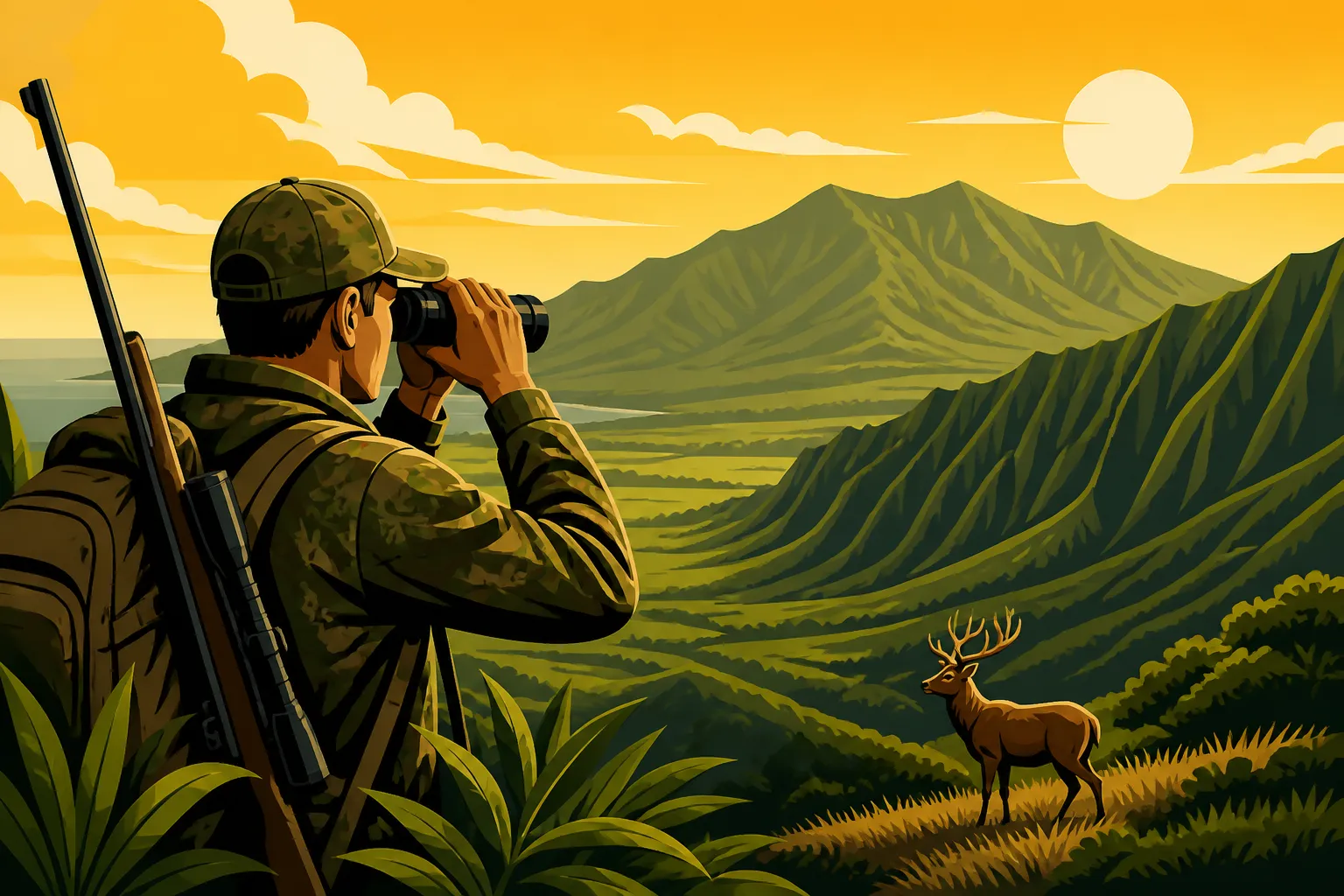
For axis deer in Kanaio, the spot-and-stalk method is unequivocally the primary strategy. Their distinctive spotted coats, surprisingly, provide excellent camouflage, blending seamlessly with the dappled light and shifting shadows cast by the kiawe forest. This means you’ll need exceptionally keen eyes and high-quality optics, spending considerable time painstakingly glassing ridges, expansive open flats, and the edges of dense brush during the crucial low-light hours of dawn and dusk. You'll be searching for any subtle twitch of an ear or the unmistakable horizontal line of a deer's back against the vertical patterns of the trees. This often necessitates lengthy periods of long-range glassing from a strategic vantage point before you even contemplate beginning a careful and calculated approach.
It's also important to remember that Why Axis Deer Rut Timing Is Different in Hawaii compared to their ancestral lands. Unlike mainland deer species with a distinct, seasonal rut, axis deer in the islands can breed year-round. This unique characteristic means you could encounter bucks in hard horn, with antlers still in velvet, or even having recently dropped their antlers, all on the very same day. This adds an intriguing dynamic to your hunt, as there isn't a single, predictable "rut" window to specifically target. Instead, you'll be actively searching for mature bucks whenever you're in the field, prepared for whatever stage of their antler cycle they might present.
Feral Goats and Their Preferred Habitat
Feral goats are perfectly engineered for Kanaio's rugged, rocky slopes and deeply incised gulches. They are undisputed masters of vertical terrain, frequently observed clinging to impossibly steep cliff faces and navigating treacherous lava flows where few other animals, and even fewer hunters, would dare to venture. While axis deer tend to favor the flatter, more brush-laden areas, goats skillfully exploit the most extreme elevation changes and broken volcanic landscapes. Their incredible agility and uncanny ability to vanish into the fragmented terrain make them exceptionally challenging targets to pursue.
Hunting goats in Kanaio typically involves a significant amount of strenuous vertical hiking and painstaking, patient glassing of cliff faces and canyon rims. You'll absolutely need robust boots with excellent ankle support to navigate the unforgiving footing, and a steady hand for taking shots from often awkward and precarious positions. Goats tend to move in cohesive groups, so if you manage to spot one, there are almost certainly others nearby. However, they are also incredibly alert and notoriously quick to flee once spooked, often leading hunters on a demanding chase through what feels like impassable country.
Goats also present an excellent opportunity for a combo hunt if you're inclined. While you're diligently scouting for deer, you might unexpectedly stumble upon a bachelor group of mature billies sunning themselves on a sun-drenched, rocky bluff. Their presence adds another layer of excitement and introduces a distinctly different style of hunting to your Kanaio experience. Whether you’re Hunting Goats on Hawaii's Coastal Cliffs or deep within the island's canyon country, a similar blend of patience, sharp observation, and a healthy respect for gravity will be your most valuable assets.
Occasional Pigs and Other Opportunistic Game
While Kanaio is generally not considered a primary destination for pig hunting, particularly when compared to the much wetter, denser rainforests found on the windward side of Maui or the Big Island, feral pigs do indeed inhabit this dry environment. They typically prefer to stick to the deeper, shadier gulches and ravines where there's usually a bit more lingering moisture, denser protective cover, and occasional opportunities for rooting in the soil. Locating them often involves carefully tracking fresh sign or encountering them opportunistically during your hunt for other species.
If your main focus is on axis deer or goats, it's still wise to remain vigilant for pig sign. Look for fresh rubs on trees, areas of disturbed earth from rooting, or muddy wallows, especially after a recent rain or in the bottom of a shaded, cooler ravine. The pigs found in Kanaio are often somewhat smaller in stature than their rainforest-dwelling counterparts, but they can still be formidable animals and certainly provide excellent table fare. Carrying a sharp knife and being prepared for a quick, close-quarters encounter is always a prudent practice when hunting in any pig habitat.
Beyond the primary big game species, you might also have encounters with various game birds, such as francolin or quail. However, their populations tend to be less abundant in the driest, most rugged parts of Kanaio compared to other, more verdant hunting units on Maui. Nevertheless, it's always a good idea to be aware of any open game bird seasons and to have a shotgun readily available if you happen to be on a multi-species hunt. For Kanaio, the primary focus for most hunters typically remains on the larger mammals. Always double-check the current Hawaii Game Bird Seasons and Bag Limits before planning any bird hunting side quests.
Essential Strategies for Success in Kanaio
Hunting in Kanaio requires a blend of keen observation, strategic planning, and unwavering perseverance. The tactics that work elsewhere might need significant adaptation to succeed in this unique environment.
Spot-and-Stalk Tactics in Open Country
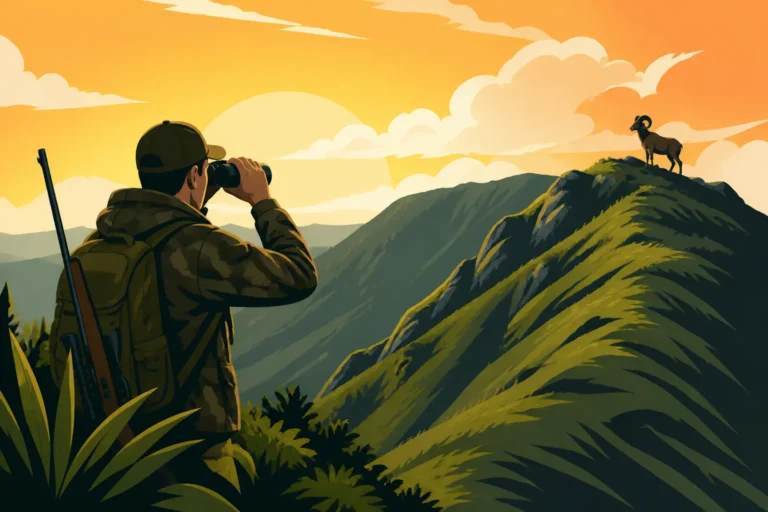
Kanaio's diverse landscape, characterized by its mosaic of open expanses interspersed with formidable thorny brush, is ideally suited for the classic spot-and-stalk hunting methodology. The absolute cornerstone of this approach is to secure a commanding vantage point well before first light, ideally one that provides an unobstructed panoramic view over vast stretches of terrain. From this elevated position, you'll need to meticulously glass the landscape with high-quality binoculars or a powerful spotting scope, painstakingly picking apart every detail and searching for any subtle movement or unusual shape that deviates from the natural contours. This intensive glassing phase can consume several hours, but it frequently proves to be the most productive way to locate animals before they become fully active and seek thicker cover.
Once you have successfully spotted an animal or a group, the true demanding work of the stalk commences. Your plan of approach must begin with a meticulous assessment of the prevailing wind direction, which is always a primary, non-negotiable concern. Kanaio's combination of shifting thermals and prevailing trade winds can be notoriously unpredictable, making a constant vigilance over wind currents absolutely critical. Following this, you must carefully identify a route that offers maximum concealment, whether it's a dry wash, a sinuous ridge line, or a dense kiawe thicket, all while simultaneously ensuring you minimize any potential noise. This is precisely where a sophisticated mapping application like onX Hunt truly demonstrates its value, allowing you to precisely mark your target, meticulously plan your intricate approach, and clearly identify all property lines.
Execute your stalk with extreme caution, moving slowly and with deliberate precision. Master the art of taking advantage of every available piece of cover, no matter how small. Make your movements when the animals are looking away or feeding, and instantly freeze whenever their heads snap up or they glance in your direction. The ubiquitous kiawe thorns will be a constant adversary, so choose each step with extreme care to mitigate noise and avoid snagging. Successfully closing the distance to within shooting range on a notoriously wary axis deer in Kanaio's profoundly challenging terrain is not merely a shot, but a profound testament to a hunter's patience, skill, and sheer determination. Spot-and-Stalk Axis Deer in Hawaii requires a blend of sharp observation and careful movement.
Approaching Water Holes and Feeding Areas
In an arid region like Kanaio, water holes and crucial feeding areas naturally transform into significant congregation points for game, particularly during the hottest parts of the day or throughout prolonged dry periods. If a direct spot-and-stalk approach isn't yielding the desired results, or if the wind conditions aren't cooperating for a lengthy, complex stalk, then strategically setting up an ambush near a known water source can be an exceptionally effective alternative. This often entails arriving and getting into position well before first light, or committing to an extended afternoon vigil, patiently waiting for animals to appear.
It's highly advisable to scout these critical areas beforehand for fresh tracks, droppings, and other signs of recent animal activity. Pay close attention to the typical approach paths that animals tend to utilize. When selecting your ambush spot, prioritize concealment above all else. Make full use of any natural brush, rock formations, or even consider a portable ground blind if local regulations permit and it aligns with your hunting style. Remain absolutely motionless and silent, allowing the animals to approach you naturally. Patience is an undeniable virtue here, as game can often appear silently and unexpectedly from the surrounding dense cover.
Always remember that ethical hunting around water sources requires a deep understanding of animal behavior and strict adherence to local regulations. It's crucial to avoid disturbing the area unnecessarily and to always approach and depart with extreme quiet. Your objective is to intercept animals as they naturally move through their environment, not to cause them undue stress or negatively impact their vital access to water. Consider deploying a trail camera (if allowed by specific unit rules) to monitor activity patterns before your actual hunt; this can provide invaluable data on peak visitation times, helping you to plan your ambush more effectively. Hunting a Water Source in Dry Hawaii Country is a classic tactic for a reason.
Gear Considerations for Kanaio's Tough Conditions
Your hunting gear for Kanaio needs to be as robust and resilient as the landscape itself. Your choice of boots is absolutely paramount: select sturdy, high-ankle support models with aggressively lugged soles to provide crucial grip on the treacherous, uneven lava and to protect your feet from the pervasive thorns. Lightweight, breathable clothing in natural, muted earth tones is essential for comfort in the intense heat. Long sleeves and pants are highly recommended to offer maximum protection against abrasive thorns, harmful UV rays, and the inevitable scrapes from sharp lava rocks.
High-quality optics are not just an advantage; they are your best friend in Kanaio's open country. A reliable pair of 10x binoculars should be considered a minimum requirement, and a quality spotting scope (preferably in the 15-45x or 20-60x range) will significantly aid in identifying game at extreme distances and allowing you to meticulously judge animals without the need for unnecessary movement. A precise rangefinder is also non-negotiable for ensuring confident and ethical shot placement in this expansive terrain.
Hydration is absolutely critical. Carry a large water bladder within your pack, supplemented by additional water bottles, and consider bringing electrolyte tablets or powders to replenish essential salts lost through sweating. A comprehensive first-aid kit, a loud whistle, a dependable headlamp, and robust navigation tools (such as a dedicated GPS device or a reliable mapping app like onX Hunt with all relevant maps downloaded for offline use on your smartphone) are also non-negotiable safety items. Cellular service is often non-existent in these remote areas, so be thoroughly prepared for No Cell Signal on a Hawaii Hunt and plan your communication and emergency procedures accordingly. Do not forget ample sun protection – a wide-brimmed hat, sunglasses, and high-SPF sunscreen are vital. Finally, a comfortable daypack that has the capacity to expand for packing out meat is an absolute must.
Access, Regulations, and Respecting the Land
Hunting in Hawaii comes with specific rules and cultural considerations. Kanaio, like all public hunting units, has regulations designed to ensure safety, manage wildlife, and preserve the natural environment.
Navigating Public and Private Land Boundaries
Kanaio Country frequently presents a complex tapestry of public hunting units interspersed with, and often adjacent to, various private landholdings. Understanding and respecting these intricate boundaries is absolutely critical for any hunter. Unintentional trespass is not only a serious legal infraction but can also severely jeopardize public hunting access for everyone, potentially leading to closures or stricter regulations. Before you even contemplate setting foot in the unit, it is imperative that you meticulously study and comprehend the official hunting unit maps provided by the Hawaii Department of Land and Natural Resources Division of Forestry and Wildlife (DOFAW).
This is precisely where contemporary mapping technology proves to be an indispensable asset. Utilizing a powerful application like onX Hunt on your smartphone, with the specific Hawaii state lands layer downloaded for offline access, can provide you with a precise, real-time visualization of your exact location in relation to both public and private property boundaries. Make it a habit to double-check your position frequently, especially when traversing ambiguous terrain such as winding ridges or deep gulches where official boundary markers might be sparse, obscured, or altogether absent. Always, without exception, respect any posted signs and physical fenced boundaries; when faced with any doubt whatsoever regarding land ownership, the safest and most responsible course of action is to immediately back out.
It's not uncommon for private land to serve as an access corridor to reach designated public hunting areas. In such specific instances, obtaining explicit prior permission from the landowner to cross their property is an absolute requirement. Never assume that access is implied or granted. Actively working to build positive relationships with local landowners or diligently seeking permission through official channels ensures that your hunting activities are conducted legally, ethically, and responsibly. This fundamental respect for private property rights not only prevents potential conflicts but also plays a crucial role in safeguarding and preserving hunting opportunities for all future generations of hunters in Hawaii.
Checking In and Out of the Unit
Just like the vast majority of public hunting units across Hawaii, Kanaio mandates that all hunters meticulously check in upon entry and check out upon their departure. This procedure is far more than a mere bureaucratic formality; it serves as a critical safety measure and provides invaluable data that assists DOFAW in effectively managing game populations and monitoring hunter pressure within the unit. Typically, designated check-in stations are strategically located at primary access points, although it's increasingly common for some units to employ modern online check-in systems, such as the OuterSpatial app. Always, without fail, confirm the precise and current check-in and check-out requirements specifically for Kanaio before you embark on your hunt, and consider reviewing regulations found on platforms like GoHunt.
Failing to properly check in or neglecting to check out can unfortunately result in significant fines or even the suspension of your hunting privileges. More importantly, it represents a substantial safety concern. Should an unforeseen incident occur while you are in the remote and challenging Kanaio terrain, the comprehensive check-in/out system provides an essential record of who is present in the unit and when they were expected to exit. This vital information is absolutely crucial for any potential search and rescue operations. Therefore, integrating this check-in and check-out routine as a non-negotiable component of your hunting preparation and execution is a fundamental responsibility for every hunter.
Always ensure you have your valid hunting license, any required permit-tags (which are typically necessary for species like Axis deer), and your check-in card or confirmation readily accessible at all times while in the field. If you are utilizing a digital application for check-in, verify that your smartphone is fully charged and that you are proficient in using the app, even in situations where cellular service is unavailable. Understanding and adhering to the protocols for Checking In and Out of Hawaii Hunting Units is a foundational responsibility for every ethical hunter in the islands.
Cultural Sensitivity and Responsible Hunting Practices
Hawaii is a place profoundly steeped in rich culture and deep-rooted tradition, and hunting within its landscapes carries unique responsibilities that extend far beyond simply adhering to legal regulations. Kanaio, like numerous other regions across the islands, holds significant cultural importance for Native Hawaiians. Approaching your hunt with an inherent sense of respect for the land (aina), its precious natural resources, and the local community is absolutely paramount. This means practicing a strict "leave no trace" ethic, meticulously packing out every piece of your trash, and treating the natural environment with the utmost reverence and care.
Responsible hunting also entails a clear understanding of your personal limitations and the capabilities of your equipment. This includes committing to taking only ethical shots, diligently following up on every animal you shoot, and performing proper Field Care in Hawaii's Heat and Humidity to ensure the humane treatment of the animal and the preservation of quality meat. Your focus should not solely be on the act of the kill, but rather on embracing the entirety of the hunting process, from meticulous scouting and ethical harvest to the demanding task of packing out your game.
Engaging with local residents and fellow hunters in a friendly, respectful, and open manner can significantly enhance your overall experience and provide you with invaluable insights into the intricacies of the area. While hunting can often be a solitary pursuit, it also fosters a sense of community, and positive interactions contribute immeasurably to a healthy and thriving hunting culture. Understanding that you are a visitor on these sacred islands, and consistently acting accordingly, is fundamental to ensuring a respectful, sustainable, and harmonious future for hunting in Hawaii.
Kanaio Hunting Overview
| Feature | Description | Key Considerations |
|---|---|---|
| Location | Leeward slopes of Haleakala, Maui | Hot, dry, rugged, remote. |
| Primary Species | Axis Deer, Feral Goats | Wary, excellent camouflage, agile. |
| Secondary Species | Feral Pigs, Game Birds (less common) | Opportunistic encounters, specific habitats. |
| Terrain | Dryland forest, kiawe thickets, lava flows, gulches | Demands robust boots, slow movement, careful footing. |
| Water Sources | Limited, critical concentration points for game | Key for patterning animal movement, potential ambush. |
| Hunting Style | Primarily spot-and-stalk, still-hunting near water | Requires good optics, patience, stealth. |
| Access | Public units, often adjacent to private land | Crucial to verify boundaries (e.g., with onX Hunt). |
| Regulations | Check-in/out mandatory, permits for Axis deer | Consult DOFAW, GoHunt for current rules. |
| Challenges | Heat, dust, thorns, uneven footing, limited cell service | Hydration, durable gear, robust navigation. |
Disclaimer: This article is for general informational purposes only and does not constitute professional advice. Laws, prices and regulations vary by location and change over time. Consult a qualified professional for guidance on your specific situation.