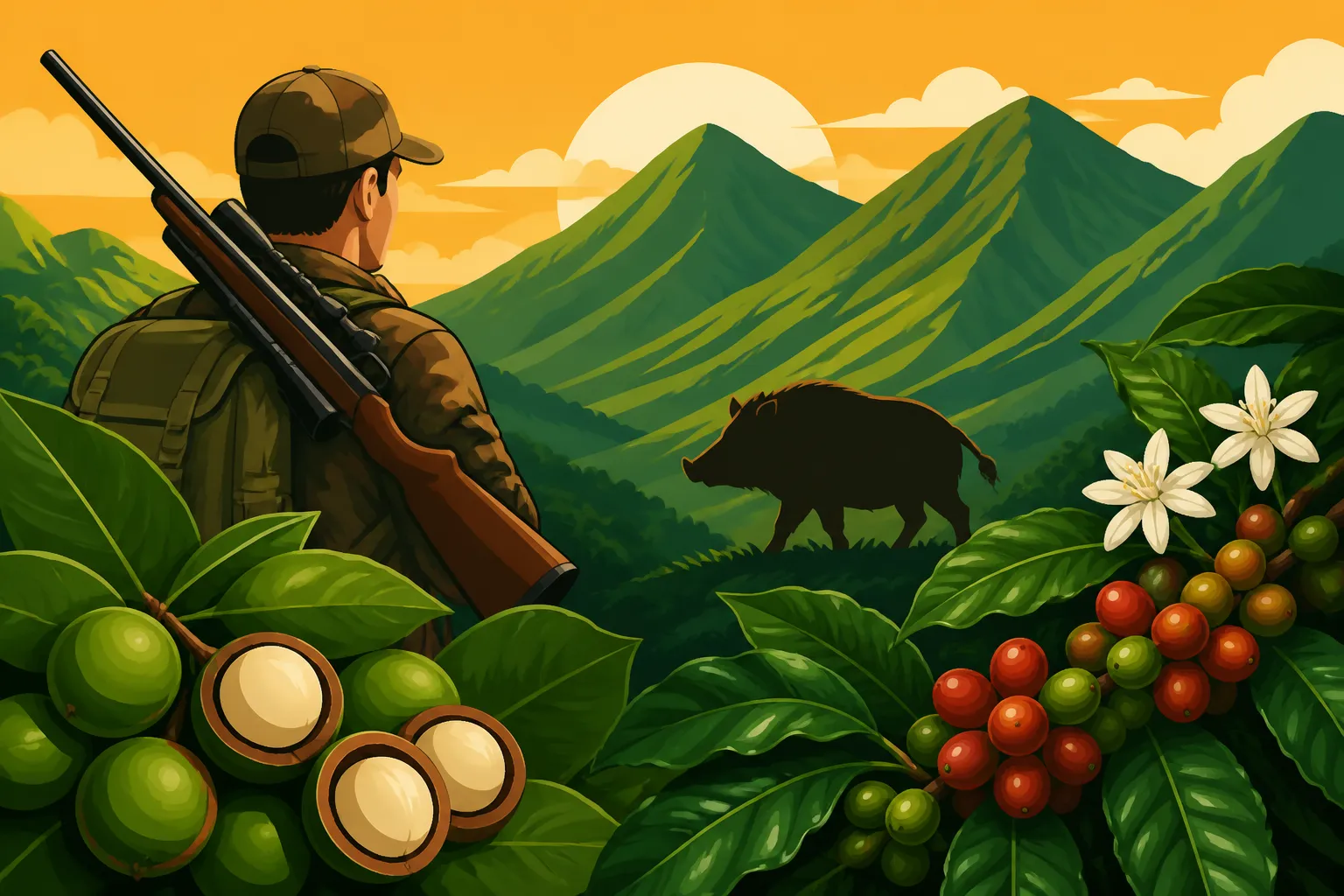
Hunting a Macadamia and Coffee Belt
Hunting an agricultural area in Hawaii, especially one as unique as a macadamia or coffee belt, presents a very different set of challenges compared to trekking through deep forest or open lava fields. You're not just looking for animals; you're navigating a mosaic of private property, working farms, and often, the fringes of wilder terrain. It can feel daunting to figure out where you can even step foot, let alone find game. This guide will help you understand the specific nuances of hunting these productive agricultural landscapes, offering practical strategies and critical considerations to make your hunt both successful and respectful.
Understanding the Unique Ecosystem of Hawaii's Macadamia and Coffee Belts
Hawaii's macadamia and coffee belts are fascinating environments. They represent a blend of managed agriculture and encroaching wildland, creating unique habitats that attract a variety of game. These areas are often found on the slopes of our islands, from the Kona side of Hawaii Island with its famous coffee farms to the broader macadamia nut orchards scattered across the Big Island and Maui. The very nature of these crops — providing food, water, and often dense cover — makes them irresistible magnets for animals like feral pigs and goats.
The Dynamics of Cultivated Land and Wildlife
Think about it: a macadamia orchard, with its regular rows of trees, offers not only the valuable nuts themselves but also consistent shade, relatively undisturbed ground, and often a dense understory of weeds and grasses if not meticulously cleared. Coffee farms, typically on steeper slopes, can be equally attractive, with the coffee cherries providing a seasonal food source and the terraced landscapes offering secluded bedding areas. These cultivated lands are often bordered by wilder gulches, deep ravines, or untouched forest, creating natural travel corridors and escape routes for game. It's a sweet spot where the wild and the domesticated meet, offering abundant forage that keeps animals close.
Feral pigs, in particular, absolutely love these areas. They'll root up the soft soil looking for grubs and fallen nuts, or gorge themselves on dropped coffee cherries. Goats, while more inclined to rocky, arid terrain, will often graze the edges, finding lush vegetation that grows around the farm boundaries. Sometimes, on islands like Maui or Molokai, you might even find Axis deer venturing into the perimeter, especially if there are open pastures or palatable forage crops nearby. Understanding these relationships is your first step. It's not just about the trees; it's about the entire ecosystem they create.
Animal Behavior Influenced by Agricultural Settings
Animals in these agricultural zones exhibit behaviors tailored to their environment. They learn to exploit the consistent food sources but also adapt to human presence. This means they might be more nocturnal, moving under the cover of darkness to feed in the orchards or fields when human activity is minimal. During the day, they'll retreat to the dense cover found in adjacent wildlands or within the thicker, less-maintained sections of the farm itself.
Their travel patterns are also distinct. You'll often find game trails running parallel to fence lines, along the edges of macadamia rows, or winding through coffee terraces. These trails connect bedding areas to feeding grounds and water sources. Scouting these routes, especially at dawn or dusk, can reveal fresh tracks, scat, and disturbed soil where pigs have been rooting. It's a constant game of hide-and-seek, where the animals are always seeking the perfect balance between readily available food and perceived safety. Your challenge is to anticipate these movements, understanding that the presence of humans during working hours pushes them into predictable patterns.
Strategic Approaches to Hunting These Unique Agricultural Edges
Hunting these mixed-use landscapes requires a different strategy than a purely wilderness hunt. You're dealing with varying terrain, human activity, and distinct animal patterns. Success often hinges on meticulous planning, quiet movement, and an acute awareness of your surroundings.
Scouting and Approaching the Edges
Before you even think about setting foot on a property, whether it's public land bordering a farm or private land with explicit permission, scouting is paramount. Drive or walk the perimeter, if accessible, and observe. Look for where the wild areas merge with the cultivated fields. Are there thick gulches leading into the coffee trees? Does a kiawe flat meet a macadamia orchard? These transition zones are goldmines for game activity. Use a good mapping application like onX Hunt to clearly delineate property lines, especially if you're hunting an adjacent public unit. This isn't just about finding game; it's about staying legal and respectful.
When you do approach, think stealth. These animals are accustomed to human sounds and smells, but they're also wary. Move slowly, using the rows of trees or natural topography as cover. Wind direction is critical here, perhaps even more so than in open country, as scents can swirl unpredictably between tree lines and buildings. Early morning and late evening are usually your best bets, as animals venture out to feed. Consider a still-hunt along a fenceline or a low-impact stalk along the edge of an orchard, keeping a keen eye out for any movement. For more on how to approach, check out Still-Hunting Pigs in Hawaii's Wet Forest, as some of the principles apply even in a drier agricultural setting.
Utilizing Cover and Topography
The terrain in Hawaii's agricultural belts can be surprisingly varied. Coffee farms often sit on steep, terraced slopes, while macadamia orchards might be flatter but still have significant undulations or access roads. Use these features to your advantage. The rows of macadamia trees offer linear cover, allowing you to move unseen parallel to areas where animals might be feeding. Similarly, the terracing on coffee farms can create natural benches and hidden pathways.
Look for the "rough" areas — patches of thick brush, fallen logs, or unkempt ravines within or bordering the farm. These are prime bedding and escape cover zones. If you're on public land adjacent to a large farming operation, these unmaintained fringes are often where animals will spend their days before venturing into the fields at night. A deep gulch running through a coffee farm, for instance, can be an excellent place to Baying a Pig in a Steep Gulch during the mid-day hours if you have the proper permits and dog-hunting permissions. Being able to read the land, both the cultivated and the wild elements, is key to predicting where game will be.
Timing Your Hunt for Peak Activity
Just like any hunt, timing is everything, but it's even more crucial in areas with active human presence. Animals here are hyper-aware of daily routines. Generally, dawn and dusk will be your most productive periods. As the farm workers are heading home or haven't yet arrived, the animals feel safer venturing out from their cover to feed.
Consider seasonal variations too. If you're hunting coffee, the harvest season might bring increased human activity, pushing animals deeper into cover. Conversely, after the harvest, dropped cherries might still be available, attracting game. For macadamia nuts, fallen nuts are a constant draw for pigs. Pay attention to weather patterns. A cool, rainy morning might encourage pigs to stay out longer in the open, while a hot, sunny day will push them into dense shade. Hunting Axis Deer at First Light in Hawaii offers insights into early morning animal behavior that can be adapted to these agricultural environments. Knowing these cycles allows you to plan your approach to maximize your chances of encountering game when they are most active and visible.
Essential Gear and Considerations for Macadamia and Coffee Belt Hunts
Hunting in Hawaii's agricultural zones isn't just about knowing where the animals are; it's also about having the right tools and mindset to navigate these unique environments safely and effectively. You'll encounter a blend of farm infrastructure, natural obstacles, and often, varying terrain that demands specific gear choices.
Footwear and Clothing for Varied Terrain
Forget those pristine hiking trails; macadamia and coffee belts can be muddy, rocky, overgrown, and slippery. Your footwear is paramount. Invest in sturdy, waterproof boots with excellent ankle support and aggressive traction. You'll be climbing over uneven ground, navigating through dense undergrowth, and potentially dealing with wet, slick conditions, even in what might otherwise be considered "dry" areas due to irrigation. The last thing you want is a twisted ankle or soaked feet miles from your vehicle.
As for clothing, layers are always a good idea in Hawaii. Even if you start warm, you might be in dense, cool shade, or rain could move in quickly. Durable, brush-resistant pants are a must, as you'll be pushing through thorny kiawe, sharp grasses, and dense guava thickets. Blaze orange requirements vary by unit and season in Hawaii, but it's always wise to incorporate some for visibility, especially in areas where other hunters or farm workers might be present. Think breathable fabrics that dry quickly, because sweat and humidity are constants here.
Navigation and Mapping Tools
In these patchwork landscapes, knowing exactly where you are is critical. Property boundaries can be complex, and you absolutely must avoid trespassing onto private land where you don't have permission. This is where modern mapping applications really shine. A GPS-enabled device with detailed satellite imagery and property ownership overlays, like onX Hunt, is an invaluable tool. It allows you to clearly see public land boundaries, private land parcels, and even specific farm features like roads and treelines. Before heading out, download offline maps, as cell service can be spotty in many of Hawaii's more remote agricultural zones.
Beyond digital maps, a physical map and compass are always good backups, especially if you're venturing into areas that border thick forest or deep gulches. Navigating the linear patterns of orchards or the complex terraces of coffee farms can be disorienting, and a reliable navigation system ensures you stay on track, respect boundaries, and can find your way back safely. For more on navigating challenging terrain, you might find Staying Found in Dense Hawaii Rainforest helpful, as similar principles apply to dense farm borders.
Respecting the Land: Food, Water, and Waste
When hunting in or around agricultural areas, you're a guest, whether officially on private land or simply adjacent to it. This means leaving no trace and respecting the environment. Carry out everything you carry in – including all your trash, food wrappers, and spent casings. If you're fortunate enough to harvest an animal, make sure you have a plan for Field Dressing Axis Deer in Hawaii Heat and packing out the meat efficiently, leaving the site clean.
Water is also a critical consideration. Hawaii's agricultural lands, especially on the leeward sides of islands, can be surprisingly hot and dry. Even if it feels temperate in the morning, the sun can quickly become intense. Carry more water than you think you'll need, along with high-energy snacks. Remember, these aren't always conveniently located wilderness areas; you might be a long walk from your vehicle or any amenities. Being self-sufficient and considerate of the agricultural environment ensures that hunting opportunities in these unique zones can continue for everyone.
Respecting Boundaries and Rules in Agricultural Hunting Zones
Hunting in and around Hawaii's macadamia and coffee belts places a huge emphasis on responsible conduct, especially regarding property lines and local regulations. The success and continuation of hunting access in these areas often depend on hunters' adherence to rules and their ability to foster good relationships with landowners and the broader community.
The Importance of Permission and Unit Rules
The single most important rule when hunting any agricultural land is to secure explicit permission if it's private property. Many macadamia and coffee farms are privately owned, and trespassing is not only illegal but can quickly jeopardize future hunting opportunities for everyone. If you're considering hunting such an area, make direct contact with the landowner well in advance. Explain your intentions, inquire about their specific rules or concerns, and clarify exactly where you are permitted to hunt and what species. Sometimes, landowners welcome hunters as a means of controlling feral pig or goat populations that damage their crops.
If you're hunting public land that borders private agricultural property, it's equally crucial to understand and respect those boundaries. Use your mapping tools, like onX Hunt, to be absolutely certain you are on public ground. Remember that animals don't recognize property lines, so a pig you've been tracking on public land might suddenly cross onto private property. You must know your limits and avoid pursuing game onto land where you don't have permission. Familiarize yourself with the specific unit rules for public hunting areas. These rules, often found through the DLNR/DOFAW website or platforms like GoHunt, will detail legal weapons, season dates, and specific check-in/check-out procedures for the area. Hawaii Trespass and Closed Area Rules is an important read before heading into any mixed-use landscape.
Wildlife Management in Agricultural Areas
The presence of game animals in agricultural belts often highlights a direct conflict between wildlife and human interests. Feral pigs, for example, can cause significant damage by rooting up irrigation lines, disturbing young plants, and eating valuable crops like macadamia nuts or coffee cherries. Feral goats can strip vegetation, contributing to erosion on slopes. Because of this, managing these populations is often a shared concern between government agencies and private landowners.
Hunters play a vital role in this management. By responsibly harvesting game, especially feral pigs and goats, hunters contribute to controlling populations that can otherwise become destructive. This is part of the broader conservation effort in Hawaii, where many game animals are considered invasive species. Being a responsible hunter means not only following the law but understanding your part in the larger ecosystem. This includes reporting your harvest correctly and adhering to all bag limits and seasonal restrictions, which helps agencies monitor populations. For a deeper dive into the relationship between hunting and conservation, consider How Hunting Fits Hawaii's Conservation Plan. By doing so, you help maintain a balance that allows both agriculture and hunting to coexist.
Overview of Hunting Considerations in Hawaii's Macadamia and Coffee Belts
To summarize the unique aspects of hunting in these agricultural areas, here's a quick look at key considerations:
| Feature | Impact on Hunting | Best Practice |
|---|---|---|
| Terrain | Uneven, often sloped, can be muddy or rocky. | Sturdy, waterproof boots with good ankle support. |
| Cover | Rows of trees, dense understory, bordering gulches. | Use linear cover for stealth, focus on transition zones. |
| Food Sources | Fallen nuts, coffee cherries, lush forage. | Animals drawn to these areas; scout for feeding sign. |
| Animal Behavior | Often nocturnal, wary of human presence during day. | Hunt at dawn/dusk, focus on travel corridors to/from cover. |
| Boundaries | Complex mix of private farms and public lands. | Absolutely secure permission for private land. Use mapping apps like onX Hunt for public land. |
| Human Activity | Farm workers, residents during daylight hours. | Plan hunts around working schedules; prioritize quiet, respectful movement. |
| Waste | Easily visible, negative impact on landowner relations. | Pack out all trash; leave no trace. |
| Regulations | Specific unit rules, licensing, and bag limits. | Consult DLNR/DOFAW, GoHunt, and landowner for current rules. |
Disclaimer
This article is for general informational purposes only and does not constitute professional advice. Laws, prices and regulations vary by location and change over time. Consult a qualified professional for guidance on your specific situation.