Hunting a Reservoir and Stock Pond Area
For any hunter in Hawaii, especially during those long dry spells, nothing grabs attention quite like the thought of a reservoir or a small, tucked-away stock pond. You spend countless hours glassing hillsides or still-hunting through kiawe flats, and sometimes it feels like the animals just vanish. But the truth is, nothing can survive long without water, and these precious oases become undeniable magnets for everything from axis deer to feral pigs and goats. This guide is all about helping you understand how to locate, approach, and successfully hunt these vital water sources across the islands, turning a seemingly empty landscape into a promising opportunity.
Why Water is a Game Magnet in Hawaii's Diverse Terrains
Hunting in Hawaii is a unique challenge, often characterized by vast, dry leeward slopes or incredibly dense, wet forests. What many folks don't realize is that even in the lushest areas, accessible surface water can be surprisingly limited for game animals. The porous volcanic rock lets much of the rain seep right through, meaning true standing water or reliable streams are precious commodities in many units. This scarcity elevates any permanent water source, be it natural or man-made, into a critical focal point for local wildlife.
The Scarcity of Surface Water in Arid Zones
Think about the leeward sides of islands like Maui or Hawaii Island. Miles of kiawe forests, sparse grasslands, and ancient lava flows bake under the sun for much of the year. For animals like axis deer, which thrive in these dry environments, finding water isn't just a convenience—it's a daily necessity. During extended droughts, a small stock pond or a seepage in a gulch can literally be the only drinkable water for miles. This concentrates animals, creating predictable patterns of movement. They might browse far and wide during cooler parts of the day or night, but eventually, their need for hydration will draw them back to these lifelines. This is especially true when you're Hunting Hawaii's Dry Leeward Country, where every drop counts. Imagine traversing a parched lava field and coming across a small, green patch around a hidden spring; that's where the animals will be, often in surprising numbers, even within a seemingly barren Hunting a Hawaii Lava Kipuka.
Water as a Game Magnet in Wet Zones
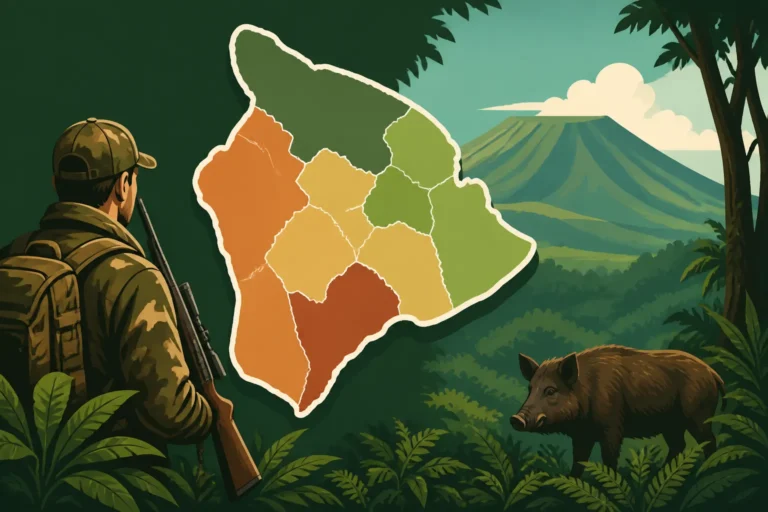
Now, flip the coin to the windward, rainforest side of an island. You might think water is everywhere here, and in a sense, it is. But much of it is running water, caught in fast-moving streams or dispersed as pervasive humidity. Animals like feral pigs, while seemingly at home in the mud and wet, still seek out specific wallows and more tranquil water sources for drinking and cooling off. These spots become community hubs, particularly for sows with piglets or older boars looking for a comfortable bed. A muddy pond or slow-moving stream in a dense forest can be just as important to them as a reservoir is to deer in arid zones, centralizing their activity. When you're Hunting Pigs in Hawaii's Rainforest Gulches, those hidden muddy pockets often hold the most promise.
Identifying Productive Reservoir and Stock Pond Areas
Not every body of water is going to be a prime hunting spot. Some might be too exposed, too close to roads, or simply not offer the cover that makes animals feel secure enough to visit during daylight hours. The key is learning how to identify the most productive water sources, which often means doing some homework before you even set foot in the unit.
Mapping and Scouting for Water Sources
This is where modern technology really shines. Tools like onX Hunt have revolutionized how we scout, allowing us to pour over detailed satellite imagery from the comfort of our homes. Look for anything that suggests standing water: blue spots, darker green vegetation, or even anomalies in the terrain that suggest a dam or natural depression. Once you've identified potential spots, zoom in and look for faint lines converging on these areas—these are often game trails, beaten down over generations by animals making their daily pilgrimage for a drink. You can even use the map features to mark these points and plan your approach. Don't forget that traditional scouting is still invaluable; nothing beats boots on the ground for confirming what the maps show and finding fresh sign. This kind of diligent Scouting a Hawaii Hunting Unit Before Opening will drastically increase your odds of success. When considering public lands, tools like GoHunt can also provide valuable insights into unit boundaries and potential water access points, helping you prioritize your scouting efforts.
Types of Water Sources and Their Appeal
Hawaii's water sources vary, and understanding each type can help you predict which animals might use them and when.
- Natural Seeps and Springs: These are often small, subtle, and tucked away in steep gulches or lava tubes. They tend to attract pigs and goats, which are adept at navigating rough terrain, and occasionally mouflon sheep in higher elevations. Their secluded nature makes animals feel more secure, increasing daytime activity.
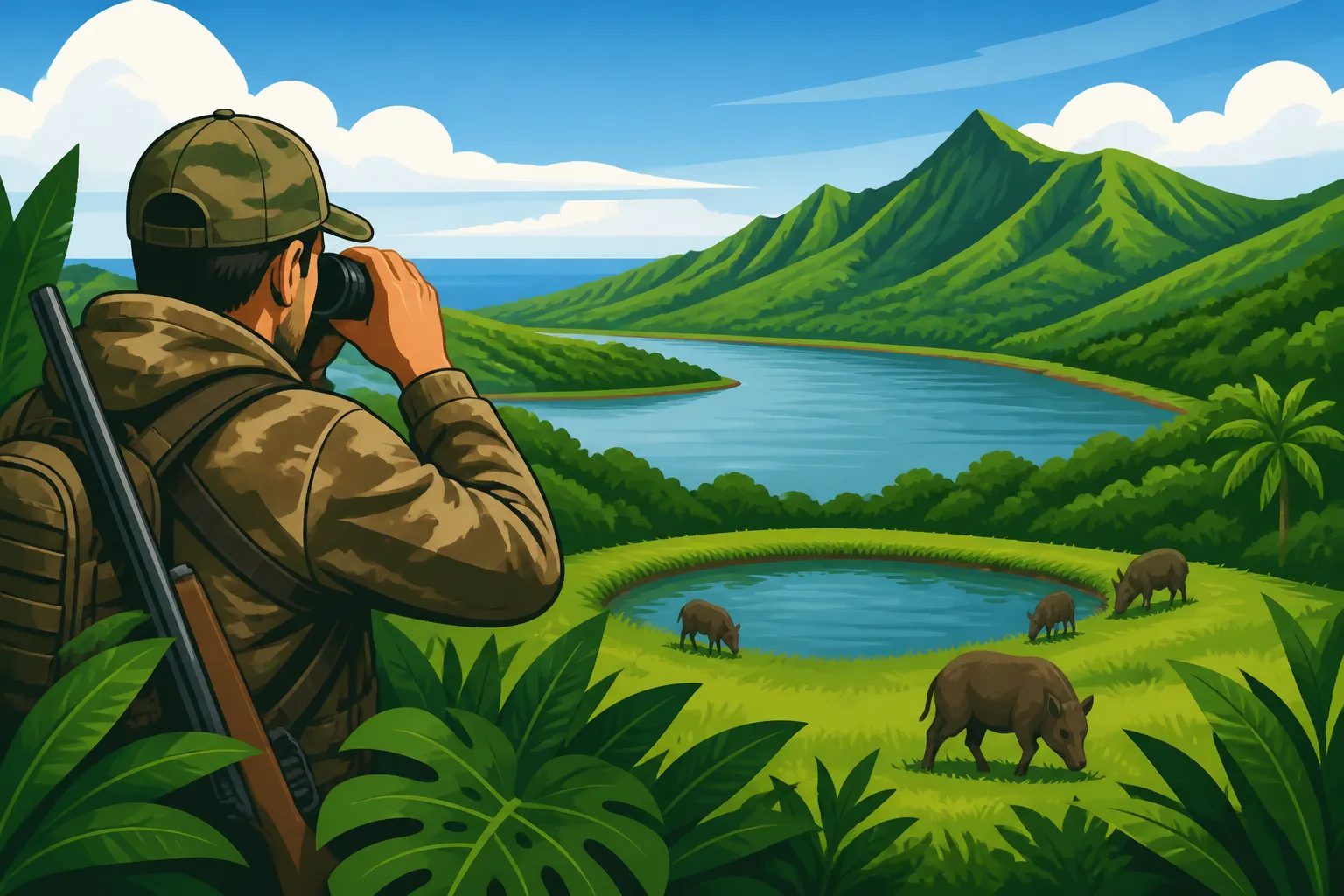
- Man-Made Stock Ponds: Created primarily for livestock, these can range from small, muddy puddles to larger impoundments. They are absolute magnets for axis deer, pigs, and goats, especially in ranching country. The surrounding vegetation might be sparse, but the draw of water is irresistible. These can be high-pressure areas, so timing and stealth are critical.
- Irrigation Reservoirs: Larger and often more open than stock ponds, these are typically found in agricultural zones. While they can be less discreet, they still draw in game, particularly axis deer and game birds. The edges might offer some cover, and animals may visit during low-light hours. Look for areas where dense brush meets the water's edge, offering concealment for animals approaching or leaving.
| Water Source Type | Common Game Animals Attracted | Best Hunting Conditions | Potential Challenges |
|---|---|---|---|
| Natural Seep/Spring | Feral Pigs, Goats, Mouflon | Dry season, thick cover | Hard to find, small, difficult access |
| Stock Pond | Axis Deer, Feral Pigs, Goats | Dry season, open country | Exposed, high hunter pressure, private land |
| Irrigation Reservoir | Axis Deer, Feral Pigs, Game Birds | Year-round, larger areas | Wind, other human users, less cover |
Tactics for Hunting Near Water Sources
Once you've identified a promising water source, the real work begins: planning your approach and executing your hunt. Success around water often comes down to patience, stealth, and understanding animal behavior.
Early Morning and Late Evening Ambush
There’s a reason why the classic "waterhole sit" is a time-tested hunting strategy. Animals are most active and confident visiting water during the cooler, low-light hours of dawn and dusk. Setting up quietly well before first light, or staying until the very last rays fade, dramatically increases your chances. Find a vantage point that offers a clear, ethical shot opportunity while keeping you concealed and downwind. This might be a natural blind of kiawe trees or a rock outcrop. Remember, movement is key, and minimizing it once you're set up is paramount. This strategy is incredibly effective for Hunting Axis Deer at First Light in Hawaii, when they feel safest leaving the shadows to drink.
Still-Hunting the Periphery
While sitting and waiting can be effective, sometimes the animals are not directly at the water's edge. Instead, they might be bedding down in dense cover nearby, waiting for dark, or browsing along the trails leading to the water. This is where still-hunting comes into play. Move slowly, deliberately, and quietly along the game trails that converge on the water source. Pause frequently to glass and listen. Pay attention to every snap of a twig, every rustle in the brush. You might jump a pig wallowing in a muddy pocket near a stream, or catch a group of axis deer feeding their way towards a pond. This tactic can be particularly fruitful if you're Still-Hunting Pigs in Hawaii's Wet Forest, where visibility is limited, but sound and scent travel well. Remember, the area immediately surrounding a water source, often within a quarter-mile radius, is just as important as the water itself. Hunters know that Hunting a Water Source in Dry Hawaii Country means focusing not just on the pond, but the entire ecosystem around it.
Understanding Wind and Thermals
Hawaii's unique topography creates complex wind patterns and thermals, which are absolutely crucial to understand when hunting near water. In open areas, the prevailing Reading Hawaii's Trade Wind Patterns will usually be your primary concern. Always try to approach and set up downwind of where you expect animals to appear. However, in mountainous or gulch-ridden terrain, thermals can be a real headache. As the sun rises, warm air pushes up the slopes; as it sets, cool air drains down into the valleys. This means your scent cone can shift dramatically throughout the day. For example, in the early morning, your scent might drop into a gulch, but by mid-morning, it could be rising up a hillside. Adapt your position as the day progresses, or plan your hunt for times when the wind is most stable. Being mindful of Hunting Downwind in Hawaii's Shifting Thermals will keep your presence a secret from wary game.
Navigating the Challenges of Water-Source Hunting
Hunting around water in Hawaii isn't without its unique set of challenges. From competing with other hunters to dealing with the often-rugged terrain surrounding these vital spots, it pays to be prepared.
Managing Hunter Pressure
Because water sources are such obvious magnets for game, they also tend to be magnets for hunters. Especially on popular public land units, you might find yourself sharing the area with others. The key here is good scouting, patience, and sometimes a willingness to walk further than most. If a main reservoir access point is crowded, look for smaller, less obvious stock ponds or seeps tucked away. Consider hunting midweek if your schedule allows; Hunting Midweek Where Hawaii Allows It can mean significantly less pressure than on busy weekend days. If you're restricted to weekends, focusing on the first hour or two of daylight, or the last hour before dark, can still give you a window before or after the main rush. Being the first one in or the last one out often makes the difference. Beating the Crowd on a Weekend Unit sometimes means finding those obscure water sources others overlook, or being willing to sit longer.
Access and Ethical Considerations
Reaching some of these water sources can be an adventure in itself. Many stock ponds are on private ranch lands, requiring careful negotiation for Hawaii Private Land Access Permits or booking with an outfitter. Always know your unit boundaries and respect private property. Even on public land, access roads might be rough, requiring a good 4WD vehicle, or you might have to walk a considerable distance. Using tools like onX Hunt can be invaluable here, helping you clearly identify property lines and legal access routes. There's nothing worse than finding a perfect spot, only to realize you've inadvertently crossed onto private land. Checking the app for Using onX for Hawaii Land Status before and during your hunt is a critical step for responsible hunting.
Safety and Field Care Near Water
The terrain around reservoirs and stock ponds can often be slippery, muddy, or steep. Be mindful of your footing, especially during the darker hours. Carrying plenty of water yourself is crucial, even if you're hunting near water; you don't want to drink from an untreated stock pond. And once you've harvested an animal, getting the meat cooled quickly is paramount in Hawaii's warm climate. While you're near a water source, use it for cleaning and initial cooling if regulations allow, but always prioritize cleanliness and getting the meat into a cooler with ice as soon as possible. Even with water nearby, you need a plan for Cooling Meat Fast on a Hawaii Hunt to preserve the quality of your harvest.
Disclaimer
This article is for general informational purposes only and does not constitute professional advice. Laws, prices and regulations vary by location and change over time. Consult a qualified professional for guidance on your specific situation.