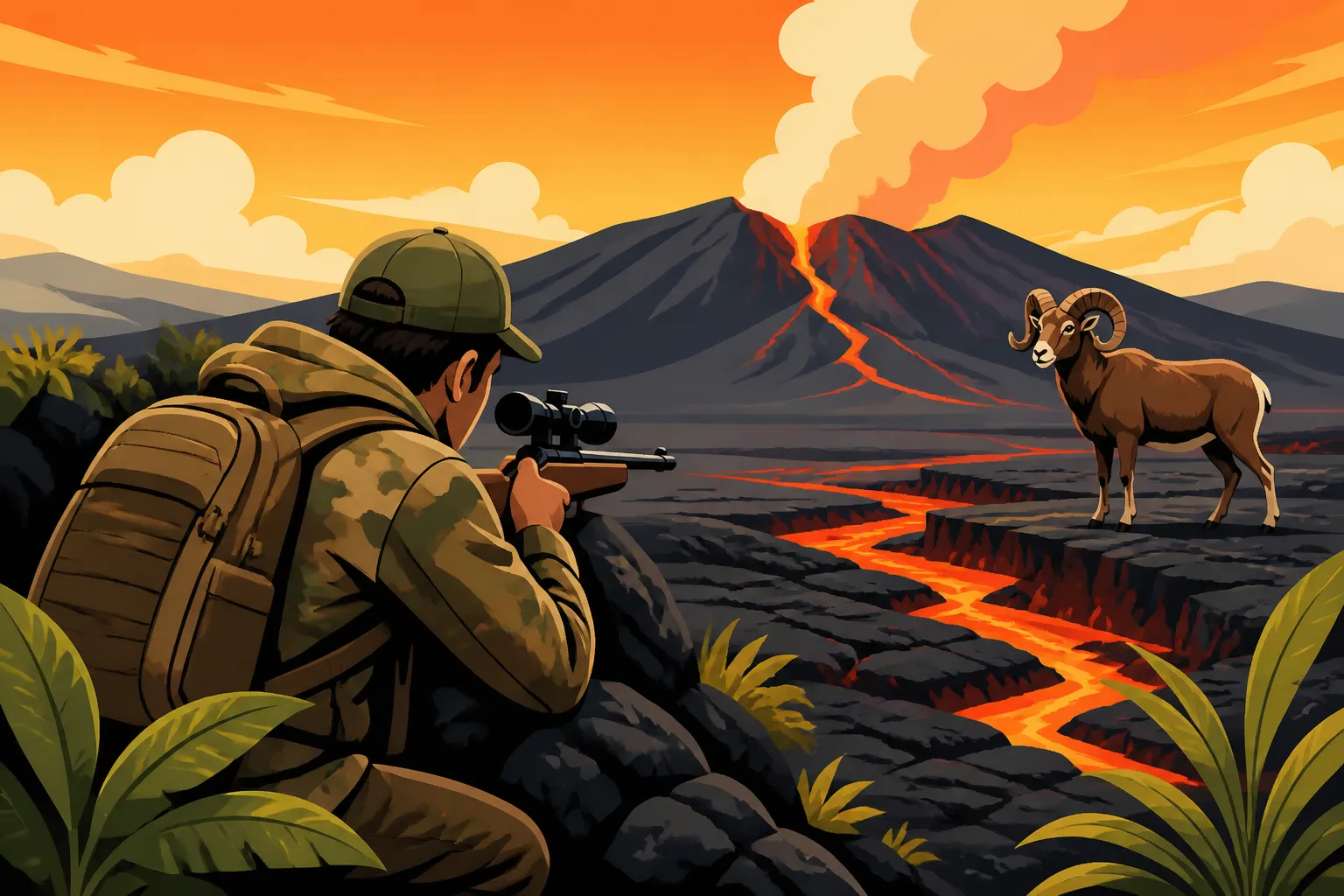
Hunting a Volcanic Rift Zone Unit
Hunting in Hawaii's volcanic rift zones can feel like stepping onto another planet, a landscape of raw, ancient power that presents a unique set of challenges and rewards. The jagged lava flows, scattered cinder cones, and deep fissures demand a different kind of preparation and approach than hunting in lush rainforests or open pastures. This guide will walk you through what to expect and how to effectively hunt these rugged, often unforgiving, yet incredibly productive areas.
Understanding Hawaii's Volcanic Rift Zone Terrain
When you hear "volcanic rift zone," you might picture something out of a science documentary, and honestly, you wouldn't be far off. These are the areas where the Earth's crust is literally pulling apart, creating long fissures, erupting lava flows, and building up cinder cones over millennia. In Hawaii, this means a landscape dominated by various types of lava: the smooth, ropey pahoehoe and the sharp, broken a'a, often interspersed with older, vegetated areas that have had time to grow a thin layer of soil.
The Geology of a Rift Zone Hunt
These zones are essentially corridors where volcanic activity has been concentrated. On the Big Island, for instance, you'll find prominent rift zones stretching from Mauna Loa and Kilauea. Picture vast, undulating fields of black or reddish lava, some fresh and barren, others older with hardy pioneer plants like 'ohia trees and ferns taking root. Interspersed within these flows are numerous kipukas, which are islands of older forest that were surrounded but not covered by more recent lava flows. These kipukas become crucial sanctuaries and travel corridors for game. The elevation can vary wildly, from lower, drier slopes near the coast to higher, cooler elevations where fog and rain can be common. The ground itself is often uneven, unstable, and incredibly abrasive. Hunting Hawaii's Volcanic Terrain delves deeper into these unique landforms.
Navigating the Challenges of Lava
Walking on lava is an art form you quickly learn in these units. The 'a'a lava is notorious for shredding boots and skin, making every step a deliberate act. The pahoehoe is smoother but can be slippery, especially when wet or covered in fine volcanic dust. There are hidden cracks, unstable rocks, and abrupt elevation changes everywhere. Beyond the footing, the sheer lack of shade in many rift zones means intense sun exposure, especially from late morning to late afternoon. Combine this with the radiant heat from the dark lava, and you're in for a truly warm day. Visibility can range from wide-open vistas across barren flows, perfect for glassing, to surprisingly thick pockets of vegetation in gulches or kipukas that hide game just feet away.
Game Species and Their Habitat in Rift Zones
While seemingly barren, Hawaii's volcanic rift zones are home to a surprising array of game, each adapted to survive and thrive in this demanding environment. Knowing what animals frequent these areas and why is key to a successful hunt.
Axis Deer and Mouflon Sheep
On islands like Maui and Lanai, Axis deer are often found on the drier fringes of rift zones, particularly where kiawe and scattered native trees provide browse and limited shade. They’ll utilize the broken terrain for cover and escape routes, often bedding down in depressions or within thicker vegetation patches that dot the lava fields. Look for their distinctive tracks in softer ash or dust, and pay attention to areas with scattered grass or forbs that spring up after a rain. On the Big Island, particularly on the slopes of Mauna Kea and Mauna Loa, you'll find Mouflon sheep. These hardy animals are perfectly suited to the sparse, rocky, high-elevation rift zones. They navigate the steep, uneven terrain with incredible agility, often feeding on the mamane and naio trees that cling to life in these harsh environments. Hunting Mouflon on Hawaii's Highest Slopes provides more detail on these elusive sheep.
Feral Pigs and Goats
Feral pigs, while typically associated with the dense, wet forests, will also venture into rift zones, especially in areas where there are more established kipukas with a thicker understory or where water sources, even intermittent ones, can be found. They'll use the deep cracks and lava tubes for bedding and escape. Look for their rooting signs in any patches of soil, especially at the edges of kipukas or where rain collects. Feral goats are arguably the most iconic animal of Hawaii's rugged volcanic landscapes. They thrive on the steep, rocky slopes, sea cliffs, and, yes, the dramatic terrain of rift zones. Goats are browsers, eating almost anything, and they use the elevation and broken ground to their advantage, often moving quickly along ledges and up steep faces. They are incredibly tough and can be found in surprisingly open areas, though they'll often seek the shade of a small overhang or a scrubby tree during the heat of the day. Hunting Hawaii's Feral Goats explores hunting these agile animals in detail.
Tactics for Hunting Volcanic Rift Zones
Hunting in a rift zone demands a blend of patience, physical endurance, and keen observation. The terrain dictates much of the strategy, making certain approaches far more effective than others.
Spot-and-Stalk in Open Lava Fields
Many rift zones feature expansive, relatively open lava fields interspersed with low-lying brush and occasional kipukas. This makes spot-and-stalk hunting an incredibly effective method. The key is to get to a high vantage point at first light, before the sun gets too high and the thermals start to swirl unpredictably. Use good optics – binoculars and a spotting scope are your best friends here – to systematically glass the entire area. Look for movement, subtle color differences, or the outline of an animal against the dark lava. Animals often stand out against the black rock, but they can also disappear surprisingly well if they bed down in a shadowed depression. Once you spot an animal, the stalk begins. This is where the lava becomes both a challenge and an asset. The broken ground can hide your approach, but it's also noisy and treacherous. Plan your route carefully, using features like cinder cones, old lava channels, or thick brush for cover. Remember, silence is golden, but sometimes the crunch of 'a'a lava is unavoidable; take it slow and steady. Spot-and-Stalk Axis Deer in Hawaii offers excellent tips for this method.
Hunting Kipukas and Transitional Zones
Kipukas are literal oases in the lava desert. These islands of vegetation provide food, water, and crucially, shade and cover for game. Hunting the edges of these kipukas, especially at dawn and dusk, can be highly productive. Animals will often move from the more open lava to browse or bed down within the denser cover. Focus on transitional zones where the stark lava meets the vegetated kipuka, or where a gulch or old stream bed cuts through the landscape. These natural corridors are frequently used by animals traveling between feeding and bedding areas. Don't be afraid to still-hunt slowly and quietly through the thicker cover within a kipuka, particularly if you've seen fresh sign like tracks or droppings. The same goes for hunting the rim of a cinder cone or a saddle between two of them, as these elevated features offer both escape routes and excellent vantage points for game. Hunting a Hawaii Lava Kipuka goes into depth on maximizing these features.
Water Sources and Game Trails
While many rift zones appear dry, even intermittent water sources can be magnets for game, especially during prolonged dry spells. Look for low-lying areas where rain might collect, old cement tanks or troughs from past ranching activity, or even dew-soaked vegetation in shaded pockets. Identifying active game trails is also paramount. Animals, like people, will take the path of least resistance. These trails, often worn into the lava or soft ash, will lead you to feeding areas, water, and bedding grounds. While a digital mapping tool like onX Hunt can show you topography and property boundaries, you'll need to develop your eye for spotting these subtle signs on the ground. Be sure to check the map for any Hawaii's Fenced Conservation Boundaries as these often influence game movement.
Safety and Preparation for Rift Zone Hunts
Hunting in Hawaii's volcanic rift zones is not for the faint of heart or the unprepared. The environment demands respect and thorough preparation.
Essential Gear and Footwear
Your gear can make or break a rift zone hunt. High-quality, durable hiking boots are non-negotiable. They need stiff soles to handle the uneven lava and good ankle support to prevent twists and turns. Many seasoned hunters will carry an extra pair of boots or at least multiple pairs of socks, as the lava is infamous for chewing through footwear. Walking Rough Lava Without Wrecking Your Boots is a must-read. Beyond boots, hydration is paramount. Carry significantly more water than you think you'll need, especially during warmer months. A good daypack capable of carrying water, food, first-aid supplies, and extra layers for changing weather conditions is essential. Sun protection – hat, sunglasses, sunscreen – is crucial due to the intense sun exposure and reflective nature of the lava.
| Item | Importance in Rift Zones | Specific Considerations |
|---|---|---|
| Boots | Critical | Stiff sole, ankle support, durable, bring extra socks |
| Water | Paramount | Minimum 3-4 liters per person for a half-day hunt |
| Navigation | Essential | GPS device or phone with onX Hunt, compass, paper map |
| First-Aid Kit | Crucial | Bandages for cuts/abrasions, blister treatment, pain relievers |
| Sun Protection | High | Wide-brimmed hat, sunglasses, high-SPF sunscreen |
| Layers | Important | Lightweight, breathable for heat; windbreaker/rain jacket for elevation/rain |
| Optics | Very High | 10x binoculars, spotting scope for long-range glassing |
| Knife/Multitool | Standard | Field dressing and general utility |
| Headlamp | If hunting near dusk | For packing out in low light |
Navigation and Communication
Getting lost in a vast, undulating lava field or a maze of kipukas can be disorienting and dangerous. A reliable GPS device or a smartphone with a robust mapping application like onX Hunt is absolutely essential. These apps allow you to mark your vehicle, track your path, and see unit boundaries, preventing accidental trespass. Remember that cell service can be spotty or non-existent in many remote Hawaiian hunting units, so download your maps for offline use. Always carry a physical compass and a paper map as a backup. Before you head out, let someone know your exact hunting location and your expected return time. Carrying a satellite communication device for emergencies, especially if hunting alone or in very remote areas, is a smart move. In the event of an emergency, having a way to communicate is literally a lifesaver, especially where No Cell Signal on a Hawaii Hunt is the norm.
Field Care in Extreme Conditions
Once you've harvested an animal in a rift zone, the clock starts ticking. The combination of intense heat, often minimal shade, and varying humidity levels means meat can spoil quickly. Field dressing immediately and efficiently is critical. If possible, quarter the animal and get the meat into game bags that allow for airflow. Finding a cool, shady spot to hang the meat, even temporarily, is ideal. If you're far from your vehicle, you'll need a plan for packing the meat out, often over difficult terrain. Bringing a lightweight game cart might be an option if the terrain allows for it, but often, it's shoulder power or multiple trips. Knowing how to quickly cool the meat is vital. Consider carrying extra ice in soft-sided coolers in your vehicle for when you get back. Cooling Meat Fast on a Hawaii Hunt provides excellent advice on this challenging aspect.
Planning Your Rift Zone Hunt
A successful hunt in a volcanic rift zone begins long before you set foot on the lava. Thorough research and planning are your best allies.
Researching Specific Units and Seasons
Hawaii has numerous hunting units spread across its islands, and many encompass or border volcanic rift zones. For instance, on the Big Island, areas around Mauna Kea and Mauna Loa offer Mouflon hunting opportunities in volcanic terrain. On Maui, certain areas have Axis deer that utilize lava features. It’s crucial to consult the Hawaii Department of Land and Natural Resources (DLNR) Division of Forestry and Wildlife (DOFAW) website for specific unit boundaries, open seasons, legal weapons, and bag limits. The rules can change frequently and vary significantly from island to island and unit to unit. Websites like GoHunt can also be a valuable resource for compiling this information and keeping track of draw deadlines and announcements for Hawaii's Drawn Hunts and Lotteries. Always double-check with the official DOFAW regulations before planning your trip.
Access and Permitting
Accessing rift zone units often requires a 4×4 vehicle, as roads can be rough, unpaved, and traverse challenging terrain. Many units also have specific check-in and check-out procedures, either at a physical hunter check station or through a digital app like OuterSpatial. Understanding these requirements is essential to avoid violations. Beyond your general Hawaii hunting license, specific permit-tags may be required for certain species or units, particularly for Mouflon sheep or Axis deer. Make sure you understand how Hawaii's Hawaii's Permit-Tag System Works and obtain all necessary permits well in advance. Some units are also managed cooperatively with private landowners, meaning additional permission or fees might be required. Always clarify the access rules for your chosen unit.
Environmental Awareness and Respect
Hunting in Hawaii's rift zones means operating in a unique and fragile ecosystem. Be mindful of your impact. Stick to established trails or avoid disturbing fragile vegetation when possible. Pack out everything you pack in, including spent shell casings. Respect cultural sites and avoid areas that are designated as off-limits for conservation or cultural reasons. Many of these landscapes are sacred to Native Hawaiians, and understanding and respecting that cultural significance is part of being a responsible hunter here. Also, be aware of protected species. While you're targeting game animals, knowing how to identify species like the Hawaii's Nene and Why It Is Protected is vital to avoid accidental harm or violations. Hunting in these ancient landscapes is a privilege, and we all share the responsibility to preserve them for future generations.
Disclaimer
This article is for general informational purposes only and does not constitute professional advice. Laws, prices and regulations vary by location and change over time. Consult a qualified professional for guidance on your specific situation.