Whether You Need Your Own Rifle
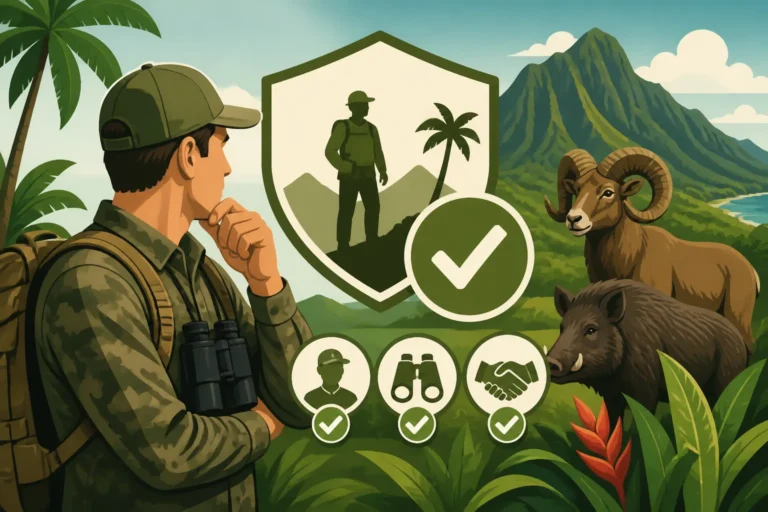
One of the biggest head-scratchers for mainland hunters dreaming of a Hawaii hunt isn't just what to hunt, but how to bring their gear, especially their rifle. The thought of flying with a firearm can be daunting, with visions of endless paperwork, airline hassles, and complicated local laws. Many folks wonder if it's even worth the trouble, or if simply renting a rifle once they arrive is the more sensible option. This guide is here to untangle that knot for you, breaking down everything you need to know about bringing your own rifle versus renting one for your Hawaii hunting adventure.
The Big Question: Bring Your Own or Rent?
This is truly the million-dollar question for any hunter planning a trip to the islands. There's no one-size-fits-all answer, as it really depends on your personal comfort level with bureaucracy, your budget, and how attached you are to your trusted hunting companion. Both options have their fair share of pros and cons, and understanding them is the first step toward making an informed decision.
Bringing Your Own Rifle: What It Entails
For many of us, our rifle isn't just a tool; it's an extension of ourselves, something we've patterned and practiced with for countless hours. The idea of hunting with anything else can feel a bit like showing up to a familiar dance in someone else's shoes. However, bringing your own rifle to Hawaii involves a bit of a journey for the firearm itself, and it's not always a smooth flight.
First, you've got the airline rules. You'll need a hard-sided, lockable case that meets TSA requirements. This isn't just a soft gun sleeve; we're talking about a robust, purpose-built case that can withstand baggage handling. You'll declare your firearm at the check-in counter, and they'll likely have you open it for inspection before it's securely tagged and sent on its way. Ammunition has its own set of rules, usually requiring it to be in a separate, secure container, often in its original packaging, and with limits on weight. The stress of hoping your rifle arrives on the same plane, undamaged, is a real concern for many. There's always that nagging worry in the back of your mind as you wait by the oversized baggage carousel.
Then, you hit Hawaii's shores, and that's where the local regulations kick in. You'll need to register your firearm with the police department in the county where you first arrive. This isn't a quick stamp and go; it involves paperwork, identification, and sometimes a bit of a wait. If you're planning to hunt on multiple islands, you might face additional steps for inter-island travel with your firearm, though typically once registered in one county, it's recognized across the state. The time and energy spent on these logistical hurdles can eat into your valuable hunting time, or at least your peace of mind leading up to the hunt.
Renting from a Guide or Outfitter: The Convenient Option
On the flip side, the sheer convenience of renting a rifle from your guide or outfitter is incredibly appealing. Imagine stepping off the plane, heading straight to your lodging, and knowing your hunting equipment is already waiting for you, sighted in and ready to go. This eliminates all the airline drama, the TSA inspections, the heavy cases, and the initial local registration process. For many, especially those on a shorter trip or those who simply don't want the added stress, this is a clear winner.
Most reputable Hawaii hunting guides and outfitters offer rifle rentals as part of their service or as an add-on. They typically have a selection of common calibers suitable for the game you'll be pursuing, whether it's Axis Deer, Hawaii's Signature Big Game, Mouflon Sheep on Hawaii's Volcanoes, or Hawaii's Feral Pigs, Island by Island. This means you'll likely be using a .270, .30-06, 7mm Rem Mag, or something similar – workhorse calibers that are effective and widely available. The cost of renting can vary, but it's usually a daily or per-hunt fee.
The benefit here extends beyond just avoiding airport hassles. Your guide's rifle is already sighted in for the local conditions, and they can often give you a few practice shots to get a feel for it before you head out into the field. This can save you a lot of time and potential frustration, ensuring you're confident with the equipment when that moment of truth arrives. It also means less to pack and less to worry about in transit, allowing you to focus more on the experience itself. When you're looking at various outfitters, a platform like BookYourHunt often details whether they offer rifle rentals and what calibers are available, which can be a huge time-saver in your planning.
Navigating Hawaii's Firearm Regulations
Whether you bring your own or decide to rent, understanding Hawaii's specific firearm laws is paramount. It’s not just about what you carry, but how you acquire, transport, and register it. Hawaii has some unique regulations compared to many mainland states, and ignorance is definitely not an excuse.
Registering Your Firearm in Hawaii: Step-by-Step for Visitors
If you choose to bring your own rifle, firearm registration is mandatory for all visitors. The process typically goes through the Honolulu Police Department (HPD) if you're flying into Honolulu International Airport (HNL), which is the primary port of entry for most travelers. Even if your ultimate destination is another island like Maui or the Big Island, you'll generally start this process in Honolulu.
Here’s a general rundown of what you can expect:
- Arrive at HNL: After collecting your luggage (and hopefully your firearm case!), you'll need to make your way to the HPD main station. It’s not at the airport, so you’ll need transportation.
- Required Documents: You'll need valid photo identification, your airline ticket showing your arrival date, and proof of hunter education. For non-residents, this usually means a hunter education card from your home state or a Getting a Letter of Exemption as a Nonresident if you meet certain criteria.
- The Application: You'll fill out an application for firearm registration. Be prepared to provide details about your firearm (make, model, serial number, caliber).
- Wait Times: This isn't an instant process. Depending on the day and staffing, there can be a wait. It's wise to plan this for a day when you're not rushing to make a connecting flight or start your hunt. The HPD will process your application, conduct a background check, and if approved, you'll receive a temporary permit and your firearm will be registered. This registration is generally valid statewide.
- Local Police Departments: While HPD handles most visitor registrations due to HNL being the main entry, if you happen to fly directly to an outer island (like Kahului, Maui), you would contact that county's police department for registration. Always check with the specific police department for their current procedures and hours before you travel.
It's crucial to understand that even if you're only visiting for a short hunt, these steps are required. Many experienced non-resident hunters find the official GoHunt website to be an invaluable resource for up-to-date information on these requirements, including details on Hawaii Hunter Education Requirements and firearm laws.
Airline Travel and TSA Rules: What You Must Know
Traveling with firearms on commercial airlines is a federal matter, governed by the TSA (Transportation Security Administration) and specific airline policies. While the general rules are consistent, always double-check with your specific airline before you fly, as their individual policies can sometimes be more stringent than the TSA minimums.
Here are the key takeaways:
- Unloaded: Your firearm must be completely unloaded. No ammunition in the chamber, magazine, or attached to the firearm itself.
- Locked, Hard-Sided Container: The firearm must be in a hard-sided container, completely enclosed, and locked. Only you should have the key or combination. Soft-sided cases are never acceptable for checked firearms.
- Declared at Check-in: You must declare your firearm to the airline agent at the check-in counter. Do not try to be discreet; it's a legal requirement. The agent will typically ask you to open the case for inspection to confirm it's unloaded and properly stored. They will then affix a special tag to the case.
- Ammunition Rules: Ammunition must be securely packed in a separate container, often in its original manufacturer's packaging or a similar sturdy container, and stored within your checked luggage. It cannot be in the same case as the firearm unless that case is designed to hold both and the ammo is in its proper container. There are also quantity limits (usually 11 lbs gross weight per passenger).
- No Carry-on: Firearms, ammunition, and even components like scopes (unless easily detachable and packed separately) are strictly prohibited in carry-on baggage.
- Potential Fees: Be aware that some airlines may charge an oversized or special handling fee for firearm cases, so factor that into your travel budget.
Dealing with all these rules can be stressful, especially if you're traveling a long distance with multiple connections. It’s why many hunters find the option of Renting a Rifle From a Hawaii Guide so appealing, avoiding the complexities of Flying Into Hawaii With a Rifle Case and the intricate Ammunition Rules Worth Knowing Before You Fly.
Practical Considerations on the Ground
Beyond the legalities and logistics of getting your rifle to the islands, there are practical realities once you're on the ground that can significantly impact your hunting experience. These often get overlooked in the excitement of planning a dream hunt.
Ammunition Availability and Cost: Local Supply Challenges
One aspect that often surprises mainland hunters is the availability and cost of ammunition in Hawaii. Unlike many mainland states where sporting goods stores are plentiful and well-stocked, Hawaii has a more limited selection. Specific calibers might be hard to find, and when you do locate them, the prices can be significantly higher due to shipping costs and lower demand.
Imagine arriving on Maui, ready for your Axis Deer Hunting in Hawaii adventure, only to realize the local store doesn't carry your preferred bullet weight for your .30-06, or worse, they're completely out of stock. This scenario is not uncommon. Many hunters who bring their own rifles opt to bring their own ammunition with them, carefully adhering to TSA regulations. It ensures they have the specific load they've practiced with and avoids the scavenger hunt for expensive local ammo. However, remember the weight limits for checked ammunition on airlines, which can restrict how much you can bring. This is another area where renting from a guide often simplifies things, as they will provide the appropriate ammunition for their rental rifles.
Getting Familiar with a Rental Rifle: Practice Makes Perfect
If you decide to rent a rifle, it's absolutely crucial that you don't just pick it up and head into the field without some serious familiarization. While a guide's rifle will be sighted in, it's still a different firearm than what you're accustomed to. The trigger pull, the safety mechanism, the scope's eye relief, the weight, and the balance will all be different.
Any reputable guide will offer you the opportunity to shoot the rental rifle before your hunt begins, usually at a range or a designated safe area. Take advantage of this! Spend enough time to feel comfortable with the rifle, understand its nuances, and confirm that it's shooting accurately for you. Even a slight difference in how you hold or aim a new rifle can drastically change your point of impact. Discuss the ballistics of the chosen ammunition with your guide, especially if you're hunting in varied terrain or at different distances. A few minutes of practice at the range can save you a lot of heartache and potential missed opportunities when a trophy animal steps out. This preparation is a small investment in time that pays huge dividends in confidence and ethical hunting.
When a Guide Can Help (and When They Can't)
Choosing a reputable guide or outfitter for your Hawaii hunt can simplify many of these logistical challenges, especially when it comes to firearms. They often act as a valuable bridge between complex regulations and your desire for a smooth hunting experience.
Guides and Rental Logistics: Making Your Hunt Smoother
A good Hawaii hunting guide is more than just someone who knows where the animals are. They are also well-versed in the local regulations and often have established relationships with local law enforcement or licensing agencies. This expertise is particularly invaluable when it comes to firearms. If you're renting, your guide will typically handle all the possession paperwork for their rental rifles, meaning you don't have to worry about the specific nuances of Registering a Firearm After Arriving in Hawaii for their weapons.
Furthermore, guides usually have a range of appropriate rifles for the game you're after. This means they can ensure you have a firearm that's properly chambered, sighted in, and ready for the field. They can often provide the necessary ammunition, removing the stress of finding it locally or bringing it through airport security. This streamlined approach allows you to focus on the hunting itself, rather than the logistics of gear. It's important to remember, however, that while they handle the rifle, you're still responsible for having your valid Hawaii hunting license and any required Hawaii Permit-Tags Are Bought for the species you're pursuing. Many hunters use platforms like GoHunt to get their licenses and stamps sorted out well in advance of their trip.
Understanding Outfitter Policies: Ask Before You Book
Not all guides or outfitters operate the same way, and their policies regarding firearms can vary. This is why it's absolutely critical to have a detailed conversation about firearm arrangements before you book your hunt. Don't assume anything.
Here are some key questions to ask:
- Do you offer rifle rentals?
- What calibers are available, and are they suitable for the game I'm targeting?
- What is the rental fee? Is it included in the overall hunt cost or an additional charge?
- Will I have an opportunity to shoot the rental rifle before the hunt? Where and for how long?
- Do you provide ammunition, or should I bring my own (within legal limits)?
- If I bring my own rifle, what specific registration assistance can you offer, if any?
- What are the Hawaii's Legal Weapons by Season for the unit I will be hunting?
Answering these questions upfront will prevent surprises and ensure you're comfortable with the arrangements. Some outfitters may even specify preferred calibers for certain species or units. If you're comparing options, online platforms like BookYourHunt often provide a good starting point, detailing services and sometimes even rental costs. Always cross-reference this information with direct communication to the outfitter. While a guide can make the firearm aspect of your hunt much easier, it's important to understand What a Hawaii Guide Cannot Do for You, such as obtaining your personal hunting license or ensuring you've met all hunter education requirements.
Comparing Your Options: Bring or Rent?
To help you make a clear decision, here's a quick comparison of the key factors involved in bringing your own rifle versus renting one in Hawaii.
| Feature | Bringing Your Own Rifle | Renting from a Guide/Outfitter |
|---|---|---|
| Convenience | Low – Significant airline and local registration hassle | High – No airline issues, guide handles local firearm rules |
| Cost | Airline baggage fees, hard case cost, potential registration fees | Rental fee (daily/per hunt), ammunition cost usually included |
| Familiarity | High – You know your rifle intimately | Low (initially) – Need practice with an unfamiliar rifle |
| Legal Hurdles | High – Mandatory personal registration with local police | Low – Guide handles most firearm possession requirements |
| Ammunition | Must bring your own (within limits) or find locally | Usually provided by the guide |
| Travel Stress | High – Worry about loss/damage, security checks | Low – Focus on travel, not firearm logistics |
| Packing | Heavy, bulky hard case for firearm and ammo | Lighter luggage, no bulky gun case |
Ultimately, the choice comes down to personal preference. If you cherish the familiarity of your own rifle and are willing to navigate the travel and registration requirements, bringing it can be very rewarding. However, if convenience, reduced stress, and streamlined logistics are your priority, renting from a trusted guide is often the preferred route for many visiting hunters. Just remember to secure your Hawaii Hunting Licenses and What They Cost and ensure you meet Hawaii Hunter Education Requirements well before your trip, no matter which option you choose for your firearm.
Disclaimer
This article is for general informational purposes only and does not constitute professional advice. Laws, prices and regulations vary by location and change over time. Consult a qualified professional for guidance on your specific situation.