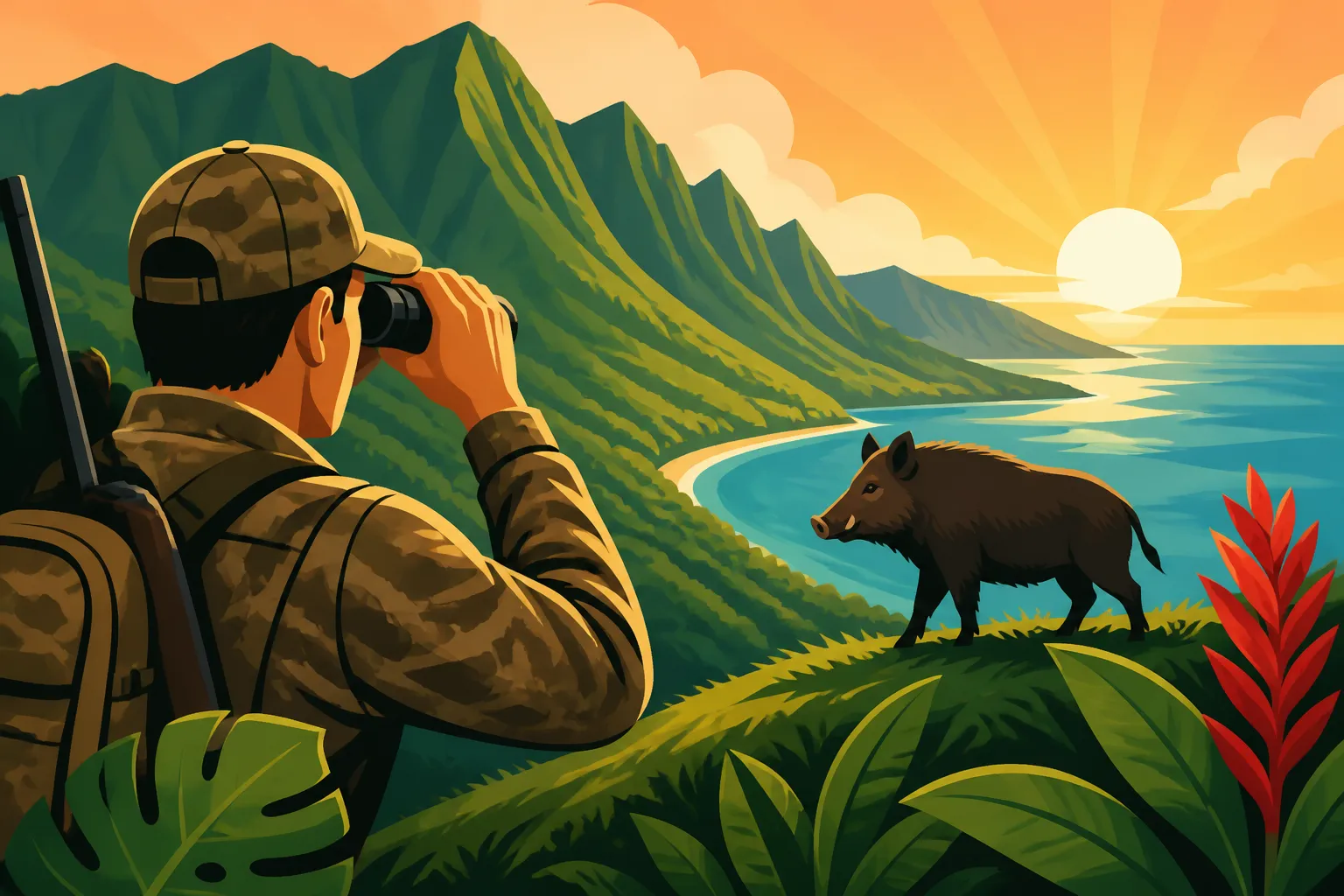
Getting the Most From a Hawaii Weekend Unit
Hunting in Hawaii is a dream for many, but the reality of limited access to public lands, especially on those coveted weekend-only units, can be a real headache. You spend all week looking forward to the hunt, only to feel like you're racing the clock and competing with a crowd. This guide is all about helping you cut through that frustration, making sure every precious minute you spend on a weekend unit is as productive and enjoyable as possible.
Understanding the Unique Challenges of Weekend Units
Weekend hunting units in Hawaii are a beast of their own, quite different from those sprawling, open-season areas you might find elsewhere. It's not just about finding game; it's about navigating a compressed timeframe, increased hunter density, and animals that have quickly learned to be wary. If you don't acknowledge these factors, you're starting at a disadvantage.
The Double-Edged Sword of Limited Access
For many of us, the weekend is the only time we can realistically get out there. Hawaii's Department of Land and Natural Resources (DLNR) knows this, and many units are specifically designated for weekend-only access to manage pressure or protect sensitive areas during the week. This is a blessing and a curse. While it gives us a chance, it also funnels a significant portion of the hunting community into the same few units during the same few days. Imagine showing up at your favorite spot, only to find a dozen other trucks already parked. It's enough to make you sigh before you even lace up your boots. You might have seen this on parts of the Big Island, or even some of the more accessible areas on Maui. Knowing that you're limited to these specific days means you have to be extra strategic with your approach, because every hunter out there is thinking the same thing – "How do I make the most of this limited time?"
On one hand, it's great that these units are open at all, preserving some hunting opportunity for the working man or woman. On the other hand, it means you can't just casually stroll in and expect to have the place to yourself, or to find game that hasn't already been bumped around a bit. The restricted access also means that if you're looking to hunt a specific animal like axis deer, you need to understand when and where the weekend units are open. Some units might be open year-round on weekends, while others follow more specific calendars. This makes a deep dive into Hawaii's Hunting Units and How They Work an absolute must.
Increased Pressure and Educated Animals
Let's be real: animals aren't stupid. They learn. When a unit is open only on weekends, the game animals quickly figure out that Saturday and Sunday are "human activity days." What does this mean for us? It means deer, pigs, and goats often become nocturnal, move into thicker cover, or completely vacate popular areas once the sun comes up and the boots hit the ground. You might find fresh sign from the night before, but the animals themselves could be miles away or bedded down in an impenetrable kiawe thicket or a dense guava patch. This phenomenon is particularly noticeable on islands like Molokai or Maui, where axis deer are highly sought after and hunting pressure can be intense. You're not just hunting an animal; you're hunting an animal that's evolved to avoid weekend hunters.
This increased pressure means you can't rely on the same tactics you might use in an unpressured, midweek scenario. Animals on these units are often jumpy, quick to bust out, and incredibly good at using the terrain to their advantage. They know the common trails, the easy access points, and where to hide. This often leads to frustrating encounters where you get a glimpse, only for the animal to vanish into the brush. It truly underlines the importance of being stealthy and being able to read subtle signs that tell you where a pressured animal might be hiding.
Time Constraints and Strategic Planning
A weekend hunt, by its very nature, is a sprint, not a marathon. You've got Saturday and Sunday, maybe a Friday evening if you're lucky and the rules allow. That's a tiny window to scout, locate, stalk, harvest, and pack out an animal, especially if you're after something like Hawaii's Feral Pigs in dense rainforest or a big axis buck on an open dryland unit. There's no time for casual exploration or hoping to stumble upon something. Every minute counts. This time crunch adds a layer of stress that can deter even seasoned hunters.
You absolutely need a plan, and then you need a backup plan, and probably a backup-backup plan. What happens if your primary spot has three trucks already parked? What if the weather turns? What if you get a flat tire on the way in? These aren't just hypothetical worries; they're common realities in Hawaii. Effective time management means having clear objectives, knowing your unit inside and out, and being ready to execute your hunt with precision. Without a solid strategy, you're likely to spend more time scratching your head than finding game.
Pre-Hunt Preparation: Laying the Groundwork for Success
Given the challenges, the most successful weekend hunters are those who treat their preparation with almost military precision. Your success isn't just made in the field; it's forged in the days and weeks leading up to your hunt. This is where you gain the critical edge over the clock and the crowds.
Intensive Scouting and Map Reconnaissance
Before you even step foot in the unit, you should know it like the back of your hand – at least on paper. This means poring over maps, satellite imagery, and aerial photos. Use tools like the OuterSpatial app, which many Hawaii hunters use for check-in, or other mapping applications to identify potential game trails, water sources, bedding areas, escape routes, and terrain features that might funnel animals. Look for hidden gulches, small pockets of dense cover, or remote corners that other hunters might overlook due to easier access points. Think about where animals might retreat when pressure increases. These are your potential hotspots.
If possible, physically scout the unit during off-season or even on non-hunting days. Nothing beats boots on the ground for truly understanding the terrain. Look for old sign, natural barriers, and areas of high game activity. Pay attention to wind patterns and thermals – Reading Hawaii's Trade Wind Patterns is crucial for any successful hunt. Even a few hours of scouting can give you invaluable insight that translates directly into weekend success. Remember, you're looking for the unobvious spots, the places that pressured animals might hide.
Gear Selection for a Quick-Strike Hunt
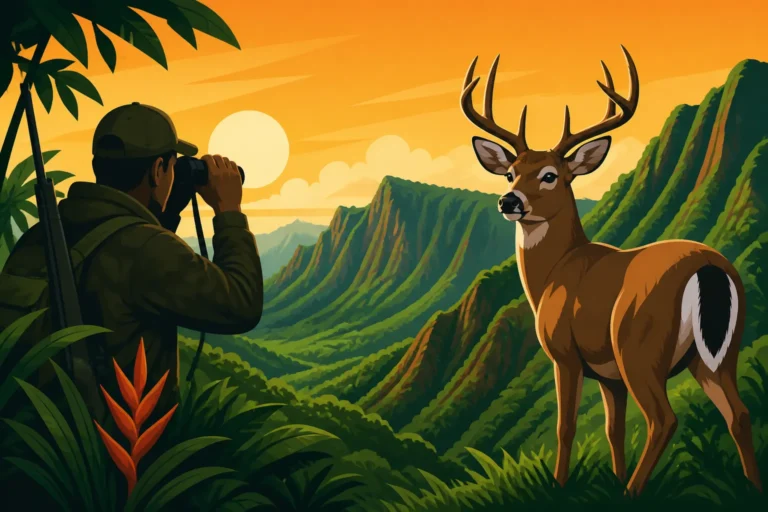
For a weekend unit, your gear needs to be efficient, reliable, and appropriate for the specific conditions you'll face. You're not packing for a week-long backcountry excursion, but you also can't skimp on essentials. Think lightweight and multi-functional. A good pair of binoculars or a spotting scope (especially for open country like on Lanai or parts of the Big Island) is non-negotiable for spotting wary game from a distance. A reliable GPS device or a mapping app on your phone (with downloaded offline maps!) is crucial, particularly when you're navigating unfamiliar terrain or if you venture into thick jungle.
| Item | Purpose | Weekend Unit Importance |
|---|---|---|
| Mapping App/GPS | Navigation, boundary awareness | Essential for quick entry/exit, avoiding trespass. |
| Optics | Spotting distant game, identifying escape routes | Crucial for locating wary, pressured animals. |
| Lightweight Pack | Carrying essentials, meat if successful | Enables fast, agile movement over varied terrain. |
| Water/Hydration | Staying fueled and focused | Absolutely critical in Hawaii's heat, even for a short hunt. |
| First-Aid Kit | Addressing minor injuries | Safety first – even small cuts can become big problems. |
| Rain Gear | Staying dry in sudden downpours | Hawaii weather changes fast; staying dry is key to comfort. |
| Headlamp | Early morning/late evening movement | Allows pre-dawn starts and post-dusk pack-outs. |
| Game Bags | Keeping meat clean and cool | Preserving your harvest is paramount, especially in heat. |
Don't forget the small things: a headlamp for those early morning starts, a good knife, game bags for Field Care in Hawaii's Heat and Humidity, and plenty of water. Even for a day hunt, hydration is absolutely critical in Hawaii's warm climate. And always, always check the weather forecast, but be prepared for sudden changes.
Physical Conditioning for Short, Intense Efforts
Hunting in Hawaii is rarely a stroll in the park, and weekend units can be particularly demanding. You might need to cover a lot of ground quickly, climb steep gulches, or navigate thick, uneven terrain. This isn't the time to realize you're out of shape. Even if your hunt is only a day or two, being physically prepared means you can push harder, stay focused longer, and recover faster. You'll be able to get into those harder-to-reach spots that other hunters might avoid.
Focus on cardio, leg strength, and endurance. Hiking with a loaded pack, trail running, or even regular stair climbing can make a huge difference. Imagine having to Packing Meat Out of a Hawaii Gulch after a successful hunt—that's when your fitness truly pays off. The better your physical condition, the more ground you can cover stealthily, and the less likely you are to get fatigued and make a mistake when a shot opportunity arises. Don't underestimate the demands of hunting Hawaii's varied landscapes, from dry, dusty kiawe flats to wet, slippery rainforests.
On-the-Ground Tactics for Maximizing Your Time
Once you've done your homework and are physically ready, it's time to put those plans into action. On a weekend unit, every minute you're in the field is precious, and how you approach the hunt directly impacts your chances of success.
Early Bird Gets the Buck (or Boar)
This adage is exponentially true for weekend units. Most animals on pressured land are moving during the low-light hours of dawn and dusk. Getting into your chosen hunting area before first light is not just an advantage; it's often a necessity. This means waking up when it's still pitch black, hiking in the dark, and being set up and ready to hunt as the sun cracks the horizon. You want to be there before the animals bed down and certainly before other hunters arrive and start bumping game.
Being the first in means you might catch animals still feeding, moving between bedding areas, or lingering in open country. This is your prime window for a successful stalk or ambush. Similarly, staying out until legal shooting light ends can provide opportunities as animals emerge from cover. This also means being diligent about checking in and out of the unit, whether it's via a physical card at a check station or Using the OuterSpatial App to Check In. Knowing the exact legal shooting hours for game mammals is vital for maximizing these low-light periods while staying compliant.
Covering Ground Efficiently and Stealthily
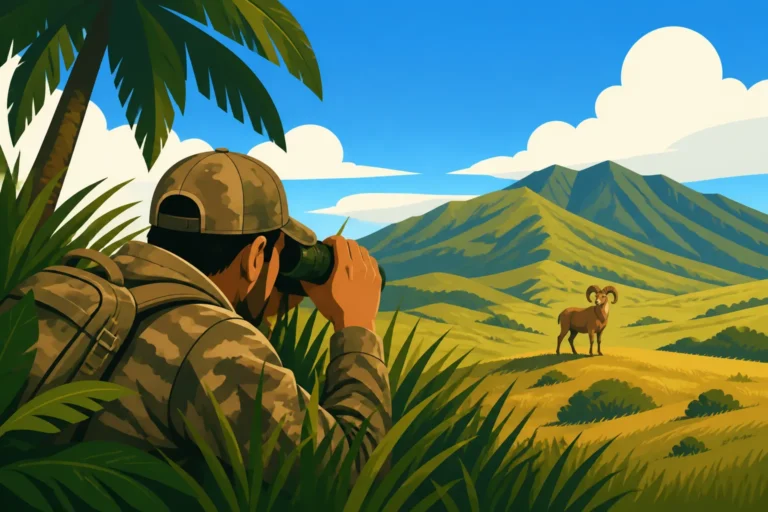
Since time is limited, you need to cover ground effectively without making so much noise that you alert every animal in the zip code. This isn't about running through the woods; it's about smart, purposeful movement. If you're Spot-and-Stalk Axis Deer in Hawaii in more open terrain, glassing from vantage points is critical. Spend more time looking than walking. Use terrain features, dense vegetation, and the lay of the land to mask your movement.
In thicker country, like areas where you might find Hunting Hawaii's Feral Pigs in dense forest, moving slowly and deliberately is key. Pause frequently, listen, and scan your surroundings. Use game trails when appropriate, but be wary of fresh sign that might indicate an animal just passed by. The goal is to move from one likely area to another, quietly and with purpose, always expecting to see an animal. Don't waste time on areas that your scouting told you were unlikely to hold game, especially when you have only a short weekend to hunt.
Utilizing Terrain Features and Natural Funnels
Hawaii's volcanic and often steep terrain offers incredible opportunities to use natural funnels and barriers to your advantage. Animals, especially when pressured, will often stick to paths of least resistance or utilize specific features for travel and escape. Look for saddles between ridges, narrow gulches that animals must traverse, or edges of thick cover where game might cross into more open areas to feed. These are ideal ambush points or locations to focus your glassing efforts.
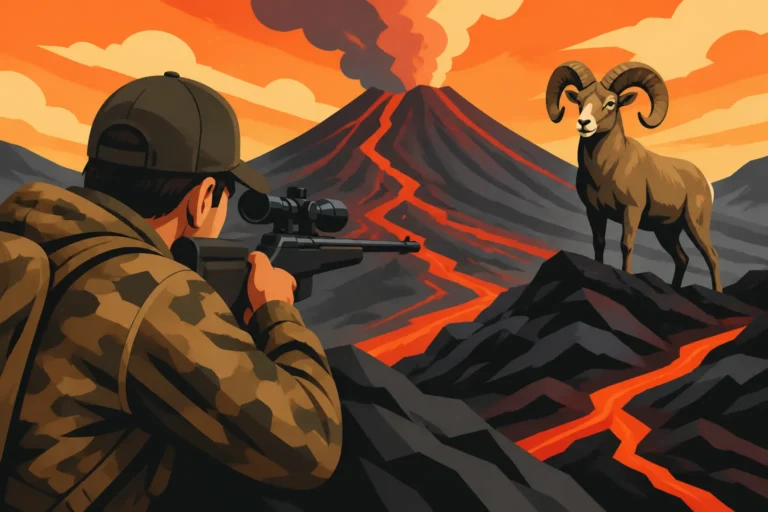
For example, on the Big Island, you might find pigs moving along the edges of ancient lava flows or in the transition zones between dry kiawe forest and wetter fern gulches. On Maui, axis deer often use the contours of the land to travel unseen across large pastures. Understanding Hunting Hawaii's Volcanic Terrain is essential. Identify these natural pathways on your map during reconnaissance, and then verify them during your initial movement in the unit. Position yourself downwind, in cover, and patiently wait for animals to use these natural corridors.
Adaptability and Persistence When Plans Go Awry
Let's face it: hunting rarely goes exactly as planned, especially on a busy weekend unit in Hawaii. Being able to adapt, adjust, and maintain your persistence is often the difference between success and frustration.
Reading Animal Behavior and Adjusting Your Strategy
On a weekend hunt, you're constantly gathering information. Did you jump a group of pigs? Which way did they run? Did you see deer cross a road only to disappear into a dense gulch? This isn't just bad luck; it's data. Animals will show you how they're reacting to pressure and where they're trying to escape. If your planned morning spot is dead silent or shows signs of heavy human traffic, don't keep grinding there. Change it up.
Maybe the game has moved higher up a slope, or perhaps they've dropped down into a particularly steep gulch that most hunters avoid. If you notice animals are becoming more nocturnal, consider shifting your focus to setting up for last light, or targeting their bedding areas with extra caution. Pay attention to how the wind is swirling or how sunlight is hitting the terrain; this could influence where animals choose to bed or feed. The ability to pivot quickly based on what the animals are telling you is a hallmark of a successful weekend hunter.
Handling Increased Hunter Traffic
One of the biggest frustrations on weekend units is encountering other hunters. It's inevitable, but it doesn't have to ruin your hunt. First and foremost, always be safe and aware of your surroundings. Wear blaze orange if required (and even if not, it's a good idea for visibility). Acknowledge other hunters with a friendly nod or wave, and respect their space. If you see another hunter already working an area you intended to hunt, graciously move on. There's no animal worth a confrontation or a dangerous situation.
Instead of seeing other hunters as competition, sometimes you can use their presence to your advantage. While you should never "block" or "cut off" another hunter, sometimes their movement might push animals towards you, especially if you're positioned downwind of their activity in a likely escape route. The key is to find areas less frequented, or to get to popular spots well before anyone else. This often means putting in the extra effort to walk further, climb higher, or navigate more challenging terrain. Remember to always check Hawaii's Weekend and Holiday Hunting Rules to be sure you're operating within the law.
Packing Out Your Harvest Efficiently
Let's say you've done it! You've successfully harvested an animal on a weekend unit. Congratulations! Now the real work begins, and on a weekend unit, efficiency is paramount. You likely have limited daylight remaining, and Hawaii's heat and humidity can quickly spoil meat. Have a plan for field dressing and packing out your animal well before you even pull the trigger.
Ideally, you've brought sharp knives, a small bone saw, and plenty of game bags. Quartering an animal in the field is almost always the most efficient way to get it out, especially if you're alone or in steep, rugged terrain. Think about your route back to the vehicle – is it uphill, through thick brush, or over slippery lava? If you're hunting a remote gulch, having a plan for Packing Meat Out of a Hawaii Gulch is non-negotiable. Get the meat cooled down as quickly as possible; even a small cooler with ice in the truck can make a huge difference. Don't let your hard-won success turn into spoiled meat because of a lack of planning for the pack-out.
Post-Hunt Analysis and Future Planning
The hunt isn't over when you're back at the truck. The most dedicated and successful weekend hunters use every experience as a learning opportunity, refining their tactics for next time.
Debriefing Your Weekend Hunt
After every hunt, take some time to reflect. What went well? What didn't? Did your scouting pay off? Did you misjudge animal movement? Were there areas you didn't check that you should have? Look at your map and mark where you saw game, where you saw other hunters, and any new terrain features you discovered. This informal "after-action review" is critical for improving your future success.
Think about the conditions: Hunting a Hawaii Unit After Heavy Rain might yield different results than a dry, dusty day. How did the animals react to the changing weather? Did you observe specific feeding patterns or bedding locations? Note these observations. This mental (or even written) debriefing helps solidify lessons learned and prevents you from making the same mistakes twice. Each hunt, successful or not, adds to your knowledge base of that particular unit and how game behaves under pressure.
Leveraging Technology for Future Success
Modern technology has revolutionized how we hunt, and it's particularly useful for maximizing weekend unit opportunities. As mentioned, mapping apps are invaluable. Go back into your GPS tracks or mapping app, and overlay your route with where you saw game or signs. Identify patterns. Did most of the activity happen near a specific type of vegetation? Near a particular elevation change? This data becomes incredibly powerful over time.
You can also use online resources to research weather patterns, moon phases, and even general hunting reports (without giving away anyone's secret spots, of course!). Sites like GoHunt Hawaii, where you purchase your licenses and permits, also provide access to crucial unit regulations and announcements. Staying informed about regulation changes, temporary closures, or special hunt opportunities on weekend units can give you a significant advantage. This constant learning and adaptation, fueled by technology and experience, makes you a more effective hunter.
Building a Weekend Unit Hunting Calendar
Instead of randomly picking a weekend unit to hunt, consider developing a long-term plan. Research Hawaii Game Mammal Seasons and identify specific weekend units that open or close at different times of the year. This allows you to spread out your hunting pressure across various units and target different species. For example, some units might be great for pigs in the wet season, while others shine for goats in the dry season.
By creating a "calendar" of potential units and target species, you can better allocate your scouting efforts and prepare specifically for each opportunity. This foresight allows you to plan vacation days, arrange carpooling with buddies, and ensure you have all the necessary permits and licenses through GoHunt Hawaii well in advance. Having a strategic calendar ensures you're always ready to make the absolute most of every precious weekend unit hunting opportunity Hawaii offers.
Disclaimer
Hunting is an inherently dangerous activity. This guide provides general information and recommendations; however, conditions in Hawaii can be unpredictable and dangerous. Always prioritize safety, understand and follow all local and state hunting regulations, and be prepared for emergencies. Hunt at your own risk.