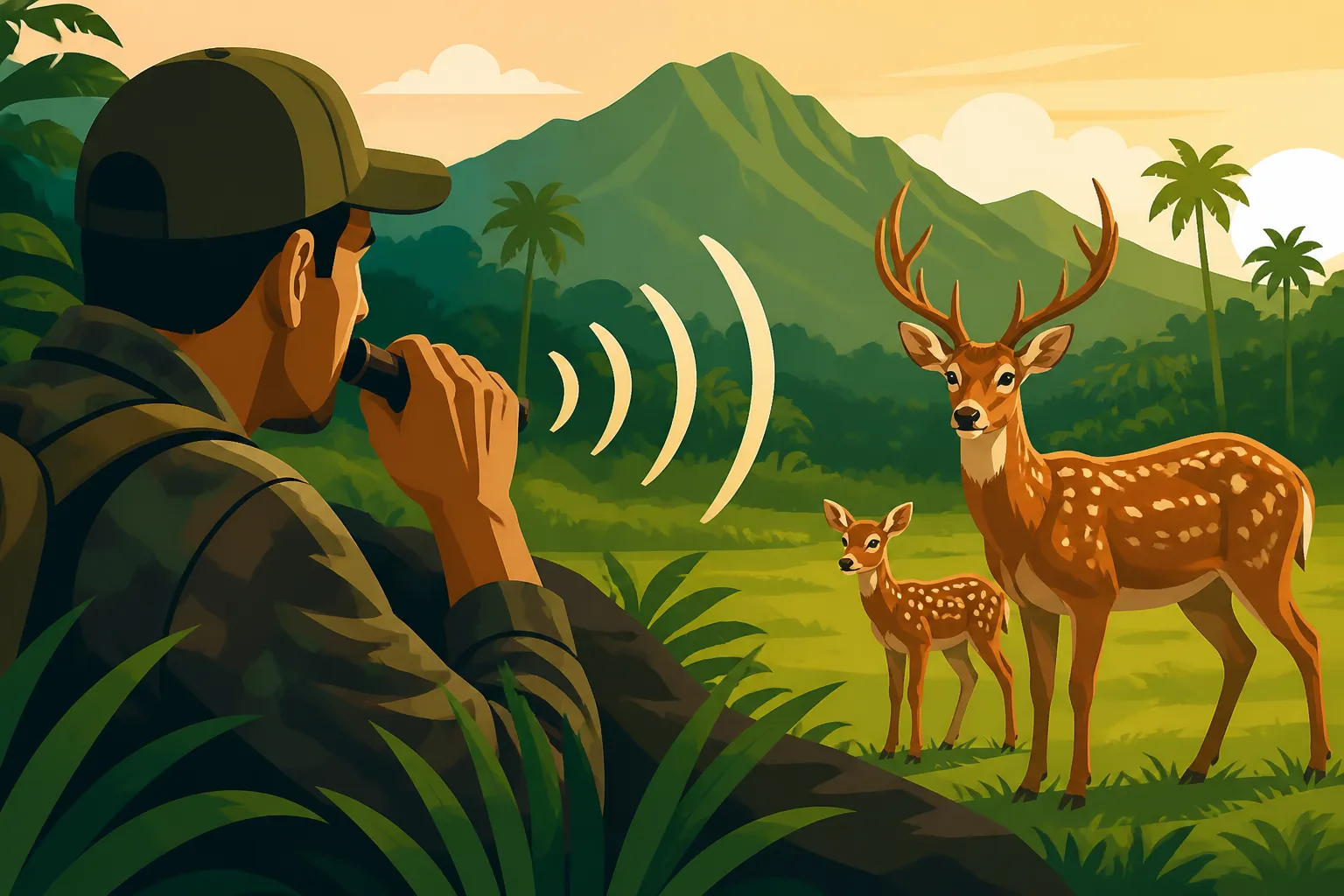
Calling Axis Deer With a Fawn Bleat
The frustration of hunting Axis deer in Hawaii often boils down to their incredible wariness and elusive nature. These beautiful animals, especially the mature bucks, seem to vanish into thin air, leaving you wondering if you're even in the right place. This guide is all about equipping you with a powerful tool to overcome that challenge: the fawn bleat. We'll dive deep into how this simple call can dramatically increase your chances of bringing an Axis deer within range, turning those quiet, frustrating hunts into exciting, successful encounters.
The Unique Vocal World of Hawaii's Axis Deer
Before we even talk about calling, it's crucial to understand the language of the Axis deer. Unlike many mainland species, Axis deer have a broad vocabulary, and their social structure means they're constantly communicating. Being an introduced species, they've adapted to Hawaii's varied landscapes, from arid kiawe flats to dense forest reserves, and their vocalizations play a key role in their survival and reproduction here.
Beyond the Alarm Bark: A Rich Vocabulary
Most hunters are familiar with the sharp, startling alarm bark of an Axis deer, which can quickly clear a hillside of animals. However, their vocal range extends far beyond that. Does will make soft contact calls to their fawns, bucks will grunt and roar during the rut, and, most importantly for us, fawns will emit a distinct distress bleat when separated or in danger. These sounds are critical to their herd cohesion and survival. Understanding these subtle cues is paramount to effective calling. For a deeper dive into the species, check out our guide on Axis Deer, Hawaii's Signature Big Game.
The Year-Round Rut and Its Impact on Calling
One of the most fascinating aspects of Axis deer in Hawaii is their non-seasonal breeding cycle. Unlike the distinct fall rut of whitetails, Axis deer can breed year-round, meaning you'll encounter fawns, yearlings, and rutting bucks at almost any time of year. This continuous cycle means that the emotional triggers associated with a fawn's distress call are almost always active in the herd. Does are perpetually in a maternal state or soon to be, and bucks are often competing for does. This makes the fawn bleat a consistently effective call, regardless of the calendar month. This perpetual rut is a stark contrast to mainland deer, and you can learn more about it in Why Axis Deer Rut Timing Is Different.
Why the Fawn Bleat is Your Secret Weapon
So, why single out the fawn bleat when Axis deer make so many other sounds? The answer lies in its universal appeal to the core instincts of survival and protection within the herd. It’s less about aggression or dominance, and more about triggering an urgent, almost involuntary response.
The Universal Call of Distress: Triggering Parental Instincts
A fawn bleat isn't a challenge; it's a plea for help. It signals vulnerability and often, separation from the herd. This sound evokes a powerful parental instinct in does, compelling them to investigate and potentially protect what they perceive as a lost or imperiled fawn. Imagine a scenario in the dry country of Lanai or Molokai: a doe hears this bleat, and her immediate thought is to locate and secure the young animal. This makes the fawn bleat a less intimidating call than, say, a buck grunt, which might only attract dominant males or scare off lesser bucks.
Drawing Both Does and Curious Bucks
While the primary draw of a fawn bleat is often a doe, bucks are frequently drawn in as well. There are a few reasons for this. Firstly, bucks often follow does, especially during the year-round rut, hoping to find receptive partners. If a doe responds to a bleat, a buck might well be trailing her. Secondly, bucks are inherently curious. A distress call represents an unusual event, and investigating it can be a part of their territorial awareness or general inquisitiveness. Sometimes, a buck might come in to investigate a potential predator that the fawn is distressed about, or simply out of curiosity for the commotion. We’ve seen this happen time and again, whether we’re Hunting Maui's Year-Round Axis Deer Units or stalking arid terrain on Molokai.
Ideal Scenarios for Fawn Bleat Success
The fawn bleat truly shines in specific hunting situations. It's incredibly effective when you've spotted deer in thick cover and need to draw them out, or when you're still-hunting slowly and want to pull a deer from a concealed position. It's also fantastic in areas where hunting pressure has made deer extremely wary of more aggressive calls. Picture yourself working the edges of a dense kiawe thicket on Maui. You know deer are in there, but they're not showing themselves. A subtle fawn bleat can be just the ticket to get them to step out for a look. It’s also surprisingly effective near water sources in dry conditions, where does might be particularly sensitive to anything that could harm their young. If you're Hunting a Water Source in Dry Hawaii Country, a fawn bleat can sometimes be the decisive factor.
Mastering the Fawn Bleat: Techniques and Scenarios
Knowing why the fawn bleat works is only half the battle. The other half is knowing how to use it effectively. This isn't just about making the sound, but about timing, cadence, and how you integrate it into your overall hunting strategy.
Choosing Your Call and Producing the Sound
There are several types of fawn bleat calls available, from mouth calls to external reed calls like Primos "The Can" or Flextone's various deer calls. The most important thing is to choose one you can operate consistently and realistically. The sound you're aiming for is a high-pitched, drawn-out "Maaaaaa" or "Baaaaa" that tapers off. It should sound like a young, vulnerable animal.
- Mouth Calls: These can offer great control over pitch and volume, but require practice to master, especially when it comes to hands-free operation in the field.
- External Reed Calls: Often easier for beginners, these calls typically require less air and skill to produce a realistic sound. Many are designed to be operated with one hand, leaving your other hand free for your bow or rifle.
- "The Can" Style Calls: These are simple inverted can calls that produce a bleat by flipping them over. They are very user-friendly and produce a consistent, realistic fawn bleat.
Practice at home until you can consistently produce the sound. Record yourself and compare it to real fawn bleats you can find online. The goal is not perfection, but realism.
Cadence and Volume: Sounding Realistic in Hawaii's Diverse Terrain
Once you've got the sound down, the next step is mastering its delivery. The cadence and volume of your bleats need to match the environment and the situation.
- Subtle and Short: In tight cover or when you believe deer are very close, opt for soft, short bleats. A single "Maaaaa" followed by 30-60 seconds of silence, then another, can be incredibly effective. You don't want to overwhelm an animal that's already within hearing range.
- Louder and Longer: In open country, or when trying to reach deer at a greater distance, you can increase your volume and slightly lengthen your bleats. Three to four bleats in a sequence, with each bleat lasting 1-2 seconds, followed by a minute or two of silence, can carry further.
- Varying It Up: Don't be afraid to vary the intensity. A few soft bleats, then a louder, more frantic one, can mimic a fawn trying harder to find its mother. Remember, you're trying to create a convincing illusion.
- Wind and Thermals: Hawaii's trade winds and unpredictable thermals, especially in mountainous or gulch terrain, can play havoc with sound. Always consider wind direction. You want your sound to carry into where you expect deer to be, not away from it. This is vital when you're Hunting Downwind in Hawaii's Shifting Thermals.
A good starting sequence might be: one or two medium-volume bleats, wait 30 seconds, then repeat, followed by a 2-3 minute pause before calling again. Be patient! Deer often approach slowly, cautiously, circling downwind to try and scent the source.
Setting Up for Success: Positioning and Patience
Calling is only as good as your setup. You need to be in a position that maximizes your chances of a shot while minimizing your risk of being detected.
- Concealment is Key: Find a spot with good cover that breaks up your outline. Axis deer have excellent eyesight, and they will pick you out if you're exposed. A dense kiawe bush or the edge of a koa forest can be ideal.
- Wind Advantage: Always, always position yourself so the wind is in your favor. As deer approach, they will often try to circle downwind to scent-check the source of the call. If your scent drifts to them, the game is over. If you're working a ridge line, pay attention to the changing thermals, especially in the mornings and evenings.
- Shooting Lanes: Ensure you have clear shooting lanes in the direction you expect the deer to approach. You don't want a magnificent Axis buck to step out 30 yards away only to be obscured by branches.
- Patience, Patience, Patience: This cannot be stressed enough. Unlike some deer species that might rush in, Axis deer are often cautious. They might take 5, 10, or even 20 minutes to respond, appearing silently from thick cover. Resist the urge to fidget or give up too soon. Many hunters make the mistake of calling for a few minutes and then moving on, missing the deer that was just about to commit.
When still-hunting, you might take a few steps, call, wait, and then continue. When set up, be prepared to sit still for extended periods. This combination of realistic calling and patient waiting can be incredibly effective, especially when you're Spot-and-Stalk Axis Deer in Hawaii.
Avoiding Pitfalls and Advanced Tips for Axis Deer
Like any hunting technique, fawn bleating comes with its own set of potential missteps. Knowing what to avoid and how to refine your approach can turn marginal success into consistent results.
Don't Overcall: Less is Often More
A common mistake new callers make is calling too frequently or too loudly. Remember, you're trying to mimic a lost fawn, not a whole daycare of them. Overcalling can sound unnatural and quickly make wary Axis deer suspicious. It’s better to make a few realistic, well-timed bleats and then be silent, letting the deer wonder and come searching. If you're constantly calling, you remove the element of curiosity and often give away your exact location too aggressively.
Think of it like this: a truly lost fawn isn't constantly screaming. It bleats, listens, waits, and then bleats again if no response comes. Mimicking this natural behavior is far more convincing. When Reading Axis Deer Sign in Dry Country, you'll notice how sensitive these animals are to subtle changes in their environment, and that includes sounds.
Reading the Deer's Reaction: When to Stop or Change Tactics
Your ears and eyes are your best tools once you start calling. Pay close attention to any response, no matter how subtle.
- Tail Flick or Ear Twitch: These are positive signs that a deer has heard you and is curious.
- Staring in Your Direction: The deer is trying to pinpoint the source. Hold still!
- Head Bobbing or Stomping: This could indicate confusion or slight alarm. It means they're interested, but also wary. Remain still and don't call again immediately.
- Turning and Walking Away: If a deer turns and slowly walks off, it means they're either not interested, or they've pinpointed you as something unnatural. In this case, either wait a long time before calling again, or carefully reposition.
Sometimes, the best call is no call at all. If a deer is heading directly toward you, cease calling and prepare for the shot. The fawn bleat is meant to bring them in, not to accompany them all the way. Knowing when to put the call down is a critical skill.
Combining the Fawn Bleat with Other Strategies
The fawn bleat doesn't have to be a standalone technique. It can be incredibly powerful when integrated into a broader hunting strategy.
- Still-Hunting: As you slowly move through prime Axis deer habitat, like a Hunting a Kiawe Flat for Axis Deer or the edge of a dense forest, periodically stop, make a few bleats, and then wait silently for several minutes. This covers more ground and capitalizes on their curiosity.
- Ambush Hunting: If you're sitting over a waterhole, a food source, or a well-used trail, occasionally using a fawn bleat can pull in deer that might otherwise pass by just out of range.
- Post-Shot Recovery: In some cases, a very subtle fawn bleat might be used to try and calm down a wounded animal, encouraging it to stop or slow down, though this is a more advanced and debated tactic.
- Scouting Integration: When you're Scouting a Hawaii Hunting Unit Before Opening, you can sometimes use a very light bleat to see if you get any distant responses, giving you an idea of deer presence without being too intrusive. Planning your hunt and scouting potential Axis deer hotspots, especially in areas like Hunting Maui's Year-Round Axis Deer Units, can be greatly aided by tools available through platforms like GoHunt, which often offer detailed maps and unit information. When researching the best times to implement calling strategies, checking current season dates and regulations on the GoHunt Hawaii portal or directly with DLNR is always a smart move.
Call Types and Their Primary Effectiveness for Axis Deer
To help you decide which call to use and when, here’s a quick overview of common Axis deer vocalizations and their typical effectiveness in hunting scenarios.
| Call Type | Primary Sound | Primary Target | Hunter Goal | Effectiveness (Fawn Bleat = 5) | Notes |
|---|---|---|---|---|---|
| Fawn Bleat | "Maaaaa" or "Baaaaa" | Does, then Bucks | Curiosity, Parental Inst. | 5 | Versatile, effective year-round due to non-seasonal rut. Low risk. |
| Doe Bleat/Estrus | Soft "Maaaaa" (lower) | Bucks | Attract receptive bucks | 3-4 | Effective for rutting bucks, but less universal than fawn bleat. |
| Buck Grunt | "Uh-uh-uh" (deep) | Dominant Bucks | Challenge, Curiosity | 2-3 | Can scare off smaller bucks or make dominant ones wary. High risk. |
| Buck Roar | Loud, drawn-out bellow | Dominant Bucks | Challenge, Presence | 1-2 | Very aggressive, can easily spook deer if used incorrectly. Only for specific rut situations. |
| Alarm Bark | Sharp, explosive bark | All Deer | Warning, Danger | 0 | Never use; signals danger and will clear an area. |
| Contact Call (soft) | Soft "meep" | Herd members (close) | Reassurance | 1 | Difficult to use effectively for hunting; too subtle for long range. |
Many hunters find success by combining calling with careful scouting, utilizing satellite imagery and topographical maps, often found on platforms such as GoHunt, to identify promising areas like secluded water sources or dense kiawe thickets where deer might feel secure. Always make sure you understand the regulations for specific hunting areas, as detailed in Hawaii's Hunting Units and How They Work, and keep your Hawaii hunting license and any required permits handy, as explained in Hawaii Hunting Licenses and What They Cost. A final check of What to Pack for a Hawaii Hunt before heading out will ensure you have all the essentials for a successful and safe hunt.
The fawn bleat is a tool that, when used correctly and patiently, can truly open up new opportunities for hunting Axis deer in Hawaii. It taps into their most fundamental instincts, drawing them in close without the intimidation of more aggressive calls. Practice your technique, understand the deer's behavior, and most importantly, be patient. You might be surprised at how effective this simple sound can be in the rugged, beautiful landscapes of the islands.
Disclaimer
Hunting in Hawaii requires adherence to all local regulations, permits, and safety guidelines set forth by the Hawaii Department of Land and Natural Resources (DLNR). Always prioritize safety, ethical hunting practices, and respect for the land and wildlife. This guide is for informational purposes only and should not replace official hunting education or direct consultation with local authorities. Conditions and regulations can change, so always ensure you have the most current information before heading afield.