Hunting Axis Deer Under a Full Moon
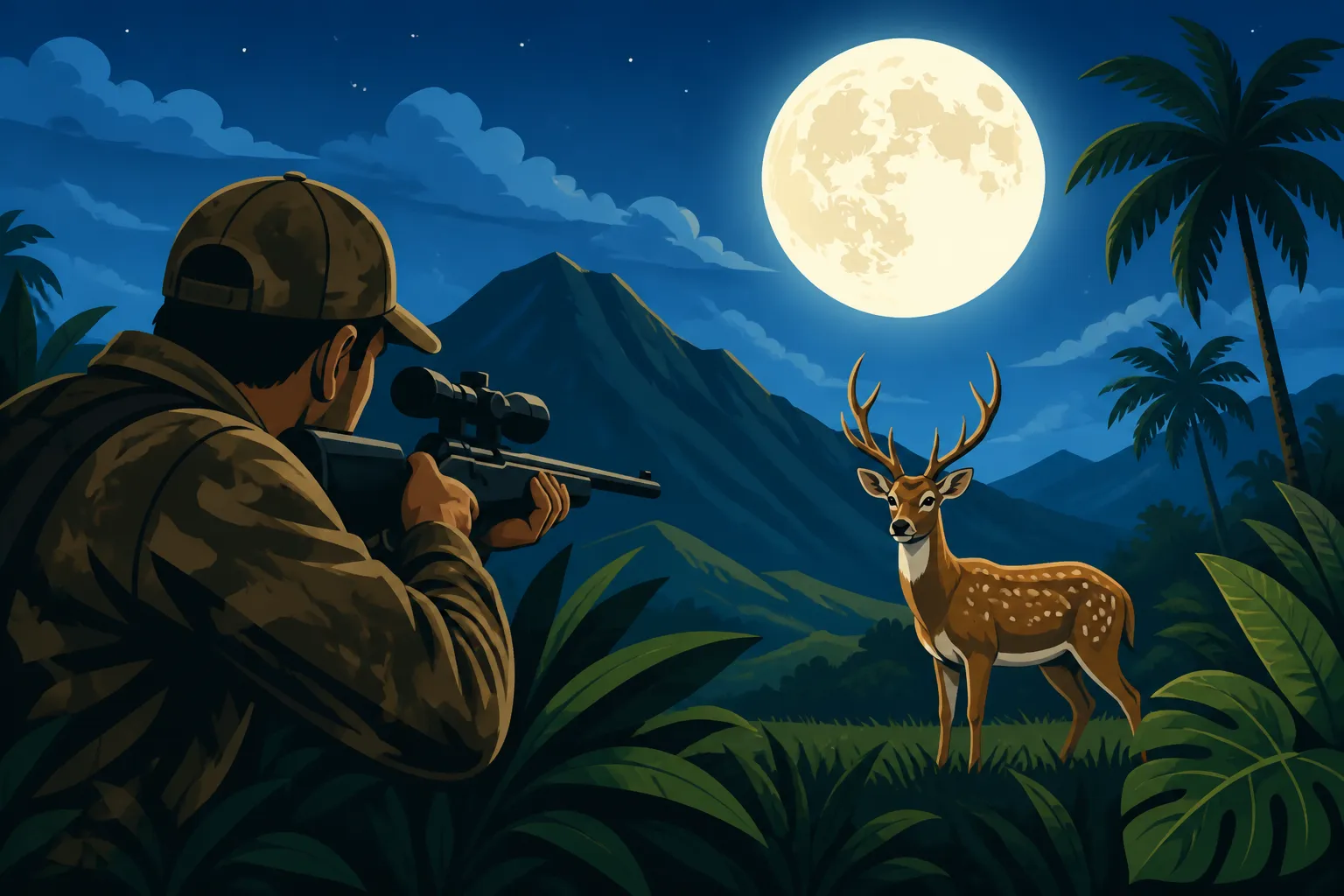
It's frustrating when you spend all that time scouting, packing in, and waiting, only for the Axis deer to act completely different than you expect, especially when the moon is bright. Those elusive deer, often most active at dawn and dusk, can really throw a wrench in your plans when a full moon lights up the Hawaiian landscape like a stadium. This guide will help you understand how a full moon truly impacts Axis deer behavior and, more importantly, how you can adapt your hunting strategies to successfully chase them during these unique lunar phases.
Understanding Axis Deer Behavior Under a Full Moon
Hunting Axis deer in Hawaii is a unique challenge, and when a full moon enters the picture, their already complex patterns can shift dramatically. Many hunters assume a full moon means more nocturnal activity, and while that's partly true, it's the ripple effect on their daytime movements that really matters for legal hunting hours. The key is to think about how that extra light changes their comfort levels, feeding routines, and ultimately, where you might find them.
Nocturnal Shifts and Energy Expenditure
When the full moon hangs high in the Hawaiian sky, casting long shadows across the dry Kiawe flats of Maui or the open ridges of Molokai, Axis deer can become incredibly active at night. This isn't just a slight increase; they might feed, socialize, and move for extended periods under the moonlight, treating the night as if it were a prolonged dusk or dawn. This extended nocturnal activity means a couple of things for hunters: firstly, it allows them to feed and move without the same pressure they'd feel during daylight, making them harder to pattern during typical hunting hours.
Secondly, and perhaps more crucially for your hunting strategy, this burst of nighttime energy means they'll likely be seeking cover and bedding down earlier and staying bedded longer during the legal hunting day. They've already done their extensive feeding and movement under the cover of darkness, so by the time the sun rises, they're looking for thick cover to digest and rest. This often translates to fewer deer moving in the open during the mid-morning, which can be incredibly disheartening if you're not prepared for it. You might find yourself walking miles through prime habitat feeling like the woods are empty.
Daytime Lulls and Bedding Habits
With their nighttime needs met, Axis deer tend to become much more reclusive during the day when a full moon is present. Instead of grazing actively during the morning, they'll often be tucked away in the densest tangles of thorny Kiawe, deep within an ʻohiʻa forest, or bedded on steep, shady hillsides where thermals carry their scent upwards. Think of it like this: if you've had a big night out, you're probably not up for running a marathon the next morning. Axis deer are similar; they've expended energy, and now they need to recover.
This doesn't mean they disappear completely, but it does mean they become incredibly difficult to spot-and-stalk in open country. You'll have to adjust your tactics from looking for moving deer to glassing for bedded animals, often just a patch of hide or an antler tip visible through thick vegetation. Their bedding areas will be chosen for maximum security and shade, making them tough to approach quietly. Understanding this shift is vital, because continuing with a "normal" hunting strategy during a full moon could lead to a lot of frustration and empty trips.
Strategic Considerations for Full Moon Hunting
Hunting Axis deer under the influence of a full moon requires a significant shift in your approach. You can't just hunt "as usual" and expect success. It’s all about adapting to the deer's altered schedule and using the subtle environmental changes to your advantage. This means adjusting when you hunt, how you approach, and even how you interpret sign.
Adjusting Hunt Times for Lunar Cycles
The most critical adjustment for full moon hunting is often your timing. Since deer are more active at night, they're likely to be moving less during the brightest parts of the day. This pushes their natural crepuscular (dawn and dusk) activity even further into the edges of legal hunting hours. You need to be in your hunting area before legal shooting light and stay until legal shooting light ends, pushing those boundaries as much as possible.
Consider setting up in a travel corridor or near a bedding area long before dawn. As the moon sets and the sun begins to rise, deer that have been feeding all night might still be making their way to their daytime beds. This brief window, just before full light, can be incredibly productive. Conversely, the last hour of daylight, as deer begin to stir from their beds and anticipate another night of feeding, can also be prime. This means getting to your glassing point or ambush spot in the dark and staying put. Checking in and out of Hawaii hunting units often requires you to be out of the field by a certain time, so understanding Hawaii's Weekend and Holiday Hunting Rules and specific unit regulations is crucial.
Scouting for Shifted Patterns
Scouting is always important, but during a full moon phase, it's absolutely paramount to observe how deer are actually using the landscape now, not just where they were last week. Focus your scouting efforts on identifying fresh sign around dense bedding cover rather than just open feeding areas. Look for tracks leading directly into or out of thickets, fresh rubs on small trees near cover, and droppings indicating where they're spending their idle hours. You might find that the prime feeding pastures you usually hunt are empty during the morning, but the trails leading from them into the deep gulches are heavily used right at first light.
Another key is to scout water sources. Even if deer are feeding heavily at night, they'll still need water, especially in Hawaii's dry regions like the West side of the Big Island or parts of Lanai. A full moon doesn't negate their thirst. However, they might approach water sources earlier in the morning or later in the evening, taking advantage of the cooler temperatures and lingering moonlight before the heat of the day sets in. Knowing Hunting a Water Source in Dry Hawaii Country is essential for these conditions. Use game cameras to confirm activity times at these critical locations.
Stand Placement and Approach Angles
Given the deer's tendency to bed down in thick cover, your stand placement (if you're using one) or ambush point should reflect this. Instead of overlooking wide-open fields, focus on pinch points, travel corridors, and the edges of dense bedding areas. If you're on a Spot-and-Stalk Axis Deer in Hawaii hunt, your approach needs to be even more meticulous. The extra ambient light from the moon, even during daylight hours, can make deer more alert to movement, shadows, and subtle changes in their environment.
Approach bedding areas slowly and deliberately, paying close attention to wind direction and thermals, which can be fickle in Hawaii's diverse terrain. Consider approaching from an elevated position if possible, allowing you to glass into thick cover from above without immediately bumping deer. Remember, if they've been feeding all night, they're not going to be in a rush to move once they're bedded. This gives you a slight advantage if you can remain undetected and patient.
Gear and Safety Essentials for Low-Light Axis Deer Hunting
Hunting Axis deer when the full moon is influencing their movements means you'll likely be operating in lower light conditions than usual, particularly at the bookends of the day. This requires specific gear choices and an unwavering commitment to safety, as navigating Hawaii's rugged terrain in dim light can be treacherous.
Optics and Illumination
High-quality optics are your best friend during full moon periods. Binoculars and spotting scopes with larger objective lenses (e.g., 10×42 or 12×50 binoculars, 65mm or 80mm spotting scopes) will gather more light, giving you precious minutes of visibility at dawn and dusk. This enhanced clarity can be the difference between spotting a bedded buck or walking right past it. Rangefinders that perform well in low light are also crucial for accurately judging distances, especially when shadows are playing tricks on your eyes.
Beyond your primary optics, reliable illumination is non-negotiable. A good headlamp with a red or green light option is invaluable for navigating to and from your hunting spot in the dark without spooking game or disturbing your own night vision. Carry a backup flashlight too, because gear failures happen at the worst times. Make sure all batteries are fresh. Remember, while the moon provides ambient light, it's not enough for fine detail or safe navigation through lava fields, steep gulches, or dense forest.
Navigation and Communication
Hawaii's public hunting units, from the expansive slopes of Mauna Kea to the dense forests of Maui, can be disorienting, even in broad daylight. In low light, the risk of getting lost escalates significantly. A GPS device or a reliable hunting app like GoHunt on your smartphone (download maps offline!) is critical. Know your chosen unit, have a map, and understand Hawaii's Hunting Units and How They Work. Mark your truck, your hunting spot, and any key terrain features before you start.
Cell service is often unreliable in remote Hawaiian hunting areas, so don't count on your phone for emergency communication. A satellite communication device, like a Garmin inReach or a Zoleo, is a smart investment, especially if you're venturing into truly remote spots alone. These devices allow you to send SOS messages, share your location, and communicate with loved ones even without cell service, providing immense peace of mind.
| Gear Category | Essential Items for Full Moon Hunting | Why It's Crucial |
|---|---|---|
| Optics | High-quality binoculars (10×42+) | Maximize light gathering at dawn/dusk, spot bedded deer in low light. |
| Spotting scope (optional) | Long-range glassing for bedded animals, antler judging before moving in. | |
| Low-light rangefinder | Accurate distance measurement when shadows distort perception. | |
| Illumination | Headlamp (red/green light option) | Hands-free navigation in dark, preserves night vision, minimizes game disturbance. |
| Backup flashlight | Essential for gear failure, extended tracking, or unexpected delays. | |
| Navigation | GPS device / Hunting app (offline maps) | Prevent getting lost in rugged, unfamiliar terrain, especially in low light. |
| Physical map & compass (backup) | Redundancy for electronic device failure. | |
| Communication | Satellite communicator (inReach/Zoleo) | Emergency contact in areas without cell service, crucial for safety. |
| Clothing | Layers (moisture-wicking, insulated) | Manage fluctuating temperatures from cool dark mornings to hot days. |
| Rain gear | Be prepared for sudden showers, even in dry seasons. | |
| Sturdy, quiet footwear | Navigate rough terrain silently, provide support and grip. | |
| First Aid | Comprehensive kit | Address cuts, scrapes, sprains, or snake/insect bites. |
| Hydration | Ample water + filter/purifier | Hawaii's heat and humidity demand constant hydration, especially with extended hours. |
First Aid and Emergency Preparedness
Whenever you're hunting, but especially when pushing into low-light conditions, having a well-stocked first-aid kit is non-negotiable. Accidents happen, whether it's a sprained ankle on uneven ground or a cut from sharp lava rock. Pack essentials like bandages, antiseptic wipes, pain relievers, blister treatment, and any personal medications. Knowing basic first aid can prevent a minor mishap from becoming a serious emergency.
Beyond medical supplies, let someone reliable know your exact hunting plans, including your unit, expected return time, and who to call if you don't check in. This simple step, often called a "float plan," is perhaps the most important safety measure you can take. No Cell Signal on a Hawaii Hunt is a very real possibility, so don't rely on it. Being prepared for unexpected delays, whether it's getting a little turned around or needing to Packing Meat Out of a Hawaii Gulch after dark, will make your full moon hunt safer and more successful.
Overcoming the Challenges of Hunting Under a Full Moon
While a full moon presents unique opportunities to intercept Axis deer that have shifted their patterns, it also throws some significant curveballs. Being aware of these challenges and having strategies to mitigate them will save you frustration and increase your chances of success.
Judging Distances and Identifying Animals
The ambient light from a full moon, even during legal hunting hours, can play tricks on your eyes. Shadows are longer and sharper, making it difficult to judge distances accurately, especially in the undulating terrain common across Hawaii's islands. What looks like a short shot might be much further, and a distant animal can appear closer than it actually is. This can lead to missed shots or, worse, poorly placed shots. Always use your rangefinder to confirm distances, even if you feel confident. Don't eyeball it when the light is tricky.
Identifying an Axis deer clearly and confidently in dim conditions is also a major challenge. Is that a branch or an antler? Is it a young spike or a mature buck? The quality of your Judging an Axis Buck's Antlers in the Field relies heavily on good light. The rules around sex and antler points (where applicable) are clear, and you don't want to make a mistake. Use your best optics, be patient, and wait for better light or a clearer view before making a decision. If there's any doubt, hold off. Better to go home empty-handed than to make a poor ethical decision.
Navigating Tricky Terrain in Low Light
Hawaii's hunting terrain is notoriously difficult, from the sharp, broken lava fields of the Big Island to the steep, slippery gulches of Maui and Molokai. Navigating this in low light, even with the aid of a bright moon, adds another layer of complexity. Trails can be indistinct, hazards like hidden holes or loose rocks are easily missed, and dense vegetation can suddenly swallow you up. Walking Rough Lava Without Wrecking Your Boots is a skill in itself, let alone doing it in the dark.
Take your time. Move slowly and deliberately. Rely on your GPS and headlamp for direction and visibility. Avoid attempting to cross overly steep or dangerous terrain until full daylight, if possible. If you do take an animal near last light, focus on Field Dressing Axis Deer in Hawaii Heat quickly and cooling the meat, but consider waiting until morning to try and pack it out if the terrain is truly treacherous. Your safety and the quality of the meat are paramount, and a long, difficult night extraction can compromise both.
Managing Expectations and Staying Flexible
Perhaps the biggest challenge when hunting under a full moon is managing your own expectations. It's easy to get frustrated when the deer aren't where you expect them to be, or when the conditions make an already tough hunt even harder. Remember that Axis deer are still wild animals responding to their environment; they don't follow a calendar. A full moon is one factor among many that influences their behavior.
Stay flexible in your approach. If your usual morning spots are dead, pivot to focusing on thicker bedding areas or adjusting your approach for a late afternoon hunt. If the deer aren't moving much, try still-hunting through dense cover very slowly and quietly, rather than just sitting and waiting. Be prepared for longer waits, tougher tracking, and perhaps fewer sightings. But remember, the challenge itself is part of the allure of Axis Deer Hunting in Hawaii, and adapting to these conditions will make you a more skilled and patient hunter in the long run.
Disclaimer
Hunting is an inherently dangerous activity. Always prioritize safety, adhere to all local regulations, and hunt ethically. The information provided in this guide is for informational purposes only and should not replace proper hunter education, local regulations, or common sense. Always consult the Hawaii Department of Land and Natural Resources (DOFAW) for the most current hunting laws and unit specific rules.