GPS Collars for Pig Dogs in Thick Cover
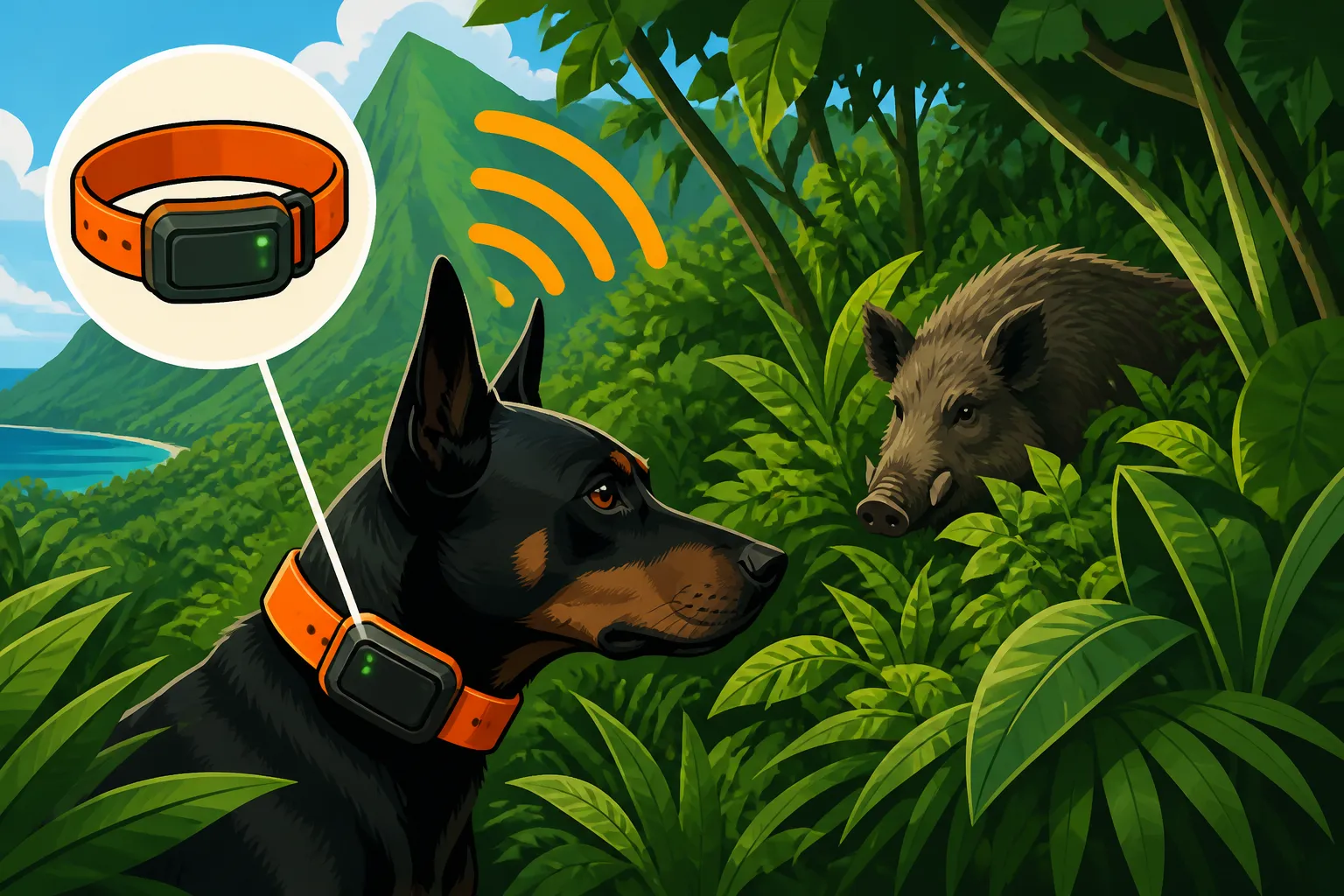
There's nothing quite like the heart-pounding thrill of a pig dog hunt in Hawaii, but that excitement can quickly turn to gut-wrenching worry when your trusty hound disappears into the island's impossibly thick jungle cover. The dense, unforgiving terrain can swallow sound and sight in an instant, leaving you calling into the void and fearing the worst for your valuable hunting companion. This guide is dedicated to bringing peace of mind to Hawaii pig hunters by detailing how GPS collars have become an absolute game-changer for keeping track of your dogs, even in the most challenging conditions the islands can throw at you.
The Challenge of Thick Cover in Hawaii Pig Hunting
Hunting feral pigs with dogs in Hawaii isn't just a sport; it's a deep-rooted tradition and a vital part of managing these invasive animals that wreak havoc on our native ecosystems. But let's be honest, it's also incredibly demanding, especially when it comes to keeping track of your dogs in the island's unique and often impenetrable vegetation.
Navigating Dense Vegetation
If you've spent any time hunting in Hawaii, you know that "thick cover" here means something entirely different than it might on the mainland. We're talking about jungles so dense you can barely see five feet in front of you, filled with tangles of uluhe fern, guava, hāpuʻu (tree fern), and kiawe thorns that seem purpose-built to slow you down and hide every animal – and sometimes, every dog. This isn't open country where you can glass for miles; this is a labyrinth where sound echoes strangely and sightlines are nonexistent.
Imagine your lead dog, full of fire, striking a hot track and disappearing over a ridge into a gulch choked with strawberry guava. One moment you hear the excited baying, the next, it's muffled, then gone. The dense undergrowth that makes up much of Hawaii's pig country is famous for swallowing sound and sight. This isn't your open country chase; this is deep jungle, where pigs often thrive and make it incredibly challenging for even the most experienced hunters and their dogs. Understanding how to navigate such terrain is key, and it really drives home the need for tools that keep your hounds safe, especially when you're deep in a thick gulch where you might be Hunting Pigs in Hawaii's Rainforest Gulches. These environments make it incredibly easy for a dog to get disoriented, or for you to lose track of its exact location amidst the cacophony of rustling leaves and the excited barks of other dogs.
The Risks to Hunting Dogs
Beyond simply getting lost, Hawaii's thick cover presents a myriad of dangers to hunting dogs. The terrain itself can be treacherous, with hidden lava tubes, steep drop-offs into ravines, and sharp volcanic rock that can cause serious injury. Add to that the aggressive nature of a cornered feral pig, especially a large boar with formidable tusks, and your dogs are literally putting their lives on the line with every hunt. A dog might get injured in a skirmish, fall into a hidden crevice, or simply become exhausted and unable to return, all while being completely out of earshot and sight.
Without a reliable way to pinpoint their location, rescuing an injured dog or even just calling one back can become a nightmare. I’ve heard countless stories, and experienced a few myself, of dogs getting separated for hours, sometimes even days. The thought of your dog suffering alone, perhaps with a serious wound from a boar, is a hunter’s worst nightmare. This is why many hunters are meticulous about Fitting a Cut Vest on a Catch Dog and taking all possible precautions. But even with the best protective gear, knowing where your dog is at all times is paramount for their safety and your peace of mind. The unpredictable nature of a pig hunt in these unforgiving environments means you need every advantage you can get to ensure your dogs make it home safely.
How GPS Collars Revolutionize Pig Dog Management
For decades, pig hunters relied on the sound of their dogs' baying and the collective experience of their hunting party to keep tabs on their hounds. While traditional methods still have their place, the advent of GPS collar technology has truly transformed how we manage dogs in the field, especially in Hawaii's demanding landscapes.
Real-Time Tracking and Location Precision
The biggest game-changer with GPS collars is, without a doubt, the ability to see your dog's exact location in real-time. No more guessing which ridge the baying is coming from or wondering if they've crossed into private land. With a handheld receiver or even a smartphone app, you can see a dot on a map representing each dog, showing their precise coordinates, direction of travel, and even their speed. This level of precision is invaluable when a dog is "on point" with a pig deep within a dense thicket, allowing you to approach stealthily and strategically.
Imagine your dog bays up a big boar in a seemingly impenetrable kiawe flat. Instead of blindly pushing through, hoping to stumble upon them, you can consult your GPS unit. It shows your dog is just 150 yards away, slightly to the west, barely moving – a clear sign they’ve got the pig contained. This allows you to plan your approach, perhaps circling to get downwind, or identifying the easiest path through the thorns to reach the action safely and quickly. This immediate feedback helps you maintain control of the hunt, even when the dogs are far out of sight. It's a massive leap from the days of simply hoping your dogs would eventually bark their way back to you, and it’s especially helpful when you're trying to quickly get to a bayed pig to use a Using a Knife or Spear on a Bayed Pig.
Essential Features for Hawaii's Terrain
When choosing a GPS collar system for Hawaii pig hunting, it’s not just about tracking; it's about selecting a system robust enough to handle the unique challenges of our islands. The features you need go beyond basic GPS.
First and foremost, durability and waterproofing are non-negotiable. Our weather can change in an instant, from blazing sun to torrential downpours, especially if you're Hunting Pigs on Hawaii's Wet Windward Side. Collars need to withstand being dragged through dense brush, submerged in muddy streams, and endure the constant exposure to humidity and occasional sharp lava rock. A collar that gives up the ghost after one dunk in a kalo patch is useless. Look for collars with high waterproof ratings, often specified as IPX7 or IPX8.
Secondly, battery life is crucial. Some hunts can stretch for hours, and if your dogs are ranging far and wide, you don't want their collar dying in the middle of an intense chase. Many modern collars offer 20-40 hours of battery life, which is a good baseline. Consider a system with rechargeable batteries and always carry fully charged spares or a power bank.
Thirdly, range and signal reliability are paramount. Hawaii's topography is incredibly varied, with steep gulches, dense forests, and mountainous terrain that can easily block signals. While no system is foolproof in every canyon, some brands offer superior antenna technology and signal acquisition, which can make a real difference. Traditional VHF tracking used to be the gold standard for signal penetration in thick cover, but modern GPS systems, often paired with satellite communication capabilities, are closing the gap significantly. When you're in an area with No Cell Signal on a Hawaii Hunt, having a robust, dedicated GPS handheld unit becomes your lifeline. Many hunters find Garmin's Alpha and Astro series, or similar robust systems, to be excellent choices, offering reliable tracking even in challenging environments like Hawaii.
Lastly, consider geofencing capabilities. Some systems allow you to set virtual boundaries on your map. If a dog crosses this boundary, you receive an alert. This can be incredibly useful for keeping dogs out of known hazardous areas, off private property, or within a specific hunting unit, especially in areas with Hawaii's Fenced Conservation Boundaries. These features, combined with the core tracking, make GPS collars an indispensable tool for any serious pig hunter in Hawaii.
Choosing the Right GPS Collar System
Selecting the perfect GPS collar system can feel a bit overwhelming given the various options on the market. However, by focusing on features critical for Hawaii’s unique hunting environment, you can narrow down your choices considerably.
Top Brands and Their Offerings
When it comes to GPS dog tracking systems, a few brands consistently rise to the top for their reliability and features. Garmin is undoubtedly the industry leader, with their Garmin Alpha and Garmin Astro series being the most popular choices among serious dog handlers. The Alpha series, such as the Alpha 200i or 100, offers advanced features like in-reach satellite communication, which can be a lifesaver when you're out of cell service and need to send a text or SOS message. This is a massive advantage in Hawaii’s remote public hunting units. These units typically come with a robust handheld device that displays detailed topographic maps, showing your location, your dogs' locations, and even their track history.
Another strong contender, though perhaps less common for pig hunting specifically, is SportDOG's Tek Series. While often geared towards bird dogs, their GPS capabilities are solid, and the collars are built tough. However, for the extreme conditions of Hawaiian pig hunting, many hunters lean towards the more specialized and rugged Garmin offerings. When considering any system, it’s worth researching what local guides and seasoned hunters on your specific island are using. Their real-world experience battling guava thickets, lava flows, and torrential rains offers invaluable insight.
Many hunters will first get their licenses and permits through the state's online system, often powered by platforms like GoHunt, but then invest significant time researching gear like these collars. It’s not just about the upfront cost; it’s about the peace of mind and the safety of your dogs, which are invaluable.
Battery Life and Durability Considerations
Let’s talk turkey about battery life and durability. You're hunting in Hawaii, not a manicured park. Your gear will get wet, muddy, thorny, and probably scraped against lava.
Battery Life: For pig hunting, you need a collar and a handheld unit that can last for the long haul. A typical hunt might be 4-6 hours, but if a dog gets separated, or if you're on a multi-day trip, you need far more endurance. Look for collars with a minimum of 20 hours of active tracking, but ideally closer to 40 hours. The Garmin Alpha series often boasts impressive battery life, and the handheld units can usually be extended with external battery packs or by carrying spare, charged batteries. Always, and I mean always, charge everything the night before a hunt. Consider carrying a portable power bank for your handheld unit, especially if you’re out in a remote area where you might be Walking In to a Remote Hawaii Unit for extended periods.
Durability: This cannot be overstated for Hawaii. The collar needs to be genuinely rugged. Look for collars made with high-impact resistant polymers and durable straps. Pay close attention to the antenna design – is it flexible and protected, or rigidly exposed and prone to snapping on a branch? Waterproofing, as mentioned earlier, should be a minimum of IPX7 (submersible for 30 minutes at 1 meter), but IPX8 is even better if your dogs are swimming through streams or wallowing in mud. Check reviews specifically mentioning performance in harsh, wet, and thorny environments. The investment in a high-quality, durable system like a Garmin Alpha will pay dividends in the long run by protecting your dogs and ensuring your hunts are safer and more effective. Don't skimp on this; it's literally your dog's lifeline in the dense Hawaiian wilds.
Here's a quick comparison of popular GPS collar features for Hawaii hunting:
| Feature | Entry-Level GPS Collar (e.g., Older Garmin Astro) | Mid-Range GPS Collar (e.g., Garmin Alpha 100) | High-End GPS Collar (e.g., Garmin Alpha 200i) |
|---|---|---|---|
| Tracking Range | Up to 5-7 miles | Up to 9 miles | Up to 9 miles (with enhanced connectivity) |
| Battery Life | 18-20 hours | 20-40 hours | 20-40 hours (collars), 14-20 hours (handheld) |
| Waterproof Rating | IPX7 | IPX7 | IPX7 |
| Mapping | Basic Topo/Satellite (via micro SD) | Detailed TOPO U.S. 100K maps | Detailed TOPO U.S. 100K + Downloadable Birdseye |
| Connectivity | GPS, VHF | GPS, VHF, Bluetooth | GPS, VHF, Bluetooth, InReach Satellite |
| Dog Capacity | Up to 10 dogs | Up to 20 dogs | Up to 20 dogs |
| Training Modes | Tones/Vibration | Tones/Vibration, Stimulation (18 levels) | Tones/Vibration, Stimulation (18 levels) |
| Price Range | $300-$500 (used/older models) | $600-$900 | $900-$1,200+ |
| Hawaii Suitability | Good for basic tracking | Excellent, widely used | Superior, especially for remote areas |
Note: Prices are approximate and can vary based on sales, bundles, and model year.
Best Practices for Using GPS Collars in the Field
Having the best GPS collar system won't do you much good if you don't know how to use it effectively and incorporate it into your overall hunting strategy. There are definite best practices that can maximize your success and, most importantly, the safety of your dogs.
Pre-Hunt Preparation and Testing
Before you even step foot into the field on hunt day, extensive preparation is key. This isn't optional; it's critical, especially when Hunting Hawaii's Volcanic Terrain or deep rainforests. First, fully charge all your units – collars and handheld receivers. Double-check that your mapping software on the handheld is up to date and that you have the most current maps for your intended hunting area. Many hunters find using resources like GoHunt helpful for checking unit boundaries and specific rules before they go.
Next, test your equipment. This means turning on all collars and the handheld, ensuring they all link up and show accurate positions. Walk around your yard or a local park with the collars on your dogs (if possible) to get a feel for how the system responds. Are all the collars registering? Is the signal strong? Do your training functions (if applicable) work? This simple check can prevent a world of frustration and potential danger once you're out in the remote wildlands where a sudden malfunction can mean losing a dog. Always ensure your dog's Fitting a Cut Vest on a Catch Dog is properly adjusted too, as an ill-fitting vest can interfere with collar placement or cause discomfort. This preparatory step is vital for seamless operation in the field, ensuring you're not fumbling with settings when your dogs are on a hot track.
Combining GPS with Traditional Dog Handling
While GPS collars are powerful tools, they are best used as an enhancement to traditional dog handling, not a replacement. Your understanding of your dogs' individual hunting styles, their calls, and your ability to read the terrain remain paramount. GPS provides the "where," but your experience and knowledge provide the "why" and "what next."
For example, a GPS unit can tell you your dog is "bayed up" in a particular location, but your ear needs to tell you if it's an excited, confident bay, or a more cautious, stressed bay, indicating a potentially dangerous encounter. Similarly, knowing your dogs' tendencies – which one is the bailer, which is the steady catcher, which one likes to range wide – allows you to interpret the GPS data more effectively. If you see a dog moving extremely fast in a straight line for an extended period, that might indicate it's "running wild" or chasing something you don't want it to, prompting you to call it back using the e-collar function on your GPS unit. Effective Training Pig Dogs in Hawaii involves teaching them to respond to these e-collar commands.
Always rely on your senses as much as your screen. The GPS can guide you to a general area, but your eyes and ears will pinpoint the exact location of the pig and dogs in the dense cover. Use the GPS to navigate efficiently to the bay, conserve energy, and then shift to a silent, tactical approach. Remember, in Hawaii’s thickest areas, even with GPS, you’ll still be breaking brush and getting into the thick of it. The GPS is your guide, but your instincts, your dogs' training, and your ability to work cohesively as a team are what truly bring success and safety to a pig hunt.
Disclaimer
Hunting in Hawaii involves inherent risks, including but not limited to challenging terrain, unpredictable wildlife, and varying weather conditions. The information provided in this guide is for informational purposes only and should not be considered a substitute for professional guidance, adherence to all local, state, and federal hunting regulations, or proper safety precautions. Always prioritize safety, understand and respect the environment, and ensure all hunting licenses and permits are current.