Hunting Hawaii’s Old Sugar Cane Lands
Hunting Hawaii's old sugar cane lands can feel like stepping back in time, yet for many hunters, these forgotten fields present a unique puzzle. The remnants of Hawaii's plantation era, now often reclaimed by dense tangles of invasive vegetation, hold incredible potential for game animals but pose significant navigational and tactical challenges. If you've ever stood at the edge of one of these overgrown areas, wondering how to even begin, you're not alone. This guide aims to pull back the curtain on these historically rich, yet physically demanding, hunting grounds, offering a roadmap to understanding their hidden advantages and mastering the techniques needed to find success.
The Legacy of Sugar Cane and What It Means for Hunting
Hawaii's landscape is dotted with the ghosts of a bygone agricultural era—vast tracts of land once meticulously managed for sugar cane production. While the plantations have largely faded, their imprint on the land remains, creating a unique habitat that, surprisingly, has become a haven for many of our most sought-after game animals. Understanding this ecological transformation is the first step to unlocking their hunting potential.
Understanding the Landscape's Evolution
Imagine rows upon rows of tall, waving sugar cane, stretching as far as the eye could see. These monoculture fields, often intensively irrigated, dominated thousands of acres. When the plantations closed down, nature, as it always does, began to reclaim its territory. The bare earth, once depleted by intensive farming, slowly gave way to a secondary succession of plant life. What we see today are often dense, unruly thickets of aggressive invasive species like guinea grass, haole koa, and kiawe, creating an almost impenetrable green wall. Beneath this canopy, you'll still find evidence of the past: old irrigation ditches, crumbling service roads, and windbreaks planted decades ago that now stand as mature groves. These remnants aren't just historical markers; they are critical features that define how animals live and move through these areas today.
This return to a wilder state means a dramatic shift in the terrain. Instead of cultivated fields, you're looking at a patchwork of dense, thorny brush, tall grasses that can hide a person standing upright, and scattered trees. The old, sometimes paved, access roads are often overgrown but still provide subtle pathways. Deep, eroded gullies that once carried irrigation water now serve as natural corridors or formidable barriers. These features mean that hunting in old sugar cane lands is less about wide-open glassing and more about still-hunting, tracking, and understanding how animals utilize thick cover for survival and escape.
Why Game Animals Thrive Here
It might seem counterintuitive that animals would flock to what appears to be such an inhospitable, overgrown environment, but these former sugar cane lands offer a surprisingly rich bounty. First and foremost, they provide an abundance of food. The diverse, often invasive, plant life that has taken root offers a smorgasbord of browse, seeds, and tubers that many species readily consume. Feral pigs, for instance, find the soft, rich soils perfect for rooting, digging up native and non-native plants alike.
Beyond food, these areas offer unparalleled cover. The dense tangles of haole koa, guinea grass, and kiawe create perfect bedding areas, places where animals feel secure and unmolested during daylight hours. This thick cover also provides critical thermal regulation, shielding animals from the intense Hawaiian sun and offering refuge from driving rain. Often, these areas are adjacent to more open pastures or forests, creating crucial edge habitat that animals favor for feeding, transitioning between cover and open ground, and escaping pressure. Finally, many of these areas still retain residual moisture in old irrigation ditches, natural depressions, or are located near permanent water sources like streams and gulches, making them complete habitats where animals can fulfill all their basic needs without having to travel far. This combination of food, cover, and water makes these areas prime hunting grounds, especially for species that thrive in dense environments.
Key Species and Their Habits in Sugar Cane Country
When you venture into Hawaii's old sugar cane lands, you're stepping into a specific ecological niche that favors certain game animals. While these areas can attract a variety of species depending on the island and exact location, feral pigs are almost universally the dominant residents, with axis deer, goats, and various game birds making appearances in transitional zones.
Feral Pigs, the Ultimate Foragers
Feral pigs are, without a doubt, the undisputed champions of Hawaii's overgrown sugar cane lands. These animals absolutely revel in the environment these abandoned fields provide. The rich, organic soils, often built up over decades of intensive agriculture, are a rooting paradise, allowing them to easily dig up tubers, roots, and insects. The dense, thorny vegetation like kiawe and haole koa offers impenetrable cover for bedding during the day, creating cool, shaded retreats from the tropical heat. You’ll often find pig wallows in low, muddy spots within these thickets, indicating favored bedding or resting areas.
Pigs in these areas tend to be highly nocturnal, moving out from their thick cover at dusk to forage and returning before dawn. However, during cooler, overcast days or periods of low hunting pressure, they might be active throughout the day, especially within the confines of the thickest brush. They frequently utilize old sugar cane roads, irrigation ditch bottoms, and any discernible trail as travel corridors. When hunting, look for fresh rooting, distinct tracks in soft ground, and fresh scat. If you find trees or fence posts rubbed raw, that's a sign of a territorial boar. Understanding these behaviors is crucial for successful pig hunting in Hawaii, as it helps you predict their movements and pinpoint their daytime hideouts. You can learn more about finding them by checking out Reading Pig Sign Along a Muddy Trail.
Axis Deer and Goats in Transitional Zones
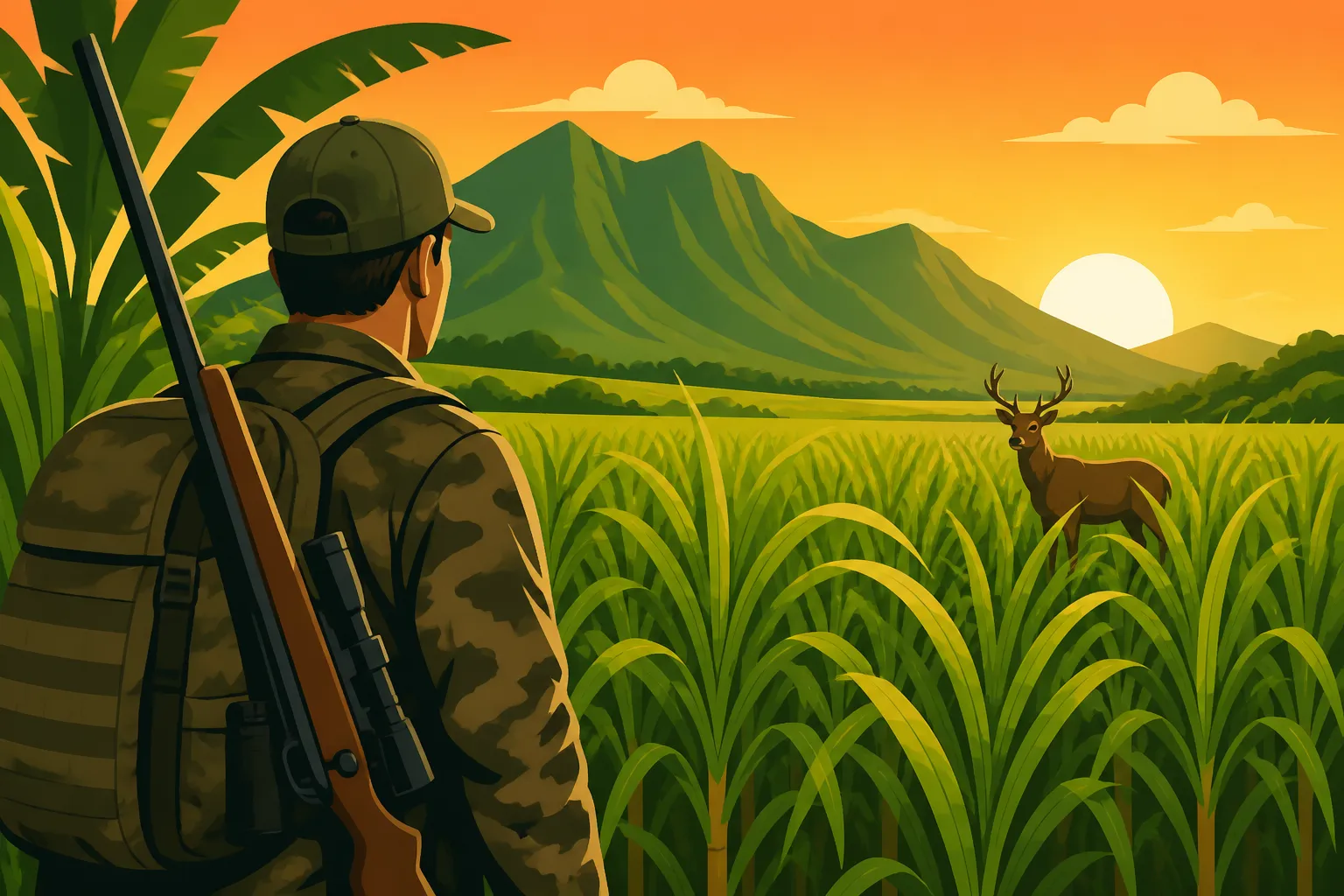
While pigs might dominate the core of the dense sugar cane regrowth, other species utilize the fringes, especially where these areas transition into different habitats. Axis deer, found primarily on Maui, Molokai, and Lanai, are fantastic at using the edges of these old fields. They'll browse on the new growth along the perimeter, especially where the cane land meets more open kiawe forests or natural grasslands. The dense cane regrowth offers them a quick escape route and excellent security cover, which is vital in areas with higher hunting pressure. You might spot them at first light or last light, tentatively moving out of the thick stuff to graze in a nearby pasture or grab a drink. If you're hunting in a region with axis deer, focusing your efforts on these transitional boundaries can be highly productive. Dive deeper into hunting strategies for these magnificent animals by exploring Axis Deer Hunting in Hawaii.
Similarly, feral goats, while less likely to be deep inside the cane fields themselves, are often found in the steep gulches and drainages that frequently cut through or border these historical agricultural areas. On islands like the Big Island, Maui, and Kauai, where goats are prevalent, these rocky, cliff-ridden features offer the perfect blend of escape terrain and browse. They will often descend into the edges of the cane fields to feed on palatable new growth before retreating to the security of the cliffs. Game birds, such as various species of francolin, pheasant, and quail, also thrive in these transition zones. They feed on the abundant seeds, insects, and protective cover found along the edges, especially where diverse vegetation meets open ground. Often, these birds can be walked up along the old road systems or the interface of the cane fields and native forest. For more specific insights on these agile climbers, consider reading Hunting Hawaii's Feral Goats.
Strategies for Hunting Old Sugar Cane Lands
Successfully hunting Hawaii's old sugar cane lands requires a distinct shift in mindset and tactics compared to more open country. Forget long-range glassing; this is a game of close quarters, patience, and meticulous movement. The challenges are real, but so are the rewards for those willing to adapt.
Navigating the Challenging Terrain
The most immediate challenge in old sugar cane lands is the sheer density of the vegetation. Moving through thick stands of guinea grass, haole koa, and especially thorny kiawe can be slow, noisy, and physically demanding. Expect to push through chest-high, sometimes head-high, brush that limits visibility to mere yards. This isn't the place for a casual stroll; it demands deliberate, quiet movement, often taking a step or two, then pausing to listen and scan. Every old ditch, every pile of discarded irrigation pipe, and every unseen hole in the ground becomes a potential hazard, so keep your eyes glued to your path.
Footwear is absolutely paramount here. You'll need sturdy, waterproof boots with excellent ankle support to navigate the uneven ground and protect against thorns and potential slips. The ground can be soft and muddy in places, hard and rocky in others, and often hides old machinery or rocks underfoot. The wind, which can be predictable on open ridges, can swirl and eddy unexpectedly within these dense pockets, making scent control even more critical. You might feel like you're in a labyrinth, and without a reliable navigation tool, getting disoriented is a genuine concern. Preparing for the specific challenges of the ground is key; for instance, understanding Walking Rough Lava Without Wrecking Your Boots offers valuable insights applicable to other rough Hawaiian terrains as well.
Still-Hunting and Tracking Techniques
Given the dense cover, still-hunting is often the most effective method in old sugar cane lands. This involves moving incredibly slowly, taking a few quiet steps, then stopping for several minutes to intently scan and listen. Animals will often be bedded down in the thickest parts and your best chance to spot them is when they move, or you detect a subtle sound – a rustle, a grunt, or the snapping of a twig. Always hunt into the wind, or at least across it, to minimize your scent dispersal.
Old plantation roads and irrigation ditch bottoms, even if overgrown, often serve as natural travel corridors for game. These can be excellent places to focus your still-hunting efforts. Animals will use these paths of least resistance to move between bedding areas and feeding zones. Pay close attention to fresh sign: tracks in soft earth, disturbed vegetation from recent passage, or fresh droppings. These clues can tell you not only that animals are present but also their direction of travel and how recently they were there. For pig hunting, if the cover becomes truly impenetrable, dog hunting can be incredibly effective, as the dogs can push pigs out of thickets that would be impossible for a human hunter to penetrate. Read more about this exciting method in Pig Hunting With Dogs in Hawaii.
Water Sources and Edge Hunting
In Hawaii's often dry climate, water is a magnet for game, and old sugar cane lands often retain subtle water sources. Residual irrigation ditches, natural depressions that hold rainwater, or even seeps along gulch walls can draw animals in, especially during extended dry spells. Focusing your attention on these areas, particularly at dawn and dusk, can increase your odds dramatically. Understanding the crucial role of hydration for wildlife, particularly in arid conditions, can make all the difference, which is why focusing on Hunting a Water Source in Dry Hawaii Country is often a smart strategy.
Furthermore, the "edge" where these overgrown lands meet other habitat types – like open pasture, natural forest, or steep gulches – is always a hotspot. Animals frequently travel these transition zones, moving from the security of the thick cover to more open feeding areas. Setting up an ambush point overlooking such an edge at first or last light can be incredibly effective. Pay close attention to areas where dense cover bottlenecks down, or where a game trail emerges from the thick brush. The dynamic interplay between different vegetation types means that animals are constantly moving and feeding along these boundaries, offering strategic opportunities for observant hunters.
Essential Gear and Safety Considerations
Hunting in Hawaii's old sugar cane lands is a rugged endeavor that demands specific gear and a keen awareness of safety. The environment is unforgiving, and being unprepared can quickly turn a promising hunt into a dangerous situation.
Recommended Gear for the Environment
Your clothing needs to be tough and protective. Think durable, breathable long-sleeved shirts and pants to shield you from thorns, sharp grass, and insects. Blaze orange is often a requirement on public hunting lands in Hawaii, so always check the specific unit rules before you head out. Don't skimp on quality footwear; those sturdy, waterproof boots mentioned earlier are non-negotiable. Ankle support and puncture resistance are key.
Optics, while not for long-range glassing, are still vital. A good pair of binoculars (8x or 10x) can help you pick apart dense cover, spotting the flick of an ear or the subtle outline of an animal hidden just feet away. Navigation is critical due to the disorienting nature of dense brush. A reliable GPS unit or a smartphone with an offline mapping app like GoHunt, which utilizes the OuterSpatial platform, is indispensable. Make sure your device is fully charged and consider carrying a portable power bank. Using apps like these to check in and out of units, as described in Using the OuterSpatial App to Check In, can make your life a lot easier. And, perhaps most importantly, always carry more water than you think you'll need. The tropical heat and humidity, combined with strenuous hiking through thick brush, can lead to rapid dehydration. Planning for Water and Heat Planning for a Hawaii Hunt is not just smart, it's essential.
Safety and Permitting Specifics
Understanding land ownership is crucial in these areas. Old sugar cane lands can be a mosaic of public and private property, and trespassing is a serious offense. Always consult up-to-date maps (like those found on the GoHunt app) and know your boundaries before you ever step foot in the field. If you're considering hunting on private land, ensure you have all necessary Hawaii Private Land Access Permits beforehand. Always adhere to hunter orange requirements, not only because it's the law in many areas but because it significantly enhances your visibility to other hunters, especially in dense cover.
Communication is another major safety concern. Cell service is notoriously spotty or non-existent in many remote Hawaiian hunting units. Carrying a satellite messenger or a personal locator beacon (PLB) is a wise investment, allowing you to call for help even without cell signal. This topic is deeply explored in No Cell Signal on a Hawaii Hunt, highlighting why it's a non-negotiable part of your planning. Be aware of the risks of heatstroke, twisted ankles, and encounters with wild animals. If you make a kill, especially a large pig in a steep gulch, plan for the strenuous effort required to get your animal out. Extracting an animal from these challenging terrains, particularly a steep descent, can be incredibly difficult, so reviewing tips on Packing Meat Out of a Hawaii Gulch is highly recommended. Always hunt with a buddy, or at the very least, inform someone of your hunting plans and expected return time.
| Feature | Old Sugar Cane Lands (OSCL) | Wet Rainforest Gulches (WRG) | Dry Kiawe Flats (DKF) | High Elevation Alpine (HEA) |
|---|---|---|---|---|
| Dominant Vegetation | Dense guinea grass, kiawe, haole koa, secondary forest | Ohia, hapuu ferns, guava, thick understory | Kiawe, buffelgrass, scattered sparse brush | Mamane, naio, sparse grasses, lava rock |
| Primary Game | Feral Pigs (dominant), Axis Deer (edges), Goats (gulches), Game Birds | Feral Pigs (dominant), some Goats (gulches) | Axis Deer (dominant), some Feral Pigs (water) | Mouflon Sheep (dominant), some Feral Goats |
| Visibility | Very Limited (yards) | Extremely Limited (feet to yards) | Moderate to Good (hundreds of yards) | Excellent (miles) |
| Terrain | Uneven, old roads, ditches, dense brush | Steep, slippery, muddy, dense, many obstacles | Flat to gently rolling, rocky, open | Very steep, rocky, loose cinder/lava, thin air |
| Hunting Strategy | Still-hunting, tracking, dog hunting, edge hunting | Still-hunting, dog hunting (bay & catch) | Spot-and-stalk, glassing, waterhole ambushes | Spot-and-stalk, long-range glassing, elevation |
| Key Challenges | Thorns, thick cover, navigation, heat/humidity | Rain, mud, steepness, getting lost, pig aggression | Heat, dust, limited water, animal wariness | Altitude sickness, extreme weather shifts, remoteness |
| Essential Gear | Heavy duty boots, GPS, water, machete/bush knife | Rain gear, aggressive tread boots, machete, GPS | Optics, ample water, sunscreen, sturdy footwear | Warm layers, optics, GPS, trekking poles, water |
Disclaimer
Hunting involves inherent risks, including injury and death. Always prioritize safety, follow all local and state regulations, and ensure you have the necessary skills, fitness, and equipment for your chosen activity. This information is for educational purposes only and should not replace professional guidance or official government regulations. Confirm all rules and land access with the Hawaii Department of Land and Natural Resources (DLNR) Division of Forestry and Wildlife (DOFAW) before heading afield.