What Feral Pigs Do to Hawaii’s Forests
Living in Hawaii, you quickly learn that the beauty of our islands is matched only by its fragility. When you talk to hunters and conservationists here, one creature always comes up: the feral pig. These animals, while providing challenging hunts for many, are also silent destroyers, methodically dismantling the very foundations of our native ecosystems. This guide is dedicated to pulling back the curtain on the profound and often heartbreaking damage these pigs inflict on Hawaii's irreplaceable forests, from the smallest seedling to the largest watershed, helping you understand the complex ecological battle being fought every single day.
The Root of the Problem: How Feral Pigs Ravage the Soil and Understory
When a pig enters a forest, it’s not just passing through; it’s an active agent of change, and almost always for the worse in our delicate Hawaiian environment. Their sheer numbers and constant activity profoundly alter the forest floor, which is the very bedrock of our unique ecosystems. This isn't just about a few disturbed plants; it's about the fundamental structure and health of the entire forest.
Destructive Foraging Behaviors
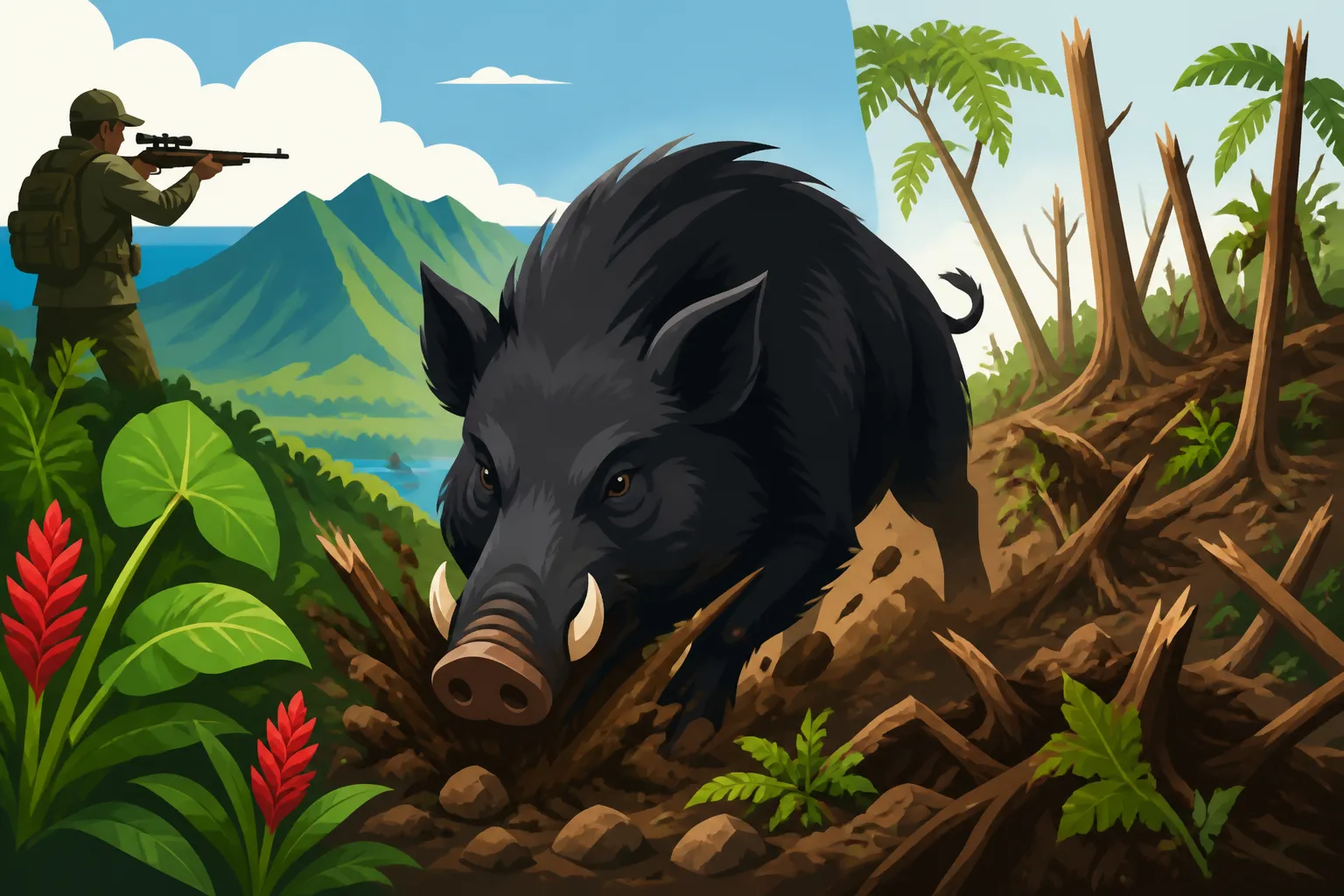
Feral pigs are opportunistic omnivores, meaning they'll eat just about anything – roots, tubers, seeds, invertebrates, and even the occasional ground-nesting bird or its eggs. But it’s how they get to these food sources that causes so much damage. They are relentless excavators. Their powerful snouts are built for "rooting," a process where they dig aggressively into the soil, tearing up the ground to get at whatever lies beneath. Imagine a rototiller going through the forest; that's essentially what a sounder of pigs does. They turn over huge swaths of earth, disrupting the delicate balance that has evolved over millennia. This isn't like a deer browsing; this is total soil disturbance, exposing bare earth, tearing apart root systems, and creating a chaotic mess. You can find their work in many public hunting units across the islands, from the wet forests of the Big Island to the more remote areas of Oahu and Maui.
Beyond rooting, pigs love to "wallow." This means rolling around in mud and water, often creating muddy depressions that hold water. While it might seem innocuous, these wallows contribute significantly to habitat degradation. They compact the soil around them, creating anaerobic conditions that most native plants can't tolerate. These mud holes also become perfect breeding grounds for mosquitoes, which are vectors for avian malaria – a huge threat to our already endangered forest birds. The constant churning of mud also silts up streams and seeps, further degrading water quality downstream.
Soil Erosion and Compaction Consequences
The immediate aftermath of rooting is exposed, loose soil. In Hawaii, with our often steep slopes and intense rainfall, this loose soil is an open invitation for erosion. When the inevitable heavy rains come, that disturbed topsoil washes away rapidly. This isn't just a small amount of dirt; it's the nutrient-rich layer that supports plant growth. Over time, repeated rooting by pigs can strip entire hillsides of their precious soil, leaving behind barren, rocky ground where native plants struggle to take hold. This process is particularly damaging in steeper forest reserves and watershed areas. Losing this topsoil means the forest loses its ability to regenerate naturally, and the land becomes less fertile for any new growth.
Moreover, the sheer weight and constant movement of pigs compact the remaining soil, especially in well-used trails or around feeding areas. Soil compaction reduces its ability to absorb water, leading to increased runoff and further erosion. It also restricts root penetration for plants, making it harder for them to access nutrients and moisture. The delicate network of fungal and microbial life in healthy forest soil is destroyed, breaking down the complex ecosystem beneath our feet. This is Why Pigs Root Up Hawaii Rainforest is such a critical topic when discussing their impact.
Impact on Native Plant Regeneration
Hawaii's native forests are unique, with many plants that evolved without the presence of large, rooting mammals. This means they are incredibly vulnerable to pig activity. When pigs root, they directly consume seeds and seedlings of native plants, effectively halting regeneration. Species like the iconic koa and ohia trees, which form the backbone of many Hawaiian forests, struggle to establish themselves when their young are constantly uprooted and eaten. The understory, which typically consists of a diverse array of native ferns, shrubs, and groundcovers, is decimated.
The selective foraging habits of pigs also play a role. They often prefer to eat native plants, leaving behind or even actively spreading the seeds of invasive species. This gives invasive plants a competitive advantage, as their seedlings are left undisturbed to grow, while native saplings are munched on. This imbalance tips the scales, further suppressing native plant communities and allowing aggressive invaders to dominate. In areas like the wet forests of Hilo or the remote gulches, you can clearly see the line where pig activity drastically changes the composition of the forest floor, often transforming a lush native understory into a sparse, weedy tangle.
Spreading the Seeds of Destruction: Pigs as Vectors for Invasive Species
It’s not just what pigs eat; it’s what they carry and spread that makes them such formidable agents of ecological change. They are, quite literally, walking, snorting seed and disease dispersal machines. This role as a vector for other destructive elements compounds their direct damage, creating a complex web of ecological harm that's incredibly difficult to untangle.
Dispersal of Invasive Plants
Feral pigs are incredibly efficient at spreading invasive plant species. Many invasive plants, like strawberry guava or Himalayan ginger, produce fruit that pigs love to eat. The seeds pass through their digestive tracts, often scarified by stomach acids, and are then deposited in their droppings far from the parent plant. This is like a perfectly packaged fertilizer bomb for invasive seeds, dropped right into the freshly disturbed soil created by their rooting. Think about the thick guava jungles you see in many Hawaiian valleys – pigs are often the primary reason these aggressive plants have spread so widely and deeply into otherwise pristine areas. They can travel great distances, effectively planting new invasive patches throughout the forest.
Moreover, seeds and plant fragments can stick to their muddy bodies, hooves, and fur, hitching a ride to new locations. A pig wallowing in a patch of miconia or passion fruit might then travel miles before rubbing against a tree or rolling in another spot, shedding those seeds and plant parts to sprout elsewhere. This passive dispersal is just as insidious as direct ingestion, ensuring that once an invasive plant is present, pigs will do their best to ensure its continued expansion throughout the landscape.
Introducing Pathogens and Pests
Pigs can also carry and spread various pathogens and parasites, some of which can impact both wildlife and humans. One of the most significant concerns in Hawaii is leptospirosis, a bacterial disease that pigs can carry and transmit through their urine. Wallows, muddy trails, and contaminated water sources become hotbeds for this bacteria, posing a risk to hunters, hikers, and other recreational users of forest lands. While Diseases Hawaii Hunters Should Know is a broad topic, leptospirosis is a key concern related to pigs.
Beyond leptospirosis, pigs can harbor other parasites, like the rat lungworm, a nematode that can cause severe neurological disease in humans. While the primary vector for rat lungworm is slugs and snails, pigs can act as intermediary hosts, further complicating the life cycle and potential spread within the environment. There's also the constant worry about diseases they might carry that could jump to livestock or even to our native wildlife, though this is less well-documented than their impact on plants. The sheer volume of pig waste in some areas also contributes to overall ecosystem stress, altering nutrient cycling and potentially introducing novel microbial communities that can upset the native balance.
Competition with Native Wildlife
While pigs themselves aren't typically direct competitors for food with many native Hawaiian species (since most native species are highly specialized), their actions profoundly impact the food sources and habitats of other creatures. By consuming vast quantities of native seeds and fruits, pigs directly reduce the food available for native birds, insects, and other forest dwellers. For example, many native forest birds rely on specific native fruits for sustenance, and if pigs are consuming those fruits before they can mature or disperse, it creates a serious bottleneck in the food chain.
Furthermore, by destroying the forest understory and causing erosion, pigs degrade the nesting and foraging habitat for ground-nesting birds, insects, and snails, many of which are already critically endangered. Imagine a “io (Hawaiian hawk) or pueo (short-eared owl) struggling to find prey in a forest floor that has been completely rooted up and altered. Even something as seemingly minor as a pig destroying a rotting log can remove critical microhabitat for endemic insects and fungi. This ripple effect throughout the ecosystem is one of the most insidious ways pigs contribute to the decline of Hawaii's unique biodiversity.
Threat to Hawaii's Unique Biodiversity: Direct and Indirect Impacts
Hawaii's native species have evolved over millions of years in isolation, without large, hoofed mammals. This means they are incredibly fragile and lack defenses against the destructive forces introduced by feral pigs. The pigs' impact isn't just about disturbing dirt; it's about systematically dismantling the intricate web of life that makes Hawaii globally unique.
Predation on Ground-Nesting Birds and Invertebrates
Many of Hawaii's endemic birds are ground-nesting or forage on the forest floor, making them exceptionally vulnerable to predation by feral pigs. Pigs are omnivores, and while insects and roots form a large part of their diet, they will readily consume eggs and chicks of native birds. Imagine a nene (Hawaiian goose) nesting on the ground, or a “ua`u (Hawaiian petrel) nesting in burrows; their nests are easily raided by foraging pigs. Even insect populations, particularly flightless species that have evolved in Hawaii, can be heavily predated by pigs, leading to local extinctions or significant population declines.
The pressure from pig predation can be a major factor in preventing the recovery of endangered bird populations in certain areas. For example, in the uplands of Maui or the Big Island, areas that could otherwise support burgeoning bird numbers are kept in check by constant pig presence. This direct predation exacerbates an already dire situation for many of Hawaii's unique species, pushing them closer to the brink of extinction.
Habitat Degradation for Endemic Species
Beyond direct predation, the widespread habitat degradation caused by pigs affects countless species. As discussed, pigs destroy the understory, leading to the loss of native plants that serve as food, shelter, and breeding grounds for specific insects, snails, and other invertebrates found nowhere else on Earth. Consider the critically endangered tree snails (Achatinella species), which rely on specific native plant leaves for food and shelter. When these plants are destroyed or replaced by invasives due to pig activity, the snails lose their vital habitat.
The alterations to soil structure and hydrology also impact soil-dwelling organisms and the delicate fungal networks crucial for native plant health. What might seem like a simple pig wallow can lead to erosion that destroys stream habitats for native oopu (gobies) and hīhīwai (neritid snails), which are integral parts of our freshwater ecosystems. Essentially, pigs are systematically unzipping the very fabric of the native forest, leaving behind a tattered and alien landscape that can no longer support its unique inhabitants.
Facilitating Other Invasive Animals
Feral pigs often act as "ecosystem engineers" for other invasive species. By rooting up the forest floor, they create disturbed environments that are perfect for invasive rodents like rats and mice, as well as invasive slugs and snails. These disturbed areas, with their changed plant composition and increased leaf litter, can offer new food sources or protective cover for these additional invaders.
Furthermore, the destruction of native plant communities can weaken the forest's overall resilience, making it more susceptible to invasion by other harmful animals. For instance, increased mosquito populations in pig wallows contribute to avian malaria, which is devastating to native forest birds. How Pigs Spread Mosquitoes in Hawaii is a direct result of their activities. This creates a cascade of negative effects, where one invasive species (pigs) directly enables or enhances the impact of several others, making comprehensive conservation efforts incredibly challenging.
Water, Water Everywhere, Not a Drop to Drink: Pigs and Watershed Health
The phrase "water is life" rings especially true in Hawaii. Our lush forests are not just beautiful; they are vital watersheds, capturing rain and cloud moisture, filtering it, and slowly releasing it to sustain our communities and ecosystems. Feral pigs pose a direct and severe threat to this fundamental natural resource, impacting everything from drinking water quality to stream health. This is one of the most critical, yet often overlooked, aspects of their destructive presence.
Contamination of Freshwater Sources
One of the most concerning impacts of feral pigs is their effect on freshwater sources. As they wallow, defecate, and urinate directly in or near streams, springs, and natural pools, they introduce bacteria and pathogens into the water supply. This can include E. coli and, as mentioned earlier, leptospirosis. For communities that rely on unfiltered surface water, this poses a significant public health risk. Hikers and hunters who depend on natural water sources in the backcountry must be acutely aware of this contamination risk.
The constant stirring of mud and sediment during wallowing also increases the turbidity of streams. This muddy water flows downstream, affecting aquatic life by reducing light penetration, clogging the gills of native fish and invertebrates, and smothering stream beds and coral reefs near the coast. This is a direct attack on the clarity and purity of Hawaii’s precious water, which takes thousands of years to filter through our volcanic rock.
Altering Stream Morphology and Water Quality
Beyond immediate contamination, pigs physically alter the structure of streams and riparian zones (the areas alongside streams). Their constant rooting and trampling along stream banks destabilize the soil, leading to increased erosion into the watercourse. This widens and shallows stream channels, reduces pool habitats, and diminishes the stream's ability to hold water, especially during dry periods.
The loss of native vegetation along stream banks, due to pig rooting and the spread of invasives, also removes critical shade cover. This can lead to increased water temperatures, which are detrimental to native aquatic species that require cool, clear water. The cumulative effect is a degraded stream ecosystem, less capable of supporting its native inhabitants and less effective at delivering clean water downstream. This is a major aspect of What Ungulates Cost Hawaii's Watersheds.
Exacerbating Drought Conditions in Dry Forests
In Hawaii's leeward and dryland forests, pigs contribute to exacerbating drought conditions. By destroying the native understory and groundcover, they reduce the amount of organic material in the soil. This organic matter is crucial for retaining moisture and slowly releasing it back into the atmosphere or into groundwater. With less organic matter and increased soil compaction, these dry forests lose their natural sponge-like ability to capture and store water.
The replacement of native plants with invasive species, which often have different water requirements and growth patterns, can also alter the water cycle. Some invasive plants, like kiawe (mesquite), are heavy water users, potentially drawing down water tables more aggressively than native vegetation. The combined effect of pig damage and invasive plant proliferation means that even during periods of sufficient rainfall, the forest is less able to hold onto that water, leading to drier conditions and increased vulnerability to wildfires in already arid regions. This makes the invaluable resource even more vulnerable.
A Domino Effect: Broader Ecological Consequences and Management
The impacts of feral pigs extend far beyond just the forest floor or a single stream. Their presence creates a cascading series of effects that touch every aspect of Hawaii's ecology and economy. Understanding these broader consequences is crucial for grasping the true scope of the challenge and appreciating the critical role that various management strategies, including hunting, play in protecting our islands.
Economic Costs to Agriculture and Infrastructure
The damage caused by feral pigs isn't limited to wild forests; it also significantly impacts Hawaii's agricultural sector and infrastructure. Farmers, particularly those growing taro, sweet potatoes, or other root crops, face constant battles against pigs rooting up their fields. The cost of fencing, crop loss, and labor to mitigate pig damage can be substantial, directly affecting the livelihoods of local farmers and the availability of locally grown produce.
Beyond agriculture, pigs can damage irrigation systems, water pipes, and even roads and trails with their rooting and wallowing. In residential areas bordering wild lands, pigs can destroy gardens and landscaping, creating a nuisance and an expense for homeowners. While less direct than crop damage, the cumulative cost of repairing and maintaining infrastructure in areas prone to pig activity adds up, placing a burden on communities and public resources. The Department of Land and Natural Resources (DLNR) also invests considerable resources into control programs and habitat restoration efforts directly attributable to pig damage.
The Role of Hunting in Mitigation
Given the widespread destruction, hunting plays a crucial role as a management tool for feral pigs in Hawaii. Unlike many other game species, pigs have no natural predators in Hawaii, allowing their populations to explode without human intervention. Hunting Hawaii's Feral Pigs is not just a recreational activity; it's a vital part of conservation efforts, directly reducing pig numbers and, by extension, their impact on the environment. Hunters, whether employing traditional Pig Hunting With Dogs in Hawaii methods or Still-Hunting Pigs in Hawaii's Wet Forest, are on the front lines, helping to keep populations in check where other methods are impractical or cost-prohibitive.
The state actively manages hunting opportunities in public hunting units across various islands, often with generous bag limits and year-round seasons for pigs, precisely because of their detrimental impact. Initiatives like the GoHunt Hawaii website make it easier for hunters to find information on seasons and units, underscoring the state's reliance on the hunting community. While hunting alone cannot eradicate pigs from all areas, it is an indispensable part of a multi-faceted approach to conservation, providing sustained pressure on populations and removing animals from critical habitat. It's a way for concerned citizens to actively participate in protecting Hawaii's unique natural heritage.
Fencing and Other Management Strategies
While hunting is essential, it's often complemented by other, more intensive management strategies, especially in highly sensitive ecological areas. One of the most effective methods is fencing. Constructing predator-proof fences around critical native forest remnants or watershed areas creates sanctuaries where pigs cannot enter. These fences are often substantial, made of sturdy materials to withstand the pigs' strength and persistence. Why Hawaii Fences Out Pigs and Goats is a prime example of proactive conservation, creating safe zones where native plants can regenerate and endangered birds can thrive without constant disturbance. These projects are expensive and labor-intensive, often requiring helicopter support to transport materials into remote, rugged terrain.
Other strategies include trapping, snaring, and aerial control efforts in areas inaccessible to ground hunters or where quick population reductions are necessary. Eradication efforts, though challenging, have seen success in smaller, contained areas. Ultimately, a successful approach to managing feral pigs in Hawaii involves a combination of these methods, tailored to specific landscapes and ecological priorities. Hunters, conservation groups, and government agencies like the DLNR Division of Forestry and Wildlife (DOFAW) must work together to tackle this complex and ongoing challenge, understanding that every pig removed from the forest helps our unique Hawaiian ecosystems breathe a little easier.
| Impact Category | Direct Impact | Indirect Impact |
|---|---|---|
| Soil & Understory | Rooting (uprooting plants, loosening soil), Wallowing (compaction, mud holes) | Erosion, Reduced native plant regeneration, Increased invasive plant establishment |
| Biodiversity | Predation on ground-nesting birds/invertebrates, Consumption of native seeds/seedlings | Habitat degradation for endemic species, Facilitates other invasive animals/diseases |
| Water Resources | Contamination (pathogens, sediment), Physical alteration of stream banks | Increased turbidity, Higher water temperatures, Exacerbated drought conditions, Reduced water quality |
| Broader Ecology | Crop damage, Infrastructure damage | Economic costs to agriculture, Hinders forest restoration, Increased fire risk in dry areas |
Disclaimer
Please remember that hunting regulations, seasons, and access rules in Hawaii can change. Always consult the most current Hawaii Department of Land and Natural Resources (DLNR) Division of Forestry and Wildlife (DOFAW) regulations before planning any hunt. This information is for general guidance only and should not replace official state publications.