What Ungulates Cost Hawaii’s Watersheds
Hawaii's natural beauty often masks a silent, relentless struggle happening deep within its forests and mountains: the degradation of vital watersheds by introduced ungulates. These wild animals, from pigs and goats to deer and sheep, are not just game species; they represent a profound challenge to the islands' most precious resource – fresh water. This guide dives deep into the true cost these ungulates inflict upon Hawaii's watersheds, exploring the environmental, economic, and cultural impacts that ripple across our delicate ecosystem.
The Vital Role of Hawaii's Watersheds
Before we talk about the damage, it's crucial to understand just how incredibly important Hawaii's watersheds are. They aren't just patches of green on a map; they are the literal lifeblood of our islands, capturing rain, filtering it, and delivering it to our communities.
What is a Watershed in the Hawaiian Context?
In Hawaii, a watershed is more than just the land area that drains into a specific river or stream. Here, our watersheds are incredibly unique, shaped by volcanic geology, extreme rainfall gradients, and millions of years of isolation that fostered an unparalleled array of native plants. On the windward (wet) sides of the islands, dense rainforests cling to steep slopes, acting like giant sponges, soaking up prodigious amounts of rainfall – sometimes hundreds of inches a year. On the leeward (dry) sides, the landscape transforms into arid shrublands and dry forests, yet even these areas contribute to critical groundwater recharge.
The native 'ohi'a lehua forests, with their unique mosses and ferns, are perfectly adapted to capture moisture from fog and slow down rainfall, allowing it to gently percolate into the ground rather than rushing off. This intricate system is what gives us our pristine streams and fills our aquifers. Think of those misty, verdant mountains you see; that's not just pretty scenery, it's our water factory.
Why Healthy Watersheds Are Critical for Island Life
The health of these watersheds directly impacts every single person and living thing in Hawaii. First and foremost, they provide our drinking water. Whether you live in Honolulu, Hilo, or Hana, the water flowing from your tap likely originated as rain high in a watershed. Beyond consumption, this water feeds our agriculture, supporting everything from kalo (taro) patches to coffee farms, which are integral to our economy and way of life.
But it goes deeper than that. Healthy watersheds maintain streamflow, which is essential for native aquatic species like o'opu (gobies) and 'opae (shrimp) that rely on clean, flowing water to complete their life cycles. They also prevent erosion, protecting our precious coral reefs from being smothered by sediment washed down from the land. Culturally, these areas are sacred, places for gathering native plants, spiritual reflection, and connection to 'aina (land). When these systems falter, the impacts are felt across all these facets of island life.
Direct Damages: How Ungulates Undermine Water Quality and Quantity
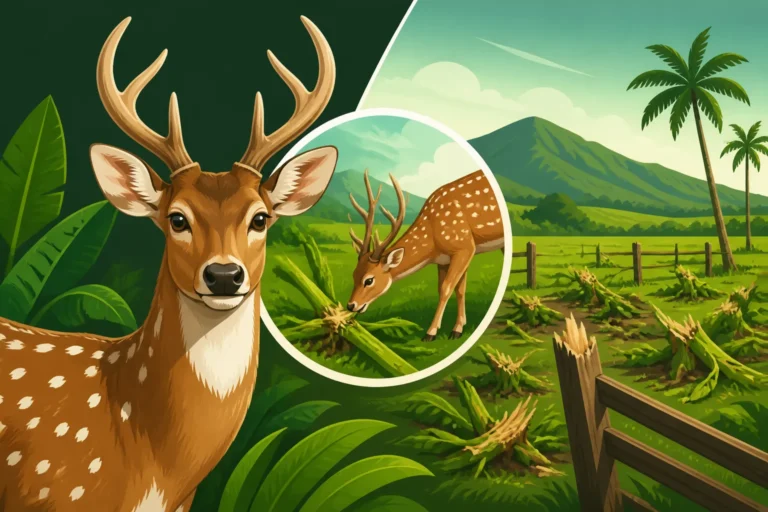
It's a tough pill to swallow, but the very animals that some enjoy hunting – the Axis Deer, Hawaii's Signature Big Game, Hawaii's Feral Pigs, Island by Island, Hawaii's Feral Goats and Why They Matter, and Mouflon Sheep on Hawaii's Volcanoes – are also driving forces behind watershed destruction. Their presence, largely unchecked by natural predators in Hawaii, leads to direct and devastating consequences for our water resources.
Erosion and Increased Sedimentation
Imagine a pristine forest floor, rich with native ferns, mosses, and decaying leaves, acting like a thick carpet. This spongy layer absorbs rainfall, allowing it to slowly seep into the soil. Now, picture a herd of feral pigs, relentlessly rooting up this protective layer in search of food. Or a group of goats, stripping vegetation from steep hillsides down to bare earth. And let's not forget the constant trampling by axis deer.
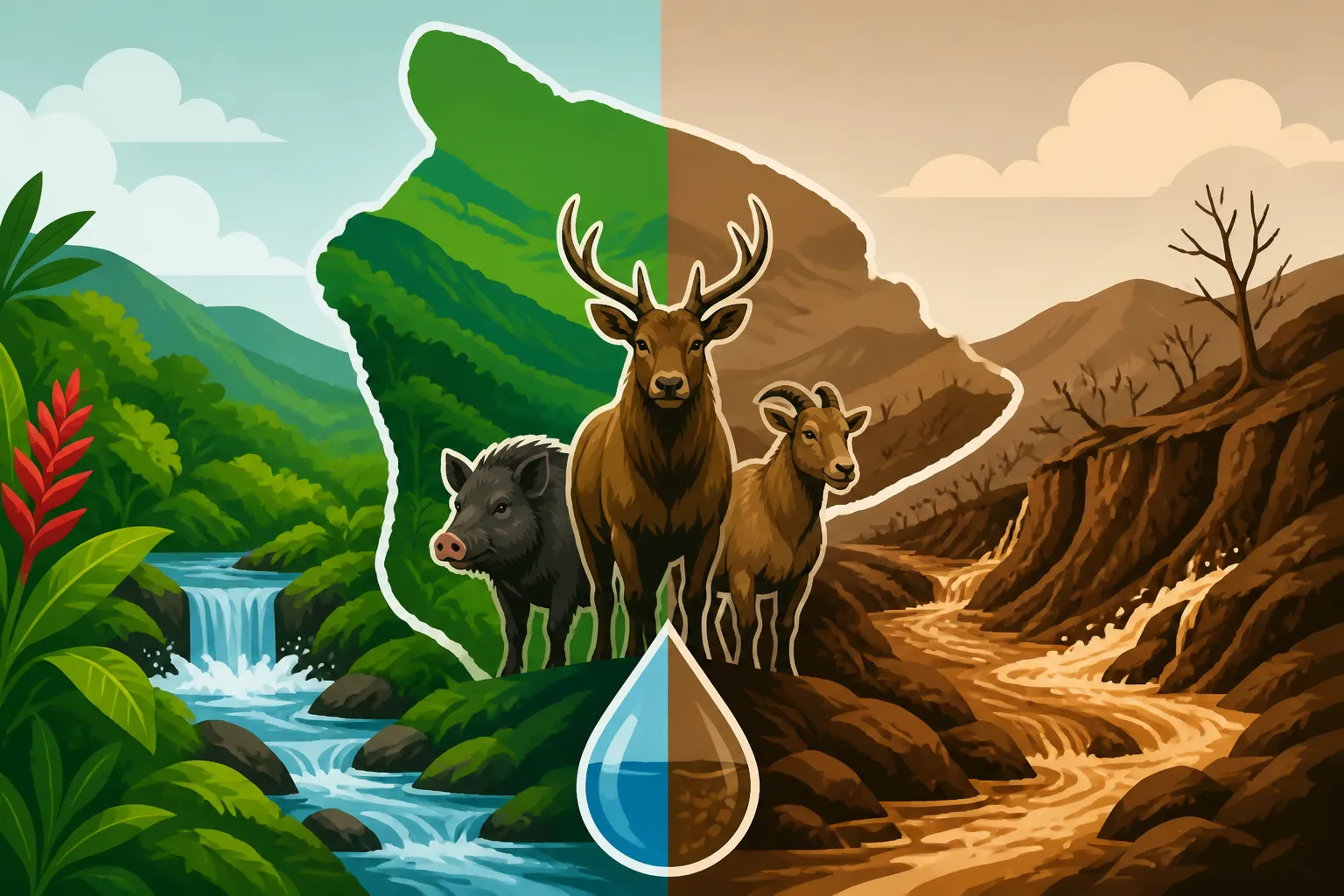
The result is widespread erosion. Rain, instead of being absorbed, rushes across exposed, compacted soil, carrying tons of sediment with it. This sediment chokes streams, fills reservoirs, and eventually flows out to sea, smothering coral reefs and nearshore marine ecosystems. For divers and snorkelers, the reduced visibility and dying coral can be heartbreaking; for water managers, it means costly dredging of reservoirs and increased turbidity in drinking water supplies. This problem is particularly acute in areas with heavy rainfall or on naturally steep terrain.
Water Contamination and Disease Risk
One of the most concerning direct impacts of ungulates on watersheds is the contamination of water sources. Where ungulates congregate, their fecal matter inevitably enters streams and groundwater. This introduces bacteria like E. coli and pathogens such as Giardia and Cryptosporidium, making the water unsafe for human consumption without extensive treatment.
Even more alarming is the heightened risk of leptospirosis, a serious bacterial disease found in the urine of infected animals, including feral pigs and rats. In Hawaii, hunters and outdoor enthusiasts are often warned about the dangers of wading in freshwater streams, especially after heavy rains, due to the risk of contracting leptospirosis from contaminated water. This isn't just a hypothetical threat; people in Hawaii get sick from leptospirosis every year. This means our recreational opportunities in streams and pools are compromised, and the cost of treating drinking water significantly increases to ensure public safety. Field Care in Hawaii's Heat and Humidity often includes awareness of these risks.
Altered Hydrology and Reduced Water Yield
The impact of ungulates on the physical structure of the watershed also fundamentally alters its hydrology – how water moves through the landscape. When vegetation is removed by grazing and rooting, and soil is compacted by hooves, the land's ability to absorb water drastically decreases. Instead of rain slowly infiltrating the ground to recharge aquifers, it runs off quickly, leading to flashier floods during storms and drier streams during prolonged dry periods.
This reduction in groundwater recharge is a critical issue for Hawaii, especially on islands with growing populations. Our aquifers are finite, and if less water is making its way into them, our long-term water supply security is jeopardized. The lush wet forest areas that are meant to be excellent water catchment zones become less efficient, impacting overall water availability for everyone. Conversely, in Hunting Hawaii's Dry Leeward Country areas, ungulates can destroy fragile native plants that help stabilize soil and capture scant moisture, exacerbating drought conditions.
The Ripple Effect: Broader Ecological and Economic Repercussions
The direct impacts on water quality and quantity are just the beginning. The presence of ungulates creates a cascade of problems that reverberate throughout Hawaii's ecosystems and economy.
Destruction of Native Ecosystems
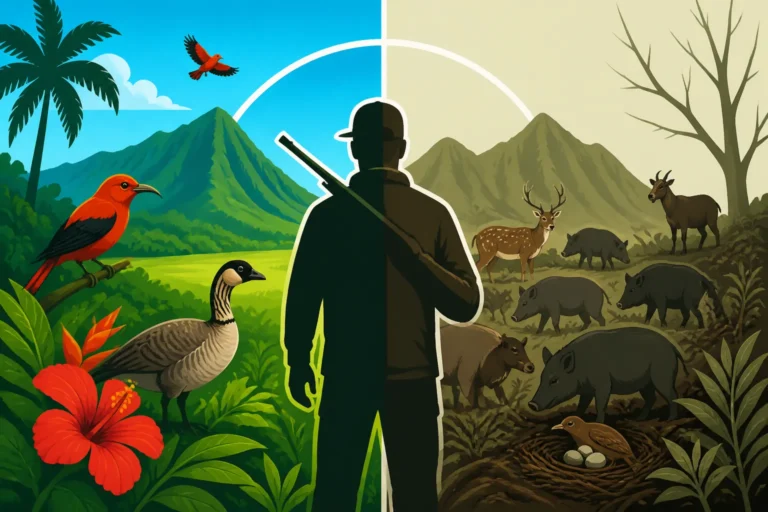
Hawaii's native forests evolved in isolation, without large grazing or rooting mammals. The plants have no natural defenses against the constant browsing, trampling, and uprooting by pigs, goats, deer, and sheep. These animals selectively consume native seedlings, preventing forest regeneration, while simultaneously spreading invasive plant seeds through their digestive tracts and on their fur. This effectively replaces resilient native ecosystems with degraded landscapes dominated by invasive species, which are often less efficient at capturing and storing water.
Consider the mamane forests on Mauna Kea, critical habitat for the endangered Palila bird, which feeds almost exclusively on mamane seeds. Feral sheep and goats browse on young mamane trees, preventing new growth and threatening this delicate ecosystem. This loss of biodiversity isn't just an aesthetic concern; it destabilizes the very foundation of our unique island environment and impacts the long-term health of our watersheds. The complexity of these issues highlights Why Hawaii Fences Out Pigs and Goats is a necessary, albeit costly, management tool.
Infrastructure Burden and Management Costs
The damage caused by ungulates translates directly into significant economic costs for the state and its residents. Water utilities face higher treatment costs due to increased sediment and contaminants in source water. Roads and trails within watershed areas are more susceptible to erosion and damage from uncontrolled runoff, requiring more frequent and expensive repairs.
Then there's the monumental cost of building and maintaining fences around sensitive watershed areas. These fences, sometimes miles long and crossing incredibly rugged terrain, are designed to exclude ungulates and allow native forests to recover. While effective, they are expensive to construct and require constant maintenance against animal breaches, falling trees, and natural wear and tear. Hunting Hawaii's Fenced Conservation Boundaries are a testament to this ongoing effort. Millions of dollars are spent annually on ungulate control programs, fencing, and watershed restoration efforts. This money comes from taxpayer dollars, diverting funds that could otherwise be used for other public services.
Diminished Recreational and Cultural Value
Beyond the environmental and economic, there are also less tangible, but equally important, costs. For those who enjoy hiking, camping, or simply experiencing Hawaii's unique natural beauty, degraded watersheds mean muddy trails, fewer native birds, and streams that are no longer safe for swimming. The aesthetic value of these lands diminishes, impacting the quality of life for residents and the experience for visitors.
For hunters, while ungulates are game, their uncontrolled populations can lead to a decline in the quality of hunting experiences over time in certain areas if the ecosystem degrades too much. Furthermore, for Native Hawaiians, the destruction of native forests impacts cultural practices like gathering plants for lei making, medicine, or traditional ceremonies. These areas are vital for connecting with ancestral lands and perpetuating cultural knowledge. When they are damaged, a piece of Hawaii's soul is diminished. This highlights the delicate balance between sustainable hunting as a management tool and overall conservation.
Managing Ungulate Impacts: A Complex Path Forward
Addressing the ungulate problem in Hawaii's watersheds is not simple. It involves a multi-pronged approach, often sparking passionate debate among conservationists, hunters, and local communities.
Fencing and Exclosure as a Primary Tool
One of the most effective, albeit controversial, strategies for protecting and restoring critical watershed areas is the construction of ungulate-proof fences. These fences, often 6-8 feet high and made of heavy-duty materials, are designed to completely exclude pigs, goats, and deer from specific management units. Once ungulates are removed from within these fenced areas, native vegetation can begin to recover, allowing the natural hydrological functions of the watershed to be restored.
While fences are incredibly successful at promoting forest regeneration, they come with substantial upfront costs for materials and construction, especially in Hawaii's remote and challenging terrain. There are also ongoing maintenance costs, as fences need regular inspection and repair to remain effective. Some argue that fencing merely shifts the problem to unfenced areas, while others express concerns about habitat fragmentation or the visual impact. However, from a watershed protection standpoint, these exclosures have proven to be invaluable for reversing decades of degradation.
Controlled Hunting and Population Management
Hunting plays a critical role in managing ungulate populations, especially in areas where fencing is not feasible or desired. By issuing permits for Hawaii Game Mammal Seasons, the Department of Land and Natural Resources (DLNR) allows hunters to participate directly in population control. Public hunting seasons, special hunts, and even aerial removal programs are all tools used to reduce ungulate numbers and alleviate pressure on fragile ecosystems.
For many local hunters, this isn't just a recreational pursuit; it's a deep-seated connection to the land and a contribution to conservation. Hunters provide valuable on-the-ground presence, removing animals that would otherwise continue to degrade the watershed. Platforms like GoHunt are becoming increasingly important for hunters to find information on Hawaii's Hunting Units and How They Work, apply for Hawaii's Drawn Hunts and Lotteries, and manage their licenses and permits, making it easier for them to participate in these crucial management efforts. The data collected from harvest reporting helps wildlife managers assess population trends and adjust management strategies.
| Ungulate Species | Primary Watershed Impact | Key Management Tools | Hunter Involvement |
|---|---|---|---|
| Feral Pig | Rooting, erosion, water contamination, invasive plant spread | Fencing, trapping, dog hunting, public rifle seasons | Active |
| Feral Goat | Overgrazing, denudation of slopes, erosion | Fencing, public rifle/archery seasons, aerial control | Active |
| Axis Deer | Browsing, trampling, compaction, spread of invasives | Fencing, public rifle/archery seasons, drawn hunts, aerial control | Active |
| Mouflon Sheep | Grazing, erosion, competition with natives | Fencing, public rifle/archery seasons, drawn hunts | Active |
Restoring Degraded Watersheds
Even with fences and hunting, active restoration is often necessary to help degraded watersheds recover. This involves reforestation with native species, particularly those that are highly effective at capturing and retaining water, like 'ohi'a. It also includes aggressive control of invasive plants that may have taken hold in areas cleared by ungulates. Community volunteer groups, often working with state and federal agencies, are vital in these efforts, planting thousands of native seedlings and removing invasive weeds by hand.
These restoration efforts are long-term commitments, often taking decades to show significant results. However, they are essential for rebuilding the resilience of Hawaii's watersheds and ensuring a sustainable future for our water resources. By understanding the profound "What Ungulates Cost Hawaii's Watersheds," we can appreciate the vital work being done by conservationists, hunters, and community members, often supported by resources found on platforms like GoHunt, to protect these irreplaceable natural treasures. Ultimately, the health of our islands depends on it.
Disclaimer
This article is for general informational purposes only and does not constitute professional advice. Laws, prices and regulations vary by location and change over time. Consult a qualified professional for guidance on your specific situation.