How Rain Shadows Split Hawaii’s Game
Hawaii is famous for its stunning beaches and lush landscapes, but beneath that beauty lies a stark climatic reality that profoundly shapes where you'll find game. If you’ve ever found yourself hunting in a thick, wet rainforest one day and a dusty, sun-baked landscape the next, you’ve experienced the dramatic effect of Hawaii’s rain shadows. This guide will help you understand this unique geographical phenomenon and how it dictates the distribution of Hawaii’s game animals, giving you an edge in planning your next hunt.
Understanding Hawaii's Rain Shadow Effect
Hawaii's volcanic islands are essentially massive mountains rising out of the Pacific, and their sheer height creates a meteorological marvel known as the "rain shadow effect." It’s a concept that sounds complex, but it’s quite straightforward once you visualize it. This phenomenon is responsible for the incredible diversity of microclimates across the islands, from arid deserts to some of the wettest places on Earth, often just a few miles apart.
The Role of Trade Winds and Mountains
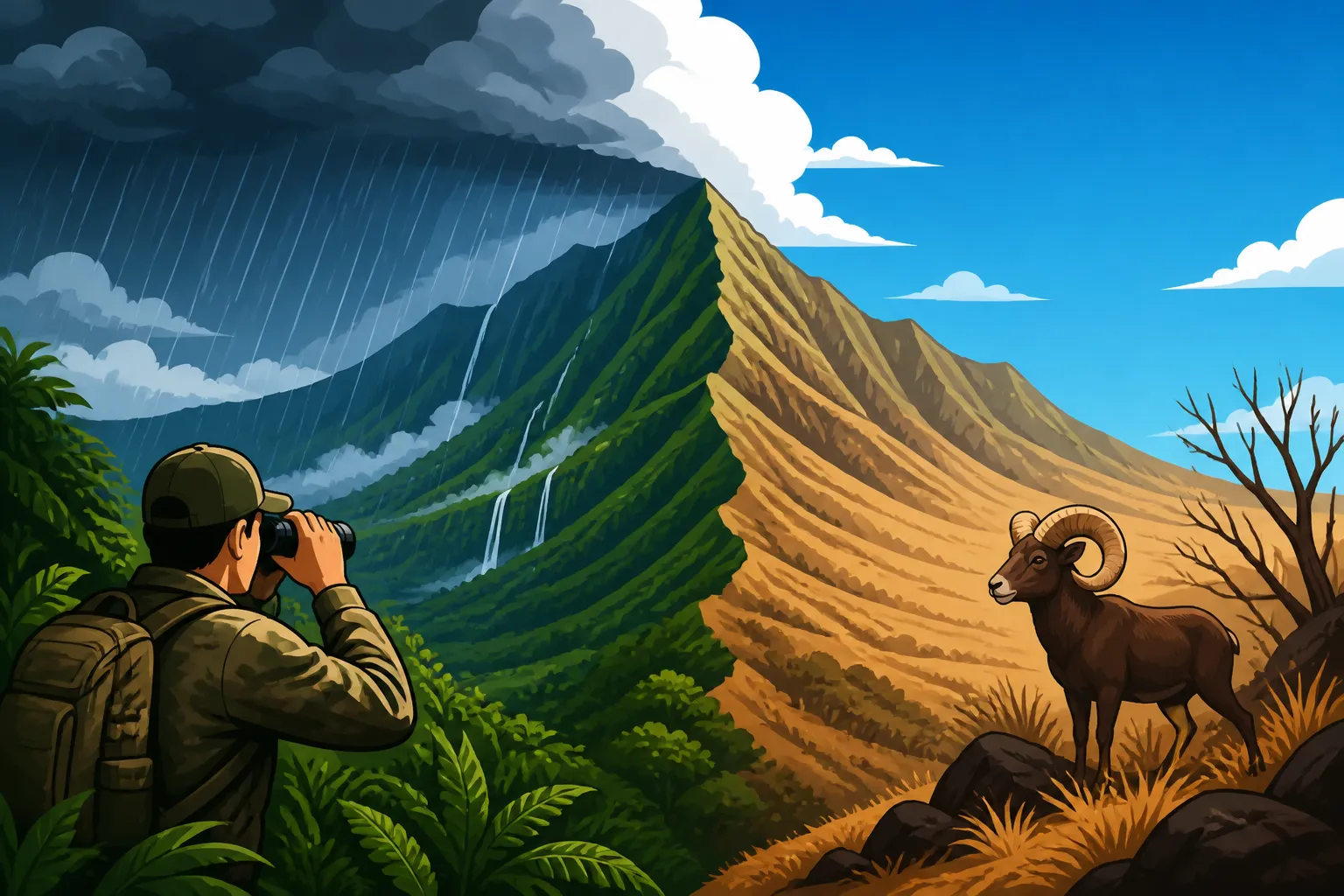
The Pacific Ocean's persistent trade winds are the primary drivers of Hawaii's weather. These winds, laden with moisture, typically blow from the northeast. As this humid air approaches one of Hawaii's tall volcanic peaks – think Mauna Kea and Mauna Loa on the Big Island, or Haleakala on Maui – it's forced upward. As the moist air rises, it cools, and that cooling causes the water vapor to condense, forming clouds and eventually rain. This is why the windward (northeast-facing) sides of the islands are so incredibly wet and green. They intercept the bulk of the incoming moisture.
Windward: The Wet and Green Side
The windward side of each island, perpetually facing the trade winds, is characterized by abundant rainfall, often measured in hundreds of inches annually. This constant moisture feeds dense, lush forests, deep gulches, and fast-flowing streams. The vegetation here is incredibly thick, with towering trees, dense undergrowth of ferns and guava, and often a muddy, slippery terrain. If you've ever found yourself post-holing through thick mud and tangled roots while searching for pigs, you were likely deep in a windward rain forest. This environment is a haven for certain types of game that thrive in moisture and cover, but it presents unique challenges for hunters.
Leeward: The Dry and Arid Side
Once the moisture-laden air has dumped most of its rain on the windward slopes, it continues over the mountain crest and begins to descend on the leeward (southwest-facing) side. As the air descends, it warms up and dries out, creating a stark contrast to the windward side. The leeward slopes are characterized by significantly less rainfall, often resembling semi-arid or even desert-like conditions. Here, you'll find sparse, thorny kiawe forests, dry grasslands, and lava fields. Water sources are scarce, and the ground can be dusty and rocky. This side of the island supports entirely different ecosystems and, consequently, different game animals, often requiring vastly different hunting tactics. It's truly like stepping into another world, sometimes within a short drive.
How Wet and Dry Sides Shape Game Distribution
The dramatic climatic differences created by rain shadows directly dictate which game species can survive and thrive on each side of Hawaii's islands. Animals, like plants, adapt to their environments, and Hawaii's diverse microclimates have led to distinct populations of game.
Game Thriving in Wet, Dense Forests
On the perpetually wet, windward sides of the islands, you'll find game animals that are built for thick cover and abundant water. Feral pigs are the quintessential residents of Hawaii's wet forests. They revel in the dense undergrowth, using it for cover, food, and bedding. The constant moisture means plenty of rooting opportunities for their omnivorous diet, and muddy wallows are never far off. These areas provide endless hiding spots, making Still-Hunting Pigs in Hawaii's Wet Forest a real challenge, often requiring keen tracking skills or the use of dogs. You'll find them rooting through guava thickets and dense fern patches, leaving behind a clear trail of disturbed earth. Hunters targeting pigs on these sides often face challenges like reduced visibility, slippery terrain, and navigating dense vegetation.
Game Preferring Dry, Open Country
In stark contrast, the dry, leeward sides of the islands are where you'll encounter game animals adapted to arid conditions and more open terrain. Axis deer, with their keen eyesight and preference for open grazing areas, are perfectly suited for these landscapes. You'll often find them browsing on kiawe pods or grazing on sparse grasses. Feral goats also thrive in these drier, rockier environments, often inhabiting steep, rugged cliffs where they can easily evade predators and find sparse browse. Hunting Goats on a Sea Cliff Safely requires specialized gear and caution. These animals often depend heavily on limited water sources, especially during dry seasons, making Hunting a Water Source in Dry Hawaii Country a highly effective strategy. The challenge here lies in spotting game from a distance and executing a successful Spot-and-Stalk Axis Deer in Hawaii approach across exposed ground.
Habitat and Hunting Contrast
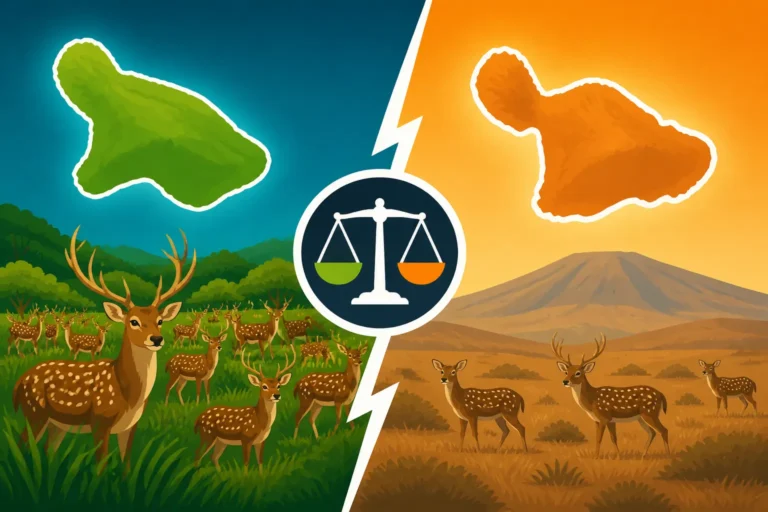
The table below illustrates the striking differences in habitat, prevalent game, and general hunting conditions between the windward and leeward sides of Hawaii's islands, a direct result of the rain shadow effect.
| Feature | Windward (Wet) Side | Leeward (Dry) Side |
|---|---|---|
| Rainfall | High (lush, rainforest, cloud cover) | Low (arid, desert-like, clear skies) |
| Vegetation | Dense forests, guava, ferns, tall grass | Sparse kiawe, dry grasslands, lava flows, scrub brush |
| Primary Game | Feral Pigs (high density in prime areas) | Axis Deer, Feral Goats, some Mouflon (Big Island) |
| Terrain | Muddy, slippery, steep gulches, thick undergrowth | Rocky, dusty, open ridges, sparse cover, exposed |
| Hunting Style | Dog hunting, still-hunting, tracking, close quarters | Spot-and-stalk, glassing, waterhole sits, long shots |
| Visibility | Low, limited to short distances | High, panoramic views, long-range glassing |
| Challenges | Navigating dense cover, heat, humidity, footing, bugs | Heat, sun exposure, limited water, lack of cover, wind |
Specific Island Examples of Rain Shadow Impact
While the general principles of the rain shadow effect apply across all the Hawaiian islands, the specific geography of each island leads to unique distributions and densities of game. Each island tells its own story of how these climatic forces have shaped its hunting opportunities.
Hawaii Island: The Giant's Influence
On the Big Island, the massive volcanoes of Mauna Kea and Mauna Loa create truly epic rain shadows. The Hilo side (windward east) is notoriously wet, home to vast, dense rainforests where feral pigs thrive. If you're looking for a challenging pig hunt in incredibly thick cover, this is your territory. Conversely, the Kona side (leeward west) is much drier, characterized by kiawe forests and vast ranch lands, particularly in areas like Puu Anahulu. Up on the slopes of Mauna Kea, above the tree line, you'll find the majestic Mouflon sheep, adapted to the thin air and sparse vegetation. Hunting Mouflon in Mauna Kea's Thin Air is a unique experience, influenced by the dry, high-altitude conditions created by the mountain's immense shadow. The distinction is so pronounced that tactics for Hunting Pigs on Hawaii's Wet Windward Side are entirely different from Hunting Pigs on the Dry Leeward Side, despite being on the same island.
Maui: Haleakala's Dividing Line
Maui's prominent shield volcano, Haleakala, also creates a significant rain shadow. The windward slopes and valleys, particularly around Hana, are verdant and wet, providing ideal pig habitat. However, the vast leeward slopes, stretching from Makawao down through Kula and Kahikinui, are much drier. These expansive, often open, areas are prime habitat for Axis deer. This is where you'll find the majority of the island's deer population, well-adapted to the drier conditions and feeding on the scattered grasses and kiawe. Hunting Maui's Upcountry Axis Deer often means hunting these leeward slopes, where glassing vast expanses is key. The availability of water sources, often man-made stock ponds, becomes critical for both deer and hunters in these arid zones.
Lanai and Molokai: Predominantly Leeward Paradises
While all islands have both wet and dry sides, some islands are more heavily influenced by one or the other. Lanai and Molokai, for instance, are relatively smaller and tend to have a more pronounced leeward character overall, making them legendary for Axis deer. The interior of Lanai is largely dry, with extensive kiawe and scattered native dryland forests. This habitat is perfectly suited for Axis deer, making the island a premier destination for deer hunters. Similarly, Molokai's terrain, particularly its west and central regions, leans towards the drier side, supporting a healthy population of Axis deer known for their impressive size. Hunting Molokai's Axis Deer Country often involves traversing dry gulches and glassing open ridges. While these islands do have wetter pockets, the predominant drier climate dictates the prevalence of certain game species over others. When planning a hunt on these islands, it's wise to consult resources like GoHunt Hawaii, which often provides unit-specific information that takes these climate differences into account.
Hunting Strategies for Different Rain Shadow Zones
Understanding the rain shadow effect isn't just academic; it profoundly impacts your hunting strategy and the gear you need to bring. A successful hunt in Hawaii often means adapting your approach to the specific microclimate you're in.
Wet Side Tactics and Gear
When hunting the windward, wet sides of the islands for feral pigs, your tactics will revolve around navigating dense cover and capitalizing on the animals' habits in moist environments. Still-hunting, moving slowly and quietly through the thick vegetation, can be effective, relying on your senses to detect subtle signs like fresh rooting or the distinct smell of pigs. Dog hunting is also extremely popular and effective in these challenging conditions, where the dogs' ability to navigate and find game in dense cover is invaluable. Pig Hunting With Dogs in Hawaii is a tradition for many local hunters. Tracking becomes crucial, as soft, muddy ground holds clear imprints.
Essential Gear for Wet Hunts:
- Rain Gear: Absolutely non-negotiable. A lightweight, durable rain jacket and pants will keep you comfortable and focused.
- Waterproof Boots: Muck boots or high-quality waterproof hiking boots with excellent traction are a must for slippery, muddy terrain.
- Navigation: GPS devices or apps like OuterSpatial are critical in dense, disorienting rainforests where visibility is limited and trails can vanish.
- Blaze Orange: Even in thick cover, safety is paramount. Follow Hawaii's blaze orange regulations.
- Hydration: Despite the rain, exertion in humidity can still lead to dehydration.
Dry Side Tactics and Gear
On the leeward, dry sides, targeting Axis deer and goats requires a completely different mindset. The more open terrain lends itself well to spot-and-stalk hunting. Spend time glassing wide areas at first light and last light, using binoculars and spotting scopes to locate game. Animals often move between bedding areas in the kiawe flats and feeding grounds or water sources. Hunting Axis Deer at First Light in Hawaii is a common and effective tactic. Focusing on Hunting a Kiawe Flat for Axis Deer can also yield results, as they often seek shade and browse in these areas. Water holes become magnets for game, especially during dry periods. Remember, long shots are often the norm on these open landscapes, so practicing your marksmanship is essential.
Essential Gear for Dry Hunts:
- Optics: High-quality binoculars and a spotting scope are indispensable for covering vast, open terrain.
- Water: Carry significantly more water than you think you'll need. Dehydration is a real risk in the Hawaiian sun.
- Sun Protection: Wide-brimmed hat, sunglasses, and sunscreen are crucial.
- Sturdy Boots: Hiking boots capable of handling rocky, uneven, and sometimes sharp lava terrain are vital.
- Lightweight Clothing: Breathable, light-colored clothing will help you stay cool.
- Rangefinder: Essential for accurate shot placement on potentially long-distance engagements.
By understanding how Hawaii's rain shadows carve the landscape into distinct hunting zones, you can better prepare for your trip, anticipate game behavior, and ultimately increase your chances of a successful and rewarding hunt, no matter which side of the island you choose to explore.
Disclaimer
This article is for general informational purposes only and does not constitute professional advice. Laws, prices and regulations vary by location and change over time. Consult a qualified professional for guidance on your specific situation.