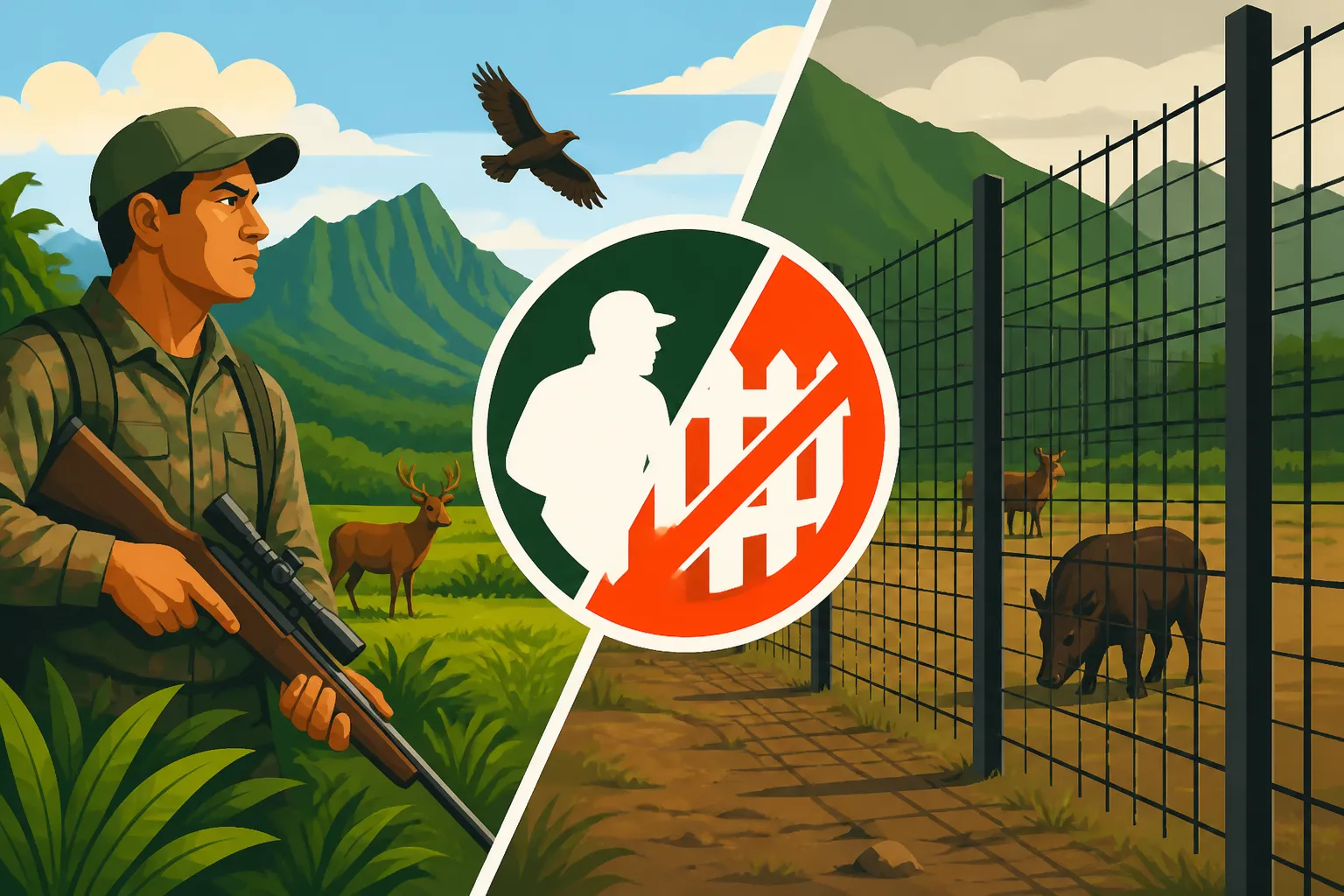
Why Some Hawaii Hunters Oppose Fencing
If you’ve spent any time hunting in Hawaii, you’ve likely encountered them: those long, often imposing fences snaking across the landscape, sometimes in the middle of what used to be prime hunting ground. It's a frustrating sight for many, creating a real sense of being cut off from cherished traditions and opportunities. This guide dives deep into why these conservation fences, despite their good intentions, often spark significant opposition among Hawaii's hunting community, exploring the concerns about access, animal welfare, and the future of hunting on the islands.
The Complex Landscape of Conservation and Fencing in Hawaii
The sight of a new fence cutting across a favorite gulch or ridgeline can be disheartening, even infuriating, for a hunter who has worked that land for years. But to understand the opposition, we first need to understand why these fences are being built in the first place. It’s not just a random act; there’s a driving force rooted in a deep concern for Hawaii’s unique, and often fragile, natural heritage.
The Rationale Behind Fencing Efforts
At its core, the push for fencing in Hawaii comes from a critical need to protect the islands' incredibly vulnerable native ecosystems. Imagine plants and birds that evolved for millions of years without the presence of large, hoofed mammals. When species like pigs, goats, sheep, and deer were introduced, they became — through no fault of their own — agents of ecological change, often devastating change. They root up forest floors, eat native seedlings, strip bark from trees, and contribute significantly to erosion, especially in vital watershed areas.
These fences are primarily erected by agencies like the Department of Land and Natural Resources (DLNR) through its Division of Forestry and Wildlife (DOFAW), often in partnership with private landowners, federal agencies, and various conservation groups. Their goal is to create sanctuaries, areas where native plants can regrow, and endangered forest birds can find refuge from habitat destruction. These are often in high-value watershed areas, where protecting the natural sponge of the forest ensures clean drinking water for everyone. It’s a battle against the ongoing degradation of irreplaceable natural resources, and fencing is seen as one of the most effective tools to exclude destructive ungulates.
A Historical Overview of Introduced Species
It's easy to look at a feral pig or goat today and see a problem, but it’s important to remember that many of these animals have been here for a very long time, some even predating Western contact. The Polynesian voyagers brought pigs to Hawaii centuries ago, establishing a deep cultural connection to these animals as a food source and an integral part of Hawaiian traditions. Later, European explorers and settlers introduced goats, sheep, and eventually deer, often for ranching or sport. Over generations, many escaped or were released, establishing robust wild populations across the islands.
These animals thrived in the predator-free environment, their numbers exploding in many areas. For generations, local communities have hunted these animals for subsistence, for sport, and as a way of life, often forming a deep personal connection to the land and the practice. The animals themselves became part of the local ecosystem, however disruptive. So, when conservation efforts move to exclude or eradicate these animals from specific areas, it often feels like an attack on a deeply ingrained way of life and a disconnect from the historical reality of Hawaii's landscape. Understanding this historical context helps explain why the opposition to fencing isn't just about "wanting to hunt," but about preserving a legacy. You can read more about What Hawaii's First Settlers Brought to the islands.
Core Concerns: Access, Animal Welfare, and Ecosystem Dynamics
When a new fence goes up, the immediate reaction from many hunters isn't usually a celebration of ecological preservation. Instead, it's often a feeling of frustration, a sense of loss, and a deep concern about the implications for both their hunting heritage and the animals themselves. These fences represent more than just a physical barrier; they symbolize a contentious point where conservation goals clash directly with long-standing human practices and ethical considerations.
Restricted Access and Loss of Hunting Grounds
Perhaps the most visceral and immediate concern for Hawaii’s hunters is the outright loss of access to traditional hunting grounds. Imagine spending years learning the contours of a specific gulch, understanding the pig trails, and knowing where the goats bed down in a particular canyon. Then, seemingly overnight, a fence is constructed, and that entire area—or a significant portion of it—is suddenly off-limits. This isn't just an inconvenience; it can feel like a personal affront, a disconnection from a land that hunters have often considered part of their identity.
These closures often happen in critical habitat areas that were also key hunting zones, pushing animals and hunters alike into smaller, unfenced regions. This can lead to overcrowded hunting units, increased competition, and a decline in the quality of the hunting experience. For hunters who rely on these animals for food, a reduction in available hunting land translates directly into less meat for the table, impacting household budgets and food security. The frustration is compounded by a feeling that hunters, who often serve as de facto wildlife managers through their efforts to control ungulate populations, are being excluded from the decision-making process. The issue of Hawaii's Fenced Conservation Area Closures is a very real one for many in the hunting community.
Animal Welfare and Population Dynamics Inside Fences
Beyond the concern for human access, many hunters voice serious ethical and practical concerns about the welfare of animals caught within newly fenced areas. What happens to the pigs, goats, or sheep that are suddenly confined? If no immediate management plan is in place to remove them, they can face starvation, disease, or simply be culled through methods that don't involve hunting. This "waste" of potential protein, when many families rely on wild game, is a deeply troubling prospect for many in the hunting community.
Furthermore, there are concerns about the long-term impact on animal populations. While the goal is to protect native species, creating isolated pockets of ungulates might not be ideal for the health of those animal populations either. Restricted movement can affect genetic diversity, particularly if the fenced areas are small, potentially leading to inbreeding or unhealthy populations in the long run. Hunters, who often observe these animals closely, worry that the ecological solutions implemented might create new problems for the very game species they pursue. The ongoing debate around Hawaii's Aerial Ungulate Control Programs often highlights these concerns, as many hunters would prefer to harvest the animals themselves.
The Impact on Hunting Culture and Economic Realities
Hunting in Hawaii is more than just a recreational activity; for many, it's a vital thread woven into the fabric of family, community, and cultural identity. When fences alter the landscape of hunting, they don't just affect a weekend hobby; they ripple through generations of tradition and impact the livelihoods of those who depend on wild game and the hunting industry. This deep cultural and economic connection is often overlooked in the broader conservation narrative, leading to significant resentment and opposition.
Erosion of Traditional and Subsistence Hunting
For many local families, hunting feral pigs, goats, and even deer isn't merely a sport; it's a cornerstone of their ancestral practices and a crucial element of their food sovereignty. Generations have learned to hunt these animals, passing down knowledge of the land, tracking skills, butchering techniques, and the importance of sharing the harvest. This isn't just about bagging a trophy; it's about putting organic, locally sourced meat on the table, often in areas where fresh food can be expensive or difficult to access.
Fencing off vast tracts of land, particularly those known for productive hunting, can sever these crucial links to the past and present. It creates a feeling that an external agenda is prioritizing one aspect of conservation (native species protection) over another equally important one: the perpetuation of local culture and the ability of families to feed themselves. The ability to engage in Hunting Hawaii's Feral Pigs or Hunting Hawaii's Feral Goats is directly tied to the availability of accessible land, and when that land is reduced, the cultural practice suffers. This isn't just a lament; it's a genuine struggle for cultural survival and a push against what many perceive as a disregard for their traditional ways of life.
Economic Repercussions for Guides and Local Businesses
The ripple effect of reduced public hunting access extends beyond individual families to the wider economy, particularly affecting local hunting guides and businesses that cater to the outdoor community. A significant portion of Hawaii's hunting landscape relies on accessible public lands or private lands that might also be subject to conservation efforts. When these areas are closed or restricted due to fencing, it can mean fewer opportunities for hunters, both local and visiting, to engage in guided hunts.
Local guides, many of whom are deeply knowledgeable about the islands' terrain and animal behavior, rely on these hunts for their livelihoods. Fewer hunters mean less business, impacting not only the guides themselves but also their families and communities. Beyond guides, there are small businesses that depend on hunters: local gear shops, rural gas stations, eateries near hunting units, and even small accommodations. Reduced hunter traffic directly impacts these establishments, which often operate on thin margins. Hunters also contribute to conservation funding through license and tag fees, and if hunting participation declines due to access issues, that funding stream can diminish. This often leads to questions about How Hunting Fits Hawaii's Conservation Plan if the economic contributions of hunters are overlooked or devalued.
Seeking Balance: Alternative Approaches and Hunter Engagement
The opposition to fencing isn't necessarily a rejection of conservation; it's often a call for a more inclusive, holistic approach that recognizes the valuable role hunters can play. Many hunters believe there are alternative, or at least complementary, strategies that could achieve conservation goals while still respecting hunting traditions and maintaining public access. The key, they argue, lies in communication, collaboration, and a willingness to explore a broader range of solutions.
The Call for Integrated Management Solutions
Rather than viewing fencing as the primary or sole solution, many hunters advocate for integrated management strategies that place hunting front and center as a conservation tool. Hunters are, by nature, active participants in wildlife management, directly reducing ungulate populations. They argue that expanding hunting opportunities, rather than restricting them, could be a more sustainable and economically beneficial way to manage feral animal numbers in certain areas.
This could involve longer hunting seasons, increased bag limits where appropriate, or even opening up new units to regulated hunting. Imagine a scenario where, instead of culling animals behind a fence, structured public hunts are organized to remove them, ensuring the meat is utilized and hunters remain engaged. Programs that support local hunters with equipment or incentives to target high-impact areas could be explored. There's also potential for modern tools to enhance management. For instance, platforms like GoHunt, or the use of mapping applications like Using the OuterSpatial App to Check In, could help manage hunter access and harvest data more efficiently, leading to better-informed management decisions. The question isn't if animals need to be managed, but how, and hunters believe their skills and dedication offer a powerful, underutilized solution.
The Importance of Communication and Partnership
A significant portion of the opposition to fencing stems from a pervasive feeling of being excluded from the decision-making process. Hunters often feel that these large-scale conservation projects are planned and implemented without adequate consultation with the very communities whose lives and traditions are most impacted. This lack of communication fosters distrust and resistance, turning potential partners into adversaries.
What's really needed is an open and ongoing dialogue between conservation agencies, the hunting community, and private landowners. Imagine community meetings where project plans are shared transparently, where hunter concerns are genuinely heard, and where collaborative solutions are actively sought. This could involve forming joint task forces composed of agency officials, local hunters, and kupuna (elders) to co-develop management plans. Such partnerships could identify areas where fencing is truly indispensable and areas where enhanced hunting pressure, guided by hunter expertise, could achieve similar ecological benefits. By working together, rather than in silos, we could build trust, foster a shared sense of responsibility, and ultimately arrive at more effective, and more widely accepted, conservation outcomes for all of Hawaii’s diverse ecosystems and communities. Initiatives like Hawaii Hunter Education Requirements are a great way to engage new hunters, and involving them in the decision-making process would strengthen their commitment.
| Aspect | Conservation Goal (from Fencing Perspective) | Hunter's Concern/Opposition |
|---|---|---|
| Native Species Protection | Shielding vulnerable endemic plants and animals from ungulate damage. | Animals within fences may be wasted if not hunted; loss of traditional food source. |
| Watershed Health | Preventing erosion and protecting pristine water sources from animal disturbance. | Reduced access to valuable public lands; concentration of animals in adjacent areas. |
| Animal Population Control | Effectively reducing ungulate numbers in sensitive areas. | Loss of hunting opportunity for specific species; ethical concerns about culling methods. |
| Hunting Access | Creating protected zones for native ecosystems. | Direct loss of traditional hunting grounds; feeling of exclusion from public lands. |
| Cost Efficiency | Long-term ecological benefits outweigh initial investment. | High cost of fencing could be better spent on other management efforts like expanded public hunts or dog programs, or even securing Getting Onto Hawaii Private Land for hunting access. |
| Cultural Impact | Focusing on preserving ecological heritage. | Disruption of generations-old subsistence hunting practices and cultural identity. |
Disclaimer
This article is for general informational purposes only and does not constitute professional advice. Laws, prices and regulations vary by location and change over time. Consult a qualified professional for guidance on your specific situation.