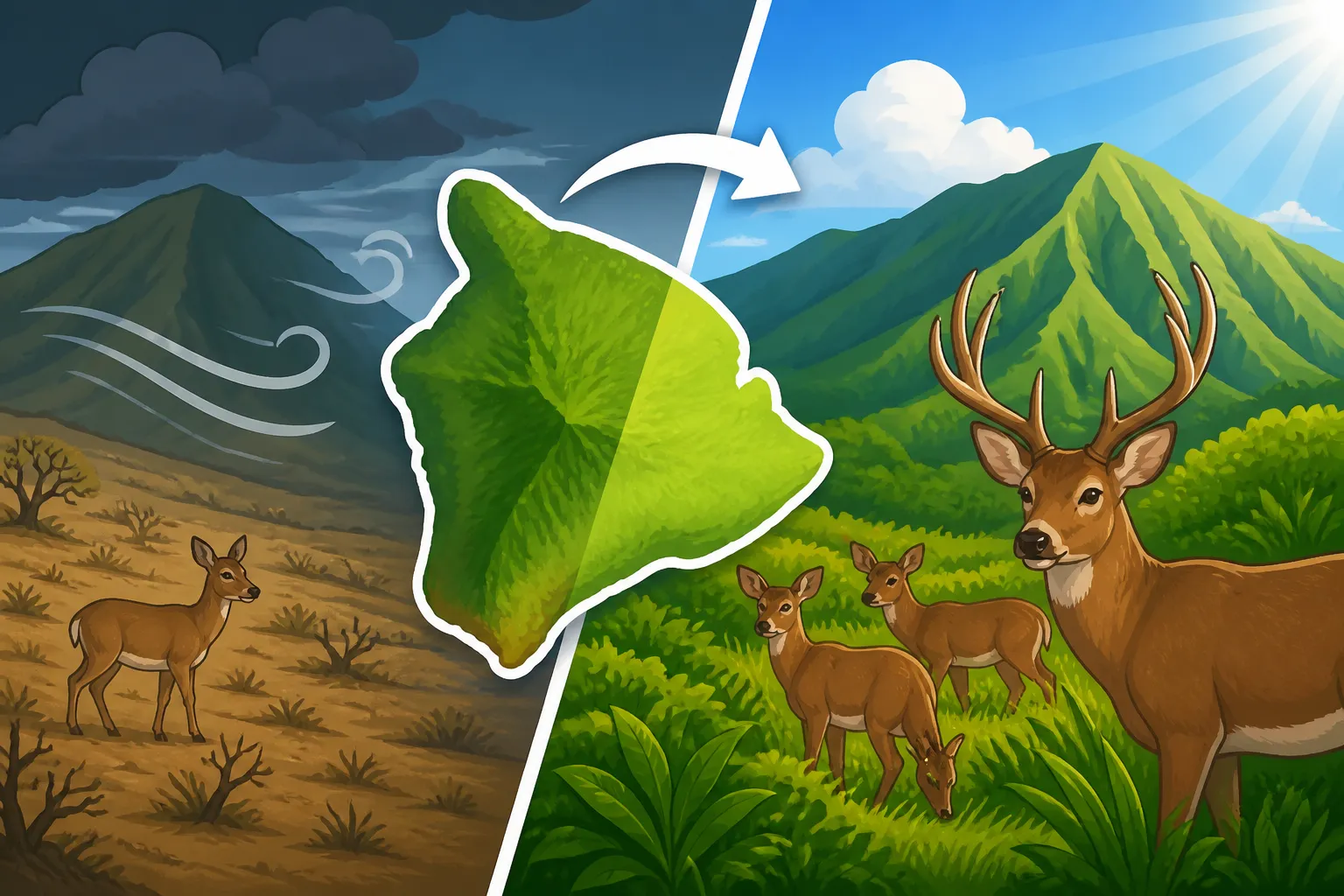
Why Hawaii’s Leeward Side Holds More Deer
Many hunters coming to Hawaii, or even those who've lived here a while but are new to the hunting scene, often wonder why certain areas seem to hold more game than others. It can be frustrating to spend hours scouting or hunting a lush, green valley only to find minimal sign, while a seemingly barren, dry slope is teeming with life. The truth is, Hawaii's unique geography creates distinct microclimates, and understanding the difference between the "leeward" and "windward" sides of our islands is absolutely crucial, especially if you're after Axis deer. This guide will walk you through exactly why Hawaii's leeward side is a haven for deer and how you can use this knowledge to your advantage.
Understanding Hawaii's Microclimates and Deer Habitats
Hawaii isn't just one big, uniform tropical paradise. Each island, with its majestic mountains, creates a distinct split in climate that profoundly impacts where our game animals thrive. It's not just a subtle difference; it's a fundamental division that dictates everything from rainfall to vegetation density.
The Trade Winds and Rain Shadow Effect
The dominant weather pattern in Hawaii comes from the northeast, bringing consistent trade winds across the islands. These winds carry moisture-laden air, which hits the high mountain ranges and is forced upwards. As the air rises, it cools, and the moisture condenses, resulting in heavy rainfall on the windward sides of the islands. This is why places like Hilo on Hawaii Island, or the Hana side of Maui, are famously wet and lush, draped in dense rainforest.
But what happens on the other side of the mountains? As that air continues over the peaks, it loses most of its moisture. By the time it descends the leeward slopes, it's dry and warm. This phenomenon is called the "rain shadow effect," and it creates arid, sun-baked landscapes. Think of the Kona side of Hawaii Island, or Kihei and Lahaina on Maui – hot, dry, and often brown. This dramatic difference in rainfall, sometimes just a few miles apart, is the single biggest factor in deer distribution.
How Vegetation Differs on Leeward Slopes
Because of that stark contrast in rainfall, the types of plants that grow on the leeward sides are completely different from their windward counterparts. On the wet windward side, you'll find dense, almost impenetrable jungles of introduced species like strawberry guava, ginger, and clidemia, alongside native 'ohi'a and koa forests. This environment, while rich in biodiversity, can be a nightmare to navigate and often lacks the open understory that deer prefer for feeding and visibility.
The leeward slopes, however, are dominated by drought-resistant vegetation. You'll see vast expanses of kiawe (mesquite) trees, thorny haole koa, various grasses, and sparse scrubland. This open, savanna-like environment is ideal for Axis deer. It provides clear lines of sight, easier travel, and a bounty of palatable browse and forbs that these deer relish. The browse species here often have higher nutritional value in their leaves, even if they appear dry, providing essential sustenance that the deer seek out.
Water Sources in Dry Leeward Country
In dry leeward country, water is gold. Unlike the perpetually damp windward side where springs and ephemeral streams are common, reliable water sources on the leeward side are few and far between. This scarcity makes any standing water — whether it's a small seep, a stock pond, a man-made trough, or even just a low spot where rain collects after a rare shower — a major magnet for all wildlife, especially deer.
Deer need water daily, particularly in hotter climates like Hawaii. Knowing where these crucial water sources are located can be the key to your success on a leeward hunt. They become natural focal points where deer congregate, especially during the early morning and late evening hours. Spotting fresh tracks or droppings around a waterhole is a clear indicator of recent activity. Sometimes, old, abandoned agricultural reservoirs or even lava tubes that capture moisture can serve as critical water points that only the local wildlife and savvy hunters know about. Hunting a Water Source in Dry Hawaii Country delves deeper into these tactics.
Why Axis Deer Thrive on the Leeward Side
Axis deer aren't native to Hawaii; they were introduced here. Like many introduced species, they found certain Hawaiian environments to be remarkably similar to their native Indian subcontinent – specifically, the drier, open woodlands and grasslands. This makes the leeward side a perfect fit for their natural behaviors and survival strategies.
Food Availability and Preferred Forage
Axis deer are primarily browsers, meaning they prefer to eat leaves, twigs, and shrubs rather than solely grazing on grass. While they will graze, their diet consists largely of the tender new growth of various bushes and trees. The vegetation mix on the leeward side, with its abundance of kiawe, haole koa, various thorny acacias, and other introduced species, provides exactly this kind of varied and nutritious forage. Even when seemingly dry, these plants offer valuable protein and minerals that keep deer healthy and thriving.
Contrast this with the windward rainforests, where much of the plant life is either unpalatable, too high to reach, or grows in such dense thickets that deer cannot move through it efficiently to feed. The open nature of the leeward browse allows deer to move freely, browse strategically, and stay alert to their surroundings, which is critical for a prey animal. Reading Axis Deer Sign in Dry Country can help you identify what they're eating and where they're moving.
Thermal Regulation and Sun Exposure
Another critical factor for Axis deer is thermal regulation. These deer are accustomed to warm climates. While the sun can be intense on the leeward side, the open, airy environment allows for better air circulation compared to the humid, stagnant conditions of a dense rainforest. Deer can seek shade under kiawe or large haole koa trees during the hottest parts of the day and then move out to feed in the cooler mornings and evenings.
The relatively sparse canopy on leeward slopes also means that when the sun does hit the ground, it helps to dry out bedding areas, reducing issues with parasites and skin conditions that can be more prevalent in perpetually wet environments. They are well-adapted to lying up in sparse cover, relying on their keen senses and camouflage to avoid detection.
Escape Cover and Terrain Preferences
While the leeward side might seem "open" to us, it still offers plenty of strategic cover for Axis deer. The kiawe and haole koa thickets, though often appearing sparse from a distance, can form incredibly dense, thorny mazes that offer excellent concealment and protection. A big buck knows how to slip into these thorny strongholds and vanish, making pursuit incredibly challenging for hunters.
The terrain itself on many leeward slopes provides natural advantages. Often characterized by rolling hills, dry gulches, and old lava flows or rocky outcroppings, these features create natural travel corridors and escape routes. Deer can use the contours of the land to move undetected, dipping into depressions or following the bottom of a dry wash to avoid detection. This combination of dense, thorny patches and undulating terrain creates a perfect balance of food, water, and security that Axis deer depend on. This is where Spot-and-Stalk Axis Deer in Hawaii tactics become essential.
Key Leeward Hunting Areas by Island
Understanding why deer prefer the leeward side is one thing; knowing where those leeward opportunities exist is another. While nearly every island has some leeward areas, the prominent Axis deer populations are concentrated on specific islands.
Maui's Leeward Axis Deer Hotspots
Maui is arguably the epicenter of Axis deer hunting in Hawaii. The vast majority of its thriving deer population is found on the dry, leeward slopes of Haleakala, particularly in areas like Kahikinui, Kanaio, and much of the Kula Forest Reserve. These units stretch from the drier lower elevations up into the more temperate mid-elevations, offering a diverse range of terrain from kiawe flats near the coast to more open pastureland and thorny brush higher up.
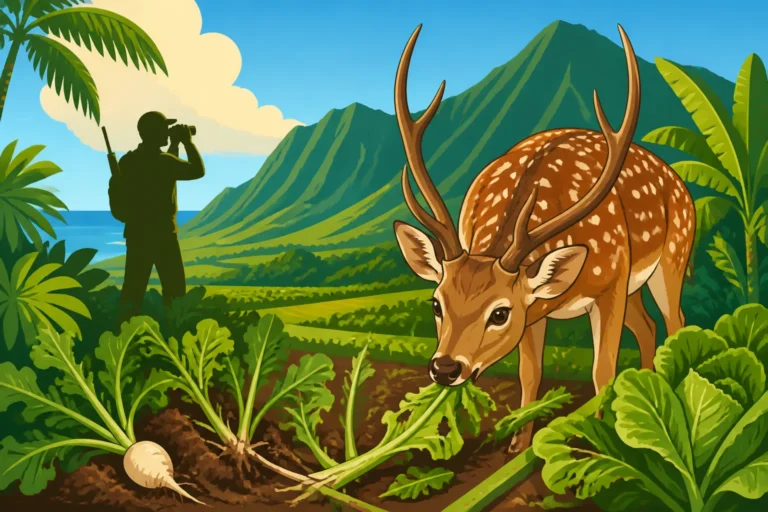
Hunters often find themselves glassing wide-open hillsides, scanning for the tell-tale white spots of Axis deer against the brown, sun-drenched landscape. The sheer number of deer in these areas can be impressive, but don't let that fool you – they are still incredibly wary. Access can vary, with some units offering vehicle access along rough roads, while others require considerable hiking. Hunting Maui's Year-Round Axis Deer Units provides more specific details on these incredible opportunities.
Lanai's Dry Country Deer Concentrations
The island of Lanai is almost entirely leeward, relative to the strong trade winds, making nearly the whole island prime Axis deer habitat. Once a vast pineapple plantation, much of Lanai's terrain is now covered in a mix of kiawe, haole koa, and open grasslands, broken by steep gulches and volcanic features. This makes it an ideal spot for large herds of Axis deer. The interior of the island, particularly around the central plateau and its various drainages, holds significant populations.
Hunting on Lanai, especially during the highly sought-after When Lanai's Axis Deer Rifle Season Runs, often involves long hours of glassing from high points, covering vast distances on foot, and carefully planning stalks across open, exposed terrain. The visibility is often excellent, but so is the deer's ability to spot you. Access to public hunting units requires careful planning, often involving designated roads or trails. GoHunt is a great resource for checking unit boundaries and specific regulations before heading out.
Molokai's West End and Central Plains
Molokai, another "deer island," also boasts substantial Axis deer populations primarily on its drier leeward side. The western end of Molokai, characterized by rolling hills, grasslands, and kiawe forests, provides a perfect environment for these deer. The central plains and valleys that run east-to-west across the island also offer excellent habitat, particularly where agricultural fields meet natural dry brush.
Hunters on Molokai will often focus on the Unit 1 and Unit 2 public hunting areas, which encompass much of this prime leeward habitat. Like Lanai and Maui, hunting here demands keen eyesight, patience, and a willingness to cover ground. While the deer are abundant, they are known for their wariness, making a successful stalk a true challenge. Private land access is also a significant factor on Molokai, offering additional opportunities for guided hunts. Hunting Molokai's Axis Deer Country outlines these unique challenges and rewards.
Adapting Your Hunt for Leeward Conditions
Hunting on Hawaii's leeward side isn't just about finding the deer; it's about adapting your entire approach to the unique environment. The dry, hot, and often exposed conditions demand different strategies than the wet, dense forests of the windward side.
Scouting and Reading the Dry Landscape
Effective scouting on the leeward side focuses on understanding the deer's daily patterns in relation to food, water, and cover. Look for well-used trails leading to and from water sources. Pay attention to fresh droppings and tracks around bedding areas, often under the shadiest kiawe trees or on benches along gulch walls. Rubs on kiawe trunks, though less common than in temperate forests, can indicate buck activity, especially during the rut.
Glassing is your most powerful tool. Find a vantage point that allows you to survey a large area, especially during the golden hours of dawn and dusk. Use high-quality binoculars or a spotting scope to pick apart the landscape, looking for even a flick of an ear or the distinctive pattern of an Axis deer's coat. Remember, their spotted camouflage is incredibly effective in dappled light and among dry brush. Programs like GoHunt often have maps that overlay public land boundaries, which are invaluable for planning your scouting routes and knowing where you can legally hunt.
Hydration and Heat Management
This is absolutely critical. Hunting the leeward side means you'll be exerting yourself in hot, often sunny conditions. Dehydration can set in quickly, leading to fatigue, poor judgment, and even heat stroke. Always carry more water than you think you'll need. A hydration pack is usually a better choice than water bottles, as it allows for continuous sipping. Electrolyte tablets or mixes can also be a lifesaver.
Dress in light-colored, breathable clothing that wicks moisture away from your skin. A wide-brimmed hat and sunglasses are essential. Plan your hunts to capitalize on the cooler morning and evening hours, taking extended breaks in the shade during the midday heat. If you're hiking into a remote area, consider caching water along your route beforehand if possible, or planning your journey around known, reliable water sources to refill. Water and Heat Planning for a Hawaii Hunt provides more extensive advice.
Stalking Tactics in Open, Sparse Cover
The open nature of the leeward environment makes stalking a true art form. You simply cannot rely on dense cover to hide your approach. This means patience, slow movement, and meticulous attention to wind direction are paramount. Axis deer have excellent eyesight and hearing, and they are incredibly alert in their preferred open habitats.
When you spot deer, immediately assess the wind. Hawaii's trade winds are generally consistent, but local thermals can create swirling breezes, especially in gulches or near terrain features. Plan your approach to keep the wind in your favor. Use every bit of terrain feature to your advantage: low ridges, dry creek beds, scattered kiawe clumps, or even large rocks. Move slowly, deliberately, and be prepared to freeze for minutes at a time if a deer raises its head. Often, a successful stalk involves a long, circuitous route to get into a shooting position without being detected. Choosing the right gear, including appropriate camouflage that blends with dry, open country, can also make a huge difference.
| Characteristic | Leeward Side | Windward Side | Impact on Axis Deer |
|---|---|---|---|
| Rainfall | Low | High | Deer prefer drier conditions; less rain means less dense undergrowth. |
| Vegetation Type | Dry scrub, kiawe, grasses, open | Dense rainforest, guava, fern, wet | Ideal browsing opportunities and visibility on leeward. |
| Humidity | Low | High | More comfortable for deer, less prone to skin issues. |
| Sunlight Exposure | High | Low (often cloudy/shaded) | Deer can sunbathe and find shade as needed; good for thermal regulation. |
| Water Sources | Scarce, concentrated | Abundant, dispersed | Deer congregate around limited water points on leeward. |
| Terrain Visibility | Open, rolling hills | Dense, steep, broken | Easier to spot deer from a distance; harder to stalk undetected. |
| Hunting Strategy | Glassing, long stalks, water focus | Still-hunting, dog hunting (for pigs), close quarters | Leeward favors optics and strategic movement. |
Understanding these distinctions isn't just academic; it's the foundation of successful hunting in Hawaii. Whether you're a seasoned local or planning your first trip, knowing why Hawaii's leeward side holds more deer will empower you to plan smarter, hunt more effectively, and ultimately, increase your chances of a successful and memorable hunt in these beautiful islands.
Disclaimer
This article is for general informational purposes only and does not constitute professional advice. Laws, prices and regulations vary by location and change over time. Consult a qualified professional for guidance on your specific situation.