Hawaii Public Land Camping for Hunters
Hunting in Hawaii is an adventure unlike any other, but finding a place to rest your head after a long day in the field often brings its own set of puzzles. Unlike mainland hunts where dispersed camping is a given in vast national forests, Hawaii's unique land classifications and limited acreage mean you can't just throw up a tent anywhere. This guide will walk you through the nuances of public land camping for hunters in Hawaii, helping you plan your overnight stays legally and strategically.
The Reality of Camping While Hunting in Hawaii
You might picture sprawling wilderness and pitching a tent wherever the mood strikes, but Hawaii's public lands operate a little differently. The islands are small, the ecosystems are delicate, and every square foot is managed with specific conservation and access rules in mind. This means that while camping is certainly possible and often necessary for multi-day hunts, it requires careful planning and a deep understanding of the local regulations. You can't just assume what works on federal lands in the Lower 48 will fly here.
Why Traditional Campsites Aren't Always an Option
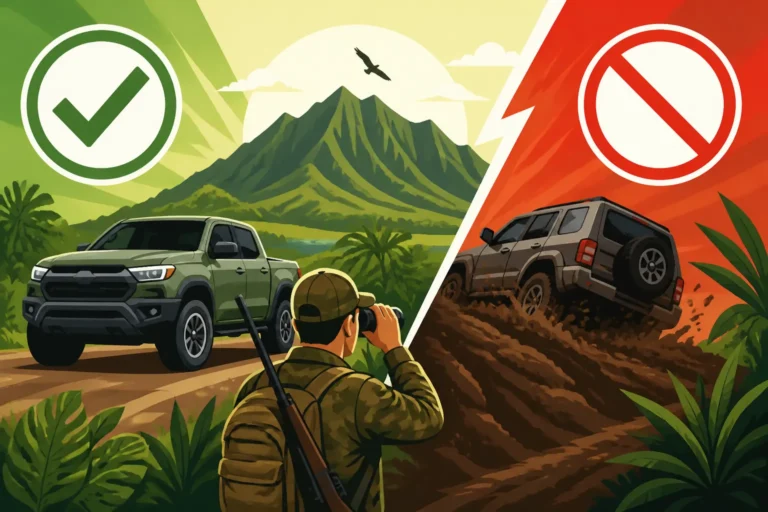
Many hunters are used to the concept of driving into a unit, finding a quiet pull-off, and setting up a rudimentary camp. In Hawaii, this kind of informal, dispersed camping is often not permitted on public hunting lands, or if it is, it's restricted to very specific areas with stringent rules. The sheer density of vegetation in some areas, the steepness of the terrain, and the constant effort to protect sensitive native habitats make blanket "camp anywhere" policies unfeasible. This can be a real adjustment if you're accustomed to vast, unmanaged backcountry camping.
Even designated campsites within state parks or recreational areas might not be conveniently located near the public hunting units you're targeting. Imagine driving an hour or more each way from a legal campground just to access your hunting grounds; it eats into valuable hunting time and gas money. Plus, these formal campgrounds are often designed for recreational tourists, not necessarily rugged hunters, and may lack the privacy or practical amenities (or lack thereof) that a hunter might prefer.
The Unique Challenges of Island Terrain and Access
Hawaii's terrain itself presents significant challenges for camping. You're dealing with everything from bone-dry lava flows to incredibly dense, wet rainforests. Setting up a comfortable and safe camp in these environments requires specific gear and knowledge. Finding flat ground that isn't solid rock or a muddy, mosquito-infested bog can be a quest in itself. Access can also be a major hurdle; many prime hunting areas are deep within gulches, atop remote ridges, or require long hikes in, making packing in extensive camping gear a serious undertaking. Hunting Hawaii's Volcanic Terrain or hunting Hawaii's rainforest gulches often means you're far from any road accessible by a typical vehicle, necessitating a backpack-style approach to your camp.
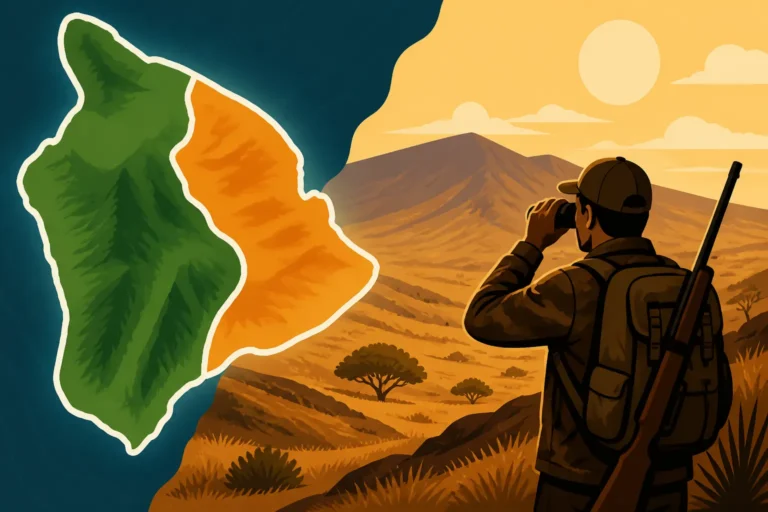
Beyond the physical terrain, Hawaii's weather patterns are famously localized and unpredictable. You might be camping in a relatively dry spot only to have a sudden, heavy rain shower roll in, turning your camp into a swamp. Or, conversely, a long dry spell might mean water sources you anticipated are completely parched. This variability means your camping strategy needs to be flexible and robust, capable of handling rapid shifts in conditions that can range from scorching sun to chilly, damp nights, sometimes all in the same day.
Balancing Convenience with Regulations
The key to successful hunting-related camping in Hawaii is striking a balance between what's convenient for your hunt and what's legally permitted. You might find a perfect little kipuka or a secluded flat spot deep within a forest reserve, but if it's not a designated camping area or doesn't fall under rules allowing dispersed camping, it's off-limits. Ignorance of the rules won't spare you a citation, and nobody wants their hunting trip cut short by a run-in with law enforcement.
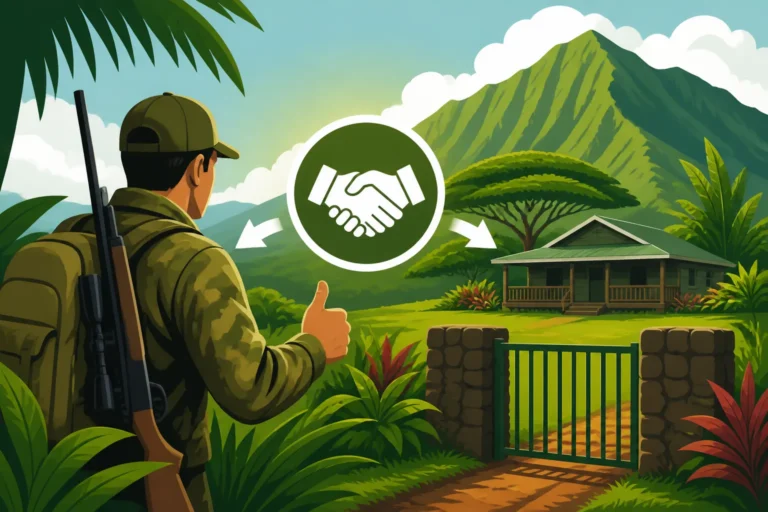
It requires proactive research into the specific unit's regulations well before you even pack your bags. This might involve diving deep into the Division of Forestry and Wildlife (DOFAW) websites, contacting local offices, or talking to other experienced local hunters. The rules can vary significantly not just by island, but even by specific management area on the same island. What's allowed in one Hawaii's Hunting Units and How They Work might be strictly forbidden just a few miles down the road. It's a commitment, but one that ensures your hunting adventure is both productive and compliant.
Navigating Hawaii's Public Land Regulations for Overnight Stays
Understanding where you can and cannot camp on Hawaii's public lands is paramount for any hunter. The rules are not uniform across the islands or even across different types of public land. It's a patchwork that requires specific knowledge to navigate successfully.
General Rules for State Parks and Campgrounds
Hawaii's State Parks offer some excellent designated campgrounds. These are typically managed for a broader recreational audience and come with facilities like restrooms, picnic tables, and sometimes even running water. If you're looking for a comfortable base camp that allows you to drive in and have some amenities, a state park campground might be a good option. However, their primary drawback for hunters is often their distance from prime hunting units. They are rarely inside the best hunting grounds, meaning you'll likely have a commute each morning and evening.
Booking these sites usually requires reservations made well in advance, especially during peak seasons or holidays. The fees are generally reasonable, but you're paying for convenience and infrastructure. Most state park campgrounds have strict quiet hours, limits on the number of people per site, and rules about open fires, alcohol, and pets. While they provide a secure and established place to stay, they might not offer the immersive backcountry experience some hunters seek, nor the immediate access to game trails or remote corners of a unit that can be critical for success.
Specific Guidelines for Forest Reserves and Game Management Areas
This is where it gets more nuanced for hunters. Hawaii's Forest Reserves (FRs) and Game Management Areas (GMAs) are the heart of public hunting opportunities. Camping regulations within these areas can vary dramatically. Some GMAs might have designated primitive campsites that are first-come, first-served, or require a simple, free permit. Others might allow dispersed camping within certain zones, provided you adhere to strict Leave No Trace principles and fire restrictions. Yet others may prohibit overnight stays entirely, meaning your hunt must be a day-trip endeavor.
For example, on the Big Island, certain areas within the Mauna Kea Forest Reserve or the Kaohe Game Management Area might allow primitive camping. This often means no facilities, no water, and packing out everything you pack in. The rules are often tied to specific units, so checking the detailed regulations for Hunting Puu Waawaa's Forest Reserve or Hunting the Puu Anahulu Game Management Area is crucial. These regulations are usually outlined on the DOFAW (Division of Forestry and Wildlife) website. This information is critical, as violating these rules could result in fines or even forfeiture of your hunting privileges.
Understanding the Permit Process: From Online to In-Person
Obtaining the necessary permits for camping is often a multi-step process. For state park campgrounds, you'll typically use the state's online reservation system. For Forest Reserves and GMAs, it can range from a simple online application for a free permit to requiring an in-person visit to a local DOFAW office. Some areas might even integrate camping permits with hunting permits or draws, especially for specific, limited-entry hunts.
Many hunters use platforms like GoHunt to keep track of draw dates and application deadlines for specific hunts, but remember that camping permits are often a separate beast. Always confirm the specific requirements for your chosen hunting unit. Don't assume that having a hunting license automatically grants you camping privileges. It's often another piece of paper or online registration you need to secure. Carrying physical copies of all your permits—hunting, camping, and any vehicle access passes—is always a good idea, as cell service can be spotty in many remote areas. No Cell Signal on a Hawaii Hunt is a common reality, so don't rely on your phone for verification in the field.
Essential Gear and Logistics for a Hawaii Hunting Camp
Hawaii's unique environment demands careful consideration of your camping gear. It's not just about finding a good spot; it's about being prepared for whatever the islands throw at you, from intense humidity to sudden downpours and everything in between.
Shelter Solutions for Diverse Weather and Terrain
When it comes to shelter, versatility is key. While a lightweight backpacking tent is often the go-to for many hunters, consider its ability to withstand wind, shed heavy rain, and manage condensation in humid conditions. Double-wall tents with good ventilation are preferable to single-wall shelters that can become a sauna or a dripping cave. A robust rainfly is non-negotiable, and if you anticipate extended rain, a tarp to create a covered cooking or gear area can be a game-changer. Think about ground conditions too; a durable footprint or ground tarp will protect your tent floor from abrasive lava rock or saturated soil.
For those venturing into the wetter, windward forests, a hammock setup with an integrated bug net and a quality rain tarp can be surprisingly comfortable and adaptable. Hammocks keep you off the often-wet ground, providing excellent air circulation, which is a blessing in high humidity. However, they require suitable trees for hanging, which isn't always available in all units, especially in areas with sparse kiawe or open scrub. Whatever your choice, practice setting it up quickly and efficiently in less-than-ideal conditions before your trip.
Water Management in Arid and Wet Environments
Water is a critical consideration for any Hawaii hunt. Even in lush, wet areas, surface water might be contaminated or difficult to access. In arid, leeward regions, finding any water at all can be a major challenge. Always assume you need to pack in a significant portion of your water supply, especially for multi-day trips. Water and Heat Planning for a Hawaii Hunt is paramount, as dehydration can sneak up on you quickly in the tropical climate.
For supplemental water, a high-quality water filter or purifier is essential. Look for models that can handle various contaminants, including sediment and bacteria. Tablets or drops can serve as a backup. Carrying multiple water bottles and a collapsible water reservoir (like a several-liter Platypus or a Dromedary bag) will give you flexibility for collecting and storing water when you find it. Even if you plan on filtering, bringing enough potable water for your first day and a half is a wise precaution, especially if your primary water source is farther than anticipated or dry. Remember, what looks like a stream on a map might just be a dry bed in reality.
Food Storage and Critter Control in the Tropics
Hawaii's ecosystem, while unique, still has plenty of critters interested in your food. Rats, mice, and especially mongoose are prevalent in many areas and are notorious for chewing through tent fabric or gear bags to get to food. Always store food in odor-proof, hard-sided containers or bear bags hung from a tree. Bear canisters, while perhaps overkill for some areas, offer ultimate protection. A simple dry bag or compression sack within a sturdy backpack can also help, but hanging it well away from your tent and at least 10 feet off the ground, 4 feet from the trunk, is your best bet.
Food waste needs to be meticulously managed. Pack out all your trash, including food scraps. Even biodegradable items can attract unwanted attention and take a long time to decompose in tropical environments. For meat harvested during your hunt, swift and proper Field Care in Hawaii's Heat and Humidity is crucial. If you're overnighting, consider bringing game bags and methods to cool meat quickly, such as chilling it in a stream (where permitted) or using reflective blankets. This also means having a plan for Packing Meat Out of a Hawaii Gulch – the heavier the load, the more energy you'll need, and the more critical your camp setup becomes for recovery.
Strategic Campsite Selection for Optimal Hunting Success
Choosing where to camp isn't just about finding a flat spot; it's a tactical decision that can significantly impact the success of your hunt. A well-placed camp minimizes travel time, conserves energy, and keeps you closer to the action.
Proximity to Hunting Units and Access Points
Ideally, your camp should be as close as legally possible to the hunting unit or the specific area you plan to focus on. This is especially true in units that require long walks or difficult climbs. Waking up already deep within the hunting grounds saves precious daylight and energy, allowing you to be on stand or still-hunting right at first light. Use mapping apps like onX Hunt to identify legal camping zones relative to your target hunting areas. The detail in onX Hunt allows you to see unit boundaries, access roads, and often, even topographic features that might indicate suitable, permitted camping locations.
Conversely, sometimes the best hunting unit might not have any legal camping within its boundaries. In such cases, you might need to find a permitted campsite in an adjacent Forest Reserve or State Park and plan for a longer walk-in or a short drive each morning. Always factor this travel time into your daily hunting schedule. Remember, early morning and late evening are often prime times for game movement, and minimizing your commute during these hours can pay dividends. If you're on a public land unit like Hunting the Waiakea Forest Reserve, understanding its specific access points and how they relate to potential camp spots is critical.
Considering Cover, Wind, and Water Sources
Once you've narrowed down legal areas, assess the tactical advantages of specific spots.
- Cover: Look for natural cover that offers protection from the elements – dense trees for shade from the intense sun, or a slight rise to break the wind. Also, consider cover for stealth. You want your camp to be discreet, not a beacon for game or other hunters. Avoid setting up camp right on obvious game trails.
- Wind: Pay attention to prevailing wind patterns. In Hawaii, trade winds are often a factor. You don't want your camp odors blowing directly into the area you plan to hunt. Try to set up downwind of your primary hunting zone or in a spot where thermals will carry your scent away from where animals are likely to be. Hunting Downwind in Hawaii's Shifting Thermals is a skill that applies to your camp as much as your stalk.
- Water Sources: Proximity to a reliable (and legally accessible) water source is invaluable. While you'll pack in water, having a backup or a place to filter more can reduce your pack weight and improve comfort. However, don't camp right on a water source if it's a critical drinking spot for wildlife, as this can deter game from using it. Instead, find a spot a bit removed but still within easy walking distance.
Minimizing Impact and Maximizing Stealth
A hunter's camp should be a temporary, low-impact affair. Choose a site that shows minimal prior use, or one that allows you to leave it looking undisturbed. This not only adheres to Leave No Trace principles but also helps maintain the wild character of the area for other users and future hunts. Avoid creating new fire rings or clearing large areas of vegetation. A compact camp with minimal disturbance is less likely to alert game or attract unwanted attention from other people.
Think about your approach and departure paths to and from camp. Can you move quietly and efficiently without disturbing the surrounding area? Are there natural features that mask your movement? In dense Hawaiian forests, like those you might encounter while Still-Hunting a Guava Thicket for Pigs, every rustle can carry far. A well-chosen camp, hidden from sight and sound, becomes an extension of your hunting strategy, allowing you to blend more seamlessly into the environment.
Responsible Camping: Leave No Trace and Safety Protocols
As hunters, we are stewards of the land, and practicing responsible camping is fundamental to preserving Hawaii's unique natural resources and ensuring continued access for future generations. This isn't just about following rules; it's about a mindset of respect for the environment.
Fire Management and Restrictions in Hawaii
Open fires are a sensitive topic in Hawaii due to the risk of wildfires, especially in drier regions. Many public hunting units, particularly those on the leeward sides of the islands or during dry seasons, have strict fire bans or require fires to be contained in existing fire rings. Always check the current fire restrictions for your specific unit before even considering a campfire. Even if fires are permitted, common sense and extreme caution are crucial.
Opting for a small, contained fire in a portable fire pan, or better yet, relying on a camp stove for cooking, is often the safest and most responsible approach. A compact backpacking stove is far more efficient, leaves no trace, and is unaffected by most fire bans. If you do have a fire, ensure it's completely out, cold to the touch, and all ashes are scattered or packed out. Never leave a fire unattended, even for a moment. The consequences of a wildfire in Hawaii's unique ecosystems can be devastating.
Waste Management and Packing It Out
The "pack it in, pack it out" ethos is non-negotiable in Hawaii. Everything you bring onto public land, including all food wrappers, empty bottles, broken gear, and even organic food scraps like fruit peels, must leave with you. This is even more critical in Hawaii because of the presence of invasive species. Leaving behind any foreign material, even seemingly innocuous items, can disrupt delicate ecosystems. A sturdy trash bag is an essential item in your pack.
Consider using reusable containers to reduce waste. For human waste, follow Leave No Trace principles: dig a cathole 6-8 inches deep and at least 200 feet from water, trails, and campsites, then cover it thoroughly. In some high-use or sensitive areas, packing out human waste in WAG bags might even be required. Always carry toilet paper and a small trowel. Being mindful of your waste reduces your impact and ensures that the pristine beauty of the hunting grounds remains intact for everyone.
Coexisting with Wildlife and Other Land Users
While hunting is your primary objective, you're sharing Hawaii's public lands with a diverse array of native wildlife (many of which are protected), invasive species, and other recreational users like hikers, birdwatchers, and scientists. Your camp should be a quiet, respectful presence. Minimize noise and light pollution, especially after dark. This not only benefits wildlife but also shows consideration for anyone else who might be in the area.
Secure all food and scented items to avoid attracting animals like feral cats, dogs, pigs, or mongoose into your camp. These animals can become habituated to human food, leading to negative interactions. Be aware of your surroundings; if you encounter other users, be friendly and courteous. Maintaining a positive image as a responsible hunter is vital for public support and continued access to these precious lands. Using resources like onX Hunt can also help you identify trails and areas with high non-hunting user traffic, allowing you to choose camp locations that offer more seclusion for both you and other outdoor enthusiasts. It's about being a good neighbor on the land.
Table: Comparing Public Land Camping Options for Hunters in Hawaii
To help summarize some of the considerations, here's a quick look at the typical characteristics of different public land camping options you might encounter as a hunter in Hawaii:
| Camping Type | Location Examples | Common Amenities | Permit Required? | Hunter Access Proximity | Typical Cost (per night) | Notes |
|---|---|---|---|---|---|---|
| State Parks | Ahupua'a o Kahana, Polipoli Spring | Restrooms, picnic tables, water | Yes, often reserved | Often distant | Low to moderate | Best for comfort, amenities; requires advance booking; may be far from hunting units. |
| Forest Reserves | Mauna Kea FR, Kapapala FR | Primitive (none or pit toilet) | Yes, free/online | Close to good units | Free | Variable rules; some designated, some dispersed; check specific unit for details. |
| Game Mgmt. Areas | Puu Anahulu GMA, Kaohe GMA | Primitive (none) | Yes, free/online | Directly in units | Free | Often the most direct access for hunters; dispersed camping common where allowed. |
| Dispersed Camping | Remote FR/GMA sections | None | Varies, often free | Excellent | Free | Only where expressly permitted; high self-sufficiency required; strict LNT rules apply. |
This article is for general informational purposes only and does not constitute professional advice. Laws, prices and regulations vary by location and change over time. Consult a qualified professional for guidance on your specific situation.