Hawaii’s Remote Units and How to Reach Them
Hunting in Hawaii can feel like navigating a maze, especially when you're dreaming of those untouched, low-pressure areas. Many hunters get frustrated by crowded weekend units or the sheer effort it takes to access the truly wild spots. This guide is all about breaking down the barriers to Hawaii's most remote hunting units, offering practical advice on how to scout, plan, and physically prepare to reach those challenging yet incredibly rewarding backcountry locations.
What "Remote" Really Means in Hawaii Hunting
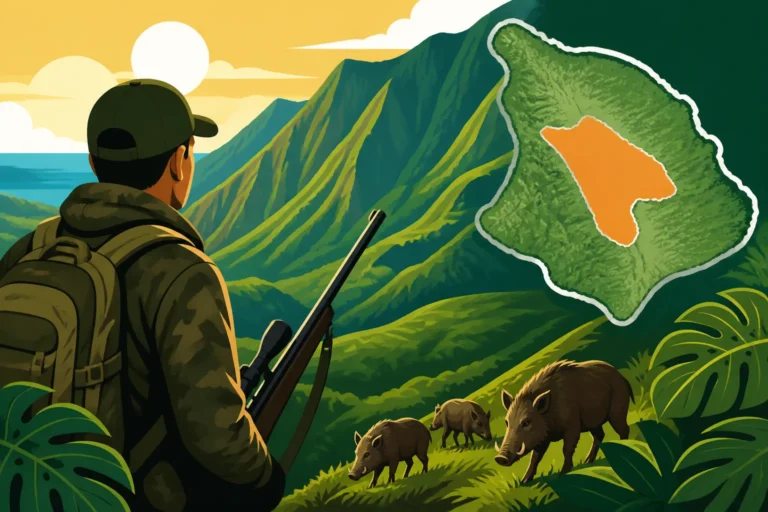
When we talk about "remote" in Hawaii, it's a bit different than the mainland. It's not just about miles from the nearest paved road; it's about the unique and often brutal landscape itself. The islands pack an incredible amount of varied terrain into a small space, and what might look like a short distance on a map can be an all-day ordeal in person.
Beyond the Paved Road
On the mainland, a "remote" unit often means a long dirt road or a few hours' hike from a trailhead. In Hawaii, it can mean all of that and more. Imagine leaving the last gravel road behind and immediately plunging into dense, tangled guava thickets where visibility is only a few feet. Or perhaps you're staring across a vast, broken lava field that promises to chew up your boots and test your ankles with every step. These are the places where most casual hunters simply won't go, and that's precisely why they hold such appeal. It's where the true challenge, and often the best hunting, lies. Getting into these areas often means a serious commitment to walking, sometimes for miles, well beyond where a vehicle can take you, no matter how capable.
Elevation, Terrain, and Vegetation as Barriers
Hawaii's geology is dramatic, to say the least. You might be hunting a deep, steep gulch carved by ancient rivers, where descending and ascending feels like climbing mountains in miniature. Or you could be in a high-elevation unit, dealing with thin air and drastically changing weather. The vegetation itself can be a formidable barrier. Think about waist-high fern gulleys that hide rocks and holes, or dense stands of kiawe trees with thorns sharp enough to puncture tires and flesh. Then there are the kipuakas – islands of forest surrounded by lava flows – which offer refuge for game but are incredibly tough to traverse. These natural obstacles often dictate how game moves and where it beds, making them key to understanding a remote unit. Hunting Hawaii's Volcanic Terrain gives you a deeper look at what to expect in these challenging landscapes.
Units with Limited Entry or Draw Systems
Sometimes, remoteness isn't just about physical access, but also about administrative hurdles. Certain highly sought-after units or specific seasons are managed through limited entry or lottery systems, making them "remote" in the sense of being exclusive and hard to get into. These are often prime areas with robust animal populations, like some of the designated Axis deer weekends on Lanai or special Mouflon hunts on the Big Island. While physically getting there might be straightforward once you have a tag, the challenge lies in winning that coveted permit. These systems are designed to control hunting pressure and maintain animal quality, effectively creating remote hunting opportunities even in areas that might have decent road access. You'll need to stay on top of application deadlines, which often means checking resources like GoHunt regularly to ensure you don't miss out on these unique chances.
Why Seek Out Remote Units? The Rewards and Challenges
The effort required to reach Hawaii's remote hunting grounds is substantial, but so are the potential rewards. It's a trade-off that serious hunters are often willing to make.
Less Pressure, More Opportunity
This is, arguably, the biggest draw of remote units. When you commit to a long hike into a challenging area, you quickly weed out the casual hunters. The farther you get from road access or easy trails, the less human pressure the game animals experience. This means deer, pigs, goats, and sheep are often less skittish, exhibiting more natural behavior. You might encounter animals that have rarely, if ever, seen a human hunter. This reduced pressure can lead to better opportunities for spotting game, longer stalk windows, and a more fulfilling hunting experience where you truly feel immersed in the wilderness. It's a chance to hunt animals that haven't been pushed and prodded every weekend.
Trophy Potential and Undisturbed Game
With less hunting pressure comes the potential for older, larger animals. Game that isn't constantly harassed has a better chance to reach maturity, leading to bigger antlers on Axis bucks or heavier curls on Mouflon rams. Feral pigs in remote, undisturbed gulches often grow larger, with impressive tusks, as they don't have to deal with the constant threat of human encounters. When you're the only one stomping through a remote valley, you're not competing with dozens of other hunters, increasing your chances of finding that mature animal you've been dreaming of. It's where the truly big ones often hide, unbothered by the everyday chaos. Hawaii's Feral Pigs, Island by Island often thrive in these harder-to-reach pockets.
The True Hawaii Backcountry Experience
Beyond the game itself, remote hunting offers an unparalleled wilderness experience. You'll witness parts of Hawaii that most tourists, and even many residents, never see. Imagine glassing across an ancient lava flow at dawn, with the steam from a distant volcano rising against the sunrise, or navigating a pristine, fern-filled rainforest where the only sounds are native birds. These hunts are an adventure in every sense of the word. They challenge your physical and mental limits, hone your outdoor skills, and connect you deeply with the raw beauty of the islands. It’s about more than just filling a tag; it’s about the journey, the solitude, and the profound sense of accomplishment that comes from earning your way into wild Hawaii.
Planning Your Approach to Remote Hawaii Units
Accessing remote units in Hawaii requires meticulous planning. You can't just show up and expect to figure it out; the terrain is too unforgiving, and the logistics too complex.
Mapping and Reconnaissance
Before you even think about lacing up your boots, you need to hit the maps. This is where tools like onX Hunt become absolutely invaluable. These apps allow you to study topography, identify potential access points, mark game trails, locate water sources, and understand property boundaries. Look for saddlebacks, ridgelines, and old lava flows that might offer easier travel corridors. Identify potential bedding areas, feeding zones, and escape routes. Pay close attention to contour lines to gauge steepness and potential bottlenecks. Satellite imagery can reveal hidden clearings or dense vegetation patches. Spending hours scouting virtually can save you days of wasted effort and ensure you're heading into an area with the best chance of success. It's your first line of defense against getting lost or exhausted in the thick stuff. Reading a Hawaii Unit Boundary Map is an essential skill here.
Permits, Check-Ins, and Logistics
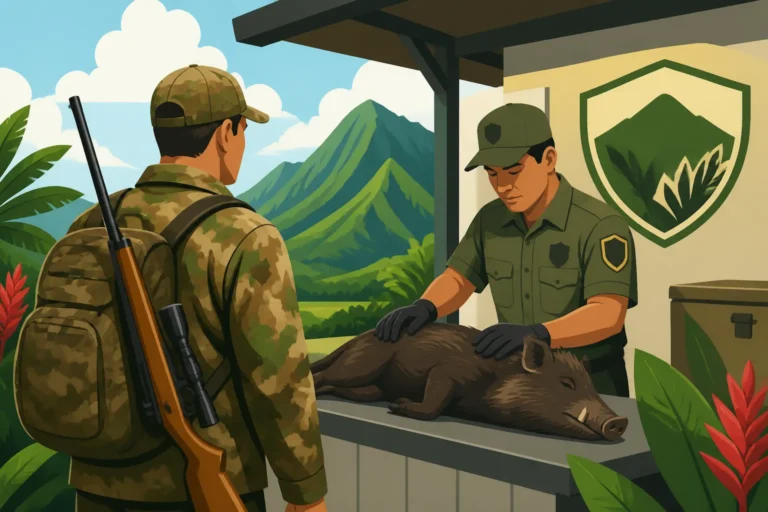
Hawaii has a specific system for public land hunting, which includes licenses, permits, and check-in procedures. Even for remote units, you'll need the proper Hawaii Hunting Licenses and What They Cost and any required permit-tags. Always double-check the specific unit rules regarding access gates, vehicle restrictions, and camping. Many public units require you to check in before hunting and check out afterward, either physically at a hunter check station or digitally using an app like OuterSpatial. Missing these steps can lead to penalties. If you're planning an overnight stay, understand the rules for Hawaii Public Land Camping for Hunters. For drawn hunts or special access areas, be sure you understand the application process and deadlines, often found through resources like GoHunt. Leave no stone unturned when it comes to the legalities.
Physical Conditioning and Team Planning
Remote Hawaii hunts are not for the faint of heart or the out of shape. You'll be traversing steep, uneven terrain, often in high heat and humidity, carrying a heavy pack. Start a rigorous physical training regimen months in advance, focusing on cardio, leg strength, and endurance. Practice hiking with a loaded pack. If you're hunting with a partner or a team, ensure everyone is on the same page regarding fitness levels, expectations, and roles. Discuss communication strategies, rendezvous points, and emergency procedures. A strong, cohesive team is far more effective and safe in remote environments. Consider how you'll handle Packing Meat Out of a Hawaii Gulch – it's often the hardest part of the hunt.
Essential Gear and Skills for Remote Access
Your gear selection for remote Hawaiian hunts is critical. The right equipment can mean the difference between a successful, safe trip and a miserable, dangerous one.
Navigation Tools and Communication
Reliable navigation is non-negotiable. Carry a GPS device or a smartphone with a robust mapping app like onX Hunt that allows for offline map downloads. Always have a physical map and compass as a backup, and know how to use them. Cell service is notoriously spotty or non-existent in many remote areas, so do not rely on it for navigation or communication. Consider carrying a satellite communication device (like a satellite messenger or phone) for emergency contact. These devices can send messages and GPS coordinates even when your phone has No Cell Signal on a Hawaii Hunt, providing a critical lifeline. Ensure all your devices are fully charged and carry portable power banks.
Water, Food, and Overnight Preparedness
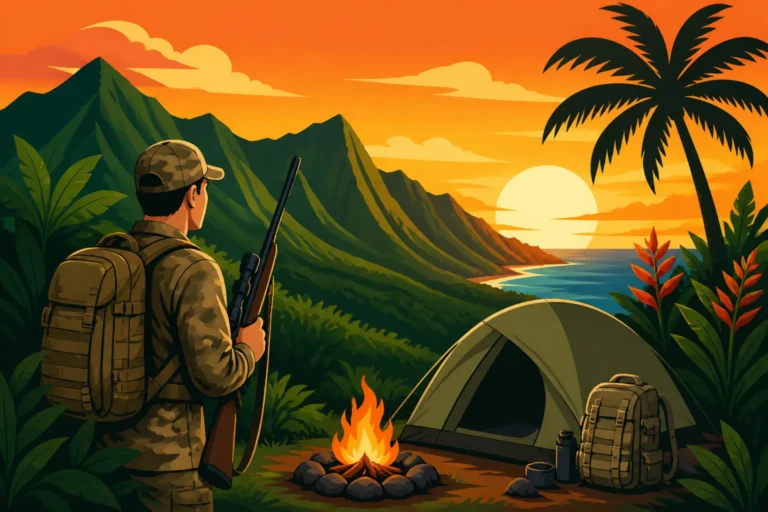
Hydration is paramount in Hawaii's heat and humidity. Carry more water than you think you'll need, or plan your route to reliable water sources if you have a filtration system. For multi-day trips, lightweight, high-calorie food is essential. MREs, dehydrated meals, and energy bars are great options. If you're staying overnight, you'll need a lightweight tent or bivy sack, a sleeping bag appropriate for tropical nights (which can still get chilly at elevation), and a small cooking system. Remember, everything you pack in, you must pack out. Prepare for varying weather conditions; even on a sunny day, rain can move in quickly, especially in windward forests. Water and Heat Planning for a Hawaii Hunt is crucial for your survival and comfort.
First Aid and Emergency Equipment
A comprehensive first-aid kit is not optional for remote hunts. It should include supplies for cuts, scrapes, blisters, sprains, insect bites, and any personal medications. Consider adding a snake bite kit, though venomous snakes are not a concern in Hawaii, the general first aid items apply. Beyond first aid, pack a headlamp with extra batteries, a knife, fire-starting materials, signaling devices (whistle, signal mirror), and emergency shelter (space blanket or lightweight tarp). Familiarize yourself with basic wilderness first aid and how to handle common injuries in the field. Having a plan for what to do in case of an emergency, including how to evacuate an injured person, is vital.
Specific Strategies for Different Remote Terrains
Hawaii's varied landscape means you need to adapt your hunting strategy and access methods to the specific terrain you'll encounter.
Hiking Long Distances Over Rough Terrain
Many of Hawaii's most remote units are only accessible by foot, and these aren't your typical groomed trails. You'll be Walking In to a Remote Hawaii Unit for miles, often through thick brush, over uneven lava, or up and down steep gulches. Invest in high-quality, durable hiking boots with excellent ankle support. Gaiters can be invaluable for keeping debris out of your boots and protecting your shins from thorns and sharp vegetation. Practice moving slowly and deliberately, constantly scanning for game and potential hazards. Conserve energy by finding the path of least resistance, even if it adds a little distance. Understanding how game uses these difficult areas for cover and travel is key to success. Hunting Hawaii on Foot Without a Truck is a true test of grit.
Utilizing 4WD and ATV Access Points
While many areas require foot travel, some remote units might have specific 4WD or ATV trails that can get you deeper into the backcountry. Always check unit rules for vehicle restrictions and designated routes. Jeep trails and old ranch roads, though often overgrown and rough, can save you significant hiking miles. Be prepared for challenging driving conditions – deep ruts, mud, loose rock, and steep inclines. A reliable 4WD vehicle with good ground clearance and recovery gear (winch, traction boards, tow strap) is a must. Remember, just because a trail exists on a map doesn't mean it's easily passable. Sometimes, it's better to park a bit further out and hike the last stretch to avoid getting stuck. Reaching a Hawaii Unit by 4WD Road can extend your range significantly.
Considering Helicopter or Boat Access for Extreme Remote Areas
For the truly extreme, inaccessible units – those surrounded by sheer cliffs, vast wilderness without roads, or deep canyons – helicopter or boat access might be the only viable option. This is typically reserved for highly experienced hunters, often with specialized gear and permits. Helicopter drops can get you into areas that would otherwise be impossible to reach, offering untouched hunting grounds. However, this comes with significant cost and complex logistics, including precise drop-off and pick-up points, weight limits, and strict safety protocols. Similarly, boat access might be used for remote coastal areas or offshore islands with unique hunting opportunities. If you're considering this, you'll need to work with licensed charter services and ensure all necessary permits are in order. Helicopter Access for Remote Hawaii Hunts is not a casual undertaking.
Safety and Contingency Planning for the Backcountry
Being prepared for the unexpected is crucial when venturing into Hawaii's remote hunting units. The islands' rapid weather changes and rugged isolation demand a robust safety plan.
Weather Watch and Changing Conditions
Hawaii's weather can change dramatically and rapidly, especially at higher elevations or in windward areas. A sunny morning can quickly turn into a torrential downpour, or a clear day can give way to dense fog, especially in the mountains. Always check the forecast before heading out, but be prepared for anything. Pack rain gear, extra layers for warmth, and sun protection. Understanding local wind patterns and microclimates is vital. For example, the kona winds can bring unexpected rain to normally dry leeward sides. Getting caught unprepared in a sudden storm in a remote gulch can be dangerous, leading to hypothermia or flash floods. Knowing Reading Hawaii's Trade Wind Patterns can give you an edge in predicting weather.
Emergency Communication and Evacuation Plans
As mentioned, cell service is rare in the backcountry. Your satellite communicator is your primary lifeline. Ensure everyone in your party knows how to use it and has emergency contact numbers pre-programmed. Before your hunt, inform a reliable person outside your group of your detailed itinerary, including your entry and exit points, expected return time, and contingency plans. Establish a check-in schedule with them. In a true emergency (serious injury, lost person), knowing how to activate your satellite device's SOS function is critical. Discuss potential evacuation routes and designated safe zones with your hunting partners. Even with satellite communication, rescue in Hawaii's remote terrain can take hours, if not days, due to the challenging landscape and limited resources.
Respecting Cultural Sites and the Environment
Hawaii is rich in cultural history, and many remote areas contain sacred sites, ancient heiau (temples), or burial grounds. It is absolutely imperative to treat these areas with the utmost respect. If you encounter any suspected cultural sites, do not disturb them, remove anything, or even walk on them. Observe them from a respectful distance. Always practice Leave No Trace principles: pack out everything you pack in, minimize your impact on vegetation, and properly dispose of human waste. Hawaiian ecosystems are incredibly fragile; avoid trampling sensitive plants or disturbing wildlife more than necessary for your hunt. Remember, you are a guest in a unique and special place. Understanding and respecting the aina (land) is a core part of hunting responsibly in Hawaii.
Remote Unit Access Methods Comparison
Navigating Hawaii's remote hunting grounds presents unique challenges and opportunities depending on your chosen method. Here's a quick look at the pros and cons of common access methods.
| Access Method | Pros | Cons | Ideal Terrain/Hunt Type |
|---|---|---|---|
| Foot (Walk-in) | Most cost-effective; ultimate solitude; access truly untouched areas; deep immersion | Most physically demanding; slow travel; limited gear capacity; potential for injury | Dense forests, steep gulches, areas with no vehicle access, multi-day wilderness hunts |
| 4WD Vehicle/ATV | Covers long distances faster; carries more gear; can get closer to game | Limited to designated trails/roads; high risk of getting stuck; expensive vehicle/fuel | Old ranch roads, lava fields with jeep trails, units with limited vehicle access points |
| Helicopter | Access to impossible areas; fastest travel; allows for deep penetration | Most expensive; complex logistics; strict weight limits; weather dependent; specialized permits | Extreme remote cliffs, deep canyons, areas surrounded by impenetrable terrain |
| Boat (Coastal/Island) | Access to sea cliffs, small offshore islands; unique perspective | Weather dependent; specialized permits; requires specific coastal unit access | Coastal goat hunts, accessing isolated small islands or peninsulas |
Disclaimer
This article is for general informational purposes only and does not constitute professional advice. Laws, prices and regulations vary by location and change over time. Consult a qualified professional for guidance on your specific situation.