Bowhunting Hawaii’s Public Units
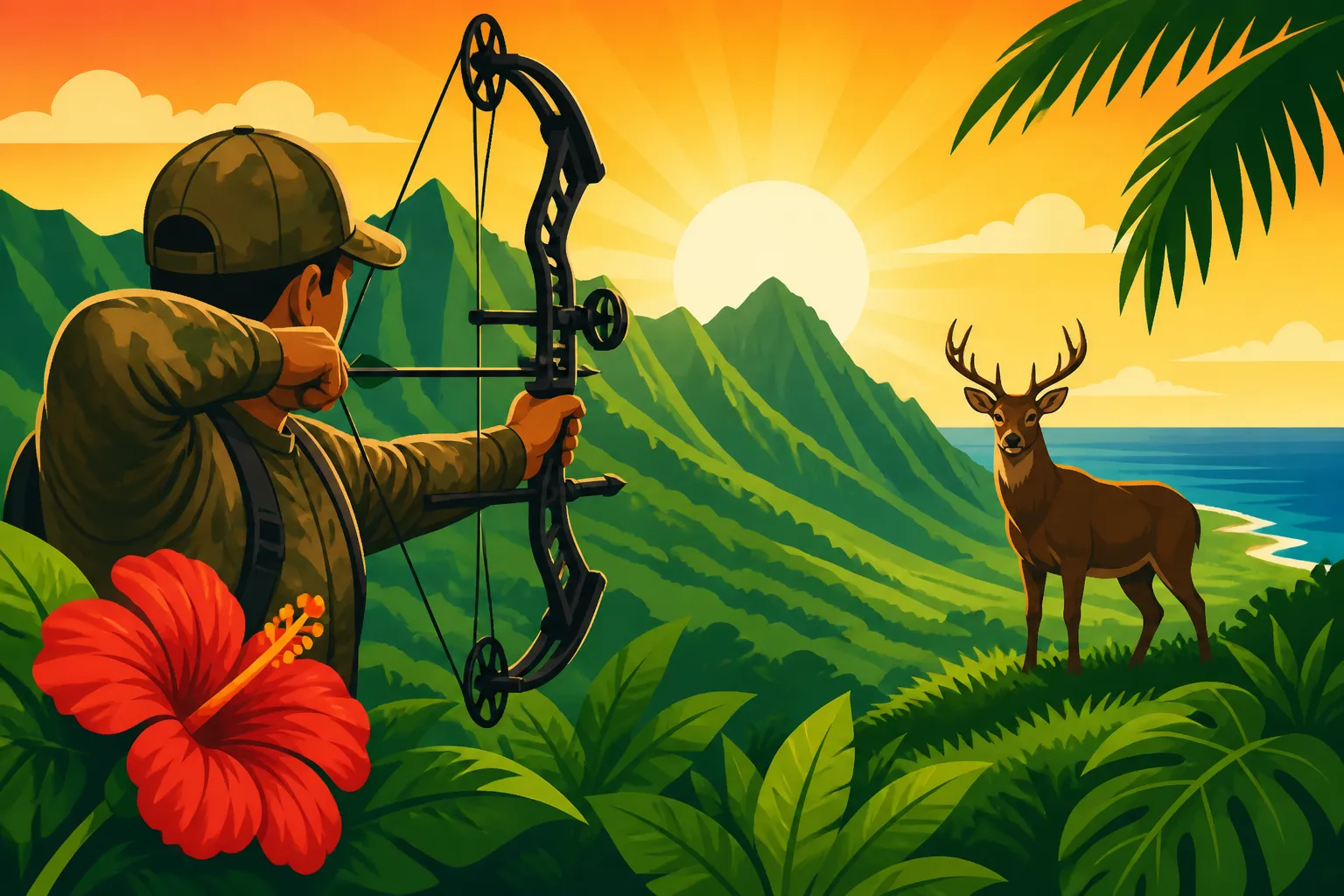
Navigating the dense, often unforgiving landscapes of Hawaii's public hunting units with a bow in hand presents a unique set of trials for even the most seasoned hunter. From the razor-sharp lava fields to the suffocating humidity of a rainforest gulch, the islands demand peak physical and mental preparation. This comprehensive guide is designed to equip you with the knowledge, strategies, and insights needed to successfully pursue game through the challenging yet incredibly rewarding public lands of Hawaii with your archery gear.
The Unique Challenges of Bowhunting Hawaii's Public Units
Bowhunting in Hawaii isn't just a hunt; it's an immersive experience that will test every fiber of your being. Unlike the wide-open plains or predictable hardwoods of the mainland, Hawaii's public lands throw a curveball with every step. Understanding these inherent difficulties is the first step toward a successful and safe archery adventure.
Navigating Dense Vegetation and Rugged Terrain
Imagine pushing through a wall of chest-high guinea grass, razor grass, or tangled guava thickets, all while trying to remain silent and aware of your surroundings. This isn't an exaggeration; it's the reality of much of Hawaii's public hunting ground. These environments, while holding abundant game, are incredibly challenging to move through quietly with a bow. The terrain itself adds another layer of complexity. You might find yourself scrambling up steep, crumbly volcanic ash slopes one moment and navigating treacherous, moss-covered lava fields the next. The ground can be uneven, slick with rain, or riddled with hidden holes and crevices that are a twisted ankle waiting to happen. For example, some units on Hawaii Island feature ancient lava flows, where every step requires careful placement, making a quick, quiet stalk nearly impossible. This means your approach has to be calculated, often slow, and incredibly patient.
The sheer density of vegetation severely limits visibility, reducing shot distances dramatically. What might be a 40-yard shot in another state often becomes a 15-yard or even 10-yard poke in Hawaii. This requires bowhunters to master close-range shooting and develop an intimate understanding of shot placement, as there's little margin for error. Think about the challenge of drawing your bow in such tight quarters without snagging your string or hitting a branch. It's a skill that can only be honed through dedicated practice in scenarios mimicking these real-world conditions. Furthermore, the constant battle with thorny plants like kiawe or dense tangles of haole koa means your clothing, skin, and gear will take a beating.
Battling Heat, Humidity, and Persistent Bugs
Hawaii's tropical climate, while beautiful for a vacation, presents significant challenges for a strenuous activity like bowhunting. The heat and humidity are relentless, especially in low-elevation and wind-sheltered areas. Dehydration can set in quickly, and the energy drain is substantial. You'll sweat more than you ever thought possible, which not only impacts your comfort but also makes scent control an even bigger battle. Animals here are accustomed to ambient smells, but a human drenched in sweat is still a foreign, alarming scent. Staying hydrated is paramount, requiring you to carry more water than you might anticipate for similar duration hunts elsewhere. Planning for water is just as critical as planning your stalk.
Beyond the discomfort, the heat and humidity contribute to rapid meat spoilage. After a successful harvest, especially an Axis deer in a sunny kiawe flat, you'll be racing against the clock to get that meat cooled. This is where the challenge of Field Care in Hawaii's Heat and Humidity becomes critically important. The dense vegetation and moist conditions also create a paradise for biting insects. Mosquitoes, especially in wet areas, can be maddening, and their incessant buzzing is hardly conducive to a quiet stalk. Then there are the notorious ticks, which can be found in various habitats across the islands. Carrying effective insect repellent and wearing appropriate clothing to minimize exposed skin isn't just about comfort; it's about maintaining focus and preventing potential health issues. The continuous distraction from bugs can make maintaining stealth and patience incredibly difficult when you're trying to execute a precise bow shot.
Understanding the Pressure on Public Game
Hawaii's public hunting units, while extensive, often see significant pressure, particularly on weekends and during prime seasons. Unlike vast wilderness areas on the mainland, the accessible public lands on these relatively small islands can feel crowded. This pressure can make game animals incredibly wary and nocturnal, pushing them into the densest, most difficult-to-access pockets of cover. For a bowhunter, this means increased patience, more arduous stalks, and a willingness to explore deeper into less-frequented areas. You might find yourself walking in significantly further than you planned, or climbing into steep terrain that other hunters shy away from.
The game animals, particularly Axis deer and feral pigs, become masters of evasion under consistent hunting pressure. They learn human patterns, recognize vehicle sounds, and become acutely aware of scent and noise. This means that your approach, your wind discipline, and your ability to remain unseen become even more critical. You're not just hunting an animal; you're hunting an animal that has likely been hunted many times before. This requires a higher level of woodsman-ship and adaptability. Successful public land bowhunting here often means hunting during the week if possible, hitting areas immediately after a rain when other hunters are scarce, or exploring those truly remote sections that demand serious effort, like some of the deeper gulches or higher-elevation areas.
Essential Gear for Hawaii Bowhunters
Having the right gear isn't just about comfort; it's about safety, efficiency, and increasing your chances of success in Hawaii's demanding environments. Every piece of equipment needs to stand up to the unique challenges of heat, humidity, sharp terrain, and dense cover.
Bow and Arrow Setup Considerations
When bowhunting in Hawaii, your equipment needs to be robust and reliable. Your bow should be one you're intimately familiar with, capable of consistent accuracy in various shooting positions, often from kneeling or even sitting in thick brush. Draw weight should be sufficient for the game you pursue, typically 45-60 pounds for Axis deer, Mouflon, and goats, and potentially a bit higher for feral pigs, given their tough hide and bone structure. However, prioritize comfortable, repeatable accuracy over sheer power. A smooth draw cycle is key when you might have limited space to come to full draw.
Your arrow setup is equally critical. For larger game like Axis deer or feral pigs, a heavier arrow (400-500 grains total weight) with good kinetic energy and momentum will provide better penetration through thick hides and bone. Choosing an arrow setup for Axis deer specifically means balancing speed with enough punch to get through the vitals. Mechanical broadheads are popular for their larger cutting diameter and excellent flight characteristics, but fixed-blade broadheads, known for their extreme durability and reliability, are often preferred by many experienced Hawaii bowhunters when pushing through dense cover or facing tough pigs. Ensure your broadheads are razor-sharp and your fletching is durable enough to withstand brush. Always carry a spare string or at least a string jig and serving material for unexpected repairs in the field.
Footwear and Clothing for Variable Conditions
Your feet will take a beating in Hawaii, making footwear perhaps the most critical gear choice. Forget flimsy trail shoes; you need sturdy, supportive boots with excellent ankle support and aggressive traction. Look for boots that are durable enough to handle sharp lava rock, yet flexible enough for steep, uneven terrain. Waterproofing is a plus, especially if you plan on hunting in wet rainforests or crossing streams, but breathability is equally important to manage the constant humidity. Some hunters opt for heavy-duty hiking boots, while others prefer lightweight, fast-drying tactical boots. Whichever you choose, make sure they are thoroughly broken in. Walking Rough Lava Without Wrecking Your Boots is a real concern and choosing the right foot protection can make or break your hunt.
For clothing, think layers, breathability, and durability. Quick-drying synthetic materials are far superior to cotton, which retains moisture and can lead to chafing and hypothermia in higher, cooler elevations. Camouflage patterns that blend with the tropical greens and browns are effective, but often solid earth tones work just as well, as breaking up your outline is more important than matching a specific leaf pattern. Consider tough, rip-resistant fabrics, as you'll be pushing through abrasive vegetation. In units where blaze orange is required, ensure you have a vest or hat that meets regulations. A good wide-brimmed hat to protect from the sun, and a lightweight rain jacket for sudden tropical downpours, are also essential.
| Gear Category | Recommended Item | Key Considerations |
|---|---|---|
| Bow | Compound or Recurve (50-60 lbs draw weight) | Accurate, durable, familiar to shooter, quiet draw |
| Arrows | Heavy Carbon Arrows (400-500 grains) | Good kinetic energy for penetration, straight flight |
| Broadheads | Fixed-Blade or Robust Mechanical | Razor-sharp, durable, reliable for tough hides |
| Footwear | Sturdy, High-Ankle Hiking Boots | Excellent ankle support, aggressive tread, lava-resistant |
| Clothing | Quick-Drying Synthetics, Layered System | Breathable, durable, rip-resistant, camouflaged or earth tones |
| Navigation | GPS Device (Garmin inReach/onX Hunt), Map & Compass | Reliable, waterproof, extra batteries, offline maps |
| Hydration | Hydration Pack (3L+) & Water Filter | High capacity, easy access, backup purification |
| Optics | Binoculars (8×42 or 10×42) | Good low-light performance, durable, lightweight |
| Cutting Tool | Sharp Fixed-Blade Knife | For field dressing, durable, easy to clean |
| First Aid | Compact, Comprehensive Kit | Snake bite kit (not for Hawaii), wound care, pain relief |
| Safety | Whistle, Signal Mirror, Headlamp | Essential for emergencies, communication |
Navigation and Communication Tools
Getting lost in Hawaii's dense, disorienting terrain is a serious risk, especially in rainforests or complex gulch systems where visibility is limited to a few feet. A reliable GPS device, like a Garmin inReach or a smartphone loaded with a mapping app such as OuterSpatial or onX Hunt, is absolutely non-negotiable. Using the OuterSpatial App to Check In and out of units is common practice, and its mapping capabilities are invaluable. Download offline maps of your hunting unit before you leave cell service, as many public lands have no signal. Always carry a physical map and a compass as a backup, and know how to use them. Mark your starting point, critical junctions, and any potential escape routes.
Communication is also vital. While cell service is spotty, carrying a satellite messenger or a two-way radio (if hunting with a partner) provides a lifeline in an emergency. Ensure all your devices are fully charged, and carry spare batteries or a portable power bank. A powerful headlamp with extra batteries is crucial for early morning starts or unexpected late finishes. Beyond technology, a simple whistle can be an effective signaling tool if you become separated from partners or need to alert rescuers. Remember that many units are remote, and help can be hours away, making self-sufficiency and reliable communication paramount.
Understanding Hawaii's Bowhunting Regulations and Seasons
Before you even think about nocking an arrow, you absolutely must understand Hawaii's specific hunting regulations. These rules are designed to manage game populations and ensure public safety, and they differ significantly from mainland regulations. Ignorance is no excuse, and violations can lead to hefty fines or loss of hunting privileges.
Licenses, Tags, and Hunter Education Requirements
To hunt legally in Hawaii, you'll need a valid Hawaii hunting license. For non-residents, this involves a specific process, and it's essential to understand Hawaii Nonresident Hunting License Options. Before you even step foot on the plane, the first crucial step is securing your hunting license and any necessary permits or tags. The State of Hawaii's online portal, often accessed through resources like GoHunt, is your primary destination for this. Beyond the basic license, many public units and specific game species, especially Axis deer and Mouflon, require additional permits or tags, often obtained through a lottery draw system. For instance, obtaining a permit-tag for the coveted Lanai Axis deer draw requires careful attention to deadlines. Always check the Hawaii Division of Forestry and Wildlife (DOFAW) website for the most current information regarding specific units, seasons, and any drawn hunts.
Hunter education is also a mandatory requirement. If you're a resident, you'll need to complete a Hawaii-approved hunter education course. Non-residents who have completed a hunter education course in another state or country can typically provide proof of that certification, often by getting a The Nonresident Letter of Exemption. Always carry your hunting license, tags, and proof of hunter education with you while in the field. Be prepared for game wardens to check your documentation, as they are diligent in enforcing regulations.
Specific Archery Season Windows by Island and Unit
Hawaii's hunting seasons are incredibly diverse, varying by island, specific hunting unit, and game species. Archery seasons often have longer windows than rifle seasons, providing more opportunity for bowhunters. However, not all units are open for archery, and some may have specific archery-only days or limited bag limits. For example, while Hawaii Archery Season Windows generally provide flexibility, a unit on Maui might have different archery dates and bag limits than a unit on Hawaii Island or Kauai.
It's crucial to consult the annual hunting regulations booklet published by DOFAW, available on their website and sometimes at local hunting supply stores. This document is your bible for understanding what's open, when, and where. Pay close attention to unit boundaries, as accidentally crossing into a closed area can lead to serious legal trouble. Some units are weekend-only, while others might be open year-round for certain species. Always double-check the latest announcements from DOFAW, as seasons can occasionally be shifted or canceled due to drought, wildfires, or other management reasons.
Legal Broadheads and Arrow Weight
Hawaii has specific regulations regarding legal archery equipment for hunting big game. For example, broadheads used for deer, goats, sheep, and pigs must be non-barbed and have a minimum cutting width. Typically, this means a fixed-blade broadhead needs at least a 7/8-inch cutting diameter, and mechanical broadheads must achieve at least a 7/8-inch cutting diameter when deployed. Barbed broadheads are strictly prohibited. The regulations also specify minimum arrow shaft weight and overall arrow weight, generally requiring a certain grains-per-pound of draw weight ratio to ensure sufficient penetration and ethical kills.
It's not just about what's legal, but what's ethical and effective. A broadhead that flies true from your bow, is incredibly sharp, and can withstand impact with bone is essential. Consider using heavier arrows for increased kinetic energy, especially for tough animals like feral pigs or for shots that might encounter thick brush. Always practice with the broadheads you intend to hunt with, ensuring they group consistently with your field points at all practical hunting distances. This attention to detail in your equipment choice ensures you're not only compliant with regulations but also prepared for a clean, humane harvest.
Scouting Strategies for Public Archery Units
Successful bowhunting, especially on Hawaii's challenging public lands, hinges heavily on thorough scouting. You can't just show up and expect to find game. Understanding the lay of the land, animal movements, and prime bedding/feeding areas is critical, and it often requires a blend of digital and on-the-ground reconnaissance.
Pre-Season Digital Reconnaissance
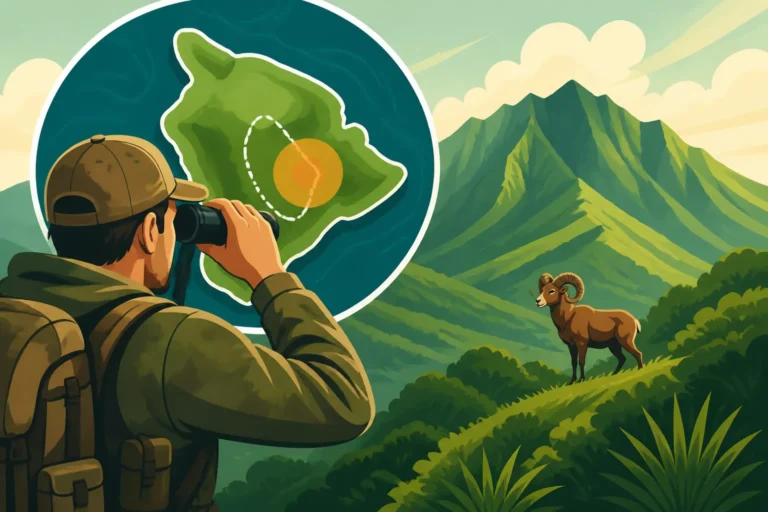
Your scouting starts long before you ever step foot on Hawaiian soil. The internet is an invaluable tool for pre-season planning. Start with the Hawaii DOFAW website to download detailed maps of public hunting units, often showing topography, access roads, and boundaries. Resources like Google Earth or dedicated hunting apps like onX Hunt (which offers detailed land ownership maps, topographic lines, and satellite imagery) are fantastic for virtual scouting. You can identify potential access points, note areas of dense cover, pinpoint water sources, and mark promising ridges or gulches. Look for transitions in habitat, like the edge of a kiawe flat meeting a more forested area, or where a lava flow meets a vegetated kipuka, as these are often travel corridors.
Pay attention to elevation changes and prevailing wind patterns in the specific unit. Remember Hawaii's unique microclimates; a windward side of an island will be dramatically different from the leeward side in terms of vegetation and animal behavior. Try to identify potential bedding areas, often on sheltered slopes or in thick pockets of vegetation, and feeding areas like open pastures, fruit trees, or browse lines. Mark these points of interest on your digital map. This digital homework not only saves you time in the field but also allows you to develop a strategic plan of attack, focusing your physical scouting efforts on the most promising areas. Consider looking into Hunting Hawaii's Volcanic Terrain specifically through satellite imagery to understand the challenges of movement.
On-the-Ground Scouting in Hawaiian Terrains
Once you've done your digital homework, it's time for boots on the ground. There's no substitute for walking the actual terrain, feeling the steepness, and seeing the vegetation firsthand. During your physical scouting trips, focus on confirming what you saw digitally and discovering what you couldn't. Walk potential travel corridors, explore gulches, and glass open areas from high points. Look for game trails – not just faint tracks, but well-used paths that indicate consistent animal movement. These trails are goldmines for a bowhunter, often leading between bedding and feeding areas, or to water.
Pay close attention to wind direction and thermals, which can be highly unpredictable in Hawaii's diverse topography. As the sun rises, thermals will typically pull scent uphill, and as it sets, they will fall downhill. This understanding is critical for planning your approach and stand locations (if you use them, though spot-and-stalk is more common in public units). Identify specific shooting lanes at various distances, noting potential obstructions. Take photos, mark waypoints on your GPS, and make detailed notes. This physical recon solidifies your understanding of the unit and helps you visualize potential hunting scenarios before the season even opens.
Reading Animal Sign in Diverse Habitats
Becoming proficient at reading animal sign is paramount for Hawaii bowhunting. In dense vegetation, you often hear or smell animals before you see them, and their sign tells a story. Look for fresh tracks, especially around water sources or along game trails. Tracks can tell you not only what species is present but also how recently they passed through and even their direction of travel. Rubs on small trees and bushes indicate where bucks and rams have marked their territory. Scrapes on the ground, especially those frequented by Axis deer or Mouflon, are key indicators of activity.
Droppings (scat) can tell you about an animal's diet and how recently they were in the area. For pigs, look for rooting damage, wallows (muddy depressions where they cool off), and rub trees where they scratch. Reading Pig Sign Along a Muddy Trail can be particularly informative. For Axis deer, fresh droppings and browsing on palatable plants are clear indicators. In open country, fresh beds in tall grass or under kiawe trees indicate daytime resting areas. The fresher the sign, the closer you are to animals. Learning to interpret these subtle cues is like piecing together a puzzle, guiding you closer to your quarry. It also helps you differentiate between old, stale activity and current, actionable information.
Effective Bowhunting Tactics for Hawaiian Game
Hawaii's public lands demand adaptable hunting tactics from bowhunters. While traditional methods form the foundation, successful execution requires significant modification to suit the islands' unique terrain, vegetation, and animal behavior.
Spot-and-Stalk in Open Country and Gulches
The spot-and-stalk method is perhaps the most exhilarating and effective tactic for bowhunting in Hawaii's more open public units, especially for Axis deer and goats. This involves using optics to locate game from a distance, then carefully planning and executing an approach to get within bow range. Units with open ridgelines, kiawe flats, or sparse lava country are ideal for this. Spot-and-Stalk Axis Deer in Hawaii is a classic example of this method. The key here is patience, keen observation, and an intimate understanding of wind direction. You'll spend a lot of time glassing, often in the early morning or late evening when animals are most active.
Once game is spotted, the real chess match begins. Analyze the terrain for cover, identify natural funnels, and predict the animal's movement. Your approach must be deliberate and often takes much longer than anticipated. You'll need to use every contour, every bush, and every shadow to conceal your movement. Wind is your absolute enemy, and a single puff in the wrong direction can send an entire herd fleeing. Always approach from downwind, considering prevailing winds and tricky thermals. In deep gulches, where animals often seek refuge from the midday sun, you might need to stalk along the rim, glassing into the draws, then pick your route down. This method demands physical fitness, mental fortitude, and exceptional stealth.
Still-Hunting Through Thick Cover
In contrast to the open country, many of Hawaii's public units are characterized by incredibly dense vegetation, like guava thickets, haole koa forests, or wet rainforests. Here, spot-and-stalk becomes nearly impossible, and still-hunting is the primary method. This involves moving incredibly slowly and deliberately through the cover, taking one or two steps, then pausing for several minutes to listen, look, and assess. Your senses become hyper-tuned. Still-Hunting Pigs in Hawaii's Wet Forest is a prime example of where this tactic shines. You're not looking for the whole animal; you're looking for a flick of an ear, a patch of hide, or the subtle outline of a leg through the brush.
The pace of still-hunting is glacial. You might cover only a few hundred yards in an hour, but those few hundred yards are packed with intense focus. Use the wind to your advantage, moving into it to carry your scent away from animals. Pay attention to every sound – a rustle in the leaves, a distant grunt, a branch snapping. These subtle cues can indicate game presence. When you spot an animal, the challenge is to assess the shot opportunity, make a silent draw, and thread an arrow through a potentially tiny window in the foliage. This often requires unconventional shooting positions and quick decision-making. Persistence is key, as you might jump many animals before getting a viable shot opportunity.
Utilizing Water Sources and Food Plots
In Hawaii's often dry leeward public units, water sources become magnets for game, especially during prolonged dry spells. Animals, particularly Axis deer and goats, will travel significant distances to drink, making these locations prime ambush sites for bowhunters. Identifying perennial springs, stock ponds, or even man-made guzzlers during your scouting phase can give you a significant advantage. Setting up a natural ground blind downwind of a water source before first light or in the late afternoon can put you in a prime position for a close-range shot.
Similarly, in some public units that border agricultural lands or feature old abandoned farms, game animals like pigs and Axis deer will often frequent food sources. This could be a patch of fallen fruit, wild taro, or lush new growth after a rain. While baiting is generally prohibited on public lands in Hawaii, understanding natural food sources and patterns of consumption can guide your hunting efforts. For instance, knowing that pigs will root near Hunting Pigs Near a Taro Patch gives you a starting point. By observing these areas for fresh sign, you can determine active feeding times and plan your approach accordingly. Always ensure you are on legal public hunting land and not trespassing onto private property when utilizing these strategies.
Field Care and Extraction in Hawaii's Challenging Environment
Successfully putting an arrow into an animal is only half the battle in Hawaii. The tropical heat and rugged terrain make field care and meat extraction an urgent and physically demanding task. Proper execution is essential to preserve your hard-earned meat and ensure a safe journey out.
Rapid Field Dressing and Cooling Meat
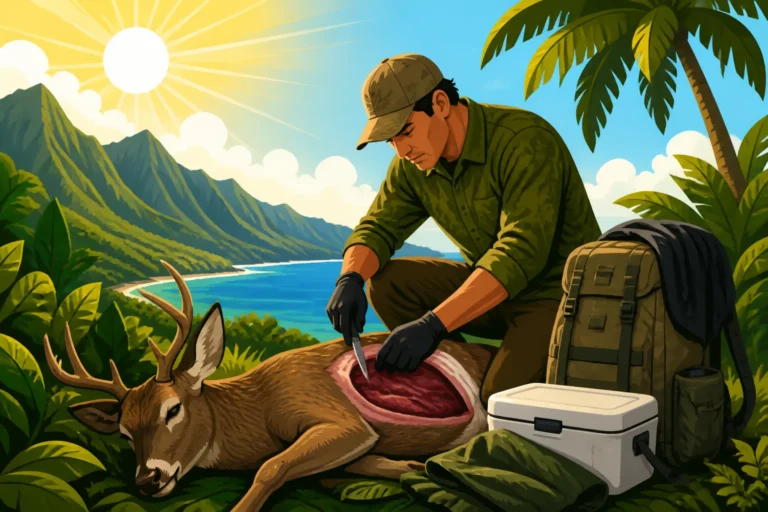
The moment your animal hits the ground, the clock starts ticking. Hawaii's ambient temperatures, often in the 70s or 80s Fahrenheit, combined with high humidity, mean that meat can begin to spoil rapidly, sometimes within hours. Your first priority is to field dress the animal immediately and thoroughly. Remove all internal organs, taking care to keep the meat clean. For a detailed guide, consider reading Field Dressing Axis Deer in Hawaii Heat. This process allows the carcass to begin cooling from the inside out. Some hunters will even gut the animal and remove the hide from the entire backstrap and hindquarters to maximize air exposure and rapid cooling.
After field dressing, the goal is to get the carcass as cool as possible, as quickly as possible. If you're close to your vehicle, you might be able to quarter the animal and get it into a cooler packed with ice. However, in many public units, you'll be far from access. In such cases, quartering the animal is usually the only practical option. Bone out as much meat as possible to reduce weight and bulk, and place the meat in breathable game bags. If you have ice packs or frozen water bottles, strategically placing them in the body cavity or around bagged meat can buy you precious time. Hanging the quarters in a shady, breezy spot is also helpful for initial cooling, but never rely on this for extended periods in Hawaii's heat.
Packing Meat Out of a Hawaii Gulch
One of the most physically grueling aspects of bowhunting Hawaii's public lands is the meat extraction. You've just expended immense energy on the hunt and field dressing, and now you face the prospect of packing hundreds of pounds of meat over unforgiving terrain, often through dense vegetation and up steep inclines. Packing Meat Out of a Hawaii Gulch is a common challenge. A sturdy, comfortable backpack frame is indispensable. Load the meat securely, ensuring the weight is distributed evenly and close to your body. Make multiple trips if necessary; your safety and the quality of the meat are paramount.
The journey out will test your endurance. The combination of heavy loads, high temperatures, and challenging footing can lead to exhaustion, dehydration, and increased risk of injury. Carry ample water for yourself, and take frequent breaks. If hunting with a partner, share the load and assist each other over difficult sections. Some hunters, particularly when targeting large animals like big Axis bucks or substantial feral pigs in remote areas, even consider hiring a packer or using pack animals if allowed and available, though this is less common on public units. Always plan your extraction route carefully, keeping in mind the most accessible path back to your vehicle, even if it's not the shortest.
Dealing with Heat and Humidity Post-Harvest
Even after the meat is out of the field, the battle against heat and humidity continues. Once at your vehicle, transfer the meat into high-quality coolers filled with ice. Drain melted ice periodically and replenish with fresh ice to keep the meat submerged and cold. Airflow is key, so don't completely seal coolers without draining water; if possible, crack them slightly or use coolers with good drainage systems. If you're not heading straight home, locate a local game processor or find a way to refrigerate the meat promptly. Many hunters bring large, marine-grade coolers, which are designed for superior insulation, to keep their meat cold for several days.
Consider your travel plans carefully. If you're flying inter-island or back to the mainland, you'll need to adhere to strict agricultural and airline regulations for transporting game meat. This usually involves frozen, well-packaged meat in approved containers. Never underestimate the logistical challenge of getting your meat from the kill site to your freezer, especially in Hawaii's climate. Taking the necessary steps post-harvest ensures that your hard work in the field translates into delicious, high-quality wild game for your table.
Species-Specific Archery Insights
Hawaii offers bowhunters a diverse range of game animals, each with its own unique habits, habitats, and challenges for archery pursuit. Understanding these nuances is crucial for tailoring your tactics and increasing your success rate.
Bowhunting Axis Deer
Axis deer are often considered Hawaii's premier big game species for bowhunters, known for their beautiful spotted coats and delicious venison. They are found predominantly on Maui, Molokai, and Lanai, and their behavior varies somewhat by island and habitat. On Lanai and Molokai, you might find larger bucks due to genetics and less pressure. Axis deer often inhabit open, dry kiawe forests, grasslands, and mixed scrubland, but they'll also retreat into denser gulches and draws during the heat of the day. They are incredibly wary animals with excellent eyesight and a keen sense of smell.
Bowhunting Axis deer usually involves a combination of long-range glassing and careful Spot-and-Stalk Tactics on Open Country. Their habit of constantly scanning their surroundings makes getting close exceptionally difficult. Pay attention to the wind, as their noses are their best defense. During the rut, which can occur almost year-round but often peaks in late spring/early summer, bucks become more vocal and aggressive, offering opportunities for calling. A fawn bleat can sometimes draw in curious does or even a cautious buck. Patience is paramount, as you might spend hours observing a herd before a viable shot opportunity arises. Mastering a silent draw and executing a quick, ethical shot is critical, as they can bolt at the slightest disturbance. For more in-depth information, check out Axis Deer Hunting in Hawaii.
Taking Feral Pigs with Archery Gear
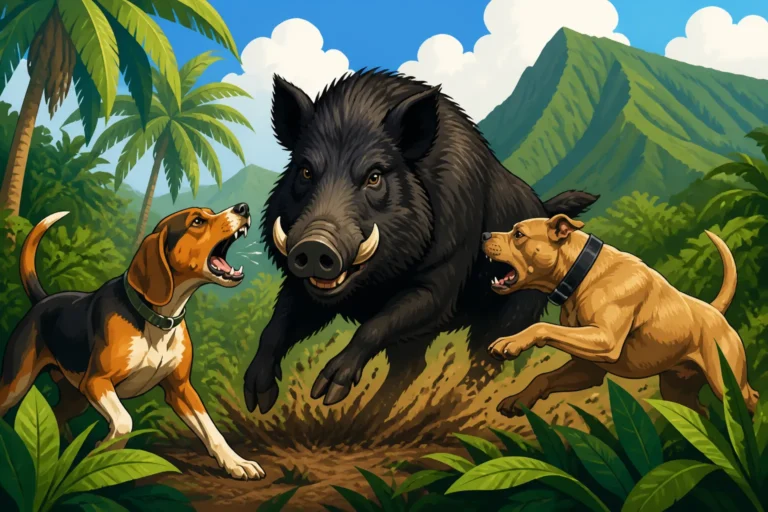
Feral pigs are perhaps the most widespread and challenging game animal for Hawaii bowhunters. Found on all the main islands, they inhabit everything from dense, wet rainforests to dry, rocky uplands. They are incredibly intelligent, tough, and often nocturnal, making them a formidable adversary for archers. The thick hide, especially around the shoulders and a boar's "shield," demands excellent arrow penetration and precise shot placement. While a broadside shot into the heart-lung area is ideal, aim for the crease behind the shoulder, slightly lower than you might for a deer, to avoid the shield.
Bowhunting pigs often involves Hunting Pigs Without Dogs in Hawaii, meaning still-hunting or ambushing. In dense cover, focus on fresh rooting, wallows, and well-used trails. Moving silently through guava thickets, listening for their distinctive grunts and snorts, is a classic approach. Pigs have a superb sense of smell but poorer eyesight than deer, so scent control is critical, but you might get away with slightly more movement if you're well hidden. Ambushes near water sources, feeding areas (like under fallen fruit trees or near taro patches), or pinch points on trails can also be effective. Be prepared for a quick follow-up shot if the first one isn't immediately lethal, as wounded pigs can be dangerous and disappear into thick cover rapidly.
Opportunities for Mouflon and Goats
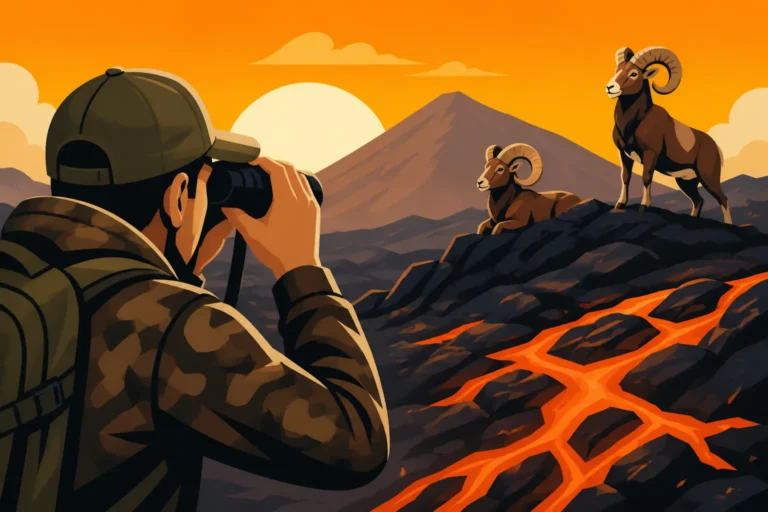
Mouflon sheep offer a truly unique high-country bowhunting experience on Hawaii Island and Lanai. On Hawaii Island, they are primarily found in the high-elevation slopes of Mauna Kea and Mauna Loa, often above the tree line in rocky, sparse terrain. Getting to these areas requires significant physical exertion, and the thin air can be a challenge. Hunting Mouflon Sheep on Hawaii Island is a serious endeavor. Spot-and-stalk is the predominant method, using optics to locate rams from afar and then executing a long, careful approach across open, unforgiving ground. Their eyesight is exceptional, making stealth an absolute necessity.
Feral goats are found on several islands, inhabiting some of the most rugged and inaccessible terrain, from sea cliffs to deep canyons. They are incredibly agile and have an uncanny ability to navigate steep, rocky slopes. Like Mouflon, they possess excellent eyesight. Bowhunting goats often involves significant climbing and careful glassing of cliff faces and canyon rims. Hunting Hawaii's Feral Goats can be a truly exciting experience, but it demands caution and physical fitness. Shots can often be steep downhill or across deep ravines. Both Mouflon and goats provide a challenging archery target, requiring patience, precision, and a willingness to tackle extreme terrain.
Respecting the Land and Local Culture
Hunting in Hawaii is not just about the pursuit of game; it's about respecting the unique natural environment, the local communities, and the traditions of the islands. As bowhunters, we have a responsibility to be good stewards of the land and respectful visitors.
Ethical Hunting Practices and Conservation
Adherence to ethical hunting practices is paramount, especially when bowhunting. This means ensuring quick, humane kills through diligent practice and choosing responsible shot opportunities. Never take a shot you're not confident in, and always follow up on every arrow. Beyond the shot, practice "leave no trace" principles: pack out everything you pack in, and perhaps even more. This includes all trash, spent cartridges (if you had any target practice, though not with a bow), and any other non-natural items.
Hawaii's unique ecosystems are fragile, and every game animal you hunt (Axis deer, feral pigs, goats, Mouflon) is an introduced species that can cause significant damage to native flora and fauna. By participating in these hunts, you are actively contributing to conservation efforts to protect Hawaii's precious native forests and watersheds. Understanding Why Every Hawaii Game Animal Was Introduced helps frame the context of your hunt within the broader conservation goals. Support local conservation initiatives and organizations. Your hunting dollars, through licenses and tags, directly fund wildlife management and habitat restoration.
Interacting with Other Hunters and Land Users
Hawaii's public lands are shared resources, used by hunters, hikers, birdwatchers, and cultural practitioners. As a bowhunter, you are an ambassador for the hunting community. Be courteous and respectful to everyone you encounter. A friendly wave or a brief, polite conversation goes a long way. If you see another hunter, give them ample space and avoid encroaching on their area. Communicate your plans if you're in a shared parking area to avoid conflicts.
Familiarize yourself with any cultural significant areas or practices in the units you plan to hunt. Some areas may have specific cultural sensitivities or restricted access for certain activities. When in doubt, err on the side of respect and inquiry. Local knowledge and customs are invaluable, and engaging with local hunters or community members can enrich your experience and foster positive relationships. Remember that you are a visitor on these beautiful islands, and demonstrating respect for the land and its people is the best way to ensure hunting opportunities continue for generations to come.
Disclaimer
The information provided in this guide is for general informational purposes only and is not intended as legal advice. Hunting regulations in Hawaii are subject to change, and specific rules vary by island, unit, and species. It is the sole responsibility of the hunter to consult the most current Hawaii Department of Land and Natural Resources (DLNR), Division of Forestry and Wildlife (DOFAW) regulations before planning or undertaking any hunting activity. Always prioritize safety, ethical hunting practices, and adherence to all applicable laws.