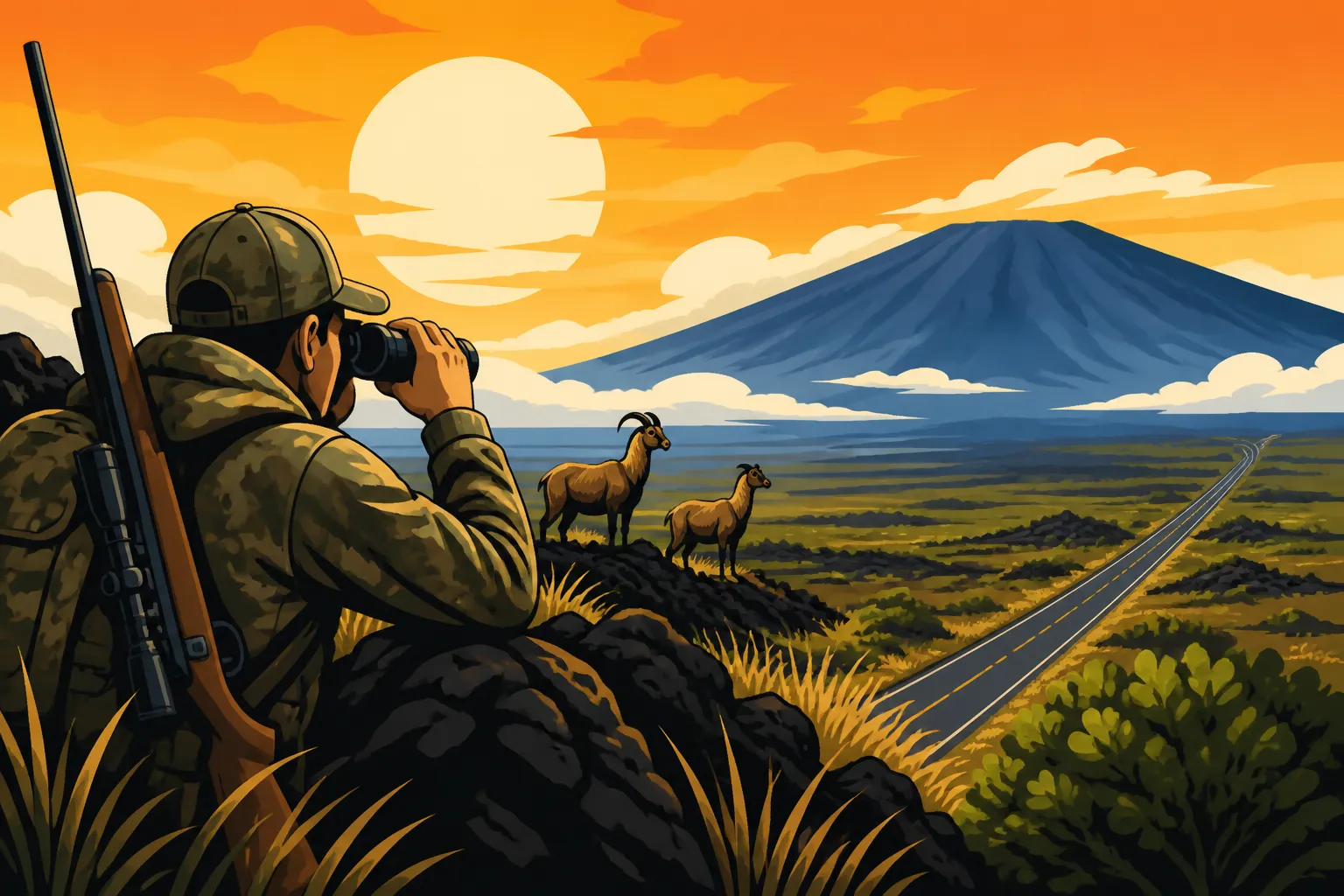
Hunting the Saddle Road Country
Hunting Hawaii's Saddle Road country can feel like stepping onto another planet, with its vast, rugged terrain, sparse vegetation, and rapidly changing weather that can easily overwhelm an unprepared hunter. This guide will walk you through what to expect when chasing game across this unique, high-elevation landscape, from understanding the challenging environment to mastering the tactics needed for a successful and safe hunt.
Understanding the Saddle Road Landscape and Its Challenges
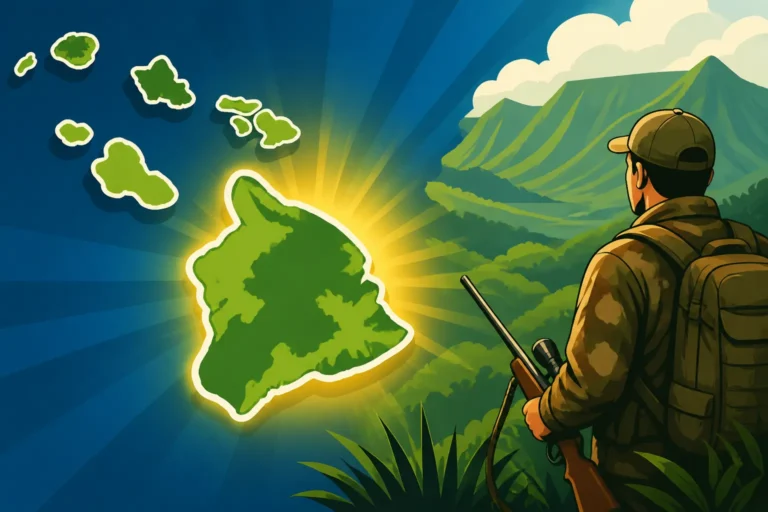
The Saddle Road, officially known as Daniel K. Inouye Highway, traverses the "saddle" between Mauna Kea and Mauna Loa on Hawaii Island, creating a distinct high-elevation ecosystem unlike much of the lush, tropical scenery you might imagine when thinking of Hawaii. This isn't your typical island hunt; it's a world of volcanic rock, rolling grasslands, and kipuka forests, all subject to extreme weather fluctuations.
High Elevation and Thin Air Considerations
One of the first things you'll notice when hunting the Saddle Road is the elevation. Much of this area sits between 6,000 and 8,000 feet, sometimes even higher as you ascend towards the mountain slopes. If you're coming from sea level, this thin air can hit you hard. Even seasoned hunters from mountainous regions can feel the difference, especially when climbing those long, gradual slopes or scrambling over lava fields. It's not just about getting winded faster; reduced oxygen can affect your judgment, energy levels, and even your ability to stay warm. Proper acclimatization, even if just a day or two spent at a mid-elevation, can make a huge difference. Pushing too hard too fast is a recipe for exhaustion and potential trouble. It's smart to pace yourself, stay hydrated, and recognize the signs of altitude sickness, even mild ones, before they become serious. Hunting Mouflon in Mauna Kea's Thin Air goes into more detail about these specific challenges.
Rugged Terrain and Volcanic Rock
The ground itself is a major challenge. Forget soft forest floors; here, you're often walking across ancient lava flows. This can range from crumbly a'a lava that grinds down boots and ankles to smoother pahoehoe flows that are surprisingly slick, especially when wet or covered in fine volcanic dust. There are deep fissures, hidden crevices, and countless sharp edges just waiting to trip you up or slice open a boot sole. Navigating this terrain quietly is nearly impossible, making spot-and-stalk hunting a true art form. It's a land where one wrong step can lead to a twisted ankle, or worse. This isn't a place for flimsy footwear; you'll need sturdy, high-ankle boots with excellent traction and robust construction to withstand the abuse. I can't stress enough the importance of Walking Rough Lava Without Wrecking Your Boots to keep you in the field longer.
Unpredictable Weather Patterns
The Saddle Road is infamous for its wildly unpredictable weather. You can start your day under clear, blue skies, shed layers as the sun climbs, and then, within hours, be engulfed in a thick, chilling fog (the mauka mist), pelted by freezing rain, or buffeted by strong, cold winds. The temperature swings can be dramatic, going from comfortable to bone-chillingly cold in a flash. The cloud line often hovers right at hunting elevations, meaning you might hunt in the clouds, severely limiting visibility to mere yards. This isn't just uncomfortable; it's a safety concern. Getting disoriented in thick fog on vast, featureless lava fields is a real danger. Layering your clothing system is absolutely critical, as is carrying waterproof and windproof outerwear, even if the forecast looks clear.
Game Species and Their Habits in Saddle Road Country
The Saddle Road country, with its unique environment, hosts several game species that have adapted to its challenging conditions. Understanding their habits here is key to a successful hunt.
Mouflon Sheep
Mouflon sheep are perhaps the most iconic big game species of the high country, thriving on the open slopes of Mauna Kea and Mauna Loa. These agile animals are incredibly well-adapted to the thin air and rugged terrain. You'll often find them grazing on sparse grasses and mamane trees at higher elevations, sometimes pushing into the alpine desert regions. They're typically found in small to medium-sized herds, though solitary rams are not uncommon, especially the older, trophy-class animals. Their keen eyesight is legendary; they'll often spot you long before you ever see them, especially on the open, exposed slopes. This means long-range glassing is your absolute best friend when Hunting Mouflon on Hawaii's Highest Slopes. They're most active during cooler parts of the day, often feeding at dawn and dusk, then bedding down in shaded areas or sheltered pockets among the lava during the midday sun. Their ability to seemingly vanish into the monochromatic landscape of volcanic rock is truly remarkable.
Feral Pigs
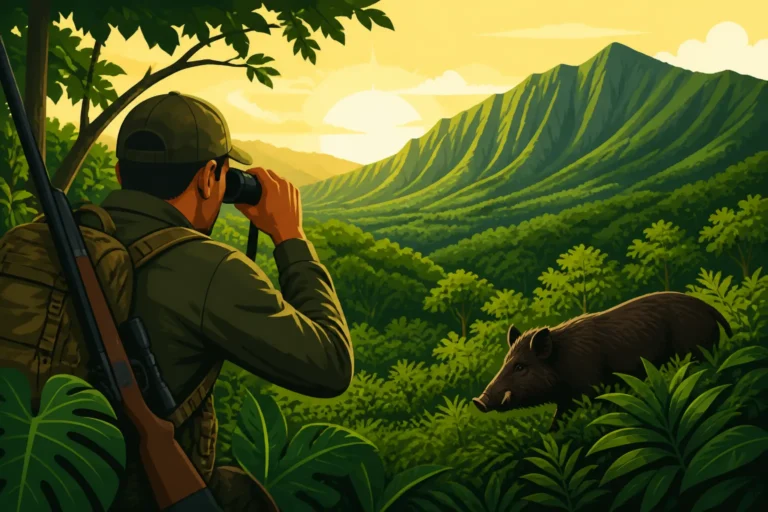
While pigs are most often associated with Hawaii's wet, dense rainforests, a surprising number of feral pigs also inhabit the Saddle Road country, particularly in the lower to mid-elevation sections and within the kipuka (islands of forest surrounded by lava flows). These aren't your typical mud-wallowing rainforest pigs. Saddle Road pigs tend to be leaner, tougher, and incredibly wary, often rooting around the edges of the mamane-koa forests, in dry gulches, or near any available water source. They'll also venture into the more open country, especially at night or during overcast weather, to forage for roots, berries, and anything else edible. Hunting Pigs on the Dry Leeward Side shares some insights that are very applicable here. Tracking them can be tough as the lava rock doesn't hold tracks well, but fresh rooting sign or disturbed ground near water sources can be a dead giveaway. They are incredibly tough and will retreat quickly into the densest cover available at the first sign of danger.
Feral Goats
Feral goats, known for their incredible hardiness and agility, can also be found in the more arid, rocky sections of the Saddle Road, particularly on the steeper slopes and canyon edges where food sources might be scarce for other animals. They are masters of climbing and can navigate terrain that would be impassable for most other game. Like mouflon, they have excellent eyesight and will often hang out on high vantage points, using their elevated positions to scan for threats. Spotting them can be challenging as their coloration often blends perfectly with the rock and dry grasses. They typically move in small groups, constantly browsing on whatever vegetation they can find. If you find a herd, pay attention to the wind, as they have a strong sense of smell and will bolt if they catch your scent. Hunting goats in this terrain demands patience and a steady approach.
Essential Gear and Tactics for High-Elevation Hunting
Hunting the Saddle Road requires a specific approach and a well-thought-out gear list to ensure safety, comfort, and success in its challenging environment.
Footwear and Clothing for Variable Conditions
Your boots are arguably the most critical piece of gear for Saddle Road hunting. They need to be robust, high-ankle, waterproof, and have excellent stiff soles with aggressive tread to tackle the sharp, unforgiving lava rock. Trust me, lightweight hikers will not cut it; they'll be shredded in a day. Think serious mountain hunting boots. As for clothing, layering is paramount. Start with moisture-wicking base layers, add insulating mid-layers like fleece or puffy jackets, and top it off with a bombproof waterproof and windproof outer shell. Remember, you could go from strenuous uphill climbing that has you sweating to sitting still in a cold, windy mist within an hour. A good hat and gloves are also essential, even if you think you won't need them. Water and Heat Planning for a Hawaii Hunt emphasizes the need for preparedness in Hawaii's diverse climates.
| Gear Category | Specific Items | Why It's Crucial for Saddle Road |
|---|---|---|
| Footwear | High-ankle, stiff-soled, waterproof boots | Protection from lava, ankle support, durable |
| Clothing | Base layers (merino/synthetic), fleece/puffy mid-layers, waterproof/windproof outer shell, warm hat, gloves | Adapt to rapid temperature swings, stay dry from sweat and rain |
| Navigation | GPS device (Garmin/onX Hunt), map, compass, external battery | No cell signal, vast featureless terrain, unit boundaries |
| Optics | Quality binoculars (10×42 or 12×50), spotting scope | Long-range glassing for wary animals in open country |
| Safety | First-aid kit, emergency shelter, headlamp, fire starter, sufficient water/filter | Remote areas, unpredictable weather, potential injuries |
| Hydration | Hydration bladder/bottles, water filter/purifier | High elevation exertion, dry air, remote water sources |
| Food | High-energy snacks/meals | Sustained energy for long, strenuous days |
Navigation and Communication in Remote Areas
Cell service on the Saddle Road is spotty at best, and often non-existent in many hunting units. This isn't the place to rely solely on your phone for navigation. A dedicated GPS device is a non-negotiable item. Tools like onX Hunt are invaluable for pinpointing your location, marking waypoints, and understanding unit boundaries, especially in areas where features look very similar. Always carry a physical map and compass as a backup, and know how to use them. An external battery pack for your electronics is also a wise choice. Given the remoteness, consider a satellite messenger device for emergency communication. No Cell Signal on a Hawaii Hunt delves deeper into preparing for communication blackouts. Checking in and out of the unit is crucial, and while some units allow digital check-ins, knowing the process for Checking In and Out of Hawaii Hunting Units via traditional methods is also good.
Hunting Strategies and Shot Placement
Spot-and-stalk is the primary tactic here. With the open terrain, you'll spend a lot of time glassing — using binoculars and spotting scopes to find animals at extreme distances. Once an animal is spotted, planning your stalk is critical, taking into account terrain, wind direction (which can be very shifty in the mountains), and the animal's acute senses. This often means long, arduous approaches, sometimes crawling through low-lying scrub or using lava formations for cover. Because of the open country and wary nature of the game, be prepared for longer shots. Practicing your shooting at various distances and angles, especially from field positions, is essential. Hawaii's Legal Rifle Calibers for Big Game are critical knowledge for ethical harvesting here. Ethical shot placement on tough animals like mouflon and pigs is paramount; understand their anatomy well.
Navigating Regulations and Access for Saddle Road Hunts
Hunting the Saddle Road isn't just about physical preparation; it's also about understanding the rules and regulations specific to these unique public lands.
Understanding Hunting Units and Seasons
The Saddle Road encompasses parts of several large hunting units on Hawaii Island, often spanning different Game Management Areas (GMAs) and Forest Reserves. Each unit will have specific seasons for different game species, as detailed in the annual Hawaii Hunting Regulations. For example, Mouflon sheep hunts often occur in designated units on Mauna Kea, sometimes through a lottery system, while feral pigs and goats might have more open, year-round seasons in other areas. It's absolutely crucial to consult the current regulations for Hawaii Game Mammal Seasons before planning your trip. These regulations will specify legal weapons, bag limits, and any special conditions for the units you intend to hunt. Always double-check for closures or changes, which can happen due to weather, environmental concerns, or management needs.
Access Points and Vehicle Requirements
Access to Saddle Road hunting units usually involves designated entry points off the Daniel K. Inouye Highway. Some areas might be accessible via well-maintained gravel roads, while others require a high-clearance 4×4 vehicle. There are also units that demand significant walking, often miles, to get into prime hunting areas. You might find yourself driving across old lava flows, through dusty tracks, or navigating roads that can quickly become impassable with rain. Always check the specific access requirements for your chosen unit. Parking is typically at designated hunter check stations or pull-offs. Be mindful of private property boundaries, which can sometimes be less clearly marked in these vast landscapes. Using an app like onX Hunt can be incredibly helpful for confirming public versus private land.
Permit-Tags and Check-In Procedures
For species like mouflon sheep, you will almost certainly need a specific permit-tag, often obtained through a lottery draw. Feral pigs and goats might sometimes require a permit depending on the unit and season, or they might be open to licensed hunters without a specific tag. Regardless, for any designated public hunting unit, you must check in before you begin your hunt and check out when you finish. This is not optional; it's a mandatory requirement for hunter safety and game management. Many units now utilize the OuterSpatial app for digital check-ins, which is incredibly convenient if you have service at the trailhead. However, some still require traditional paper check-in cards at physical stations. Make sure you understand the correct procedure for your unit. Forgetting to check out can lead to penalties and is something the Hawaii Division of Forestry and Wildlife (DOFAW) takes seriously. The Using the OuterSpatial App to Check In post provides a great overview of that system. Always carry your valid Hawaii hunting license and any required permit-tags with you at all times while in the field. To apply for drawn hunts, resources like GoHunt can be helpful in tracking application periods and understanding the draw odds, though you'll still apply directly through the state's system.
Disclaimer
This article is for general informational purposes only and does not constitute professional advice. Laws, prices and regulations vary by location and change over time. Consult a qualified professional for guidance on your specific situation.