Hunting Oahu’s Ewa Forest Reserve
Hunting on Oahu can feel like a real puzzle. With so much development and limited public access, finding a decent spot to pursue game animals often leaves hunters scratching their heads, wondering if it's even worth the effort. But don't give up hope just yet! This guide is here to walk you through everything you need to know about navigating and hunting Oahu's Ewa Forest Reserve, offering practical advice and insights to help you make the most of this unique island hunting opportunity.
Getting Your Bearings in Ewa Forest Reserve
The Ewa Forest Reserve, nestled on the leeward side of Oahu, offers a surprising contrast to the bustling city life nearby. When you think of "forest reserve" on Oahu, you might imagine lush, dense, wet rainforest, but Ewa often presents a drier, more open type of terrain, especially compared to some of the windward units. It's an area primarily managed for watershed protection and forestry, but it also provides crucial habitat for some of Oahu's most sought-after game animals: feral pigs and goats. Understanding the lay of the land here is your first big step to a successful hunt.
The Landscape of Ewa: Dry Slopes and Steep Gulches
Ewa Forest Reserve generally encompasses the drier slopes of the Waianae mountain range, specifically on the leeward side. This means you'll often encounter a mix of kiawe, haole koa, and invasive guinea grass, which can be incredibly thick in places. While it's not the dense, dripping jungle of some other islands, navigating Ewa still presents its own set of challenges. The terrain can be quite steep and unforgiving, characterized by deep gulches and sudden elevation changes that will test your conditioning and your boots. You might find yourself scrambling up loose dirt and rock, or pushing through nearly impenetrable tangles of thorny brush. It’s definitely not a stroll in the park.
Access points are usually marked, but parking can sometimes be limited, and you'll often find yourself walking significant distances before reaching prime hunting ground. This is where a good topographical map or a GPS app like onX Hunt becomes absolutely indispensable. It helps you visualize those elevation changes and identify potential travel corridors for animals, saving you a lot of wasted energy and frustration. Knowing which ridges to follow and which gulches to avoid can make or break your day, especially when you're trying to pack out an animal.
Target Species: Pigs and Goats
In Ewa Forest Reserve, your primary targets are feral pigs and goats. While Oahu doesn't have the big deer herds found on Maui or Lanai, these tenacious animals provide a challenging and rewarding hunt. Feral pigs are abundant and can grow to impressive sizes, particularly in areas with good forage and water. They are incredibly wary and use the thick cover to their advantage, making still-hunting or dog hunting the most common and often most effective methods. Goats, on the other hand, tend to frequent the steeper, rockier slopes and ridgelines. They're masters of camouflage and can disappear into the landscape with surprising speed, but they also offer exciting spot-and-stalk opportunities if you have the patience and a good set of optics.
Both species are considered invasive and cause significant damage to Hawaii's native ecosystems, so hunting them contributes directly to conservation efforts. You're not just enjoying a challenging pursuit; you're also helping to protect Hawaii's unique flora and fauna. Remember to be mindful of Hawaii's Fenced Conservation Boundaries which might sometimes border these public hunting areas, and always know where you stand.
Understanding the Regulations and Seasons
Before you even think about lacing up your boots and heading into Ewa Forest Reserve, you need to be absolutely squared away on the local hunting regulations. Hawaii's rules can be a bit different from what you might be used to on the mainland, and Oahu has its own specific nuances. Ignoring these details can quickly turn a great day into a costly headache, so let's make sure you're properly prepared.
Licenses, Permits, and Check-In Procedures
First things first: you'll need a valid Hawaii hunting license. For residents, this is a straightforward process, but non-residents also have clear guidelines to follow. Beyond the license, Oahu's hunting units, including Ewa Forest Reserve, operate under a specific check-in and check-out system. This isn't just a suggestion; it's a mandatory step for every hunter, every time you enter or exit a public hunting area.
In the past, this often meant physical hunter check stations and paper cards, but the Hawaii Department of Land and Natural Resources (DLNR) has embraced technology. Many units now use the OuterSpatial app for check-ins and check-outs, making it incredibly convenient. You simply use your smartphone to log your entry and exit, reporting your harvest if successful. This is a critical step for both safety and data collection, so Checking In and Out of Hawaii Hunting Units properly is non-negotiable. If you're wondering about the cost, you can find details like Hawaii Resident Hunting License Cost on the official DOFAW website.
| Requirement | Description |
|---|---|
| Hunting License | Required for all hunters. Residents and non-residents have different options and pricing. |
| Permit-Tags | Oahu generally does not require permit-tags for pigs and goats, unlike some other islands for Axis deer or Mouflon. However, always verify current regulations. |
| Check-In/Out | Mandatory for every entry and exit from the hunting unit, typically via the OuterSpatial app or designated check station. |
| Hunter Education | Required for all first-time hunters in Hawaii. A letter of exemption is available for those with previous hunter education certification from other states. |
| Blaze Orange | Mandatory in specific hunting units and during certain seasons. Always check the current regulations for Ewa Forest Reserve to confirm the requirement for your hunt day. |
Season Dates and Legal Weapons
Hawaii's hunting seasons for feral pigs and goats on Oahu are generally year-round in many units, and Ewa Forest Reserve often falls into this category. This flexibility is a huge advantage for local hunters, allowing for more opportunities throughout the year. However, "year-round" doesn't mean "unregulated." There are still specific hunting days and legal hours you must adhere to. Weekends and state holidays are commonly open, but always confirm the current calendar for the Ewa Forest Reserve unit. Hawaii Game Mammal Seasons provides a broad overview, but always double-check the specific unit rules.
Regarding legal weapons, Oahu allows various methods for hunting pigs and goats, including archery, muzzleloader, rifle, and dog hunting with a knife or spear. Each method has its own set of rules and specifications. For instance, there are minimum caliber requirements for rifles and specific draw weight or arrow weight rules for archery. If you're thinking about Pig Hunting With Dogs in Hawaii, be aware there are strict rules about dog registration, the number of dogs you can use, and approved methods for dispatching the animal once it's bayed. Always consult the official Hawaii DOFAW regulations before heading out to ensure your equipment is legal for the specific season and unit you're hunting.
Strategies for Hunting Ewa Forest Reserve
Ewa Forest Reserve, with its steep slopes and dense vegetation, demands a thoughtful approach to hunting. It's not the kind of place where you can just wander in and expect success. You need a strategy, an understanding of animal behavior in this particular environment, and the physical stamina to execute your plan. Hunters often express frustration with the sheer amount of ground to cover and the elusiveness of the game, but with the right tactics, Ewa can deliver.
Still-Hunting and Scouting in Thick Cover
For those who prefer a quieter approach or are Hunting Pigs Without Dogs in Hawaii, still-hunting is a viable, albeit challenging, strategy in Ewa. This involves moving slowly, deliberately, and quietly through the terrain, constantly scanning for movement, fresh sign, and animals. Pigs, in particular, will seek out the densest thickets of guinea grass or kiawe to bed down during the day. Focus your efforts in areas with abundant feed, such as guava patches or where you see evidence of rooting.
Reading pig sign is crucial here. Look for fresh tracks in soft earth, muddy wallows, rub marks on trees, and freshly rooted areas. The fresher the sign, the closer you are to the animals. Goats will also leave sign, often in the form of droppings on rocky ledges or worn trails along steep contours. They tend to favor the more open, rockier terrain where they can spot predators from a distance, making those steep, exposed ridges excellent places for glassing at first light or last light. Remember, pigs and goats can often be found in close proximity, utilizing different aspects of the same gulch or ridge system. Pay close attention to wind direction; Hawaii's trade winds can be your friend or your worst enemy, constantly shifting and carrying your scent.
Spot-and-Stalk for Goats and Strategic Ambushing for Pigs
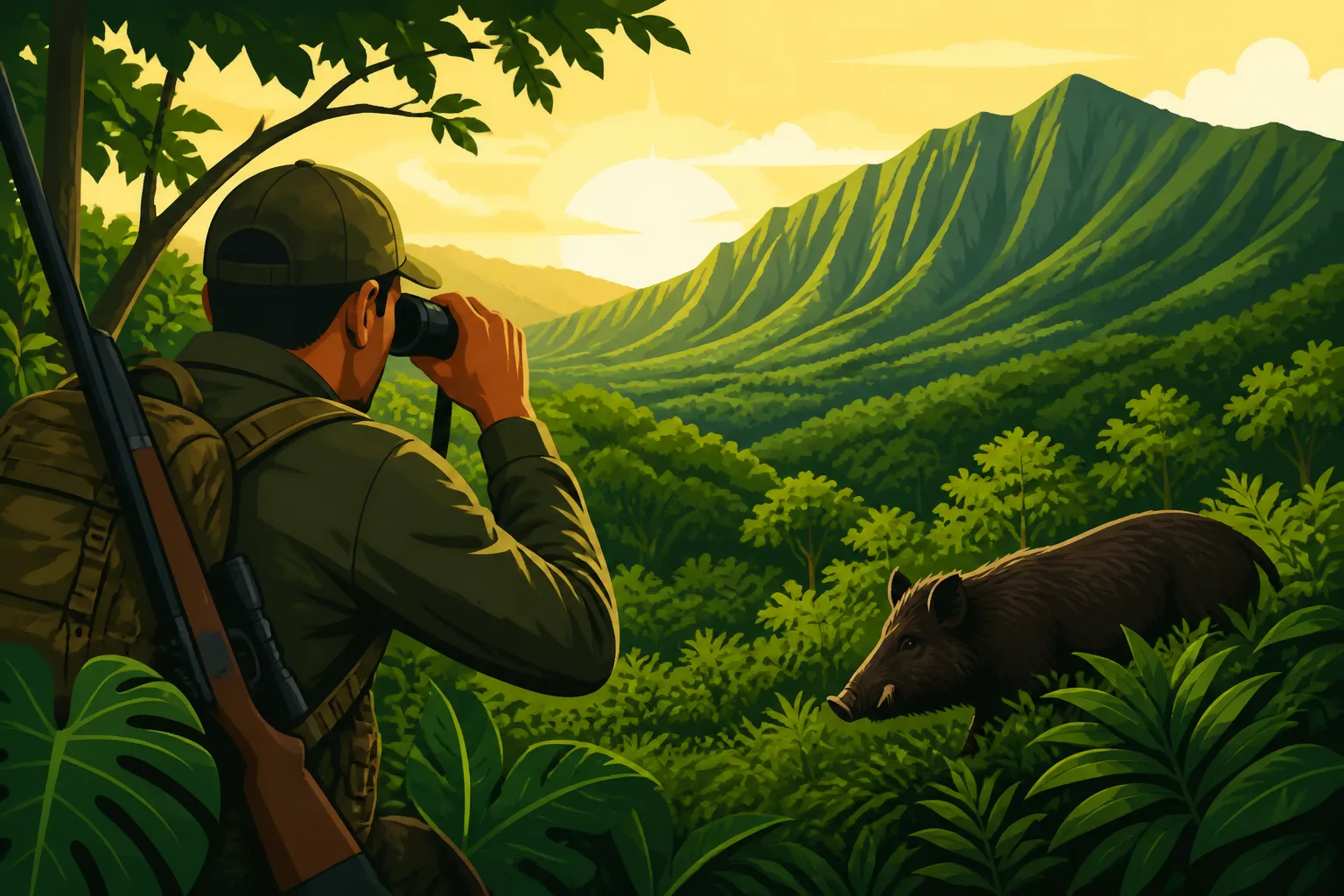
Spot-and-stalk tactics work particularly well for goats in Ewa Forest Reserve, especially on the more open, eroded slopes and ridgelines. Get to a high vantage point early in the morning and use good binoculars or a spotting scope to carefully scan the opposite slopes and draws. Goats often move at dawn and dusk to feed before bedding down in secure, elevated positions. Once you spot a billy or nannie, the real work begins: planning your approach to get within shooting range while staying out of their keen sight. This often involves long, circuitous routes to stay out of the wind and remain concealed.
For pigs, ambushing near known trails, water sources, or feeding areas can be effective. Pigs are creatures of habit, often using the same trails to move between bedding and feeding grounds. Setting up silently downwind of a well-used trail before first light, or staying late as they emerge to feed, can increase your chances significantly. Patience is paramount. You might sit for hours with no activity, only for a sounder of pigs to suddenly materialize out of the brush. Understanding Why Feral Pigs Move Mostly at Night can help you time your hunts for their crepuscular activity.
It’s also worth considering the impact of human pressure. On public lands like Ewa, animals quickly become educated to hunting pressure. They'll often shift their activity to night or retreat deeper into the most inaccessible parts of the reserve. This means you need to be willing to go where other hunters aren't, pushing deeper into the gulches or higher up the steeper slopes.
Gear and Preparation for Ewa Forest Reserve
Hunting in Hawaii, even on Oahu, requires specific gear and a level of preparation that often catches mainland hunters by surprise. The unique tropical environment, with its heat, humidity, sharp lava rock, and dense vegetation, can quickly expose weaknesses in your equipment or planning. Thinking ahead about what to bring and how to stay safe is critical for a successful and enjoyable hunt in Ewa.
Footwear, Hydration, and Navigation Essentials
Let's talk boots. You absolutely cannot skimp on footwear for Ewa Forest Reserve. The terrain is brutal on feet and ankles. You'll be climbing steep, often loose, rocky slopes, traversing uneven ground, and pushing through thorny brush. A sturdy pair of waterproof or water-resistant hiking boots with excellent ankle support and aggressive tread is non-negotiable. Many hunters prefer boots designed for aggressive mountain hunting, as they offer the necessary durability and traction. Boots for Hawaii Lava and Wet Forest offers more specific advice, but generally, think tough.
Hydration is another critical factor. Even on the relatively drier leeward side, the humidity can be high, and the sun can beat down relentlessly. Dehydration can creep up on you fast, leading to fatigue and poor decision-making. Always carry more water than you think you'll need. A good hydration pack is excellent, allowing you to sip water easily as you move. Additionally, packing electrolyte supplements can help replace salts lost through sweating. Remember, Water and Heat Planning for a Hawaii Hunt is not just a suggestion, it’s a necessity.
For navigation, a reliable GPS device or a robust app like onX Hunt on your phone is a lifesaver. Cell service in many parts of the Ewa Forest Reserve, especially deep in the gulches, will be spotty or nonexistent, so download your maps for offline use before you head out. Don't rely solely on your phone; a physical compass and map are always good backups, and knowing how to use them is essential. No Cell Signal on a Hawaii Hunt is a reality you must prepare for.
Safety Considerations and Packing out Your Harvest
Safety in Ewa means being prepared for emergencies. Always let someone know where you're going and when you expect to be back. Carry a small first-aid kit, a headlamp, and a whistle. The thick vegetation can disorient you surprisingly quickly, even on familiar ground. Be aware of sharp objects, thorny plants, and potential rockfall on steep slopes.
If you are successful, packing out an animal from Ewa's steep, rugged terrain is going to be a workout. A sturdy frame pack is invaluable for deboning an animal and carrying out the meat. The heat and humidity mean you need to cool the meat down as quickly as possible to prevent spoilage. While gutting, consider quartering the animal in the field to make it more manageable to transport. Many hunters carry game bags to protect the meat from flies and debris. It's truly a test of endurance, but the reward of fresh, wild game makes it all worthwhile. Just be realistic about your physical capabilities and don't hesitate to take a buddy along for assistance.
Disclaimer
This article is for general informational purposes only and does not constitute professional advice. Laws, prices and regulations vary by location and change over time. Consult a qualified professional for guidance on your specific situation.