Hunting an Old Ranch Fence Line
Hunting in Hawaii often conjures images of vast open slopes or dense, humid rainforests, but one overlooked gem for consistent game encounters is the humble old ranch fence line. These seemingly mundane boundaries can be incredibly productive hunting grounds, serving as natural travel corridors, food sources, and crucial cover for various game animals across the islands, and knowing how to approach them can significantly boost your success. This guide will walk you through understanding why these fence lines are so attractive to game, how to interpret the signs they hold, and the best tactics for hunting them effectively, all while keeping a respectful eye on land access.
The Unexpected Bounty: Why Old Ranch Fence Lines Attract Game
It might seem counterintuitive to focus on a man-made structure like a fence, but in Hawaii's diverse and often rugged terrain, these old ranch lines create unique microhabitats and pathways that funnel game animals right into your path. They're not just barriers; they're often edges where different types of habitat meet, or where natural features are exploited, making them irresistible to various species.
Edges and Ecotones: Where Habitats Meet
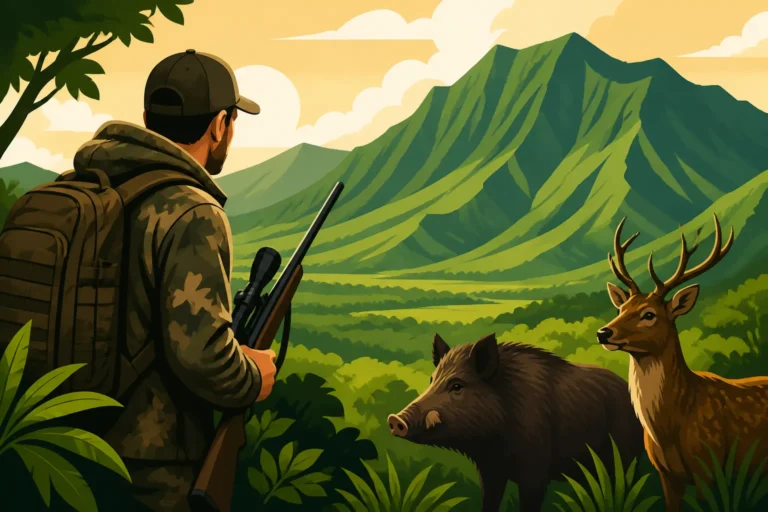
An old fence line often marks the division between two distinct types of terrain or vegetation. Think about a fence separating a dry, open kiawe flat from a dense, shaded koa forest, or a lush pasture from a thick, brushy gulch. These "edge effects" are biological magnets. Animals, whether they are Axis Deer, Hawaii's Signature Big Game, Hawaii's Feral Pigs, Island by Island, or Hawaii's Feral Goats and Why They Matter, are naturally drawn to these transitional zones because they offer the best of both worlds. They can feed in the open, sun-drenched areas and quickly retreat to the safety of thick cover when startled.
Imagine a fence running along the upper boundary of an old macadamia nut orchard, where the cultivated trees give way to wilder forest. Axis deer might browse on fallen nuts or tender new growth in the orchard at dawn and dusk, then slip back into the forest along the fence line for bedding during the day. Pigs will certainly be rooting where the cultivated land meets the wild, taking advantage of both food sources and the denser cover for escape. This blend of resources means a higher likelihood of encountering game compared to homogenous habitat.
Natural Travel Corridors and Funnels
Animals, just like people, tend to take the path of least resistance. An old ranch fence line, even if broken down in places, can inadvertently create a natural highway or funnel. If the terrain is steep, rocky, or overgrown, a relatively clear path alongside a fence line becomes an obvious choice for travel. This is especially true for pigs pushing through dense undergrowth, or goats traversing a steep pali (cliff). They’ll follow the easier grade or the slight break in vegetation that the fence line provides.
Consider a long, straight fence running across a rolling landscape with occasional gulches. Instead of navigating the complex topography of the gulches or the thick stands of guava, deer, pigs, and goats will often use the fence line itself as a navigation aid. They might push through a low spot in the wire, or walk the faint trail worn parallel to the posts. These corridors become predictable pathways, giving you a distinct advantage as a hunter. Hunting a Hawaii Gulch System is challenging, but intersecting that gulch with a fence line can make it easier to predict animal movement.
Cover, Shade, and Water Access
Beyond serving as travel routes, fence lines often provide essential resources like cover, shade, and sometimes even guide animals to water. Trees and shrubs often grow thicker along fence lines, providing excellent visual cover, especially for animals moving between feeding and bedding areas. The posts themselves can sometimes offer a scratching post for deer or a rub for pigs. In Hawaii's intense sun, the shade cast by vegetation along a fence can be a critical attraction for animals seeking relief during the heat of the day.
While fence lines don't inherently provide water, they can lead to water sources. A fence line might run down to a stock pond, a spring, or a stream, acting as a natural guide for animals thirsty in dry conditions. Knowing these potential water points along a fence line, especially in the dry leeward sides of the islands, can be a game-changer. During extended dry spells, Hunting a Water Source in Dry Hawaii Country becomes paramount, and a fence line can be your guide.
Decoding the Fence Line: Reading Signs and Animal Movement
Hunting an old ranch fence line isn't about aimlessly walking it; it's about becoming a detective. These lines are often littered with clues about what animals are using them, when, and for what purpose. Learning to read these signs is key to positioning yourself for a successful encounter.
Interpreting Tracks and Trails
The most obvious signs along a fence line are tracks. Look for fresh tracks in soft earth, mud near water crossings, or even dust. Pig tracks are generally rounder and blunt-toed, while deer tracks are more heart-shaped and pointed. Goat tracks are often narrower with sharper points. Pay attention to the direction of travel and the size of the tracks. Are they moving with purpose, or are they milling around? If you see scuff marks or drag signs, it could indicate an animal recently pushed through a tight spot.
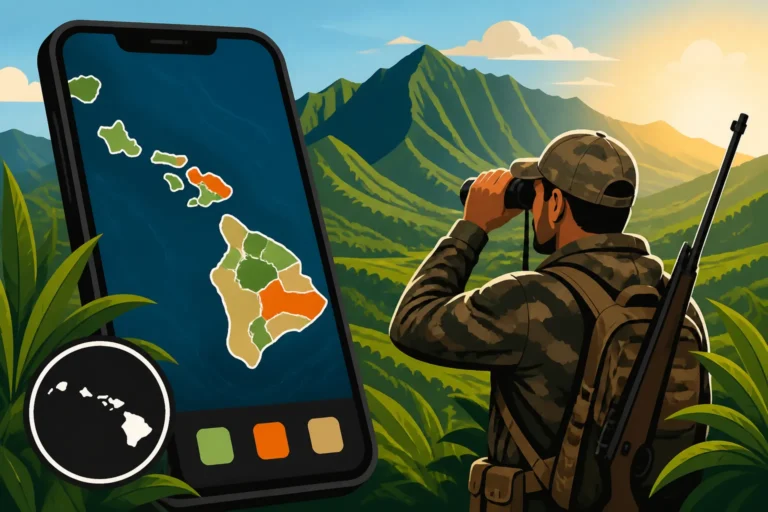
Beyond individual tracks, look for worn trails running parallel to the fence or crossing it. These are "game trails" and indicate consistent use. Notice where animals cross the fence: is there a specific low spot in the wire, a broken-down section, or a well-worn path underneath? These crossing points are prime ambush locations. A robust mapping app like onX Hunt can help you mark these game trails and crossing points digitally, creating a detailed picture of animal movement over time.
Rubs, Scrapes, and Droppings
Other tell-tale signs abound. For deer, look for rubs on fence posts or small trees where bucks have rubbed their antlers, especially during rutting periods. These indicate a buck's presence and possibly his travel route. Pigs will often rub themselves on posts or low-hanging branches to remove mud or parasites, leaving behind hair and mud smears. Scat (droppings) is another excellent indicator. Fresh, moist droppings mean animals are currently in the area. The size and consistency of the droppings can even give you an idea of the animal's diet and its general health.
Goats, in particular, will leave hair on barbed wire as they push through or climb over. They also tend to have specific bedding areas near cliff edges or rocky outcrops, and a fence line running near such features might funnel them to and from these spots. Take note of any areas where the vegetation has been browsed or rooted. Freshly turned earth or clipped leaves are clear indicators of recent feeding activity.
| Animal Type | Common Fence Line Signs | What It Tells You |
|---|---|---|
| Axis Deer | Hoof prints (heart-shaped), antler rubs on posts/trees, browsed vegetation, fresh pellets (scat) | Direction of travel, buck activity, feeding areas, recent presence |
| Feral Pigs | Hoof prints (round/blunt), rooting activity (disturbed earth), mud/hair rubs on posts, fresh scat | Feeding patterns, travel routes, size of pigs, recent presence |
| Feral Goats | Hoof prints (narrow/sharp), hair on barbed wire, browsed vegetation, fresh pellets (scat) | Travel along rocky terrain, crossing points, feeding habits, recent presence |
Timing is Everything: When Animals Use the Fence
Animals aren't using fence lines around the clock. Their activity is often dictated by time of day, weather, and hunting pressure. At first light, animals are typically moving from bedding areas to feeding grounds, and a fence line often provides safe passage. Similarly, in the late afternoon and evening, they'll reverse this pattern, heading back to cover. Hunting Axis Deer at First Light in Hawaii can be incredibly effective along a fence line.
Midday, especially on hot days, animals might seek shade along a fence line where denser vegetation provides relief. If there's a water source nearby, they might visit during the hotter hours. Overcast or rainy days can sometimes extend feeding periods into the day, making fence lines active for longer. Understanding these patterns, combined with fresh sign, will help you decide when and where to focus your efforts.
Tactics for Success: Hunting the Fence Line Effectively
Once you understand why game uses fence lines and how to read the signs, it's time to put that knowledge into action. Hunting these linear features requires a blend of stealth, patience, and strategic positioning.
Still-Hunting the Line
Still-hunting is perhaps the most effective method for covering a fence line. This involves moving slowly and deliberately, taking a few steps, then pausing for several minutes to observe, listen, and glass the surrounding area. Think of it as a moving ambush. You're constantly looking for movement, listening for tell-tale sounds like a branch breaking, a faint grunt, or the rustle of leaves.
Focus on sections where the fence line crosses varied terrain, goes over a ridge, dips into a gulch, or passes through dense cover. These are the "pinch points" where animals are most likely to be moving or feeding. Use the fence line itself as a guide, but remember that animals will often be just off the line, either feeding or moving parallel to it, slightly inside the cover. Keep the wind in your face or quartering, always mindful of Hawaii's shifting thermals, especially in mountainous areas. Still-Hunting Pigs in Hawaii's Wet Forest along a fence line involves careful steps and listening through the dense undergrowth.
Ambushing Key Crossing Points
If you've scouted the area and identified specific, frequently used crossing points or heavily trafficked sections of the fence, an ambush strategy can be highly productive. This means setting up downwind (or crosswind, depending on the topography and prevailing winds) of the crossing point, well before daylight or in the mid-afternoon, and waiting patiently. Choose a position that offers good visibility, shooting lanes, and concealment.
This strategy works particularly well for Hunting Hawaii's Feral Goats that might use a narrow ledge or a broken section of fence to access different parts of a canyon or cliff face. For axis deer, an ambush at a fence line that runs between a bedding area and a preferred feeding pasture can yield results, especially during twilight hours. Patience is key here; be prepared to sit still for extended periods.
Using Terrain and Wind to Your Advantage
Hawaii's terrain is rarely flat, and its winds, particularly the trade winds, are a constant factor. When hunting a fence line, always consider how the topography and wind will affect game movement and your approach. A fence line running along a ridge offers excellent visibility but can also expose you. A line running through a gulch offers more cover but can have swirling winds. Reading Hawaii's Trade Wind Patterns is crucial, as they can shift throughout the day, especially with local thermals kicking in.
Approach the fence line from a direction that puts the wind in your favor. If the fence runs east-west and the wind is coming from the north, you'll want to move from west to east or east to west, staying on the south side of the fence where your scent is carried away from the likely path of animals. Use any undulations in the terrain, large rocks, or clumps of vegetation for concealment as you move or set up an ambush.
Navigating the Line: Access, Boundaries, and Ethics
Hunting old ranch fence lines in Hawaii comes with important responsibilities, especially regarding land access and ethical conduct. Fence lines are often literal boundaries, separating public land from private, or one public unit from another. Ignorance of boundaries is not an excuse for trespass.
Identifying Land Ownership with Precision
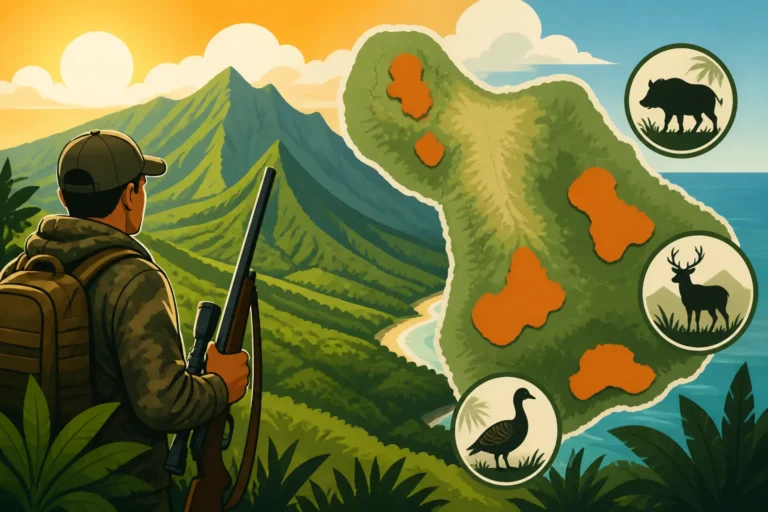
Before you even step foot near a fence line, you must know whose land you're on and whose land is on the other side. This is where modern mapping tools become indispensable. Applications like onX Hunt provide detailed land ownership information right on your phone, showing public land, private land, and various management designations. This is a game-changer for avoiding accidental trespass. You can easily see if a fence line marks the edge of a Game Management Area, a Forest Reserve, or a private ranch.
Always verify your location using GPS on your phone or a dedicated unit, and consult physical maps if available. Even if you're hunting on public land, the fence line next to it could be private, and animals will often cross these lines. Be absolutely certain of your position before taking a shot, and never shoot across a property line onto land where you don't have permission. Using onX for Hawaii Land Status is a vital part of responsible hunting in the islands.
Understanding Access Rules and Permits
Even if a fence line is on public land, there might be specific access rules. Some units require checking in and out at hunter stations or via an app like OuterSpatial. Others might have restrictions on vehicle access, requiring you to walk in. If the fence line runs through a Cooperative Game Management Area or along the boundary of private land where a special agreement is in place, you may need additional permits or permissions.
For instance, hunting units might border private ranch lands where axis deer and pigs are abundant. While you might be able to hunt up to the fence line on the public side, crossing that fence, even for a downed animal, is trespassing unless you have explicit permission from the landowner. Always check the specific rules for the unit you're hunting. You can find information on general access and permitting through GoHunt Hawaii, which often consolidates details for state-managed lands. Remember, obtaining your Hawaii Hunting Licenses and What They Cost is just the first step; knowing the local rules for each unit is equally critical.
Ethical Considerations and Respect
Beyond legality, there's an ethical component to hunting fence lines. Always be mindful of livestock if you're near active ranch land. Never harass or shoot domestic animals. If you down an animal near a fence line and it crosses onto private property, your first step is to contact the landowner for permission to retrieve it. If you cannot get permission, you may be unable to retrieve your game, which can be a tough pill to swallow, but it’s part of respecting private property rights.
Also, be respectful of the fence itself. Do not damage it by cutting wires, climbing over fragile sections, or leaving gates open if you encounter them. Many of these fences are essential for containing livestock or delineating important conservation areas. Leaving the area as you found it, or better, is a core principle of ethical hunting. When Checking In and Out of Hawaii Hunting Units, if you encounter any issues with fences or boundaries, report them to the local wildlife officials.
Disclaimer
This article is for general informational purposes only and does not constitute professional advice. Laws, prices and regulations vary by location and change over time. Consult a qualified professional for guidance on your specific situation.