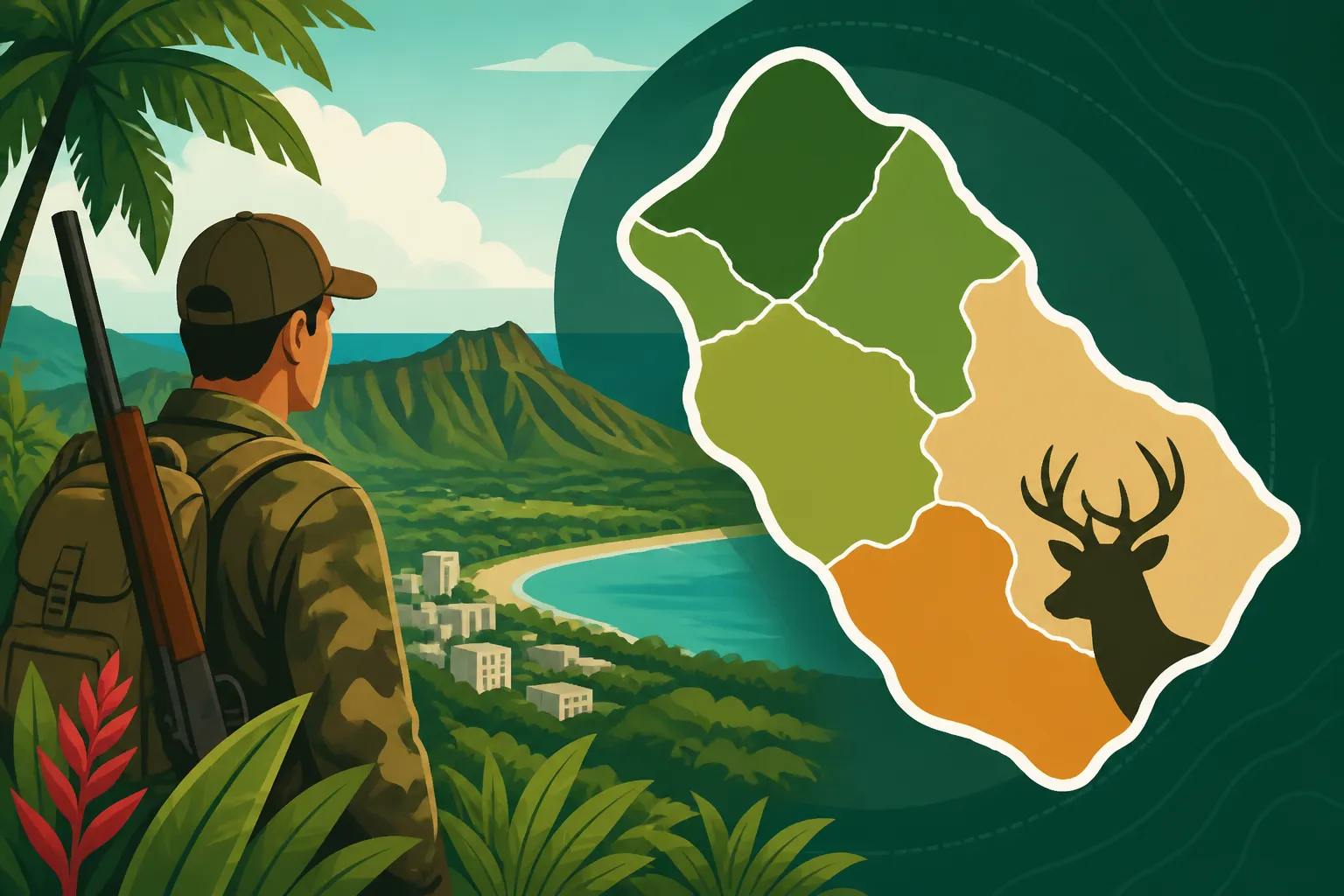
Honolulu County Unit Access Overview
Hunting in Honolulu County, specifically on the island of Oahu, can feel like a contradiction in terms for many mainland hunters, or even those accustomed to the more expansive, rural units on neighbor islands. The constant hum of traffic, the dense population, and the seemingly endless sprawl of development can make finding a wild place to pursue game feel impossible. This guide aims to demystify Oahu's public hunting units, offering a realistic look at where and how you can still experience the thrill of the hunt in this unique urban-island environment.
Understanding Honolulu County's Unique Hunting Landscape
When people think of Oahu, visions of Waikiki beaches, Diamond Head, and bustling Honolulu usually come to mind. What often goes unsaid is that even amidst this vibrant urban core, there are still pockets of wild, rugged terrain where feral pigs and goats roam. It’s a completely different experience than what you might find on the Big Island or Maui, and it requires a unique mindset and approach. The challenges are real, from limited access to navigating areas near private property, but for those willing to put in the effort, the rewards of a successful hunt in Oahu are incredibly satisfying.
The Challenges of Urban Island Hunting
Let's be honest, hunting on Oahu isn't like heading out to a sprawling national forest. The land base is smaller, pressure can be higher, and you're always mindful of where you are in relation to communities and private properties. Roads often serve multiple purposes, from residential access to agricultural routes, which means hunters need to be extra vigilant and respectful. The "wild" areas here are often interspersed with residential zones, military installations, and protected conservation lands, creating a complex patchwork that can be daunting to decipher without local knowledge. This geographical reality means understanding the regulations and boundaries isn't just a suggestion; it's absolutely critical for a safe and legal hunt.
Public Land Opportunities Amidst Development
Despite these challenges, Oahu still offers legitimate public hunting opportunities. These aren't vast wildernesses, but rather specific management units, often in the more mountainous or remote parts of the island, typically within Forest Reserves or Watersheds. The primary game animals are feral pigs and goats, which thrive in the thick, wet forests and steep, rocky terrain that characterizes much of the available hunting land. You won't find axis deer or mouflon sheep here; those are primarily on other islands. What you will find are hardy animals that have adapted to intense pressure and dense cover, making for some truly challenging and exciting hunts. Knowing where these units are and how to access them is the first step toward putting fresh wild pork or goat on your table.
Key Public Hunting Units in Honolulu County
Oahu's public hunting land is managed by the Department of Land and Natural Resources (DLNR), Division of Forestry and Wildlife (DOFAW). These units are scattered across the island, predominantly in the Ko'olau and Wai'anae mountain ranges. Each unit has its own character, challenges, and specific rules. It's not a one-size-fits-all situation, and understanding the nuances of each area is paramount for planning a successful trip.
Oahu's Waianae Kai Forest Reserve
The Waianae Kai Forest Reserve, located on the leeward side of the Wai'anae mountain range, is one of Oahu's most well-known public hunting areas. This unit is popular for pig hunting, offering a mix of steep valleys, dense kiawe forests, and thorny brush. Access points can be limited, and the terrain quickly becomes very rugged and challenging, demanding good physical fitness and navigational skills. Hunters often access this area via side roads off Farrington Highway, but parking can be an issue, and you'll often be walking in a good distance before you even start hunting.
The heat on the leeward side can be intense, especially during the middle of the day, so early morning starts are crucial. Pigs here are often found deep in the gulches, seeking shade and water. It's not uncommon to encounter other hunters, especially on weekends, so practicing good hunter etiquette is essential. Many local hunters use dogs in this area, so be aware of potential encounters with baying dogs or other hunting parties. Hunting Oahu's Waianae Kai is a true test of grit and determination, offering a raw, challenging experience for those seeking feral pigs.
Ewa Forest Reserve and Its Potential
Further south on the leeward side, the Ewa Forest Reserve presents another option for hunters. This unit tends to be drier than some of the windward units, characterized by similar kiawe and scrub brush, often with deep cuts and ravines. While perhaps not as frequently discussed as Waianae Kai, it still holds populations of feral pigs and goats. The terrain here can be just as demanding, if not more so, with sharp volcanic rock and thorny vegetation making every step a deliberate one.
Access usually involves traversing private or unpaved roads, which may require permission or careful navigation to avoid trespassing. Knowing your boundaries here is critical. The sparse tree cover in some areas can make spot-and-stalk difficult, often pushing hunters into thicker vegetation or focusing on game trails. Hunting Oahu's Ewa Forest Reserve often means dealing with dry conditions, so knowing where the limited water sources are can be a key to success, both for you and for finding game.
Makua-Keaau Reserve Access Considerations
The Makua-Keaau Reserve lies adjacent to military training areas, which presents unique access considerations. Hunters must be acutely aware of military operations and closures, which can change frequently and without much advance notice beyond what's posted by DOFAW. This area is rugged, steep, and remote, offering a true backcountry feel even on Oahu. Pigs and goats are present, often seeking refuge in the dense, untouched valleys.
Because of the proximity to military lands, checking in and understanding the exact boundaries is non-negotiable. Some areas might be subject to unexploded ordnance, making it incredibly dangerous to stray off marked trails or into closed zones. Hunting Oahu's Makua-Keaau Reserve is definitely not for the faint of heart or the unprepared. It requires careful planning, checking all advisories, and a strong sense of self-reliance.
Mokuleia and Kahuku: Ridgelines and Remote Spots
Moving to the North Shore, the Mokuleia and Kahuku areas offer different types of hunting experiences. These units, especially in the higher elevations of the Ko'olau Range, can be incredibly wet and steep, covered in dense rainforest vegetation like guava, uluhe fern, and ginger. This kind of cover makes for extremely difficult, close-quarters hunting, often relying on dog work or painstaking still-hunting. Feral pigs are the primary target here, thriving in the damp, muddy conditions.
Hunting Oahu's Mokuleia Ridges often means tackling steep, slippery slopes and navigating dense undergrowth where visibility can be mere feet. Hunting Oahu's Kahuku Country similarly plunges you into lush, often fog-shrouded forests. Access might involve traversing old plantation roads or hiking in from more established trails. Expect mud, steep climbs, and a lot of sweat. These areas truly embody the "jungly" side of Hawaii hunting and are a far cry from the open country most people associate with hunting.
Navigating Access and Regulations
Hunting in Honolulu County isn't just about finding the right unit; it's about diligently following the rules and respecting the land and local communities. The system is designed to manage public safety, conservation efforts, and the experience for all users. Ignoring any part of it can lead to serious consequences, from fines to losing your hunting privileges.
Permitting, Check-In, and the OuterSpatial App
Every hunter on Oahu, just like on other islands, needs a valid Hawaii hunting license. Beyond that, many units require a specific permit or mandate a check-in and check-out procedure. This system helps DOFAW track hunter effort, harvest rates, and ensures everyone is accounted for, especially in remote areas. In recent years, the OuterSpatial app has become an indispensable tool for this process. It allows hunters to digitally check in and out of units, view real-time maps, and see current regulations, saving a lot of time and hassle compared to paper cards.
Before you even step foot in a unit, make sure your license is current and you understand the specific check-in requirements for that area. Sometimes there are physical check stations; other times, it's solely through the app. Don't assume anything; always double-check. Forgetting to check out, even accidentally, can sometimes trigger a search and rescue response, or at the very least, a call from DOFAW. It's a critical part of being a responsible hunter here. Checking In and Out of Hawaii Hunting Units is a requirement, not an option. Familiarizing yourself with Using the OuterSpatial App to Check In will make your life much easier.
Understanding Unit-Specific Rules and Boundaries
Each hunting unit on Oahu comes with its own set of rules regarding seasons, legal weapons, bag limits, and specific access points. These rules are posted on the DLNR website and at various kiosks near unit entrances. It's not enough to just know the general statewide regulations; you absolutely must familiarize yourself with the specifics of the unit you plan to hunt. For example, some units might only allow archery or muzzleloader hunting, while others permit rifles on specific weekends.
Boundaries are another crucial element. Public hunting areas often abut private property, military land, or sensitive conservation zones. Trespassing is a serious offense and can jeopardize future hunting opportunities for everyone. Tools like onX Hunt are invaluable here, providing detailed satellite imagery and property lines that can help you stay within legal boundaries. Always consult the official DOFAW unit map, available through GoHunt or on the DLNR website, and cross-reference it with your GPS. Reading a Hawaii Unit Boundary Map accurately is one of the most important skills a Hawaii hunter can possess.
Vehicle Access and Parking Challenges
Many of Oahu's hunting units, particularly those in the steep mountain ranges, have limited vehicle access. Some roads may require a 4×4 vehicle, while others are gated and require hunters to walk in. Parking can also be a challenge, especially on popular weekend days. You might find yourself parking on the shoulder of a narrow road, so always be mindful of not blocking access for residents or emergency vehicles.
Be prepared to walk, often for miles, to reach prime hunting grounds. This means packing appropriately, carrying enough water, and having sturdy footwear. Vehicle Rules on Hawaii Public Land are strictly enforced; don't take your vehicle into areas marked as foot-access only, or attempt to drive on deeply rutted or overgrown trails unless explicitly permitted and you have a capable vehicle. Improper parking or vehicle misuse can lead to fines or your vehicle being towed. If you plan to camp, remember that Camping Rules on Hawaii Public Land must also be followed, and not all units allow it.
Strategies for Successful Hunting in Oahu
Hunting on Oahu, while challenging, can be incredibly rewarding. It demands adaptability, patience, and a deep respect for the unique environment. Here are some strategies to increase your chances of success in this one-of-a-kind hunting landscape.
Scouting and Planning Your Hunt
Effective scouting is paramount on Oahu, perhaps even more so than on larger, more contiguous hunting lands. Since hunting units can be isolated pockets within a developed island, understanding the precise layout, topography, and game movement patterns is critical. Spend time studying maps from sources like onX Hunt or the official DOFAW unit maps. Look for natural funnels, water sources, bedding areas, and potential escape routes. Pay attention to how the terrain changes from a dry, leeward kiawe flat to a wet, windward gulch.
If possible, do a reconnaissance hike (or "pila" as locals might say) during the off-season or a non-hunting day. Observe pig and goat sign—rooting, tracks, droppings, and rubs. Look for areas with fresh feed, like fallen fruit from guava or mango trees. Understand that game animals on Oahu are often nocturnal due to hunting pressure, so finding fresh sign from the previous night is a good indicator. Scouting a Hawaii Hunting Unit Before Opening will give you a huge advantage when the season arrives.
Species to Target and Tactics to Employ
As mentioned, feral pigs and goats are the primary game animals available on Oahu. Pigs are abundant in the dense, wet forests of both the Ko'olau and Wai'anae ranges. Goats tend to prefer the steeper, drier, and more open rocky slopes, often found on the leeward side.
For pigs, still-hunting is a common tactic, especially if you're hunting without dogs. This involves moving very slowly and quietly through the thick cover, stopping frequently to listen and observe. Look for areas with active rooting or wallows, and approach them cautiously. Hunting Pigs Without Dogs in Hawaii requires immense patience and keen observation. If you hear rustling in the dense brush, it's often a pig. Using a small grunt tube or a soft pig call can sometimes draw a curious animal closer. For those who hunt with dogs, the deep gulches and dense tangles are perfect for bay and catch dogs, though GPS Collars for Pig Dogs in Thick Cover are essential for keeping track of your valuable companions.
For goats, particularly in the more open, steep country, spot-and-stalk is the preferred method. Find a high vantage point at first light and glass the opposite slopes and cliff faces. Goats are incredibly agile and can disappear quickly into broken terrain. A good pair of binoculars or a spotting scope is invaluable. Once you spot an animal, plan a careful approach, using terrain features to stay out of sight and downwind. Remember that No Cell Signal on a Hawaii Hunt is common in these remote areas, so always carry a map and compass, or a reliable GPS device, and let someone know your plans.
| Unit Name | Primary Game | Typical Terrain | Key Challenges | Recommended Tactics |
|---|---|---|---|---|
| Waianae Kai Forest | Pigs, Goats | Steep gulches, kiawe forest, rocky slopes | Heat, dense cover, other hunters, steep climbs | Still-hunt, dog hunting |
| Ewa Forest Reserve | Pigs, Goats | Dry kiawe, scrub, ravines | Heat, sharp rock, access, private land proximity | Still-hunt, spot-and-stalk |
| Makua-Keaau Reserve | Pigs, Goats | Very steep, remote, dense forest | Military closures, unexploded ordnance, extreme ruggedness | Still-hunt, challenging stalk |
| Mokuleia/Kahuku Ridges | Pigs | Wet rainforest, dense uluhe/guava, steep | Mud, thick cover, low visibility, steep climbs | Dog hunting, careful still-hunt |
Respecting Cultural Sites and Local Communities
Oahu is not just a hunting ground; it's a living, breathing island with deep cultural significance and vibrant local communities. Many hunting units are adjacent to or contain ancient Hawaiian cultural sites, such as heiau (temples), burial grounds, and agricultural terraces. These sites are sacred and must be treated with the utmost respect. Disturbing them is not only illegal but deeply offensive to local culture. Always be aware of your surroundings and if you stumble upon what appears to be a cultural site, leave it undisturbed.
Additionally, hunters on Oahu often access public lands through or near private property and local neighborhoods. Maintaining a good relationship with residents and landowners is vital for continued access. This means driving slowly on residential roads, packing out all your trash (and perhaps even some that isn't yours), keeping noise to a minimum, and always being polite and courteous. Hunter behavior has a direct impact on public perception and future access. Remember that Cultural Etiquette on a Hawaii Hunt is an important part of the experience here, and showing respect for the land and its people is paramount.
Disclaimer
This article is for general informational purposes only and does not constitute professional advice. Laws, prices and regulations vary by location and change over time. Consult a qualified professional for guidance on your specific situation.