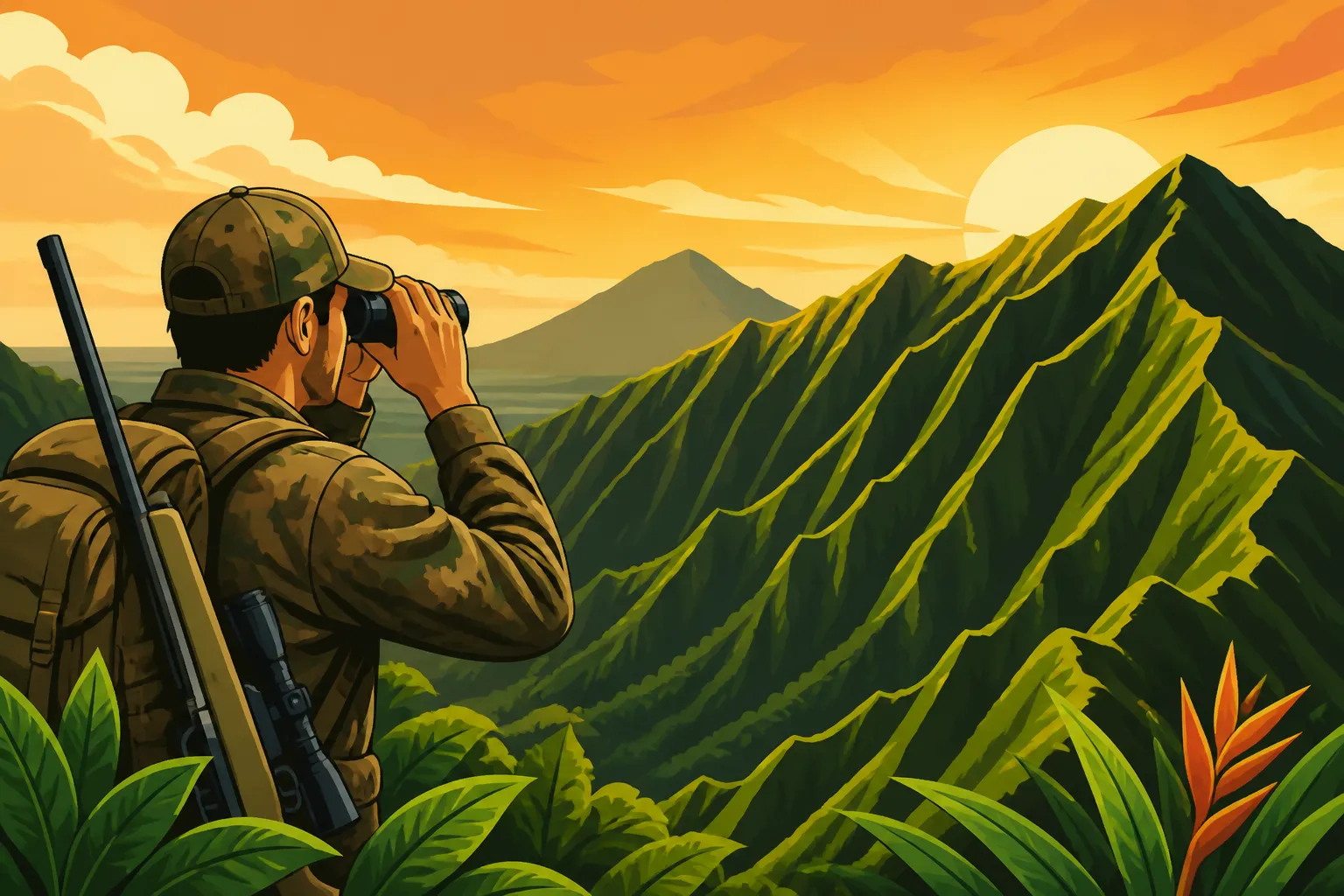
Hunting Oahu’s Public Ridges
Hunting Oahu's public ridges isn't just a physical challenge; it's a mental game against some of the densest jungle, steepest terrain, and most elusive game animals anywhere. Many hunters come to Oahu, eager to experience island hunting, only to find themselves swallowed by thick vegetation or exhausted by endless ascents and descents without seeing a single animal. This guide is here to break down exactly what it takes to successfully hunt the public lands of Oahu, focusing on understanding the unique environment, targeting the right species, and employing tactics that actually work in this demanding landscape.
Understanding Oahu's Unique Public Ridge Ecosystems
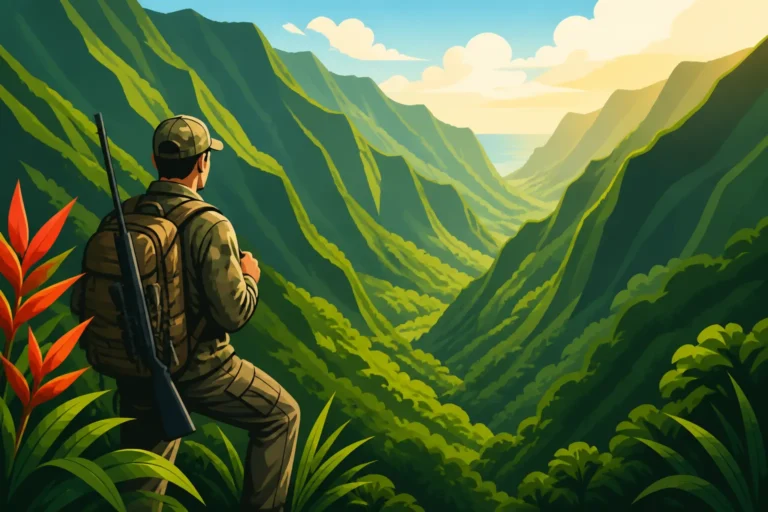
Oahu might be known for its stunning beaches and bustling city life, but venture inland and you'll find a rugged, wild heart dominated by steep, verdant ridges and deep gulches. These public lands offer incredible hunting opportunities, but they demand respect and a deep understanding of their unique characteristics. The very topography that makes Oahu beautiful also makes it an unforgiving hunting ground.
Ridge Topography and Microclimates
The Koolau and Waianae mountain ranges define Oahu's landscape, creating a dramatic contrast between windward (wet) and leeward (dry) sides. Hunting the windward side often means contending with constant rain, slick mud, and incredibly dense rainforest, whereas the leeward side can be hot, arid, and covered in thorny kiawe and sparse grasses. Each ridge system, each gulch, has its own microclimate and vegetation, influencing where animals live and move. For instance, a gulch on the windward side might be a constant haven for pigs seeking moisture and thick cover, while goats on the leeward side will favor rocky, exposed slopes where they can spot predators from afar. Understanding these localized conditions is paramount to knowing where to focus your efforts. You might start a hunt in a misty, cool forest and, within an hour's walk, find yourself baking in direct sun on an exposed ridge crest.
Diverse Vegetation and Animal Cover
The vegetation on Oahu's ridges is incredibly varied and often extremely challenging to traverse. On the wetter windward slopes, you'll encounter dense stands of invasive strawberry guava, thick Clidemia, and ancient koa and ōhiʻa forests. This forms an almost impenetrable wall of green, making still-hunting slow and requiring keen observation for even the slightest movement or sign. Pigs absolutely thrive in this kind of cover, using it for bedding, feeding, and escaping pressure. On the drier leeward sides, you'll deal with thorny kiawe forests, haole koa, and dry grasses, which, while less dense, can still be a nightmare to push through and offer less visual cover for the hunter. Navigating this diverse plant life means constantly adapting your approach, choosing between quiet, slow movement in open areas, or noisy, deliberate pushes through the thick stuff. The animals are masters of using this cover to their advantage, vanishing silently into seemingly impenetrable tangles.
Targeting Oahu's Primary Game Animals: Feral Pigs and Goats
Oahu's public lands are primarily home to two main game animals: feral pigs and feral goats. While both are considered invasive species and present conservation challenges, they also offer exciting and challenging hunting opportunities for local and visiting hunters. Understanding their habits, preferred habitats, and signs is the key to success.
Habits and Habitats of Feral Pigs
Feral pigs are the most common quarry on Oahu's public ridges, especially in the wetter, denser areas. These intelligent and resilient animals thrive in the island's abundant cover and food sources. You'll find them rooting for tubers, eating fallen fruits, and wallowing in muddy depressions. Pigs often stick to the thickest parts of gulches and drainages, particularly on the windward side where moisture is plentiful and the vegetation provides constant concealment. They are creatures of habit, often using the same trails (pig trails are unmistakable, resembling miniature highways through the undergrowth), bedding areas, and feeding zones. Locating fresh sign—wallows, rubs on trees, fresh tracks, and rooting areas—is crucial for figuring out where they are currently active. Early mornings and late afternoons are often the best times to find them moving, though in very dense cover, they might move throughout the day. For deep insights into their behavior, check out our guide on Hunting Hawaii's Feral Pigs.
Locating Feral Goats in Ridge Country
Feral goats on Oahu tend to prefer the more open, rockier, and drier ridge systems, especially on the leeward side of the island. They are masters of navigating steep, treacherous terrain that would make most humans dizzy. Look for them on steep hillsides, rocky outcrops, and along cliff edges where they can quickly scale vertical faces to escape danger. Goats are primarily browsers, feeding on leaves, shrubs, and grasses. Fresh droppings, tracks in dusty areas, and rubs on small trees or bushes are good indicators of their presence. They often move in small herds, so if you spot one, there are likely more nearby. Unlike pigs, which rely heavily on cover, goats use their excellent eyesight and agility to evade hunters. Spot-and-stalk tactics, often involving long-distance glassing, are essential when pursuing these wary animals. Our article on Hunting Hawaii's Feral Goats provides more detailed information on tracking these agile climbers.
Navigating the Public Hunting Units on Oahu
Oahu has several public hunting units managed by the Department of Land and Natural Resources (DLNR) Division of Forestry and Wildlife (DOFAW). These units are spread across the island's mountain ranges, each with its own character and rules. Successfully hunting them requires not only physical prowess but also careful planning and adherence to regulations.
Key Oahu Hunting Units and Their Characteristics
Oahu offers several distinct public hunting units, each presenting different terrain and challenges.
- Waianae Kai Forest Reserve (Unit A): Located on the leeward side of the Waianae Range, this unit offers a mix of dry, rocky slopes and some deeper, more vegetated gulches. Access can be challenging, and the heat can be intense. It's known for both pigs and goats, with goats often found higher up on the more exposed ridges. For a closer look at this specific area, you might find our article on Hunting Oahu's Waianae Kai helpful.
- Ewa Forest Reserve (Unit C): Also in the Waianae Range, Ewa tends to be drier than some of the windward units, with kiawe and haole koa prevalent. It offers good pig hunting, particularly in the drainage bottoms.
- Kahuku Training Area (KTA): This is a federal military training area that offers public hunting on specific weekends, requiring prior registration and strict adherence to military regulations. It's often drier and more open in parts, providing unique opportunities for both pigs and goats.
- Mokuleia Forest Reserve (Unit F): Situated on the North Shore, this unit is known for its steep, wet gulches and dense forest cover, making it prime pig country. Navigation can be tricky due to the thick vegetation and numerous drainages.
- Makua-Keaau Forest Reserve (Unit G): Located on the leeward side of the Waianae Range, this area shares characteristics with Waianae Kai, offering a mix of dry slopes and wetter gulches. It's less accessible in some parts, requiring longer hikes.
Each unit has unique access points, terrain, and game densities. It's critical to study maps, understand the boundaries, and be aware of any temporary closures or special regulations. The GoHunt website and the OuterSpatial app are invaluable resources for current unit information and check-in/out procedures.
Check-In and Out Procedures
Hawaii has a mandatory check-in and check-out system for all public hunting units, and Oahu is no exception. This isn't just a formality; it's a safety measure and a way for DOFAW to collect valuable data on hunter effort and harvest. You typically check in at designated hunter check stations or, increasingly, through the OuterSpatial mobile app. Failing to check in or, more critically, failing to check out, can result in penalties and even suspension of your hunting privileges. It's your responsibility to know the rules for the specific unit you're hunting. Always double-check that your check-out is properly recorded, especially if using the app in areas with spotty cell service. Our guide on Checking In and Out of Hawaii Hunting Units provides a detailed walkthrough of this essential process.
Effective Hunting Methods for Oahu's Ridge Country
Hunting Oahu's public ridges demands specific tactics tailored to the dense vegetation, steep slopes, and the nature of the game animals. Gone are the days of long-range glassing across wide-open plains. Here, it's about close-quarters engagement and relentless pursuit.
Still-Hunting and Stalking in Dense Cover
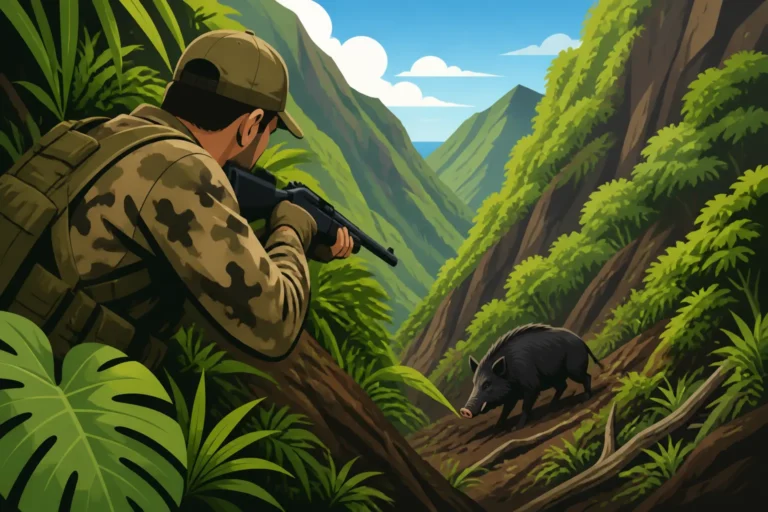
Still-hunting is perhaps the most challenging, yet rewarding, method for pigs and goats on Oahu. It involves moving incredibly slowly and deliberately, stopping frequently to listen, look, and scan for any sign of movement or disturbance. The key is to blend with the environment, taking advantage of natural cover, and moving only when animals are not looking in your direction. In the thick rainforest, visibility can be limited to mere yards, making every step critical. Focus on the subtle sounds of the jungle – a rustle in the leaves, a distant grunt, the snapping of a twig. When still-hunting for pigs in the wet forest, pay close attention to fresh rooting, wallows, and pig trails. These are their highways; if you find fresh sign, they're likely nearby. Our article on Still-Hunting Pigs in Hawaii's Wet Forest offers more specific techniques for this challenging environment. For goats on more open ridges, stalking becomes more important, requiring precise movements to close the distance without being detected.
Dog Hunting for Feral Pigs
Dog hunting is a deeply rooted tradition in Hawaii and remains one of the most effective ways to pursue feral pigs, especially in Oahu's dense, steep terrain. It typically involves a team of well-trained dogs: "bay dogs" that locate and hold a pig by barking, and "catch dogs" that move in to subdue the pig once bayed. The hunters follow, often using GPS collars to track the dogs through the thick undergrowth. This method is physically demanding, requiring hunters to keep pace with the dogs through incredibly rugged country. It's also an adrenaline-pumping experience, ending in a close-quarters encounter. When engaging in Dog and Knife Pig Hunting in Hawaii, strict adherence to safety protocols and local regulations, including Hawaii Dog Hunting Rules, is paramount. This method is not for the faint of heart, but it's incredibly effective for getting pigs out of the thickest cover.
Spot-and-Stalk on Open Ridges
While dense cover defines much of Oahu's hunting, there are areas, particularly on the drier leeward slopes and higher, more exposed ridges, where spot-and-stalk tactics can be employed for goats. This involves using binoculars or a spotting scope to scan distant hillsides for feeding or bedded animals. Once an animal is located, the real work begins: planning an approach that uses terrain features, wind direction, and vegetation to close the distance undetected. This can involve long, arduous walks, often followed by painstaking crawls through sparse cover. Goats have excellent eyesight, so movement must be slow and deliberate. Success in spot-and-stalk often boils down to patience, stealth, and a keen understanding of the wind.
Gear and Preparation for Oahu's Challenging Terrain
Hunting Oahu's public ridges is a demanding endeavor that requires careful preparation and the right gear. The unique environmental challenges – from oppressive humidity to razor-sharp lava and slippery mud – will test both you and your equipment. Skimping on preparation here can quickly turn a hunt into a miserable experience, or worse, a dangerous one.
Essential Footwear and Clothing
Your feet are your most important asset when hunting Oahu's steep and slippery ridges. Investing in high-quality, waterproof, sturdy hiking boots with excellent ankle support and aggressive traction is non-negotiable. Trails can be non-existent, and you'll be traversing everything from slick clay to loose volcanic rock and tangled roots. Boots like those from Kenetrek or Crispi, designed for mountain hunting, are highly recommended. Break them in well before your trip. For clothing, think layers that breathe well and dry quickly. Lightweight, synthetic materials are far superior to cotton, which stays wet and heavy. Long pants are essential to protect against thorny vegetation and insect bites. Rain gear is also a must, especially on the windward side. A compact, breathable rain jacket and pants can save you from hypothermia or just plain misery.
Navigation and Communication Tools
Staying found in Oahu's dense, broken terrain is a constant challenge. Cell service is unreliable, so relying solely on your phone for navigation is a recipe for trouble. A dedicated GPS unit like a Garmin inReach or a reliable GPS app on your phone (like GoHunt's embedded mapping or the OuterSpatial app) with downloaded offline maps is essential. Always carry a physical map and compass as a backup and know how to use them. Mark your start point, key landmarks, and your route frequently. For safety, a personal locator beacon (PLB) or satellite messenger is a wise investment, allowing you to call for help even without cell service. Ensure someone knows your hunting plan, including your expected return time and exact unit you'll be in. Our guide to Staying Found in Dense Hawaii Rainforest elaborates on critical navigation skills.
Water, Food, and First Aid
Hawaii's humidity and strenuous terrain mean you'll sweat a lot, making dehydration a serious risk. Carry significantly more water than you think you'll need – a hydration pack with a 3-liter capacity is a good starting point, possibly supplemented by additional bottles. Bring electrolyte mixes to replenish salts. High-energy, non-perishable snacks like energy bars, nuts, and dried fruit are ideal. A well-stocked first-aid kit is crucial, especially one prepared for cuts, scrapes, blisters, insect bites, and minor sprains. Consider adding a small snake bite kit, though snakes are not native to Hawaii, some hunters carry them for perceived protection in dense areas. More importantly, bring bandages for severe cuts from sharp lava or thick brush. When Packing Meat Out of a Hawaii Gulch, ensure you have enough water and supplies for the added effort.
Rules, Regulations, and Local Etiquette
Hunting in Hawaii comes with its own set of rules and cultural considerations. It's not just about what's legal, but also about respecting the land, the animals, and the local community. Ignorance of the rules is no excuse, and showing respect goes a long way.
Legal Weapons and Seasons
The legal weapons for hunting on Oahu's public ridges vary by unit and season. For most feral pig and goat hunting, archery, muzzleloaders, and rifles are generally permitted, though specific caliber and draw weight minimums apply. Shotguns are also sometimes allowed, particularly for birds, but check unit-specific rules for mammals. Always consult the most current DOFAW hunting regulations for the specific unit and species you intend to hunt. Crossbows are generally considered archery equipment but always confirm. Keep in mind that Hawaii's Legal Weapons by Season can be complex, and it's your responsibility to be compliant. Importantly, What Oahu Hunters Do Without Tags is also a key distinction; while many species require tags on other islands, pigs and goats on Oahu typically do not, though checking in and out is still mandatory.
Blaze Orange and Safety Guidelines
While not always mandatory for archery or muzzleloader seasons, wearing blaze orange is a smart safety practice, especially during rifle seasons or if you're hunting in a popular area. A blaze orange vest or hat makes you significantly more visible to other hunters, which is crucial in dense cover. Always practice safe firearm handling, know your target and what's beyond it, and never hunt alone if possible. If you do hunt solo, ensure you have reliable communication and a detailed plan shared with someone outside the hunting area. Adhering to Hawaii Blaze Orange and Safety Rules helps ensure a safe hunt for everyone.
Respecting Private Land Boundaries and Local Culture
One of the biggest frustrations for hunters on Oahu is navigating the patchwork of public and private land. Many public units are bordered by private ranches, homes, or agricultural operations. It is absolutely critical to know your unit boundaries and avoid trespassing onto private property, which can lead to serious legal consequences and erode the public's trust in hunters. Utilize your GPS with land ownership layers. Beyond legal boundaries, understand and respect local customs and practices. Locals often have deep ties to the land and hunting traditions. Be courteous, respectful, and willing to learn. Don't leave trash, don't block access roads, and be mindful of noise, especially near residential areas. The old saying, "Take only pictures, leave only footprints," applies even more so in these fragile island ecosystems.
Table: Comparing Select Oahu Public Hunting Units
| Unit Name | Primary Game | Typical Terrain | Key Features | Access Challenges | Check-in Method |
|---|---|---|---|---|---|
| Waianae Kai (Unit A) | Pigs, Goats | Dry slopes, rocky ridges, vegetated gulches | Leeward side, mix of open and dense cover | Steep climbs, hot conditions, limited road access | Online (OuterSpatial) or designated station |
| Ewa Forest Reserve (Unit C) | Pigs, Goats | Dry, steep valleys, kiawe thickets, some wet areas | Leeward side, challenging terrain for still-hunting | Rugged trails, dense thorny brush, can be very hot | Online (OuterSpatial) or designated station |
| Mokuleia Forest Reserve (Unit F) | Pigs | Wet, dense rainforest, steep gulches | Windward side, very thick vegetation, high rainfall | Muddy trails, extremely dense undergrowth, navigation tricky | Online (OuterSpatial) or designated station |
| Makua-Keaau (Unit G) | Pigs, Goats | Mix of dry and wet, steep ridges, deep canyons | Leeward side, remote sections, challenging hiking | Longer hikes to reach prime areas, rough access roads | Online (OuterSpatial) or designated station |
| Kahuku Training Area (KTA) | Pigs, Goats, Birds | Varied; open fields, dense brush, some forest | Military training area, specific hunt dates, requires prior registration | Restricted access, military rules, check in on-site | On-site at KTA check station, pre-registration required |
Disclaimer
Hunting in Hawaii carries inherent risks, including but not limited to challenging terrain, unpredictable weather, and encounters with wild animals. Always prioritize safety, adhere to all local, state, and federal regulations, and obtain proper licenses and permits. The information provided in this guide is for informational purposes only and should not be considered legal advice. It is the hunter's responsibility to verify all rules and regulations with the Hawaii Department of Land and Natural Resources (DLNR) Division of Forestry and Wildlife (DOFAW) before heading afield.