Glassing Lanai’s Open Ridgelines
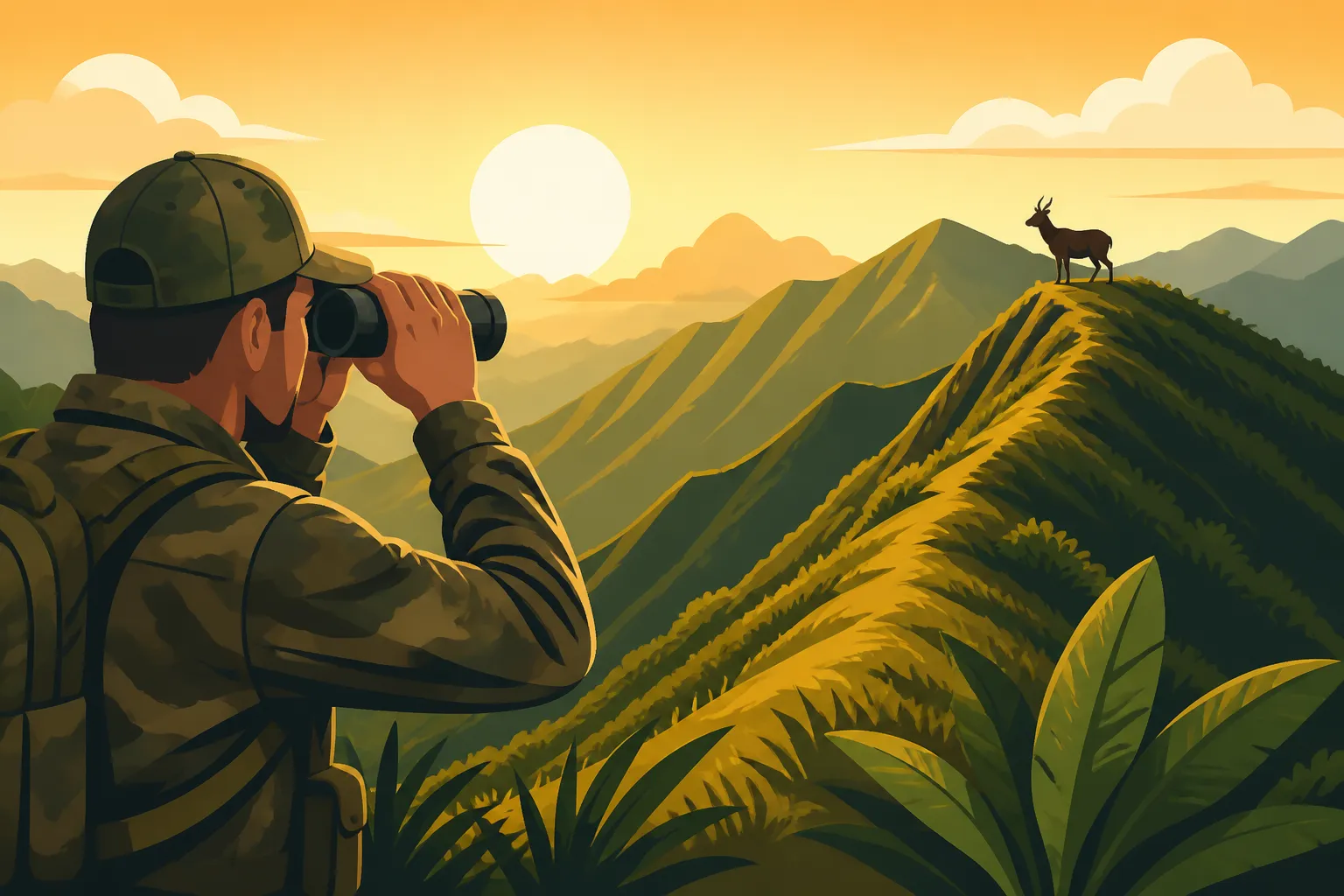
Hunting Axis deer on Lanai can feel like looking for a needle in a haystack, especially when faced with those immense, sun-drenched ridgelines that stretch for miles. It’s easy to get overwhelmed by the sheer scale of the landscape and the elusive nature of these wary animals. This guide is here to walk you through the ins and outs of glassing Lanai's open country, transforming frustration into focused, strategic searching that will help you locate those prized deer.
Understanding Lanai's Unique Terrain and How Animals Use It
Lanai, often called the Pineapple Isle, presents a truly distinctive hunting environment. Unlike the dense, wet forests you might find on other islands, much of Lanai’s prime Axis deer habitat consists of vast, open ridgelines punctuated by deep gulches and thorny kiawe flats. This landscape dictates how deer behave and, consequently, how we hunters need to adapt our strategies.
The Lay of the Land: Ridgelines, Gulches, and Kiawe Flats
Imagine standing on a high point on Lanai, looking out over miles of undulating terrain. You'll see broad, sweeping ridgelines covered in dry grasses, scattered kiawe trees, and thorny brush. These ridges offer incredible vantage points, but they also expose you. Below them, often hidden from casual view, are deep, often brushy gulches that carve through the landscape. These aren't just ditches; they are complex networks of drainage, often holding denser vegetation, shade, and sometimes even pockets of moisture long after a rain. Further down, towards the lower elevations, you'll encounter extensive kiawe flats – dense, thorny thickets that are nearly impenetrable to humans but offer Axis deer excellent cover and browse.
The critical thing to understand is that Axis deer rarely stay put in one type of terrain. They constantly move between these different zones. At first light and last light, they often emerge from the cover of the gulches or kiawe flats to feed on the open ridgelines, where the grass is abundant. As the sun climbs, they retreat into the shadows and security of the gulches or the almost impenetrable kiawe. Water sources, whether natural seeps or man-made stock ponds, are also magnets, especially during the drier seasons. Understanding these movements is the first step in effective glassing; you're not just looking for a deer, you're looking for where a deer would be at that specific time of day. This knowledge is crucial for anyone Hunting Lanai Without a Guide and relying on their own scouting.
Axis Deer Behavior on Lanai's Open Ground
Axis deer on Lanai are incredibly intelligent and well-adapted to their environment. In these open conditions, their senses are on high alert. They rely heavily on their eyesight and hearing, constantly scanning their surroundings for danger. You’ll notice they often position themselves to have a good view, either from a slight rise or just inside the edge of cover, allowing them to spot threats from a distance. Their fawn-spotted coats provide remarkable camouflage against the sun-dappled kiawe and dry grasses, making them incredibly difficult to pick out with the naked eye.
During the cooler parts of the day – dawn and dusk – you’ll often find them actively grazing on the more open slopes and ridges. Midday, however, is a different story. They will typically bed down in shaded areas within gulches, under kiawe trees, or even just behind a slight rise that offers a bit of relief from the intense sun. When the wind picks up, they might seek shelter in more protected pockets. Their patterns can also be influenced by hunting pressure; on public land, they might become even more nocturnal or stick to the densest cover. This means your glassing strategy needs to account for their evasive behavior, especially when you're targeting those elusive mature bucks. Knowing When Axis Deer Antlers Are in Velvet or Why Axis Deer Rut Timing Is Different can also give you clues about their seasonal movements and breeding patterns, which often involve more movement.
Essential Glassing Gear and How to Use It Effectively
You wouldn't try to build a house with a butter knife, and you shouldn't try to find Axis deer on Lanai's expansive terrain without the right optics. Good glassing gear isn't a luxury; it's an absolute necessity. The right tools, coupled with proper technique, will dramatically increase your chances of success.
Binoculars and Spotting Scopes: Choosing Your Optics
When it comes to glassing on Lanai, your choice of optics will be dictated by the distances you intend to cover and your budget.
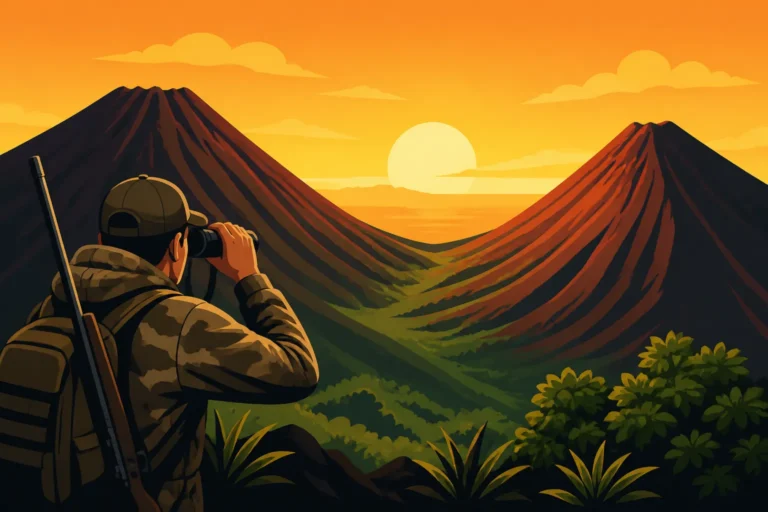
- Binoculars: For general scanning and mid-range observation (up to a mile or so), a good pair of 10×42 or 12×50 binoculars is your bread and butter. The "10x" means they magnify objects 10 times, and "42" refers to the diameter of the objective lens in millimeters, which affects how much light gathers. For Lanai's bright conditions, you don't necessarily need massive objective lenses, but larger ones do offer a brighter image at dawn and dusk.
- Pros: Lighter, more compact, excellent for quickly scanning large areas, offer a wider field of view, and you use both eyes, reducing eye strain for shorter periods.
- Cons: Limited magnification for extreme distances, making it harder to discern fine details or judge antler size at very long ranges.
- Spotting Scopes: This is where you bring out the big guns for long-range reconnaissance. A quality spotting scope, typically in the 15-45x60mm or 20-60x80mm range, allows you to pick apart distant hillsides with incredible detail.
- Pros: Unparalleled magnification for identifying subtle movements, discerning antler points, and confirming if that distant brown blob is indeed an Axis buck or just a rock. Essential for Judging an Axis Buck's Antlers in the Field before committing to a long stalk.
- Cons: Heavier, bulkier, more expensive, and require a sturdy tripod. They offer a narrower field of view, making initial scanning slower. Using one eye for extended periods can cause eye fatigue.
Many seasoned hunters bring both – binoculars for broad sweeps and a spotting scope for detailed examination once a potential animal is spotted.
Tripods and Accessories: Stability is Key
Having the best optics in the world means nothing if you can't hold them steady. A sturdy tripod is absolutely non-negotiable for effective glassing, especially with a spotting scope, but even a good pair of 10x or 12x binoculars will benefit immensely from being mounted.
- Tripods: Look for a tripod that is lightweight but robust. Carbon fiber models are excellent for packing into remote areas as they offer stability without excessive weight, though they come at a higher price point. Aluminum tripods are a more budget-friendly option. Crucially, ensure the tripod is tall enough for you to comfortable glass while standing or sitting without excessive hunching, depending on your preferred posture.
- Pan Heads: A fluid pan head or a ball head with a smooth, locking mechanism is vital. You want to be able to make micro-adjustments to your field of view without the scope jerking or slipping. This smooth movement is what allows you to "grid" a hillside meticulously without missing anything.
- Glassing Pad/Mat: While not strictly optics, a comfortable pad to sit or lie on will make those long glassing sessions much more bearable. When you're spending hours behind glass, comfort directly translates to effectiveness. You'll be surprised how much better you can focus when your back isn't screaming at you.
Harnessing Technology: Apps and Rangefinders
While traditional optics are paramount, modern technology can complement your glassing efforts significantly.
- Mapping Apps: Tools like the OuterSpatial app are fantastic for understanding the topography of your unit. Before you even set foot on the ground, you can identify potential glassing perches, likely travel corridors between feed and cover, and the precise boundaries of your hunting area. This pre-scouting is crucial, especially on vast public lands. Even when you're on the ground, using it to mark observations or plan a stalk can save you valuable time. For example, understanding Hawaii's Hunting Units and How They Work is made much easier with these digital tools. You can also use it to check in and out of units via the Using the OuterSpatial App to Check In feature.
- Laser Rangefinders: Once you've spotted an animal through your optics, a reliable laser rangefinder is essential for determining the exact distance. This is critical for making an ethical shot. Many modern rangefinders also offer angle compensation, which is incredibly useful in Lanai's steep, broken terrain. There's nothing worse than spotting a trophy animal only to realize you have no idea how far away it truly is. Brands like Vortex, Leupold, and Sig Sauer offer excellent options for hunters. The more information you have about your target and its surroundings, the better prepared you'll be. This is especially true when planning a stalk after a successful glassing session, as it helps you assess the difficulty of a shot and the terrain between you and the deer.
Mastering Glassing Techniques for Lanai's Ridgelines
Glassing isn't just pointing your binoculars at a hillside. It's an art form, a systematic process that takes patience and practice. On Lanai, where deer can blend seamlessly into the sun-baked landscape, mastering these techniques is the difference between spotting a ghost and walking right past a trophy.
The Grid Search Method: Slow and Deliberate
The most effective way to glass vast, open country is to do it systematically. This is where the "grid search" comes in. Instead of aimlessly sweeping your optics across the landscape, which almost guarantees you'll miss something, you break the terrain down into manageable sections.
- Divide and Conquer: Pick a section of the hillside or ridgeline you want to observe. Start at the top left of that section.
- Slow Scan: With your binoculars or spotting scope mounted on a tripod, slowly, deliberately, scan horizontally from left to right. Move the optics in tiny increments, pausing frequently, especially around any changes in terrain, color, or texture.
- Drop and Repeat: Once you reach the right edge of your chosen section, drop your optics down slightly – just enough to overlap with the area you just scanned – and scan back from right to left.
- Cover Every Inch: Continue this pattern, working your way down the entire section, ensuring every square foot is meticulously examined. The goal isn't to see a whole deer right away; it's to spot a part of a deer: an antler tip, an ear twitch, a horizontal line where everything else is vertical, a patch of fawn spots. Any anomaly in the natural pattern should trigger a closer look.
This method takes time, sometimes hours for a single hillside, but it forces your eyes to focus on detail and prevents you from missing those subtle clues that betray an Axis deer's presence. Remember, the deer are usually bedded or moving slowly, so you're often looking for stillness and contrast.
Exploiting Light and Shadow: Best Times to Glass
Light and shadow are your greatest allies and fiercest enemies when glassing. Understanding how they play on the landscape throughout the day is crucial for maximizing your visibility.
- Golden Hours (Dawn and Dusk): These are prime time. As the sun rises and sets, the light creates long shadows and a softer glow. Deer are often most active during these periods, moving and feeding on the open ridgelines. The low angle of the sun can also help highlight contours and reveal animals that might be hidden during midday. However, too much direct sunlight can cause glare, especially when glassing towards the sun. Position yourself with the sun at your back or side, if possible, to illuminate the areas you're observing.
- Midday Challenges: When the sun is high and harsh, glassing becomes significantly more challenging. Heat shimmer or mirage can distort distant objects, making it nearly impossible to distinguish a deer from a rock. During these hours, focus your efforts on the shady sides of gulches, under dense kiawe, or in any pockets of deep cover. Deer will be bedded and seeking relief from the heat. This is also when you'll truly appreciate the value of a high-quality spotting scope to cut through some of that haze.
Reading Sign from a Distance: What to Look For
Glassing isn't just about seeing the animals themselves; it's about seeing the evidence of their presence. From a distant vantage point, you can often pick up subtle clues that tell you deer are in the area, even if you can't see them directly. This is part of Reading Axis Deer Sign in Dry Country.
- Trails and Game Paths: Look for faint lines cutting across open slopes or through brush. These are game trails, and deer use them regularly. Follow them with your optics, as they often lead to bedding areas, feeding grounds, or water.
- Disturbances: Any unnatural disturbance in the landscape can indicate animal activity. Patches of rubbed bark on kiawe trees can signal a buck marking its territory. Disturbed ground or fresh droppings, though harder to spot from extreme distance, are definitive signs.
- Movement: This sounds obvious, but you're not just looking for a deer, you're looking for any movement – a flick of an ear, a swishing tail, a shifting shadow. Humans are conditioned to see large, obvious things. Train your eyes to pick up tiny, unusual movements.
- Color and Form: Axis deer have a very distinct fawn-spotted coat. Look for that specific color pattern or for the horizontal line of a deer's back against a vertical landscape. Sometimes, all you'll see is a small patch of color that doesn't quite match its surroundings.
Strategic Positioning and Overcoming Challenges
Effective glassing on Lanai requires not just the right gear and technique, but also smart strategy in terms of where you set up and how you deal with the island's unique environmental factors.
Finding Your Glassing Perch: Elevation and Vantage Points
Choosing the right spot to glass from is paramount. You need a vantage point that offers a broad, unobstructed view of the terrain you want to hunt, but also one that offers you concealment and considers the wind.
- Elevation is Key: Seek out the highest ground available that allows you to comfortably glass. This could be a prominent ridgeline, a knoll, or even a small hill. The higher you are, the more country you can see, and the less likely you are to be smelled by distant deer.
- Concealment: Don't just set up in the open. Use natural features like a cluster of kiawe trees, a large rock, or the reverse slope of a ridge to break up your silhouette. You want to see without being seen. Remember, deer are constantly scanning.
- Wind Direction: Always be mindful of the prevailing trade winds. Position yourself so your scent is carried away from the areas you're glassing. If the wind shifts, be prepared to move. A deer's nose is its primary defense, especially in open country where it can easily spot movement. This is a crucial element of Hunting Downwind in Hawaii's Shifting Thermals.
- Sun Angle: As mentioned earlier, try to position yourself so the sun is behind or to your side, illuminating the areas you want to glass. Avoid looking directly into the sun, as it will cause glare and eye strain.
- Accessibility: Consider how easy it is to get to and from your glassing spot, especially if you plan to make a stalk once you find an animal. There's no point in finding a deer if you can't reach it. For those looking for remote access, even considering Helicopter Access for Remote Hawaii Hunts might be an option if your budget allows for truly unexplored vantage points. Some of the most productive spots are often a good hike in, requiring a solid Water and Heat Planning for a Hawaii Hunt strategy.
Dealing with Environmental Factors: Heat, Haze, and Wind
Lanai throws some tough environmental challenges at hunters, and these factors directly impact your ability to glass effectively.
- Intense Sun and Heat: The Hawaiian sun is no joke, especially on Lanai's open, dry terrain. Prolonged exposure can lead to fatigue, dehydration, and mirage. Wear a wide-brimmed hat, use sunscreen, and drink plenty of water. Schedule your primary glassing efforts for the cooler parts of the day (early morning and late afternoon). During midday, either focus on shaded areas or take a break.
- Heat Shimmer/Mirage: As the sun heats the ground, it creates shimmering air currents that distort distant objects. This "heat haze" can make identifying animals incredibly difficult. There's no magic bullet for this, but quality optics can help somewhat. Try to glass earlier in the day before the ground really heats up, or focus on objects closer to you. Waiting for a break in the shimmer, even for a few seconds, can sometimes reveal what you're looking for.
- Persistent Trade Winds: Lanai often experiences strong, consistent trade winds. While this helps keep you cool, it can also make holding binoculars steady a challenge, even on a tripod. Find a natural windbreak if possible. The wind also carries scent, making wind direction a constant consideration for your approach and exit. Strong winds can also impact how well deer hear, sometimes making them a little less wary of subtle noises, but their vision and scenting ability remain paramount. For public land hunters researching their hunt, consulting resources like GoHunt can provide valuable insights into weather patterns and terrain features specific to different units on Lanai.
Successfully glassing Lanai's open ridgelines is a rewarding challenge that, with the right gear, patience, and technique, can dramatically improve your hunting success. It’s about slowing down, being systematic, and truly understanding the landscape and the animals that call it home.
Disclaimer
Hunting in Hawaii involves inherent risks. Always consult the most current regulations from the Hawaii Department of Land and Natural Resources (DLNR) Division of Forestry and Wildlife (DOFAW) before planning any hunt. This guide is for informational purposes only and does not substitute for personal research, preparation, or professional guidance. Adhere to all local, state, and federal laws. Be respectful of private property and cultural practices. Stay safe out there.