Hunting Pigs on the Dry Leeward Side
Hunting pigs on Hawaii's dry leeward side can be a seriously tough endeavor, testing your grit and your gear in ways the lush, wet windward forests simply don't. The dense, thorny kiawe forests, the relentless sun, and the scarcity of water reshape pig behavior, making traditional hunting methods often ineffective and leaving many hunters frustrated and empty-handed. This comprehensive guide will equip you with the knowledge, strategies, and essential preparations needed to successfully navigate the arid challenges and bring home some leeward pork.
Understanding the Dry Leeward Ecosystem and Pig Behavior
The leeward side of Hawaii's islands—places like West Maui, parts of Molokai, or the Kona coast of Hawaii Island—are starkly different from their windward counterparts. These areas are characterized by significantly less rainfall, more direct sun exposure, and often sparse, thorny vegetation adapted to drought. Understanding how these environmental factors dictate pig behavior is the first step to becoming a successful leeward hunter.
Water Sources and Pig Movement
In the dry country, water is life, and that holds true for pigs. Unlike the windward side where water is abundant in streams and rain-fed pools, leeward pigs must travel to find reliable water. This makes natural water sources, whether it's a small seep, a cattle trough, or a stock pond, absolute magnets for activity, especially during the hotter, drier months. Pigs will often travel significant distances from their bedding areas to drink, sometimes under the cover of darkness. They might frequent a water source in the late evening, throughout the night, and again in the pre-dawn hours before retreating to dense cover for the day. Learning to read these travel corridors and understanding when and how pigs access these precious resources is paramount. Expect them to approach water cautiously, often staging in thick brush nearby before committing to drink. Pay close attention to trails leading to and from these areas; they'll often be well-worn, and you might find fresh tracks, scat, and even rub marks on trees. A key strategy for success here is knowing how to find and Hunting a Water Source in Dry Hawaii Country effectively.
Food Preferences in Arid Zones
While pigs are opportunistic omnivores, their diet on the dry leeward side shifts to what's available in that harsher environment. Gone are the lush fern beds and taro patches of the wet side. Here, pigs often forage on fallen kiawe pods, which are highly nutritious and available for much of the year. They'll also dig for roots, tubers, and invertebrates that can survive in drier soils. In areas bordering agricultural lands, they might raid pineapple fields or macadamia nut orchards, but in truly wild leeward country, it's often about those kiawe pods, grasses that manage to stay green, and whatever fruits drop from drought-resistant trees. This focus on certain food sources can concentrate pigs in specific areas. For example, a large grove of kiawe trees actively dropping pods can be a hotspot, especially if it's near dense bedding cover. Understanding What Feral Pigs Eat in the Islands can help you predict their movements.
Nocturnal Habits and Shade Seeking
The intense heat and direct sun on the leeward side mean pigs are largely nocturnal or crepuscular, moving most actively during the cooler hours of dawn, dusk, and night. During the day, they seek the densest, shadiest cover imaginable—often impenetrable kiawe thickets, deep gulches, or overgrown lava tubes. These areas provide protection not only from the sun but also from predators (like hunters). Their daytime bedding areas are usually well-hidden and offer limited visibility, making still-hunting these areas a game of inches and patience. They might move short distances within the cover to browse or wallow in a cool, muddy spot if available, but extensive daytime travel is rare unless pressured. Hunters must adapt by starting early, staying late, and being prepared to navigate extremely dense cover if they want to catch pigs during their vulnerable periods.
Effective Hunting Strategies for Leeward Pigs
Hunting the dry leeward side demands a strategic shift from what you might employ in Hawaii's wetter, more open hunting grounds. The environment dictates specific tactics to increase your chances of success.
Still-Hunting the Kiawe Thickets
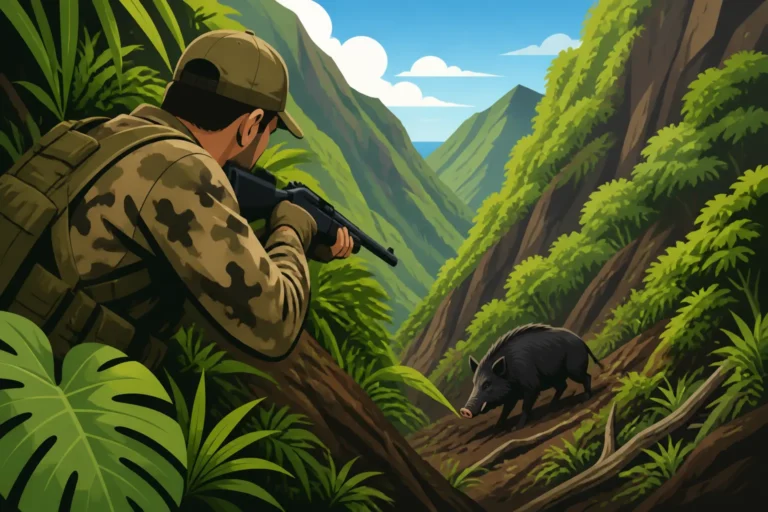
Still-hunting is perhaps the most effective method for pigs in the dry leeward country, but it requires immense patience and discipline. Kiawe trees, with their formidable thorns and dense growth, form almost impenetrable walls that pigs call home during the day. This is a game of slow, deliberate movement. You'll need to move literally inch by agonizing inch, stopping frequently to glass ahead and listen for the slightest rustle. The key is to hunt into the wind, which can be tricky with Hawaii's shifting thermals, especially in gulches or valleys. Look for subtle signs: a faint pig trail, a freshly rooted patch, a broken branch. Often, you won't see the whole animal, just a dark shape, an ear flick, or the twitch of a tail through the foliage. Your shots will likely be close, quick, and through tight lanes. Success here hinges on your ability to be silent, observant, and ready to shoot at a moment's notice. It's a stark contrast to Still-Hunting Pigs in Hawaii's Wet Forest. This is also a primary tactic when Hunting Hawaii's Dry Kiawe Forest for other game.
Spot-and-Stalk on Open Slopes
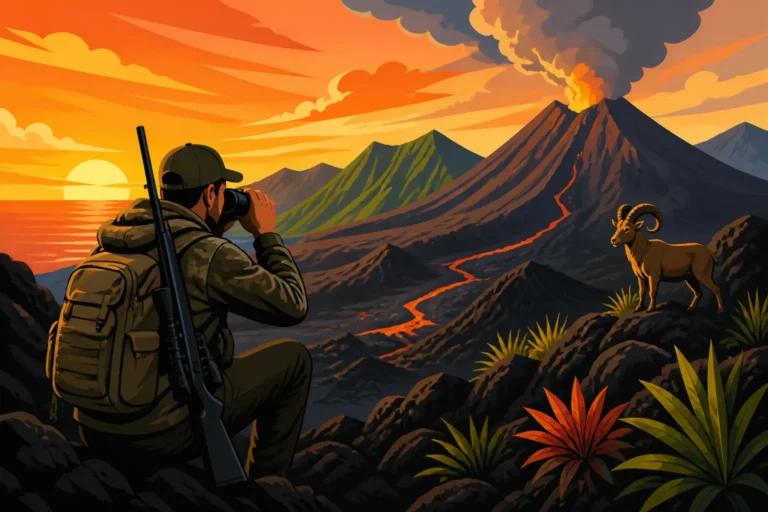
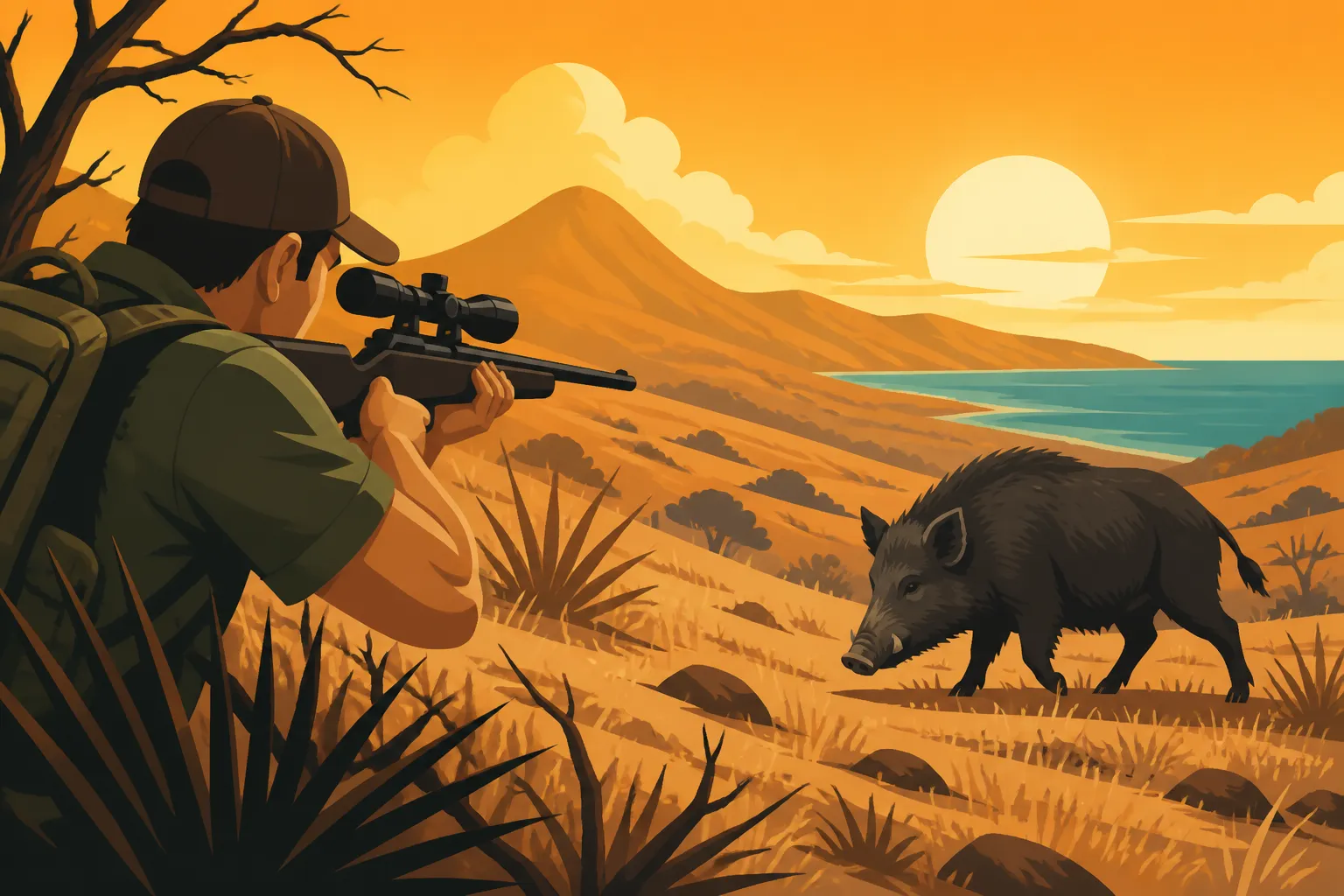
While much of the dry leeward side is characterized by thick brush, there are often more open, grassy slopes, lava fields, or old pasturelands that pigs might cross or feed on, especially at dawn and dusk. This is where spot-and-stalk tactics come into play. Get to a high vantage point before first light or in the late afternoon and use good optics to scan distant ridges, gulches, and pasture edges. Look for movement, a dark spot that doesn't belong, or pigs rooting in the open. Once a pig is spotted, the real work begins. Plan your approach carefully, using terrain features, kiawe thickets, and any available cover to close the distance without being seen or winded. The dry ground can be noisy, full of crunchy leaves, loose rocks, and snapping twigs, so move slowly and deliberately, always checking the wind. The sun can also create mirages and harsh glare, so consider the sun's position relative to your approach.
Hunting Water Sources at Dawn and Dusk
As mentioned, water sources are prime locations. Setting up an ambush near a known water source during the low-light hours of dawn and dusk can be highly productive. This isn't about sitting in a blind for hours like in some mainland hunts, but rather carefully approaching a water source before legal shooting light or positioning yourself downwind in a hidden spot just before sunset. Pigs will come to drink, and if you're patient and concealed, you can intercept them. This strategy is particularly effective during prolonged dry spells when water is even scarcer. Before committing to a spot, scout the area for fresh tracks and pig sign around the edges of the water source. Remember, pigs are smart; they'll often approach from unexpected angles, so consider multiple escape routes and approach paths they might take. This is similar to strategies you might use when Hunting a Water Source in Dry Hawaii Country for Axis deer.
Essential Gear and Preparation for Dry Leeward Hunts
The demanding conditions of Hawaii's dry leeward side require specific gear choices and thorough preparation to ensure a safe and successful hunt. Neglecting any of these can quickly turn a memorable hunt into a miserable one.
Hydration and Sun Protection
This cannot be stressed enough: the leeward side is hot, dry, and unforgiving. Dehydration is a serious threat. You need to carry significantly more water than you think you'll need. A good rule of thumb is at least 1 liter per hour of strenuous activity, plus extra for emergencies. Consider a hydration pack with a 3-liter bladder, supplemented by additional water bottles. Electrolyte packets are also a wise addition. For sun protection, wide-brimmed hats, sunglasses, and lightweight, long-sleeved shirts made of quick-drying, UV-protective fabric are essential. Sunscreen on exposed skin is a must, and reapply frequently. Being proactive about hydration and sun protection is critical, as conditions can quickly lead to heat exhaustion or worse. Remember to also consult resources like Water and Heat Planning for a Hawaii Hunt before you go.
Footwear for Rough, Dry Ground
The terrain on the dry leeward side is often characterized by uneven lava flows, sharp coral rock, loose dirt, and sometimes steep, crumbling slopes. Your footwear needs to stand up to this abuse while providing excellent ankle support and traction. Sturdy, well-broken-in hiking boots with stiff soles and good ankle support are indispensable. Look for boots with a durable rand to protect against abrasive rocks and thorns. While breathable boots are good, waterproof isn't as critical as on the wet side, but durability and comfort are paramount. You'll be putting in miles over unforgiving ground, so blisters can quickly end a hunt. Consider bringing multiple pairs of socks, preferably wool or synthetic blends, to prevent rubbing and manage moisture.
Weapon Choices for Leeward Cover
The type of weapon you choose will often depend on the specific unit and your hunting style, but there are considerations unique to the leeward side. In dense kiawe, shots will be close and fast. A rifle chambered in a cartridge suitable for thick cover, like a .30-30, .44 Magnum lever-action, or a .45-70, can be very effective. However, more common calibers like .308 Win, 6.5 Creedmoor, or .270 Win are still perfectly adequate, especially if you anticipate longer shots on open slopes. The critical factor is bullet construction—you want something that holds together well and penetrates through thick hide and bone, not something that fragments prematurely. For bowhunters, a heavier arrow setup with a sturdy broadhead is advisable for punching through ribs and thick shoulder plates. Regardless of your choice, knowing your weapon intimately and practicing quick, accurate shots is crucial. Don't forget to check the specific legal weapon requirements for your chosen unit, which you can usually find through the GoHunt Hawaii website or the local DOFAW office.
Navigating the Unique Challenges of Leeward Terrain
Beyond the heat and the dense cover, the dry leeward side presents several other challenges that hunters must be prepared to overcome. These include navigating vast, often featureless terrain, dealing with tricky wind patterns, and ensuring proper field care for your harvest.
Dealing with Dust and Wind
The dry conditions often come hand-in-hand with dust and persistent trade winds. Dust can clog optics, get into moving parts of firearms, and irritate eyes and lungs. Carrying lens wipes and keeping your optics covered when not in use is a good practice. The wind, while sometimes offering a welcome cooling breeze, can also be your biggest enemy. Swirling thermals in gulches and valleys make wind direction unpredictable, and a slight shift can carry your scent directly to wary pigs. You'll need to pay constant attention to the wind, using a wind checker frequently. Always try to hunt into the wind, even if it means taking a longer route. Strong winds can also carry sound, making it harder to hear distant animal movement but also masking your own footsteps. Use this to your advantage when stalking.
Tracking in Hard Ground
Unlike the soft, damp earth of the windward side where pig tracks can be clearly defined, tracking on the dry leeward side can be incredibly difficult. Hard-packed dirt, rocky ground, and areas covered in fallen kiawe pods often yield little to no discernible track. You'll need to become an expert at finding subtle signs: a displaced stone, a scuff mark, a broken twig, a sparse patch of rooting, or disturbed vegetation. Look for fresh scat, which will be darker and moist, indicating recent presence. If you're lucky enough to find soft dirt near a water source, take your time to study the tracks there. Learning to differentiate fresh sign from old is a skill that comes with practice. Sometimes, you'll be less "tracking" and more "interpreting subtle disturbances" to deduce pig movement. This is a very different skill set than Reading Pig Sign Along a Muddy Trail.
Heat Management and Meat Care
Killing a pig on the dry leeward side is only half the battle; getting the meat out and properly cared for in the heat is the other. Heat and humidity accelerate spoilage, so swift and efficient field dressing is critical. As soon as the animal is down, get it gutted. Consider quartering the animal in the field to allow for faster cooling and easier packing. If you're deep in a gulch, you'll need a plan for Packing Meat Out of a Hawaii Gulch. Carry game bags to protect the meat from flies and dirt. Ice is your best friend once you get back to your vehicle. Bring a quality cooler filled with ice, and get the meat cooled down as quickly as possible. Don't underestimate how fast meat can spoil in Hawaii's climate. Even on a shorter hunt, bring extra ice, just in case. When processing your animal, always be mindful of parasites and diseases, common to Hawaii's Feral Pigs, Island by Island.
Table: Comparison of Pig Behavior: Leeward vs. Windward
| Feature | Dry Leeward Side | Wet Windward Side |
|---|---|---|
| Water Reliance | High; pigs travel to scarce water sources. | Low; water is abundant and easily found. |
| Primary Activity | Nocturnal/Crepuscular due to heat and lack of cover. | More active during the day, especially in cool, overcast weather. |
| Diet | Kiawe pods, roots, dry grasses, agricultural raid. | Ferns, taro, fruits, tubers, more varied green forage. |
| Cover Type | Dense, thorny kiawe thickets, lava tubes, deep dry gulches. | Lush rainforest, dense fern and guava thickets, wet valleys. |
| Tracking Difficulty | Very high; hard ground, subtle signs. | Moderate; softer, muddier ground with clearer tracks. |
| Heat Management | Critical; rapid field dressing and cooling essential. | Important, but less urgent due to cooler conditions. |
| Primary Challenge | Dehydration, heat, impenetrable cover, tricky winds. | Dense vegetation, steep terrain, mud, persistent rain. |
Remember, successful hunting on the dry leeward side is as much about mental toughness and preparation as it is about skill. Respect the environment, plan meticulously, and be ready to adapt. Before any hunt, ensure your Hawaii Hunting Licenses and What They Cost are current and that you've completed any required check-in procedures, perhaps even using the OuterSpatial App to Check In if available for your unit. Good luck, and stay safe out there!
Disclaimer
Hunting involves inherent risks, including but not limited to injury or death. Always prioritize safety, adhere to all local, state, and federal hunting regulations, and ensure you have the necessary permits and licenses. This guide is for informational purposes only and does not substitute for professional training, personal experience, or official regulations. Conditions in Hawaii can change rapidly; always check with the Hawaii Department of Land and Natural Resources (DLNR) Division of Forestry and Wildlife (DOFAW) for the latest rules, season dates, and unit closures before planning any hunt.