Hunting Mouflon in Hawaii’s Mamane Forest
Many hunters dream of chasing game across open, sweeping vistas, but the reality of hunting in Hawaii, especially for elusive mouflon, often means navigating dense, unique ecosystems that can feel like a maze. It’s frustrating to scout an area only to find yourself swallowed by thick cover, wondering how you’ll ever spot an animal, let alone get a shot. This comprehensive guide is here to unravel the complexities of hunting mouflon within Hawaii's distinctive mamane forest, offering practical strategies to help you successfully pursue these incredible sheep in their challenging, high-elevation home.
Understanding the Mamane Forest Environment
The mamane (Sophora chrysophylla) forest isn't just a collection of trees; it's a critical, high-elevation ecosystem unique to Hawaii, primarily found on the slopes of Mauna Kea and Mauna Loa on Hawaii Island, and in smaller pockets on Maui and Lanaʻi. These forests are the lifeblood for mouflon, providing both forage and crucial cover, but they present a distinct set of challenges for the hunter accustomed to more open terrain.
The Unique Ecosystem of Mamane-Naio Forests
Imagine stepping into a world where the air is thin, crisp, and often cool, even when the sun is blazing down. That’s the mamane-naio forest for you. Mamane trees, known for their bright yellow flowers and tough, gnarled branches, grow alongside naio (Myoporum sandwicense), creating a surprisingly dense canopy in some areas, while other sections might be more open, almost park-like. This mix offers mouflon a perfect blend of food sources and hiding spots. The understory often consists of native grasses and shrubs, but it can also be choked with invasive species that create impenetrable tangles. Hunters often find themselves pushing through thickets of blackberry or ginger, which wasn't part of the original ecosystem but has become a reality. It's not like your typical mainland pine forest where you can see for hundreds of yards; here, your visibility might drop to 30 yards or less in an instant, making a strategic approach absolutely critical. Understanding this unique vegetation density is key to success.
Navigating this environment demands a different kind of preparation than hunting, say, Hunting Hawaii's Feral Goats on coastal cliffs. You won't be glassing vast expanses; instead, you'll be dissecting small pockets of cover, looking for subtle movements or the glint of a horn. The ground itself can be a mix of decomposed volcanic soil, sharp lava rock, and sometimes, surprisingly soft, mossy patches. The sound of your footsteps, or even the rustle of your clothing, is amplified in the quiet, thin air. You're not just walking through trees; you're moving through a living, breathing, and often noisy, habitat that demands respect and a keen awareness of your surroundings. This includes paying attention to the unique plants that thrive here, many of which provide crucial forage for the mouflon, giving you clues as to where they might be concentrating their feeding.
Elevation and Terrain Challenges
Hunting mouflon in mamane forests means you're almost certainly at elevation, often starting above 6,000 feet and sometimes pushing higher, depending on the specific unit. This thin air is no joke. If you're coming from sea level, your lungs will feel it, especially when climbing those steep, unforgiving volcanic slopes or navigating through old lava flows that hide within the forest. These aren't manicured trails; they're often game trails, or no trails at all, demanding a good sense of direction and sturdy legs. Imagine slogging uphill through loose cinder for what feels like an eternity, only to find yourself needing to scramble over jumbled a'a lava hidden beneath a thicket of mamane trees. It’s physically demanding, and anyone considering Hunting Mouflon on Hawaii's Highest Slopes needs to be in good shape.
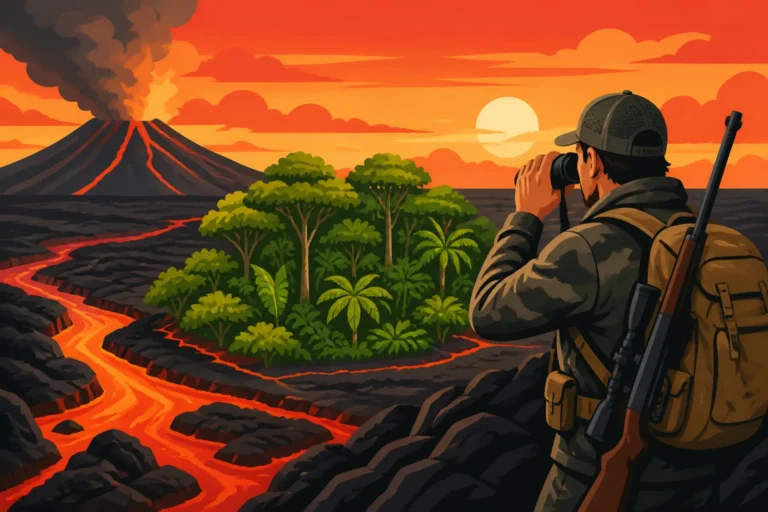
The terrain itself is incredibly varied. You might be walking across ancient lava flows, some smooth pahoehoe that’s easy to traverse, others jagged a'a that will test the durability of your boots – a good pair of boots is crucial when Walking Rough Lava Without Wrecking Your Boots. Then, suddenly, you might drop into a steep gulch, often formed by erosion, which can funnel game but also make for treacherous descents and climbs. These elevation changes aren't just about physical exertion; they also impact wind currents and thermals, which are vital considerations for scent control. A ram might be just over the next rise, completely unaware of your presence if the wind is right, but a sudden shift can blow your cover instantly. Understanding the nuances of the terrain is a skill that takes time to develop, but it's essential for a successful hunt.
Weather Patterns and Their Impact
High-elevation Hawaii weather is notoriously unpredictable, and the mamane forest is no exception. You can start your day under a clear, brilliant sky, feeling the warmth of the rising sun, and within an hour, be enveloped in a thick, chilling fog or a sudden downpour. The trade winds, while often consistent, can swirl unexpectedly in the broken terrain of ridges and gulches, making scent control a constant battle. This is particularly true on the Big Island where the influence of Mauna Kea and Mauna Loa creates its own microclimates. One moment, you're hiking in a t-shirt; the next, you're shivering as a cold rain sweeps in, driven by strong gusts.
These rapid weather changes directly influence mouflon behavior. On sunny, calm days, rams might be more inclined to be out browsing in more open patches, soaking up the warmth. When it's rainy or foggy, they often seek deeper cover within the denser mamane stands, becoming even harder to spot. This requires a hunter to be adaptable, ready to layer up or shed clothing quickly, and to have reliable rain gear. Forget the forecast you checked at sea level; the mountains make their own rules. Being prepared for anything, from scorching sun to freezing rain, is paramount for both comfort and safety in this dynamic environment.
Mouflon Behavior and Sign in Mamane
Mouflon sheep are incredibly resilient and have adapted exceptionally well to Hawaii’s high-elevation volcanic slopes and the mamane forest. They are not like domestic sheep; they are wild, wary, and possess keen senses, making them a formidable quarry. Learning their habits and how to interpret their sign in this specific habitat is your secret weapon.
Mouflon Feeding Habits and Preferences
In the mamane forest, the mamane tree itself is often the primary food source for mouflon. These sheep will browse on the leaves, pods, and even the bark of mamane, particularly during dry spells when other forage is scarce. The yellow flowers, when blooming, are also a favorite. However, they aren't exclusive to mamane. They'll also feed on naio leaves, various native grasses, and a surprisingly wide array of invasive plants that have taken root in the forest understory. Knowing Where Mouflon Feed on Mauna Kea will give you a significant advantage. This varied diet means you can't just look for one type of browse; you need to understand the entire ecosystem.
You’ll often find them browsing in more open sections of the forest, or along the edges where the mamane transitions to grasslands or lava flows. During the early morning and late afternoon, they're most active, moving through the forest systematically, pausing to feed. During the hotter parts of the day, they might retreat to denser patches for shade and security. Learning to identify their preferred forage plants will allow you to predict their movements and focus your search in areas where they are most likely to be. Look for clipped branches, stripped bark, and disturbed ground around these food sources.
Reading Sign in the Forest Understory
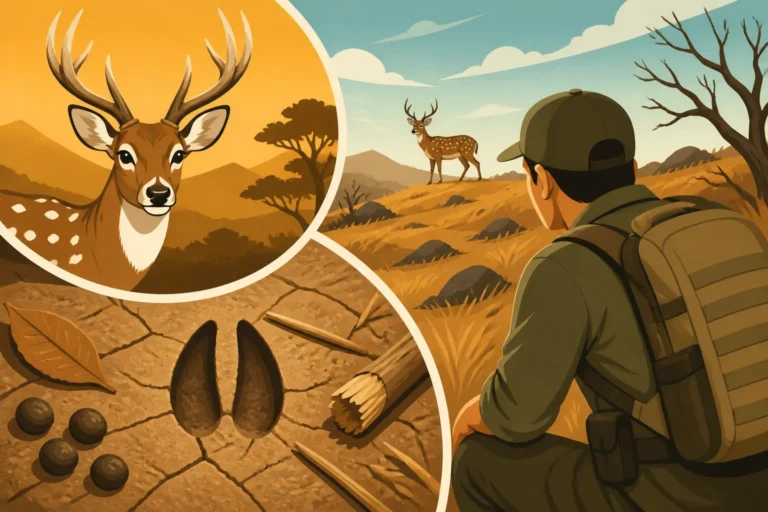
Finding mouflon in the mamane forest is often less about spotting the animal itself from afar and more about meticulously reading the subtle clues they leave behind. Droppings are a great indicator – small, dark pellets, often found in concentrated piles where they've been bedding or feeding. Their tracks, smaller than deer tracks, will also tell you if sheep are in the area and which direction they're headed. Pay attention to how fresh the sign is. Older droppings might be faded or crumbly, while fresh ones will be dark and moist. Look for compressed spots of grass or flattened areas under trees, indicating a recent bed.
Perhaps the most telling sign in the mamane forest is the browse itself. Look for stripped bark, nibbled leaves, and chewed-off branches, especially on the lower parts of mamane and naio trees. Rams will often rub their horns on smaller trees and shrubs, leaving noticeable scuffs and polished spots – another strong indicator of their presence. These rub marks, along with shed wool caught on thorns or branches, can give you an idea of the size of the animals in the area. Piecing together these different types of sign is like solving a puzzle, building a picture of the mouflon’s movements and daily patterns.
Ram Movement Patterns
Mouflon rams are often found in bachelor groups, especially outside of the rut. These groups tend to be quite wary and will utilize the mamane forest's cover to their advantage. They might move through the densest sections, often just inside the tree line, using the vegetation as a screen while still being able to watch open areas. Their preferred travel corridors often follow natural contours of the land, such as small ridges, dry creek beds, or the edges of lava flows that offer both cover and efficient travel.
During the rut, which can occur throughout the year in Hawaii but often peaks in late fall or early winter, rams will be more focused on ewes and can be more vocal and visible. However, even then, they will use the mamane forest for escape and concealment. They often move uphill in the mornings, bedding down for the day in areas that offer good visibility and protection from predators (though Hawaii has few natural predators for them). In the evenings, they'll typically move downhill to feed. Understanding these elevation-based movements is critical. Using a tool like GoHunt to scout unit topography before your hunt can help you identify these natural travel corridors and potential bedding areas.
Tactics for Hunting Mouflon in Dense Cover
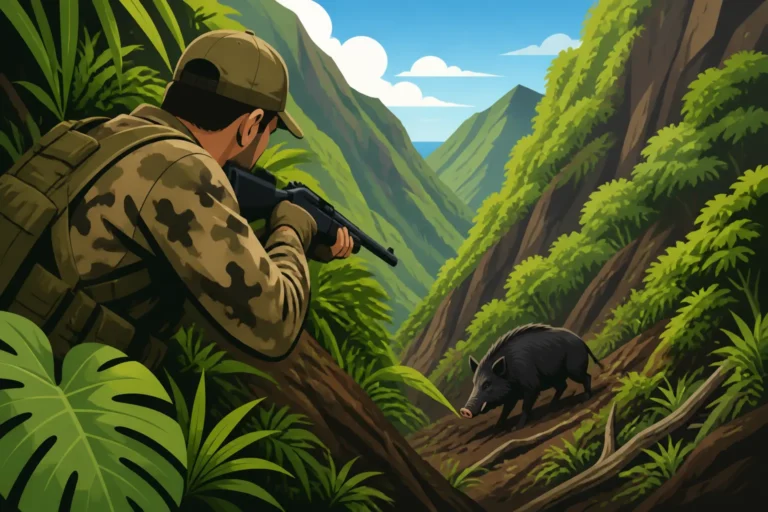
Hunting in the mamane forest requires a shift in mindset from glassing open country. It's a game of patience, stealth, and close-quarters engagement. Forget long-range shots; here, you're focused on spotting a patch of wool or a glint of horn through a small window in the vegetation.
Slow, Deliberate Still-Hunting Techniques
Still-hunting is your primary tactic in the mamane forest. This isn't about covering vast distances quickly; it's about moving at a snail's pace, often taking several minutes to move just a few yards. Think "two steps, stop, look, listen." Every step needs to be planned to minimize noise. Pick your footing carefully, avoiding loose rocks or dry leaves that will crunch loudly. Use your eyes to slowly scan every shadow, every cluster of branches, searching for anything that looks out of place – a horizontal line in a vertical world, a different texture, a flicker of movement. This is where high-quality binoculars or even a monocular can be invaluable, allowing you to pick apart the cover.
When you stop, pause for an extended period, perhaps 5-10 minutes. Often, animals that were initially startled will settle down, or a bedded ram you walked past might stand up. Use this time to not only look but also to listen intently. The rustle of leaves, the snap of a twig, or even the distinct clack of a ram’s horns can give away their position. This type of hunting requires immense discipline and patience, but it’s often the only way to catch a wary mouflon off guard in the thick forest.
Using Cover and Wind to Your Advantage
The mamane forest offers incredible cover for both the hunter and the hunted. Your goal is to use it to your advantage. Move from one piece of cover to the next, always with an escape route in mind. Stay in the shadows as much as possible, breaking up your silhouette against the trees. Avoid walking on skylines or ridgelines where you'll be easily silhouetted. Instead, try to stay just below the crest, using the terrain to hide your approach.
Wind is perhaps your most critical factor. Mouflon have an excellent sense of smell. You must always hunt into the wind or with a quartering wind. As mentioned earlier, high-elevation thermals can be tricky, often drawing air uphill in the morning and downhill in the evening. Study a topo map of your unit on GoHunt, identify potential gulches and ridges, and try to predict how the wind will behave. If the wind is swirling or unpredictable, it’s often best to wait for more stable conditions or hunt areas where the wind is more consistent. A sudden wind shift can ruin a careful stalk in an instant, pushing your scent directly to a bedded ram.
Calling and Decoying Considerations
While not as common for mouflon as for, say, axis deer, calling can sometimes be effective, particularly during the rut. A soft bleat, imitating a ewe or a lamb, might pique the curiosity of a ram, especially a younger one. However, in the dense mamane forest, the sound doesn't travel far, and it's less about drawing an animal in from a distance and more about getting a nearby ram to stand up or take a few steps into an opening. Always be ready for a shot if you decide to try calling, as they might appear quickly.
Decoying is generally not practical in such dense cover. The chances of a mouflon seeing a decoy through the trees are slim, and the effort of carrying and deploying one is usually not worth it. Your focus should remain on stealthy movement, keen observation, and capitalizing on short-range opportunities. For more on different methods, consider exploring Muzzleloader Hunting in Hawaii or Bowhunting Hawaii's Public Units if you prefer a closer-quarters challenge.
Essential Gear and Preparation for Mamane Forest Hunting
Hunting mouflon in the mamane forest demands specific gear and meticulous preparation. The challenging terrain, variable weather, and the nature of the hunt mean you can't just throw any old gear in your truck.
Footwear and Clothing for Forest Hunting
Your boots are arguably the most important piece of gear. You need sturdy, high-ankle boots with excellent traction and good ankle support. The uneven volcanic ground, loose cinder, and sharp lava can quickly destroy lesser footwear and lead to twisted ankles. Waterproofing is also essential, as morning dew can soak through quickly, and sudden rain showers are common. Think durable, comfortable, and reliable. After all, you'll be spending hours Hunting Hawaii's Volcanic Terrain, and your feet will thank you.
Layering is critical for clothing. Start with a moisture-wicking base layer to manage sweat, followed by an insulating mid-layer (fleece or synthetic puffy) for warmth, and an outer shell that is both waterproof and windproof. Camouflage patterns that blend with the browns, greens, and grays of the mamane forest are a good choice, but solid earth tones work just as well. Remember that blaze orange requirements apply in many units, so check the Hawaii hunting regulations via the GoHunt app for your specific hunting area. A good backpack, capable of carrying water, extra layers, food, first-aid, and if you're lucky, meat, is also indispensable.
Optics and Weapon Choices
For optics, a good pair of 8x or 10x binoculars is invaluable for picking apart the dense cover. While long-range glassing isn't the primary method, binoculars help confirm what you're seeing in small openings and verify details of an animal. A rangefinder is also a smart addition for confirming distances in uneven terrain, especially if you're hunting with a rifle or bow. For your weapon, accuracy at closer ranges is key. Rifles in common calibers like .270, .30-06, or .308 are excellent choices, offering plenty of power for mouflon. Shot placement is paramount, as a wounded animal can quickly disappear into the dense undergrowth.
Archery equipment also works well, offering a unique challenge and requiring you to get even closer. For archers, a well-tuned bow, sharp broadheads, and practiced shooting at various distances are essential. Regardless of your weapon, ensure you are proficient with it and comfortable taking a shot from an unsupported position, as stable rests might be hard to find in the thick forest.
Navigation and Safety Gear
Getting lost in the mamane forest, especially when chasing an animal or dealing with shifting weather, is a real risk. A reliable GPS device (either a dedicated unit or a robust app like GoHunt on your phone with downloaded offline maps) is non-negotiable. Carry a physical map and compass as a backup, and know how to use them. Mark your starting point and key landmarks as you go. Given the often remote nature of these hunts, a personal locator beacon (PLB) or satellite messenger is also highly recommended, especially if you're hunting solo or venturing deep into challenging terrain. Cell service is often nonexistent in these areas.
Beyond navigation, a comprehensive first-aid kit is crucial. Minor cuts, scrapes, and blisters are common, and a sprained ankle far from the trailhead can turn serious quickly. Carry plenty of water – more than you think you’ll need – and high-energy snacks. A headlamp or flashlight, even for a day hunt, is a lifesaver if you end up staying out later than planned. Before heading out, make sure you understand Hawaii Hunting Licenses and What They Cost and comply with all Checking In and Out of Hawaii Hunting Units requirements for your chosen hunting area. It's not just about rules; it's about being accountable for your safety.
| Aspect | Description | Key Challenge | Recommended Approach |
|---|---|---|---|
| Terrain | Volcanic slopes, a'a and pahoehoe lava, cinder, steep gulches, dense mamane-naio forest understory. | Physically demanding, uneven footing, hidden obstacles, rapid elevation changes. | Sturdy, high-ankle boots with excellent traction; physical fitness; slow, deliberate movement. |
| Visibility | Often limited to 20-50 yards in dense sections, opening up in scattered areas. | Difficult to spot game from a distance, close-quarters encounters. | Still-hunting, meticulous scanning, keen listening, patience, good binoculars. |
| Weather | Highly variable: hot sun, cold fog, sudden rain showers, strong, swirling winds, thin air at elevation. | Rapid changes in conditions, impact on scent, comfort, and game behavior. | Layered clothing, waterproof outerwear, robust navigation tools (GPS/map), plenty of water. |
| Game Behavior | Wary, uses cover extensively, feeds on mamane and other browse, rams in bachelor groups, predictable uphill/downhill movements. | Elusive, melts into cover, requires keen sign-reading and understanding of patterns. | Focus on fresh sign, hunt into the wind, exploit morning/evening feeding times, use cover for approach. |
| Logistics | Remote access, often no cell service, required check-in/check-out, specific tag/permit rules. | Risk of getting lost, need for self-reliance, administrative hurdles. | Reliable GPS with offline maps, PLB/satellite messenger, proper licenses/tags, informing someone of your plan. |
Concluding the Mouflon Hunt in Mamane
Successfully hunting mouflon in Hawaii's mamane forest is a deeply rewarding experience that challenges hunters on multiple levels. It demands not just physical endurance and shooting skill, but a deep understanding of the unique environment, the animal's habits, and a willingness to embrace a slower, more deliberate hunting style. This isn't a quick hunt; it's an immersion into a special ecosystem that will test your patience and sharpen your senses.
As you navigate the gnarled mamane trees and sharp lava, remember that every piece of sign, every shift in the wind, and every distant sound is a clue. Persistence, preparation, and respect for the land and the animal are what truly make a successful mouflon hunter in this challenging, yet beautiful, Hawaiian landscape. Take the time to understand the nuances, prepare thoroughly, and you might just find yourself standing over a magnificent ram, deep within the forest, with a memory that will last a lifetime.
Disclaimer
Hunting is an inherently dangerous activity. This guide provides general information and should not replace proper training, local regulations, or professional guidance. Always prioritize safety, adhere to all local, state, and federal hunting laws, and ensure you have the necessary licenses and permits before engaging in any hunting activities. Conditions in Hawaii can change rapidly, and hunters are responsible for their own safety and preparedness.