Hunting Goats in a Kauai Canyon
Hunting goats in Kauai's deep, winding canyons can feel like an insurmountable challenge. The sheer drops, the relentless heat, the dense vegetation, and the incredibly wary animals combine to create an environment that will test even the most seasoned hunter. It's not like the open country hunts you might find elsewhere; here, every step is a calculation, and every goat is hard-earned. This guide will walk you through the unique difficulties and provide actionable strategies to help you successfully pursue feral goats in the stunning, yet unforgiving, canyons of Kauai.
Understanding Kauai's Canyon Goats and Their Habitat
Kauai's canyons, particularly the magnificent Waimea Canyon, are a world unto themselves. They're not just deep; they're intricate systems of precipitous cliffs, narrow ledges, thick brush, and hidden pockets that provide goats with both abundant forage and formidable escape routes. These goats are incredibly adapted to their vertical world, making them exceptionally tough to hunt.
Where Feral Goats Call Home in Kauai's Canyons
Feral goats thrive in the rugged, steep terrain of Kauai, finding refuge and sustenance in places most other animals (and certainly most people) would struggle to navigate. They utilize the canyon walls for escape, often bedding on narrow ledges or in cave overhangs where they have an unobstructed view of potential threats below. You'll find them grazing on sparse vegetation clinging to the canyon sides, especially in areas that receive morning sun but offer shade later in the day. Water sources, often seasonal seeps or small pools hidden within the gulches, are also key congregating points, especially during drier periods. The areas around Waimea Canyon State Park and the adjacent Na Pali-Kona Forest Reserve are prime examples of this challenging habitat, where goats have carved out a tough existence. They prefer the dryer, leeward slopes where vegetation isn't quite as impenetrable, but they aren't afraid to dip into the greener, wetter parts for food or water.
Goat Behavior and Movement Patterns in Steep Terrain
Unlike their counterparts in flatter, more open country, Kauai's canyon goats are masters of vertical movement. They can disappear in an instant, scrambling up or down seemingly impossible faces, often using narrow game trails that are barely visible to the human eye. They typically move most actively during the cooler parts of the day – early morning and late afternoon – to avoid the intense midday sun baking the canyon walls. During the hotter hours, they'll often bed down in shaded areas or on ledges, making them incredibly difficult to spot. Their keen eyesight and hearing are amplified by the canyon acoustics, meaning any misplaced rock or sudden movement on your part can send them scattering. You need to be incredibly deliberate and slow in your movements, constantly glassing ahead and below you, understanding that the wind currents within a canyon can be highly unpredictable, swirling and shifting with the sun's position and the canyon's contours. Learning to read Goat Herds Move Through a Canyon is crucial to predicting where they might be.
Essential Gear and Preparations for Canyon Hunting
Hunting Kauai's canyons isn't a casual endeavor. It demands a specific set of gear and a level of physical preparation that goes beyond what you might expect for other Hawaiian hunts. The wrong boots or a poorly packed bag can turn an adventure into a dangerous ordeal.
Footwear, Clothing, and Navigation for Extreme Terrain
Your feet are your most important tools in the canyon, and proper footwear is non-negotiable. Forget your light hiking shoes; you need sturdy, high-ankle boots with aggressive, sticky outsoles for maximum grip on slippery rocks, loose scree, and muddy trails. Think mountain hunting boots, not just general hiking boots. Because you'll be constantly walking rough lava without wrecking your boots, invest in quality. For clothing, layers are key. Even though it's Hawaii, temperatures can vary, and you'll sweat profusely climbing, then cool rapidly when stationary or in the shade. Quick-drying, breathable synthetics are far superior to cotton. Blaze orange is often required or highly recommended on public lands, so check current regulations on the GoHunt Hawaii portal or with DOFAW. Navigation is paramount in such broken country. A reliable GPS unit or a smartphone with offline mapping capabilities (like the OuterSpatial app) is essential. Cell service is often non-existent deep in the canyons, so don't rely on it. Carry a physical map and compass as a backup, and know how to use them.
Optics, Pack Systems, and Water Considerations
High-quality optics are your best friends in canyon hunting. Binoculars (10x or 12x) are critical for glassing distant slopes and spotting bedded goats, and a spotting scope can be invaluable for evaluating animals from a safe distance before committing to a grueling stalk. Remember, you're often looking down into terrain, not just across it. Your pack system needs to be robust, comfortable, and capable of carrying everything you need for a full day, plus extra space for meat if you're successful. A sturdy frame pack with good hip support will save your back when packing meat out of a Hawaii gulch. Hydration is another critical factor. The heat, humidity, and physical exertion mean you'll need significantly more water than you think. Carry a water filter or purification tablets as a backup if you know of reliable water sources in your unit. For many canyon hunts, planning for your water and heat planning for a Hawaii hunt can make or break your trip. Consider electrolytes and snacks that provide sustained energy, as you'll be burning a lot of calories.
| Item | Canyon Hunting Necessity | Notes |
|---|---|---|
| Boots | Sturdy, high-ankle, aggressive sticky sole | Crucial for traction on varied, steep terrain |
| Clothing | Layered, quick-drying synthetics, blaze orange | Manage sweat, temperature swings, and safety |
| Navigation | GPS/Offline Map App, physical map/compass | No cell service; critical for staying found |
| Binoculars | 10x-12x | Essential for spotting wary goats and planning stalks |
| Spotting Scope | Recommended (if practical to carry) | Long-range glassing and animal assessment |
| Backpack | Durable, comfortable frame pack (30-50L capacity) | Haul gear and potential meat out of difficult terrain |
| Water/Hydration | 3-4 liters minimum, filter/purifier, electrolytes | High exertion + heat = extreme dehydration risk |
| First Aid Kit | Comprehensive, with wound care and blister treatment | Inevitable scrapes, cuts, and potential falls |
| Headlamp | Essential for pre-dawn starts and post-dusk pack-outs | Canyons get dark fast |
| Knife/Game Bags | Sharp, reliable knife and breathable game bags | For Field Care in Hawaii's Heat and Humidity |
Effective Hunting Strategies in Kauai's Canyons
Successfully hunting goats in Kauai's canyons requires a blend of patience, physical prowess, and strategic thinking. It's not about covering miles quickly; it's about moving smart and utilizing the terrain to your advantage.
Spot-and-Stalk Tactics in Vertical Environments
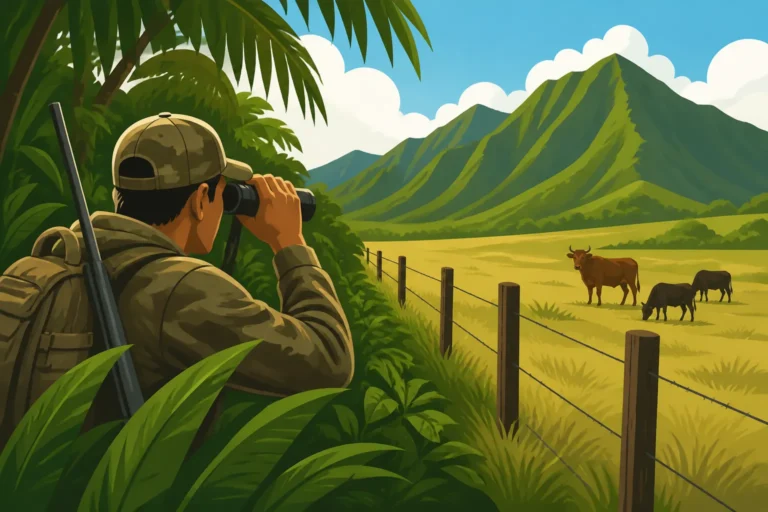
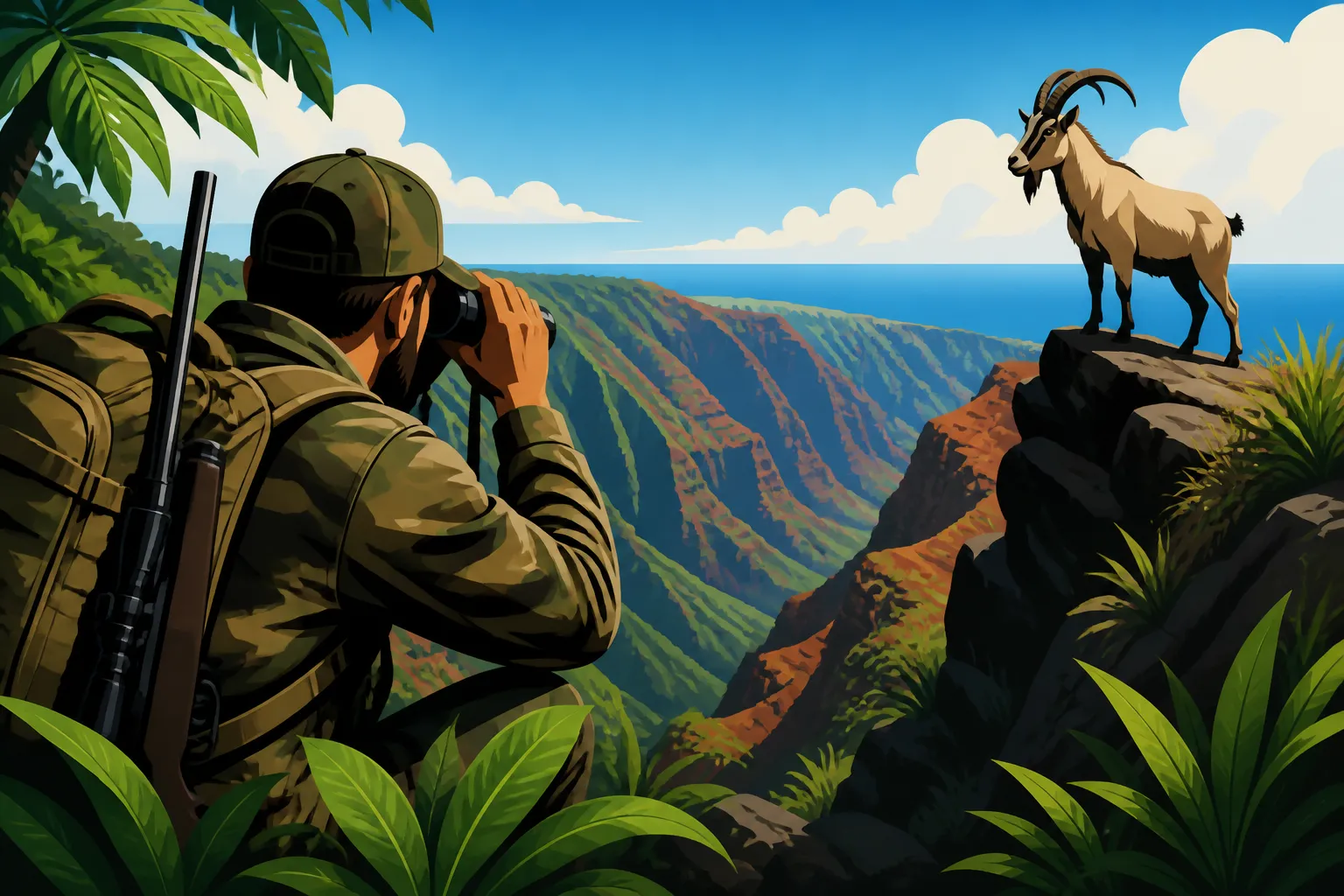
The classic spot-and-stalk is still your primary method, but it's fundamentally different in a canyon. Instead of spotting across a flat plain, you're often Glassing a Hawaii Coastline for Goats, but in a more enclosed, undulating environment. You'll spend a significant amount of time glassing from a high vantage point, looking into opposite canyon walls, under ledges, and into shaded pockets. Once you spot a goat, the stalk begins. This is where canyon hunting truly tests you. You might have to descend hundreds of feet, cross a gulch, and then climb back up to get within shooting range, all while maintaining constant awareness of wind direction and potential thermals. Pay close attention to the wind, as it often swirls unpredictably within the canyons. Try to plan your approach so the wind is consistently in your favor, or at least neutral. Remember that goats often travel in small herds, so if you spot one, there are likely more. Patience is paramount; a hasty move will spook the entire group.
Using Topography and Wind to Your Advantage
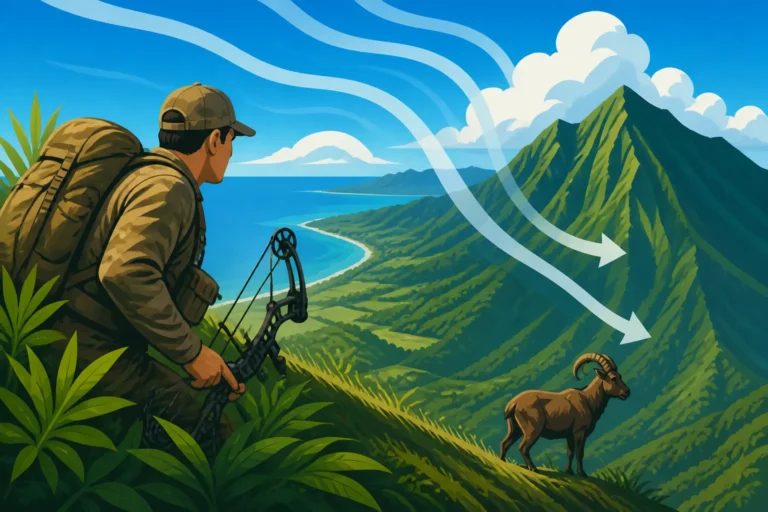
The canyons themselves are your best tool for concealment. Use the natural folds, ridges, and vegetation to break up your silhouette and hide your approach. Move slowly, deliberately, and always scan ahead for potential hazards or bedded animals. As mentioned, canyon winds are tricky. Thermals will typically pull air uphill in the morning as the sun heats the slopes, and then drop downhill in the evening as the air cools. However, localized eddies and cross-canyon currents can make this unpredictable. Continuously monitor your wind direction using a wind checker. Approaching from above offers a unique advantage, as goats rarely look straight up, but it presents its own challenges with steep descents and maintaining footing. Conversely, approaching from below can be physically taxing and makes it harder to use the terrain for concealment. Often, the best strategy is to traverse a mid-slope, using the contours and vegetation to stay out of sight and scent. Understanding how to stay found in dense Hawaii rainforest can also be vital if you dip into the wetter, thicker canyon bottoms.
Recovering Your Harvest in Challenging Canyon Terrain
This is where the real work begins, and it's often the most overlooked part of the hunt. Down a goat in a steep, remote canyon, and you immediately face the daunting task of recovery. Getting a pig out of a Hawaii gulch is tough, and goats are no different. You'll need to field dress the animal quickly, especially given the warm Hawaiian temperatures, to begin cooling the meat. Have strong game bags to protect the meat from flies and dirt. Consider boning out the animal on the spot to reduce weight significantly. This will make the arduous climb out far more manageable. If you're hunting with a partner, this task becomes much easier, but if alone, you must be prepared for multiple trips or a very slow, painful pack-out. Route planning for the pack-out should be part of your pre-hunt scouting, as climbing out with a heavy load is exponentially harder than climbing in. Remember that even small goats can be deceptively heavy once you add the weight of gravity pulling against you in a steep environment.
Safety and Logistics for a Successful Hunt
Hunting Kauai's canyons isn't just physically demanding; it carries inherent risks that demand careful planning and a strong emphasis on safety. Being prepared for emergencies and understanding local regulations are critical.
Accessing Kauai's Canyon Hunting Units
Kauai offers several challenging public hunting units within its canyon country. The Waimea Canyon area and parts of the Na Pali-Kona Forest Reserve are popular, though access can be difficult. Many units require checking in and out, either physically at a hunter check station or digitally using the GoHunt Hawaii application. Always confirm the specific unit rules and season dates well in advance, as these can change. You might need a four-wheel-drive vehicle to access some of the trailheads or unimproved roads. Always respect private land boundaries, even if they seem to run right up to public land; trespassing is taken seriously. If you're new to the area, consider scouting a Hawaii hunting unit before opening day, or at least studying maps extensively, looking for the best routes in and out, and identifying potential water sources. This pre-trip research will give you a leg up, especially when considering hunting Kauai's public ridges which often border these steep canyons.
Emergency Preparedness and Communication
Given the remote and rugged nature of Kauai's canyons, emergency preparedness is non-negotiable. As mentioned, cell service is often non-existent. Carry a satellite communication device (like a Garmin inReach or Zoleo) to call for help in an emergency. This is not just a suggestion; it's a critical safety tool when you're miles from the nearest road or person. Inform someone of your detailed hunting plan, including your intended route, expected return time, and specific hunting unit. Carry a comprehensive first-aid kit, and know how to use its contents. Twisted ankles, deep cuts, and dehydration are real possibilities in this environment. Understand the signs of heatstroke and how to prevent it. Never hunt alone if you're unfamiliar with the terrain or are pushing your physical limits. Having a partner who can assist in an emergency or share the load during recovery is invaluable.
Ethical Considerations and Regulations
Adhering to Hawaii's hunting regulations and ethical practices is paramount. Ensure you have the proper Hawaii hunting licenses and any required permits or tags for the specific unit and season you are hunting. These can often be purchased through the GoHunt Hawaii website. Be aware of bag limits and legal shooting hours. When pursuing goats in such steep country, shot placement is incredibly important. You want to ensure a clean, humane kill, as a wounded animal can quickly disappear into impenetrable terrain, leading to a lost animal and an unethical outcome. Practice your shooting skills at various angles and distances to be confident in your abilities. Remember, while feral goats are an introduced species and often targeted for population control, they are still living creatures deserving of respect. Practice Leave No Trace principles, packing out all your trash, including spent casings, and leaving the canyon as pristine as you found it.
Disclaimer
Hunting is an inherently dangerous activity. This guide provides general information and strategies, but local conditions, regulations, and personal abilities vary. Always prioritize safety, consult official Hawaii Department of Land and Natural Resources (DLNR) Division of Forestry and Wildlife (DOFAW) resources for the most current regulations, and consider hiring a local guide if you are unfamiliar with the terrain or hunting methods. The author and publisher are not responsible for any accidents, injuries, or legal issues that may arise from hunting activities.