Hunting a Fern Gulch at Dawn
Hunting Hawaii's dense fern gulches at dawn can feel like stepping into a green, steamy labyrinth, making it incredibly challenging to spot game even when you know they're there. The thick vegetation, slippery terrain, and often unpredictable thermals can frustrate even seasoned hunters. This guide will walk you through the unique challenges and effective strategies for successfully hunting these elusive pockets of paradise when the sun just begins to peek over the ridgelines.
The Dawn Chorus and Animal Behavior in Fern Gulches
Dawn in a Hawaiian fern gulch isn't just a beautiful spectacle; it's a critical window of opportunity for hunters. Understanding why animals frequent these deep, verdant valleys, particularly during the first hours of daylight, is the cornerstone of a successful hunt. These gulches, often carved by ancient streams or volcanic activity, offer a microclimate that's distinctly different from the surrounding open country or higher elevations. They are typically cooler, much wetter, and provide unparalleled cover, making them a natural magnet for various game species.
Feral pigs, for instance, are champions of the gulch. They thrive in the moist, shaded environments, rooting for invertebrates, ferns, and dropped fruits that collect on the damp ground. During the cooler night hours, pigs might venture out onto adjacent ridges or into flatter, more open areas to feed, but as the first rays of sun begin to warm the landscape, they often retreat into the cooler, darker depths of a fern gulch for bedding and security. This makes dawn a prime time to catch them moving back into cover or still foraging in the gulch's sheltered pockets. Hawaii's Feral Pigs, Island by Island details their widespread presence.
Similarly, feral goats, while often associated with more arid, cliffy terrains, will utilize the edges and shallower sections of fern gulches for cover, especially where the gulch transitions into more open, browse-rich areas. They might descend into a gulch to escape the heat of the day, find succulent forage, or access hidden water sources. At dawn, you might find them moving out of the gulch to bask in the morning sun on a rocky outcrop or climb to higher feeding grounds. Mouflon sheep, particularly if the gulch is at a higher elevation on islands like Hawaii Island, might use the upper reaches for cover as they transition from nocturnal grazing to daylight bedding. Even Axis deer, primarily dwellers of dry, open country, will sometimes follow gulch systems for water access or to use the denser vegetation as a travel corridor, especially if it leads to a secluded food source.
The thermals at dawn also play a crucial role. As the sun rises, the cool air that has settled in the gulch overnight begins to warm and rise, creating an upward draft. This means that if you're hunting from above the gulch, your scent will likely be carried up and away from animals deeper in the valley, giving you a temporary advantage. Conversely, if you're trying to still-hunt up from the bottom, your scent could be pushed directly into the faces of animals above you. Reading Hawaii's Trade Wind Patterns and Hunting Downwind in Hawaii's Shifting Thermals offer more insight into how crucial wind is in Hawaii. Understanding these shifting air currents is paramount. If possible, positioning yourself on a ridge overlooking the gulch, letting the thermals work in your favor, can be an effective tactic.
Mastering the Stalk: Tactics for Dense Fern Gulches
Hunting a fern gulch at dawn demands a specific set of tactical skills. This isn't wide-open glassing country; it's an intimate, close-quarters affair where stealth, patience, and acute senses are your greatest assets. The sheer density of the vegetation, primarily the towering uluhe (false staghorn fern) and hapu'u (tree fern), makes visibility incredibly limited, often reducing your line of sight to mere yards.
Your movement needs to be agonizingly slow – think measured steps, placing your foot down only after carefully checking for twigs, loose rocks, or slippery mud. Each step should be deliberate, with your weight shifted slowly, allowing you to react if a branch snaps or a rock rolls. Often, the soft, damp earth in these gulches can muffle your footsteps, which is a blessing, but unexpected sounds can still give you away. Pausing frequently to scan your immediate surroundings, listening intently for any rustle, grunt, or the distinctive scuff of hooves, is crucial. Use the natural sounds of the dawn – a sudden gust of wind, a distant bird call, or the drip of dew from the canopy – to mask your own movements. This slow, deliberate approach is often referred to as Still-Hunting Pigs in Hawaii's Wet Forest, a technique perfectly suited for gulches.
Visual scanning is more about detecting movement, shape, and contrast rather than clear outlines. Look for the horizontal line of a pig's back against the vertical fern fronds, the dark mass of a body in deep shadow, or the subtle twitch of an ear. Sometimes, the only thing you'll see is a patch of black, brown, or gray that just doesn't quite fit the natural patterns of the jungle. Optical aids are limited in such dense cover, but a good quality pair of binoculars, even low-power ones, can help resolve vague shapes into identifiable game animals when you get a momentary clear view.
Pay close attention to fresh sign. Droppings, fresh tracks in the mud, overturned earth from rooting, or trails worn through the ferns are all indicators of recent animal activity. If you find a fresh wallow or a heavily used game trail leading deeper into the gulch, you're on the right track. Remember, a gulch system can be incredibly complex, with numerous smaller side-gulches and thickets that serve as bedding areas. Focus your efforts on these pinch points or areas where trails converge. Understanding Reading Pig Sign Along a Muddy Trail is invaluable here.
One common frustration is navigating the steep, often crumbly, and slippery terrain. Many gulches feature near-vertical walls, loose scree, and slick, moss-covered rocks. Picking a safe route is paramount, especially in the low light of dawn. Always maintain three points of contact when scrambling, and don't hesitate to backtrack if a path feels too dangerous. Remember that getting down into a gulch is often easier than getting back out, especially with a heavy animal on your back. Planning your exit strategy for Getting a Pig Out of a Hawaii Gulch before you even begin your descent is a smart move.
Essential Gear for a Wet and Rugged Environment
Hunting a fern gulch at dawn isn't just about strategy; it's also heavily reliant on having the right gear to endure the specific conditions of these unique Hawaiian habitats. The combination of high humidity, frequent rain, steep terrain, and abrasive vegetation can quickly turn an ill-prepared hunt into a miserable experience.
First and foremost, your footwear is your most critical piece of equipment. Forget your casual hiking boots; you need serious, waterproof boots with aggressive traction. Mud is a constant companion in gulches, and the slippery, decaying leaf litter, moss-covered rocks, and wet ferns demand a sole that can grip. Look for boots designed for wet, rugged terrain, preferably with good ankle support to prevent twists and sprains on uneven ground. Brands like Kenetrek or Schnee's offer models that excel in these conditions, providing the necessary support and waterproofing. Check out advice on Boots for Hawaii Lava and Wet Forest for more details.
Next, a good rain shell is non-negotiable. Even if the forecast calls for clear skies, gulches create their own weather, often trapping moisture and experiencing localized showers, or simply dripping from the dense canopy long after the rain has stopped. A lightweight, packable rain jacket and pants made from a breathable, waterproof material like Gore-Tex will keep you dry and comfortable. Layering is key, as mornings can start cool but quickly become warm and humid as the sun climbs. A moisture-wicking base layer and a light insulating layer, like a fleece, will help regulate your body temperature. For more insights on staying dry, read up on Rain Gear for a Windward Hawaii Hunt.
When it comes to carrying your essentials, a sturdy daypack, preferably one with a waterproof cover or made from water-resistant material, is essential. Inside, you'll want to pack plenty of water – more than you think you need, as the humidity can be dehydrating – high-energy snacks, a first-aid kit, a headlamp with fresh batteries, and a way to signal for help, such as a whistle or satellite messenger. Cell service is notoriously spotty in deep gulches, so relying on your phone for navigation or emergencies is risky. GPS devices or apps like OuterSpatial are invaluable for navigating complex terrain and keeping track of your location and the unit boundaries. You can use the GoHunt platform to help secure your hunting license and stay updated on unit regulations before you head out. GoHunt also provides maps that can be integrated with GPS systems, making it easier to navigate.
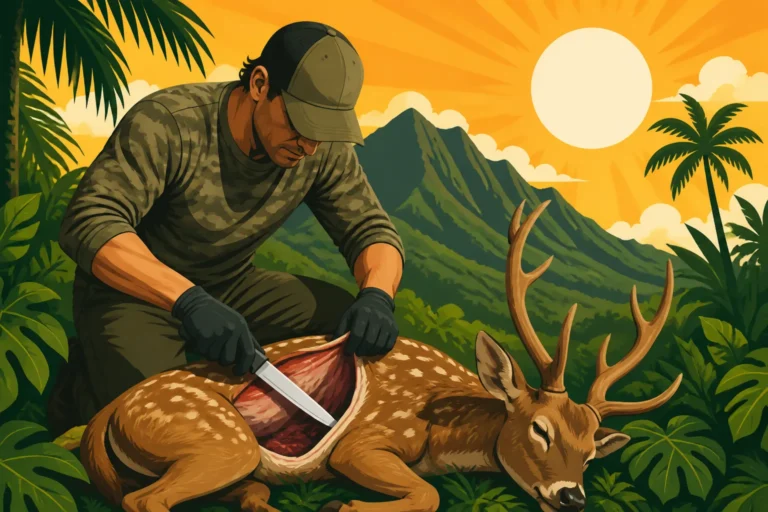
A reliable, sharp knife is also crucial for field dressing your animal. The work is often done in challenging conditions, so a knife you can trust to hold an edge and handle wet, messy tasks is vital. Having a sharpening tool or a spare blade is a good backup.
Consider scent control, especially for pigs. While the dense vegetation can help mask your presence, pigs have an incredible sense of smell. Using scent-eliminating sprays on your clothing or even carrying a small amount of activated carbon can make a difference, especially when the thermals are still settling.
Lastly, make sure you've properly checked in with the Department of Land and Natural Resources (DLNR) for the specific public hunting unit you're entering. This is a critical step for your safety and to ensure you're hunting legally. Platforms like GoHunt can help streamline the process of acquiring your license and understanding specific unit regulations.
| Gear Item | Why It's Essential in a Fern Gulch at Dawn | Key Features to Look For |
|---|---|---|
| Waterproof Boots | Protection from mud, water, sharp rocks | Aggressive traction, ankle support, durable waterproof membrane |
| Rain Gear | Stay dry from dew, rain, humidity | Breathable (e.g., Gore-Tex), lightweight, packable |
| Daypack | Carry essentials, protect from moisture | Water-resistant material, rain cover, comfortable fit |
| Headlamp | Navigate in low light conditions | Bright beam, red light option, fresh batteries |
| GPS/Map & Compass | Navigate dense, featureless terrain | Reliable signal, pre-downloaded maps (GoHunt integration), battery life |
| Knife | Field dressing and utility | Sharp, durable blade, comfortable grip, easy to clean |
| Water Bottle/Bladder | Stay hydrated in humid conditions | Ample capacity, easy access |
| First-Aid Kit | Treat minor injuries | Blister care, antiseptic, pain relievers, bandages |
| Whistle/Satellite Messenger | Emergency communication (no cell service) | Loud, durable whistle; reliable satellite messenger |
Safety and Ethical Considerations in the Jungle
Hunting in Hawaii's fern gulches, especially at dawn, comes with inherent risks that demand a strong commitment to safety and ethical practices. These environments are beautiful but unforgiving, and a momentary lapse in judgment can have serious consequences.
One of the primary safety concerns is navigation. The dense, often monotonous landscape of ferns can quickly disorient you, even on a short walk. Gulches often have many tributary fingers, all looking similar, making it easy to get turned around. Always carry a reliable GPS device or a topographic map and compass, and know how to use them. Mark your starting point and significant turns, and regularly check your position. Remember that even with a GPS, battery life can be an issue, and signals can be weak in deep canyons. Familiarize yourself with the unit boundaries using platforms like GoHunt before you enter, and be aware of any nearby private land. Staying Found in Dense Hawaii Rainforest is a must-read for anyone venturing into these areas.
Terrain hazards are constant. The footing is often treacherous, with slippery mud, loose rocks, hidden roots, and steep, unstable slopes. A fall in a remote gulch can lead to serious injury, from sprains and fractures to head trauma. Take every step with caution, use trekking poles for stability, and avoid rushing. When climbing or descending, maintain three points of contact. Never hunt alone if possible, or at least inform someone of your exact hunting plan and expected return time.
When it comes to identifying your target, the poor visibility in a fern gulch is a significant challenge. You'll often hear animals before you see them, or only catch a fleeting glimpse. Positive identification is paramount. Never shoot at sound or movement alone. Wait until you can clearly see the animal, confirm it's your target species, and ensure there are no other hunters or protected species in your line of fire. Hawaii is home to several protected native birds and bats; being certain of your target is not just ethical, it's a legal requirement.
Ethical hunting in these sensitive ecosystems also means minimizing your impact. Stick to established game trails where possible to avoid trampling delicate vegetation. Pack out everything you pack in, including spent shell casings and trash. Field dress your animal responsibly, packing out all inedible portions, or burying them deeply away from water sources. Hawaii’s unique environment is fragile, and hunters play a vital role in conservation by managing invasive species while also being good stewards of the land. Remember, these are wild animals, and while they are an invasive species, they deserve a humane and ethical harvest.
Finally, be aware of other users of the land. While fern gulches are often remote, hikers, photographers, or other hunters might be present, especially on weekends. Courtesy, common sense, and strict adherence to blaze orange requirements (where applicable) are crucial for everyone's safety. Always keep your muzzle pointed in a safe direction and treat every firearm as if it's loaded. By combining careful preparation, thoughtful tactics, and an unwavering commitment to safety and ethics, hunting a fern gulch at dawn can be a truly rewarding and unforgettable Hawaiian experience.
Disclaimer
Hunting carries inherent risks, including but not limited to injury, illness, and death. Always prioritize safety, adhere to all local, state, and federal regulations, and obtain proper licenses and permits before engaging in any hunting activity. The information provided in this guide is for informational purposes only and should not be considered a substitute for professional instruction, local knowledge, or official regulations from the Hawaii Department of Land and Natural Resources (DLNR). Hunters are responsible for their own safety and for understanding and following all applicable laws.