Why Every Hawaii Game Animal Was Introduced
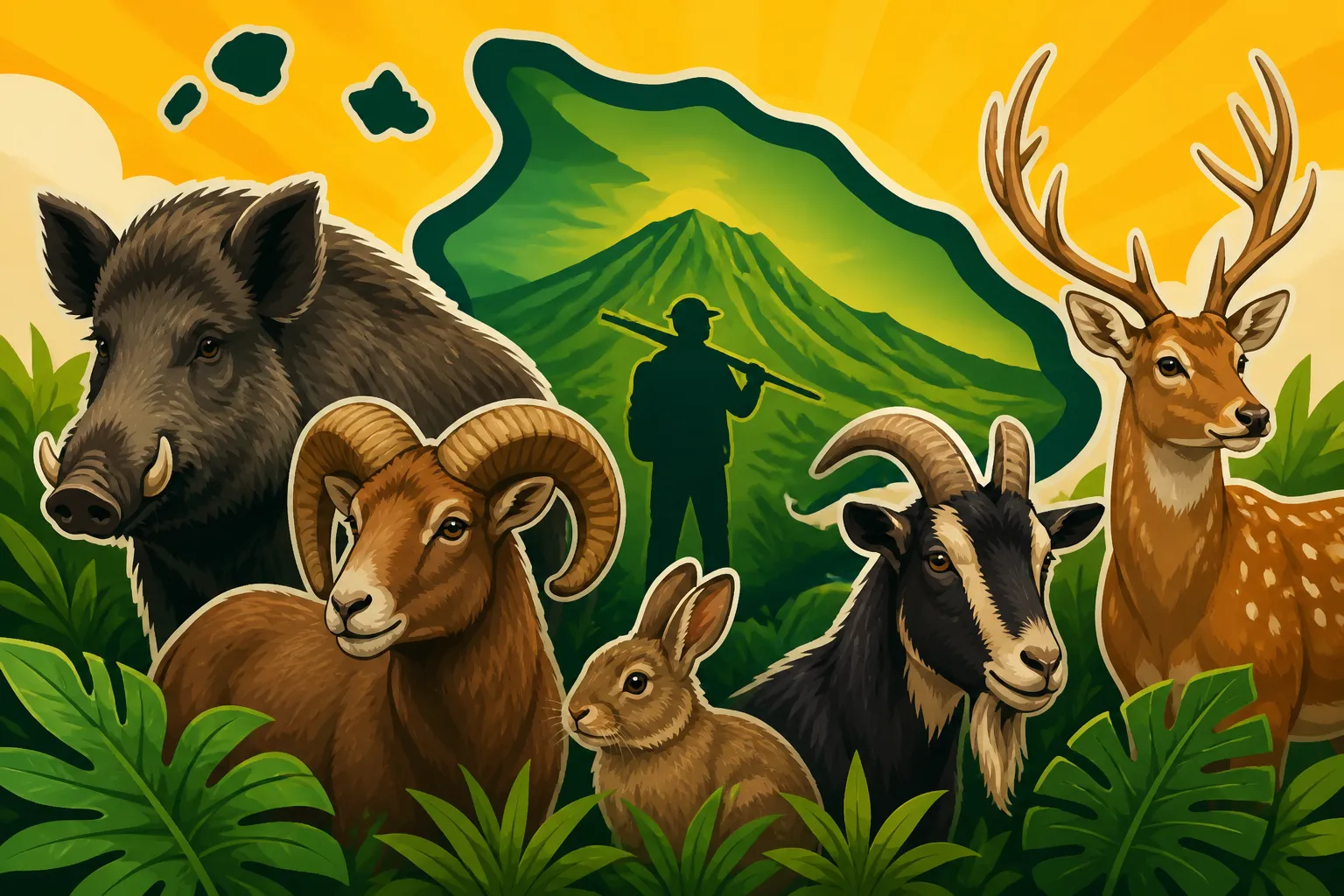
Many hunters dream of Hawaii, picturing wild game in lush landscapes, but few realize a fundamental truth: every single hoofed mammal and feathered game bird you can pursue here was intentionally introduced. This isn't mainland hunting; it's a unique challenge. Understanding this history is absolutely key to appreciating the hunt, and this guide unravels the captivating story of how Hawaii's diverse game animals arrived, shaping the challenging, yet immensely rewarding, opportunities available today.
The Unique Genesis of Hawaii's Ecosystems
For those of us who grew up hunting vast continental landscapes, the idea of an ecosystem without native big game can be baffling. Hawaii's story, however, is one of unparalleled isolation and a truly unique evolutionary path. It's a place where life arrived against incredible odds, and in doing so, created a world unlike any other. Before humans, the islands were a sanctuary for highly specialized plants and animals, making them incredibly vulnerable to change.
An Archipelago Born in Isolation
Picture this: millions of years ago, a hot spot beneath the Pacific Ocean began spewing lava, slowly, painstakingly, building up landmasses from the seafloor. These are the Hawaiian Islands, some of the most isolated landforms on Earth. Life here didn't march across land bridges or swim easily from nearby continents. Instead, every single plant, insect, and bird that made it to Hawaii had to arrive by wind, wave, or wing. Think about the incredible journey a seed would take, clinging to a bird's feather for thousands of miles, or a spore carried by a strong gust of wind.
This extreme isolation is the fundamental reason why Hawaii never developed large, native land mammals. There were no bears, no deer, no pigs, no elk, and no goats that could naturally cross those vast oceanic distances. The only native land mammal to successfully colonize Hawaii was the ʻōpeʻapeʻa, the Hawaiian hoary bat. So, when you look at the majestic landscapes of Hawaii, understand that they evolved in an almost completely predator-free environment, a truly unique biological laboratory that was fundamentally different from the continents. It truly explains Why Hawaii Has Almost No Native Mammals.
The Fragile Balance of Native Biodiversity
In the absence of large grazing or predatory mammals, Hawaii's native plants and birds evolved without the need for defenses like thorns, toxins, or flight from ground predators. Imagine forests where birds sang without fear, where unique, delicate plants thrived without being browsed down. This created a remarkably specialized and intertwined ecosystem, with species existing in delicate balance, often dependent on each other for survival. Each island, and even different valleys on the same island, developed its own distinct collection of species, many found nowhere else on Earth.
This incredible specialization, while beautiful, also meant extreme vulnerability. When new species were eventually introduced – especially those large, hoofed animals we now hunt – the native flora and fauna had no built-in defenses. They simply weren't equipped to handle intense grazing, rooting, or predation from species that had evolved in much more competitive and aggressive environments. The stage was set for a dramatic, and often devastating, transformation of Hawaii's natural world.
Early Human Migrations and the Polynesian Pig
The Hawaiian Islands remained a pristine, unblemished wilderness for millions of years. This changed dramatically with the arrival of the first humans, the Polynesian voyagers. These incredible navigators didn't just bring themselves; they brought with them a carefully selected suite of plants and animals essential for survival in their new island homes, forever altering the ecological landscape.
The First Deliberate Introductions by Voyagers
Around 300 to 800 AD, brave Polynesian seafarers, guided by stars and currents, reached these remote islands in their double-hulled canoes. They were not simply explorers; they were intentional colonists, carrying with them what they needed to thrive. Among their most crucial cargo were three domestic animals: the pua'a (pig), the moa (chicken), and the ʻilio (dog). These animals were vital for their sustenance, ceremonies, and companionship. The pigs, especially, became a cornerstone of their diet and culture, providing a much-needed protein source in a land devoid of native game mammals.
These early introductions weren't random. They were calculated efforts to establish a viable food system, replicating elements of the Polynesian homeland. The pigs and chickens were raised as livestock, kept close to settlements, though some undoubtedly escaped into the wild, finding the lush Hawaiian forests a hospitable new home. The initial impact was localized but significant, marking the very first chapter in the story of introduced game animals in Hawaii.
How the Polynesian Pig Reshaped the Landscape
Once established, even in small numbers, the Polynesian pig began to exert its influence on the landscape. These aren't the huge European boars we often picture; they were smaller, but their rooting behavior was still incredibly disruptive. They would tear up the forest floor in search of tubers, grubs, and fallen fruit, disturbing delicate native plant communities. This rooting also altered water runoff patterns, increasing erosion and affecting stream ecosystems.
As centuries passed, these pigs, often interbreeding with later European introductions, became the foundation of today's feral pig populations. They adapted incredibly well to the diverse Hawaiian environments, from wet rainforests to dry uplands, showing remarkable resilience. The descendants of these original Polynesian pigs, mixed with European strains, are the tenacious, intelligent animals that hunters pursue across the islands today. Understanding their history helps us appreciate the challenge of hunting these resilient creatures, which are now widespread as Hawaii's Feral Pigs, Island by Island.
European Contact and the Expansion of Ungulates
The arrival of Captain James Cook in 1778 marked another pivotal moment in Hawaii's history, ushering in an era of rapid and far-reaching introductions that further reshaped the islands' ecosystems. Where Polynesian voyagers brought sustenance for survival, European explorers and settlers often brought livestock and, eventually, a desire for sport hunting.
Captain Cook's Legacy and Initial Livestock
When Captain Cook first landed, he gifted King Kalaniʻōpuʻu with domestic pigs, goats, and cattle. Unlike the Polynesian pigs, which were largely kept and managed, many of these European livestock animals were simply left to roam freely, establishing feral populations remarkably quickly. Imagine cattle, completely unmanaged, adapting to the rugged terrain of the Big Island, or goats scaling the steepest pali (cliffs). These animals, with their hard hooves and voracious appetites, began to have an immediate and visible impact on the landscape.
Their grazing patterns were far more destructive than anything the native ecosystem had ever experienced. They browsed down native plants, stripped bark from trees, and compacted the soil, exacerbating erosion. These initial introductions, meant as gifts or for future provisioning, quickly became wild, multiplying without natural predators and setting the stage for the diverse ungulate populations that define Hawaiian hunting today.
Ranching, Agriculture, and Further Introductions
As Hawaii transitioned into a kingdom and later a U.S. territory, Western influence grew. Ranching became a significant industry, particularly on islands like the Big Island and Maui. This led to more intentional, larger-scale introductions of various European cattle breeds, domestic sheep, and horses. Many of these animals eventually escaped or were intentionally released onto open range, contributing to the burgeoning feral populations. The descendants of these early ranch animals, particularly the feral sheep, are still hunted on the slopes of Mauna Kea and Mauna Loa.
Beyond livestock, the desire for familiar game animals for sport hunting also began to take hold among wealthy landowners and foreign residents. The concept of "game management" as understood in Europe and North America spurred the introduction of species specifically for recreational hunting. This period saw a deliberate effort to transform parts of Hawaii into hunting grounds reminiscent of other parts of the world, profoundly changing the islands' ecological and cultural landscape in the process. This shift eventually led to the organized permit-tag system that hunters use today, a system that GoHunt helps simplify for many.
The Era of Intentional Game Species Releases
While earlier introductions were often byproducts of colonization and settlement, the late 19th and 20th centuries saw deliberate, organized efforts to bring specific animals to Hawaii purely for the purpose of sport hunting. These introductions forever changed the hunting opportunities available in the islands, creating the unique roster of game species we pursue today.
Axis Deer, a Prized Mainland Import
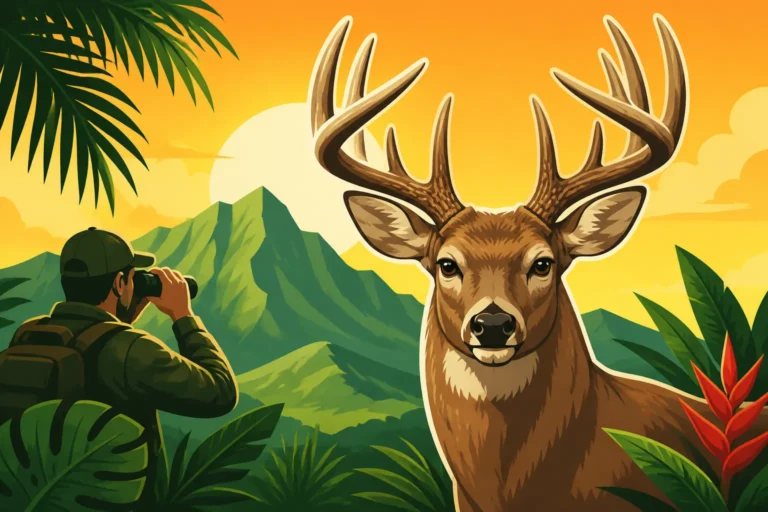
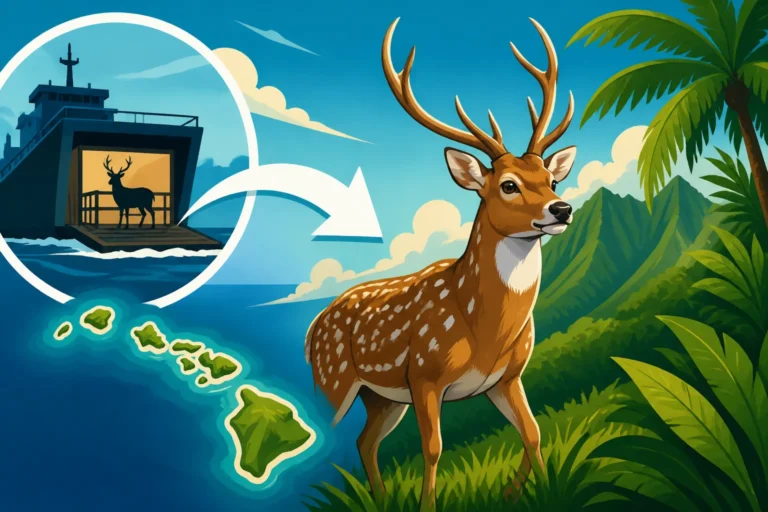
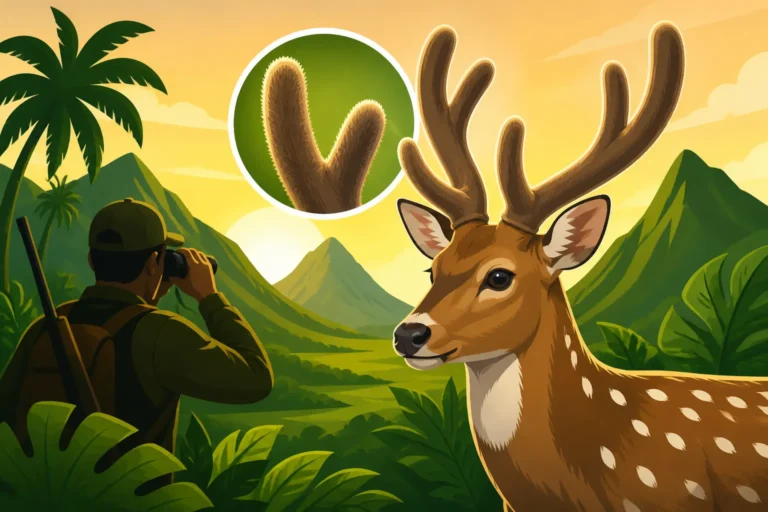
If there's one animal that exemplifies intentional game introduction in Hawaii, it's the Axis deer, or chital. These strikingly beautiful deer, native to India, were first introduced to Molokai in the 1860s. The story goes that they were a gift from Hong Kong to King Kamehameha V. They thrived in Molokai's dry, kiawe-studded forests, multiplying rapidly due to the lack of natural predators and abundant forage. Later, in the mid-20th century, some Axis deer were transplanted from Molokai to Maui and Lanai to establish populations there, again, specifically for hunting.
The success of Axis deer in Hawaii is undeniable. Their populations exploded, particularly on Maui and Lanai, providing an exciting and challenging hunting experience unlike any other. They are a highly sought-after game animal, known for their delicious venison and impressive antlers. To learn more about these magnificent animals, check out Axis Deer, Hawaii's Signature Big Game. Today, hunters eagerly participate in draws, often facilitated by platforms like GoHunt, to pursue these incredible animals, showcasing how a foreign species became deeply integrated into the islands' modern hunting culture.
Mouflon and Feral Sheep: Grazers of the High Slopes
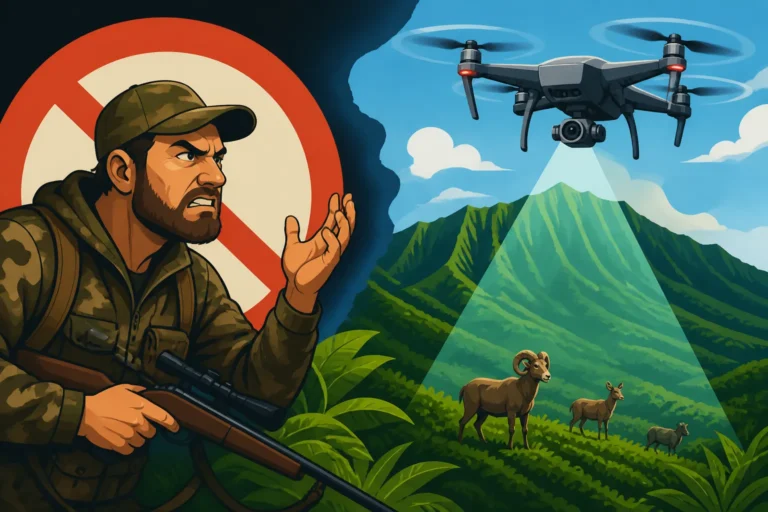
The Big Island's towering volcanoes, Mauna Kea and Mauna Loa, are home to a truly unique hunting experience: Mouflon sheep. These majestic wild sheep, native to Europe and Asia, were introduced to Hawaii Island in the 1950s. The motivation was clear: to create an exciting big-game hunting opportunity in the high-elevation, open terrain. They quickly adapted to the rugged, often sparse, volcanic landscapes, forming robust populations that are now a staple of Big Island hunting.
Alongside the purebred Mouflon, Hawaii also has significant populations of feral sheep, which are descendants of domestic sheep introduced centuries ago that escaped into the wild. These feral sheep often interbreed with Mouflon, creating hybrids that are also fair game for hunters. However, the presence of these sheep, particularly Mouflon, has sparked considerable debate and legal challenges due to their impact on critically endangered native birds like the Palila, which depends on the mamane tree for survival. This creates a complex conservation challenge, but hunting remains a key management tool. For a deeper dive, read about Mouflon Sheep on Hawaii's Volcanoes.
Feral Goats and Black-Tailed Deer
Feral goats, descendants of Captain Cook's gifts and later domestic escapees, are ubiquitous across the Hawaiian Islands. While not "introduced" for sport in the same way Axis deer or Mouflon were, their robust populations, adaptability to extreme terrain, and the challenging hunt they provide have cemented their status as a significant game animal. You can find them scaling precipitous sea cliffs or navigating dense jungle gulches, a testament to their incredible resilience. They are a fantastic, accessible hunting opportunity for many, and you can learn more about them in Hawaii's Feral Goats and Why They Matter.
In a unique twist, the island of Kauai is home to its own distinct deer population: Black-Tailed deer. Unlike Axis deer, which are widespread across Maui Nui, these deer were specifically introduced to Kauai in the 1960s from the continental U.S. for the purpose of establishing a game animal. They thrive in Kauai's lush, mountainous terrain, providing a challenging hunting experience that is distinct from Axis deer hunting. They are the only deer species on Kauai and represent another example of intentional introduction to diversify hunting opportunities, a fascinating story detailed in Black-Tailed Deer in Hawaii.
Game Birds: Filling the Hawaiian Skies with Diverse Species
It's not just the hoofed animals that are transplants; Hawaii's skies are also filled with a vibrant array of game birds, almost all of which were introduced from far-flung corners of the globe. This was a concerted effort by early settlers and game managers to create hunting opportunities for feathered game, adding another dimension to Hawaii's unique hunting landscape.
Upland Birds: Francolins, Pheasants, and Quail
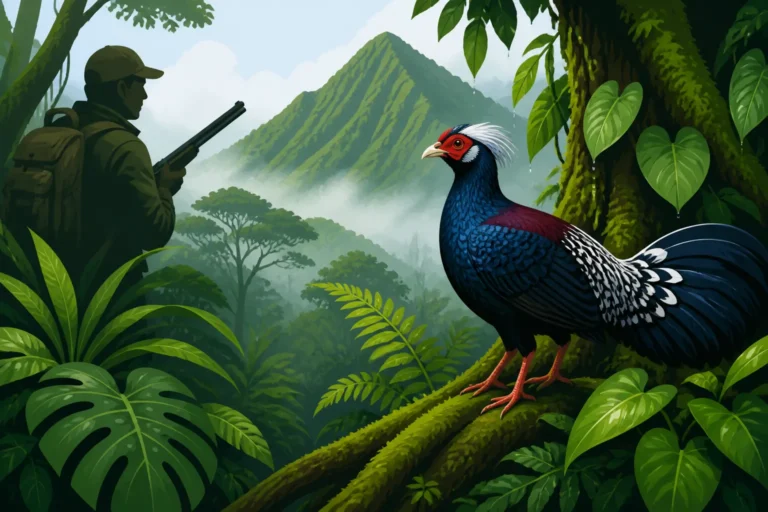
Imagine the ambition of those who decided to bring birds from Africa, Asia, and North America to Hawaii! This wasn't a casual affair; it was a dedicated program to establish huntable populations across different elevations and habitats. Among the most popular are the francolins: Erckel's Francolin, a striking bird from East Africa, which thrives in the Big Island's dry upland forests; and the Gray Francolin and Black Francolin, both from Asia, which can be found in various dryland and scrub habitats across several islands. Their distinct calls are a true sign you're in game bird country.
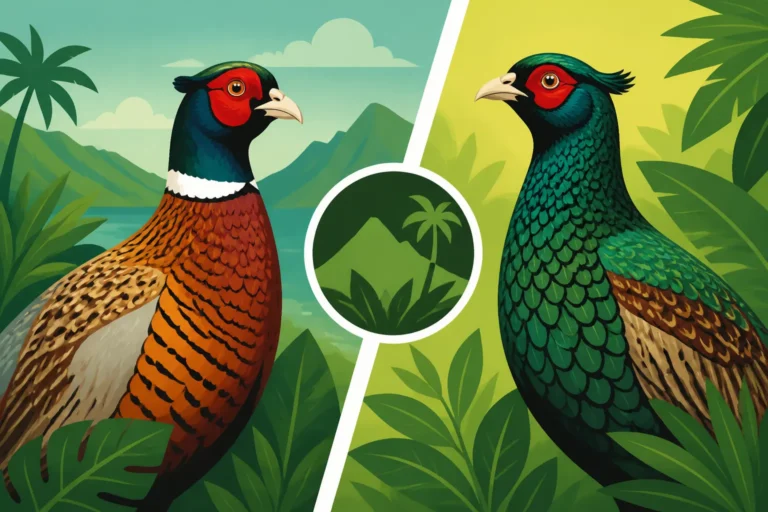
Then there are the pheasants. The vibrant Ring-necked Pheasant, originally from Asia, is a classic game bird found in agricultural fields and open grasslands. The elusive Kalij Pheasant, also from Asia, prefers the denser, wetter forests, offering a challenging hunt for those willing to venture into the thick stuff. Finally, various quail species, including the Japanese Quail and California Quail, were introduced to fill the niche of smaller upland birds, providing fast-flying targets in the drier, brushier areas. Each of these species found a new home in Hawaii, thanks to intentional releases, creating a diverse wing-shooting paradise. You can dive deeper into where to find these fantastic birds in Hawaii's Game Birds and Where to Find Them.
Doves, Chukar, and the Huntable Flocks
Beyond the larger upland species, doves and chukar partridge also contribute significantly to Hawaii's game bird roster, each with its own fascinating origin story. The Spotted Dove and Barred Dove, both charming birds native to Asia, were introduced in the early 1900s. They quickly established themselves in various habitats, from suburban areas to agricultural fields, providing readily accessible hunting opportunities for many. Their gentle cooing is a common sound across the islands, and they are a popular target for many local hunters. You can often find them feeding in open areas at dawn, a great hunt to learn more about in Hawaii's Doves and Where They Feed.
The Chukar partridge, a hearty bird from the rocky, arid mountains of Asia, found its perfect match in the rugged, high-elevation lava fields of Hawaii Island. Introduced in the 1920s, these birds are incredibly adapted to steep, dry terrain, offering an exceptionally challenging hunt for those willing to climb. Their distinctive call echoing across the vast, open landscapes is a quintessential sound of high-country hunting. These birds, along with others, were all part of a broader vision to create diverse and abundant game bird populations for sport and sustenance in the islands.
The Modern Hunter's Role in Hawaii's Introduced Ecosystems
This rich history of introductions has created a truly unique hunting landscape in Hawaii, but it also brings with it significant ecological challenges. For the modern hunter, understanding this context isn't just interesting trivia; it's fundamental to responsible and ethical participation in Hawaii's conservation efforts.
Management Challenges and Conservation Imperatives
The very success of these introduced game animals – their ability to thrive and multiply without natural predators – is a double-edged sword. While they provide fantastic hunting opportunities, they also exert immense pressure on Hawaii's incredibly fragile native ecosystems. What Ungulates Cost Hawaii's Watersheds is a question many conservationists grapple with daily. Feral pigs, with their rooting, destroy native plant communities and create breeding grounds for invasive mosquitoes that spread avian malaria, decimating native forest bird populations. Goats and sheep, with their relentless browsing, strip vegetation, leading to massive erosion on steep slopes, especially in dry areas.
This is where hunting steps in, not just as a recreational activity, but as a crucial tool for wildlife management. The Hawaii Department of Land and Natural Resources (DLNR), Division of Forestry and Wildlife (DOFAW), actively manages these populations through regulated hunting seasons and permit systems. By providing opportunities for hunters to harvest these animals, the state aims to mitigate their ecological impact, protecting vital native forests and endangered species. It's a complex balance, where hunters are direct participants in the conservation of Hawaii's unique biodiversity. This is precisely How Hunting Fits Hawaii's Conservation Plan, making hunters vital partners.
Navigating Permits and Public Lands
For anyone looking to hunt in Hawaii, engaging with this introduced ecosystem means understanding the specific rules and regulations designed to manage these populations and protect native environments. It starts with obtaining your Hawaii Hunting Licenses and What They Cost, a necessary first step for any hunter, resident or non-resident. Beyond the license, Hawaii employs a rigorous permit-tag system for many big game species, especially on the more populated islands. Understanding How Hawaii's Permit-Tag System Works is crucial; it involves applying for specific permits, often through a lottery draw, and ensuring you have the correct tags before heading into the field.
Platforms like GoHunt provide valuable resources for navigating these applications, unit information, and season dates. Whether you're planning to hunt on Public Hunting Land in Hawaii, often located within vast forest reserves or game management areas, or seeking access to private ranch lands, knowing the specific rules for each unit is paramount. This includes check-in/check-out procedures, weapon restrictions, and bag limits. Being a responsible hunter in Hawaii means not just knowing how to track and harvest game, but also deeply understanding and respecting the unique history and ongoing conservation challenges of these precious islands.
Table: Key Introduced Game Species in Hawaii
| Game Species | Primary Island(s) of Range | Origin Country/Region | Approximate Introduction Period | Primary Reason for Introduction |
|---|---|---|---|---|
| Feral Pig | All Main Islands | Polynesia, Europe | 300-800 AD (Polynesian), 1778+ (European) | Food, Livestock |
| Feral Goat | All Main Islands | Europe | 1778+ | Livestock |
| Axis Deer | Molokai, Maui, Lanai | India | 1860s | Sport hunting, aesthetic |
| Mouflon Sheep | Hawaii Island | Europe | 1950s | Sport hunting |
| Feral Sheep | Hawaii Island | Europe | 1700s | Livestock |
| Black-Tailed Deer | Kauai | North America | 1960s | Sport hunting |
| Ring-necked Pheasant | All Main Islands | Asia | 1800s | Sport hunting |
| Erckel's Francolin | Hawaii Island, Maui, Molokai, Lanai | Africa | 1950s | Sport hunting |
| Chukar Partridge | Hawaii Island | Asia | 1920s | Sport hunting |
| Spotted/Barred Dove | All Main Islands | Asia | 1900s | Food, sport |
Disclaimer
Please remember that hunting regulations in Hawaii can change. Always consult the most current Hawaii Department of Land and Natural Resources (DLNR) Division of Forestry and Wildlife (DOFAW) regulations before planning any hunting trip. This guide is for informational purposes only.