Public Hunting Land in Hawaii
Navigating the unique landscape of public hunting opportunities in Hawaii can feel like deciphering an ancient scroll, especially for those accustomed to mainland regulations and expansive tracts of easily accessible land. Many hunters arrive, excited by the prospect of diverse game, only to be met with a maze of unit designations, specific access rules, and a constant need to verify information. This guide aims to clear up that confusion, offering a comprehensive look at what public hunting land in Hawaii truly means, where to find it, how to access it, and what to expect when you get there.
Understanding Hawaii's Public Hunting Landscape
When you first start researching hunting in Hawaii, it's easy to picture wide-open spaces, but the reality is wonderfully complex and incredibly unique. Unlike the vast, contiguous national forests or BLM lands found across the continental US, Hawaii's public hunting areas are often smaller, more fragmented, and can vary dramatically from one island to the next, and even within the same island. This isn't your typical drive-in-and-set-up scenario; it demands a deeper understanding and appreciation for the local nuances.
The Unique Challenge of Island Hunting
One of the biggest eye-openers for hunters visiting Hawaii is just how localized everything is. Each island, and often distinct regions within an island, operates under its own specific set of rules, seasons, and access protocols, all managed by the Department of Land and Natural Resources (DLNR), Division of Forestry and Wildlife (DOFAW). What works on Maui might not fly on Hawaii Island, and what's legal on a weekend in one unit could be completely off-limits in another just a few miles away. This can be incredibly frustrating when you're trying to plan a trip, feeling like you're constantly digging for the right piece of information. It's not just about knowing where to hunt, but when, how, and with what.
The terrain itself presents a significant challenge. We're talking about everything from dense, wet rainforests with tangled undergrowth and steep gulches to arid, rocky lava flows and windswept alpine zones. This variety means that what constitutes "public land" can look drastically different depending on where you are. A public hunting unit on the dry side of Hawaii Island might be wide-open kiawe flats, while a unit on the windward side could be an impenetrable thicket of strawberry guava. This geographical diversity directly impacts how you hunt, what gear you need, and even how you think about tracking and retrieving game. It's a far cry from the predictable forest blocks or prairie lands many are used to.
Furthermore, Hawaii's unique ecological makeup means that many of our game animals—like Axis deer, feral pigs, and Mouflon sheep—are introduced species. While they offer fantastic hunting opportunities, their presence also ties into broader conservation efforts aimed at protecting Hawaii's incredibly fragile native ecosystems. This means public hunting often serves a dual purpose: providing recreation for hunters and helping to manage ungulate populations that can have devastating impacts on native plants and birds. Understanding this underlying context helps frame why some of the rules and restrictions are in place, even if they sometimes feel restrictive.
Public vs. Private Land Realities
While this guide focuses on public land, it’s important to acknowledge the significant role private land plays in Hawaii hunting. Much of the prime hunting ground, particularly for species like Axis deer on islands like Maui and Molokai, is privately owned ranch or conservation land. This can lead to a sense of scarcity on public lands, especially if you're not seeing the numbers of animals you expected. Don't get discouraged; public land holds incredible potential, but it often requires more effort, more research, and a willingness to adapt your hunting style.
The distinction between public and private land isn't always immediately obvious on the ground. Boundaries can be marked by old, decaying fences, subtle changes in vegetation, or sometimes, just a small sign that's easy to miss if you're not paying close attention. This is where tools like mapping apps become invaluable, helping you stay on the right side of the law and avoid accidental trespass. Many local hunters have long-standing relationships with private landowners, which is a major avenue for access, but that's a whole different ballgame from navigating public areas.
Another reality is the sheer pressure on public lands, especially on opening weekends or during peak seasons. With limited public access areas and a passionate local hunting community, some units can see significant hunter numbers. This means that while the dream of a solitary hunt deep in the Hawaiian wilderness is absolutely possible, you might also find yourself sharing a ridge or a gulch with other dedicated hunters. It's a balance, and success often comes down to scouting, timing, and finding those less-traveled spots that require a bit more legwork.
Navigating Hawaii's Hunting Unit System
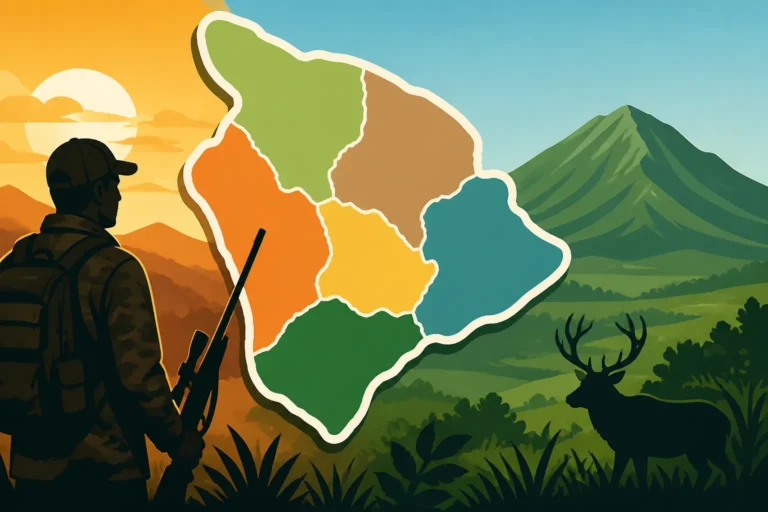
Hawaii doesn't just have generic "public land" for hunting; it's meticulously broken down into specific hunting units. Think of these units as individual puzzle pieces, each with its own shape, size, and set of rules. This system, while initially daunting, is designed to manage game populations and habitat across a fragmented landscape. It's crucial to understand how these units are designated and, more importantly, how to find and interpret the maps that dictate where you can and cannot hunt.
How Units Are Designated and Numbered
DOFAW manages Hawaii's public hunting areas by assigning distinct "units," often identified by letters or numbers, sometimes combined with island names. For instance, you might encounter "Unit A" on Mauna Kea on Hawaii Island, or a specific numbered unit within a Forest Reserve on Maui. These designations aren't arbitrary; they typically correspond to areas with specific habitat types, land ownership, or management goals. Understanding that a unit designation means a unique set of rules is your first step to a successful hunt.
These units aren't always contiguous. You might find a small hunting unit nestled between private agricultural lands or conservation areas, while another unit could span thousands of acres of rugged wilderness. Each unit will have its own permitted species, season dates, legal weapons, and sometimes even specific days of the week when hunting is allowed. It's a lot to keep track of, and the information can change from year to year. This is why always checking the most current DOFAW regulations for the specific unit you plan to hunt is non-negotiable. Don't assume anything based on past experience or information from a few seasons ago.
The reasoning behind these unit designations often involves balancing game management with other land uses, such as native forest restoration, watershed protection, or even public recreation like hiking. Sometimes, a unit might be closed entirely for a season to allow populations to recover, or specific areas within a unit might be designated as "no hunting" zones. It’s a dynamic system that requires diligent research on the hunter's part. This constant need to verify can be a point of friction for hunters, but it’s essential for responsible and legal participation in Hawaii's unique hunting culture.
Finding and Using Maps, Including Digital Tools
Gone are the days when a paper map and a compass were your only tools for navigating hunting units. While a good topo map is still incredibly valuable, especially in areas with no cell signal, digital mapping tools have become indispensable for Hawaii hunters. The official DOFAW maps, often available on their website, are the authoritative source for unit boundaries. These maps, however, can sometimes be generalized or lack the fine detail needed for precise navigation in dense cover.
This is where advanced mapping applications truly shine. Tools like onX Hunt have revolutionized how hunters approach public land in Hawaii. By overlaying public and private land ownership boundaries onto detailed topographic maps and aerial imagery, onX Hunt allows you to see exactly where you are in relation to hunting unit lines, private property, and no-access zones. This capability is critical when you're hunting near a Hawaii Fenced Conservation Boundary or an old ranch fence line that might not be clearly marked on the ground. It offers peace of mind and significantly reduces the risk of accidental trespass, which is a serious offense.
Beyond just boundaries, these digital maps can help you identify key topographical features like gulches, ridges, water sources (crucial in dry areas), and changes in vegetation. You can mark waypoints for game sightings, track your path, and even plan your route in advance, saving valuable time in the field. Before heading out, always download offline maps to your device, as cell service is often nonexistent in Hawaii's more remote units. Using OuterSpatial Instead of a Paper Card is another digital tool that hunters use for checking in and out of units, further underscoring the shift towards tech-assisted hunting management in the islands.
Exploring Hawaii's Diverse Public Hunting Areas
Hawaii's public hunting lands are as varied as the islands themselves. From the mist-shrouded peaks of Mauna Kea to the arid leeward slopes of Maui, each type of land designation offers a distinct hunting experience. Understanding these categories is key to knowing what to expect, what game you might encounter, and what specific rules might apply. It's not a one-size-fits-all approach here.
Forest Reserves and Watershed Lands
Forest Reserves make up a significant portion of Hawaii's public land and often contain some of the most rugged and remote hunting units. These areas are primarily managed for watershed protection, native forest restoration, and sometimes timber production, but public hunting is often a permitted activity. You'll find a wide range of habitats within Forest Reserves, from high-elevation mamane-koa forests to lower-elevation wet forests dominated by native 'ohia and introduced species like strawberry guava. These lands are critical for Hawaii's freshwater supply, meaning access and activity are often carefully regulated to minimize environmental impact.
Hunting in these reserves often means tackling challenging terrain. Expect steep inclines, dense vegetation that can make visibility difficult, and often wet, muddy conditions, especially on the windward sides of the islands. This is prime habitat for feral pigs, which thrive in the thick cover and moist environment, rooting around in the forest floor. You might also find feral goats in the more open, drier sections or along steep cliffs. Due to their ecological importance, some Forest Reserves may have stricter access rules, requiring hunters to stick to designated trails or specific areas to protect fragile ecosystems. Always check specific unit maps and regulations before heading into a Forest Reserve.
The sheer size and remoteness of some Forest Reserve units mean that a significant portion of hunting here is walk-in only. Vehicles might be restricted to main access roads, requiring hunters to be prepared for long treks, often through very difficult terrain. This can be both a challenge and a reward; those willing to put in the effort often find less pressured animals and a more genuine wilderness experience. It's an environment where good physical conditioning and a solid understanding of navigation are absolutely essential.
Game Management Areas and Cooperative Lands
Game Management Areas (GMAs) are explicitly designated for hunting and wildlife management. These units are often created to provide consistent public hunting opportunities and are actively managed by DOFAW to enhance game populations. GMAs can vary in size and habitat, but they generally have clear boundaries and more straightforward hunting regulations than some other land types, as their primary purpose is defined around hunting. This makes them often sought-after by hunters looking for reliable access.
In addition to state-run GMAs, Hawaii also has Cooperative Game Management Areas (CGMAs). These are lands, usually private ranches, that have entered into an agreement with DOFAW to allow public hunting access under specific conditions. This is a fantastic model that expands public hunting opportunities by leveraging private land. The rules for CGMAs can be quite specific, often dictating the species hunted, hunting days, and sometimes even the type of weapons allowed, reflecting the agreements made with the private landowners. For example, Hunting the Kapapala Cooperative Area on Hawaii Island offers opportunities for feral pigs and goats on private ranch land under DOFAW's oversight.
Hunting in GMAs and CGMAs often means you'll find better road access and infrastructure compared to deep Forest Reserves, though this isn't always the case. They are frequently stocked with specific game species or managed to maintain healthy populations, making them potentially more productive for hunters. However, this also means they can experience higher hunter pressure, especially on popular weekends. It's crucial to understand the specific rules for each GMA or CGMA, as they are not uniform across the islands. Always verify seasons, bag limits, and check-in/out procedures, which might vary even from adjacent public units.
Natural Area Reserves and Their Restrictions
Natural Area Reserves (NARs) are perhaps the most restrictive type of public land when it comes to hunting. These areas are established to protect unique natural ecosystems, rare and endangered species, and significant geological features. While some NARs may have very limited hunting opportunities, many are completely closed to hunting, or only allow highly controlled management hunts conducted by DOFAW staff for specific conservation goals. It's vital to know the status of any NAR if you find yourself near one, as accidental trespass or hunting within a prohibited area can carry serious penalties.
The primary focus of NARs is preservation, meaning that human impact, including recreational hunting, is often minimized or disallowed to safeguard sensitive habitats. For example, Hunting Manuka Natural Area Reserve might have very specific rules due to its ecological significance. While this can sometimes feel frustrating for hunters looking for more access, these reserves are critical for protecting Hawaii's irreplaceable natural heritage. It’s a delicate balance between preserving unique environments and providing recreational opportunities.
If hunting is allowed in a specific NAR, the regulations will be exceptionally strict, often limited to specific species (usually feral ungulates like pigs or goats, which pose a threat to native flora), precise seasons, and perhaps even permit-only access beyond the general hunting license. Always consult the most up-to-date DOFAW regulations or contact the NAR system directly if you have any questions. The general rule of thumb is to assume hunting is not allowed in a Natural Area Reserve unless explicitly stated otherwise by official channels. Respecting these boundaries is not only a matter of legality but also of supporting broader conservation efforts.
Island-Specific Public Hunting Opportunities
Hawaii's public hunting landscape is not uniform across the archipelago. Each major island offers distinct opportunities, challenges, and game species. What's available on the Big Island might be vastly different from what you'll find on Kauai or Maui. Understanding these island-specific nuances is crucial for planning your hunting adventure.
Hawaii Island's Vast Expanses
Hawaii Island, often called the "Big Island," lives up to its name, boasting the largest amount of public hunting land in the state. This vastness translates into a wide array of habitats and game species, making it a dream destination for many hunters. The island is essentially a giant volcano playground, with Mauna Kea and Mauna Loa dominating the landscape, offering everything from high-altitude alpine zones to dense rainforests and dry, leeward slopes.
On the higher elevations of Mauna Kea, you'll find prime habitat for Mouflon sheep, often mixed with feral sheep. Units like Unit A on Mauna Kea provide challenging hunts in thin air and rugged lava flows. Hunters here need to be prepared for extreme weather changes, from freezing temperatures to intense sun. The landscape is open, requiring sharp glassing skills and long shots. Further down the slopes, and across into areas like the Puu Waawaa Forest Reserve or the Mauna Loa Forest Reserve, you'll encounter good populations of feral pigs and goats. The terrain can be brutally steep, with dense vegetation in the gulches and kiawe forests in drier areas. Hawaii Island Hunting Unit Seasons are varied, allowing for hunting of pigs and goats year-round in many areas, which is a major draw.
The Big Island also offers opportunities for game birds, particularly Chukar in the high country and various francolin and pheasant species in mid-elevation pastures and dry forest fringes. With such extensive public land, you can often find solitude, though popular areas still see pressure. Road access varies greatly, from well-maintained gravel roads to barely discernible jeep trails that require high-clearance 4WD vehicles. It's important to scout ahead, either virtually with maps or physically if possible, to understand the access points and terrain of your chosen unit. This is truly an island where you can immerse yourself in diverse hunting environments.
Maui County's Varied Terrain: Maui, Molokai, Lanai
Maui County encompasses the islands of Maui, Molokai, and Lanai, each presenting unique public hunting scenarios, particularly for the coveted Axis deer. While private land holds many of the largest deer populations, public lands do offer opportunities, albeit with their own set of challenges and specific regulations.
Maui itself has several public hunting areas, notably in the upcountry regions and on the slopes of Haleakala. Units like Kula and Kahikinui Forest Reserves offer opportunities for Axis deer, feral pigs, and goats. Maui's Public Hunting Areas often consist of mixed forest and open grasslands, with steep gulches and thick patches of introduced vegetation. Axis deer are primarily found on the drier, leeward slopes, while pigs and goats can be found in a wider range of habitats. Hunter pressure can be significant in some of these units due to their proximity to population centers and the popularity of Axis deer. Success often hinges on getting away from easy access points and exploring the more challenging terrain.
Molokai is known for its legendary big-bodied Axis bucks, and while much of the best hunting is on private ranches, there are public opportunities for pigs and goats, and sometimes Axis deer, though less consistently than on private ground. Molokai's public areas are often rugged and remote, requiring serious effort. Lanai, the "Pineapple Isle," is a unique case. It has three primary public hunting units for Axis deer and Mouflon sheep. These are highly managed through a lottery draw system, making public hunting here an exclusive and highly sought-after experience. The Lanai Cooperative Game Management Area (Unit 1) is especially famous, but requires a successful draw to participate. You absolutely need to understand How the Lanai Axis Deer Draw Works if you dream of hunting here. The island's dry, open terrain, dotted with kiawe trees, provides an incredible spot-and-stalk environment.
Kauai and Oahu's Accessible Options
Kauai, the "Garden Isle," offers public hunting primarily for feral pigs and goats, along with its unique population of Black-tailed deer. The island's hunting units are largely concentrated in the Waimea Canyon and Na Pali-Kona Forest Reserve areas, presenting incredibly steep, rugged, and often wet terrain. Kauai's Public Hunting Areas are characterized by deep canyons, dense forests, and breathtaking coastal cliffs. Hunting here is physically demanding, often involving long hikes and navigating challenging landscapes. The Black-tailed deer, an introduced species, are found primarily in the Kokee and Waimea Canyon regions, offering a distinct hunting experience from the Axis deer on other islands. Goat hunting on Kauai's sea cliffs can be particularly exhilarating but also incredibly dangerous, demanding extreme caution and physical fitness.
Oahu, while being the most populated island, still offers public hunting opportunities, primarily for feral pigs and goats. These units, such as those in the Waianae Mountains and Koolau Range, are often closer to urban areas and can see heavy pressure. Oahu's Public Hunting Areas tend to be in steep, wet, and densely vegetated valleys and ridges. Hunting here often means battling thick, thorny brush and navigating challenging elevation changes. While big game hunting might not be as widespread as on Hawaii Island, these areas provide accessible opportunities for local hunters seeking pigs and goats. Game bird hunting can also be found in specific units, though often limited by seasonal closures and bag limits. The convenience of public hunting on Oahu makes it a popular choice for residents, but it also means being prepared to share the woods and work harder for your game.
Accessing and Navigating Public Lands
Getting onto Hawaii's public hunting land is often more involved than simply showing up. There are specific procedures for entry, a variety of road conditions to contend with, and a strong emphasis on responsible conduct once you're in the field. Understanding these practicalities beforehand can save you a lot of grief and ensure a smooth hunting trip.
Road Access, 4WD Requirements, and Remote Units
Hawaii's public hunting units offer a full spectrum of access options, from easy-to-reach areas right off paved highways to incredibly remote tracts that demand significant effort to reach. For many units, especially those on the Big Island or in Maui's upcountry, Hawaii Road Access and 4WD Requirements are a real consideration. Unpaved, rocky, and often deeply rutted tracks are common, particularly after heavy rains. A high-clearance 4WD vehicle isn't just a recommendation; it's often a necessity to avoid getting stuck or damaging your vehicle.
There are also numerous "walk-in" units where vehicle access is restricted entirely, or where the roads simply don't go deep enough. These remote units, while physically demanding to access, often offer the best opportunities for less-pressured animals. Walking In to a Remote Hawaii Unit might involve miles of hiking through dense jungle or over rough lava fields, often with significant elevation changes. This requires careful planning, proper gear, and excellent physical conditioning. You need to be self-sufficient and prepared for emergencies, as cell service is often non-existent in these areas.
Before heading out, always check the specific unit's access rules. Some roads might be open only on certain days, or seasonally closed due to weather or management activities. The DOFAW website is your best friend here, but also local knowledge can be invaluable. Don't assume that because a road appears on a map, it's easily passable. Hawaii's weather and terrain can quickly change conditions, making a smooth track into a muddy impassable bog overnight. Plan your approach, account for travel time, and err on the side of caution when it comes to vehicle capabilities.
Checking In and Out: The OuterSpatial App and Hunter Stations
A critical part of public land hunting in Hawaii is the mandatory check-in and check-out procedure for many units. This isn't just a suggestion; it's a legal requirement designed for safety, game management, and monitoring hunter activity. Historically, this involved physical hunter check stations where you'd sign a paper card. While some still exist, the system has increasingly moved towards digital solutions.
The OuterSpatial app has become a primary tool for Checking In and Out of Hawaii Hunting Units. This mobile application allows hunters to digitally check into a unit before their hunt and check out afterward, often reporting their harvest directly through the app. It's a convenient system that helps DOFAW gather vital data on hunter effort and success, while also providing a record of who is in the field. You'll need to download the app, create an account, and familiarize yourself with its functions before your hunt. It's also wise to have a backup plan, like carrying a paper check-in card if the unit still offers one, in case of technical issues or lack of phone battery.
For units that still utilize physical check stations, you'll find drop boxes with paper cards at the entrance or designated points. Fill out the card completely, indicating your entry and exit times, the species you're hunting, and any harvest. This system relies on hunter honesty and responsibility. Whether digital or physical, failing to check in and out can result in citations and impact future hunting privileges, so it's a step you absolutely cannot skip. This procedure is a fundamental part of public land access in Hawaii and reflects the island's unique approach to wildlife management.
Rules, Regulations, and Staying Legal
Hawaii's hunting regulations are comprehensive and specific, covering everything from legal weapons to blaze orange requirements and dog hunting rules. It's not enough to simply have a Hawaii Hunting License and What They Cost; you must also understand the rules specific to the unit, season, and species you are pursuing. For example, Hawaii Game Mammal Seasons vary significantly by island and unit, and certain weapons might only be legal during specific times, like Hawaii Archery Season Windows or Hawaii Muzzleloader Season Windows.
| Regulation Category | Common Rules/Considerations | Why It Matters in Hawaii |
|---|---|---|
| Legal Weapons | Caliber minimums, archery draw weights, shotgun restrictions. | Specific weapons often tied to unit types, game species, and safety around diverse terrain. |
| Blaze Orange | Required on many public lands during rifle/muzzleloader seasons. | Enhances safety in areas with varying visibility and multiple hunters. |
| Dog Hunting | Restrictions on dog numbers, types, and required registration. | Common for pig hunting, but rules protect dogs and ensure responsible practices. |
| Bag Limits | Daily/seasonal limits per species. | Critical for game management, ensuring sustainable populations on smaller islands. |
| Check-In/Out | Mandatory digital (OuterSpatial) or paper procedures. | Safety, data collection for DOFAW, and legal compliance. |
| Closed Areas | Natural Area Reserves, private land, buffer zones. | Protects fragile ecosystems, endangered species, and private property. |
| Vehicle Use | 4WD requirements, restricted roads, parking areas. | Protects sensitive soils, prevents erosion, and manages access in remote areas. |
| Camping | Permitted in designated areas only, often with permits. | Manages environmental impact and prevents conflicts with other land users. |
Beyond the general regulations, be aware of specific local rules. For example, Hawaii's Rules on Baiting and Feeding game animals are strict, generally prohibiting the practice. You also need to know Hawaii Blaze Orange Requirements, which are in place for safety, especially in units with high hunter density or during certain seasons. If you plan to hunt with dogs, be sure to review Hawaii Dog Hunting Rules, which dictate things like the number of dogs allowed and registration requirements. Ignorance of the law is never an excuse, and Hawaii's enforcement is serious about protecting both its wildlife and its unique environment. Always carry your hunting license and any required permits (like Hawaii's Permit-Tag System Works for certain species) with you in the field.
Strategies for Success on Public Hunting Land
Hunting public land in Hawaii presents its own unique set of challenges and rewards. It's not always about finding the biggest trophy, but about embracing the adventure, learning the land, and adapting your tactics to the specific environment. Success here often comes down to preparation, persistence, and a willingness to think outside the box.
Scouting and Understanding Unit Characteristics
Effective scouting is paramount when hunting public land in Hawaii. Given the fragmented nature of the units and the diverse terrain, simply showing up on opening day with a map won't cut it. Digital tools like onX Hunt can be incredibly useful for virtual scouting, allowing you to identify potential bedding areas, feeding zones, water sources, and travel corridors before you even set foot in the unit. Look for topographical features like saddles between ridges, deep gulches, and flat benches that might offer natural pathways or resting spots for animals. Understanding How Lava Flows Shape Hawaii Game Range or how Hunting Hawaii's Kipuka Islands of Forest can concentrate animals is a game-changer.
Beyond virtual scouting, if you're able to physically scout a unit before the season, take advantage of it. Walk the trails, explore the fringes, and look for fresh sign: tracks, scat, rubs, and feeding areas. Pay attention to prevailing wind patterns and thermals, which can be highly localized and change quickly in Hawaii's varied topography. Learn what the local game animals are eating in that particular unit – whether it's invasive grasses, fruit from introduced trees, or native vegetation. This can give you clues as to where they'll be concentrated. Don't underestimate the value of talking to local hunters, if you have the opportunity; their insights into specific units can be invaluable. This diligent preparation is key to Scouting a Hawaii Hunting Unit Before Opening.
Finally, understand that Hawaii's environment is constantly changing. A heavy rain can turn a dry wash into a raging river, making a gulch impassable. A drought can concentrate animals around dwindling water sources. Game patterns might shift with the availability of certain forage or increased pressure. Being flexible and adaptable is a huge part of successful scouting here. If your initial plan isn't working, be prepared to adjust your strategy and explore different areas within the unit or even a different unit altogether.
Dealing with Pressure and Finding Solitude
One of the realities of hunting public land, especially on smaller islands with limited access, is hunter pressure. Popular units, particularly on Hawaii's Weekend and Holiday Hunting Rules days, can see a significant number of hunters. This means game animals can become wary, moving more at night or retreating to thicker, less accessible cover. Don't let this deter you; instead, let it guide your strategy.
To find solitude and less pressured animals, you often need to be willing to work harder and go further than the average hunter. This might mean getting up earlier, hiking deeper into a unit, or tackling more challenging terrain that others avoid. Focus on areas that require a long walk-in, particularly those with significant elevation changes or dense vegetation. These are often the places where animals feel safest and are less disturbed. Hunting Hawaii on Foot Without a Truck can be exhausting but incredibly rewarding.
Consider hunting during midweek if your schedule allows, as many units see a drop in pressure from Monday to Friday. Also, learning how to read the landscape for subtle signs of animal movement in pressured areas can give you an edge. Animals might use specific escape routes, dense thickets for bedding, or travel at odd hours. Mastering these subtle cues can help you locate game even when other hunters are nearby. It's about being patient, persistent, and strategic in your approach.
Packing and Preparing for Hawaii's Challenges
Hawaii's unique environment demands careful consideration for what you pack. The weather can change dramatically within a single hunt, from hot, humid coastal areas to cold, wet, misty uplands. Layering is key, with good rain gear being an absolute necessity, especially if you're hunting on the windward side or in high-elevation cloud forests. You'll need sturdy, waterproof boots with excellent ankle support for navigating uneven lava fields, slippery mud, and steep gulches. Boots for Hawaii Lava and Wet Forest are not just a luxury; they're essential for safety and comfort.
Water is another critical consideration. Even on seemingly short hunts, the humidity and physical exertion can lead to rapid dehydration. Always carry more water than you think you'll need, especially in dry, exposed units. A water filter or purification tablets can be a lifesaver in areas with natural water sources, though always treat any surface water. Food should be lightweight, high-energy, and easy to consume on the go. Sun protection—hat, sunglasses, sunscreen—is also non-negotiable.
Finally, consider safety and emergency preparedness. Carry a well-stocked first-aid kit. A reliable GPS device or a smartphone with offline maps (like onX Hunt) is crucial for navigation, especially where trails are faint or non-existent. Inform someone of your hunting plan, including your intended unit and expected return time. No Cell Signal on a Hawaii Hunt is a common reality in many remote areas, so don't rely on your phone for communication or navigation unless you have a satellite communicator or personal locator beacon as a backup. Being prepared for anything will make your Hawaii public land hunting experience safer and more enjoyable.
The Future of Public Hunting in Hawaii
Public hunting in Hawaii is not just a recreational activity; it's a vital component of ecosystem management and conservation. The very nature of Hawaii's unique and fragile environment means that the future of hunting here is inextricably linked to ongoing conservation efforts and the active involvement of the hunting community. It's a relationship that requires constant dialogue, adaptation, and a shared commitment to the health of the islands.
Conservation Efforts and Hunter Involvement
Hawaii faces immense conservation challenges, largely due to the impacts of introduced species, including many of our game animals. Feral pigs, goats, and sheep can decimate native plant communities, spread invasive seeds, and create wallows that become breeding grounds for disease-carrying mosquitoes, threatening endemic birds. Axis deer, while a prized game animal, can cause significant damage to agricultural lands and native forests, especially as their populations grow unchecked in certain areas. This is why public hunting is not just tolerated; it's often actively encouraged by DOFAW as a primary tool for managing these ungulate populations.
Hunters, therefore, play a critical role as citizen conservationists. By participating in regulated hunts, we directly contribute to controlling populations of invasive ungulates, thereby helping to protect Hawaii's unique biodiversity. This isn't always an easy concept to grasp for hunters from areas where game management focuses on increasing populations; here, it's often about reducing populations to protect native ecosystems. Understanding and embracing this role is crucial for the long-term viability of hunting in the islands. Hunters who are engaged, informed, and respectful of the delicate balance here are the greatest advocates for continued hunting access.
Supporting organizations that work with DOFAW on habitat restoration, invasive species control, and public access initiatives also contributes to the future of hunting. This might involve volunteering for trail maintenance, participating in community conservation days, or simply adhering strictly to all regulations. The more hunters demonstrate responsible and ethical practices, the stronger the case for maintaining and expanding public hunting opportunities. It’s about being part of the solution, not contributing to the problem.
Advocacy and Preserving Access
Preserving and expanding public hunting access in Hawaii is an ongoing effort that requires active advocacy from the hunting community. As land use pressures increase and environmental concerns grow, hunters need to be vocal, organized, and articulate in expressing the value of hunting to both conservation and local culture. This means understanding the issues, engaging with policymakers, and educating the broader public about the positive role hunters play.
One of the biggest challenges is the perception of hunting. While deeply ingrained in local tradition for many, it can be misunderstood by those unfamiliar with its role in Hawaii's unique ecosystem. Hunters need to be prepared to explain how their activities contribute to managing invasive species, providing sustainable food sources, and fostering a connection to the 'aina (land). Organizations like Hawaii's hunting associations and conservation groups are vital in this advocacy, serving as a collective voice for hunters and working to ensure that future generations have opportunities to hunt.
The future of public hunting also depends on hunters respecting private land boundaries and adhering to all rules. Incidents of trespass or poaching can severely jeopardize public perception and lead to stricter regulations or reduced access. By being responsible, ethical, and engaged, hunters can secure their place as essential partners in Hawaii's conservation future. The public lands available today are a privilege, and it’s up to all of us to ensure they remain accessible and healthy for years to come.
Disclaimer
This article is for general informational purposes only and does not constitute professional advice. Laws, prices and regulations vary by location and change over time. Consult a qualified professional for guidance on your specific situation.