Hawaii’s Feral Cattle and Where They Remain
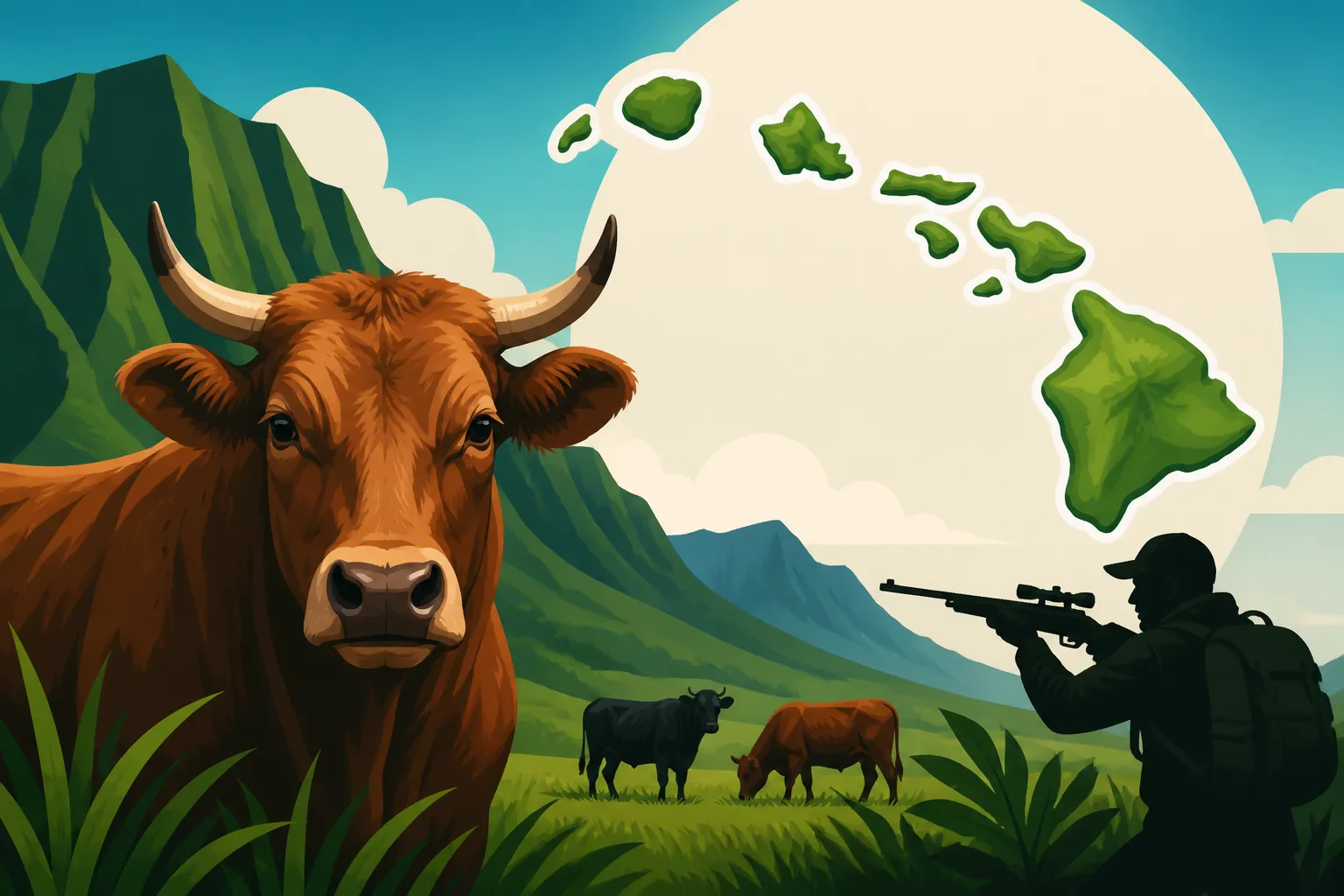
For many folks who cherish Hawaii's wild places, the thought of vast herds of wild cattle roaming the islands might seem like a scene from an old Western, not a contemporary reality. But indeed, remnants of these free-ranging bovines have been a part of Hawaii's landscape for centuries, shaping the ecosystems and creating unique challenges. This guide will delve into the history of these animals, where you might still find them today, their impact on the fragile Hawaiian environment, and what this means for anyone interested in the islands' natural resources.
The Long History of Cattle in Hawaii's Landscape
It's hard to imagine Hawaii without its iconic cattle, particularly the ranches that dot the slopes of volcanoes like Mauna Kea and Haleakala. But these aren't native animals, not by a long shot. Their story begins much like many other game animals in Hawaii—with introductions from foreign lands. When Captain George Vancouver brought the first cattle to Hawaii in the late 18th century, a gift to King Kamehameha I, they were intended to establish a new food source and resource for the burgeoning kingdom. The King, wisely, placed a kapu or taboo on hunting them, allowing their numbers to proliferate unchecked for decades. This period of protection, while beneficial for establishing a herd, also allowed many to escape into the wild and become feral.
These early cattle adapted surprisingly well to the diverse Hawaiian terrain, from the dry leeward slopes to the wet, dense forests of the windward sides. They thrived, expanding their range significantly, sometimes becoming quite destructive to native forests that had never evolved with large grazing mammals. Imagine sprawling herds moving through pristine koa and 'ohia forests, trampling delicate undergrowth and devouring plants that simply couldn't withstand such pressure. This unchecked proliferation led to significant ecological shifts long before formal conservation efforts began. To learn more about this broader context, you might be interested in reading about Why Every Hawaii Game Animal Was Introduced and What Captain Cook's Ships Left Behind.
By the mid-19th century, the kapu was lifted, and cattle hunting became a prominent activity, giving rise to the paniolo, Hawaii's own cowboys. This marked the beginning of efforts to manage and eventually control the vast feral populations. However, even with widespread ranching and hunting, some populations remained elusive, retreating into the most remote and rugged areas of the islands. These became the true "feral" cattle – descendants of those original herds, living completely wild, without human intervention or management.
The Origins of Hawaii's Wild Bovines
The initial introduction by Vancouver wasn't a one-time event; subsequent ships and settlers brought in more cattle breeds over the years, contributing to the genetic diversity of the wild herds. We're not talking about a single type of cow running wild; rather, it was a mix of European breeds that were hardy and self-sufficient enough to survive in varied, often challenging, environments. These cattle adapted to a life where they had to forage for themselves, find their own water, and protect themselves from whatever dangers the Hawaiian wilderness presented, though natural predators were, and still are, largely absent.
Over generations, these animals developed traits that distinguished them from their domestic counterparts. They became leaner, tougher, and much warier of humans. Their instincts sharpened, much like any wild animal. They learned to navigate steep gulches, dense thickets, and rough lava flows with an agility that would surprise anyone used to seeing docile pasture cows. This natural selection created a truly feral animal, far removed from the milking cows or beef cattle we see in fenced pastures today. Understanding Hawaii's Feral Cattle History in depth really highlights how integral they became to the wild ecosystems.
Early Management Attempts and the Rise of Ranching
As the feral cattle populations swelled, their impact on the land became undeniable. Early Hawaiian residents, and later the territorial government, recognized the need for control. This wasn't just about preserving native ecosystems; it was also about creating an economic opportunity. The burgeoning ranching industry began to capture and domesticate some of these wild cattle, creating the foundation for many of the large ranches we still see today, like Parker Ranch on the Big Island.
The transition from purely feral to managed ranch animals was a long process, involving large-scale roundups and the establishment of fences, a novel concept in many parts of the islands at the time. Yet, despite these efforts, small pockets of truly wild cattle persisted. They found refuge in areas too remote, too steep, or too dense for even the most determined paniolo to consistently access. These areas became their strongholds, allowing them to continue their wild existence, out of reach of regular management practices.
Where You Might Still Encounter Feral Cattle on the Islands
While large, free-ranging herds of feral cattle are a thing of the past for the most part, small, isolated populations or individuals still persist in some of the more rugged and inaccessible parts of the Hawaiian Islands. It's not like you'll stumble upon a thousand head of wild cattle, but encountering a small group or even a solitary bull is certainly possible, especially if you're venturing deep into certain backcountry areas.
The Big Island, with its vast and varied terrain, is probably the most likely place to still find truly feral cattle. Its massive size, combined with extensive wilderness areas like the slopes of Mauna Loa and Mauna Kea, offers plenty of refuge. On Maui, especially in the more remote reaches of Haleakala's slopes or deeply forested gulches, you might also find evidence of them. Other islands, due to their smaller size and more intensive land use, have largely eradicated these wild populations.
Big Island's Remote Volcanic Slopes and Forests
On Hawaii Island, the remote slopes of Mauna Loa and Mauna Kea offer some of the last bastions for feral cattle. These are areas characterized by challenging lava flows, dense kipukas (forest islands surrounded by lava), and high-elevation mamane-naio forests. Access is often difficult, requiring considerable effort and sometimes even specialized vehicles or aerial support. It's in these rugged, often sparsely vegetated regions, that small groups of cattle have learned to survive, much like the mouflon sheep.
Hunters venturing into Hunting Hawaii's High-Elevation Country or Hawaii Island's Forest Reserve Units for other game, like pigs or mouflon, sometimes report seeing tracks, droppings, or even distant glimpses of these animals. They tend to be incredibly wary, much more so than a domestic cow, and will often vanish into the cover or broken terrain long before a human can get close. It's a testament to their wildness that they've managed to survive in these challenging environments for so long, often away from easy water sources or prime grazing lands.
Maui's Deep Gulches and Upper Slopes
Maui also harbors some historical strongholds for feral cattle, particularly in the vast, often impenetrable gulches and remote upper slopes of Haleakala. Areas like Kahikinui, which is known for its rugged terrain and extensive kiawe forests, might hold very isolated groups. These cattle are often a mix of breeds, lean and agile, navigating the steep, eroded landscapes with surprising ease. They are masters of concealment, disappearing into dense thickets of guava, gorse, or fountain grass when disturbed.
For those exploring Hunting Maui's Upcountry Forest Reserves or the more remote areas, signs of cattle might include heavily trampled trails in damp areas, distinct large droppings, or even rub marks on trees where they've scratched. While you won't typically be hunting these animals, being aware of their presence helps paint a fuller picture of the ecosystem you're in. These aren't creatures you'd want to bump into unexpectedly in thick cover, as a wild bull can be quite formidable.
Signs of Their Presence in the Wild
Even if you don't see them directly, signs of feral cattle are often present in their historical ranges. Look for:
- Large tracks: Much larger than deer or pig tracks, often showing cloven hooves but without the pointed shape of a goat.
- Heavily browsed vegetation: Unlike goats that clip neatly, cattle tend to tear at plants, leaving a more ragged appearance.
- Rubbing posts: Trees or large rocks with smoothed bark or dirt around them where cattle have rubbed to scratch themselves.
- Wallows: Shallow depressions filled with muddy water, often used by pigs too, but cattle wallows will be significantly larger.
- Well-worn trails: In certain areas, cattle create distinct paths through dense brush, wider than pig trails and often leading to water sources or grazing areas.
- Droppings: Large, round cow patties, often dispersed where they've been grazing or bedding down.
Consulting detailed maps, like those available through platforms such as GoHunt, can help you identify remote sections of public hunting lands or forest reserves where these conditions are more prevalent. It’s always smart to have a good understanding of the topography when venturing into these wilder, less-trafficked regions.
The Ecological Impact and Management of Feral Cattle
The presence of feral cattle in Hawaii, even in smaller numbers, continues to have a noticeable impact on the islands' delicate ecosystems. These are, after all, large, non-native herbivores grazing in an environment that evolved without such pressures. Their influence extends to native plant communities, soil erosion, and even water quality. Managing these populations, where they still exist, remains a complex conservation challenge.
Unlike game animals such as axis deer or feral pigs, which are actively managed for hunting opportunities in many units, feral cattle are generally targeted for removal when found in conservation areas. The goal is to protect native forests and watersheds from their destructive habits. This approach highlights a fundamental difference in how various introduced species are viewed and managed within Hawaii's conservation framework. Hawaii's Feral Animal Control Programs often detail these efforts, and it's a constant balancing act.
Damage to Native Forests and Watersheds
Feral cattle are major agents of environmental degradation in Hawaii, particularly in areas with native forests. They trample sensitive plants, consume native seedlings, and compact soil, which inhibits new growth. Their grazing habits can alter the composition of plant communities, favoring invasive grasses and weeds over native species, further pushing out the endemic flora. Imagine a young koa tree struggling to establish itself, only to be browsed down by a hungry cow.
Beyond direct plant damage, cattle contribute significantly to soil erosion. Their heavy hooves break up the soil, especially on steep slopes and during wet conditions, leading to runoff and sedimentation in streams and coastal waters. This directly impacts What Ungulates Cost Hawaii's Watersheds, affecting water quality and disrupting aquatic ecosystems. In a place where healthy watersheds are critical for both human populations and natural habitats, this impact is profound. This is why many conservation fences are built, creating Hawaii's Fenced Conservation Area Closures to protect these vital areas.
Control and Removal Efforts
Over the decades, various agencies, primarily the Department of Land and Natural Resources (DLNR) Division of Forestry and Wildlife (DOFAW), along with private landowners and conservation groups, have undertaken extensive efforts to control and remove feral cattle from sensitive areas. These efforts have ranged from traditional roundups by paniolo to more modern techniques like aerial culling or targeted trapping.
The primary objective of these control programs is habitat restoration and protection of endangered species. For instance, on the slopes of Mauna Kea, where rare birds like the Palila depend on native mamane forests, feral cattle (along with feral sheep and mouflon hybrids) pose a direct threat to the very food sources and nesting habitats these birds need. These control methods, while sometimes controversial, are deemed necessary to preserve Hawaii's unique biodiversity.
What Hunters Need to Know About Feral Cattle Encounters
For most hunters in Hawaii, an encounter with feral cattle is rare, and they are not typically considered a huntable game species under public hunting regulations. While hunters might legally take feral pigs or goats year-round in many public units, feral cattle fall into a different category. They are generally seen as a pest animal requiring eradication in conservation zones rather than a recreational hunting target.
However, awareness is key. If you are hunting in remote public areas or on private land that borders conservation efforts, understanding the historical presence and ongoing management of these animals can be valuable. It shapes the landscape, impacts other game animals, and informs conservation strategies. Knowing what to do if you encounter them is also important for your safety and for respecting land management rules.
Are Feral Cattle Huntable in Hawaii?
Generally speaking, no, feral cattle are not a publicly huntable game species in Hawaii. The state's hunting regulations do not list feral cattle as an animal for which tags are issued or seasons are set. Their presence is primarily viewed as a management challenge for native ecosystem protection. Therefore, you cannot legally hunt feral cattle on public lands or units under the standard hunting regulations.
There might be very specific, highly controlled circumstances on private lands or through special depredation permits where landowners are dealing with an ongoing cattle problem, but these are exceptions and not part of the regular public hunting framework. Always, and I mean always, consult the current DOFAW regulations or contact the local DOFAW office if you have any questions about specific animals or units. It's better to be safe than sorry when it comes to legal hunting. Platforms like GoHunt can often provide links to the most up-to-date regulations.
Safety During an Encounter
While rare, encountering a truly wild, feral cow or bull in dense cover can be intimidating. Unlike domesticated cattle, these animals are not accustomed to humans and can be unpredictable, especially if they feel cornered or threatened. A large feral bull can be dangerous, capable of causing serious injury.
If you do encounter feral cattle while hunting, the best course of action is usually to give them a wide berth. Avoid making sudden movements, loud noises, or getting between a cow and her calf. If they haven't seen you, try to move away quietly and make sure you're downwind. If they are aware of your presence and seem agitated, slowly back away while keeping an eye on them. Remember, these are wild animals with survival instincts, and respecting their space is paramount.
Supporting Broader Conservation Goals
Even though you won't be putting a feral cow in your freezer, understanding their history and ecological role helps contextualize the broader conservation challenges in Hawaii. When you participate in legal hunting of other introduced species like pigs or goats, you are, in a way, contributing to the health of native ecosystems by helping to control ungulate populations. Many of the areas where feral cattle once roamed are now critical habitats for Hawaii's Endangered Forest Birds or contain Hawaii's Watershed Partnership Lands that are vital for the islands' future.
By being informed about the full spectrum of introduced species and their impacts, you become a more responsible and effective advocate for Hawaii's unique natural heritage. It's not just about what you can hunt, but how every animal fits into the complex tapestry of the islands' environment. The challenges of managing introduced species like feral cattle are a constant reminder of the delicate balance that Hawaii's conservationists and hunters work to maintain.
Disclaimer
This article is for general informational purposes only and does not constitute professional advice. Laws, prices and regulations vary by location and change over time. Consult a qualified professional for guidance on your specific situation.