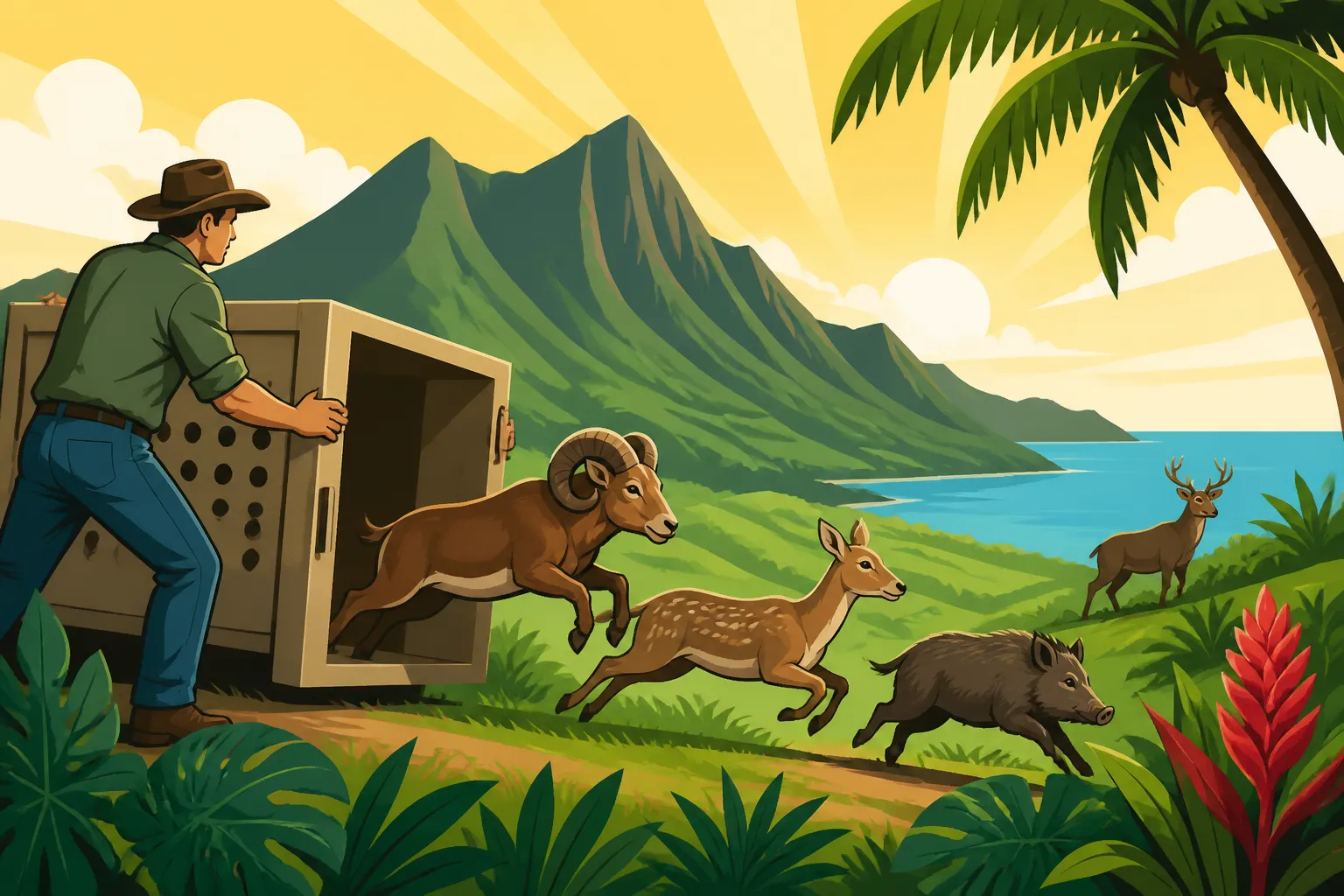
Why Ranchers Released Game Animals in Hawaii
It’s a common moment for new hunters arriving in Hawaii, or even long-time residents just getting into the sport: you look at the game animals available – pigs, goats, axis deer, mouflon sheep, various game birds – and you can't help but wonder, how did all these non-native species get here? It's a valid question, because the islands famously have very few native land mammals. This guide dives into the fascinating and often complex history of why ranchers and others released game animals into Hawaii, shaping the unique hunting landscape we know today.
The Arrival of Hoofed Animals: A Historical Perspective
To truly understand why various game animals were released in Hawaii, we need to go back in time, long before modern ranching, to the very first introductions of hoofed animals. This wasn't a sudden, single event, but rather a gradual process spanning centuries, driven by different needs and intentions at different points in history. It began with the earliest voyagers and continued through European contact and the subsequent establishment of a colonial and territorial economy.
Polynesian Voyagers and Their Introductions
Long before European ships ever sighted these shores, the first human settlers, the Polynesians, arrived with their own suite of animals. These were vital for survival and cultural practices in their new island homes. While not "game animals" in the Western sense, their introductions laid the groundwork for how non-native species would impact the delicate island ecosystem. Pigs, dogs, and chickens were carefully transported in their canoes, representing a lifeline. The "Polynesian pig," or puaʻa, quickly became an integral part of Hawaiian culture, providing meat, offerings, and even companionship. These animals were managed, some allowed to run wild to forage, others kept closer to settlements. Their presence marked the first significant introduction of non-native mammals, establishing a precedent for how future introductions might fare in the unique Hawaiian environment. These early pigs, though descendants of domesticated stock, quickly adapted to the islands' dense forests and valleys, becoming the ancestors of many of the feral pigs hunted today.
Captain Cook and the First European Livestock
The arrival of Captain James Cook in the late 1770s ushered in a new era of animal introductions, bringing species that would profoundly alter the islands. Cook, and subsequent European explorers and traders, understood the value of livestock as a renewable food source for their long voyages and as potential gifts or trade items. It was Captain Cook himself who left behind some of the very first European pigs, as well as a ram and ewe, and two goats, in various locations. These initial introductions were sometimes intended as future provisions, a kind of living pantry for return journeys. The idea was to allow them to propagate, providing an easy food source years later. What Captain Cook's Ships Left Behind details some of these early contributions. While many of these initial releases might have been small in number, they were incredibly significant. The European domestic pigs, often larger and more aggressive than their Polynesian counterparts, interbred, contributing to the genetic diversity and hardiness of today's feral pig populations. The goats, in particular, found the steep, dry slopes of Hawaii much to their liking and quickly proliferated, laying the foundation for the abundant feral goat populations now found across the islands.
The Plantation Era and Agricultural Needs
As Hawaii transitioned into a more settled and economically developed society, especially during the 19th and early 20th centuries with the rise of the sugar and pineapple plantations, the need for robust agricultural systems grew. This era saw more deliberate and larger-scale introductions of various livestock. Ranching became a significant industry, particularly on the Big Island and Maui, where vast tracts of land were suitable for cattle. With the cattle came the need for robust grazing animals and, eventually, a desire for additional game species that could thrive in Hawaii's diverse climates, providing both food and recreational opportunities. The landscape was changing rapidly, with native forests being cleared for agriculture and ranching, creating open lands that resembled habitats found in other parts of the world. This made the idea of introducing new species to fill these "niches," or simply to provide a familiar resource for the growing non-native population, seem like a logical step.
Ranchers' Motivations: More Than Just Meat
The motivations behind these introductions were multi-faceted. While supplying meat and other agricultural products was certainly a primary driver, ranchers and landowners in Hawaii often had additional goals, ranging from developing a local hunting culture to managing their vast land holdings in innovative ways. It wasn't always a simple, single decision, but a combination of economic, recreational, and sometimes experimental aspirations.
Establishing Commercial Livestock Operations
For many early ranchers, the introduction of animals like cattle, sheep, and horses was purely for commercial purposes. The vast, open lands on islands like Hawaii Island and Maui, especially on the leeward sides, were ideal for raising livestock. These ranchers, often of European or American descent, brought with them the agricultural practices and animals they knew from their homelands. They envisioned thriving cattle industries that could supply beef to the growing population of Hawaii and even export it. Goats and sheep were also part of this vision, providing meat, milk, and wool. Hawaii's Feral Cattle History touches on some of these early ranching endeavors. However, the unique challenges of the Hawaiian environment, including periodic droughts, steep terrain, and the general ruggedness of the land, meant that not all domesticated stock remained fenced. Some inevitably escaped, or were intentionally released into less managed areas, quickly adapting and forming feral populations that, while sometimes problematic for conservation, also became an accessible food source and hunting opportunity for locals.
Recreational Hunting for Sport and Subsistence
Beyond commercial agriculture, a significant driver for introducing certain species was the desire for recreational hunting. Many of the non-native populations in Hawaii, particularly the axis deer and mouflon sheep, were introduced specifically with hunting in mind. Ranchers and affluent residents wanted to create a sporting tradition that mirrored the big game hunting they knew from mainland America or Europe. It was a way to enrich the leisure activities available on the islands and provide a challenge for hunters. These animals, once established, provided not only sport but also a valuable source of protein for subsistence hunting, especially for families living in rural areas. The idea was to create a robust, self-sustaining population that could be managed through hunting. This era saw the deliberate release of animals like the axis deer from India in the late 1800s on Molokai, which then later spread to Maui and Lanai. How Axis Deer Reached Hawaii gives more detail on this specific introduction. These were not mere escapes; they were often carefully planned translocations by landowners who saw the value in a new game animal.
Early Conservation and Game Management Attempts
It might seem counterintuitive today, but some early introductions were even framed, in their time, as a form of "game management" or conservation. Before the complexities of island ecology were fully understood, the idea of introducing new species to "improve" an area or provide specific benefits was not uncommon. This could include introducing certain game birds to areas where existing bird populations were scarce or establishing large ungulate populations to provide a sustainable food source. The concept of managing game as a renewable resource, similar to mainland practices, began to take root. This wasn't always about protecting native species (a concept that gained prominence later), but about ensuring a plentiful supply of desired animals for hunting and food. For example, various pheasant and francolin species were introduced to bolster game bird hunting opportunities. Hawaii's Game Birds and Where to Find Them outlines the variety of these introductions. While these efforts often had unintended ecological consequences, the initial intent was sometimes rooted in a desire to create a more "productive" landscape for human use.
Specific Species and Their Lasting Legacy
The various game animals introduced to Hawaii each have their own story, linked to specific times, people, and reasons. These introductions have created the unique hunting opportunities available today, while also presenting ongoing challenges for land managers and conservationists. Let's look at some key examples.
Axis Deer: A Trophy Animal from India
The story of the axis deer in Hawaii is perhaps one of the most well-known introductions for sporting purposes. These beautiful, spotted deer, native to India, were first brought to Molokai in 1867 as a gift to King Kamehameha V. The intention was clear: to establish a new, exotic game animal for hunting. From Molokai, they were later introduced to Lanai and Maui. Today, these three islands are the primary strongholds for axis deer, offering some of the most exciting and challenging big game hunting in Hawaii. Axis Deer, Hawaii's Signature Big Game describes them in more detail.
Ranchers quickly realized the value of these deer, not just for their venison, which is renowned for its mild flavor, but also for their impressive antlers, making them a highly desirable trophy animal. The arid, open plains and kiawe forests found on parts of Molokai, Maui, and Lanai proved to be ideal habitat for axis deer, allowing their populations to explode. Their year-round rut and rapid breeding cycles meant they proliferated quickly, cementing their status as a premier game animal. Many private ranches have cultivated axis deer populations specifically for guided hunting experiences, generating significant revenue.
Mouflon Sheep: European Genetics for Mountain Terrain
Mouflon sheep, with their distinctive curled horns, are another example of an intentional introduction for hunting. While various domestic sheep breeds were brought to Hawaii for wool and meat, the mouflon, a wild sheep from Europe, was specifically introduced for sport. They were brought to the Big Island in the mid-20th century, particularly to the slopes of Mauna Kea and Mauna Loa. How Mouflon Reached Hawaii explains their journey to the islands.
The rough, high-elevation, and often desolate volcanic terrain of these mountains proved to be a challenging but suitable environment for mouflon. Ranchers and game managers saw them as a robust game animal that could thrive in areas less suitable for cattle, providing another distinct hunting opportunity. The mouflon offered a different kind of hunt, requiring stamina and skill in thin air and over unforgiving lava fields. Over time, some mouflon interbred with feral domestic sheep populations that had also established themselves in the highlands, creating hybrid populations that are common today. This blend of wild genetics with hardy domestic stock ensured their continued success in Hawaii's unique mountain ecosystems, providing a unique challenge for hunters seeking big game.
Feral Goats and Pigs: Hardy Survivors with Diverse Impacts
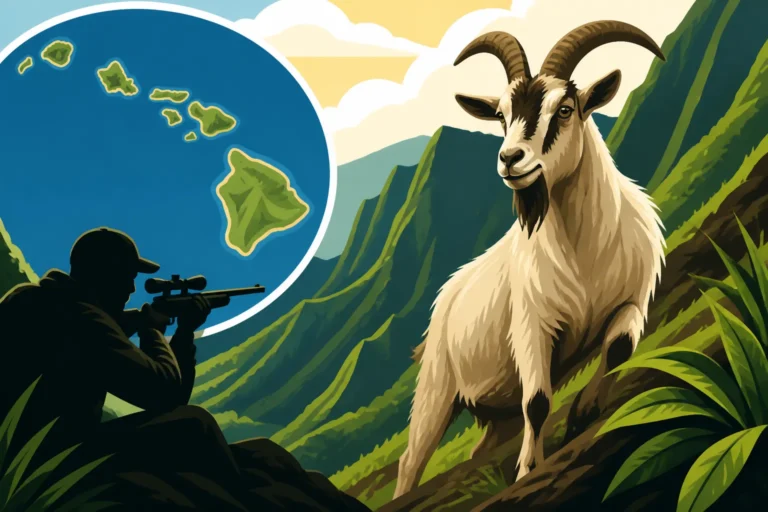
While axis deer and mouflon were largely intentional introductions for sport, the widespread populations of feral goats and pigs often stem from earlier, less controlled releases or escapes of domesticated animals. As we discussed, goats were among Captain Cook's earliest introductions. They quickly adapted to the rugged cliffs and dry shrublands across the islands. Ranchers found them useful for brush control in some areas, and they certainly provided meat, but their adaptability and explosive breeding also meant they could become ecological concerns. How Feral Goats Reached Hawaii gives more context to their spread.
Similarly, feral pigs, a mix of the original Polynesian introduction and later European breeds, became incredibly successful in Hawaii's diverse forests, from wet rainforests to dry uplands. While some pigs were managed on ranches, many escaped or were intentionally released into the wild to create free-ranging food sources for local communities. How Feral Pigs Reached Hawaii explores this lineage further. Their ability to thrive in almost any terrain and their prolific breeding made them a constant source of meat and a popular target for hunters, particularly those using dogs. These animals, while historically important for subsistence, are now often seen as a significant challenge for native forest conservation due to their destructive rooting and grazing habits.
Game Birds: Filling the Skies for Sporting Pursuits
Beyond mammals, the intentional release of game birds was also a significant part of establishing hunting opportunities in Hawaii. Over the decades, numerous species of pheasant, francolin, quail, and doves were introduced from various parts of the world. These were explicitly brought in to create a robust and diverse bird hunting season, mimicking the upland bird hunting common in other regions.
Ranchers and private landowners often played a key role in these introductions, releasing birds on their properties to establish huntable populations. The thinking was that these birds would provide sport and add to the biodiversity of the islands, without fully understanding the long-term ecological impacts. Today, hunters pursue species like ring-necked pheasant, Kalij pheasant, various francolins (Erckel's, gray, black), Chukar partridge, California quail, Japanese quail, barred doves, and spotted doves. Each of these species found niches in different Hawaiian landscapes, from open pastures to high-elevation dry forests and dense wet gulches. These bird populations are now managed by the Department of Land and Natural Resources (DLNR) and provide weekend hunting opportunities across several islands.
The Complicated Relationship: Past Intentions, Present Realities
The legacy of these historical introductions is a complex tapestry of economic benefit, recreational pleasure, and significant ecological challenges. While ranchers and early settlers had their reasons, today's understanding of island ecosystems means we view these animals through a different lens.
Ecological Consequences and Native Species Protection
One of the undeniable realities of these introductions is their profound impact on Hawaii's unique and fragile native ecosystems. For millions of years, Hawaii's native plants and animals evolved in isolation, without the presence of large, hoofed mammals or ground-dwelling predators. The introduction of pigs, goats, sheep, and deer dramatically altered these environments. Their rooting, grazing, and browsing habits destroy native understory plants, spread invasive weeds, and contribute to soil erosion, especially on steep slopes. What Ungulates Cost Hawaii's Watersheds details these impacts.
Furthermore, these animals can create pathways for invasive plants and provide habitat for other invasive species, like mosquitoes, which in turn spread avian diseases to native forest birds. The legal and social landscape around these animals has shifted considerably, with a stronger emphasis today on protecting what remains of Hawaii's native biodiversity. This often places hunters, who value these animals as game, in a complex position, balancing their passion with the broader conservation needs of the islands. Organizations like DOFAW (Division of Forestry and Wildlife) now manage hunting units with a dual purpose: providing recreational opportunities while also controlling animal populations for ecological benefit.
The Role of Hunting in Modern Wildlife Management
Despite the historical issues, hunting itself has become an indispensable tool in modern wildlife management in Hawaii. With many of these introduced species firmly established and lacking natural predators, controlled hunting is often the most effective method for managing their populations. Without hunting pressure, species like pigs, goats, and axis deer would likely multiply unchecked, causing even greater damage to forests, agricultural lands, and critical watersheds.
Hunters, therefore, play a vital role in Hawaii's conservation efforts. They are often on the front lines, helping to keep animal numbers in check in designated public hunting areas and, in some cases, on private lands through special agreements. The state’s permit-tag system and various hunting seasons are designed not only to provide recreational opportunities but also to exert management pressure on specific populations. For example, hunts might be structured to target specific numbers of animals in sensitive areas. When you're looking up available seasons or applying for a permit through resources like GoHunt, you're participating in a system that balances access with ecosystem needs. Understanding your role as a hunter in this context is crucial for responsible participation in Hawaii's unique hunting scene.
Navigating Access and Regulations Today
The legacy of animal introductions also shapes how hunters interact with land and regulations today. Public hunting lands are carefully delineated, and access is managed to ensure both hunter safety and ecological protection. Many ranch lands still offer hunting opportunities, either through guided hunts or special access permits, reflecting their historical role in introducing and managing game animals. When planning a hunt, checking current regulations and access requirements, often found on the DLNR website or through an application like GoHunt, is critical.
For instance, knowing whether you need a specific permit for a certain species or unit, or understanding Getting Onto Hawaii Private Land if you plan to hunt a ranch, is directly tied to the historical decisions that populated these areas with game. The rules against certain practices, such as The Rules Against Baiting Game, are often in place to maintain fair chase and prevent unintended ecological impacts. The modern hunter in Hawaii is not just pursuing game; they are participating in an ongoing story of human interaction with nature, a story deeply rooted in the past intentions of ranchers and settlers who, for better or worse, shaped the islands' wild animal populations.
| Species | Origin | Primary Release Island(s) | Primary Reason for Introduction | Current Status |
|---|---|---|---|---|
| Axis Deer | India | Molokai, Lanai, Maui | Recreational hunting, trophy animal, food source | Thriving, major game animal, managed via hunting |
| Mouflon Sheep | Europe | Hawaii Island | Recreational hunting, sport | Established, often hybridized with feral sheep |
| Feral Goats | Europe | All major islands | Food source, brush control, escaped livestock | Widespread, managed via hunting, ecological concern |
| Feral Pigs | Polynesia, Europe | All major islands | Food source, cultural practices, escaped livestock | Widespread, major game animal, ecological concern |
| Pheasant spp. | Asia | All major islands | Upland game bird hunting, sport | Established, managed via hunting season |
| Francolin spp. | Africa, Asia | All major islands | Upland game bird hunting, sport | Established, managed via hunting season |
| Quail spp. | North America, Asia | All major islands | Upland game bird hunting, sport | Established, managed via hunting season |
| Dove spp. | Asia | All major islands | Upland game bird hunting, sport | Established, managed via hunting season |
Disclaimer
This article is for general informational purposes only and does not constitute professional advice. Laws, prices and regulations vary by location and change over time. Consult a qualified professional for guidance on your specific situation.