Hawaii Hunting Access Near Hilo
Hunting near Hilo presents a unique set of challenges and incredible rewards, distinct from the drier, more open landscapes on the leeward side of Hawaii Island. Many hunters, especially those new to the island, underestimate just how dense, wet, and rugged this windward country can be, leading to frustration, lost game, or even getting turned around in the thick jungle. This comprehensive guide will walk you through the specifics of accessing public hunting lands around Hilo, understanding the local environment, preparing for the hunt, and employing effective strategies to increase your chances of success in this truly wild Hawaiian landscape.
The Unique Environment of Hunting Near Hilo
When you think of Hilo, you probably envision lush, emerald green landscapes, frequent rain, and stunning waterfalls. That picturesque beauty translates directly into the hunting environment, creating a world away from the sun-baked kiawe flats or high-altitude lava flows found elsewhere on Hawaii Island. This isn't just a different climate; it's a completely different kind of hunting experience that demands a specific approach and a healthy respect for Mother Nature.
Hilo's Climate and Terrain Impact on Hunting
The windward side of Hawaii Island, where Hilo sits, is dominated by consistent trade winds that bring moisture-laden clouds directly from the ocean. This means rain – often a lot of it, and often year-round. While it keeps everything vibrant and alive, it also means perpetually muddy trails, slick rocks, and dense, often impenetrable undergrowth. Imagine trekking through a rainforest where visibility can be limited to mere yards, and every step requires careful placement to avoid slipping on moss-covered roots or hidden rocks.
The terrain itself is a maze of steep gulches, often carved by countless streams and rivers flowing down from Mauna Kea and Mauna Loa. These gulches can be incredibly difficult to navigate, with sheer drops, tangled vegetation, and slippery banks. It's not uncommon to hike for an hour only to find yourself facing a seemingly impassable ravine, forcing a lengthy detour. The constant moisture also contributes to a thick canopy, which limits direct sunlight and creates a cooler, shadier environment, but also means dampness pervades everything. Your gear, your clothing, and even your firearms will feel the effects of the humidity. This unique combination makes hunting near Hilo an athletic endeavor, requiring stamina, sure-footedness, and a resilient spirit.
Dominant Game Species in the Hilo Region
While other parts of Hawaii Island might boast mouflon sheep or even feral sheep/goat hybrids, the Hilo region is overwhelmingly known for its robust population of feral pigs and a healthy number of feral goats in specific, often cliff-ridden, areas. Hawaii's Feral Pigs, Island by Island delves deeper into these animals across the archipelago, but near Hilo, pigs are truly king. These aren't your average farm pigs; they are tough, wily, and perfectly adapted to the dense forest. Their primary food sources include roots, fruits, and invertebrates found in the rich forest floor, which means they can be found almost anywhere there's cover and forage. You'll also encounter a variety of game birds in the lower elevations and forest edges, but the big game pursuit here almost exclusively revolves around pigs. For those seeking goats, the terrain often dictates where you'll find them – typically on steeper, more exposed slopes and gulch walls where the vegetation thins out slightly.
Understanding Forest Reserve vs. GMA Differences
Hawaii's public hunting lands are primarily designated as Forest Reserves (FR) or Game Management Areas (GMA). While both offer hunting opportunities, there are subtle differences to be aware of, especially around Hilo. Forest Reserves, like the Hilo Forest Reserve, are generally larger tracts of forested land, often managed for watershed protection, timber (historically), and conservation. Hunting is typically a permitted use, but the primary management focus might not always be solely on game species. This can mean less active game management beyond season setting, and access might be more primitive.
Game Management Areas, on the other hand, are often specifically designated for game production and hunting opportunities. These areas can sometimes see more active management, such as trail maintenance (though still limited in Hilo's wet conditions), and their boundaries might be more clearly defined on maps. However, in the Hilo region, both types of areas share the common characteristics of dense vegetation, challenging access, and a focus on feral pig control. Regardless of the designation, hunters must adhere to all specific unit rules, which can vary even between adjacent areas. Always check the current regulations before heading out.
Major Public Hunting Units Accessible from Hilo
For hunters based in or around Hilo, several public units offer opportunities, each with its own characteristics and challenges. These areas represent vast tracts of often-unbroken forest, providing a true wilderness hunting experience that is increasingly rare in many parts of the world. Expect to work hard for your animals, but the reward of harvesting a wild Hawaiian pig or goat in this stunning environment is truly unforgettable.
Hilo Forest Reserve and Its Opportunities
The Hilo Forest Reserve is perhaps the most iconic hunting area directly accessible from the Hilo side. It's a massive, sprawling expanse of wet rainforest, stretching from the lower elevations near the coast up the slopes of Mauna Kea. Hunting Hilo Forest Reserve Country offers a deeper dive into this area. The primary game here is feral pig, with occasional goats found on the steeper ridges and gulch walls. Access points are scattered along Saddle Road and various smaller feeder roads coming off of the main highway systems. However, "access point" often means little more than a pull-off or a gate leading to a barely maintained old logging road or ATV trail that quickly degrades into a muddy mess.
The sheer size of the Hilo Forest Reserve means that hunting pressure, while present, can be mitigated by those willing to hike deeper into the unit. This is not a place for road hunters. Successful hunters here are often those who embrace the "slog"—pushing through thick fern and uluhe (false staghorn fern), navigating dense thickets of guava, and carefully picking their way through wet stream beds. While hunting here, you'll feel truly immersed in the Hawaiian wilderness. Opportunities for still-hunting are abundant, as the dense cover allows for close-range encounters, but spotting animals at a distance is rare.
Waiakea Forest Reserve – Another Wet Forest Gem
Just south of the Hilo Forest Reserve, the Waiakea Forest Reserve offers similar hunting conditions and species. Hunting the Waiakea Forest Reserve provides more details. Like its northern neighbor, Waiakea is characterized by its high rainfall, thick vegetation, and a labyrinth of gulches. Access here might also involve older, rougher roads, often requiring a high-clearance 4×4, especially during and after heavy rains. The main draw remains feral pigs, thriving in the abundant cover and rich forage.
Hunting in Waiakea often involves a combination of tracking and still-hunting. Pigs will root extensively, leaving clear signs in the soft, damp earth. Following these fresh tracks, especially in the early morning, can lead you to actively feeding animals. Expect to encounter challenging terrain, from muddy slopes to dense stands of trees and ferns. This is a unit where understanding the subtle nuances of pig sign – fresh rubs, wallows, and droppings – is paramount, as visual detection can be extremely difficult until you're right on top of them. Hunters often find success by focusing on areas with diverse food sources, such as ripe guava patches or areas with exposed roots.
Kaohe Game Management Area Access Points
The Kaohe Game Management Area (GMA) is another significant hunting unit near Hilo, though its character can vary more than the continuous forest reserves. While some parts are also wet forest, Kaohe extends further inland, and some sections can be drier or encompass different vegetation zones. Hunting Kaohe Game Management Area provides a deeper look. Kaohe GMA offers opportunities for feral pigs and, in some of its rockier, more open sections, feral goats. The access points might be a bit more varied, including paved or well-maintained gravel roads leading to specific check-in stations or trailheads, particularly those along the Saddle Road corridor.
However, even within Kaohe, once you leave the main access roads, the terrain quickly becomes rugged. Hunters here often use a combination of hiking and strategic vehicle use (where permitted) to cover ground. Given its variable terrain, scouting becomes even more important here to identify areas holding game. Focus on transitions between different vegetation types – the edges of dense forest meeting more open grasslands or older lava flows – as these can be productive travel corridors and feeding grounds for both pigs and goats. The ability to switch tactics, from dense jungle still-hunting for pigs to more open country glassing for goats, can be a significant advantage in Kaohe.
Navigating Permits, Maps, and Check-Ins
Before you even think about lacing up your boots and heading into the Hilo jungle, you need to make sure your paperwork is in order. Hawaii has a specific system for hunting licenses, permit-tags, and unit check-ins, and understanding it is crucial for a legal and hassle-free hunt. Don't be that hunter who gets caught without the right documentation – it's an easy way to ruin a trip and potentially face penalties.
Essential Licenses and Permit-Tags for Big Island Hunting
First and foremost, every hunter in Hawaii, resident or non-resident, must possess a valid Hawaii hunting license. This is your basic pass to participate. Hawaii Hunting Licenses and What They Cost details the various options and fees involved. You can typically purchase these online through the state's Go Hunt Hawaii portal or sometimes in person at a local licensing agent. While a hunting license is essential, it's not always the only document you'll need.
For most big game hunting on Hawaii Island, particularly for pigs and goats in designated public units, you will also need a specific permit-tag. These tags are species-specific and unit-specific, meaning you'll apply for a tag for, say, a feral pig in the Hilo Forest Reserve. Unlike some mainland states, not all game animals require a physical tag that's punched or affixed to the carcass. Many units simply require you to check in and out, and your harvest is recorded electronically or on a paper card. However, it's critical to know when a physical tag is required, as missing one can lead to serious issues. Always double-check the current year's regulations bulletin for the specific unit you plan to hunt.
Finding and Using Hunting Unit Maps
Getting lost in the dense, monotonous jungle of Hilo is a real concern. The trees all look the same, the trails are often faint or overgrown, and visibility is severely limited. Having reliable maps is not just a good idea; it's a safety imperative. The Division of Forestry and Wildlife (DOFAW) provides basic maps of their hunting units, often available as PDFs online or at their local offices. These are a good starting point, but they often lack the detailed topographic information or satellite imagery that can make a real difference in the field.
This is where modern mapping applications like onX Hunt become invaluable for hunting in Hawaii. With onX Hunt, you can download detailed offline maps of the public hunting units, complete with property boundaries, topographic lines, and satellite imagery. Being able to see gulches, ridges, and even old trails on your phone or GPS device, even without cell service (which you absolutely will not have in most Hilo units), is a game-changer. You can mark your truck, pinpoint areas of pig sign, and track your route to avoid getting disoriented. I can't stress enough how much a good mapping app improves safety and efficiency in this kind of terrain. Don't rely solely on paper maps, as they can get wet and torn in the Hilo rain.
The Check-In/Check-Out Process
Hawaii has a mandatory check-in and check-out system for all public hunting units, including those around Hilo. This system helps DOFAW monitor hunter activity, collect harvest data, and ensure accountability. For many years, this involved signing a paper card at a hunter check station. While some remote stations might still use paper, the state has increasingly moved towards digital check-ins via the OuterSpatial app. Using the OuterSpatial App to Check In explains this process in detail.
Before you enter a unit, you must check in, either by filling out the physical card or, more commonly now, by using the OuterSpatial app on your smartphone. The app allows you to select your unit, declare your entry, and then check out when you leave. It's a simple process, but it's legally required. Forgetting to check out can lead to questions or even a search and rescue operation if rangers are concerned you're overdue. So, even if you’re exhausted after a long day of humping a pig out of a gulch, make sure you complete your check-out process. This system is also how DOFAW gathers its crucial harvest data, so it's important for the future of hunting opportunities that hunters comply honestly and accurately.
Strategies for Success in Hilo's Terrain
Hunting in Hilo's wet, dense forests requires a different mindset and different tactics than hunting in open country. Forget long-range shots or glassing vast expanses. Here, it’s all about close-quarters detection, stealth, and persistence. The jungle has a way of swallowing sound and sight, making every advantage count.
Still-Hunting in Dense Rainforest
Still-hunting is perhaps the most effective method for pursuing pigs in the Hilo rainforest. This involves moving slowly, taking a few quiet steps, then pausing for several minutes to listen and observe. The dense vegetation and damp ground naturally muffle sounds, but it also amplifies any sudden movement you make. Focus your senses: listen for rooting sounds, the rustle of leaves, or the distant "whoof" of a pig. Keep your eyes peeled for subtle movements, a flash of black or brown against the green, or the horizontal line of a pig's back amidst the vertical chaos of the forest.
Patience is key. You might cover only a quarter-mile in an hour, but that slow, deliberate pace dramatically increases your chances of spotting a pig before it spots you. Pay close attention to the wind, as pigs have an excellent sense of smell. Even in dense cover, thermals can shift, especially in steep gulches. Always try to hunt into the wind. This isn't just about moving silently; it's about becoming part of the forest, blending in, and letting the jungle reveal its secrets to you. Still-Hunting Pigs in Hawaii's Wet Forest offers more specific tips for this technique.
Reading Pig Sign in Wet, Muddy Conditions
The soft, damp ground of the Hilo forests is a canvas for pig activity, and learning to read this sign is crucial. Fresh rooting is a dead giveaway: pigs will tear up the soil in search of roots, grubs, and other edibles. Look for areas where the ground has been recently disturbed, especially around the base of trees or in damp depressions. Wallows, muddy depressions where pigs roll to cool down and deter parasites, are also common. Fresh wallows with wet mud indicate recent activity.
Tracks are another obvious sign, but in the soft earth, they can be difficult to differentiate unless they are very fresh. Look for cloven hoof prints, often accompanied by dewclaw marks in muddy conditions, indicating a heavier animal. Pay attention to the size and depth of the tracks. The fresher the sign, the closer the pigs are likely to be. Reading Pig Sign Along a Muddy Trail provides excellent guidance on interpreting these indicators. Also, keep an eye out for rubs on trees, especially lower down, where pigs might scratch themselves. When you find fresh sign, slow down even further, quiet your movements, and be prepared for an encounter.
Managing Weather and Wind in Windward Forests
The weather near Hilo is a constant factor. Expect rain, fog, and high humidity, often all in the same day. This impacts not just your comfort but also visibility and scent. Rain can dampen sound, making it harder to hear pigs, but it also makes your approach quieter. Fog can drastically reduce visibility, sometimes to a few feet, making navigation tricky but also allowing for extremely close approaches to animals if you can stay oriented.
The wind, while seemingly erratic in the dense forest, generally follows the trade wind pattern from the east, but local thermals play a significant role, especially in gulches. As the day warms, air tends to rise, pulling scent uphill; in the evenings, it cools and sinks, carrying scent downhill. Understanding these patterns is critical to preventing your scent from alerting pigs. Always try to position yourself downwind of where you expect pigs to be. If the wind is swirling or unpredictable, it’s often better to hold tight, or move slowly, constantly checking conditions. Keep your gear protected from moisture, as wet optics or a soggy rifle can quickly ruin a hunt.
Preparing for a Hilo Hunting Expedition
A successful hunt in the Hilo region isn't just about skill; it's about being prepared for the unique environment. Underestimate the jungle at your peril. Proper gear, physical conditioning, and a robust emergency plan are not luxuries; they are necessities.
Footwear and Rain Gear Essentials
This cannot be overstated: invest in high-quality, waterproof, and durable footwear. Your boots will get wet, muddy, and stressed by the rugged, uneven terrain. Look for boots with excellent ankle support, aggressive tread for slippery surfaces, and waterproof membranes. Leather boots treated with waterproofing or synthetic boots with GORE-TEX or similar technologies are ideal. Carry extra socks, preferably wool or synthetic, and change them frequently to prevent blisters and trench foot.
Rain gear is equally critical. A good quality waterproof and breathable rain jacket and pants are essential. Even if it's not actively raining, pushing through wet vegetation will soak you quickly. Layering is key: wear moisture-wicking base layers, an insulating mid-layer, and your waterproof outer shell. Avoid cotton, as it retains moisture and loses its insulating properties when wet, leading to hypothermia even in mild temperatures if you get chilled. Think about how you'll protect your backpack and its contents, too – pack covers or waterproof stuff sacks are a must.
Water, Food, and Emergency Preparedness
Even though Hilo is wet, reliable drinking water can be a challenge. While streams are abundant, filtering or treating all water is crucial to avoid waterborne illnesses. Carry enough water for a full day, and a filter or purification tablets for refilling if you plan an extended trip. High-energy snacks and meals that are easy to eat on the go are best. Think protein bars, trail mix, jerky, and dehydrated meals for longer excursions.
Emergency preparedness for Hilo hunting means acknowledging the isolation. Cell phone service is practically non-existent in most of these units. Carry a personal locator beacon (PLB) or a satellite communication device (like a Garmin inReach or Zoleo) for emergencies. A basic first-aid kit with blister treatment, bandages, pain relievers, and any personal medications is non-negotiable. Always let someone know your exact hunting plan, including where you're going, when you expect to return, and what your backup plan is. A whistle can also be a simple but effective signaling device if you get separated from a hunting partner. No Cell Signal on a Hawaii Hunt explains this critical issue further.
Field Care of Game in High Humidity
Once you've successfully harvested an animal, particularly a pig, the work is far from over. The high heat and humidity of the Hilo environment mean meat spoils quickly. You need a plan for rapid field dressing and cooling. This usually means quartering the animal as soon as possible, getting the hide off, and exposing the meat to air. Carrying game bags that allow air circulation is very helpful.
Packing meat out of a Hilo gulch can be an arduous task, especially when it's hot and humid. Be prepared for multiple trips or to have a strong packing plan with partners. Consider bringing a lightweight tarp to lay the meat on while processing and to help keep it clean. Once back at your vehicle, immediately get the meat into coolers packed with ice. Having a pre-chilled cooler ready to go can save precious time. Don't underestimate how quickly meat can sour in this climate – speed and cleanliness are your allies. Field Care in Hawaii's Heat and Humidity offers more in-depth advice on this crucial step.
Local Challenges and Respecting the Land
Hunting near Hilo isn't just about the animals; it's about navigating the unique local conditions and demonstrating respect for the land and its people. From understanding road conditions to adhering to private property rules, being a responsible hunter means being informed and conscientious.
Off-Road Vehicle Use and Road Conditions
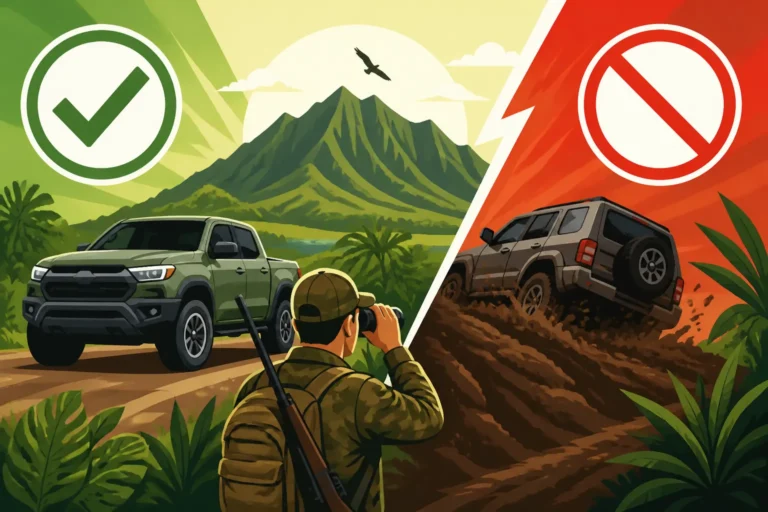
Accessing many of the prime hunting spots in the Hilo region often means traversing unpaved, deeply rutted, and frequently muddy roads. A high-clearance 4×4 vehicle is not just recommended; it's often essential. Even then, expect to encounter conditions that can challenge even the most capable vehicles, especially during the rainy season. Many old logging roads become impassable, turning into boggy quagmires or washouts.
Always know your vehicle's limits and understand that getting stuck in a remote area can be a serious ordeal, far from any help. Drive defensively, be prepared to use winches or recovery gear, and consider traveling with another vehicle if you plan to explore particularly rough tracks. Some areas may have specific vehicle restrictions, so always check the unit rules. Respect gates and signs, and don't create new trails, as this can lead to erosion and habitat damage.
Navigating Private Land Boundaries and Trespass
While Hilo offers extensive public hunting lands, these units are often interspersed with private property. This can be ranch land, agricultural parcels, or even residential areas, sometimes with ill-defined boundaries in the dense forest. Trespassing, whether intentional or accidental, is a serious offense and can jeopardize future hunting access for everyone.
This is another area where a robust mapping application like onX Hunt becomes indispensable. Its detailed land ownership layers can help you identify public versus private land boundaries, even in remote areas. Always know your location relative to these boundaries. If you find yourself near a fence or boundary you're unsure about, err on the side of caution and retreat to confirmed public land. Never pursue game onto private property without explicit, prior permission from the landowner. Building relationships with local landowners can sometimes open up new opportunities, but always follow proper protocols for gaining access.
Understanding Conservation Efforts in Hilo's Watersheds
The lush forests surrounding Hilo are vital watersheds, capturing rain and feeding the island's aquifers and streams. These areas are incredibly important for Hawaii's natural resources, and hunting feral animals plays a critical role in their conservation. Feral pigs, in particular, cause immense damage by rooting up the forest floor, destroying native plant communities, and creating wallows that can spread invasive species and disease. Feral goats also contribute to erosion on steep slopes.
As hunters, we are often viewed as conservationists, directly contributing to the health of these ecosystems by helping to control invasive ungulate populations. Understanding the ecological impact of these animals reinforces the importance of ethical and responsible hunting. Be mindful of fragile areas, avoid unnecessary disturbance, and pack out all your trash – leaving no trace. Your actions as a hunter directly reflect on the entire hunting community, and demonstrating respect for the 'aina (land) is crucial for ensuring hunting opportunities continue for future generations. For more on this, consider reading about Hawaii's Fenced Conservation Boundaries and how they work.
| Hunting Unit Name | Primary Game Species | General Terrain Type | Typical Access Difficulty | Key Considerations |
|---|---|---|---|---|
| Hilo Forest Reserve | Feral Pig, Feral Goat | Dense Wet Rainforest | High (4×4, deep hiking) | Steep gulches, high rainfall, limited visibility, deep woods |
| Waiakea Forest Reserve | Feral Pig, Feral Goat | Dense Wet Rainforest | High (4×4, deep hiking) | Similar to Hilo FR, known for good pig sign in muddy areas |
| Kaohe Game Management Area | Feral Pig, Feral Goat | Varied: Wet Forest to Dry Grassland/Lava | Moderate to High (4×4 for some areas) | More varied terrain allows for different tactics, some goats |
Disclaimer
This article is for general informational purposes only and does not constitute professional advice. Laws, prices and regulations vary by location and change over time. Consult a qualified professional for guidance on your specific situation.