Hawaii Youth and First-Timer Guided Hunts
Embarking on a first hunting adventure, especially in a place as unique and challenging as Hawaii, can feel incredibly daunting. You're probably buzzing with excitement, but also wondering about everything from licenses and terrain to what gear you actually need and how on earth you'll find an animal. This guide is here to walk you through the world of guided hunts in Hawaii, specifically tailored for youth and first-time hunters, offering a pathway to a safe, educational, and truly memorable experience without the overwhelming guesswork.
Why Guided Hunts Are a Game Changer for New Hunters
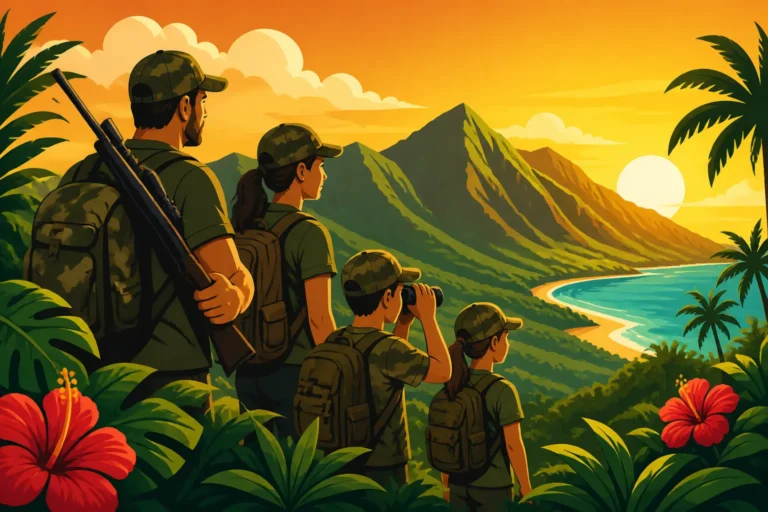
For anyone new to hunting, or for parents introducing their children to the outdoors, the idea of heading into Hawaii's wild public lands can be a mixed bag of thrilling anticipation and genuine anxiety. The islands present a complex tapestry of unique ecosystems, ever-changing weather, specific regulations, and game animals that behave differently than their mainland cousins. A guided hunt isn't just about finding an animal; it's about providing a structured, safe, and immensely educational entry point into a lifelong passion.
Navigating the Unknown with an Expert Hand
Let's face it, Hawaii's hunting landscape is unlike almost anywhere else. You're not just walking into a typical deer woods. You might be trekking across jagged lava flows, slogging through dense, wet rainforests, or navigating steep, brushy gulches that feel like an entirely different planet. For a first-timer, or a young hunter, these environments can be disorienting and even intimidating. A good guide knows every contour of the land, every game trail, and every hidden water source. They understand the nuances of the wind currents, the subtle signs of animal presence, and the safest routes through challenging terrain. This local expertise is priceless, turning potential confusion into a focused, productive learning experience. Without a guide, you could spend days just figuring out where to go, let alone finding game.
Prioritizing Safety in Unfamiliar Territory
Safety is, without question, the paramount concern when introducing new hunters to the field. This isn't just about safe firearm handling – though that's crucial and a good guide will reinforce it constantly – it's also about navigating the very real hazards of Hawaii's environment. Think about slippery, root-choked trails in the wet forest, or unstable rock faces near coastal goat country. Guides are seasoned veterans who know how to mitigate these risks. They'll teach proper footing, how to cross streams safely, and what to do if you encounter unexpected wildlife (or even other hunters). For parents, knowing that your child is under the watchful eye of an experienced professional who prioritizes their well-being can make all the difference in deciding to take that first step. They're not just leading; they're teaching hazard awareness every step of the way.
Unlocking Local Lore and Hunting Skills
Hunting in Hawaii isn't just about pulling a trigger; it's about understanding the animals and their environment. Axis deer on Maui behave differently than feral pigs on the Big Island, and both are influenced by the unique microclimates of their specific island homes. A guide acts as a living encyclopedia, sharing insights into Why Axis Deer Rut Timing Is Different, where What Feral Pigs Eat in the Islands, or how to read Telling Pig Sign From Goat Sign. They'll teach you tracking skills, how to move quietly through the bush, the art of glassing distant slopes, and calling techniques that are effective for Hawaii's game. This mentorship accelerates the learning curve dramatically, giving first-timers a foundational understanding that would take years to acquire through trial and error. You're not just being led to an animal; you're receiving a masterclass in Hawaiian hunting.
Simplifying Gear, Logistics, and Regulations
The thought of acquiring all the necessary gear for a hunt – especially if you're traveling to Hawaii – can be overwhelming. Do you need a specific type of rifle? What kind of boots handle lava and mud? How do you keep your powder dry in the humidity? Many guided operations can alleviate this burden by providing loaner rifles, optics, and even advice on specialized clothing. Beyond gear, there's the administrative hurdle: obtaining a Hawaii hunting license, understanding the permit-tag system, and navigating check-in procedures for specific units. Guides often streamline this process, ensuring all paperwork is in order before you even step foot in the field. This convenience, from a logistical standpoint, can be a huge draw for new or visiting hunters. Services like GoHunt can help you acquire your license, but a guide will know the nuances of specific unit regulations.
What to Expect from a First-Timer's Guided Hunt
So you've decided a guided hunt is the way to go. Fantastic! But what does a typical day actually look like? It's not always a high-adrenaline rush from dawn till dusk. For youth and first-timers, a good guide will pace the experience, focusing on education, safety, and enjoyment as much as the pursuit of game. It's an immersive classroom where the lessons are learned firsthand in the wild.
The Day's Flow: From Briefing to Field Care
Your guided hunt will likely begin with a clear briefing, often over coffee and a light breakfast. This is when your guide will cover the day's plan: where you'll be hunting, what game you'll pursue, and the specific safety protocols for that day's conditions. They'll re-emphasize safe firearm handling – loading, unloading, carrying – and make sure everyone understands the shooting ethics and shot placement fundamentals. Then, it's off to the unit. Depending on the species, you might be driving to a remote trailhead for a long hike, or quietly still-Hunting a Kiawe Flat for Axis Deer at first light. The day often involves periods of walking, glassing, and strategic stops to listen and look for sign. If you're successful, the guide will lead you through the process of Field Dressing Axis Deer in Hawaii Heat or cooling down a feral pig, explaining each step. Even if no animal is harvested, the day is packed with learning.
Species Focus: Axis Deer, Pigs, and Goats
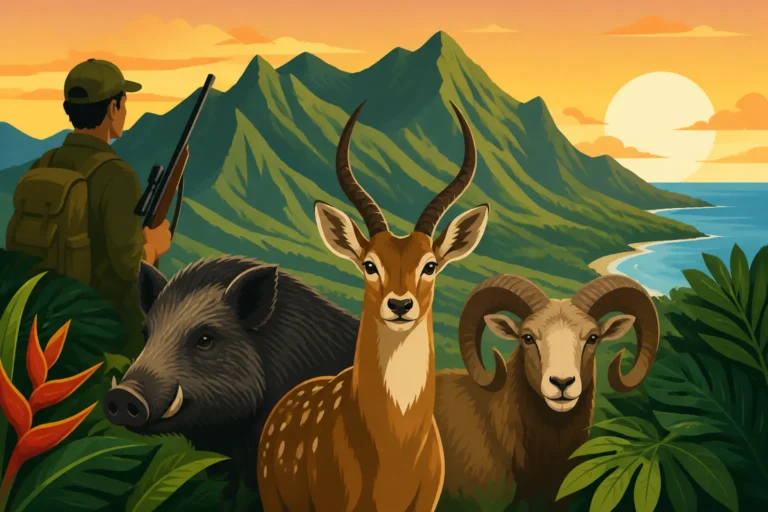
In Hawaii, most guided hunts for first-timers will focus on the more common and accessible game species: Axis deer, feral pigs, and feral goats. Each offers a unique challenge and learning opportunity. Axis Deer, Hawaii's Signature Big Game, for instance, offer a fantastic introduction to big game hunting with their keen senses and herd dynamics. A guide will teach you how to approach a herd, differentiate bucks from does, and make an ethical shot. Hunting Hawaii's Feral Pigs often involves more tracking through dense cover, and for many, the excitement of a pig hunt, especially with dogs, is incredibly thrilling. Guided goat hunts, often conducted in dramatic coastal or canyon country, teach patience and precision shooting on steep terrain. Your guide will help you understand the characteristics of each animal and how to hunt them responsibly.
Essential Skills You'll Learn
A guided hunt is a hands-on workshop. You won't just be a passenger; you'll be actively involved in the process. Expect to learn:
- Reading the Land: How to identify prime feeding areas, bedding cover, and travel corridors specific to the Hawaiian environment. Your guide will point out natural indicators and teach you what to look for.
- Tracking and Sign Recognition: You'll learn to differentiate fresh tracks from old, recognize scat, rubs, and wallows, and understand what these signs tell you about animal movement and habits. Reading Pig Sign Along a Muddy Trail is a crucial skill.
- Ethical Shot Placement: This is perhaps the most critical lesson. Guides will ensure you understand where to aim for a quick, humane kill and stress the importance of waiting for the right shot opportunity.
- Field Care and Meat Preservation: In Hawaii's heat, rapid field dressing and cooling are essential. Your guide will demonstrate how to properly gut, skin (if time allows), and cool the animal to preserve the meat. This practical experience is invaluable for future hunts. Cooling Meat Fast on a Hawaii Hunt is a lesson every hunter needs.
- Responsible Hunting Ethics: Beyond the mechanics, a good guide instills a deep respect for the animal, the land, and the traditions of hunting. You'll learn about conservation efforts and the hunter's role in managing Hawaii's introduced species.
Choosing the Right Guide for Youth or Beginners
Selecting a guide is a crucial step, especially when it's for a first-timer or a youth. You're not just hiring someone to take you hunting; you're choosing a mentor who will shape the initial hunting experience. The right guide will foster a love for the outdoors, impart valuable skills, and prioritize safety and education above all else.
Vetting Experience and Reputation
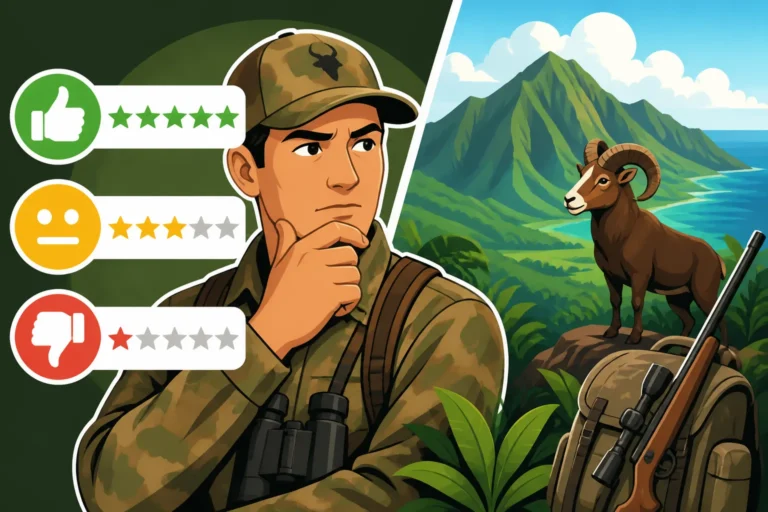
When you're looking for a guide, start by doing your homework. Look for outfitters with a solid track record, particularly those who emphasize family hunts or beginner-friendly packages. Don't be afraid to ask for references, and definitely read online reviews. Sites like BookYourHunt can be a good starting point to find reputable operations that cater to a range of experiences. You want a guide who is patient, a good communicator, and genuinely enjoys teaching. An experienced guide will have dealt with all sorts of situations and personalities, from nervous beginners to boisterous youth, and will know how to make everyone feel comfortable and engaged. Inquire about their years of experience hunting in Hawaii and specifically guiding new hunters.
| Feature | Excellent Guide for Beginners/Youth | Acceptable Guide | Less Suitable Guide |
|---|---|---|---|
| Patience | Exceptional, encourages questions, allows time for learning. | Generally patient, but might expect some prior knowledge. | Impatient, rushes through explanations, focuses only on the kill. |
| Safety Focus | Explicitly reviews all safety protocols, demonstrates continually. | Mentions safety, assumes some prior understanding. | Assumes client knows safety, minimal review. |
| Teaching Style | Hands-on, breaks down complex tasks, explains "why." | Provides instructions, might not elaborate on reasoning. | Directive, simply tells client what to do. |
| Youth Experience | Specific programs or noted experience with young hunters, positive reviews. | Has guided youth, but not their primary focus. | No specific mention or experience with young hunters. |
| Communication | Clear, encouraging, provides constructive feedback. | Communicates adequately, might be less expressive. | Minimal interaction, gruff, or hard to understand. |
| Hawaii Expertise | Deep knowledge of local flora, fauna, history, and hunting units. | Knowledgeable about hunting areas, less on broader ecology. | Only knows where to find game, limited local context. |
| Equipment | Offers suitable loaner gear, explains usage and care. | May offer loaner gear, but less emphasis on education. | Expects client to bring all their own, no advice. |
| Post-Hunt Support | Assists with field care, processing, trophy prep, and next steps. | Helps with basic field care, provides minimal further assistance. | Leaves client to figure out post-hunt logistics. |
Communication and Personality Match
Before booking, make sure you have a conversation with the guide. Ask about their philosophy on guiding new hunters. Do they prioritize the experience and education over solely bagging an animal? Do they have experience with youth hunters, understanding that patience and a fun approach are key? A great guide for a first-timer will emphasize the journey, the lessons learned, and the camaraderie, rather than just the trophy. They should be someone you and your young hunter feel comfortable with, someone who can answer all your questions (and there will be many!), and who can adjust their approach to suit the individual's learning style and energy levels. This pre-booking chat is critical for setting expectations and ensuring a good fit.
Permits, Licenses, and Legalities
One of the less glamorous, but absolutely essential, aspects of hunting is dealing with permits and licenses. This is where a good guide can truly shine. They'll be intimately familiar with Hawaii Hunting Licenses and What They Cost, How Hawaii's Permit-Tag System Works, and specific requirements like Hawaii Hunter Education Requirements. For non-residents, they can help you navigate the process of obtaining an appropriate license and any necessary permits for your chosen species and unit. While you're still responsible for purchasing your license and tags, your guide can advise you on exactly what you need, where to get it (often online via platforms like GoHunt), and ensure you have all documentation correctly filled out before you head into the field. This takes a huge weight off the shoulders of new hunters, allowing them to focus on the excitement of the upcoming adventure rather than bureaucratic hurdles.
Planning Your First Hawaii Guided Hunt
Once you've settled on a guide, it's time to iron out the practical details. A successful guided hunt, especially for a beginner, hinges on thorough preparation. This isn't just about packing your bags; it's about understanding the financial commitment, getting in physical shape, and knowing what to bring.
Understanding the Investment: Costs and Inclusions
Let's be realistic: a guided hunt in Hawaii is an investment. The What a Hawaii Guided Hunt Costs can vary significantly based on the species, the duration of the hunt, whether it's private or public land, and what's included. Typically, guided packages cover the guide's fee, transportation within the hunting area, and often loaner equipment. What's usually not included are your hunting license, tags, flights to Hawaii, accommodations, meals outside of the hunt day, meat processing, or taxidermy. Before you book, get a clear breakdown of all costs. Ask about any hidden fees or extra charges. Understanding the full financial picture upfront prevents unpleasant surprises and allows you to budget accordingly. Remember, it's an experience you're paying for, and the educational value for a first-timer is immense.
Physical Preparation for Hawaii's Terrain
Hawaii's beauty often belies its challenging terrain. Even if you're not climbing Mauna Kea for mouflon, you could be navigating steep gulches, uneven lava fields, or thick, humid jungle. For Hunting Hawaii's Volcanic Terrain or hunting Hawaii's rainforest gulches, a certain level of physical fitness is definitely an asset. Encourage your young hunter, and yourself, to engage in some pre-hunt preparation. Regular walks, especially on uneven ground, stair climbing, or light cardio, will make a huge difference in your comfort and endurance. Discuss the expected activity level with your guide. They can give you a realistic idea of the distances you'll cover and the types of inclines you might encounter. Being in decent shape means you can focus on the hunting experience rather than being distracted by aches and pains.
Essential Gear and What to Pack
Your guide will provide a detailed packing list, but some items are universally important for a Hawaii hunt. Good quality, broken-in hiking boots are paramount – they need to handle rocky, muddy, and potentially wet conditions. Layered clothing is key due to changing elevations and weather; think quick-drying materials. Rain gear is a non-negotiable, especially on the windward side or during the wetter months. Don't forget a hat, sunscreen, insect repellent, a small backpack for water and snacks, and a reliable headlamp. If you're bringing your own rifle, ensure it's sighted in and you're comfortable with it. If you're renting, your guide will cover its operation. Discuss What to Pack for a Hawaii Hunt specifically with your guide, as they know the exact conditions you'll face. And a camera, of course, to capture those unforgettable moments!
Making the Most of the Experience
A guided hunt for a first-timer or youth isn't just about harvesting an animal; it's about fostering a deep appreciation for nature, learning new skills, and creating lasting memories. To truly maximize the value of this experience, approach it with an open mind, a willingness to learn, and a commitment to safety and ethics.
Embracing the Learning Opportunity
Think of your guide as a teacher and the Hawaiian wilderness as your classroom. Ask questions – lots of them! Why did that pig move that way? What does that particular bird call mean? How do you know if that track is fresh? The more engaged you are, the more you'll learn. Pay close attention to your guide's instructions on safety, movement, tracking, and shot placement. Practice your shooting before the trip so you're confident when the opportunity arises. Remember, success isn't solely measured by a filled tag; it's also about the knowledge gained, the skills honed, and the connection made with the natural world. This foundational learning will serve you well on all future outdoor pursuits, whether it's Bowhunting Hawaii's Public Units or still-hunting on your own.
Patience and Realistic Expectations
Hunting, especially for big game, is rarely a guaranteed success, even with the best guide. Animals are wild and unpredictable. There will be slow periods, long walks, and perhaps even missed opportunities. Patience is a hunter's greatest virtue. Teach young hunters that the hunt itself, the time spent in nature, the quiet observation, and the physical challenge are all integral parts of the experience, regardless of whether an animal is harvested. A good guide will manage expectations, emphasizing that the goal is a safe, educational, and enjoyable day in the field. Celebrate the small victories – spotting a rare bird, identifying a fresh track, making a challenging stalk – and view every moment as part of the adventure.
Respect for the Land, Animals, and Culture
Hunting in Hawaii comes with a profound responsibility and a deep connection to the 'aina (land). Instill in new hunters a reverence for the environment and the animals they pursue. Understand that these feral species, while hunted, are still living creatures deserving of respect. Practice leave-no-trace principles, taking out everything you bring in. Also, be mindful of local customs and the unique cultural heritage of hunting in Hawaii. Listen to your guide's advice on ethical behavior and respect for local communities. This respect extends to proper Tagging an Animal Correctly in Hawaii and understanding the regulations surrounding Hawaii Rules on Transporting Game Meat. By demonstrating these values, you're not just participating in a hunt; you're becoming a responsible steward of the land and a respectful participant in Hawaii's vibrant outdoor traditions.
Disclaimer
This article is for general informational purposes only and does not constitute professional advice. Laws, prices and regulations vary by location and change over time. Consult a qualified professional for guidance on your specific situation.