Where Hawaii’s Biggest Pigs Come From
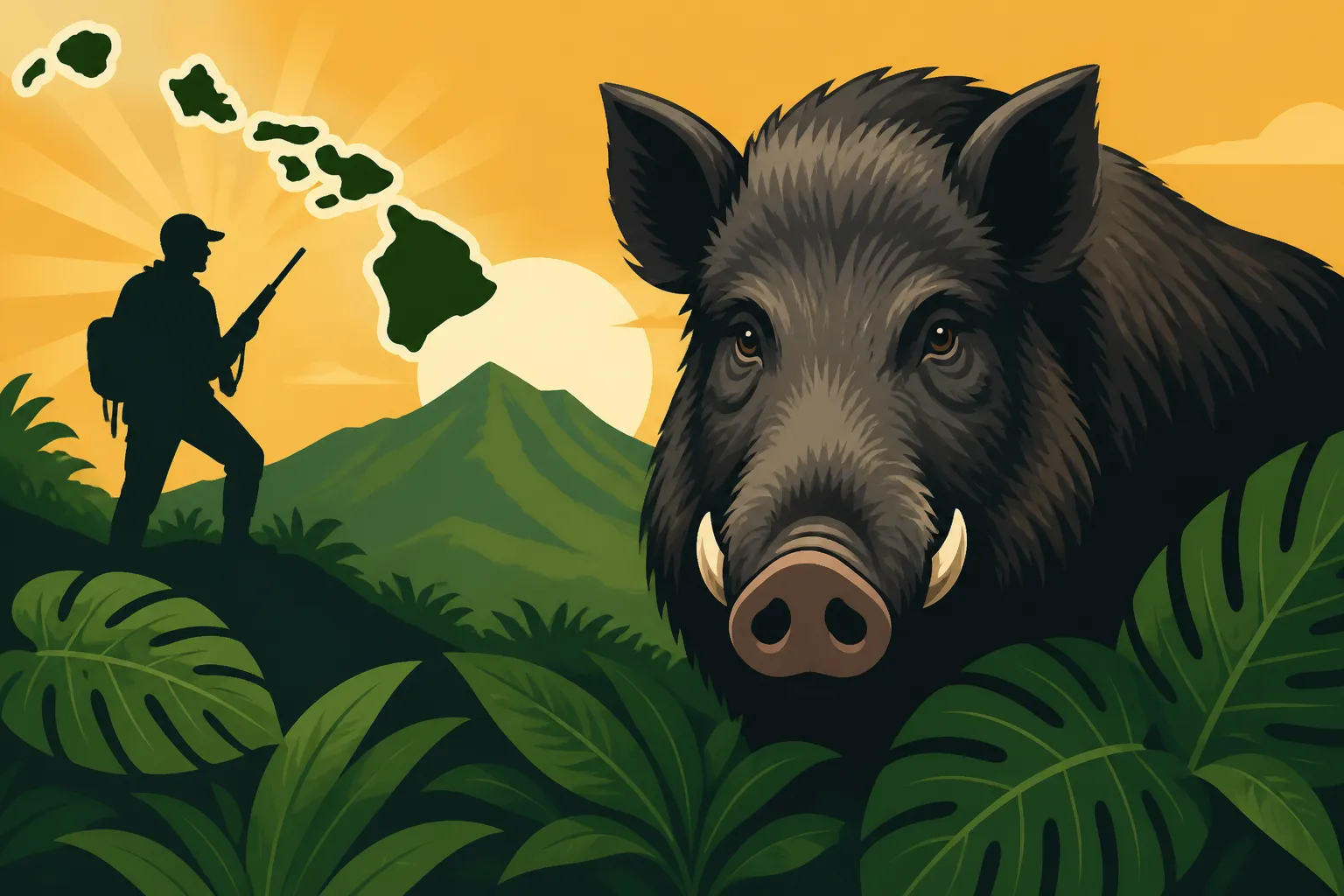
One of the biggest thrills for any hunter in Hawaii is the pursuit of a genuinely large feral pig. We're not talking about just any oinker here; we're talking about those mature boars that have grown wise and massive in the islands' rugged terrain. It's a common frustration to put in the effort, only to encounter smaller pigs, leaving you wondering where those legendary giants actually hide. This guide is dedicated to pulling back the curtain on where Hawaii's biggest pigs come from, revealing the specific habitats, islands, and conditions that produce truly impressive hogs, and how you might go about finding them.
Defining "Big" in the World of Hawaii Feral Pigs
Before we dive into the "where," let's clarify what we mean by "big" when it comes to Hawaii's feral pigs. Unlike some mainland species where size is purely about live weight, here in the islands, "big" often encompasses more than just pounds. It's a combination of overall mass, impressive tusks, and the sheer challenge of outsmarting an old, wise boar.
Beyond Just Pounds: What Makes a Hawaii Pig "Big"?
When local hunters talk about a "big" pig, they're often referring to a mature boar that has seen a few seasons, carrying significant weight, yes, but also sporting impressive tusks. While a 100-pound sow can provide plenty of meat, a 200-pound boar with long, sharp cutters tells a different story. These older boars develop powerful shoulders and thick hides, making them formidable adversaries. What a Hawaii Feral Boar Weighs can vary wildly, but anything consistently over 150 pounds is generally considered a good-sized animal, with true giants pushing well over 200 or even 300 pounds in some areas. It's the combination of age, weight, and tusk development that truly defines a "big" pig in the eyes of many Hawaii hunters.
The Role of Tusks and Age in Determining a Trophy
Tusks are the badges of honor for a Hawaii boar. They grow continuously throughout a pig's life, and while genetics play a role, age is a primary factor in their length and thickness. A truly impressive boar will have long, well-developed upper and lower tusks, often worn smooth and sharp from constant use. These aren't just for show; they're critical tools for rooting, fighting, and defense. An old boar with broken or scarred tusks tells a story of many battles. To understand more about this, you might want to read How Big Hawaii Pig Tusks Get. A pig needs time to grow these formidable weapons, which means they need to survive various challenges, including other pigs, hunters, and environmental factors. This survival in turn points to specific habitats where they can remain unpressured long enough to reach maturity.
The Prime Habitats Where Hawaii's Largest Boars Develop
Hawaii's diverse landscapes are the canvas upon which these impressive pigs grow. Certain environments offer the perfect cocktail of abundant food, dense cover, and reduced human pressure, allowing boars to reach their full potential.
The Sanctuary of Wet Rainforests and Remote Gulches
Think about the windward sides of islands like the Big Island, Maui, and Oahu. These areas are characterized by lush, often impenetrable rainforests, fed by consistent trade winds and heavy rainfall. This isn't your open country hunting; this is thick, unforgiving jungle. These deep, wet forests, particularly within expansive gulch systems, are prime real estate for big pigs. The dense undergrowth of hāpuʻu ferns, guava thickets, and various invasive species provides continuous, rich forage. More importantly, it offers unparalleled cover from hunters and dogs. A pig can live its entire life within a few acres of these dense areas, rarely exposing itself.
The steep, often slippery slopes of these gulches, carved over millennia by water, create natural fortresses. Hunters often find themselves crawling, not walking, through these areas. The effort required to access and navigate these remote pockets means less human disturbance, allowing pigs to feed and grow without constant pressure. A boar that can reach old age in these environments is often larger, tougher, and incredibly intelligent, having learned to evade detection in its complex home. For a deeper dive into these challenging terrains, check out Hunting Pigs in Hawaii's Rainforest Gulches.
Abundant Food Sources and Their Impact on Size
Just like any animal, a pig's size is directly tied to its diet. Hawaii's feral pigs are omnivores, meaning they'll eat just about anything – and in these islands, "anything" is often incredibly plentiful. In wet forests, they root for earthworms, grubs, and the underground parts of plants. They gorge on fallen fruits like guava, passionfruit, and strawberry guava when in season. In agricultural areas adjacent to wild lands, they'll raid taro patches, macadamia nut orchards, and coffee farms, packing on pounds rapidly.
Even in drier, leeward areas, resourceful pigs find sustenance from kiawe pods, succulent cacti, and various roots. A consistent, high-calorie diet, coupled with relatively low energy expenditure due to dense cover reducing the need for long-distance travel, allows pigs to allocate more energy to growth and fat storage. What Feral Pigs Eat in the Islands highlights just how adaptable and opportunistic these animals are, and this adaptability directly contributes to their ability to grow large in various environments. The richer the food source, the faster and bigger they tend to get.
The Role of Low Hunting Pressure and Seclusion
It's no secret that pigs grow biggest where they face the least pressure. In Hawaii, this often means the most remote, difficult-to-access areas. These are the places where hunters either can't easily reach or simply don't frequent due to the sheer physical challenge. Think about units that require multi-hour hikes just to get to the hunting grounds, or those that are accessible only by helicopter or boat.
Areas deep within vast forest reserves, far from roads and established trails, become sanctuaries. Here, a boar can live out its life relatively undisturbed, feeding, wallowing, and growing. While year-round hunting exists for pigs on many islands, the reality is that the vast majority of hunters stick to more accessible spots. The boars that survive and thrive in these untouched pockets often represent the genetic potential for maximum size and tusk development, having proven their resilience and cunning over many years.
Island-Specific Hotbeds for Trophy Hogs
While large pigs can theoretically be found anywhere on the major islands, certain islands and specific regions within them have earned reputations for consistently producing larger, more impressive boars.
The Big Island: Volcanic Slopes and Vast Forests
The Big Island is, well, big, and its sheer size provides ample room for pigs to roam and grow. The massive slopes of Mauna Loa and Mauna Kea, particularly on the windward sides, harbor extensive rainforests and dense kipukas – islands of forest surrounded by lava flows. These vast, remote areas offer exactly what big pigs need: endless cover and diverse food sources. Units like the Hilo Forest Reserve, Waiakea Forest Reserve, and sections of the Mauna Loa Forest Reserve are known for their challenging terrain and the potential for huge boars.
The mix of native and introduced vegetation, combined with volcanic activity that creates new, fertile ground, means a constant renewal of forage. While some areas are heavily hunted, the sheer volume of wild land means that truly secluded pockets exist. Hunters willing to put in the effort to penetrate these remote sections often find themselves in areas where pigs mature into formidable animals.
Maui and Molokai: Axis Deer Country and Deep Gulches
Maui and Molokai are often celebrated for their Axis deer, but they also hold some truly impressive pigs. On Maui, the sprawling slopes of Haleakalā, especially the windward and leeward gulch systems, are home to many large boars. Areas like the Kahikinui slopes, Kula Forest Reserve, and Makawao Forest Reserve offer a mix of terrain, from dry, brushy country to wetter, denser forests. The presence of Axis deer means a shared habitat with abundant browse and forage, contributing to the pigs' diet.
Molokai, often called the "Friendly Isle," is also renowned for its large pigs. Its rugged, undeveloped eastern end, with its incredibly steep sea cliffs and deep valleys, is a sanctuary for undisturbed wildlife. The inaccessibility of much of this terrain means that pigs here often live long, unpressured lives, growing to considerable sizes. Getting onto Molokai private land or navigating its challenging public areas can be a tough endeavor, but the reward can be a truly giant boar.
Oahu and Kauai: Surprising Giants in Populated Lands
You might not immediately think of Oahu, the most populated island, as a hotspot for big pigs, but its deep, jungle-filled mountain ranges, like the Koʻolau and Waiʻanae, hold surprising giants. The dense growth here is arguably even thicker than on other islands, offering unparalleled hiding spots. The Ewa Forest Reserve or Waianae Kai are excellent examples where pigs thrive despite proximity to human activity. These pigs are often incredibly wary, having learned to evade people. Similarly, Kauai, with its dramatic Na Pali Coast and Waimea Canyon, offers rugged, inaccessible terrain where pigs can grow to impressive sizes, particularly in the deep, wet valleys and remote plateaus. Hunting Goats in a Kauai Canyon shares similar challenges to finding pigs in these areas. The key on both islands is finding those seldom-visited pockets of dense vegetation that remain sanctuaries for mature animals.
| Island/Region | Primary Habitat | Contributing Factors | Typical Pig Size Potential |
|---|---|---|---|
| Big Island (Windward) | Dense Rainforest, Volcanic Kipukas | Vast acreage, consistent rain, diverse forage, remoteness | Large to Very Large (200-300+ lbs) |
| Maui (Haleakalā Slopes) | Wet Gulches, Forest Reserves | Mix of dry/wet forage, deep canyons, some private land buffers | Large (150-250 lbs) |
| Molokai (East End) | Steep Cliffs, Valleys, Dense Forests | Extreme inaccessibility, low pressure, lush growth | Very Large (200-300+ lbs) |
| Oahu (Mountain Ranges) | Thick Jungle Valleys, Ridges | Dense cover, proximity to diverse food sources (farms) | Medium to Large (100-200 lbs) |
| Kauai (Canyons & Na Pali) | Deep Canyons, Remote Valleys | Rugged terrain, inaccessibility, abundant forage | Large (150-250 lbs) |
Strategies for Pursuing Hawaii's Elusive Giant Pigs
Knowing where the biggest pigs tend to be is only half the battle. Successfully pursuing them requires specific strategies, patience, and a deep understanding of their behavior in these challenging environments.
The Art of Scouting and Reading Pig Sign
You can't just stumble upon a giant boar in Hawaii; you need to scout. This involves more than just walking trails. It means looking for fresh sign in the thickest, nastiest cover you can find. Look for large areas of fresh rooting, big tracks, rubs on trees, and well-used wallows. Pig Wallows and What They Tell You can be incredibly insightful, as older, larger pigs often have distinct wallowing habits. Pay attention to the size of the droppings and the height of the rubs. These subtle clues can tell you if a truly large animal is using the area.
Scouting might also involve setting up trail cameras in key pinch points or near consistent food sources, especially where you suspect a big boar might be moving at night. Remember, older boars become incredibly nocturnal, especially if there's any hunting pressure. Early morning or late evening observations can provide crucial intel. Before any hunt, be sure to use resources like GoHunt to understand the specific unit you're targeting, including access points and any special regulations.
Still-Hunting and Ambush Tactics in Dense Cover
For hunters without dogs, still-hunting is an effective, albeit challenging, method for targeting big pigs in dense cover. This involves moving incredibly slowly and quietly, stopping frequently to listen and scan. The goal is to move at a snail's pace, trying to catch a pig unawares before it catches you. Focus on areas with fresh sign, especially those close to bedding areas or travel corridors between feeding and bedding. Use the wind to your advantage; Hawaii's trade winds can be your best friend or worst enemy. Still-Hunting Pigs in Hawaii's Wet Forest provides excellent tactics for this approach.
Ambush tactics can also be highly effective. This involves identifying a consistent food source, a well-used game trail, or a water source in dry country, and setting up an elevated stand or ground blind downwind. Patience is key here. You might spend hours waiting for a pig to move, but when a big boar finally appears, you'll be in a prime position for a shot.
Dog Hunting Considerations for Large Boars
Dog hunting for pigs is a long-standing tradition in Hawaii, and it's often the most effective way to extract a large boar from the impenetrable cover it calls home. A team of well-trained dogs, typically including a "bay dog" to find and hold the pig and a "catch dog" to secure it, can penetrate areas that would be impossible for a human hunter to navigate quietly. When targeting large boars, you'll want dogs that are experienced and tough, as these old, tusked animals can be incredibly dangerous. Pig Hunting With Dogs in Hawaii goes into detail on this method.
It's crucial to understand the nuances of working with dogs, including reading their behavior, knowing when they've bayed a pig, and moving quickly and safely through the thick brush to get to the action. The sound of a bayed pig and barking dogs is one of the most exciting experiences in Hawaii hunting, and it's often the best way to get hands on one of these elusive giant boars. Remember, always be aware of Hawaii Dog Hunting Rules and ensure your dogs are registered if required.
Finding Hawaii's biggest pigs is a quest that demands dedication, physical stamina, and a deep respect for the islands' wild places. They don't give themselves up easily, preferring the deep, wet recesses of the forests and the remoteness of the highest gulches. But for those willing to embrace the challenge, the reward of encountering and harvesting one of these formidable animals is an unforgettable experience, a testament to the wild spirit of Hawaii.
Disclaimer
This article is for general informational purposes only and does not constitute professional advice. Laws, prices and regulations vary by location and change over time. Consult a qualified professional for guidance on your specific situation.