Hunting Hawaii’s Rainforest Units
Hunting Hawaii's rainforest units can feel like stepping into an entirely different world from the sun-drenched beaches and open, dry plains you might picture. The reality is often a relentless, humid, and visually challenging environment where every step requires intentional effort, and finding game becomes a test of patience, keen senses, and local knowledge. This guide is here to unravel the mysteries of Hawaii's dense, wet forests, offering you a realistic look at what it takes to successfully hunt these incredibly unique and demanding ecosystems.
Understanding Hawaii's Rainforest Terrain
When you picture Hawaii, you might conjure images of sandy beaches and swaying palms, or perhaps the stark, volcanic slopes of Mauna Kea. But a huge part of the islands, especially the windward sides, is cloaked in dense, vibrant rainforest. This isn't your mainland forest; it's a world apart, and understanding its unique characteristics is the first step to a successful hunt.
The Unique Climate and Vegetation
The most defining characteristic of Hawaii's rainforests is the sheer, overwhelming wetness. We're talking about constant moisture, a humidity that clings to you, and frequent, often sudden, rain showers that can turn a dry trail into a muddy slick in minutes. This persistent dampness fosters an incredibly dense and diverse plant life that can be both beautiful and frustratingly impenetrable. Imagine trying to see more than a few yards in front of you when you're surrounded by towering hāpuʻu ferns, tangled vines, and a suffocating blanket of strawberry guava and uluhe fern. It’s an environment that swallows sound and sight, making traditional spot-and-stalk tactics nearly impossible in many areas. The ground beneath this canopy is often a mix of slippery mud, hidden rocks, and exposed roots, creating a treacherous footing where a single misstep can send you tumbling. Preparing for this constant dampness and thick growth is paramount for any hunter venturing into these units. You'll quickly learn that proper gear isn't just a comfort; it's a necessity for safety and success.
Steep Gulches and Ridges
Hawaii's volcanic origins mean that even in the lushest rainforests, the topography is dramatic and unforgiving. Picture deep, jungled ravines, often referred to as gulches, carved by centuries of rainfall, plunging hundreds of feet down. These gulches are interspersed with sharp, knife-edge ridges that demand every ounce of your physical and mental fortitude to navigate. Moving through these units isn't a walk in the park; it's a constant battle with elevation changes, steep descents, and arduous climbs. Game animals often use these natural features for bedding, escape routes, and travel corridors, making them prime hunting grounds, but incredibly difficult to access. Getting into a promising gulch might be a precarious slide, but getting a harvested animal out can feel like an impossible feat. Hunters often spend more time planning the logistics of entry and egress than they do the actual hunt, knowing that a successful kill is only half the battle. Navigating a Hawaii Gulch System is an art form in itself, requiring respect for the terrain and a good bit of grit.
Water Sources and Stream Crossings
With all that rain and humidity, it's no surprise that Hawaiian rainforests are crisscrossed with countless streams, rivulets, and even impressive waterfalls. These aren't just scenic backdrops; they are vital arteries of the ecosystem, providing water for the animals and shaping the landscape. For hunters, they present both opportunities and challenges. Game animals, particularly pigs, will often use stream beds as travel routes, especially when the surrounding vegetation is too thick to push through easily. They'll also create wallows in muddy banks near water sources. However, crossing these streams can be hazardous. Rocks are often slick with algae, currents can be surprisingly strong, and sudden downpours can turn a peaceful brook into a raging torrent in mere minutes, potentially leading to flash floods. Always exercise extreme caution around stream crossings, especially after heavy rains, and be prepared for your boots to get wet, no matter how waterproof they claim to be.
Game Species You'll Find in the Rainforest
While Hawaii is known for several game species, the dense rainforest environments primarily cater to a select few that thrive in such challenging conditions. Understanding these animals' habits is key to successful hunting in the wet forest.
Feral Pigs: The Primary Target
Without a doubt, feral pigs are the undisputed kings of Hawaii's rainforests. These cunning and resilient animals absolutely thrive in the dense cover, using the impenetrable vegetation for security and the abundant food sources for sustenance. They'll root through the soft, damp soil for tubers, feast on fallen fruits like strawberry guava and thimbleberry, and browse on a variety of plants. Hunters often encounter a mix of "Polynesian" pigs, which tend to be smaller and more lean, and larger "European" boar hybrids, which can sport impressive tusks. The rainforest provides them with everything they need, from constant water to endless hiding spots, making them incredibly difficult to pinpoint. You'll rarely see a pig until you're practically on top of it, so hunting becomes a game of following subtle signs and listening intently. Their impact on native ecosystems is profound; by rooting, they spread invasive plant seeds, create mosquito breeding grounds, and destroy critical habitat for native birds and plants. This makes hunting them not just a pursuit of game, but a crucial act of conservation. If you're looking for a true challenge in the Hawaii rainforest, pigs are your primary quarry. You can learn more about their presence across the islands in Hawaii's Feral Pigs, Island by Island.
Feral Goats: Often in Rainforest Edges
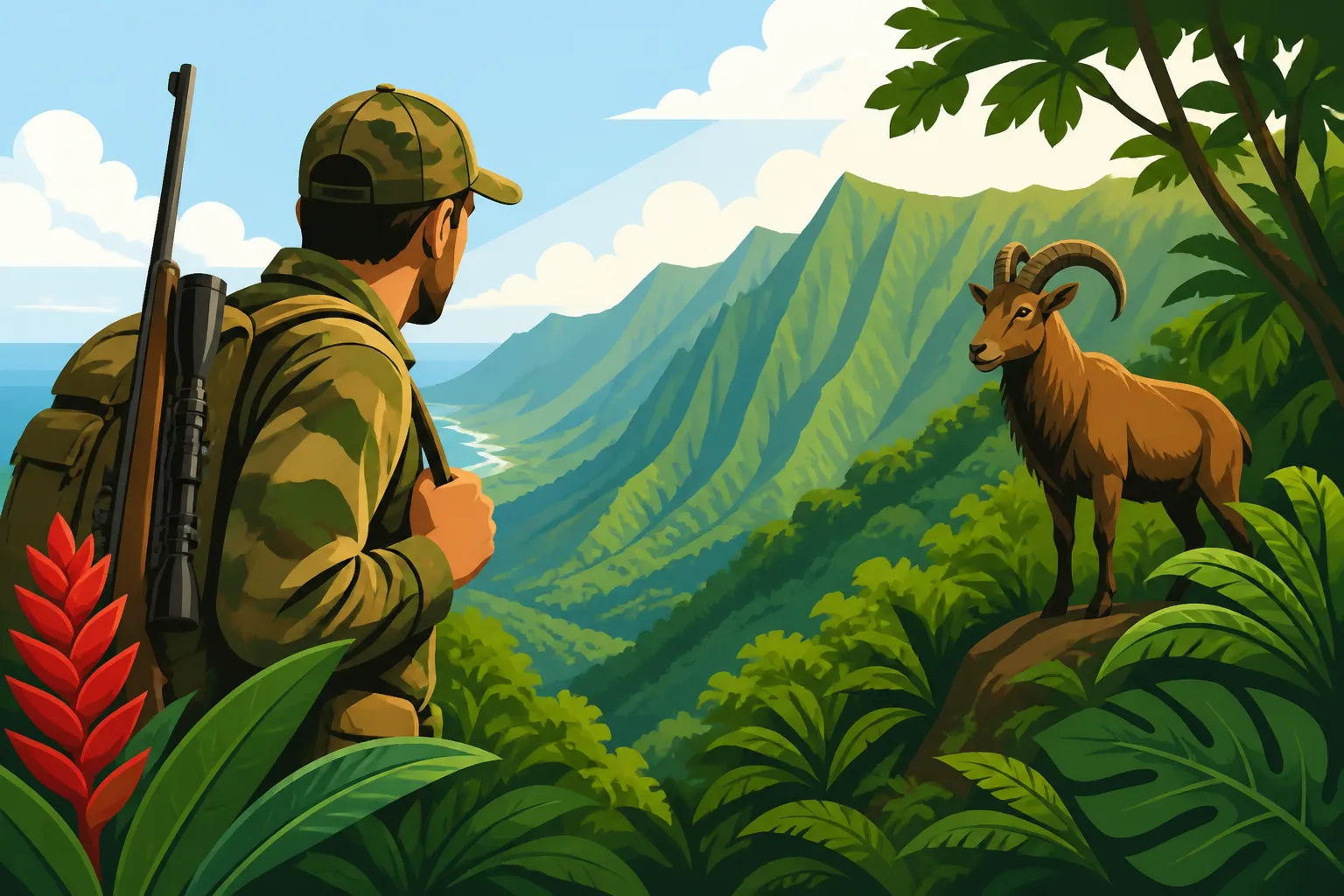
While feral goats are typically associated with Hawaii's arid, rocky, and coastal areas, they will absolutely frequent the edges of rainforest units, particularly where the dense forest transitions into more open grasslands, old clearings, or steep, drier slopes. These areas offer the best of both worlds for goats: nutritious browse and security from the forest, combined with open areas for sunning and spotting predators (which are mostly just humans here). If you're hunting a rainforest unit that abuts drier canyon country or an old pasture, keep an eye on these transition zones. Goats are agile climbers and will use the steep, broken terrain to their advantage, often disappearing into the thickest tangles of vegetation when alarmed. They are extremely wary, with excellent eyesight, so approaching them in these edge habitats requires stealth and patience. They also contribute significantly to erosion in sensitive areas, making their control vital for ecosystem health. Understanding Hawaii's Feral Goats and Why They Matter helps put your hunt into ecological perspective.
Game Birds: In Openings and Edges
While the primary focus for hunters in the deep rainforest is usually pigs and, to a lesser extent, goats, certain game birds do inhabit the more open parts and edges of these wet forest units. Species like the Kalij Pheasant and Erckel's Francolin prefer areas with thick undergrowth but also need some open patches for foraging and dusting. You might find them along old logging roads, clearings, or the margins where the rainforest meets a pasture or abandoned agricultural land. Hunting birds in these environments can be a completely different endeavor, often requiring shotguns and trained bird dogs to flush them from the thick cover. While not the main draw for those seeking big game in the rainforest, an opportunistic hunter might come across them. If you're interested in the winged game, delve into Hunting Hawaii's Game Birds and Where to Find Them for more detailed information on species and locations.
Key Rainforest Hunting Units by Island
Hawaii's rainforests aren't uniform; each island offers its own unique challenges and opportunities. Knowing which units on which islands are predominantly rainforest can help you narrow down your options and prepare accordingly.
Hawaii Island's Wet Forest Units
The Big Island, with its immense size and active volcanoes, boasts vast stretches of wet forest, particularly on the windward (Hilo) side and in the southern Kau district.
- Hilo Forest Reserve: This sprawling unit is a prime example of Hawaii's deep, wet forest. It's characterized by dense
ʻōhiʻaandkoaforest, thickhāpuʻuferns, and numerous gulches. Access can be challenging, often involving long walks on muddy trails or through extremely dense undergrowth. Pigs are the main quarry here, thriving in the abundant cover and food sources. Visibility is often limited to mere yards, making still-hunting an exercise in extreme patience and tracking. Hunting Hilo Forest Reserve Country is a classic Big Island rainforest experience. - Waiakea Forest Reserve: Similar in character to Hilo Forest Reserve, Waiakea also offers extensive wet forest habitat. It's often intersected by old logging roads or trails, which can provide slightly easier access points, but don't be fooled—the deeper you go, the thicker it gets. Hunters here often rely on dogs or slow, methodical still-hunting to locate pigs.
- Kau Forest Reserve: Located in the drier, southern part of the island, Kau Forest Reserve still contains significant pockets of wet forest, especially in its higher elevations and along deeper gulches. The mix of ecosystems here means you might encounter pigs in the denser areas and possibly goats on the drier, more open slopes and fringes. The terrain can be incredibly rugged, with sharp elevation changes and tricky footing.
Maui's Windward Units
Maui, like the Big Island, has its own significant rainforest areas, especially on the windward slopes of Haleakala and in the West Maui Mountains.
- Makawao Forest Reserve: Nestled on the slopes of Haleakala, Makawao is a popular unit known for its mixed forest, including eucalyptus and
koa, with dense undergrowth. While some areas are drier, large sections are classic wet forest, holding good numbers of pigs. Access is generally better than some Big Island units due to a network of trails, but the hunting itself is still challenging due to the thick vegetation. These areas also hold Axis deer, but they tend to frequent the more open areas, making pigs the primary focus for deep rainforest penetration. - East Maui Areas (e.g., portions of Kipahulu Forest Reserve): Much of East Maui is remote, extremely wet, and characterized by deep valleys and steep ridges covered in pristine rainforest. While some areas are designated hunting units, access is often severely limited, sometimes only reachable by extreme hiking or even helicopter for remote hunts. These are wild, untamed places where feral pigs roam largely undisturbed. For more on the unique hunting opportunities on this island, check out Hunting Maui's Upcountry Forest Reserves.
Oahu's Dense Ridges and Valleys
Oahu, despite being the most populated island, still offers challenging rainforest hunting opportunities, particularly in its mountain ranges.
- Ewa Forest Reserve: Located in the Waianae Mountains, Ewa Forest Reserve offers steep, often extremely dense valleys and ridges. While not as consistently wet as some windward units on other islands, it still experiences significant rainfall and holds thick vegetation ideal for pigs. Proximity to urban areas means these units can see more hunting pressure, so early starts and deep penetration are often rewarded.
- Waianae Kai Forest Reserve: Also in the Waianae Mountains, this unit is known for its rugged terrain and deep, heavily vegetated gulches. Pigs are abundant, and hunters often rely on dog packs to navigate the challenging cover. The hikes in and out can be strenuous, making physical fitness a key factor for success here. Hunting Oahu's Public Ridges provides a closer look at the unique challenges of hunting this island.
Kauai's Lush Canyon Country
The Garden Isle lives up to its name with incredibly lush and verdant rainforests, particularly in its dramatic canyons and along its remote coastlines.
- Na Pali-Kona Forest Reserve: This vast reserve encompasses some of Kauai's most breathtaking and challenging terrain. It includes portions of the famous Waimea Canyon and extends into incredibly dense, wet forests. Feral pigs are the main game, thriving in the deep, remote valleys. Hunting here is a true wilderness experience, demanding excellent navigation skills and a high level of physical conditioning. The thick vegetation can make for very close-quarters encounters. Hunting Kauai's Na Pali-Kona Reserve is a deep dive into the specific challenges and rewards of this truly wild landscape.
Gear and Preparation for Rainforest Hunts
Hunting Hawaii's rainforests isn't just a different kind of hunt; it demands a different kind of gear. The unique environmental challenges of constant moisture, dense vegetation, and rugged terrain mean your standard hunting kit might not cut it. Preparation is everything.
Waterproof and Durable Clothing
This is non-negotiable. You will get wet. Even on a "dry" day, the humidity is oppressive, and brushing against wet leaves is like taking a shower. Breathable, lightweight rain gear is crucial. Think full rain jacket and pants that can withstand constant abuse from thorns, sharp branches, and abrasive ferns. Heavy cotton is a definite no-go; it absorbs water, stays wet forever, and makes you cold and miserable. Opt for quick-drying synthetic fabrics or wool for your base layers and mid-layers. Good quality gaiters are also highly recommended to keep mud, water, and debris out of your boots. The goal is to stay as dry and comfortable as possible, which is a constant battle in the rainforest, but proper clothing makes a huge difference in your endurance and morale.
Footwear for Mud and Steep Terrain
Your boots are perhaps the most critical piece of gear for a Hawaiian rainforest hunt. They need to be waterproof, durable, offer excellent ankle support, and, most importantly, have aggressive, self-cleaning tread patterns to grip slippery mud, wet roots, and moss-covered rocks. Many hunters prefer a sturdy, high-ankle boot that can handle being submerged in shallow water or mud. Look for models designed for mountaineering or serious backpacking in wet conditions. Even with waterproof boots, expect your feet to get damp from sweat and the sheer amount of water you'll encounter. Bringing multiple pairs of moisture-wicking socks (wool or synthetic) is a smart move. There's nothing worse than having your hunt cut short by blisters or discomfort from inadequate footwear. Read up on Boots for Hawaii Lava and Wet Forest to select the right pair that will keep you on your feet.
Navigation Tools and Communication
The dense canopy and convoluted terrain of Hawaii's rainforests can quickly disorient even experienced outdoorsmen. Cell service is virtually non-existent in most of these remote units, so relying on your phone alone is a recipe for disaster. A dedicated GPS unit with pre-loaded topographic maps is absolutely essential. Many local hunters swear by mapping apps like onX Hunt which allow you to download offline maps before you lose service. These maps are invaluable for tracking your position, marking game sign, and understanding unit boundaries. Always carry a physical compass and a waterproof paper map as a backup. A satellite communication device, such as a satellite messenger or phone, is also highly recommended for emergency communication. If you get lost or injured, it could be your only lifeline. Trust me, the feeling of realizing you're disoriented in a thick, wet gulch with no signal is a special kind of dread. No Cell Signal on a Hawaii Hunt is a reality you must prepare for.
Essential Pack Contents
Beyond your clothing and navigation, a well-stocked pack is vital. Here’s a basic list of what should always accompany you into the rainforest:
- Water and Filtration: Carry plenty of water, and ideally, a portable water filter or purification tablets. You'll sweat more than you think, even when it's cool and damp.
- First Aid Kit: Comprehensive, with blister treatment, bandages, pain relievers, and any personal medications.
- Headlamp: Even if you plan to be out before dark, unexpected delays can happen.
- Emergency Shelter: A lightweight tarp or emergency blanket can be a lifesaver if you get stuck overnight.
- Knife: Sharp, durable, and easily accessible.
- Game Bags: Breathable game bags are crucial for protecting meat from flies and debris, especially in humid conditions.
- Snacks: High-energy, non-perishable foods.
- Whistle: For signaling if you get separated from hunting partners.
- Small Saw or Machete: The vegetation can be so thick that you might need to cut your way through short sections, though always be mindful of regulations regarding altering vegetation in public hunting areas.
- Trash Bag: Pack out everything you pack in, and then some.
Managing weight is a constant challenge, but cutting corners on essential safety or survival items is never worth the risk in these wild places.
Hunting Strategies for the Rainforest
Hunting Hawaii's rainforests requires a fundamental shift in strategy from more open-country hunts. Forget long-range glassing or sweeping views; this is a game of intimate knowledge, acute senses, and methodical progression.
Slow, Deliberate Still-Hunting
In an environment where visibility can be limited to less than 10 yards, speed is your enemy. The most effective strategy for many rainforest hunters is an excruciatingly slow, deliberate still-hunt. This means moving at a snail's pace, often taking minutes to cover just a few feet. Your eyes aren't scanning the horizon; they're dissecting every shadow, every cluster of ferns, every tangled vine for the slightest hint of an animal. Listen for subtle sounds: a rustle in the undergrowth, the soft snorting of a pig, the gentle slosh of a wallow, or even the distinct clack of a pig's hooves on rock. The rainforest environment absorbs sound, so what sounds distant might be surprisingly close. Pay attention to the wind, which can be fickle and swirling in the dense canopy. You're trying to surprise the animal before it ever knows you're there. This method demands immense patience and a deep appreciation for the art of observation. For more insights on this method, look into Still-Hunting Pigs in Hawaii's Wet Forest.
Tracking and Reading Sign
Since direct visual encounters are rare, becoming a master tracker is paramount. Pigs leave abundant sign in the soft, damp rainforest floor. Look for fresh tracks in the mud, noting their size and direction. Pigs are notoriously destructive, so you'll often find extensive rooted areas where they've dug for tubers and grubs. Pay attention to fresh rubs on trees or logs, where pigs scratch themselves. Their wallows—muddy depressions where they cool off and rid themselves of parasites—are also clear indicators of their presence. Droppings, broken vegetation, and even the smell of pigs (a musky, pungent odor) can all lead you to your quarry. The fresher the sign, the closer the pigs. Learn to distinguish between old, washed-out tracks and crisp, recent ones. Understanding what you're seeing on the ground is far more important than what you can see in front of you. A thorough understanding of Reading Pig Sign Along a Muddy Trail will be invaluable.
Using Dogs in the Rainforest
For many local Hawaiian hunters, particularly those targeting pigs, hunting with dogs is the preferred and often most effective method in the dense rainforest. This isn't just a tradition; it's a practical necessity. Dogs can penetrate the thick cover far more efficiently than humans, using their superior sense of smell to locate pigs. Typically, a "bay dog" will find and corner a pig, holding it at bay with barking until the hunters can arrive. Then, a "catch dog" might be used to secure the animal for dispatch. This method is incredibly physical and can be dangerous for both dogs and hunters, requiring specialized gear like cut vests for the dogs and quick, decisive action from the hunter. Managing a dog pack in steep, slippery terrain, ensuring their safety, and navigating to the baying dogs requires a deep understanding of dog behavior, the terrain, and excellent communication with your hunting partners. Pig Hunting With Dogs in Hawaii is a long-standing practice here, born out of the very nature of the land.
Stand Hunting Near Food Sources or Wallows
While less common than still-hunting or dog hunting, setting up an ambush or stand near key pig activity areas can also be effective, particularly in areas with consistent food sources or well-used wallows. Pigs are creatures of habit, and if they've found a good spot for food or comfort, they'll often return. Identify areas with abundant fallen fruit, active rooting, or fresh wallows. Position yourself quietly downwind, preferably elevated slightly for better visibility (if available) or simply tucked into the densest cover you can find. Patience is key, as pigs often move during the cooler parts of the day, early morning and late afternoon, though they can be active anytime in the deep, shaded rainforest. Scent control is vital, as a pig's nose is their primary defense. This method requires a thorough understanding of pig movement patterns in your specific hunting unit. You might even want to try Hunting Pigs Near a Taro Patch if you find one, as these cultivated fields are magnets for rooting pigs.
Navigating and Staying Safe in the Rainforest
The lush beauty of Hawaii's rainforests conceals numerous challenges and potential dangers. Navigating this environment safely requires careful planning, constant awareness, and respect for the powerful forces of nature.
Dealing with Dense Vegetation and Obstacles
The sheer density of rainforest vegetation is arguably its most defining characteristic and one of the biggest challenges for hunters. You won't be strolling through open woods; you'll be pushing, crawling, and sometimes even cutting your way through tangled masses of vines, thorny bushes, and head-high ferns. Hidden obstacles are everywhere: slippery roots, jagged lava rocks concealed by moss, and unexpected drops. This constant battle with the vegetation saps energy, slows progress to a crawl, and limits visibility to an extreme degree. It's easy to lose your sense of direction when every direction looks the same. Staying Found in Dense Hawaii Rainforest is a skill you'll hone quickly, often by paying attention to subtle clues like the direction of water flow, the angle of the sun through the canopy (when it appears), and familiar landmarks on your GPS. Always plan your route, even if it's just a few hundred yards, and communicate your intentions clearly if you're hunting with a partner.
Steep Climbs and Descending Gulches
The rugged, volcanic topography of Hawaii means that rainforest hunting often involves significant elevation changes. You'll encounter steep, muddy climbs that feel endless and treacherous descents into deep gulches. These gulches, while prime hunting grounds, are often incredibly difficult to enter and exit, sometimes requiring hand-over-hand climbing or even the use of ropes for safety. The ground is often slick, unstable, and prone to giving way. Physical fitness is not just an advantage; it's a prerequisite for effectively and safely hunting in these areas. You need strong legs, good balance, and endurance to handle the constant up and down. Always test your footing before committing your weight, and never underestimate the effort it will take to haul yourself and potentially a harvested animal back out. Hunting Hawaii's Volcanic Terrain can offer more insights into the general physical demands.
Weather Changes and Flash Floods
Hawaii's rainforests are synonymous with rain, and while often a gentle, misty drizzle, it can turn into a torrential downpour without warning. The weather here is highly localized and can change dramatically in a matter of minutes. This poses a significant risk of flash floods in gulches and stream beds. A small stream you easily crossed on the way in can become a raging, impassable river after a heavy rain upstream, cutting off your escape route. Always monitor weather forecasts closely, even though they can be unreliable in these microclimates. Pay attention to the water levels and clarity of streams as you cross them; rapidly rising or muddy water is a clear sign of trouble. If a storm rolls in, seek higher ground immediately and be prepared to hunker down. Never underestimate the power of Hawaiian water. Consider Hunting a Hawaii Unit After Heavy Rain for advice on how to adjust your plans.
Wildlife Hazards
While Hawaii doesn't have large, dangerous predators like bears or mountain lions, the feral pigs themselves can pose a significant hazard. A cornered boar, especially one with large tusks, or a sow protecting her piglets, can be incredibly aggressive and dangerous. They are powerful animals that can inflict serious injury. When hunting with dogs, the chaos of a bayed pig can be disorienting, and it's crucial for hunters to maintain situational awareness and execute a quick, clean dispatch. Beyond pigs, leptospirosis, a bacterial disease spread through animal urine, is a concern in stagnant or slow-moving water in Hawaii. Always filter or boil stream water before drinking it, and cover any open cuts or wounds when wading through water or mud. Be aware of ticks and other biting insects, which thrive in the humid environment.
Ethical Hunting and Conservation in Rainforests
Hunting in Hawaii's rainforests isn't just about bagging an animal; it's about being a responsible steward of a fragile and unique ecosystem. The connection between hunting and conservation here is particularly pronounced, given the invasive nature of the primary game species.
Respecting the Ecosystem
Hawaii's rainforests are incredibly sensitive and vital for the islands' overall health. They are critical watersheds, filtering rain and feeding streams that sustain both human populations and unique native flora and fauna. The native species that call these forests home are often found nowhere else on Earth, and many are endangered. As a hunter, it's paramount to minimize your impact. Stick to established trails where possible, pack out all your trash (and any you might find), and avoid disturbing areas clearly marked as sensitive or protected. Remember that your presence in the forest, even as a hunter, can still have an impact. Be mindful of quiet and respectful movement, not just for the hunt itself, but for the integrity of the wild space. Understanding What Feral Pigs Do to Hawaii's Forests will deepen your appreciation for the role you play.
Hunter's Role in Feral Animal Control
It’s easy to think of hunting as solely a recreational pursuit, but in Hawaii's rainforests, it takes on a crucial conservation role. Feral pigs and goats are invasive species that were introduced to the islands by humans. Without natural predators, their populations have exploded, leading to widespread destruction of native forests. Pigs, with their constant rooting, destroy native understory plants, facilitate the spread of invasive weeds, and create wallows that serve as breeding grounds for disease-carrying mosquitoes (which, in turn, decimate native bird populations). Goats contribute to erosion on steep slopes. By hunting these animals, you are directly contributing to the health and recovery of Hawaii's native ecosystems. This perspective transforms the hunt into a vital management tool, aligning recreational activity with ecological restoration. For a broader view, read How Hunting Fits Hawaii's Conservation Plan.
Navigating Fenced Conservation Boundaries
One increasingly common feature in Hawaii's rainforest units is the presence of conservation fences. These fences, often built by government agencies or conservation groups, are designed to exclude invasive ungulates (like pigs and goats) from critical areas of native forest, allowing the native plants to recover without being rooted up or browsed down. For hunters, this means you must be acutely aware of unit boundaries and the location of these fences. Hunting within a fenced conservation area may be strictly prohibited, or specific rules may apply. Relying on mapping tools like onX Hunt is incredibly helpful here, as they often display these boundaries, helping you ensure you're hunting legally and ethically. Crossing into a protected, fenced area, whether accidentally or intentionally, can lead to severe penalties and undermines the vital conservation efforts being made. Always check the latest regulations for your specific unit before heading out, as boundaries and rules can change. Understanding Hunting Hawaii's Fenced Conservation Boundaries is essential for responsible hunting in these units.
Field Care and Meat Packing in Humid Conditions
Harvesting an animal in Hawaii's rainforest is a triumph, but the job is far from over. The hot, humid conditions present unique challenges for field care, and properly handling your meat is critical to prevent spoilage and ensure a quality harvest.
Rapid Field Dressing and Cooling
Unlike colder climates where you might have a bit more time, Hawaii's heat and humidity demand immediate action. Once an animal is down, the clock starts ticking. Rapid field dressing is absolutely crucial. Get the guts out as quickly and cleanly as possible to allow the carcass to cool from the inside out. Don't waste time admiring your trophy; focus on opening up the body cavity and removing the entrails. If regulations allow and you have the tools, skinning the animal in the field can also help accelerate cooling by exposing more surface area to the air. Quartering the animal into manageable pieces as soon as possible is often the best approach for both cooling and packing out. The goal is to dissipate body heat as fast as you can. Any delay significantly increases the risk of bacterial growth and meat spoilage. While specific to deer, many principles in Field Dressing Axis Deer in Hawaii Heat can be adapted to pigs and goats.
Packing Meat Out of Steep, Wet Terrain
Packing out an animal from a deep, wet rainforest gulch is a serious physical challenge. Pigs, especially large boars, can weigh well over 150 pounds, and goats can be deceptively heavy. You'll need sturdy, breathable game bags to protect the meat from flies, dirt, and debris during transport. A robust pack frame designed for heavy loads is almost a necessity, as a standard backpacking pack might not handle the weight or the abuse of the terrain. The ground will be slippery, the climbs will be steep, and the vegetation will be constantly trying to grab at you and your pack. Break down the animal into the smallest, most manageable pieces necessary for your strength and the terrain. Enlist hunting partners if possible; an extra set of hands makes an enormous difference. Remember, the journey out is often more arduous than the journey in. Consider bringing a tarp or sled to help drag portions of the carcass, though this can be difficult in thick vegetation. For more general advice on dealing with tough terrain, check out Packing Meat Out of a Hawaii Gulch.
Processing and Transport
Once you've painstakingly packed your meat out of the forest, the immediate priority is to get it into a cooler with ice. Do not let it sit in the back of a hot truck. Have large coolers ready, filled with plenty of ice. Drain off melted water regularly to prevent the meat from sitting in stagnant water. The colder you can keep the meat, the better its quality will be. If you plan to process the meat yourself, get it to a clean, cool workspace as soon as possible. Otherwise, research local game processors in advance and have their contact information handy. They are experienced in handling game in tropical conditions. If you're flying between islands or back to the mainland, be aware of agricultural regulations regarding transporting game meat. You'll need to ensure it's properly frozen and packaged for transport. Good planning for Cooling Meat Fast on a Hawaii Hunt can make or break the enjoyment of your hard-earned harvest.
Comparison of Rainforest Hunting Units by Island
To help you visualize the differences and challenges, here's a general comparison of typical rainforest hunting units across the islands. Keep in mind that specific units will have their own unique characteristics and regulations.
| Island | Primary Game | Typical Terrain | Access Challenges | Vegetation Density | Notes |
|---|---|---|---|---|---|
| Hawaii | Feral Pigs | Deep gulches, steep ridges, dense wet forest | Remote, long hikes, muddy trails, rough 4WD needed | Very High (Hāpuʻu, Guava) | Extensive wild areas, often less pressure than Oahu. |
| Maui | Feral Pigs, Goats | Volcanic slopes, mixed forest, transition zones | Network of trails but still strenuous, some remote areas | High (Guava, Eucalyptus) | Can have Axis deer at edges, good balance of remoteness/access. |
| Oahu | Feral Pigs | Steep, sharp ridges, dense valleys | Closer to population, can be busy, challenging trails | High (Ironwood, Strawberry Guava) | Good for dog hunting, requires fitness to navigate steep terrain. |
| Kauai | Feral Pigs | Dramatic canyons, extremely lush, remote | Very remote, long hikes, difficult ingress/egress | Extremely High (Fungi, Ferns) | True wilderness experience, highest rainfall, unique challenges. |
| Molokai | Feral Pigs | Dense valleys, coastal slopes | Fewer public units, private land access, remote | High (Guava, Native) | Good for pigs, similar to Maui in some ways, but smaller scale. |
Disclaimer
This article is for general informational purposes only and does not constitute professional advice. Laws, prices and regulations vary by location and change over time. Consult a qualified professional for guidance on your specific situation.