Hawaii Hunting Access Near Honolulu
Many folks living in or visiting Honolulu often dismiss the idea of hunting on Oahu, believing the island is simply too developed, too crowded, or too small to offer any real opportunities for pursuing game. The image of skyscrapers and endless traffic rarely conjures thoughts of wild pigs or upland birds. However, while hunting near Hawaii's capital city certainly comes with its own set of unique challenges and considerations, it's far from impossible. This comprehensive guide is designed to demystify hunting access around Honolulu, providing you with the practical knowledge, specific unit information, and essential tips needed to successfully plan and execute a hunt in this surprisingly wild urban fringe.
Understanding Oahu's Unique Hunting Landscape
Hunting on Oahu, especially near Honolulu, isn't like hunting in the vast, open spaces of the mainland. It requires a different mindset, an understanding of island ecology, and a deep appreciation for the limited, yet precious, wildlands that remain. It's an experience that blends the raw challenge of the Hawaiian wilderness with the realities of living adjacent to a major metropolitan area.
The Reality of Hunting Close to a Major City
Let's be honest, when you think of Honolulu, you probably picture Waikiki Beach, Diamond Head, and bustling city streets. The idea of strapping on a hunting pack and heading out for game within an hour's drive can feel entirely contradictory to that image. And in many ways, it is a contrast. Unlike many states where suburban areas gradually transition into sprawling wildlands, Oahu's dense population means that public hunting areas often butt directly against private farms, residential communities, or military installations.
This proximity means that hunters bear an extra responsibility to be aware of their surroundings, understand property boundaries, and operate with the utmost respect for non-hunting residents and landowners. The challenges are real: public lands can be fragmented, access points are limited, and pressure from other outdoor enthusiasts (hikers, mountain bikers, birdwatchers) can be a factor. Yet, for those willing to embrace these specific conditions, the opportunity to harvest wild game just a short distance from an urban center is a truly unique reward. It challenges you to become a more adaptable and conscientious hunter, learning to navigate an environment where wildness and civilization often meet at a razor's edge.
Oahu's Public Hunting Units: A Limited Resource
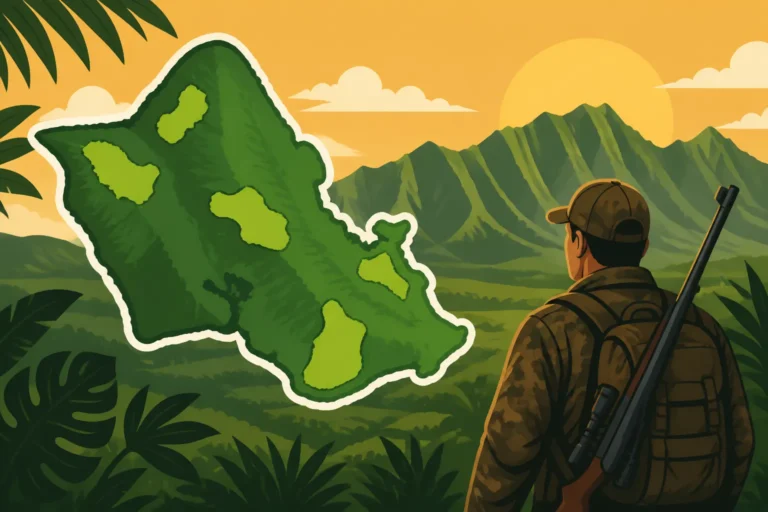
Despite its urban footprint, Oahu is home to several public hunting units managed by the Department of Land and Natural Resources (DLNR) Division of Forestry and Wildlife (DOFAW). These aren't your expansive national forests; they are often sections of existing forest reserves, portions of mountainous terrain, or designated game management areas. They might be smaller and more geographically isolated than units on other islands, but they hold viable populations of game.
These units are carefully managed to balance conservation goals with recreational hunting opportunities. Because of their limited size and often rugged nature, they demand thorough preparation. You won't find many easily accessible roads cutting through prime hunting grounds; instead, you'll often be walking in, earning every step of your hunt. Familiarizing yourself with maps, regulations, and access protocols specific to Oahu is crucial. A good starting point is to review the official maps for Oahu's Public Hunting Areas, which will give you a visual sense of where these opportunities exist. Knowing where you can and cannot go is not just about avoiding trouble; it's about maximizing your effective hunting time and showing respect for the resources.
Exploring Oahu's Designated Hunting Areas
Oahu offers several public hunting units, each with its own character, challenges, and opportunities. Understanding the specific nature of these areas is key to planning a successful hunt from Honolulu. While none are directly in the city, they are all within reasonable driving distance, making day hunts entirely feasible for local residents.
Ewa Forest Reserve: Upland Opportunities
The Ewa Forest Reserve, situated on the western side of Oahu, covers significant portions of the Waianae Mountain Range. This area is primarily known for its feral pig hunting, with some opportunities for game birds in certain sections. The terrain here is classic Hawaiian upland: steep ridges carved by countless gulches and valleys, often covered in a dense mix of native and introduced vegetation. This isn't flat, easy walking country; expect serious elevation changes and plenty of thick cover that makes visibility challenging.
Access typically involves hiking into the reserve from designated entry points, some of which require navigating unpaved or rougher roads to reach the trailhead. Once you're on foot, prepare for a physically demanding hunt. The dense tangles of plants like strawberry guava, haole koa, and guinea grass can make for slow going, but they also provide excellent cover for pigs. Hunters often focus on tracking through these thickets, looking for fresh pig sign like rooting, tracks, and wallows. While tough, the Ewa Forest Reserve offers a genuine Hawaiian hunting experience surprisingly close to Honolulu.
Waianae Kai Forest Reserve: Steep and Challenging Terrain
Further up the western flank of the Waianae Mountains lies the Waianae Kai Forest Reserve, another prime spot for feral pigs and, in some of the drier, more remote sections, an occasional feral goat. This reserve is known for being incredibly rugged, even by Hawaiian standards. The valleys are deep, the ridges are sharp, and the inclines can be brutal. This is the kind of country where a misplaced step can lead to a long slide, and getting an animal out often becomes the biggest challenge of the entire hunt.
Many local hunters in Waianae Kai utilize dog hunting techniques, as the sheer density of the vegetation and the steepness of the terrain make still-hunting extraordinarily difficult. A well-trained bay dog can help locate and hold pigs in the thick cover, allowing hunters to close the distance. However, even with dogs, success requires tenacity and excellent physical conditioning. Be prepared for arduous hikes and a serious workout if you plan to explore these challenging slopes. Knowing how to safely and efficiently navigate such country, perhaps by studying resources on Navigating a Hawaii Gulch System, will be a massive advantage.
Makua-Keaau Reserve: Access and Restrictions
Located on Oahu's far western coast, the Makua-Keaau Reserve offers hunting potential, but it comes with a significant caveat: access is often restricted due to its proximity to the Makua Military Reservation. Historically, parts of this area have been periodically closed or have very limited entry due to military training exercises, unexploded ordnance, or specific conservation efforts for endangered species.
Hunters absolutely must consult the most current DOFAW regulations and any special announcements before planning a trip to Makua-Keaau. These closures and restrictions can change frequently and without much lead time. You might find that hunting is only permitted on certain days, or that specific zones are off-limits. While pigs are the primary game animal here, the uncertainty of access makes it a unit that demands meticulous planning and constant vigilance regarding official updates. It's not a unit for spontaneous hunting trips; it requires prior research and flexibility.
Mokuleia and Kahuku Country: North Shore Potential
Moving to Oahu's iconic North Shore, you'll find hunting opportunities in the Mokuleia Forest Reserve and within the upland sections of what's often referred to as "Kahuku Country." These areas also hold populations of feral pigs and a variety of game birds. While still rugged in places, especially higher up in the mountains, some sections may offer slightly more forgiving terrain than the steepest parts of the Waianae range, with rolling hills and forested areas giving way to open pastures or agricultural edges.
These units are often adjacent to working ranches, active farms, or even residential developments along the North Shore. This means hunters need to be exceptionally diligent about knowing where public land ends and private land begins. Using a robust mapping application like onX Hunt can be incredibly helpful for real-time boundary verification, ensuring you stay within legal hunting areas. Scouting areas where Hunting a Hawaii Pineapple Field Edge or Hunting a Ranch Pasture Boundary are viable can lead to success, as pigs often feed in these transitional zones. The views here are breathtaking, offering a truly unique backdrop to your hunt, but don't let the scenery distract you from your responsibilities as a hunter.
Game Species You Can Pursue Near Honolulu
While Oahu doesn't boast the diverse big game species found on other islands like Axis deer or Mouflon sheep, it offers excellent opportunities for pursuing challenging and abundant game animals right in its backyard. The primary targets for hunters are feral pigs, with limited opportunities for feral goats and a variety of game birds.
Feral Pigs: The Primary Target
For most hunters on Oahu, feral pigs are the main event. These incredibly resilient and adaptable animals thrive across the island's varied landscapes, from the wet, dense forests of the Ko'olaus to the drier, brushy slopes of the Waianae range. They are a non-native, invasive species, and hunting them plays a crucial role in managing their populations and mitigating their significant ecological damage to native Hawaiian forests and watersheds. You can learn more about Hawaii's Feral Pigs, Island by Island to understand their impact and distribution.
Feral pigs provide year-round hunting opportunities in most public units on Oahu, and in many areas, there aren't specific bag limits beyond what you can reasonably and ethically harvest. This open season and generous allowance make them an attractive target. Hunters typically employ two main methods: dog hunting and still-hunting. Dog hunting, often with a combination of bay and catch dogs, is very popular and effective in the thick jungle-like vegetation. For those who prefer a quieter approach, Still-Hunting Pigs in Hawaii's Wet Forest can be productive, especially at dawn and dusk, by slowly moving through areas with fresh sign, like rooting and trails, or near water sources. Success often hinges on understanding their habits and knowing where they feed and bed.
Feral Goats: Less Common, More Challenging
While not as widespread or numerous as pigs on Oahu, feral goats can be found in some of the island's more rugged, arid, and inaccessible areas, particularly in the Waianae Mountains. These animals are incredibly agile and wary, making them a formidable challenge for even experienced hunters. Like pigs, Hawaii's Feral Goats and Why They Matter as they are an introduced species that contributes to erosion and damage to native plants in their preferred steep, dry habitats.
Hunting goats on Oahu is typically a spot-and-stalk affair, requiring keen eyesight, powerful optics, and exceptional physical stamina. Hunters often spend hours glassing distant cliffs, rocky outcrops, and steep canyon walls, searching for the tell-tale white patches of a goat herd. Once spotted, the stalk can be long, demanding, and often involves navigating treacherous terrain. Success rates for goats are generally lower than for pigs due to their preference for difficult-to-reach habitats and their keen senses. It's a hunt that tests your patience, climbing ability, and marksmanship under pressure, often in completely exposed conditions.
Game Birds: Upland Options
Beyond big game, Oahu also offers opportunities for bird hunting, providing a different flavor of hunting experience. The primary game bird species include various francolin (Erckel's, Gray, Black), pheasants (Ring-necked, Green), and doves (Spotted, Barred). These birds are typically found in the upland regions of the island, often inhabiting areas near agricultural fields, forest edges, open grasslands, and brushy draws.
Unlike feral pigs and goats, game bird seasons on Oahu are specific and regulated with defined opening and closing dates, as well as daily bag limits. To hunt game birds, you'll need a valid Hawaii hunting license and a separate Hawaii Game Bird Stamp. Specific units, often those with a mosaic of forest and open areas, provide the best chances. For instance, Hunting Erckel's Francolin in Tall Grass might involve walking through overgrown pastures or forest clearings, often with a good bird dog, to flush these quick-flying birds. Hunters must consult the annual hunting regulations booklet for current season dates, bag limits, and specific unit rules, as these can vary year to year.
Navigating Permits, Licenses, and Regulations
The administrative side of hunting in Hawaii, even on Oahu, can feel daunting, especially for those new to the state's system. But understanding and adhering to the permit, license, and check-in procedures is non-negotiable. Skipping these steps won't just ruin your hunt; it can lead to legal penalties.
Obtaining Your Hawaii Hunting License
The first and most critical step for any hunter looking to pursue game near Honolulu is to obtain a valid Hawaii hunting license. This is required for both residents and nonresidents. If you're a resident, you'll need to demonstrate proof of having completed a hunter education course. If you're a nonresident, you can either take a Hawaii hunter education course or provide documentation of having completed an approved hunter education program in another state or country. Details on these requirements can be found in the Hawaii Hunter Education Requirements.
Licenses can be purchased online through the GoHuntHawaii portal, which has significantly simplified the process. It's always a good idea to complete this process well in advance of your planned hunt to avoid any last-minute stress or delays. Ensure you have your physical license (or a digital equivalent if permitted and readily accessible) with you in the field, as it's subject to inspection by conservation officers. Don't risk a fine or having your hunt cut short because of an oversight here.
Checking In and Out of Oahu Units
For nearly all public hunting units on Oahu, a mandatory check-in and check-out procedure is in place. This isn't just bureaucratic red tape; it's a vital part of DOFAW's management strategy. It helps them monitor hunter numbers, collect crucial harvest data, track hunter safety, and know who is in the field in case of an emergency.
Many units now utilize the OuterSpatial app for this process, allowing hunters to check in and out digitally from their smartphones, even in areas with limited cell service once the maps are downloaded. However, some areas may still have physical check stations with paper cards. It is your responsibility to understand the specific check-in/check-out requirements for the unit you plan to hunt. Failure to properly check in or out can result in citations and fines. The process of Using the OuterSpatial App to Check In is becoming standard across the islands, so familiarizing yourself with it beforehand is highly recommended.
Understanding Oahu's Unique Tag System
Here's where Oahu hunting differs notably from big game hunting on other Hawaiian islands. For feral pigs and goats on Oahu, there are typically no individual permit-tags required beyond your general hunting license. This means you don't have to apply for a limited draw or purchase a separate tag for each animal you intend to harvest, as you would for Axis Deer, Hawaii's Signature Big Game on Maui or Lanai, or Mouflon Sheep on Hawaii's Volcanoes on the Big Island.
While this streamlines the process for pigs and goats, it doesn't mean there are no rules regarding harvest. Unit-specific regulations might still dictate season dates (for birds), weapon types, shooting hours, or even specific bag limits for certain species or areas. For game birds, a separate game bird stamp is required, and strict bag limits apply. Always, always, consult the most current DOFAW hunting regulations booklet for Oahu before heading into the field. This booklet is your definitive guide to what's legal and what's not in each specific hunting unit.
Practical Considerations for Oahu Hunters
Hunting near Honolulu presents unique practical challenges that require thoughtful preparation. From the gear you choose to how you navigate the landscape and interact with others, being prepared for Oahu's specific conditions will dramatically increase your chances of a successful and safe hunt.
Gear Essentials for Oahu's Terrain
Oahu's terrain is notoriously rugged, often wet, and thick with vegetation. This demands specialized gear to ensure safety and comfort. Forget your lightweight trail runners; you'll need sturdy, waterproof hunting boots with aggressive traction and excellent ankle support to tackle steep, muddy trails and uneven lava rock. The dense, often thorny undergrowth will shred flimsy clothing, so invest in durable long pants and long-sleeved shirts that offer protection from scratches, scrapes, and insects. Moisture-wicking layers are essential to manage sweat in the tropical humidity, and a reliable rain jacket is a must, even on what starts as a sunny day.
A good quality backpack is crucial for carrying water (more than you think you'll need!), snacks, a comprehensive first-aid kit, and enough space to pack out meat should you be successful. Navigation is paramount: cell service can be non-existent in deep gulches or remote valleys, so a dedicated GPS device or a robust mapping app like onX Hunt with offline maps downloaded is absolutely essential. Don't rely solely on your phone. A sharp, durable knife, a headlamp with spare batteries, and emergency signaling devices (whistle, satellite messenger) round out the critical gear list. Being prepared for everything is being prepared for Oahu.
Accessing Remote Areas and Parking
While close to Honolulu, many of Oahu's best hunting grounds require significant effort to access. Paved roads often give way to gravel, dirt, or incredibly rough tracks that may necessitate a high-clearance vehicle, or even a true 4WD, just to reach a trailhead. Always research the road conditions to your chosen access point beforehand, especially if there have been recent rains. Some areas may require a substantial hike-in, sometimes miles, before you even begin to hunt. This is where understanding what it means to be Walking In to a Remote Hawaii Unit truly comes into play.
Parking can also be a challenge. Designated parking areas at trailheads might be limited, and you'll often be leaving your vehicle in relatively remote spots. It's wise to secure your vehicle properly and avoid leaving valuables in plain sight to deter theft. Additionally, be acutely aware of "No Parking" signs or areas that might block access for residents or agricultural operations. Respecting designated parking and access points helps maintain positive relationships between hunters and other land users.
Respecting Boundaries and Private Land
On an island like Oahu, where public and private lands are often interwoven, respecting boundaries is paramount. Public hunting units frequently border working ranches, agricultural fields (pineapple, coffee, taro), residential properties, or restricted military lands. Inadvertently crossing onto private property without permission is not only illegal but can also lead to the closure of hunting access for everyone. The rules outlined in What Hawaii Trespass Law Requires are strictly enforced.
Using a reliable GPS with detailed land ownership maps, such as those provided by onX Hunt, is invaluable for staying on public land. Even then, always be vigilant for fences, signage, or other indicators of private property. If an animal you've shot crosses onto private land, you must obtain permission from the landowner before attempting to retrieve it. Do not assume; always ask. Hunters on Oahu are ambassadors for the sport, and demonstrating respect for property rights is critical for maintaining hunting privileges across the island.
The Role of Local Knowledge and Community
For hunters new to Oahu, or even new to Hawaii, tapping into local knowledge can significantly shorten the learning curve and improve your success. Local hunters often possess generations of insight into pig movements, seasonal patterns, the best access routes, and the nuances of specific valleys or ridges. They understand the effects of microclimates, trade winds, and rainfall on game behavior in a way that maps alone cannot convey.
While the local hunting community might seem tight-knit, most hunters are welcoming to those who approach with respect, humility, and a genuine desire to learn. Consider joining local hunting groups or forums, or engaging in polite conversation with other hunters you might encounter at check stations. Show your commitment to ethical hunting, conservation, and respect for local traditions, and you'll often find invaluable guidance. Being part of this community means not just following the written rules, but also understanding the unwritten etiquette of hunting in a unique island culture.
| Oahu Public Hunting Unit | Primary Game Species | Typical Terrain Description | Main Access Points | Key Considerations for Hunters |
|---|---|---|---|---|
| Ewa Forest Reserve | Feral Pig, Birds | Steep, dense forest, gulches | Designated trailheads, often requiring hike-in | Physical fitness, thick cover, navigation skills |
| Waianae Kai Forest Reserve | Feral Pig, Goat | Very rugged, steep valleys, dry ridges | Limited road access, challenging hike-in | Extreme terrain, packing out game, dog hunting common |
| Makua-Keaau Reserve | Feral Pig | Varied: coastal to upland | Restricted access, check DOFAW for openings | Military closures, unexploded ordnance, specific permit needs |
| Mokuleia Forest Reserve | Feral Pig, Birds | Upland slopes, forest edges, some open areas | Adjacent to private land, designated parking | Boundary awareness, mixed habitat, potential for birds |
| Kahuku Country (Uplands) | Feral Pig, Birds | Rolling hills, forest edges, agricultural interfaces | Often via private easements or public road ends | Private land access, mixed use areas, bird season dates |
Disclaimer
This article is for general informational purposes only and does not constitute professional advice. Laws, prices and regulations vary by location and change over time. Consult a qualified professional for guidance on your specific situation.