Hunting Lanai’s Unit One
Hunting Lanai's Unit One is often seen as the ultimate Hawaii Axis deer challenge, a dream for many, but the reality of its vast, dry, and often unforgiving landscape can quickly turn that dream into a frustrating ordeal if you're not prepared. Many hunters arrive with high hopes, only to be overwhelmed by the sheer scale and subtle nuances of this unique hunting ground. This guide aims to demystify Unit One, providing you with the deep insights and practical strategies needed to confidently approach your hunt and increase your chances of success on this iconic Hawaiian island.
Understanding Lanai's Unit One: The Lay of the Land
Lanai's Unit One is not just a patch of dirt; it's a living, breathing landscape with its own rhythm and challenges. It's crucial to understand its unique character before you even step foot on the island, as this foundational knowledge will inform every decision you make, from packing your gear to planning your daily routes. Trying to hunt here without respecting its terrain and climate is like trying to sail without understanding the tides.
Geographic Features and Boundaries
Unit One on Lanai is characterized by expansive, open country, sweeping kiawe flats, and a complex network of dry gulches and arroyos. Unlike some of the lush, wet forests you might encounter on other Hawaiian islands, Unit One is predominantly arid, covered in scrub brush, sparse grasses, and rocky outcrops. The terrain can be deceptively mild-looking from a distance, but up close, it's a relentless mix of sharp lava rock, loose soil, and thorny vegetation. These dry gulches, or "wadis" as they're often called in arid regions, act as natural travel corridors for deer, as well as offering vital shade and slightly cooler temperatures during the heat of the day. They can also be incredibly steep and difficult to navigate, making a direct line of travel often impossible. Identifying the broader boundaries of Unit One on a good topographical map or using a mapping app like onX Hunt is your first critical step. Pay attention to changes in vegetation, old fence lines, and elevation contours which often dictate where deer will move and bed.
The topography often features rolling hills that can hide animals surprisingly well, creating a landscape of constant undulation. You might be glassing what appears to be a flat expanse, only to realize there are countless small draws and depressions that can conceal a whole herd of Axis deer. The kiawe trees, while offering some cover, are notorious for their sharp thorns and dense growth, making silent movement through them a real challenge. You'll spend a lot of time evaluating glassing points, often high up on a ridge, trying to pick apart the distant landscape for any flick of an ear or shimmer of an antler. Understanding how to "read" this dry country, even before you arrive, can save you precious hunting time.
Animal Behavior in Unit One
The Axis deer in Unit One behave differently than deer in more lush environments. Given the arid conditions, water sources become absolute magnets for activity, especially during extended dry spells. While they are primarily browsers and grazers, their movements are heavily dictated by the availability of water and shade. Deer will often bed down in the kiawe thickets or deep gulches during the hottest parts of the day, emerging in the cooler dawn and dusk hours to feed and seek water. Their daily routine can be quite predictable once you understand the pattern, often involving a travel route from bedding cover to feeding grounds and then to water. You'll also encounter feral goats in Unit One, often sharing the same water sources or using the steeper, rockier sections of the terrain. While not the primary target for many on Lanai, they are present and can be an indicator of game activity.
It's also worth noting that Axis deer on Lanai are incredibly wary. They face hunting pressure and have excellent senses, particularly their eyesight. Spotting a herd from a distance and planning a careful stalk is usually the most effective strategy. They are not like some mainland deer that might tolerate a little noise; these deer will vanish at the slightest disturbance. Understanding their herd structure – often a lead doe, with bucks trailing or forming their own bachelor groups – can help predict their escape routes once spooked. Expect to see deer moving quickly across open areas, making shot opportunities fleeting.
Weather and Its Impact
Lanai's Unit One is typically dry, often dusty, and can be relentlessly hot, especially during the middle of the day. The sun is intense, and shade is a precious commodity. Hydration is not just important; it's absolutely critical. Dehydration can set in rapidly, leading to fatigue and poor decision-making, which can be dangerous in remote terrain. The dry heat also means that scent control is a constant battle; thermals will rise as the sun heats the ground, then drop in the evening, often swirling unpredictably with the trade winds. Hunting Downwind in Hawaii's Shifting Thermals
While rare, heavy rains can transform Unit One dramatically, albeit temporarily. Dry gulches can become raging torrents, making them impassable, and the ground can turn slick and muddy. However, the more common scenario is a persistent drought, which concentrates animals around the few reliable water sources. Always check the forecast and historical weather patterns for your hunting dates. Even a slight increase in humidity or cloud cover can influence deer movement, making them more active throughout the day. The wind, often a consistent trade wind, can pick up fiercely, making long-range shooting challenging and carrying your scent far across the open plains.
Planning Your Hunt in Unit One
A successful hunt in Lanai's Unit One isn't just about showing up with a rifle; it's about meticulous preparation and strategic planning long before you board your flight. The logistical challenges, combined with the unique hunting conditions, demand a thoughtful approach to permits, gear, and navigation.
Permits, Seasons, and Access
First and foremost, you need a Hawaii hunting license and the specific permit-tag for Axis deer on Lanai. Unit One hunts are typically allocated through a lottery system, meaning you need to apply well in advance and hope your name is drawn for a specific weekend. This can be one of the most frustrating parts of hunting Lanai – the uncertainty of getting a tag. The season dates are usually weekend-only, emphasizing the need for efficiency and a solid plan for those precious days. Information on application deadlines and season dates is usually available through the Department of Land and Natural Resources (DLNR) website, and sometimes aggregated by hunting information sites like GoHunt. How the Lanai Axis Deer Draw Works
Once you secure your permit, understanding the access points and check-in/check-out procedures for Unit One is paramount. There are designated hunter check stations where you must register before entering and after exiting the unit. Failing to check in or out can result in serious penalties. Access roads into Unit One can be rough, often requiring a high-clearance 4×4 vehicle. Don't underestimate the need for a capable vehicle; many rental cars simply won't cut it. Familiarize yourself with the exact location of these stations and access roads well before your hunt date, as cellular service can be spotty or non-existent once you leave the main town.
Essential Gear for Lanai
Your gear list for Unit One should prioritize durability, light weight, and functionality in a hot, dry, and rugged environment. Footwear is perhaps the most critical item: you'll be walking on sharp lava rock and uneven terrain for miles. Invest in sturdy, comfortable boots with good ankle support and durable soles. Many hunters opt for gaiters to protect their lower legs from kiawe thorns and abrasive brush. Hydration is non-negotiable; bring a high-capacity hydration pack and supplemental water bottles. You cannot rely on finding water in Unit One.
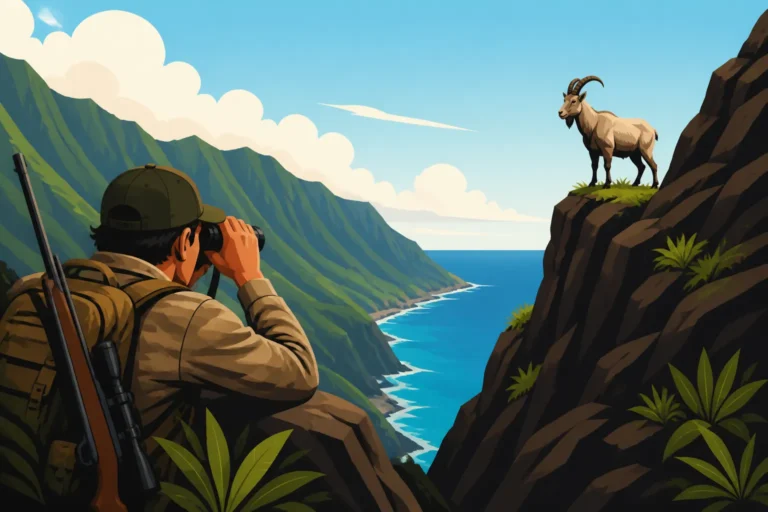
Optics are your best friend here. Quality binoculars (10x or 12x) and a spotting scope on a lightweight tripod are essential for glassing the vast expanses. You'll spend far more time looking through glass than actually walking. Sun protection is also key: wide-brimmed hats, sunglasses, and lightweight, breathable UPF-rated clothing will protect you from the intense sun. For weaponry, consider a rifle chambered in a flat-shooting caliber suitable for open country shots, as opportunities can present themselves at longer ranges. Choosing an Arrow Setup for Axis Deer If bowhunting, ensure your setup is tuned for accuracy and penetration on tough Axis deer hides. A good backpack capable of carrying extra water, snacks, first-aid, and potentially even quartered meat for a short distance is also vital. Remember, every ounce matters when you're packing it across miles of challenging terrain.
Scouting and Navigation
Scouting, even if it's "digital scouting" from home, is invaluable. Utilize satellite imagery on mapping apps like onX Hunt to identify potential water sources, dense kiawe thickets (bedding areas), prominent ridges for glassing, and logical travel corridors. Mark these waypoints on your phone or GPS device. Crucially, download offline maps to your device, as cell service will likely be non-existent once you're deep in Unit One. Don't rely solely on electronics; carry a physical map and compass as a backup. Scouting a Hawaii Hunting Unit Before Opening
Once on the ground, even if it's just the day before your hunt, driving the accessible roads and visually inspecting the landscape can provide critical insights. Look for recent deer sign near water holes or fresh tracks along gulches. Understand the general direction of the prevailing winds. Given the open nature of much of Unit One, identifying distinct landmarks for navigation is important, as many areas can look remarkably similar. Consider carrying a satellite communication device like a Garmin inReach or Zoleo for emergencies, as regular cell phones won't cut it when you're miles from a road and need help. Pre-planning your routes and having contingency plans for extraction are crucial safety measures.
Effective Hunting Strategies for Unit One
Hunting Lanai's Unit One requires a blend of patience, keen observation, and strategic movement. It's not a place for "still hunting" through dense forest, but rather a game of long-distance chess, playing the terrain and the animals' habits against the clock.
Spot-and-Stalk Tactics
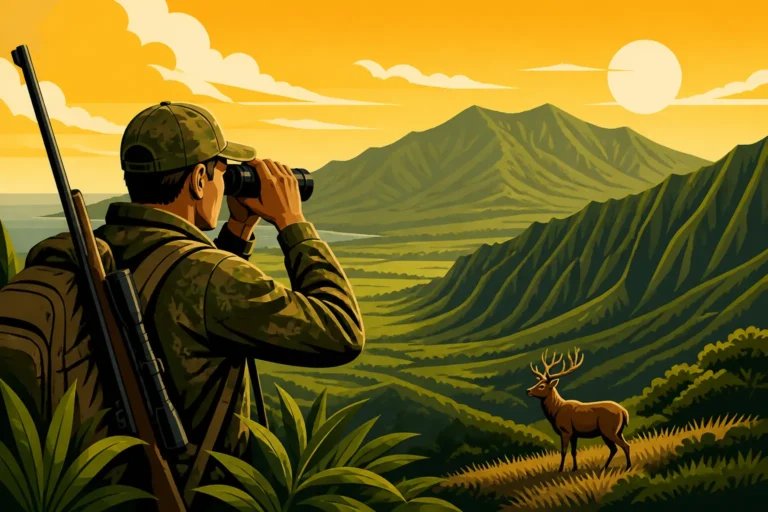
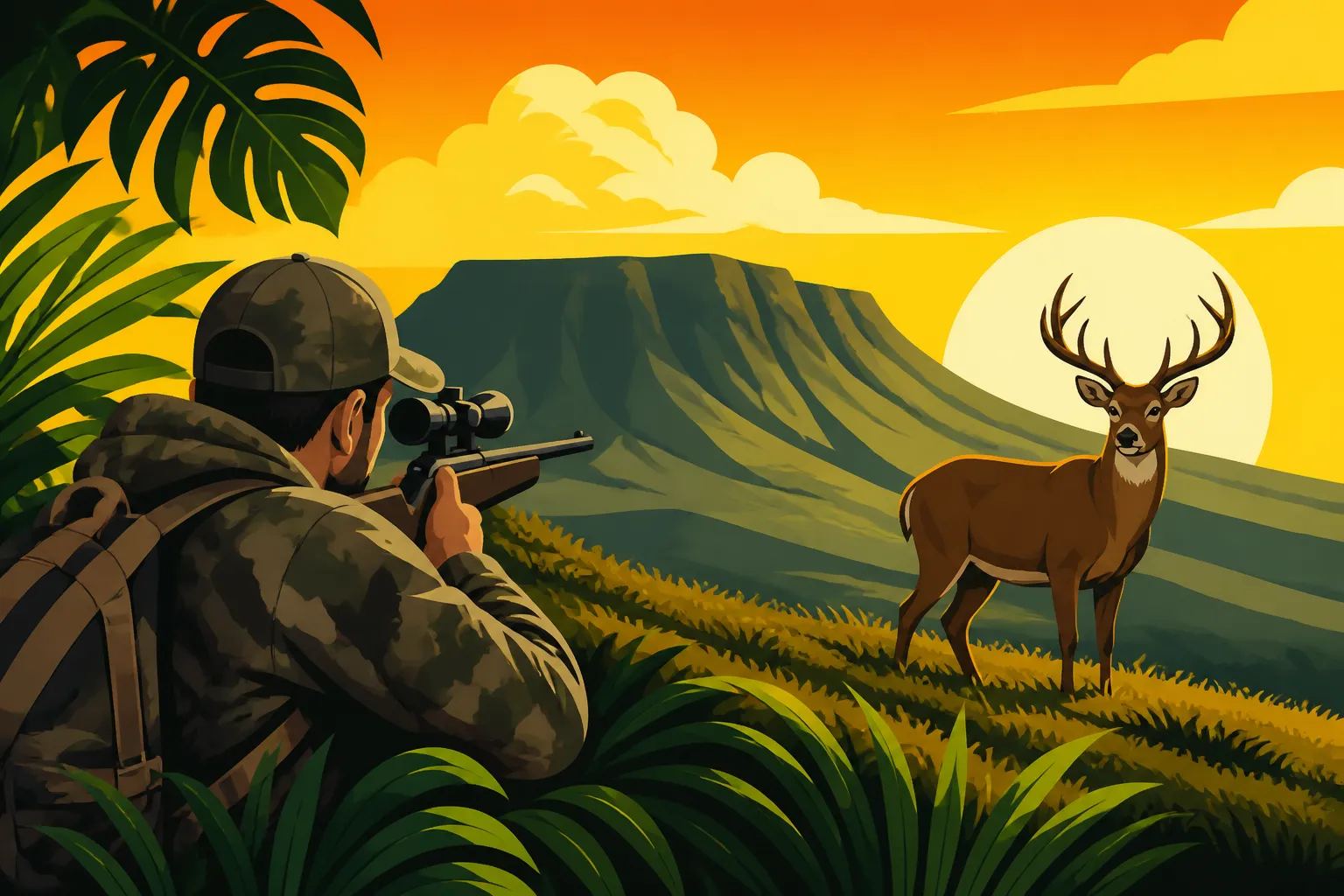
The vast majority of successful hunts in Unit One rely on classic spot-and-stalk techniques. This means finding a high vantage point at first light, setting up your optics, and patiently glassing for deer. Dedicate significant time to thoroughly sweep the landscape, looking for entire animals, parts of animals, or even just subtle movements or color changes that indicate deer. Once a target animal or herd is spotted, the real work begins: planning your approach. Spot-and-Stalk Tactics on Open Country
Consider the wind direction, the terrain between you and the deer, and available cover. Axis deer have incredible eyesight, so staying out of sight is paramount. This might involve long detours, crawling on your hands and knees, or using dry gulches and the cover of kiawe trees to your advantage. A successful stalk often takes hours, covering far more ground than the direct distance to the animal, but getting into effective shooting range undetected is the goal. Remember to use the thermals to your advantage; as the sun rises, warm air rises, carrying your scent upwards, but as evening approaches, the air cools and sinks, often carrying your scent downhill. Always be aware of how your scent is traveling.
Water Source Ambush
Given the arid nature of Unit One, water sources become strategic focal points, especially during prolonged dry periods. Identifying key water holes, seeps, or stock tanks (if present) on your maps during scouting is vital. While Axis deer are wary, their need for water can draw them into predictable locations. Setting up a patient ambush near a known water source, particularly in the late afternoon or early morning, can be an effective strategy, especially if spot-and-stalk opportunities are proving difficult. Hunting a Water Source in Dry Hawaii Country
When planning a water source ambush, consider your approach and exit to avoid spooking animals before you even get set up. Find natural cover that offers a clear line of sight to the water and allows you to remain undetected. This might be a dense cluster of kiawe, a rocky outcrop, or a deep crease in a gulch. Be mindful of the wind, as deer will often approach water from downwind to check for danger. This method requires immense patience, often sitting for hours in the heat, but the payoff can be a close-range shot at a relaxed animal.
Reading Sign and Tracking
Even in the dry, dusty conditions of Unit One, Axis deer leave behind crucial clues. Learning to read their sign can help you confirm their presence, identify travel routes, and even estimate recent activity. Look for fresh tracks in soft soil or dust, particularly near water sources or along gulch bottoms. Pay attention to the size and freshness of droppings, and browse lines on vegetation. Axis deer will rub their antlers on trees and bushes, especially during the rut, leaving behind distinct marks. Reading Axis Deer Sign in Dry Country
While tracking in open, rocky country can be challenging, understanding the types of sign can help you narrow down areas of high deer activity. For instance, finding heavily browsed patches of kiawe or fresh tracks indicating a herd's movement from a bedding area to a feeding ground can inform your spot-and-stalk strategy for the next day. Goats will also leave their mark, often in steeper, rockier terrain, so learning to differentiate between goat and deer sign is helpful. The more you immerse yourself in the subtle language of the landscape, the better you'll understand where the animals are and what they're doing.
After the Harvest: Field Care and Logistics
Successfully harvesting an Axis deer in Unit One is only half the battle. The warm Hawaiian climate and the physical demands of getting your animal out of remote terrain mean that quick and efficient field care is absolutely crucial to preserving your meat.
Field Dressing in the Heat
The moment an animal is down, the clock starts ticking. Hawaii's heat and humidity can spoil meat incredibly fast, so rapid field dressing is essential. Get the animal gutted as quickly as possible to begin the cooling process. If you're planning to quarter the animal to pack it out, do so immediately. Removing the hide, or at least peeling it back in sections, can also help dissipate heat. The goal is to expose as much surface area of the meat to the air as possible to cool it down. Field Dressing Axis Deer in Hawaii Heat
Have a sharp knife, game bags, and gloves ready. Work efficiently, and be prepared for flies and other insects that will quickly arrive. Even if you're only a short distance from your vehicle, it's wise to begin this process immediately rather than dragging a whole carcass, which generates more heat and bruises meat. Consider bringing a small, lightweight tarp to lay the animal on, keeping it off the hot ground and making the process cleaner.
Cooling and Transporting Meat
Once field dressed and potentially quartered, the next challenge is getting the meat cooled and transported. Large, durable coolers filled with ice are non-negotiable. Plan for more ice than you think you'll need. If you've quartered the animal, place the meat into breathable game bags to protect it from dirt and flies, then immediately get it into coolers packed with ice. Drain any melted water regularly to prevent the meat from soaking, which can encourage bacterial growth. Cooling Meat Fast on a Hawaii Hunt
If you're deep in the unit, consider how you will physically move the meat. A hunting frame backpack is a lifesaver for packing out heavy quarters over rugged terrain. It's often a multi-trip affair, especially if you're hunting alone. The distance from your kill site to your vehicle can feel ten times longer with a heavy load on your back. Always have a plan for getting the meat from the field to your vehicle, and from your vehicle to a cold storage facility or home freezer as quickly as possible. Many hunters bring multiple coolers, and even frozen water bottles or jugs to act as extra ice, to keep everything as cold as possible during the transport.
Checking Out and Reporting
After a successful hunt, your final responsibility is to properly check out of Unit One and report your harvest. This typically involves returning to a designated check station or using an electronic system like the OuterSpatial app, if available for that unit. Make sure your permit-tag is correctly attached to your animal, as required by law. Tagging an Animal Correctly in Hawaii
Be prepared to provide details about your hunt, including the species harvested, sex, and possibly the location of the kill. These reporting requirements are not just bureaucratic hurdles; they are crucial for wildlife management officials to gather data on game populations and hunting pressure. Failing to check out or report your harvest can lead to fines and loss of future hunting privileges, so always make this a priority before you celebrate your successful hunt.
Key Considerations for Hunting Lanai's Unit One
| Feature | Description | Strategic Implication |
|---|---|---|
| Terrain | Arid, open kiawe flats, deep dry gulches, rocky outcrops, rolling hills. Sharp lava rock underfoot. | Requires sturdy boots, patient glassing, careful stalking, and navigating difficult, thorny cover. |
| Game | Primarily Axis deer, with feral goats also present. Wary animals with excellent eyesight. | Focus on spot-and-stalk; utilize cover and wind; prepare for long-range shots. Understand deer patterns around water. |
| Water | Extremely limited and critical. Often the primary driver of animal movement and concentration. | Identify all known water sources during scouting; consider ambush tactics, especially in dry periods. |
| Weather | Hot, dry, intense sun, often dusty. Persistent trade winds with shifting thermals. Rains are rare but impactful. | Hydration is paramount; sun protection essential; scent control challenging due to swirling winds; quick field care vital. |
| Access | Lottery-based permit system. Rough, 4WD-only roads. Mandatory check-in/out. Limited amenities. | Apply early for permits; rent a high-clearance 4×4; know check-in locations; download offline maps (onX Hunt). |
| Challenges | Lack of cell service, long packing distances, rapid meat spoilage, dense kiawe thorns, wary animals. | Carry satellite communicator; bring game bags and plenty of ice; wear gaiters; practice long-range shooting. |
Disclaimer
This article is for general informational purposes only and does not constitute professional advice. Laws, prices and regulations vary by location and change over time. Consult a qualified professional for guidance on your specific situation.