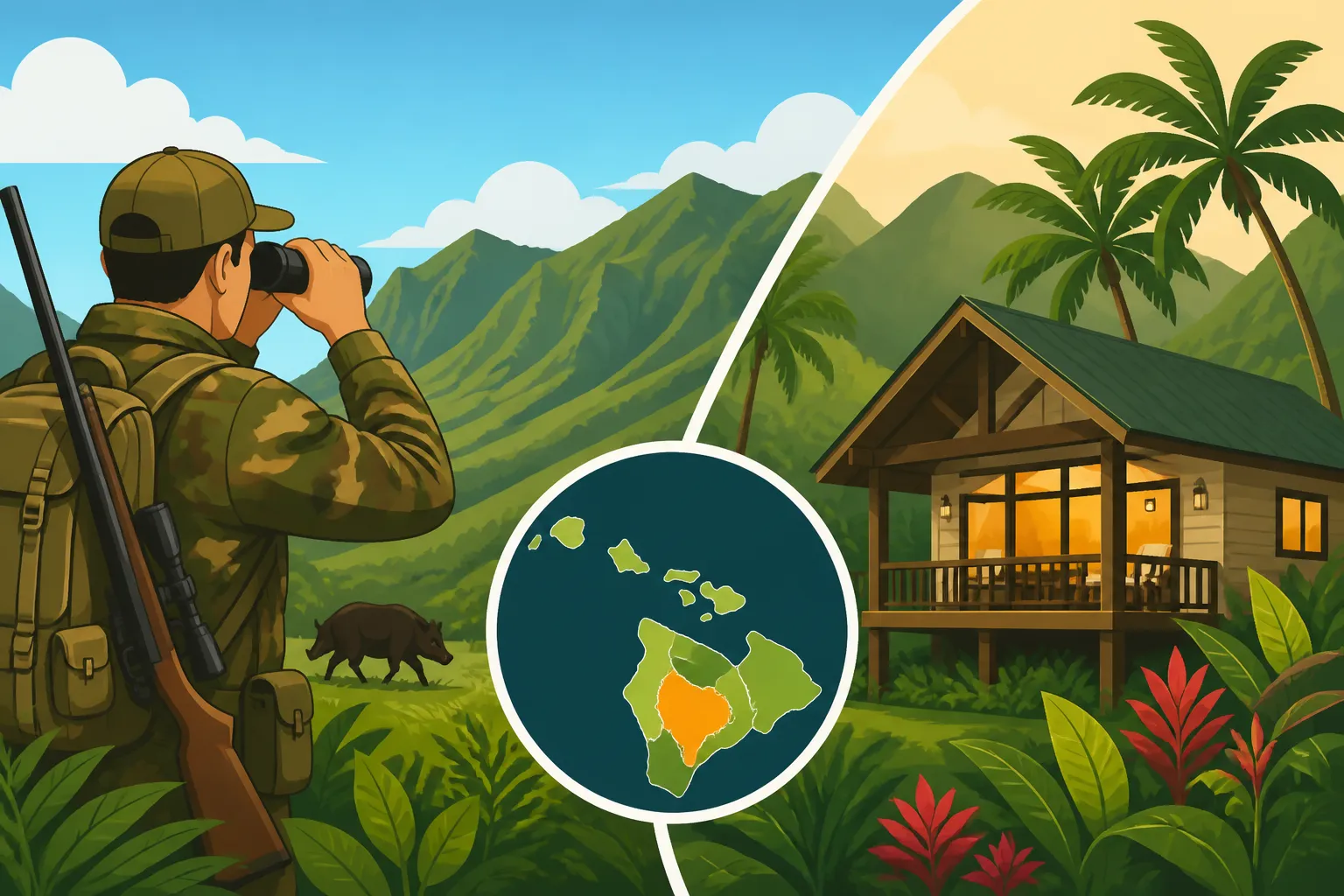
Hawaii Lodging Near the Hunting Units
One of the trickiest parts about planning a hunting trip to Hawaii, especially for those new to the islands, isn't just navigating the unit boundaries or understanding the permit-tag system—it's figuring out where on earth you're going to stay. You're not just looking for any old vacation rental or hotel; you need lodging that actually supports the unique demands of a hunting trip, often far removed from the typical tourist hubs. This guide will help you understand your options and make smart choices for your home base.
The Unique Challenges of Finding Hunter-Friendly Lodging in Hawaii
Let's be real, Hawaii isn't exactly a well-trodden path for mainland hunters, and the infrastructure reflects that. You're not going to find a "hunter's lodge" on every corner like you might in some Western states. The challenge isn't just finding a bed; it's finding a strategic bed that allows you to hit the trails before dawn and return after dark without a two-hour drive, and then actually handle your harvest responsibly.
Beyond the Tourist Hotspots
When most people think of Hawaii lodging, they envision beachfront resorts, bustling Waikiki hotels, or charming B&Bs in quaint surf towns. While these are wonderful for a vacation, they're often completely impractical for a hunter. Many of Hawaii's prime hunting units, whether for axis deer, feral pigs, or mouflon sheep, are located far from these tourist centers. We're talking about remote forest reserves, high-elevation volcanic slopes, or rugged canyon lands. Trying to commute from a resort in Kaanapali to a pre-dawn hunt on Haleakala's slopes, or from Kailua-Kona to a unit up on Mauna Kea, can add hours of driving to an already long day.
The sheer distance from amenities can also be a factor. While you might want to enjoy a nice dinner after a successful day, most hunters prioritize being close to their hunting grounds. This means looking at smaller towns, rural areas, or even private rentals that might not be prominently advertised on major travel sites. The ambiance might be less "luxury resort" and more "rustic retreat," which is exactly what a serious hunter needs.
Early Mornings and Late Nights: The Logistical Hurdles
Hunting in Hawaii often starts early. Like, before-the-sun-comes-up early. You need to be checked into your unit, geared up, and hiking into position well before legal shooting light. Depending on the unit, this could mean leaving your lodging at 3:00 or 4:00 AM. If your accommodation is an hour or two away from the trailhead, you're looking at an alarm clock that feels downright cruel. This daily grind quickly wears you down, impacting your focus and endurance in the field.
Conversely, successful hunts often end late. Packing out an animal, especially a large pig or an axis deer from a deep gulch, can easily take hours, pushing you well past sunset. Returning to your lodging in the dark, tired and possibly with a cooler full of meat, presents its own set of challenges. Hotels with strict quiet hours or limited parking might not be ideal. You need a place where you can come and go without disturbing others or feeling like you're constantly explaining your unconventional schedule.
Post-Hunt Realities: Meat Care and Gear Storage
This is where many standard lodging options truly fall short for hunters. Once you've harvested an animal in Hawaii's often warm and humid climate, proper field care and rapid cooling are paramount. You can't just leave a deer quartered in a truck bed overnight; that meat will spoil quickly. You absolutely need access to ample ice, large coolers, and ideally, freezer space to properly process and preserve your hard-won venison or pork. Field Care in Hawaii's Heat and Humidity becomes a critical concern.
Most hotels don't offer guest access to industrial freezers, nor do they appreciate hunters cleaning bloody gear in their bathtubs. A vacation rental or a more remote, private cabin often provides the space and facilities needed for gutting, quartering, and chilling meat. You also need secure storage for your firearms, archery equipment, muddy boots, and wet rain gear. Leaving expensive equipment unsecured in a vehicle, especially in less populated areas, is a risk no hunter should take. Look for places with garages, enclosed lanais, or secure sheds where you can store your gear out of sight and protected from the elements.
Types of Lodging Options for Hawaii Hunters
Knowing the challenges, let's dive into the kinds of places that typically work best for hunters in Hawaii. Each option has its own set of pros and cons, and the "best" choice really depends on your budget, the specific island you're hunting, and your personal preferences for comfort and convenience.
Vacation Rentals and Private Homes
For many hunters, renting a private home or vacation rental through platforms like Airbnb, Vrbo, or local rental agencies is the sweet spot. These options offer privacy, space, and amenities that are hard to beat. You can often find places in more rural neighborhoods or small towns closer to hunting units, cutting down on those arduous pre-dawn drives.
The biggest advantage is usually the full kitchen, which allows you to cook your own meals, pack lunches, and prepare coffee for those early mornings. More importantly, many private rentals have larger refrigerators and sometimes even dedicated chest freezers, which are invaluable for proper meat care. You might also find outdoor hoses for cleaning gear, a garage for secure storage, or enough space on a lanai to hang wet clothes. If you're hunting with a group, a multi-bedroom house can also be surprisingly cost-effective when splitting the bill. Just be sure to communicate with the owner upfront about your intentions to hunt, especially regarding game animals, to ensure they're comfortable with it.
Hotels and Motels: Pros and Cons
While not always ideal, hotels and motels can work, especially if you're traveling solo, on a tight budget, or if your hunting unit happens to be close to a town with such options. The main pros include ease of booking, daily cleaning service (though you might want to skip it on a hunting trip!), and sometimes amenities like pools or fitness centers if you have downtime.
However, the cons are significant. Hotel rooms typically lack kitchen facilities beyond a mini-fridge and microwave, making meal prep difficult and meat storage impossible. Security for firearms and hunting gear can be a concern, and cleaning muddy boots or processing any part of an animal in a hotel room is usually a definite no-go. You'll also likely be much farther from your hunting grounds, leading to longer commutes. If you choose a hotel, plan on frequent trips to a local store for ice and be ready to quarter and cool your meat immediately at a processor or a friend's house if possible. For planning your trip and getting your licenses, websites like GoHunt can be invaluable, but they won't help much with the physical lodging realities unless you're connecting with a guided outfitter who might arrange a specific hotel.
Camping and Remote Cabins
For the truly adventurous or budget-conscious hunter, camping is always an option, though it comes with its own set of considerations. Hawaii has a limited number of designated campgrounds, some of which are near public hunting units. Camping Rules on Hawaii Public Land vary, so it's essential to research specific unit rules and permits. The obvious advantages are proximity to the hunting grounds and cost savings. You can be at the trailhead moments after waking up.
The drawbacks, however, are substantial. You'll be exposed to the elements, which in Hawaii can mean sudden downpours, strong winds, or oppressive humidity. Meat care becomes even more challenging, requiring a robust cooler setup and constant vigilance with ice. Security for your gear is also a major concern in remote areas. Some public lands might have rustic cabins or shelters, but these are few and far between and often require advanced booking or special permits. This option is best suited for experienced backcountry hunters who are well-prepared for self-sufficiency and don't mind roughing it.
Island-Specific Lodging Considerations
Hawaii's islands are incredibly diverse, and so are their hunting opportunities and, consequently, the lodging situations. What works on Maui might be impossible on Molokai, so it pays to research your specific island and unit.
Hawaii Island Big Island: Proximity to Mauna Kea, Puu Waawaa, and Kona/Hilo Units
The Big Island offers a vast amount of public hunting land, but it's spread out, making strategic lodging crucial. If you're targeting mouflon sheep on the high slopes of Mauna Kea or Mauna Loa, staying in Waimea or Kamuela puts you closer to the high-elevation access points. These towns offer a mix of smaller hotels, vacation rentals, and even some ranches that might offer accommodations. They also tend to be cooler, which is a bonus for meat care. Hunting Mouflon Sheep Hunting on Hawaii Island often requires a high-elevation base.
For hunting pigs and goats in the Puu Waawaa area or the Kona side units, finding lodging in Kailua-Kona or even small towns like Waikoloa Village or Waimea (if you don't mind a drive) might be an option. However, for the more rugged and remote east (Hilo) side units, like the Hilo Forest Reserve, you might need to look for rentals closer to Hilo or even more rural homesteads outside of town. Hawaii Island Hunting Unit Seasons will guide you to where you'll be spending your time. Remember, the Big Island is big, so minimizing drive time is key.
Maui: Lodging for Axis Deer Country
Maui is famous for its thriving axis deer population, particularly on the leeward slopes of Haleakala. Many of the hunting units are located in the "Upcountry" region—areas like Kula, Ulupalakua, or closer to Makawao. These areas offer stunning views, cooler temperatures, and are often dotted with charming vacation rentals or private homes. Staying upcountry dramatically reduces your drive time to units like Kahikinui or Polipoli, which is critical when you want to be glassing at first light for Hunting Axis Deer at First Light in Hawaii.
Coastal towns like Kihei or Lahaina are further away, and while they have abundant lodging, they mean a longer, winding drive uphill every morning. If you're doing a guided hunt, especially for axis deer, many outfitters on Maui might offer packages that include lodging or recommendations for nearby accommodations. It's worth checking with services like BookYourHunt or directly with Maui outfitters for such options. Consider the dry, dusty nature of the terrain when choosing lodging; you'll appreciate a place where you can hose off yourself and your gear.
Lanai and Molokai: Limited Options, Strategic Choices
These islands are unique, offering some of the most sought-after axis deer and mouflon hunting, but with significantly fewer lodging options. On Lanai, the small town of Lanai City is virtually your only option for formal lodging outside of one or two resorts. This means booking far in advance is absolutely essential, especially if you get drawn for a highly coveted hunt. Given the island's size, Lanai City is fairly central to most hunting areas, including Hunting Lanai's Dry Kiawe Flats, making daily commutes manageable. Many hunters opt for vacation rentals or guesthouses.
Molokai, often called the "Friendly Isle," also has limited choices. Kaunakakai is the main town, and you'll find a few small hotels, condos, or vacation rentals there. Some private ranches might offer lodging as part of a guided hunt package. For access to public areas like Hunting Molokai's Public Reserve Land, staying near Kaunakakai or in a more remote rental on the west or east end, depending on your target unit, is prudent. The key here is scarcity; don't expect last-minute availability, especially during peak hunting seasons.
Kauai and Oahu: Accessing Pig and Black-Tailed Deer Areas
Kauai offers unique black-tailed deer hunting in the Kokee/Waimea Canyon area, along with feral pigs and goats across various units. Lodging on Kauai tends to be clustered in areas like Lihue, Poipu, Kapaa, or Princeville. For deer hunting in the high country, staying in Waimea or Kekaha on the west side significantly cuts down your travel time to the canyon rim or the Kokee plateau. This also makes sense if you plan to explore Hunting the Waimea Canyon Rim for Deer. Rentals in these smaller towns often provide a more rustic feel that aligns well with hunting.
Oahu, while the most populated island, still offers public hunting opportunities for feral pigs and goats on its mountain ranges. Lodging here is dominated by Honolulu and Waikiki, which are generally too far and too urban for practical hunting operations. Hunters on Oahu often seek out vacation rentals or guesthouses in more rural parts of the island, such as the North Shore, Waianae, or around the Koolau mountain range, to be closer to units like Hunting Oahu's Public Ridges. These areas will provide better access to trailheads and a more appropriate setting for returning with muddy gear after a long day in the dense forest.
Key Factors to Consider When Booking Your Stay
Beyond just where you stay, there are crucial practical elements that can make or break your hunting trip. Thinking through these details before you book can save a lot of headaches later on.
Location, Location, Location: Cutting Down Drive Times
This cannot be stressed enough. Hawaii's roads, especially those leading to rural or mountainous hunting units, can be slow, winding, and poorly maintained. A distance that looks short on a map might take an hour or more to drive. When you're waking up at 3 AM to be at the trailhead by 5 AM, every minute of drive time matters. Look at your chosen hunting units on a map and then search for lodging in the closest possible small towns or rural areas. Don't be swayed by cheaper rates or nicer amenities if it means adding an hour or two to your daily commute.
Consider the type of roads you'll be on. Many units require 4WD access, and your lodging might be off a bumpy, unpaved road. Ensure your rental vehicle and your accommodation are compatible with this reality. Some remote units, particularly on the Big Island or Maui, can be very far from any established town. If you plan to hike into a remote Hawaii unit, you might even consider camping closer to the trailhead for a night or two if rules allow, just to maximize your hunting time.
Essential Amenities for Hunters (Freezer Space, Cleaning Areas)
As we touched on earlier, specific amenities are a must. High on the list is freezer space for your harvested game. If a rental doesn't explicitly mention a chest freezer, ask the owner directly. Even a large, empty freezer in the garage can be a huge bonus. Failing that, a spacious refrigerator for coolers and easy access to ice at a local store is crucial.
Next, consider cleaning facilities. An outdoor hose, a wash basin, or even a utility sink can be invaluable for rinsing off muddy boots, bloodied gear, and knives. If you're bringing dogs for pig hunting, a place where you can wash and secure them will also be a priority. Secure storage for firearms and archery equipment is non-negotiable. A locked garage, shed, or even a secure room within the rental provides peace of mind. Finally, good laundry facilities are always a plus; no one wants to pack stinky, muddy hunting clothes into their luggage.
Budgeting for Your Accommodation
Hawaii is not a cheap destination, and lodging will likely be one of your biggest expenses. Prices for vacation rentals can fluctuate wildly depending on the season, island, and amenities. During peak tourist times or popular hunting weekends (like Opening Weekend on a Hawaii Hunting Unit), prices will be higher, and availability will be lower. Booking well in advance can often secure better rates.
Factor in more than just the nightly rate. Consider cleaning fees, service charges, and local taxes. If you're choosing a more remote rental, think about your grocery budget as well, as eating out every meal will quickly add up. Sharing a multi-bedroom vacation rental with hunting buddies is often the most economical approach, as you can split costs and share cooking duties. Don't forget to factor in the cost of ice, which you'll need in abundance. Sometimes, a slightly more expensive rental that offers a freezer and is closer to your unit can actually save you money in the long run by reducing fuel costs and the need for constant ice runs.
Leveraging Resources to Find Your Ideal Spot
Finding the perfect hunter-friendly lodging often requires a bit more digging than just a quick Google search. You'll need to tap into various resources and sometimes even get creative.
Online Platforms and Local Classifieds
Start with the major vacation rental platforms like Airbnb and Vrbo, but don't just search for "Hawaii vacation rental." Use keywords like "rural," "off-grid," "ranch," or "countryside" in your searches, and zoom in on maps to areas directly bordering or closest to your target hunting units. Read descriptions carefully for mentions of outdoor space, storage, or even local landowner connections. Sometimes, looking at local classifieds or community groups (online or physical bulletin boards) can unearth hidden gems that aren't on the big platforms. Local real estate agents specializing in rural properties might also have leads on short-term rentals.
When planning any hunt, remember to sort out your hunting license and any necessary permits. Sites like GoHunt provide excellent resources for understanding Hawaii Hunting Licenses and What They Cost and navigating the permit-tag system. While GoHunt itself doesn't offer lodging, their information can help you pinpoint your hunting location, which then informs your lodging search.
Connecting with Local Outfitters and Guides
If you're considering a guided hunt, this is often the easiest route to securing appropriate lodging. Many Hawaii outfitters offer comprehensive packages that include not only the hunt itself but also accommodations, meals, and even transportation to and from the hunting grounds. This eliminates much of the guesswork and ensures you'll be staying in a place that is genuinely hunter-friendly. When you're looking at Booking a Hawaii Axis Deer Hunt or a pig hunt, ask what's included in their What a Hawaii Guided Hunt Costs packages, especially regarding lodging and meat care facilities.
Even if you're planning a self-guided hunt, local outfitters can be a fantastic resource. They know the islands, the hunting units, and often have connections to private landowners or small guesthouses that cater to hunters. A quick phone call to a reputable guide service, even if you're not booking their services, might yield valuable lodging recommendations. Just be polite and respectful of their time and knowledge.
Understanding Rules and Restrictions
Before finalizing any booking, it's crucial to understand the specific rules and restrictions of your chosen lodging. This goes beyond just general house rules. For private rentals, confirm with the owner that they are comfortable with you bringing hunting gear, especially firearms (if applicable), and that you plan to field dress animals and potentially handle meat on the property (within reason, like quartering and cooler packing). Some owners might have strict rules against processing game meat on their property, so it's always best to be transparent.
If you're considering Hawaii Private Ranch Hunting Access, sometimes the ranch itself will offer rustic cabins or bunkhouses as part of their hunting packages. These are typically ideal as they're explicitly set up for hunters. If staying on public land, ensure you understand and comply with all Camping Rules on Hawaii Public Land and any other local ordinances. Ignorance of the rules won't prevent you from facing consequences, and you definitely don't want your hunting trip ruined by a misunderstanding with a homeowner or local authorities.
| Lodging Type | Pros | Cons | Best For |
|---|---|---|---|
| Vacation Rental | Privacy, full kitchen, potential for freezer space, secure gear storage, ideal for groups. | Can be expensive, requires careful vetting of owner's policies, less common in extremely remote areas. | Groups of hunters, longer trips, self-guided hunts where meat care and gear storage are top priorities. |
| Hotel/Motel | Easy booking, daily service, single-person friendly, amenities like pools/restaurants often available. | No freezer space, limited kitchen, difficult for gear storage/cleaning, often far from hunting units, less privacy. | Solo hunters on a strict budget, short trips, or when hunting units are exceptionally close to urban centers (rare in Hawaii). |
| Camping | Closest proximity to units, most budget-friendly, immersive outdoor experience. | Exposed to elements, challenging for meat care/security, requires significant gear, limited amenities. | Experienced backcountry hunters, very short trips, or as a temporary base for a specific remote unit when rules permit. |
| Outfitters' Lodge | Specifically designed for hunters, includes meals/services, guides handle logistics, convenient. | Can be expensive (part of guided package), tied to specific outfitter/unit, less personal flexibility. | Hunters booking a guided trip, first-time Hawaii hunters seeking convenience and expertise, those without extensive gear. |
Disclaimer
This article is for general informational purposes only and does not constitute professional advice. Laws, prices and regulations vary by location and change over time. Consult a qualified professional for guidance on your specific situation.