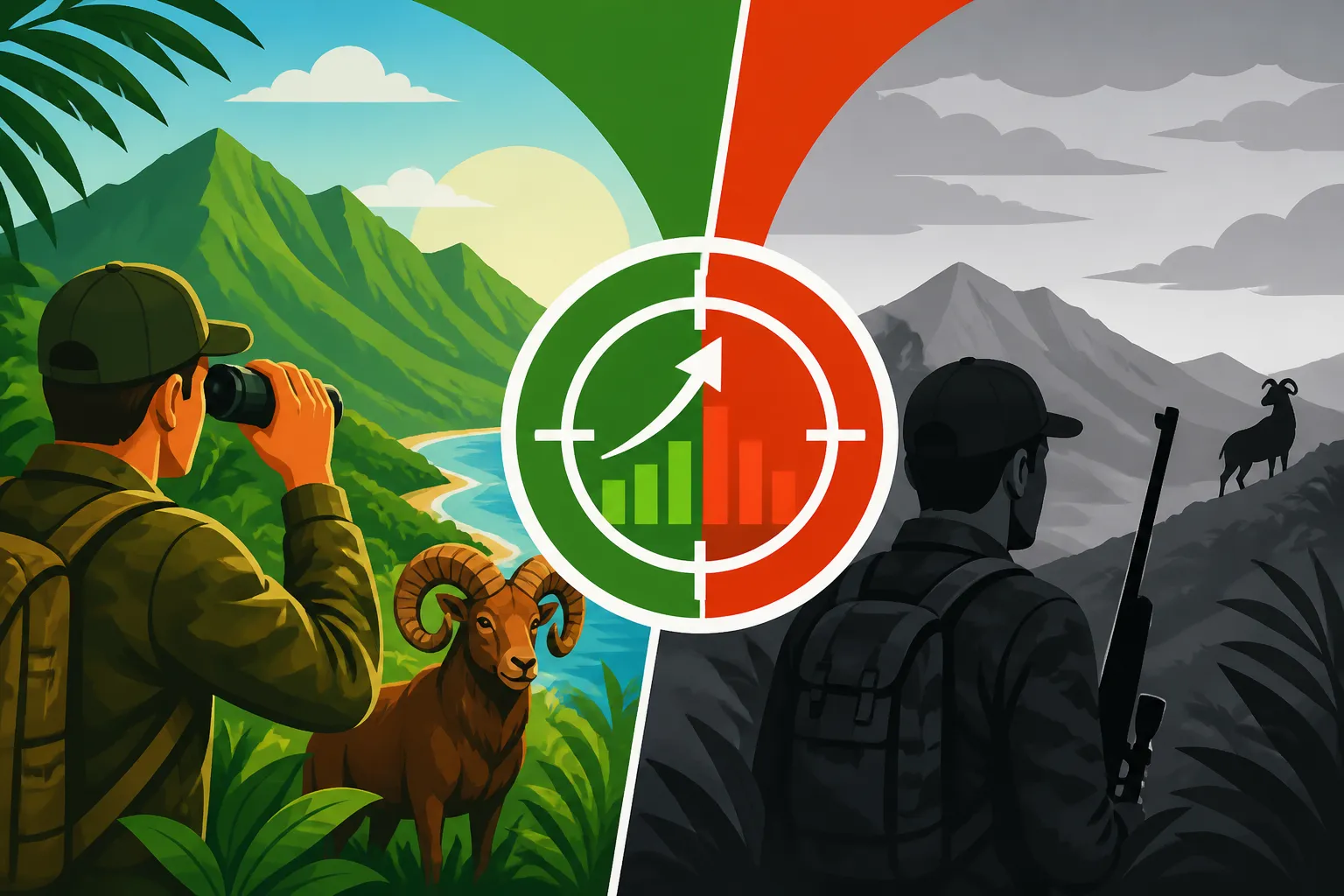
What Success Rates Actually Mean
When you’re planning that dream Hawaii hunting trip, whether it’s for a trophy axis deer on Maui or a challenging pig hunt deep in a rainforest gulch, you’re naturally going to look at what outfitters advertise as their "success rates." It's totally understandable to want to know your chances, but let's be honest, those numbers can be incredibly confusing and often don't tell the whole story. This guide is here to cut through the marketing jargon and explain what "success rates" truly mean in the context of Hawaii hunting, helping you set realistic expectations and ask the right questions before you commit.
Decoding "Success Rates" in Hawaii Hunting
It’s easy to get swept up in the excitement when you see an outfitter proudly displaying a 90% or even 100% "success rate." Your mind immediately jumps to a picture of you standing over a beautiful animal, but what does that number really represent? In the unique and wild landscapes of Hawaii, where no two hunts are ever truly alike, a simple percentage can be incredibly misleading. Understanding the nuances behind these figures is crucial for any hunter coming to the islands.
The Nuance of Opportunity vs. Harvest Success
One of the biggest distinctions you'll encounter in how outfitters report their success is the difference between "opportunity success" and "harvest success." This isn't just semantics; it's the core of what that percentage actually promises.
"Opportunity success" usually means that a hunter was presented with a reasonable chance to take a shot at a legal animal. This could mean seeing a mature axis buck within shooting range, even if the hunter ultimately chose not to shoot, missed the shot, or simply couldn't get a clean ethical angle. For instance, imagine your guide puts you on a beautiful axis buck at 250 yards, a shot you might typically make on the range. But in the excitement, or perhaps due to an unexpected gust of Hawaii's trade winds, you miss. From the outfitter's perspective, they provided you with an "opportunity," thus contributing to their high success rate.
"Harvest success," on the other hand, means an animal was actually taken by the hunter. This is the number most hunters think they're looking at when they see an advertised success rate. If you only care about putting meat in the cooler or a trophy on the wall, this is the percentage that truly matters to you. A high opportunity rate doesn't necessarily translate to a high harvest rate if hunters are consistently missing, passing on shots, or getting buck fever. It's vital to clarify which metric an outfitter is using, as it dramatically changes what that percentage implies for your personal trip. Sometimes, even the best plans are thwarted by external factors, and it's good to consider What Happens If Weather Cancels Your Hunt or impacts the animal's behavior.
What Outfitters Report and Why They Do It
Outfitters, like any business, are looking to attract clients. A high success rate is a powerful marketing tool, and how they define and present that rate can vary widely. Some reputable outfitters will be upfront about whether their rate is for opportunity or harvest, while others might be vaguer, allowing you to infer the more desirable outcome. The pressure to compete in a crowded market can sometimes lead to emphasizing the most favorable interpretation of their numbers.
Ethical outfitters understand that managing client expectations is key to a good experience. They'll explain that while they'll work tirelessly to put you on game, the ultimate outcome is never guaranteed when dealing with wild animals. Platforms like BookYourHunt often try to standardize the reporting, but it's still incumbent upon the hunter to dig deeper and ask clarifying questions. A guide who promises a 100% "kill rate" should raise a red flag, as this is almost impossible with truly wild, free-ranging game and suggests either a very limited hunting scenario or an exaggerated claim.
The Hidden Metrics: Legal Animals, Shot Opportunity, and Passing
Digging deeper into an outfitter's success rate reveals even more layers. Does their reported rate include every hunter who booked, or just the ones who tried to shoot? What if a hunter passes on multiple legal animals because they're holding out for a truly massive trophy? Some outfitters might count every instance a legal animal was seen within range, even if the hunter had no intention of taking it due to personal preference.
For example, on a deer hunt, if a hunter is solely focused on a "booner" buck and passes on several respectable but not record-book animals that the guide successfully located, those passed opportunities might still contribute to the outfitter's high "opportunity" success rate, even if the hunter goes home empty-handed. Similarly, if a hunter gets a shot at a pig, but rushes it and wounds the animal, only for it to escape into dense cover, that might still be counted as an "opportunity," even if no animal was recovered. These scenarios highlight why just looking at a single percentage isn't enough; you need to understand the underlying criteria the outfitter uses to define "success" for their metrics.
Key Influencers of Your Personal Success on a Hawaii Hunt
While an outfitter's general success rate provides a baseline, your individual success on a Hawaii hunt is far more complex and multifaceted. It hinges on a combination of your personal preparation, the guide you choose, and the ever-unpredictable natural world of the islands. Expecting your hunt to mirror an advertised percentage without considering these variables is like expecting a perfect surf day just because the forecast looked good; there are always other factors at play.
Hunter Preparation: Fitness, Skill, and Mindset
Hawaii hunting is not for the faint of heart, or the out of shape. The terrain can be brutal – steep gulches, uneven lava fields, dense, humid jungles, and high elevations. Your physical fitness is paramount. A hunter who arrives unprepared for the demanding hikes and challenging conditions will undoubtedly have a tougher time, potentially limiting their ability to keep up with the guide, stalk into position, or make a steady shot after a strenuous climb. For instance, Hunting Molokai's Axis Deer Country often involves long walks and significant elevation changes under the hot sun. If you're not ready for that, it directly impacts your ability to capitalize on opportunities.
Beyond physical fitness, your shooting skill is a huge factor. Can you confidently make an ethical shot at varying distances, possibly offhand or from an improvised rest, under pressure? Practicing your shooting from different positions and distances before your trip is invaluable. Finally, your mindset plays a huge role. Are you mentally prepared for the challenge? Are you patient and persistent, or do you get discouraged easily? Hunting is often about perseverance, especially in environments as dynamic as Hawaii.
The Role of Your Guide and Their Ethical Approach
Your guide is your eyes, ears, and often your legs in the Hawaiian wilderness. A good guide doesn't just know where the animals are; they understand their behavior, the local topography, and the ever-changing conditions. They should be able to communicate effectively, manage your expectations, and, most importantly, prioritize ethical hunting practices. When you're Choosing the Right Hawaii Outfitter, look for someone who emphasizes a fair chase, sustainable hunting, and a deep respect for the land and its resources.
An ethical guide will be honest about the challenges and won't promise a guaranteed kill. They'll work hard to put you in the best possible position, but they'll also respect your decisions, whether that's passing on an animal or taking a challenging shot. Their experience in navigating the unique microclimates and animal movements – knowing where pigs might be after a rain or where axis deer might water during a dry spell – is invaluable. Their ability to adapt the hunt plan on the fly, based on current conditions and animal sign, directly influences your chances.
Unpredictable Nature: Weather, Habitat, and Animal Behavior
Hawaii's diverse ecosystems mean you can go from dry, arid kiawe flats to dense, wet rainforests within a short drive. This variability, combined with the islands' unique weather patterns, profoundly impacts animal movement and availability. Hunting a Hawaii Unit After Heavy Rain might mean finding pigs wallowing in mud or deer moving to higher, drier ground. Conversely, Hunting a Hawaii Unit in Drought will concentrate animals around scarce water sources, changing typical patterns.
Wind, especially the strong, swirling trade winds, can make stalking incredibly difficult, carrying your scent far and wide. The sheer density of some vegetation, like strawberry guava or deep fern gulches, can make finding animals a monumental task, even when they're present in large numbers. These are wild animals, not livestock. They respond to food availability, weather changes, hunting pressure, and their own instincts. No matter how good your guide is or how skilled you are, sometimes nature simply doesn't cooperate, and that's an inherent part of the hunting experience in a truly wild environment.
Asking Intelligent Questions to Gauge Realistic Expectations
Since advertised success rates can be slippery, it's up to you, the hunter, to become an investigative journalist before you book. Don't be afraid to ask direct, probing questions. A good outfitter will welcome your questions and provide transparent answers, building trust and ensuring you have a clear understanding of what to expect.
Beyond the Raw Percentage: What to Ask
Don't just nod and accept a simple "90% success rate." Dig deeper. Ask:
- "Is that a 90% harvest rate or a 90% opportunity rate?" This is the most critical question.
- "What percentage of your clients actually take an animal?" This is different from a "kill rate" per animal.
- "On average, how many days does it take for a client to harvest an animal on this particular hunt?" This gives you an idea of the typical duration.
- "What's the typical size range of animals harvested on this hunt?" If you're after a trophy, a high success rate on smaller animals won't meet your goal.
- "What happens if I don't get an opportunity?" A fair outfitter might have a policy for a reduced future hunt or partial credit.
- "How many opportunities does the average hunter get?" This helps gauge animal density and guide effectiveness.
These kinds of questions, as detailed in Questions to Ask Before Booking, paint a much clearer picture than a single, ambiguous percentage. They help you understand not just if animals are seen, but if they're taken, and under what typical circumstances.
Understanding Trophy Quality and Tag Types
If your primary goal is a trophy-class animal, a general success rate becomes even less relevant. An outfitter might have a 95% success rate for axis deer, but if 80% of those are young spikes or management bucks, and you're dreaming of a record-book animal, that rate doesn't apply to your specific objective. Always clarify what "success" means in terms of trophy quality. Ask about the average antler size for axis bucks, or the typical horn curl for mouflon rams.
Also, consider the impact of tag types. On Lanai, for example, many hunts are for What One Either-Sex Tag Means on Lanai. While this increases the chance of harvesting an animal, it doesn't necessarily mean you'll get a trophy buck if that's your goal. A hunter focused on Judging an Axis Buck's Antlers in the Field might pass on several animals, thus lowering their personal harvest rate, even if the outfitter's overall opportunity rate remains high. Be honest with your guide about your specific goals, as this will help them manage your expectations and tailor the hunt.
Leveraging Independent Resources and References
Don't rely solely on what an outfitter tells you. Do your homework. Look for reviews on independent hunting forums, social media groups, and review sites. Be discerning, as not all reviews are fair or accurate, but consistent themes can emerge. If an outfitter is listed on platforms like BookYourHunt, check their reviews there. Pay attention to comments regarding the guide's professionalism, the quality of the hunting experience, and whether expectations were met.
Most importantly, ask the outfitter for references – specifically, clients who hunted the same species you're interested in, ideally within the last year or two. When you call these references, ask them the same detailed questions you asked the outfitter. Did their experience align with the advertised success rates? What were the challenges? What was their guide's demeanor like? Honesty from past clients, as highlighted in advice like Reading Outfitter Reviews Honestly, is the best indicator of what you can truly expect. Additionally, resources like GoHunt can provide valuable data on public land draws and success rates for various species, which can indirectly inform your expectations even for private land hunts, giving you a broader context of animal populations and hunting pressures in the region.
Cultivating a Realistic Mindset for Your Hawaii Hunting Adventure
Ultimately, a truly fulfilling hunting experience in Hawaii isn't just about pulling the trigger. It's about the adventure, the challenge, the beauty of the islands, and the privilege of being out in nature. When you set realistic expectations, you're far more likely to come home with a smile, regardless of what's in your cooler.
The True Value of the "Hunt" Itself
The term "success rate" puts a lot of emphasis on the "kill." But for many of us, the hunt is the true reward. It's the pre-dawn hike through a misty koa forest, the thrill of Spot-and-Stalk Axis Deer in Hawaii across an open ridge, the intense focus of tracking Hawaii's Feral Pigs, Island by Island through dense undergrowth, or the breathtaking views from a high-elevation Mouflon Sheep on Hawaii's Volcanoes hunt. It's the camaraderie with your guide, the lessons learned, and the sheer joy of immersing yourself in a wild landscape unlike any other.
If you focus too narrowly on the outcome, you risk missing the profound beauty and experience of the journey. Embrace the challenge, enjoy the scenery, learn about the unique ecology of Hawaii, and appreciate every moment, whether or not you tag an animal. That, in itself, is a huge success.
Accepting the Wildness of the Game
Hawaii's game animals – be it Axis Deer, Hawaii's Signature Big Game, feral pigs, or mouflon sheep – are wild. They are cunning, have keen senses, and their movements are dictated by instinct, weather, and pressure. There are no guarantees in hunting truly wild animals. Even the most experienced hunters with the best guides can have off days, or simply be outsmarted by the game.
This unpredictability is precisely what makes hunting so captivating. It’s not a shopping trip where you pick an item off the shelf. It’s a test of skill, patience, and respect for nature. Understanding and accepting this fundamental truth will free you from undue pressure and allow you to appreciate the experience for what it truly is: a challenging, rewarding interaction with the wild.
Planning for All Outcomes
Going into a Hawaii hunt with the understanding that success (meaning harvest) is never guaranteed allows you to plan accordingly. What will you do if you don't tag an animal? Perhaps you'll use the extra time to explore more of the island, enjoy some local cuisine, or simply relax on the beach. Hawaii offers so much more than just hunting opportunities.
Consider booking your hunt as part of a larger vacation. That way, if the hunting doesn't yield a harvest, you still have an incredible trip filled with other activities. This flexible mindset can turn a potential disappointment into a fantastic adventure, making sure your investment in a Hawaii trip pays off in unforgettable memories, no matter the outcome of your time in the field.
| Success Rate Type | Definition | What It Means for You | Key Questions to Ask |
|---|---|---|---|
| Opportunity Success | Hunter was presented with a reasonable chance to take a shot at a legal animal. | You saw game, and the guide did their job, but a harvest isn't guaranteed. | "Does this count missed shots or passes?" "How many opportunities typically?" |
| Harvest Success | Hunter successfully took a legal animal. | You brought an animal home (or had the chance to). This is often what you want. | "Is this based on actual animals taken?" "What's the average size harvested?" |
| Trophy Success | Hunter harvested an animal meeting specific trophy criteria (e.g., antler score). | Your personal goal for a specific quality of animal was met. | "What percentage of harvests are trophy class?" "What defines 'trophy'?" |
Disclaimer
This article is for general informational purposes only and does not constitute professional advice. Laws, prices and regulations vary by location and change over time. Consult a qualified professional for guidance on your specific situation.