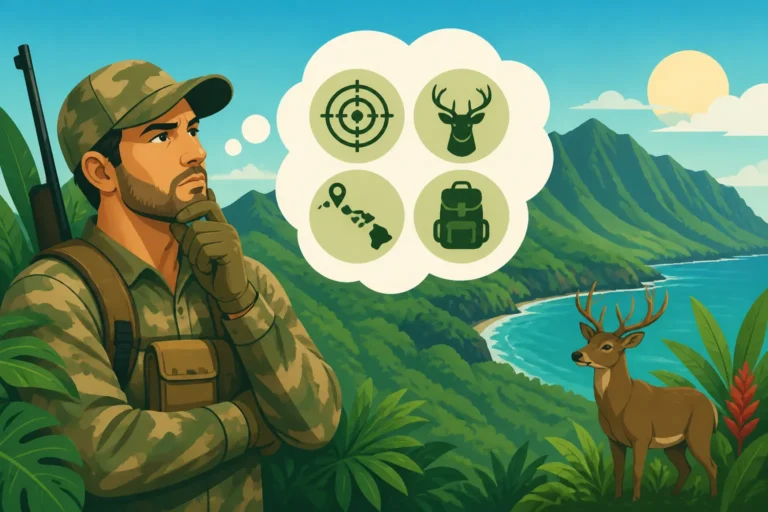
Why You Cannot Hire a Guide on Lanai
It's incredibly frustrating when you're planning what you think will be an epic guided hunt in a dream destination like Lanai, only to discover that the rules are completely different from what you expected. Many hunters, especially those new to Hawaii, envision hiring a seasoned local guide to navigate the terrain and spot game on Lanai, only to hit a wall. This guide will clarify exactly why you can't hire a guide for public land hunts on Lanai and help you understand the unique requirements for planning a successful self-guided adventure there.
The Unique Public Land Hunting Landscape on Lanai
Lanai, often called the "Pineapple Isle," holds a special place in the hearts of Hawaii hunters, especially when it comes to Axis deer. However, the hunting opportunities on this island, particularly on public lands, operate under a very distinct set of rules compared to what many mainland hunters, or even hunters from other Hawaiian islands, might be used to. It's not just about getting a license; it's about understanding the entire framework.
Understanding Lanai's Public Hunt System
When you look at public hunting on Lanai, you're looking at a system designed to ensure fair access and opportunity for everyone. The state Department of Land and Natural Resources (DLNR), through its Division of Forestry and Wildlife (DOFAW), manages these lands, and they have specific regulations that govern how hunts are conducted. Unlike some other places where guided operations are common on public acreage, Lanai’s public units are primarily set up for self-guided hunters. This means that if you've been dreaming of someone else doing all the legwork for you, you'll need to adjust your expectations.
These public hunts are often allocated through a lottery or drawing system, especially for coveted species like Axis deer. Hunters apply for specific hunt dates and units, and if drawn, they receive a permit-tag. This ensures that the hunting pressure is distributed and that everyone has an equal shot at participating. You can find detailed information on the application process in guides like How the Lanai Axis Deer Draw Works. This system is a cornerstone of public land hunting here, and it fundamentally shapes what kind of assistance you can and cannot have in the field.
The Rationale Behind the No-Guide Rule
The decision to prohibit guided hunts on Lanai's public lands isn't arbitrary; it's rooted in a philosophy of public resource management and ensuring fairness. When the state designates land for public hunting, the intent is often to provide recreational opportunities that are accessible to all licensed hunters, regardless of their financial ability to hire a professional guide. Allowing guides could potentially create a two-tiered system where those who can afford a guide have a perceived advantage over those who cannot, which runs counter to the spirit of public land access.
Furthermore, the "no-guide" rule helps maintain the integrity of "fair chase" ethics. A guided hunt, while offering many benefits, sometimes streamlines the process to a degree that some argue detracts from the self-reliance and challenge inherent in traditional hunting. On Lanai, hunters are expected to scout, track, and recover game entirely on their own or with the help of uncompensated hunting partners. This encourages a deeper personal connection to the hunt and a more profound understanding of the land. It also helps manage overall hunting pressure and prevent the commercialization of a resource meant for the general public, aligning with broader conservation efforts.
Navigating Lanai's Self-Guided Hunt Requirements
So, you're committed to hunting Lanai, and you understand it's a self-guided affair. Fantastic! Now it's time to dive into the nitty-gritty details to ensure your trip is not just legal, but also well-planned and successful. This isn't like showing up with a guide waiting for you; it's all on you, and that's part of the adventure.
Essential Licenses and Permit-Tags
First things first: you need to be properly licensed and permitted. This starts with securing a valid Hawaii hunting license. Whether you're a Hawaii resident or coming from the mainland, there are specific requirements and costs involved, which you'll want to sort out well in advance. For non-residents, this often includes specific hunter education requirements or providing proof of prior hunter education.
Once your general hunting license is in hand, the next critical step for Lanai is obtaining the specific permit-tag for the game you intend to hunt, typically Axis deer or Mouflon sheep. These tags are often allocated via a lottery system, as mentioned earlier. You'll need to apply within the specified windows, which are usually announced by DOFAW well ahead of time. It's crucial to pay attention to these deadlines, as missing them means missing out on the hunt. Details about costs, whether you're a resident or non-resident, can be found in resources like Lanai Axis Deer Tag Cost for Residents and What Nonresidents Pay for a Lanai Deer Tag. The GoHunt website or the official DOFAW portal is usually where these applications are processed, so familiarize yourself with those platforms.
Planning Your Logistics: From Oahu to the Unit
Getting to Lanai is often the first logistical puzzle for many hunters. While there are direct flights from some neighbor islands, most mainland travelers will fly into Oahu (Honolulu) first, then catch a connecting flight to Lanai. Once on Lanai, you'll immediately face the challenge of getting around. The island has limited public transportation, and much of the hunting terrain requires a capable vehicle, often a 4WD, to access. Booking a suitable rental car that can handle rough, unpaved roads is non-negotiable for a self-guided hunt.
Beyond island transportation, you need to think about your specific hunting unit logistics. Each public hunting unit has designated check-in and check-out procedures, which are mandatory. This might involve an online system like OuterSpatial, or a physical check station. Failing to check in and out can lead to fines or loss of hunting privileges, so it’s not something to overlook. Refer to guidelines like Checking In and Out of Hawaii Hunting Units for the specifics. You'll be responsible for navigating the unit, locating game, making your stalk, and recovering your animal. This level of self-reliance is what makes a Lanai public land hunt such a rewarding challenge, as detailed in articles like Hunting Lanai Without a Guide.
Maximizing Your Self-Guided Success on Lanai
A self-guided hunt on Lanai demands preparation, resilience, and a solid understanding of the terrain and the animals you're pursuing. It’s not just about showing up with a rifle; it’s about becoming a temporary expert in that specific environment. This is where your planning and field skills really shine.
Key Scouting and Strategy Tips
Before you even set foot on Lanai, you should be doing your homework. Digital mapping tools are invaluable for pre-scouting the public hunting units. Study topography, identify potential water sources, and look for natural funnels or pinch points that Axis deer might use. Lanai's terrain varies from dense kiawe forests to open, arid ridges, so understanding the specific unit you're drawn for is crucial. Articles like Glassing Lanai's Open Ridgelines can provide insights into how to effectively scout and hunt these diverse landscapes.
Once you’re on the island, physical scouting, if permitted before your hunt dates, can make a huge difference. If not, be prepared to learn on the fly. Axis deer are creatures of habit, but their patterns can shift with weather, hunting pressure, and food availability. Look for fresh sign—tracks, scat, rubs, and active feeding areas. Pay close attention to subtle details; reading the land is paramount when you don't have a guide pointing out every clue. For dry country, knowing how to interpret Reading Axis Deer Sign in Dry Country will be invaluable. The key is patience, quiet movement, and being able to adapt your strategy as you encounter the unique challenges of Hunting Lanai's Dry Kiawe Flats.
Field Care and Game Recovery in Hawaii's Climate
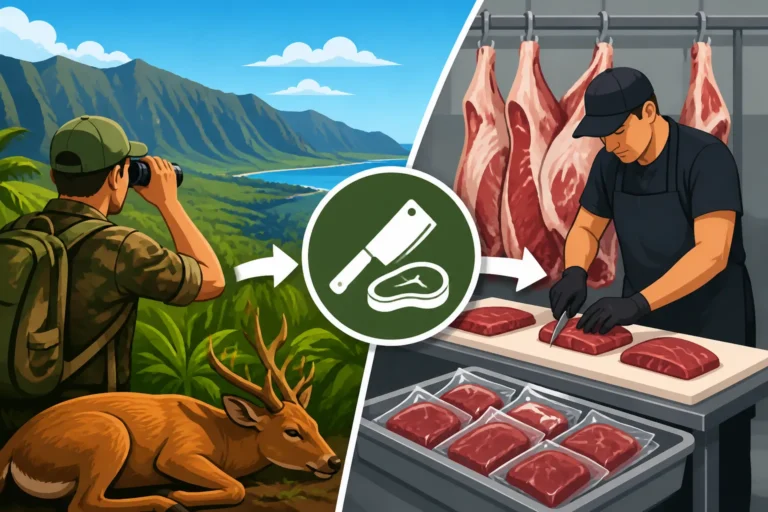
One of the biggest challenges for self-guided hunters in Hawaii, especially on Lanai, is the heat and humidity. These conditions are not forgiving when it comes to game meat. Proper and swift field care is absolutely non-negotiable if you want to salvage your harvest. As soon as an animal is down, the clock starts ticking. You need to be prepared to immediately field dress the animal, getting those guts out to begin the cooling process. This isn't a task to delay or rush.
Beyond field dressing, cooling the meat as rapidly as possible is vital. This often means breaking down the animal into quarters (or even smaller deboned pieces) to facilitate air circulation and minimize heat retention. Having a plan for packing out the meat – whether using sturdy game bags and a good pack frame for a long walk out (see Packing Meat Out of a Hawaii Gulch) or having a cooler filled with ice at your vehicle – is essential. Without a guide, you are solely responsible for this strenuous but critical part of the hunt. Don't underestimate the physical demands of getting an animal off the mountain in the heat; articles like Field Dressing Axis Deer in Hawaii Heat and Cooling Meat Fast on a Hawaii Hunt offer crucial advice for these conditions.
Alternatives and Private Land Opportunities
Just because you can't hire a guide on Lanai's public lands doesn't mean guided hunting is off the table entirely in Hawaii. The islands offer a range of hunting experiences, and it's worth understanding all your options, especially if a guided hunt is truly what you're after.
Exploring Guided Hunts on Other Islands
If the idea of a fully self-guided hunt on Lanai feels a bit too daunting, or if you simply prefer the convenience and expertise a guide offers, you absolutely have options on other Hawaiian islands. Maui and Molokai, for instance, are renowned for their Axis deer hunting, and numerous reputable outfitters operate on private lands there. These guides can provide everything from transportation and equipment to in-depth local knowledge, significantly increasing your chances of success and reducing the logistical headaches.
For example, if you're set on Axis deer but want a guided experience, looking into Booking a Hawaii Axis Deer Hunt on Maui or Molokai would be a smart move. Similarly, if other species like feral pigs or goats are on your list, you can find guided opportunities for those on various islands as well (e.g., Booking a Hawaii Pig Hunt). Websites like BookYourHunt are excellent resources for finding and vetting guides and outfitters across Hawaii, allowing you to compare packages and find the experience that best suits your preferences and budget. This allows you to experience Hawaii hunting with a local expert by your side.
Private Ranch Hunting on Lanai
It's important to draw a clear distinction between Lanai's public hunting lands and any potential private land operations. While guided hunts are prohibited on the public units managed by DOFAW, this rule does not necessarily extend to private ranches on the island. There are large private land holdings on Lanai, and these landowners might choose to operate their own guided hunting programs. These operations would fall under private land agreements and would have their own set of rules, fees, and available species.
If a guided hunt on Lanai is truly your dream, your best bet would be to directly contact the major private landowners or their designated hunting managers on the island. These opportunities can be exclusive and may come with a different price point and booking process than public land draws. They often provide a more controlled hunting experience and can include amenities not found on public hunts. Always ensure you thoroughly understand the terms, conditions, and what is included in any private land hunt package you consider.
| Feature | Lanai Public Land Hunt | Other Island Guided Hunt (Private Land) | Lanai Private Ranch Hunt (If Available) |
|---|---|---|---|
| Guide Allowed | No | Yes | Potentially Yes (contact landowner) |
| Land Management | State (DLNR/DOFAW) | Private Ranch | Private Ranch |
| Access Type | Draw/Lottery for Permit-Tag | Direct booking with outfitter | Direct booking with landowner |
| Responsibility | 100% Self-Guided | Guide handles logistics, tracking, etc. | Guide handles logistics, tracking, etc. |
| Cost Structure | License + Permit-Tag Fee | Package fee (higher) | Package fee (variable, likely higher) |
| Species | Axis Deer, Mouflon Sheep | Axis Deer, Pigs, Goats, Sheep | Axis Deer, Mouflon Sheep (likely) |
| Key Skill Required | Self-reliance, navigation | Hunter skill, trust in guide | Hunter skill, trust in guide |
Disclaimer
This article is for general informational purposes only and does not constitute professional advice. Laws, prices and regulations vary by location and change over time. Consult a qualified professional for guidance on your specific situation.