Hawaii Multi-Species Hunt Packages
Imagine flying all the way to Hawaii, hitting the public lands or a private ranch, and coming away with not just one incredible animal, but several, each offering its own unique challenge and story. It sounds like a dream, doesn't it? But orchestrating a hunt for multiple species in Hawaii can feel like trying to solve a puzzle with missing pieces. You're balancing different seasons, varying terrain, and distinct hunting methods, all while trying to make the most of your precious time in paradise. This guide is here to walk you through the ins and outs of Hawaii multi-species hunt packages, helping you understand how to plan, prepare, and successfully execute an unforgettable combo hunt across these amazing islands.
Understanding Multi-Species Hunt Packages in Hawaii
The idea of a "multi-species hunt package" might conjure images of African safaris, but here in Hawaii, it's a very real and increasingly popular option for hunters looking to maximize their adventure. It's about more than just bagging an animal; it's about experiencing the incredible diversity of Hawaii's landscapes and the unique challenges each game animal presents.
What Exactly Is a Multi-Species Hunt?
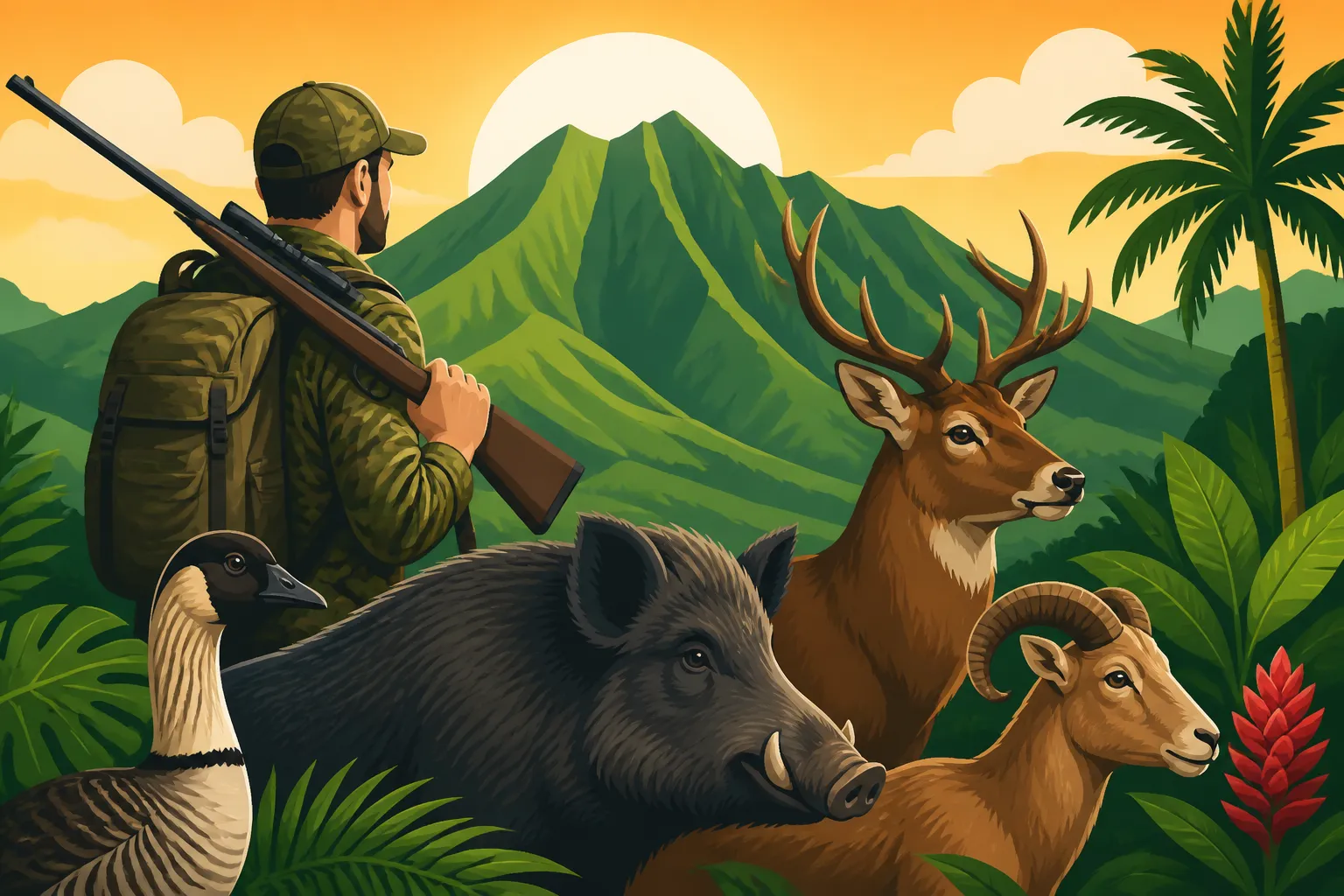
At its heart, a multi-species hunt in Hawaii means targeting two or more different game animals during a single trip. Instead of focusing solely on, say, Axis deer, you might combine that with a feral pig hunt, or perhaps add a goat to the mix. These packages are designed by outfitters to offer a richer, more varied hunting experience, often bundling species that can be found in similar regions or hunted with compatible methods. For many visiting hunters, the appeal is immense. You've already invested in travel to the islands, so why not make the most of your time and try for a variety of game? It's an efficient way to explore more of what Hawaii's diverse hunting opportunities have to offer.
Consider a scenario: you've always dreamed of Axis Deer Hunting in Hawaii. But you've also heard tales of the incredible challenge and excitement of Hunting Hawaii's Feral Pigs in the dense rainforests. A multi-species package allows you to pursue both without needing to book two entirely separate trips or spend days coordinating different logistics. Outfitters often structure these packages to flow seamlessly, moving you from one habitat to another, or even allowing you to pursue multiple species in the same general area if conditions are right.
The Allure and Challenges of Combining Hunts
The allure of a multi-species hunt is undeniable. You get more bang for your buck, literally and figuratively. You get to test your skills against different animals, adapt to varying environments, and potentially fill your cooler with a wider array of delicious wild game. Imagine starting your day glassing for Axis deer on a dry, open ridge on Maui, then transitioning in the afternoon to a thick gulch, stalking pigs with dogs. That kind of dynamic experience is what these packages deliver. Plus, it often means you're seeing more of the islands and experiencing a broader spectrum of what makes Hawaii hunting so unique.
However, it's not without its challenges. Logistically, multi-species hunts are more complex. You'll need to consider different weapon requirements for each species, varying hunting seasons, and the physical demands of moving between vastly different terrains. For example, the gear you'd need for Hunting Hawaii's Feral Goats on steep, rocky cliffs might be quite different from what's ideal for a quiet stalk for Axis deer across a kiawe flat. Your guide will be key in navigating these complexities, but it also requires more preparation and flexibility on your part. You'll likely need a broader range of clothing, perhaps different types of boots, and certainly a willingness to adapt your hunting style on the fly. And let's not forget the processing and transport of multiple animals; Field Care in Hawaii's Heat and Humidity is already a critical consideration for one animal, let alone two or three.
Common Multi-Species Combinations on the Islands
Outfitters on various islands have developed popular multi-species packages based on the local game populations and accessible hunting units. Here are some of the most common and sought-after combinations:
- Axis Deer and Feral Pig: This is arguably the most popular combo, especially on Maui and Molokai. You can pursue the elusive Axis deer in open, drier country, then shift gears to the dense, often wet, forests for pigs. The contrasting styles of hunting – spot-and-stalk for deer versus still-hunting or dog hunting for pigs – make for an incredibly diverse experience. On Maui, for instance, you might be Hunting Maui's Upcountry Axis Deer in the morning and then head lower into a gulch for pigs.
- Feral Pig and Feral Goat: On islands with robust populations of both, such as the Big Island or certain areas of Maui, this combo is a fantastic choice. Pigs are found in the thicker, often wetter areas, while goats prefer the drier, more rugged, and often cliff-laden terrain. This package often appeals to those who enjoy extremely physical hunts, as both pigs and goats can lead you through some seriously challenging country. Hunting Goats on Hawaii's Coastal Cliffs can be breathtakingly beautiful but intensely demanding.
- Mouflon Sheep and Feral Pig: This combination is primarily found on the Big Island, where mouflon sheep roam the high, often volcanic slopes of Mauna Kea and Mauna Loa. Mouflon Sheep Hunting on Hawaii Island takes you into a completely different environment than pig hunting in the lower elevation forests. This pairing offers a true high-country to deep-gulch adventure, demanding both alpine hunting skills for sheep and jungle smarts for pigs.
- Axis Deer, Feral Pig, and Feral Goat (Triple Threat!): For the truly ambitious hunter, some outfitters offer a three-species package. This is usually reserved for longer trips and specific islands that have all three robust populations within a reasonable travel distance. It's an immersive experience that will test every aspect of your hunting prowess.
When considering these combos, remember that specific availability will depend on the island, the outfitter, and the current hunting seasons. Always check with your chosen guide about what's realistic for your travel dates.
Finding and Booking Your Hawaii Combo Hunt
Embarking on a multi-species hunt in Hawaii requires careful planning, especially when it comes to finding the right outfitter and understanding the intricate details of licensing and permits. It's not like simply walking into a sporting goods store; you need to do your homework to ensure a smooth and successful adventure.
Researching Outfitters and Their Offerings
The first step in planning any guided hunt in Hawaii, especially a multi-species one, is thorough research into the available outfitters. You're looking for someone with a proven track record not just for getting clients on game, but for successfully managing the logistics of multiple species. Websites like BookYourHunt and GoHunt can be excellent starting points. They often list various Hunting Guides and Outfitters in Hawaii, detailing their packages, target species, and even client reviews. Look specifically for outfitters who explicitly advertise "combo hunts" or "multi-species packages."
When you find potential guides, don't hesitate to reach out directly. Ask detailed questions:
- What specific species combinations do they offer?
- What islands do they operate on for each species?
- What is the typical duration of their multi-species hunts?
- What's included in the package price (e.g., meals, lodging, field transport, basic meat processing)?
- What are their success rates for each species in the combo?
- Can they assist with obtaining necessary licenses and permits?
- What kind of terrain will you be hunting for each animal? For example, knowing if you'll be Hunting Hawaii's High Elevation Alpine Ground for mouflon versus Hunting Pigs in Hawaii's Rainforest Gulches is crucial for your physical and gear preparation.
It's also a good idea to ask for references from past clients who have done similar multi-species hunts. Their firsthand accounts can provide invaluable insights into the outfitter's professionalism, the quality of the experience, and how well they managed the complexities of a combo hunt. Remember, you're not just booking a hunt; you're investing in an experience, and a good outfitter will make all the difference.
Customizing Your Multi-Species Experience
While many outfitters have pre-set multi-species packages, a good guide will often be flexible enough to help you customize your experience, especially if you're booking a private land hunt. Don't be afraid to discuss your specific preferences, target animals, and even your fitness level. Some hunters might prioritize a trophy Axis buck, while others are more interested in the raw adventure of a pig hunt. Knowing your priorities upfront will help the outfitter tailor the trip to your expectations.
Customization might involve:
- Adjusting hunt duration: Perhaps you want an extra day dedicated solely to pig hunting if that's a personal passion.
- Choosing specific areas: If an outfitter has access to multiple Hawaii Private Ranch Hunts, you might discuss which areas offer the best chance for your desired combo.
- Weapon preferences: Some hunters prefer to stick to one weapon type, like a rifle, for all species, while others might want to try Bowhunting Hawaii's Public Units for deer and then switch to a firearm for pigs. Discussing this early allows the guide to plan accordingly for the unit access and legal weapons.
- Adding non-hunting activities: Maybe you want to combine your hunt with some fishing or other island adventures. A flexible outfitter might be able to help arrange this, especially for longer trips or if you're Combining a Hawaii Hunt With a Family Trip.
Remember, clear communication with your guide is paramount. They are the local experts and can advise on what's realistic and what might present too many logistical hurdles.
Navigating Licensing and Permits for Multiple Animals
This is where things can get a bit tricky, and it's absolutely crucial to get it right. Hunting in Hawaii involves a specific process for licenses and often for separate permits or tags for each species, depending on the island and unit. You can't just show up and expect to hunt everything.
Here’s a general overview, but always confirm the latest regulations with your outfitter and the Hawaii Department of Land and Natural Resources (DLNR) Division of Forestry and Wildlife (DOFAW):
- Hawaii Hunting License: You'll need a basic Hawaii hunting license, which is mandatory for all hunters, resident and nonresident alike. You can purchase this online through GoHunt Hawaii, the state's official licensing portal, or sometimes in person. Be aware of the distinction between Hawaii Resident Hunting License Options and Hawaii Nonresident Hunting License Options, as costs and requirements can differ.
- Wildlife Conservation Stamp: This is often required in addition to your basic license.
- Permit-Tags: For most big game animals like Axis deer, mouflon, and often goats (depending on the unit), you will need specific permit-tags. How Hawaii's Permit-Tag System Works is unique. These tags are often specific to an island or unit and may be obtained through a lottery draw system (like for Axis deer on Lanai) or over-the-counter for other species or units. Feral pigs on many public units, particularly on Oahu or parts of the Big Island, often do not require a separate tag beyond your hunting license, but this can vary.
- Season Dates: Critically important are the season dates for each species you plan to hunt. A multi-species hunt must align with the open seasons for all target animals. Some seasons are year-round for certain feral species, while others are highly restricted. Your outfitter will be essential in helping you navigate these dates.
When you're looking at a multi-species hunt, the outfitter should be able to clearly outline what licenses and tags you'll need and assist you with the application process, or at least provide explicit instructions. Don't leave this to the last minute! Applying for drawn tags can have deadlines months in advance of your trip. Understand Hawaii Hunting Licenses and What They Cost and factor these into your overall budget.
Preparing for Your Diverse Hawaii Hunt
A multi-species hunt in Hawaii isn't just a physical challenge; it's a test of preparedness. You'll be traversing varied and often rugged terrain, adapting to different hunting styles, and managing the unique logistics that come with pursuing more than one type of game animal. Getting your gear, body, and mind ready is key to a rewarding experience.
Gear Considerations for Different Terrains and Species
One of the biggest differences with a multi-species hunt compared to a single-species outing is the gear. You'll often be moving from dry, arid, rocky slopes to damp, muddy, dense jungle, sometimes all in the same day. This means your equipment needs to be versatile and robust.
- Footwear is paramount: Forget your casual hiking boots. You'll need serious, broken-in hunting boots that can handle both the sharp, abrasive lava rock and the slick, muddy trails of a rainforest. Look for boots with excellent ankle support and waterproofing. It's not uncommon for hunters to bring two pairs of boots – one for dry country and one for wet – especially if the combo hunt involves drastically different habitats. Read up on Boots for Hawaii Lava and Wet Forest.
- Clothing layers: Hawaii's weather can change dramatically, especially as you gain or lose elevation, or move from windward to leeward sides of an island. Start with a moisture-wicking base layer, add insulating layers, and always have a lightweight, waterproof, and breathable rain jacket and pants. You might be sweating profusely one moment and shivering from a sudden downpour the next. For Axis deer, lighter, quieter fabrics are essential. For pig hunting, durability against thorns and sharp branches is more critical.
- Weapon choice: Discuss this carefully with your outfitter. While a good all-around rifle caliber can be suitable for both deer and pigs, some hunters prefer different setups for different animals. If you're Muzzleloader Hunting in Hawaii for mouflon, you'll need a different setup than if you're pursuing pigs with dogs. Your outfitter might offer Renting a Rifle From a Hawaii Guide, which can simplify travel logistics, especially if you're flying in from the mainland.
- Optics: High-quality binoculars and a spotting scope are indispensable for glassing open country for Axis deer and mouflon. For pig hunting in thick cover, a good headlamp and perhaps a small, powerful flashlight become more critical.
- Backpack: A sturdy, comfortable daypack is essential to carry water, snacks, extra layers, first-aid, and game bags. For packing out meat, a larger frame pack might be necessary, or your guide might handle the heavy lifting.
Creating a detailed gear list with your guide's input is a non-negotiable step.
Physical Demands of a Combo Hunt
Let's be real: hunting in Hawaii is physically demanding, and a multi-species hunt amplifies that. You're not just walking flat ground. You could be climbing steep volcanic slopes for mouflon, navigating jagged lava fields, or slogging through dense, muddy, uneven rainforest for pigs. The heat and humidity, even at higher elevations, add another layer of challenge.
- Axis Deer: Often involves extensive hiking, sometimes at elevation, with long periods of still-hunting and spot-and-stalk. You might cover many miles over a day or two.
- Feral Pigs: Can be intensely physical, involving pushing through incredibly thick vegetation, navigating deep gulches, and moving quickly if hunting with dogs. It's often hot, humid, and muddy work.
- Feral Goats: Expect steep ascents and descents on rocky, unstable terrain, often along cliff faces. Requires good balance, strong knees, and a head for heights.
- Mouflon: Primarily high-elevation hunting, demanding excellent cardiovascular fitness for hiking in thin air and across rough, uneven terrain.
If you're considering a multi-species hunt, start a fitness regimen well in advance. Focus on cardio, leg strength, and core stability. Practice walking with a loaded pack on varied terrain if possible. The fitter you are, the more you'll enjoy the hunt and the higher your chances of success. Don't underestimate the islands; they are beautiful but can break you if you're not ready.
Field Care and Logistics for Multiple Harvests
Successfully harvesting one animal in Hawaii requires careful Field Dressing Axis Deer in Hawaii Heat and rapid cooling. Now imagine harvesting two or three animals within a day or two. The logistics become significantly more complex.
- Cooling meat: You'll need a solid plan for cooling all your meat quickly. This means bringing plenty of ice and quality coolers, or ensuring your guide has adequate provisions. For Axis deer, getting the hide off and the meat into shade and airflow is critical. For pigs, especially larger ones, quartering quickly and getting the meat packed out is paramount. Your guide will have local knowledge, but understanding the process and being prepared to assist is important. Cooling Meat Fast on a Hawaii Hunt is a skill you'll want to review.
- Transport: Moving multiple carcasses or a large volume of meat out of remote areas can be challenging. Some guides use ATVs, UTVs, or pack animals, while others rely on pure manpower. If you're on a public land hunt, you'll need to know the rules for Packing Meat Out of a Hawaii Gulch or through designated access points.
- Processing: Discuss meat processing with your guide before the hunt. Do they offer basic quartering? Do they have a preferred local processor? Will you be taking your meat home, or will you be leaving some with the guide or donating it? If you plan to ship meat home, understand the rules and costs for Shipping Meat Home From Hawaii. Agricultural inspections and specific packaging requirements apply. The same goes for any capes or antlers you wish to take for taxidermy; ensure you understand Getting a Cape and Horns Shipped Home.
Having a clear, pre-discussed plan with your outfitter for post-harvest logistics is vital to ensure your hard-earned game meat is handled properly and makes it to your freezer or destination.
Maximizing Your Multi-Species Adventure
A multi-species hunt in Hawaii is more than just a hunting trip; it's an immersive experience into the unique natural and cultural landscape of the islands. To truly make the most of it, strategic planning, ethical considerations, and an openness to the broader Hawaiian experience are essential.
Strategic Planning for Success
Success in a multi-species hunt hinges on strategic planning and communication with your guide. This isn't just about showing up with your gear; it's about understanding the flow of the hunt and being an active participant in its execution.
- Timing is everything: Discuss with your outfitter the best time of year for the specific species combination you're after. While some animals like feral pigs and goats can be hunted year-round in certain units, others like Axis deer have peak rutting periods or specific season dates. If you're hoping for a big Axis buck, knowing Why Axis Deer Rut Timing Is Different and aligning your trip with it can significantly increase your chances.
- Flexibility on the ground: Be prepared for conditions to change. Weather can shift rapidly, animals might move unexpectedly, or a target species might prove harder to locate than anticipated. A good guide will adapt, and you should too. Your itinerary might change daily, or even hourly, based on what the land and animals are telling you.
- Scouting and communication: While your guide will do the heavy lifting in terms of scouting, ask them what kind of sign you should be looking for. Learning to read Reading Axis Deer Sign in Dry Country or Reading Pig Sign Along a Muddy Trail can make you a more engaged hunter and potentially contribute to success. Maintain open communication with your guide about your energy levels, any challenges you're facing, and what you're hoping to achieve each day.
Remember that a successful multi-species hunt often means having realistic expectations. You might not tag every single animal you pursue, and that's okay. The adventure itself, the learning, and the incredible experience of hunting in Hawaii should be your ultimate trophies.
The Ethical Hunter's Approach to Diverse Ecosystems
Hunting in Hawaii comes with a unique set of ethical responsibilities, particularly because most game animals are introduced species that impact sensitive native ecosystems. As a hunter pursuing multiple species, your commitment to ethical hunting practices is even more important.
- Respect for regulations: Adhere strictly to all Hawaii hunting regulations, bag limits, and season dates for each species. Understand Hawaii's Legal Weapons by Season and ensure your gear complies. These rules are in place not just for safety but also for managing wildlife populations and protecting native flora and fauna.
- Conservation mindset: Hawaii's unique ecosystems are fragile. Understand that the feral animals you are hunting—pigs, goats, and deer—are considered invasive species by conservationists due to their impact on native forests, watersheds, and endangered plants. Your hunting efforts contribute to their management, which is a vital part of Hawaii's conservation strategy. Be mindful of your impact on the land, pack out all trash, and avoid disturbing non-target species or protected areas. Hawaii's Fenced Conservation Area Closures are there for a reason, and respecting them is critical.
- Clean kills and responsible harvest: With multiple animals on the agenda, ensure that you are taking ethical shots and making every effort to recover any animal you hit. This means knowing your effective range, practicing with your weapon beforehand, and being prepared for tracking. The tropical environment can make tracking difficult, so a responsible shot is paramount.
By approaching your multi-species hunt with a strong ethical compass, you not only ensure a positive experience for yourself but also contribute positively to Hawaii's unique conservation challenges.
Making the Most of Your Hawaiian Experience
Beyond the thrill of the hunt, a multi-species package offers an unparalleled opportunity to immerse yourself in the natural beauty and culture of Hawaii. Don't let your entire trip be just about the kill; savor the journey.
- Enjoy the landscapes: Take time to appreciate the stunning scenery you'll be hunting in. From the desolate, breathtaking vistas of lava fields to the lush, vibrant canopies of the rainforest, Hawaii's natural beauty is unlike anywhere else on earth. The views from Hunting a Ridge Above a Hawaii Valley or Hunting a Sea Cliff Goat Ledge are unforgettable.
- Cultural appreciation: Engage with the local culture. Your guide is likely a local, with deep roots in the community and a wealth of knowledge about the land, its history, and its people. Listen to their stories, ask questions about local traditions, and show respect for Hawaiian customs.
- Extend your stay: If possible, consider adding a few extra days to your trip before or after the hunt. This allows you to explore other aspects of the islands, from relaxing on pristine beaches to visiting historical sites or enjoying the local cuisine. Many families Combining a Hawaii Hunt With a Family Trip find this balance works perfectly.
- Document your journey: Take photos (responsibly and respectfully) of the landscapes, your camp, and the overall experience. These memories will last a lifetime, long after the meat is gone and the antlers are on the wall.
A multi-species hunt in Hawaii truly offers a comprehensive adventure. By combining the pursuit of diverse game with an appreciation for the islands' unique environment and culture, you're guaranteed an experience that goes far beyond a typical hunting trip.
| Species Combination | Typical Terrain | Common Islands | Hunting Methods | Physical Demand |
|---|---|---|---|---|
| Axis Deer & Feral Pig | Dry plains/kiawe forests + Wet rainforest/gulches | Maui, Molokai | Spot-and-stalk (deer) / Still-hunt, dog (pig) | Medium to High |
| Feral Pig & Feral Goat | Wet rainforest/gulches + Arid cliffs/canyons | Big Island, Maui | Still-hunt, dog (pig) / Spot-and-stalk (goat) | High |
| Mouflon Sheep & Feral Pig | High elevation volcanic slopes + Wet rainforest/gulches | Big Island | Spot-and-stalk (mouflon) / Still-hunt, dog (pig) | Very High |
| Axis Deer & Feral Goat | Dry plains/kiawe forests + Arid cliffs/canyons | Maui (specific areas) | Spot-and-stalk (deer/goat) | Medium to High |
Disclaimer
This article is for general informational purposes only and does not constitute professional advice. Laws, prices and regulations vary by location and change over time. Consult a qualified professional for guidance on your specific situation.