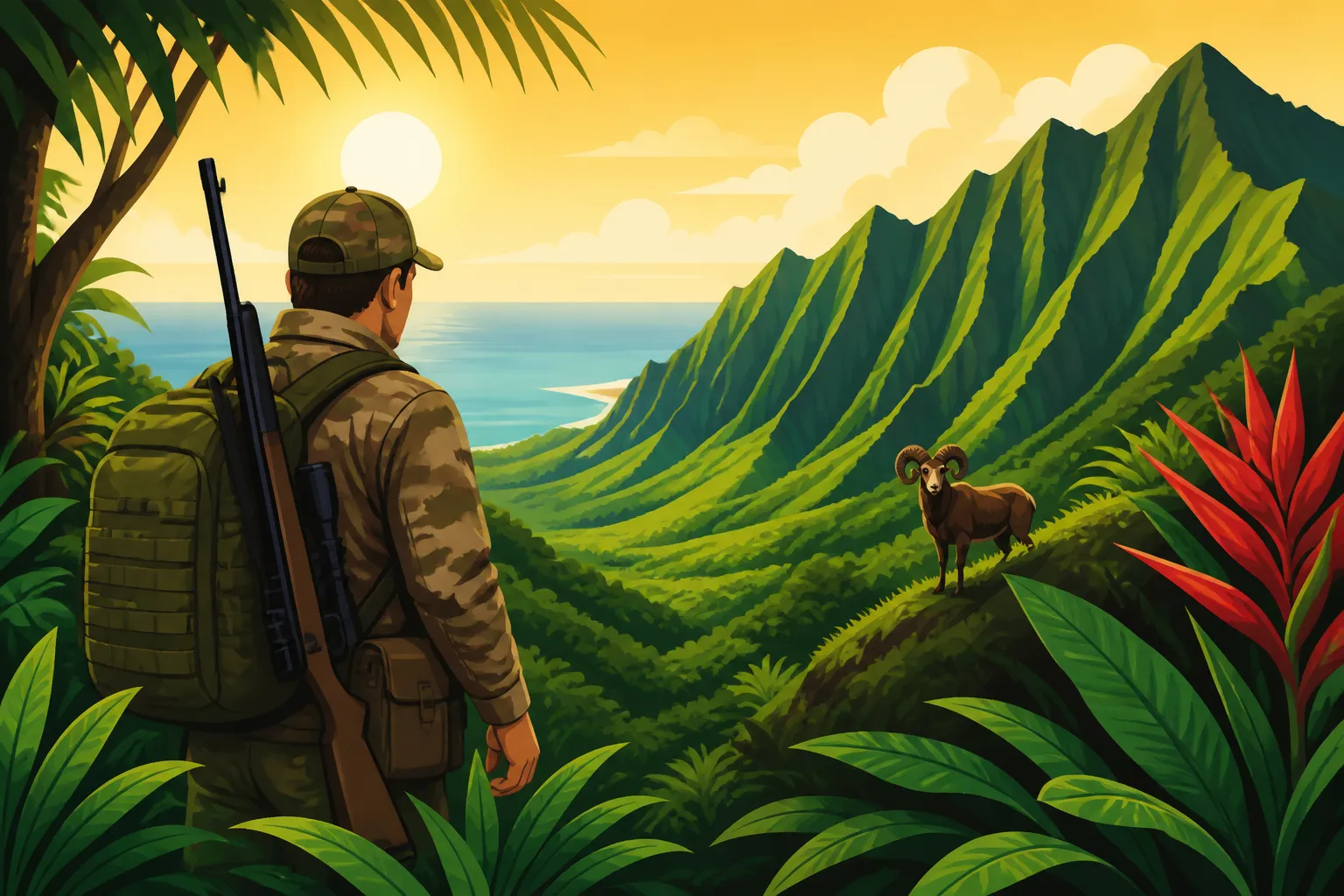
Walking In to a Remote Hawaii Unit
The thought of truly getting away from it all, deep into a remote Hawaii hunting unit, is incredibly appealing. But let's be honest, it's also incredibly daunting. We've all looked at those maps, seen the vast green areas far from any road, and wondered if it's even worth the monumental effort. The truth is, chasing game where few others dare to tread offers unparalleled rewards, but it demands meticulous planning, the right gear, and a serious dose of mental fortitude. This guide is here to walk you through everything you need to know to successfully venture into, hunt, and extract your harvest from Hawaii's most secluded hunting grounds.
The Lure and Challenge of Remote Units
There’s a certain magic to knowing you’re in a place few others bother to reach. It’s where the landscape feels truly wild, and the animals act on their primal instincts, less influenced by human presence. But that magic comes with its own set of very real, very Hawaiian challenges.
Why Go Remote?
The primary draw of a remote hunting unit in Hawaii is, without a doubt, the promise of untouched potential. When you put in the legwork to get far from the nearest access road, you're almost guaranteed to encounter less hunting pressure. This often translates to more relaxed animals, which can be less skittish and more predictable in their patterns. Imagine stalking an old axis buck or a trophy mouflon ram that hasn't seen a hunter in weeks, rather than a wary animal that bolts at the first hint of human scent or sound. These deep units, whether you're exploring Hawaii's High Elevation Alpine Ground or pushing into Hunting Hawaii's Rainforest Gulches, often hold the older, bigger animals that have learned to avoid the easily accessible fringes.
Beyond the game itself, there's the sheer experience. Hunting in Hawaii’s backcountry is an immersion in wild, untamed beauty. You'll witness landscapes that are rarely seen by anyone outside of dedicated researchers or the most intrepid adventurers. The solitude is a profound reward, offering a chance to truly disconnect from the modern world and reconnect with nature. It’s not just about filling a tag; it’s about the journey, the challenge, and the unforgettable moments of quiet wilderness you’ll find far from the beaten path. This raw experience builds a deeper appreciation for the islands and the resilience it takes to thrive within them.
The Realities of Hawaii's Backcountry
Stepping into Hawaii's remote hunting units is a whole different ballgame than a drive-up hunt. The terrain itself is often the biggest hurdle. You'll encounter everything from jagged, unforgiving lava flows that can shred boots and ankles, to incredibly steep gulches carved by centuries of rain, often choked with dense, thorny vegetation like kiawe, guava, and uluhe fern. Picture yourself picking through a maze of sharp rock one minute, then literally crawling through a thicket of tangled vines the next, all while trying to stay quiet and track game. The elevation changes can be brutal, with ascents and descents that test even the fittest hunter, especially when carrying a heavy pack.
Compounding these physical demands are the unique environmental factors. Hawaii’s weather can change on a dime, swinging from scorching sun to torrential downpours in a matter of minutes. Humidity is almost a constant, making exertion even harder and turning steep, muddy trails into slick, treacherous slides. And perhaps one of the most significant realities of these remote areas is the almost complete lack of infrastructure. Forget about cell service; most of these units are communication dead zones, making No Cell Signal on a Hawaii Hunt a very real safety concern. Water sources can be scarce in the dry leeward areas, or overly abundant but difficult to access in the wet windward regions, making Water and Heat Planning for a Hawaii Hunt absolutely critical. These aren't minor inconveniences; they are fundamental challenges that demand respect and thorough preparation.
Essential Gear and Preparation for the Walk-In
Going deep into Hawaii's backcountry isn't about roughing it; it's about being prepared to survive and thrive in a challenging environment. Your gear choices will directly impact your safety, comfort, and ultimately, your success. Skimping here is not an option.
Footwear and Clothing
Let's talk boots first, because if your feet aren't happy, you're not going anywhere. Hawaii's terrain is notoriously brutal on footwear. You'll be traversing everything from sharp, abrasive lava rock to slick, deep mud, and steep, rocky trails. You need boots that offer exceptional ankle support to prevent twists and sprains on uneven ground. They must be sturdy enough to withstand constant abrasion from lava and dense undergrowth. Waterproofing is non-negotiable, even in dry country, as you never know when a sudden downpour will hit, or when you’ll encounter a dewy fern gulch. Brands like Kenetrek, Crispi, or Schnee's are popular choices among serious hunters for their durability and support. Make sure to break them in thoroughly before your hunt; blisters are a hunt-ender in remote country.
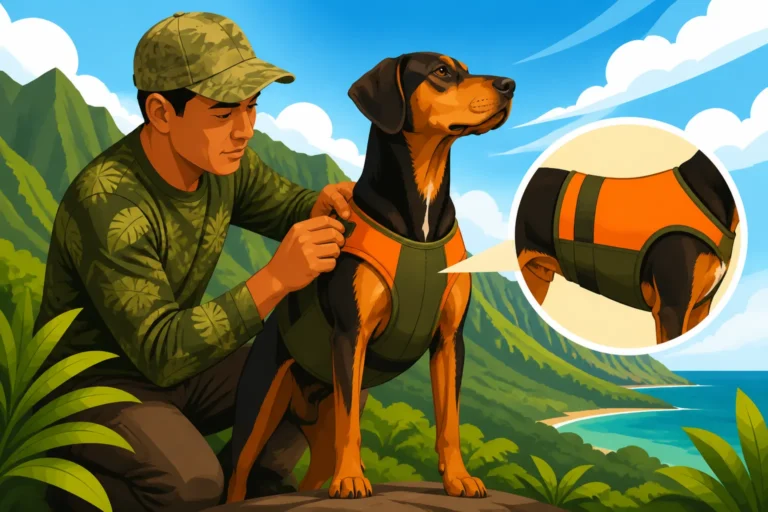
For clothing, layering is king in Hawaii's dynamic climate. You need lightweight, breathable fabrics that dry quickly. Think synthetics or merino wool, which wick moisture away from your body, keeping you cooler when it's hot and warmer when it's wet. A good base layer, an insulating mid-layer (even a light fleece can be useful for higher elevations or cooler mornings), and a truly waterproof, breathable outer shell are essential. Don't forget durable hunting pants that can stand up to thorns and abrasive brush. And, of course, blaze orange. Many public hunting units in Hawaii require a minimum amount of blaze orange, often a hat and an outer garment, for visibility and safety. Always check the specific regulations for your chosen unit, which can be found through resources like GoHunt Hawaii, before you head out.
Navigation and Communication
In remote Hawaiian units where cell service is non-existent, reliable navigation and communication are not just convenient; they are life-saving. A dedicated GPS device, like a Garmin Montana or inReach, is paramount. While phone apps like onX Hunt or OuterSpatial are excellent tools for Reading a Hawaii Unit Boundary Map and showing land status, they rely on phone batteries which can die quickly. Always have a backup power bank or two for your phone. Critically, download all your maps for offline use before you lose service. A paper map and compass, even if you rarely use them, should always be in your pack as a truly bomb-proof backup. Knowing how to orient yourself with them is a skill worth practicing.
For communication, especially in emergencies, a satellite communicator is indispensable. Devices like the Garmin inReach or Zoleo allow you to send and receive text messages and, most importantly, trigger an SOS signal to a 24/7 monitoring center, even when No Cell Signal on a Hawaii Hunt means your phone is useless. These devices are an investment, but the peace of mind they offer in the event of an injury or other emergency in the backcountry is priceless. Remember, being remote means help is hours, if not a day, away – direct communication is your fastest lifeline.
Packing for Success (and Survival)
Your backpack is your mobile base camp, so every item needs to earn its spot. Start with the "ten essentials" and then tailor for Hawaii's unique environment. Water, and lots of it, is critical. Beyond what you carry, a water filter (like a Sawyer Squeeze or Katadyn BeFree) or purification tablets are absolute must-haves. You'll also need enough high-energy, non-perishable food for the duration of your trip, plus an extra day’s supply in case of unforeseen delays. A comprehensive first-aid kit is crucial, equipped for cuts, scrapes, blisters, sprains, and insect bites. Consider adding an emergency bivy sack or a lightweight tarp for shelter in unexpected downpours or if you have to spend an unplanned night out.
Other critical items include a reliable headlamp with extra batteries, a sharp hunting knife, a fire starter (waterproof matches, lighter, ferro rod), and a signaling mirror. When it comes to your harvest, bring lightweight but durable game bags (synthetic or cotton blend, breathable) to protect your meat immediately after the kill. This is particularly important for Field Care in Hawaii's Heat and Humidity to keep flies off and allow air circulation, beginning the cooling process. Thinking through scenarios and packing accordingly means you're prepared for whatever Hawaii's remote units throw your way.
Here's a quick checklist to get you started:
| Category | Essential Items | Considerations |
|---|---|---|
| Navigation | GPS device (pre-loaded maps), Satellite communicator, Paper map & compass | Download offline maps, extra batteries/power bank, know how to use compass |
| Footwear | Sturdy, waterproof hiking boots, multiple pairs of wool socks | Broken in, ankle support, good traction for mud/lava |
| Clothing | Layered clothing (base, mid, outer shell), rain gear, blaze orange | Quick-drying, synthetic/merino wool, full coverage to protect from sun/brush |
| Hydration | Water bottles/bladder, water filter/purification tablets | Plan for 1 gallon per person per day minimum |
| Food | High-energy snacks/meals, extra day's supply | Non-perishable, easy to prepare, calorie-dense |
| First Aid | Comprehensive kit, personal medications, insect repellent, blister treatment | Knowledge of basic first aid, emergency contact info |
| Shelter/Safety | Lightweight tarp/bivy, headlamp w/ extra batteries, fire starter, signaling mirror | Emergency blanket, whistle |
| Hunting Gear | Rifle/bow, ammunition/arrows, binoculars, rangefinder, game bags, knife, cordage | Cleaning kit, scent control, GoHunt Hawaii tags/license |
| Miscellaneous | Small trowel, toilet paper, garbage bags, personal hygiene items, sunscreen | Leave No Trace principles, lightweight, multi-purpose items |
Strategies for Effective Navigation and Travel
Once you've got your gear sorted, the real work begins: moving through the landscape. Hawaii's remote units demand a different approach to navigation and travel than what many mainland hunters are accustomed to. It's not just about covering distance; it's about doing so efficiently, safely, and quietly.
Understanding Hawaiian Terrain and Vegetation
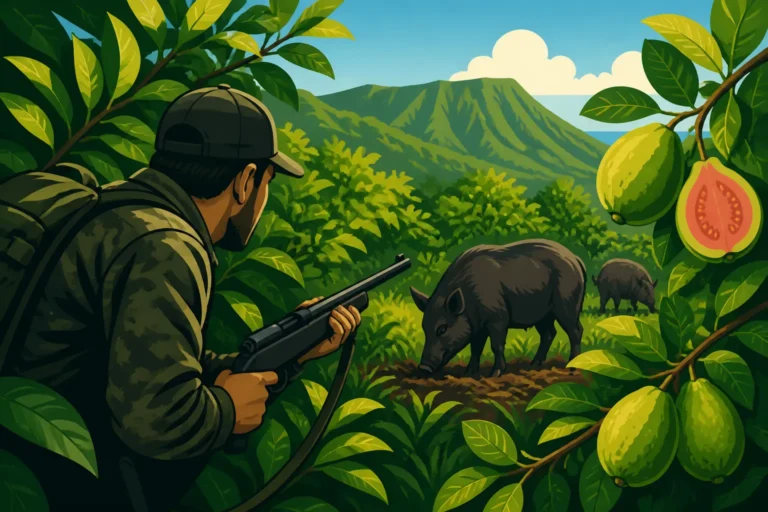
Hawaii’s geology is young and wild, and that translates directly into the hunting experience. Walking Rough Lava Without Wrecking Your Boots isn't just a suggestion, it's a necessity. A’a lava is notoriously jagged and sharp, capable of slicing through boot soles and skin with ease. Pahoehoe, while smoother, can be uneven and full of hidden cracks. Moving across these flows requires careful footing, patience, and often a slower pace than you’d expect. On the other hand, the lush, wet side of the islands means you’ll be pushing through dense vegetation, sometimes so thick you can barely see your hand in front of your face. Imagine tackling Hunting a Strawberry Guava Thicket where the intertwining branches form an impenetrable wall, or navigating uluhe fern that can be waist-high and soak you to the bone. Finding game trails or old Hunting an Old Hawaii Ranch Road can be a godsend, providing temporary relief and clearer passage.
Understanding how different types of terrain relate to animal movement is also key. For instance, a Hunting a Hawaii Lava Kipuka, an island of older vegetation surrounded by a newer lava flow, can be a magnet for game, offering food and shelter in an otherwise barren landscape. Animals often travel along the edges of these kipukas. Likewise, the transition zones between dense forest and more open country are high-traffic areas. Learning to identify these subtle shifts and how they funnel game is crucial. This deep familiarity with the landscape comes from diligent map study, aerial photo analysis, and boots-on-the-ground scouting, giving you a huge advantage when you’re deep in a unit.
Pacing and Route Planning
The biggest mistake many hunters make when walking into a remote unit is going too fast. Remember, you’re not just hiking in; you’re planning to hike out with potentially hundreds of pounds of meat. Conservation of energy is paramount. Plot your route carefully on your map or GPS, paying close attention to contour lines. Look for ridges that offer easier travel or slight saddles that might avoid a steep gulch. While it might seem counterintuitive to take a longer route, a less strenuous path can save you valuable energy for the hunt itself and, more importantly, for the grueling pack out.
When route planning, always identify potential water sources, especially in drier units. Mark them on your map. Also, consider "escape routes" – alternative paths or easier ways out in case of an emergency or if you successfully harvest an animal far from your planned entry point. Navigating a Hawaii Gulch System can be exhausting and disorienting, so knowing ahead of time which gulches are passable and which are better avoided is critical. Using resources like GoHunt Hawaii for unit-specific information, maps, and regulations can significantly aid in this meticulous planning phase. Even if a particular feature isn't marked, satellite imagery can often reveal hidden trails or less dense areas, allowing you to plot a more efficient path through the Hawaiian wilderness.
Reading Animal Sign in Remote Areas
The beauty of hunting remote areas is that the game is often less disturbed, meaning their sign can be clearer and more consistent. Once you're deep in the unit, slow down and start hunting with your eyes and ears as much as your feet. Look for fresh tracks in soft earth, especially near water sources or along well-used game trails. Pay attention to the age of scat; fresh droppings indicate animals are actively using the area. Rubs on trees and fresh beds in tall grass or sheltered spots are also excellent indicators of recent activity. In a remote setting, finding these undisturbed signs is a strong signal that you're in an area holding game.
In Hawaii's often dry leeward hunting units, focus your efforts around Hunting a Water Source in Dry Hawaii Country. Animals, especially axis deer and goats, are constantly seeking water, and these spots become natural congregation points, especially in drought years. Conversely, in wetter areas, look for signs around preferred food sources like fallen fruit or specific types of forage. The key difference in remote units is that the sign you find is likely from animals that haven't been pushed by other hunters, meaning they might still be in the vicinity. This is where understanding how Hunting Pressure Does on Small Islands influences animal behavior really pays off; less pressure means animals might be feeding and bedding more openly, offering better opportunities.
Field Tactics Once You're In
You've made the arduous journey into the heart of the unit. Now, the real hunting begins. The strategies you employ here need to capitalize on the remoteness, respecting the wildness of the animals and the environment.
Still-Hunting and Glassing Remote Basins
Once you're far into a remote Hawaii unit, your primary tactic should often shift to slow, deliberate still-hunting or methodical glassing. Still-hunting involves moving at an incredibly slow pace, taking a few steps, then pausing to scan and listen for several minutes. This allows you to pick apart the terrain ahead, identify game before it sees you, and react to any sounds. Always use the wind to your advantage, keeping it in your face or quartering. In Hawaii’s mountainous terrain, thermals can be tricky, shifting as the sun rises and falls. Understanding Hunting Downwind in Hawaii's Shifting Thermals is crucial for success, especially in the early mornings and late evenings when animals are most active.
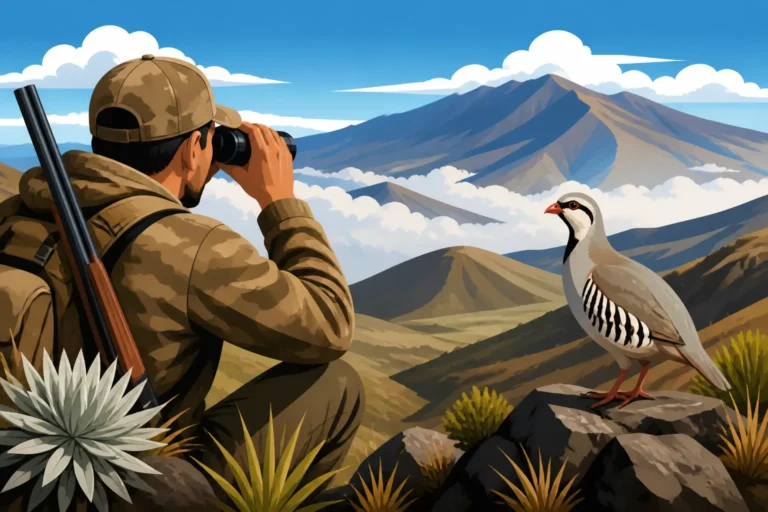
In areas with more open visibility, such as Hunting a Cinder Cone Rim or the expansive slopes of Hunting Hawaii's High Elevation Alpine Ground, glassing becomes your most powerful tool. Find a good vantage point that offers a wide view of basins, ridges, and valleys. Set up your binoculars or spotting scope on a tripod and systematically scan the area. Look for subtle movements, a flick of an ear, the horizontal line of a deer’s back against vertical vegetation, or the tell-tale white patch of a mouflon’s saddle. Spend significant time behind the glass, sometimes 30 minutes or more in a single spot, before moving on. Patience is not just a virtue here; it’s a tactical advantage that separates successful remote hunters from those who just cover ground.
Setting Up a Temporary Camp
If your walk-in hunt extends beyond a single day, a temporary camp becomes your home base. Choosing the right location is vital. Look for a spot that is discreet, out of the way of potential game trails, and offers some natural shelter from the elements – a large tree, a rock outcropping, or a slight depression. Flat ground for sleeping is a luxury, but try to find it. Prioritize proximity to a reliable water source if possible, but ensure your camp is far enough away from the water to avoid disturbing animals that might come to drink.
Minimal impact camping is the rule in Hawaii's fragile ecosystems. Pack out everything you pack in, and then some. This means all your trash, including food scraps. When it comes to food storage, be smart. Hang your food in a bear bag or use a sealed container to deter pigs, rats, and mongooses from raiding your supplies. These scavengers are adept at finding food, and losing your provisions deep in the backcountry can quickly turn a challenging hunt into a dangerous situation. Your goal is to leave no trace that you were ever there, preserving the wilderness for future hunters and for the animals themselves.
The Mental Game of Remote Hunting
Let’s be honest, remote hunting is tough. It’s physically demanding, yes, but often even more challenging mentally. There will be moments when you’re exhausted, soaking wet, covered in mud, and questioning why you put yourself through this. That's when the mental game truly kicks in. Resilience is your best friend. Be prepared for setbacks – missed stalks, weather turning sour, or simply not finding the game you hoped for. Problem-solving becomes second nature; adapting your plan on the fly when you hit an unexpected impassable gulch or a sudden change in wind.
Staying positive, even when things are difficult, is crucial. Focus on the beauty around you, the solitude, the fact that you're in one of the most unique hunting destinations on earth. Remember that every step deeper into the wilderness is an accomplishment. Know your limits, and don't be afraid to Hunting a Hawaii Unit After Heavy Rain to re-evaluate your strategy or even to turn back if conditions become unsafe. There's always another day to hunt. The enjoyment of the solitude and the challenge itself, regardless of whether you fill a tag, is the true trophy of a remote Hawaii hunt.
Extracting Your Harvest from the Backcountry
You’ve done it. The shot was true, and you’ve got an animal down deep in the backcountry. Now comes arguably the most physically demanding part of a remote Hawaii hunt: getting your hard-earned meat out. This phase requires meticulous planning, a strong back, and an unwavering commitment to proper field care.
Field Dressing and Cooling Meat Fast
The moment your animal is down, the clock starts ticking, especially in Hawaii's often warm and humid climate. Efficient and quick field dressing is absolutely paramount to preserving the quality of your meat. Get to the animal immediately, confirm it's expired, and then start the process. Remove the entrails as quickly and cleanly as possible to allow the body cavity to cool. If conditions are particularly warm, consider skinning the animal on site if regulations allow and you have the time and tools. Removing the hide greatly accelerates cooling. For species like axis deer, which can be quite large, Field Dressing Axis Deer in Hawaii Heat means focusing on getting that heat out of the carcass as fast as humanly possible.
Once field dressed, break the animal down into manageable pieces. This usually means quartering it, or even deboning if you’re trying to minimize weight for a very long pack out. Get the meat into those breathable game bags you packed. These bags protect the meat from flies and dirt while allowing air to circulate, which is key for Cooling Meat Fast on a Hawaii Hunt. Hang the game bags if possible, allowing air to flow all around them. If there’s a stream or a cool, shaded area, utilize it. The goal is to reduce the core temperature of the meat as rapidly as possible to prevent spoilage. This attention to detail in the first few hours directly impacts the quality of the venison you’ll eventually take home.
The Pack Out Challenge
This is where all your physical preparation, from scouting to hiking, truly pays off. Packing an animal out of a remote Hawaii gulch or off a steep ridge is a monumental undertaking. You’ll understand why Packing Meat Out of a Hawaii Gulch is often considered the hardest part of the hunt. Even a medium-sized pig or axis deer can weigh over a hundred pounds when quartered, and that weight feels exponentially heavier on uneven, steep, and slippery terrain. A high-quality external frame pack designed for heavy loads is a non-negotiable piece of gear here. Practice packing heavy weights in it before your hunt.
Distribute the weight evenly, securing the quarters so they don’t shift and throw you off balance. Take frequent, short breaks. Stay hydrated. This is not a race; it's a marathon. If you’re hunting with a partner, you can share the load, alternating who carries the heaviest pack or making multiple trips. The physical and mental toll can be immense, but knowing you’re bringing home wild, organic meat that you earned through sheer grit is an incredibly rewarding feeling. Don't underestimate this phase; it's often more challenging than the hunt itself.
Post-Hunt Logistics and Reflection
Once you’ve wrestled your animal out of the backcountry and back to your vehicle, the job isn’t quite done. You’ll still need to formally Checking In and Out of a Hawaii Unit at a hunter check station or through the OuterSpatial app, depending on the unit. This is a critical step for compliance and for wildlife management data. Ensure your tag is properly affixed to the animal as required by Hawaii regulations.
After the check-out, the focus shifts to final meat care. Get the meat into a cooler with ice as soon as possible. If you’re traveling between islands, remember the rules for Shipping Game Meat Between Hawaii Islands, which often require specific packaging and airline notification. For mainland hunters, Flying Home With Game Meat From Hawaii involves strict USDA regulations and usually requires professional processing and packaging. Many local hunters will simply process their own meat or take it to a local butcher. Take a moment to reflect on your achievement. A walk-in hunt in a remote Hawaii unit is a true adventure, a testament to your skills and endurance. It’s not for the faint of heart, but the memories, the experience, and the meat are incredibly rewarding.
Disclaimer
Please note that hunting regulations, unit boundaries, and access rules in Hawaii can change. Always consult the most current Hawaii Department of Land and Natural Resources (DLNR) Division of Forestry and Wildlife (DOFAW) regulations before planning any hunt. This guide is for informational purposes only and does not substitute for official regulations or personal research. Stay safe and hunt ethically.