What Guides Do When Someone Gets Hurt
When you're out in the rugged, wild landscapes of Hawaii, chasing pigs through a dense rainforest or spot-and-stalking axis deer across a dry lava field, the last thing anyone wants to think about is an accident. But let's be realistic: hunting, by its very nature, carries risks. Whether it's a slip on a wet rock, a sprained ankle in a hidden gulch, or something more serious, knowing what your hunting guide will do if someone gets hurt isn't just a comfort – it's absolutely vital. This guide is going to walk you through the essential role your Hawaii hunting guide plays in preventing and responding to emergencies, giving you peace of mind when you venture into the islands' demanding terrain.
The Inevitable Reality of Remote Risk
Hawaii's beauty is undeniable, but beneath the postcard-perfect facade lies some seriously challenging hunting terrain. We're talking about steep, unforgiving volcanic slopes, dense, tangled rainforests that can disorient you in minutes, razor-sharp lava fields, and remote areas where cell service is just a distant dream. This isn't your grandfather's woodlot hunt. Accidents can and do happen, and when they do, your location often dictates the severity and complexity of the response.
Hawaii's Unique Challenges: Rough Terrain, Heat, Isolation
Imagine yourself deep in a gulch on the Big Island, pursuing a feral pig. The ground is slick with recent rain, the vegetation is thick, and the walls of the gulch are incredibly steep. A misstep could send you tumbling, resulting in a serious injury like a broken leg or a head injury. Or perhaps you're on Lanai, glassing vast, arid plains for axis deer. The sun beats down relentlessly, and dehydration or heat exhaustion can creep up fast, especially if you're not used to the tropical sun. Water and Heat Planning for a Hawaii Hunt becomes paramount. These are not minor inconveniences; they are genuine threats that require immediate and knowledgeable action. The sheer isolation of many prime hunting units means that professional medical help might be hours away, making the initial response by your guide critically important.
Why a Guide is Your Best Bet: Their Local Knowledge and Preparedness
This is where a good Hawaii hunting guide really earns their keep. They're not just there to help you find an animal; they're your primary safety net. These folks live and breathe this land. They know the treacherous spots, the quickest routes out, and exactly where you might lose cell signal. More importantly, reputable guides are prepared for emergencies. They've often taken first aid and CPR courses, carry extensive emergency kits, and have established protocols for contacting help in remote areas. They understand the local emergency response system – who to call, what information they need, and how to direct them to a tricky location. While you might try to navigate this on your own, having a professional whose very job it is to keep you safe in these environments is an immeasurable advantage. When you're considering a guided hunt, whether through a platform like BookYourHunt or directly with an outfitter, inquire about their emergency procedures.
Before the Hunt: Prevention and Preparation are Key
The best emergency response isn't a response at all – it's preventing the emergency from happening in the first place. A professional Hawaii hunting guide invests significant effort before the hunt even begins to minimize risks and ensure that if something does go wrong, they are ready.
Pre-Hunt Briefings and Safety Protocols: Setting Expectations
Before you even step foot in the field, a good guide will conduct a thorough safety briefing. This isn't just a formality; it's a critical information exchange. They'll cover everything from safe firearm handling (especially important with different terrain types) to what to do if you get separated from the group. They'll outline the specific hazards of the unit you'll be hunting – maybe it's steep cliffs for goat hunting, or perhaps deep mud in a pig hunting area. They'll explain their communication plan, their check-in and check-out procedures with local authorities (like those managed by the state's DOFAW system, sometimes through apps like OuterSpatial), and what their immediate actions would be in various emergency scenarios. This briefing is your chance to ask questions and fully understand the expectations and risks.
Emergency Contact Information & Medical History: Crucial Data Collection
Don't be surprised when your guide asks for emergency contact information, and sometimes even a brief medical history or a list of allergies. This isn't nosey; it's responsible and potentially life-saving. In an emergency, knowing if a client has, say, a severe bee allergy or a heart condition, can drastically alter the immediate first aid and the urgency of evacuation. They need to know who to call if you can't communicate yourself. Make sure you provide accurate and complete information. Similarly, a guide will often carry their own personal information and contacts, and you should too. It's a two-way street of preparedness.
Gear Checks and Hunter Fitness: Minimizing Risks
A guide will often subtly (or not so subtly) assess your gear and physical fitness. Are your boots appropriate for Walking Rough Lava Without Wrecking Your Boots? Do you have adequate Rain Gear for a Windward Hawaii Hunt if you're headed into a wet forest? Is your rifle sighted in? They might even ask about your general fitness level. Fitness for a Steep Hawaii Hunt is no joke, and attempting to tackle challenging terrain without adequate conditioning can lead to exhaustion, falls, and injuries. A guide might suggest adjustments to your gear or a slower pace if they perceive a risk. They're trying to set you up for success and, more importantly, safety.
Communication and Navigation Tools: The Lifeline in Remote Areas
In Hawaii's remote hunting units, reliable communication is not a luxury; it's a necessity. Your guide will almost certainly carry multiple forms of communication, knowing that cell service is often nonexistent. This can include:
- Satellite Phones or Messengers: Devices like Garmin inReach or Zoleo allow for text messaging and SOS functions even without cell signal, providing a critical link to emergency services.
- Two-Way Radios: For communication within the hunting party, especially when spread out.
- GPS Devices: Essential for precise location tracking, especially in featureless lava fields or dense jungle. They often come pre-loaded with detailed topographical maps. Staying Found in Dense Hawaii Rainforest is a skill, but technology helps immensely.
- Whistles and Signal Mirrors: Simple but effective tools for signaling over short distances or attracting attention.
A responsible guide will ensure all these devices are fully charged and functional before heading out. They'll also brief you on how to use them if, for some reason, you end up needing to call for help yourself.
| Preparation Aspect | Self-Guided Hunter Responsibility | Guided Hunter Advantage |
|---|---|---|
| Emergency Planning | Research local EMS, self-assess risks, create personal plan. | Guide provides established protocols, local contacts, specific unit risks. |
| Medical Info Sharing | Inform hunting partners of conditions/allergies, carry personal info. | Guide proactively collects and stores this for rapid response. |
| Gear & Fitness Assessment | Self-assess gear suitability and physical readiness. | Guide provides recommendations, may adjust hunt plan based on observation. |
| Communication Tools | Must acquire, learn, and carry satellite devices/GPS. | Guide provides and maintains advanced communication/navigation. |
| First Aid Training/Kit | Essential to have basic training and a comprehensive kit. | Guide typically has certified training and professional-grade kit. |
| Local Terrain Knowledge | Research maps, rely on past experience, GPS. | Guide has intimate, firsthand knowledge of dangerous spots and escape routes. |
| Liaison with Authorities | Must know local DOFAW/EMS contacts, language, and procedures. | Guide handles all communication with local emergency services. |
During an Incident: Immediate Response and First Aid
When an injury occurs, adrenaline surges, and clear thinking can be difficult for anyone involved. This is precisely when a guide's training, experience, and pre-planned protocols kick in. They become the calm in the storm, orchestrating the immediate response.
Assessing the Situation and Stabilizing the Victim: First Priorities
The very first thing a guide will do is quickly assess the situation. Is the area safe? Are there any immediate dangers (like a falling rock, an unstable animal, or a sharp drop-off)? Once the scene is secured, their focus shifts to the injured person. They'll calmly evaluate the nature and severity of the injury, check for consciousness, breathing, and severe bleeding. This rapid assessment dictates the next steps. Their priority is always to stabilize the victim and prevent further injury or worsening of their condition. This might involve carefully moving the person to a safer spot if necessary, or simply keeping them still and reassuring them.
Applying Basic First Aid: What Skills Guides Typically Possess
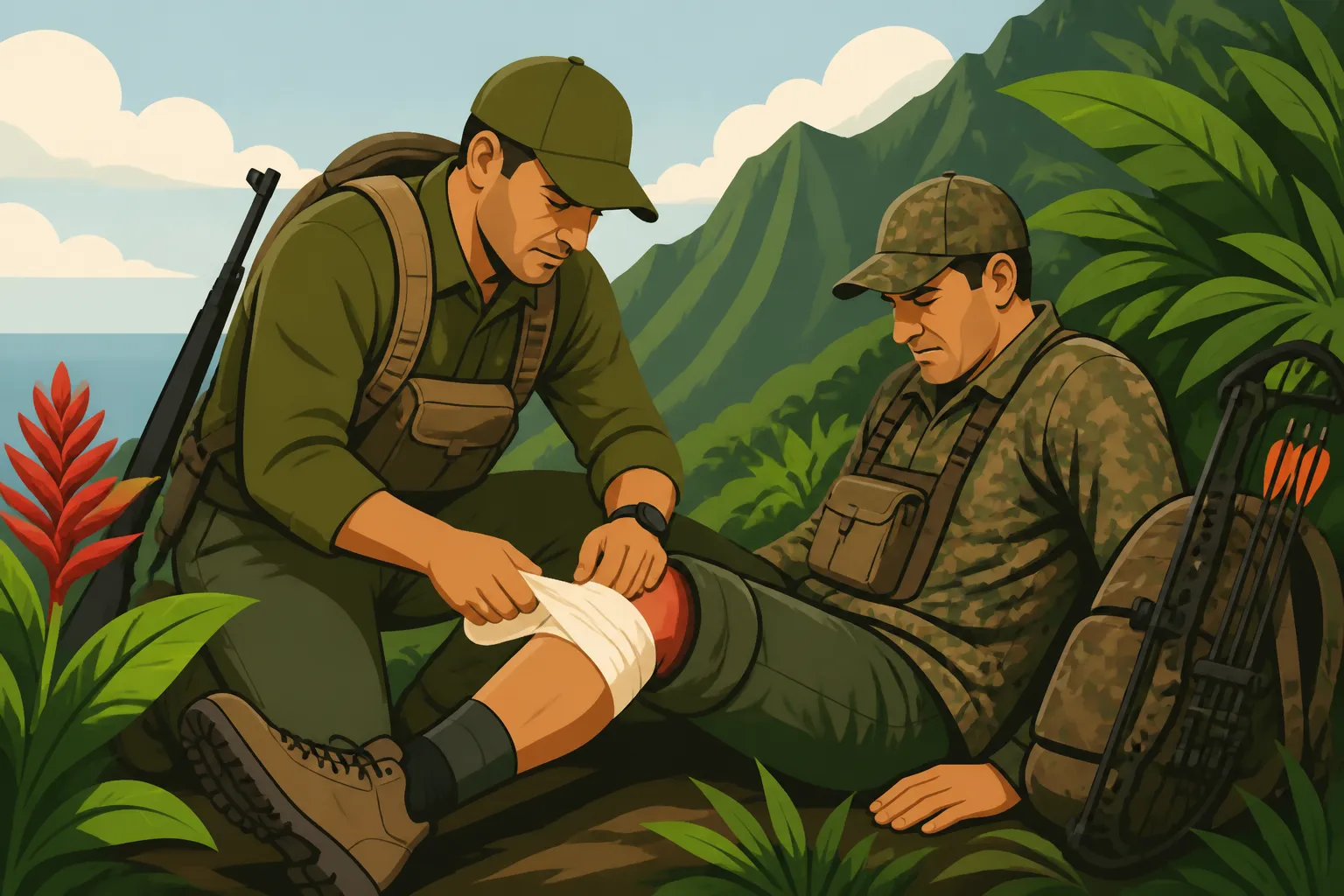
Most professional hunting guides in Hawaii will have at least basic first aid and CPR certification. Many go further, undertaking wilderness first responder courses that are specifically tailored to remote environments where advanced medical help is far away. They'll carry a well-stocked first aid kit, far more comprehensive than what most hunters carry. This allows them to:
- Control Bleeding: Using pressure, bandages, or even tourniquets if necessary.
- Immobilize Fractures or Sprains: Applying splints to stabilize limbs and prevent further damage.
- Treat Wounds: Cleaning and dressing cuts, abrasions, or puncture wounds to prevent infection.
- Address Shock: Keeping the injured person warm and comfortable.
- Manage Other Conditions: Such as severe allergic reactions (administering an EpiPen if the client has one), or symptoms of heatstroke or hypothermia.
Their calm demeanor and practical skills are invaluable during these stressful moments, transforming a potentially catastrophic situation into a manageable one while awaiting professional help.
Activating Emergency Communications: Getting Help to the Location
Once the immediate first aid is underway, the guide's next crucial step is to activate their emergency communication plan. If there's cell service, they'll call 911 directly. However, in many Hawaii hunting areas, that's simply not an option. No Cell Signal on a Hawaii Hunt is a common reality. This is where those satellite phones or messengers become critical.
The guide will use their device to send an SOS signal or a detailed message to their pre-programmed emergency contacts or a dedicated monitoring center. This message will contain:
- Precise Location: Using GPS coordinates, which is why using the OuterSpatial App to Check In is useful as it often tracks your location.
- Nature of the Injury: Describing what happened and the victim's condition.
- Number of People Involved: Including uninjured party members.
- Current Conditions: Weather, terrain, time of day.
This information is relayed to the appropriate emergency services – local police, fire department, EMS, or even the Coast Guard if coastal cliffs are involved. The guide then becomes the point of contact, providing updates and following instructions from rescue personnel, often having to relay complex information about Hunting Hawaii's Volcanic Terrain or Navigating a Hawaii Gulch System.
Coordinating Evacuation and Further Assistance
Once emergency services are notified, the guide's role shifts to coordinating with them and facilitating the evacuation. This stage can be the most logistically challenging, especially in Hawaii's remote and rugged landscapes.
Liaising with Local Emergency Services: Police, Fire, EMS, Coast Guard, Air Support
Your guide is the vital link between you and the incoming rescue teams. They understand the local agencies and their capabilities. For instance, they'll know if a specific area requires a helicopter extraction due to impassable terrain, or if ground teams can reach you within a reasonable timeframe. Helicopter Access for Remote Hawaii Hunts is a real consideration in many steep, remote units. The guide will provide critical information to the rescuers, such as the best approach route, specific landmarks, and any hazards on the way to the injured party. They will maintain communication, updating the rescue teams on the patient's status and guiding them directly to the location, saving precious time. This often involves speaking to multiple agencies – county EMS, the Department of Land and Natural Resources (DLNR) officers, and potentially even military rescue assets if the situation warrants it.
Navigating Challenging Terrain for Extraction: Gulches, Lava, Dense Forest
The extraction itself can be incredibly difficult. Imagine rescue personnel trying to carry a stretcher out of a steep, muddy, or lava-strewn area. Your guide's knowledge of the terrain is paramount here. They can advise the rescue teams on the safest and most efficient path, even helping to clear obstacles or guide rescuers through confusing sections of Hawaii's wet forest or Hunting Hawaii's High Elevation Alpine Ground. They might even assist directly in carrying equipment or providing support to the rescue workers, ensuring that the injured person is moved as safely and comfortably as possible under the circumstances. Their expertise in Packing Meat Out of a Hawaii Gulch can often be adapted to moving an injured person with the right equipment.
Post-Incident Follow-Up: Ensuring Continued Care and Reporting
Even after the injured person is safely evacuated and handed over to medical professionals, a reputable guide's duties aren't necessarily over. They will typically assist the uninjured members of the hunting party, ensuring their safe return to base camp or lodging. They might also be required to provide a detailed report of the incident to local authorities or their outfitting company, which is an important part of accountability and improving future safety protocols. Some guides will even follow up with the injured hunter, checking on their recovery, which speaks volumes about their professionalism and care for their clients. If you're looking for an outfitter, platforms like GoHunt or BookYourHunt often have reviews where you can gauge a guide's overall professionalism and commitment to client safety.
A hunting trip to Hawaii is an incredible adventure, full of unique challenges and unforgettable moments. While no one wants to think about something going wrong, understanding that your guide is thoroughly prepared for emergencies can provide immense peace of mind. Their local knowledge, first aid skills, communication systems, and ability to coordinate with rescue services are not just perks – they're essential elements of a safe and responsible Hawaii hunting experience.
Disclaimer
This article is for general informational purposes only and does not constitute professional advice. Laws, prices and regulations vary by location and change over time. Consult a qualified professional for guidance on your specific situation.