Spot-and-Stalk Tactics on Open Country
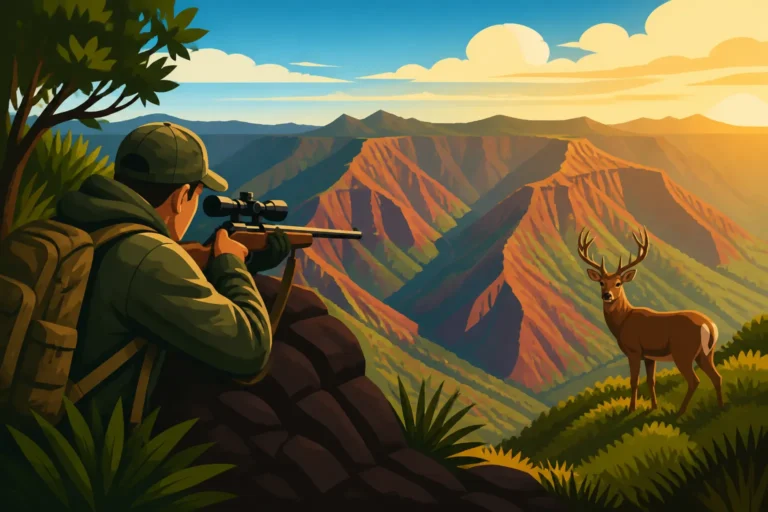
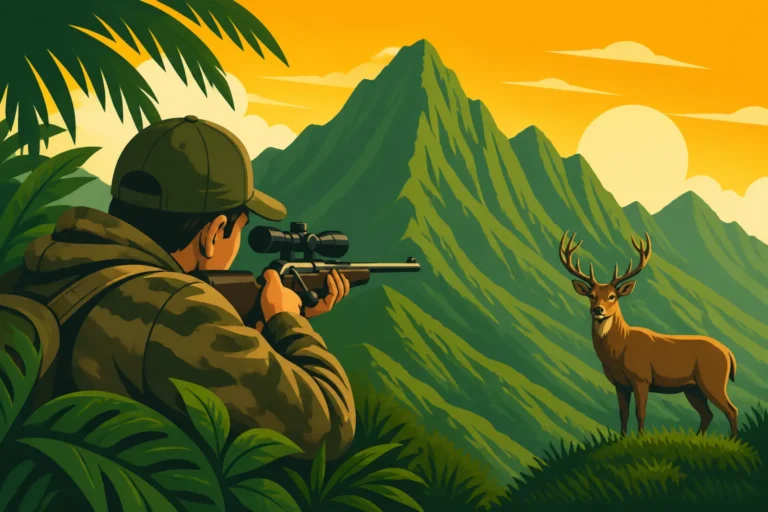
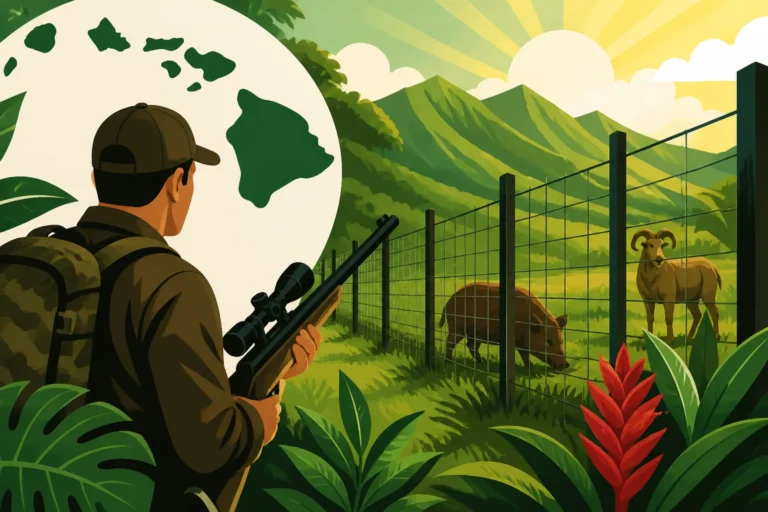
Hunting in Hawaii's vast, open country can be incredibly frustrating. You spend hours glassing, finally spot that trophy Axis buck or an elusive goat herd, only to have them vanish the moment you try to get closer. The animals have all the advantages—their keen eyesight, the sparse cover, and the wide-open spaces that seem to scream your presence. This guide is dedicated to helping you master the art of spot-and-stalk hunting in these challenging Hawaiian landscapes, providing the tactics you need to close the distance and fill your tag.
Understanding the Landscape and Your Quarry
The first step to a successful spot-and-stalk hunt in Hawaii's open country is deeply understanding the environment you're in and the animals that call it home. It's not just about seeing game; it's about predicting their movements and using the subtle nuances of the land to your advantage.
Reading the Open Hawaiian Terrain
Hawaii's "open country" isn't a monolithic landscape. It encompasses a diverse range of environments, each presenting its own set of challenges and opportunities for a spot-and-stalk hunter. On Maui, you might find yourself on vast, rolling pastures interspersed with dense kiawe flats, while on the Big Island, you could be navigating the stark, broken terrain of an old lava flow or the high-elevation slopes of Mauna Kea. Kauai offers open ridgelines and the edges of sprawling ranch lands where Black-Tailed Deer might be grazing. The key is recognizing these specific features and how they offer concealment, even when it feels like you're exposed.
Folds in the land, even subtle ones, can provide crucial cover. Imagine a gentle dip or swale that might be only a few feet deep but is enough to hide your approach for dozens of yards. Pockets of kiawe trees, even if they're not dense enough to create a full jungle, can be stitched together as a network of shadows and screening. Gulches and dry washes, often carved out by ancient rains, become natural highways for you to move undetected. These natural contours become your best friends when you're trying to close the distance on a wary animal. Don't underestimate the small details—a lone clump of native pili grass, a fallen log, or a volcanic rock outcropping can all become temporary hides during a slow crawl. Understanding how to use Hunting Hawaii's Dry Kiawe Forest for cover is a game-changer, as these areas often hold deer seeking shade. Similarly, when hunting higher elevations, knowing how to navigate Hunting a Cinder Cone Rim can give you an elevated vantage point for glassing.
The unique geology and climate of Hawaii also dictate where cover and animals can be found. The islands are famous for their "rain shadows," where one side of a mountain is lush and wet, while the other is arid and dry. Open country often falls on these leeward (dry) sides, which means less dense vegetation for concealment but also creates predictable water sources that animals frequent. Learning about Hunting Hawaii's High Elevation Alpine Ground will highlight how elevation impacts not only the type of game you'll find but also the kind of cover available—think sparse mamane-naio forests and vast expanses of cinder.
Knowing Your Game's Habits in the Open
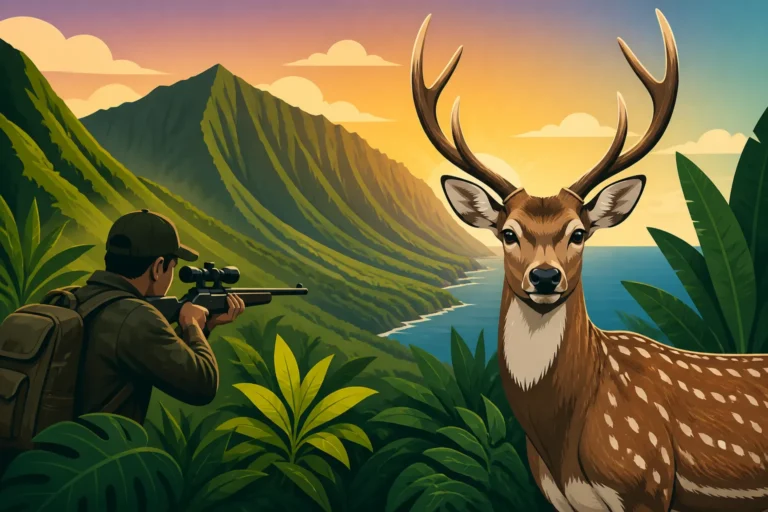
Successfully stalking an animal depends heavily on understanding its daily routine and senses. In Hawaii's open areas, you're primarily going after Axis Deer and Feral Goats, both known for their incredible wariness. Axis deer, with their striking coats and elegant antlers, are notorious for their keen eyesight. They often graze in open pastures during cooler parts of the day, moving into shaded kiawe thickets or gulches to bed down when the sun gets high. Observing their patterns is crucial. Are they feeding actively, or are they bedded down and vigilant? Their feeding behavior might offer windows for a stalk, as their heads will be down more often.
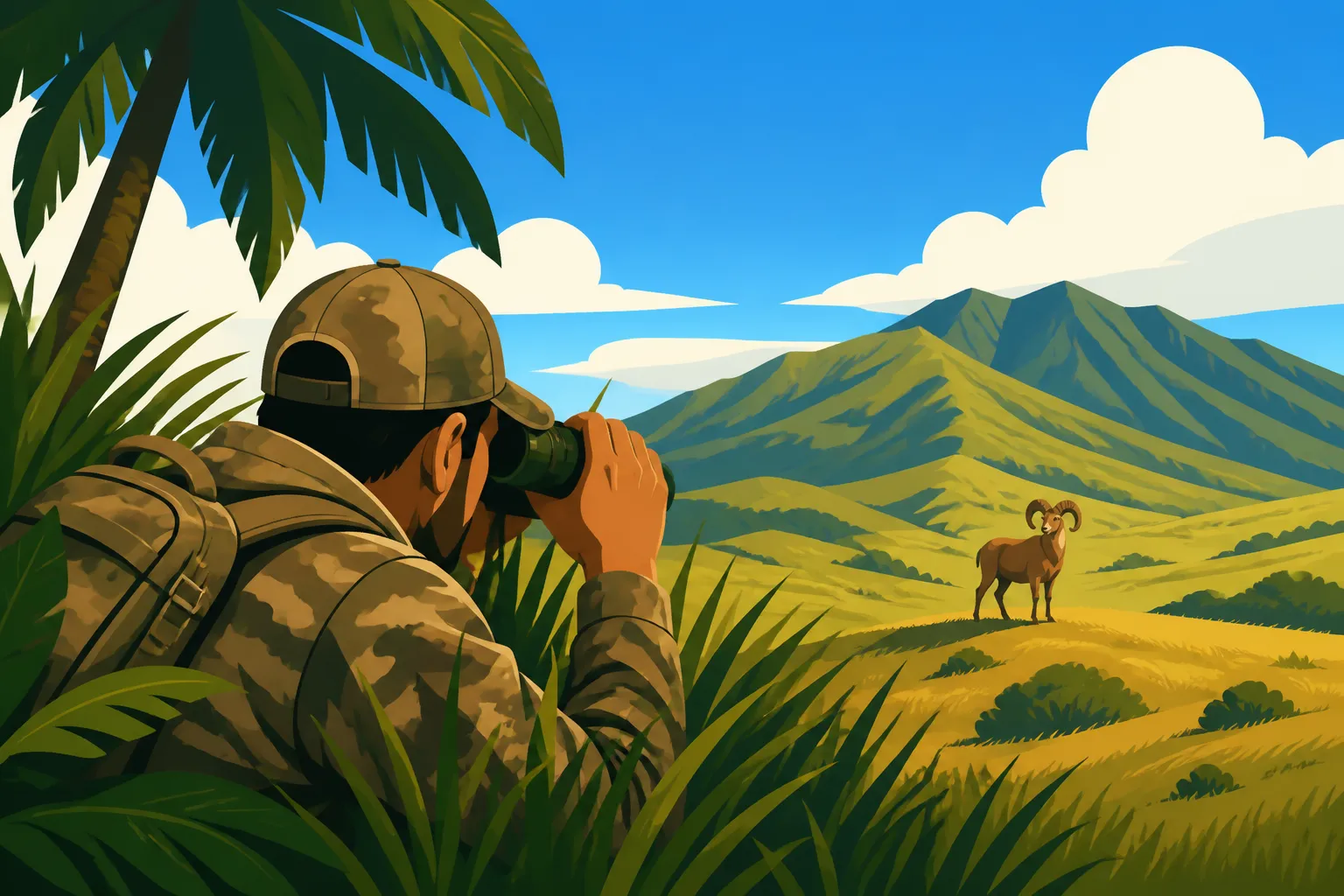
Goats, on the other hand, often inhabit steep, rugged open terrain—from coastal cliffs to canyon rims. They possess exceptional agility and an uncanny ability to spot movement from great distances. While Axis deer might hold to cover, goats often seem perfectly content on an exposed rock face, relying on their vantage point and incredible senses to detect danger. Understanding Why Hawaii Goats Move at First Light is key; they often utilize the cool morning hours to feed before seeking shade in the midday sun. This early morning activity can be your best chance to spot and stalk them before they become stationary and difficult to approach.
Both species rely heavily on their sense of smell. The ever-present trade winds in Hawaii mean that scent is constantly shifting and swirling. A small thermal eddy can betray your presence even with a seemingly favorable wind direction. Learning to read these subtle shifts is paramount. Observing What Axis Deer Eat on Maui can also inform your hunting strategy; if you know their preferred forage, you can identify areas where they are likely to be concentrated and plan your approach accordingly.
Essential Spotting Techniques
You can't stalk what you can't find, and in Hawaii's expansive open country, spotting your quarry is an art form that demands patience, good equipment, and a systematic approach. Don't rush into the unit hoping to stumble upon game; that's a recipe for blown stalks and wasted effort.
Glassing for Success
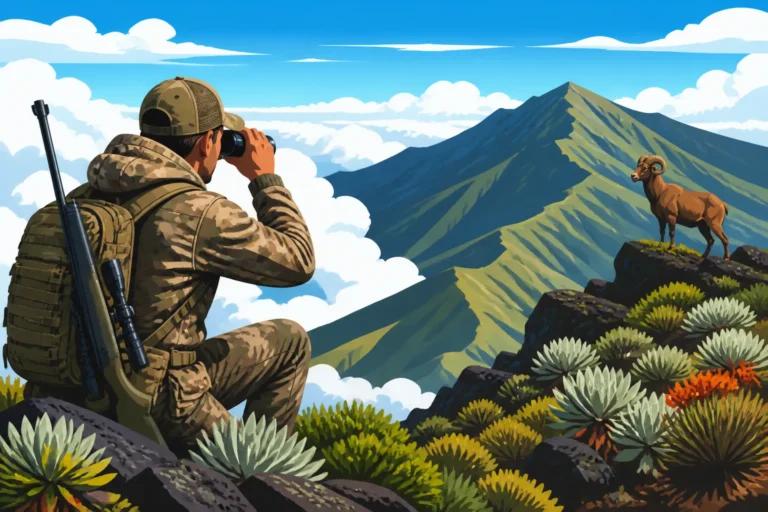
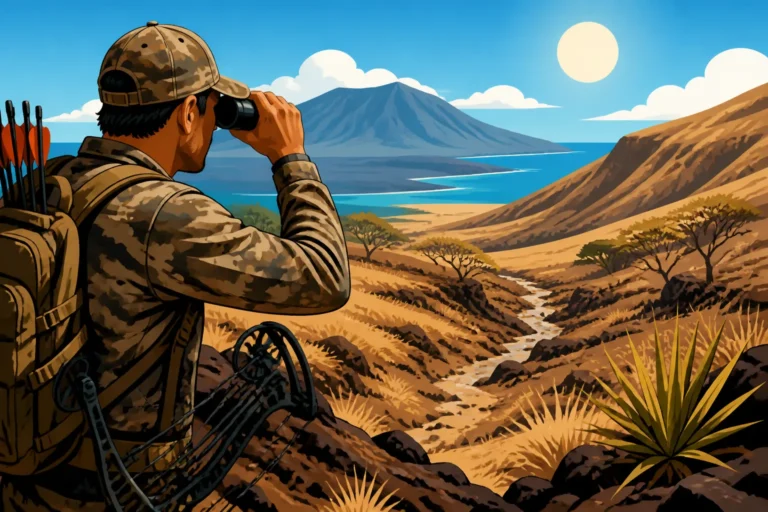
In open country, your optics are arguably more important than your rifle. High-quality binoculars (10×42 or 12×50 are popular choices) paired with a sturdy tripod are essential. A spotting scope (20-60x or higher) becomes your best friend for verifying details, judging an animal, and picking apart distant cover. Don't cheap out here—clear glass makes all the difference when trying to spot a flicker of an ear or the curve of an antler against a busy background.
The key to effective glassing is being systematic. Don't just scan randomly. Pick a section of hillside, an expanse of pasture, or a distant lava field, and work it methodically, left to right, top to bottom, as if you're reading a book. Take your time, pausing at regular intervals to let your eyes adjust and look for anything out of place. Many hunters rely on digital mapping tools like GoHunt to scout units and identify potential stalking routes from home, helping them narrow down likely areas to glass once in the field. Pay close attention to shadows, brush lines, and areas where animals might be bedded or feeding. The goal isn't to see the whole animal at first, but to catch a small piece of it—a leg, a horizontal line in a vertical landscape, a patch of hide that doesn't match the surroundings. Glassing Lanai's Open Ridgelines or Glassing a Lava Flow for Mouflon Rams requires this kind of systematic approach, as animals can blend in seamlessly.
Glassing effectively also means understanding the optimal times of day. Early morning and late evening are prime, as animals are typically more active and the lower sun angles create longer shadows that can highlight game. However, a midday scan can often reveal bedded animals that were previously hidden, especially if they've shifted positions. Always get to a high vantage point, if possible, without silhouetting yourself against the skyline. Use a ridge or hill crest to break up your outline, observing from just below the top.
Selecting Your Stalking Route
Once you've spotted an animal and confirmed it's something you want to pursue, the most critical phase begins: planning your approach. This isn't a race; it's a chess match. Immediately consider the wind direction—it is non-negotiable. A slight shift in a thermal can carry your scent right to the animal, blowing the entire stalk. You always want the wind in your face or quartering from the side. Before heading out, make sure your Hawaii hunting license and any necessary permits are in order. GoHunt's platform is an excellent resource for managing your licensing needs, offering a streamlined way to acquire what you need before you hit the field.
Next, assess the sun's position. Stalking with the sun directly behind you puts you at a disadvantage, casting long shadows and potentially silhouetting you. Ideally, the sun should be in the animal's eyes or at least off to the side, giving you a better advantage. Then, meticulously trace a route using every piece of available cover. This might mean making a massive detour to use a deep gulch, crawling through a long stretch of kiawe, or hugging the back side of a ridge. Don't take the direct route unless it offers continuous, impenetrable cover. Planning your route carefully is essential when Hunting Downwind in Hawaii's Shifting Thermals, as these can be unpredictable.
The goal is to move from cover to cover, always keeping the animal out of sight or at least presenting minimal profile. Use your binoculars to constantly re-evaluate your route and the animal's position. Remember, the animal might move, so be prepared to adjust your plan on the fly. Mapping applications can be invaluable here. Tools found on platforms like GoHunt can help you mark game sightings and potential escape routes, allowing for dynamic adjustments in the field.
Executing the Stalk and the Shot
The planning is done, the route is set. Now it's time for the physical and mental challenge of executing the stalk itself, culminating in an ethical shot. This is where patience truly becomes a virtue.
Moving Slowly and Deliberately
The actual movement during a stalk is agonizingly slow. Think of yourself as a predator, flowing with the landscape rather than walking through it. Every step should be deliberate, testing the ground for crunching leaves or loose rocks before committing your weight. When cover is sparse, you might find yourself crawling, sometimes for hundreds of yards, on your hands and knees or even belly-crawling. This is where durable, quiet clothing and tough knee pads become invaluable. The Hawaiian terrain is unforgiving, with sharp lava rock, thorny kiawe branches, and rough coral on coastal areas. Your boots, specifically, need to be able to withstand this abuse; otherwise, you'll be feeling every sharp edge. Check out tips on Walking Rough Lava Without Wrecking Your Boots and choosing the right Boots for Hawaii Lava and Wet Forest.
Pausing frequently isn't just about catching your breath; it's about observing. Animals often freeze or shift position if they sense something is off. By pausing, you give them a chance to relax and reveal themselves if they've moved. Listen for sounds—the rustle of leaves, the snap of a twig, or the distinct bark of an Axis deer can all tell you about their immediate surroundings or their reaction to your presence. If you're on a lava flow, the silence can be deafening, making every misstep amplified. If you're near a kiawe flat, you'll need to navigate the dense, thorny undergrowth with extreme care.
The Final Approach and Shot Placement
As you get within shooting range, the intensity ratchets up. This is where many stalks fail. The animal might be feeding, moving, or even looking your way. You need to anticipate its movements and adjust your final approach accordingly. If it's feeding, use the moments its head is down to advance. If it's looking, freeze completely, becoming one with the landscape. Often, the final 50-100 yards are the hardest, requiring the most patience and the lowest profile.
When you're finally in position, setting up for a stable shot is paramount. Prone is often the most stable position in open country, especially if you can get behind a small rise or use a backpack as a rest. Kneeling or sitting positions can work, especially with a bipod or shooting sticks. A sturdy shooting tripod can be a game-changer, allowing for steady shots from various angles. You absolutely need to be rock-solid. Adrenaline will be pumping, but focus on your breathing, your sight picture, and the shot. Take a moment to calm your nerves, confirm your target, and make a clean, ethical shot. Pay attention to the animal's body language; if it's quartering away, aim to penetrate the vitals while avoiding the gut. If broadside, aim for the heart-lung area. Learn how to accurately judge antler size in the field by reading up on Judging an Axis Buck's Antlers in the Field.
Post-Shot Procedures and What Comes Next
Taking the shot is only one part of the equation. In Hawaii’s challenging open and often warm environments, proper post-shot procedures are critical for successful recovery and meat care.
Tracking and Recovery in Open Country
Even when an animal goes down in seemingly open country, recovery isn't always straightforward. After the shot, immediately mark the exact spot where the animal was standing and where it was when it reacted to the shot. Observe its reaction: did it drop immediately, bolt, or stumble? This information is vital for beginning your track. If the animal runs, resist the urge to immediately charge after it. Give it time—15 to 30 minutes, or even longer if you suspect a non-lethal hit—to lie down and expire. Pushing a wounded animal can send it further and make recovery exponentially harder.
When you do begin tracking, move slowly and methodically. Look for blood, broken branches, disturbed earth, or scuff marks. On dry, rocky Hawaiian ground, blood trails can be sparse and difficult to follow. Look for small specks of blood, often on the underside of leaves or rocks, rather than a gushing trail. Pay attention to the animal's direction of travel. If it went over a ridge or into a gulch, mark the last sign and approach the area cautiously, using your binoculars to scan ahead. Remember, animals often seek the path of least resistance when wounded. For more detailed advice, consider articles like Packing Meat Out of a Hawaii Gulch, which provides valuable insights into dealing with difficult terrain after a kill.
Field Care and Extraction
Hawaii's warm climate demands immediate and thorough field dressing. As soon as you recover the animal, begin the process of gutting and skinning, if feasible. Heat is the enemy of wild game meat, and the longer the internal organs retain heat, the faster the meat will spoil. Get the hide off quickly to allow the carcass to cool. Even in exposed, open terrain, shade can be found under a kiawe tree or a rock overhang. Hang the carcass if possible, or prop it open to maximize airflow.
Cooling the meat quickly is crucial. If you’ve read up on Cooling Meat Fast on a Hawaii Hunt, you know that sometimes this means packing ice or gel packs into game bags and getting the meat into a cooler as soon as possible. Consider breaking down the animal into quarters or deboning it in the field to make it easier to pack out and cool. Having sturdy game bags is non-negotiable for keeping the meat clean and protected from insects. Planning for meat extraction is also vital. In truly remote, open areas, you might face a long, arduous pack out over challenging terrain. Ensure you have the necessary supplies, like a good backpack frame or a plan for getting vehicle access if possible. After a successful hunt, remembering to check out of your unit is crucial. Services like GoHunt often integrate with the state's check-in/check-out system, making it easy to comply with regulations, as detailed in Using the OuterSpatial App to Check In.
The table below summarizes key considerations for spotting and stalking Hawaii's primary open-country game:
| Feature/Species | Axis Deer | Feral Goats |
|---|---|---|
| Primary Habitat | Dry kiawe flats, open pastures, sparse woodlands, gulches | Steep cliffs, rocky canyons, lava flows, open ridges |
| Key Sense to Beat | Eyesight (exceptional), Scent (good) | Eyesight (exceptional), Scent (good) |
| Movement Patterns | Grazing at dawn/dusk, bedding in shade midday; often in herds | Feeding early/late, often stationary on vantage points; small to large herds |
| Typical Cover Used | Kiawe thickets, folds in terrain, deep gulches, taller grasses | Rock outcroppings, steep ledges, small caves, shadows on cliffs |
| Stalking Challenge | Wide-open visibility, herd dynamics, unpredictable shifts in position | Extreme vertical terrain, highly exposed positions, spotting from below |
| Best Approach | Utilize terrain features, crawl, anticipate herd movement | Approach from above or below using steep contours, move when heads are down |
| Shot Placement | Broadside heart/lung, quartering away vitals | Broadside heart/lung, quartering away vitals |
Disclaimer
Please remember that hunting regulations in Hawaii can change. Always consult the most current Hawaii Department of Land and Natural Resources (DLNR) Division of Forestry and Wildlife (DOFAW) regulations before planning any hunt. This guide is for informational purposes only and does not substitute for official regulations or professional guidance.