Baying a Pig in a Steep Gulch
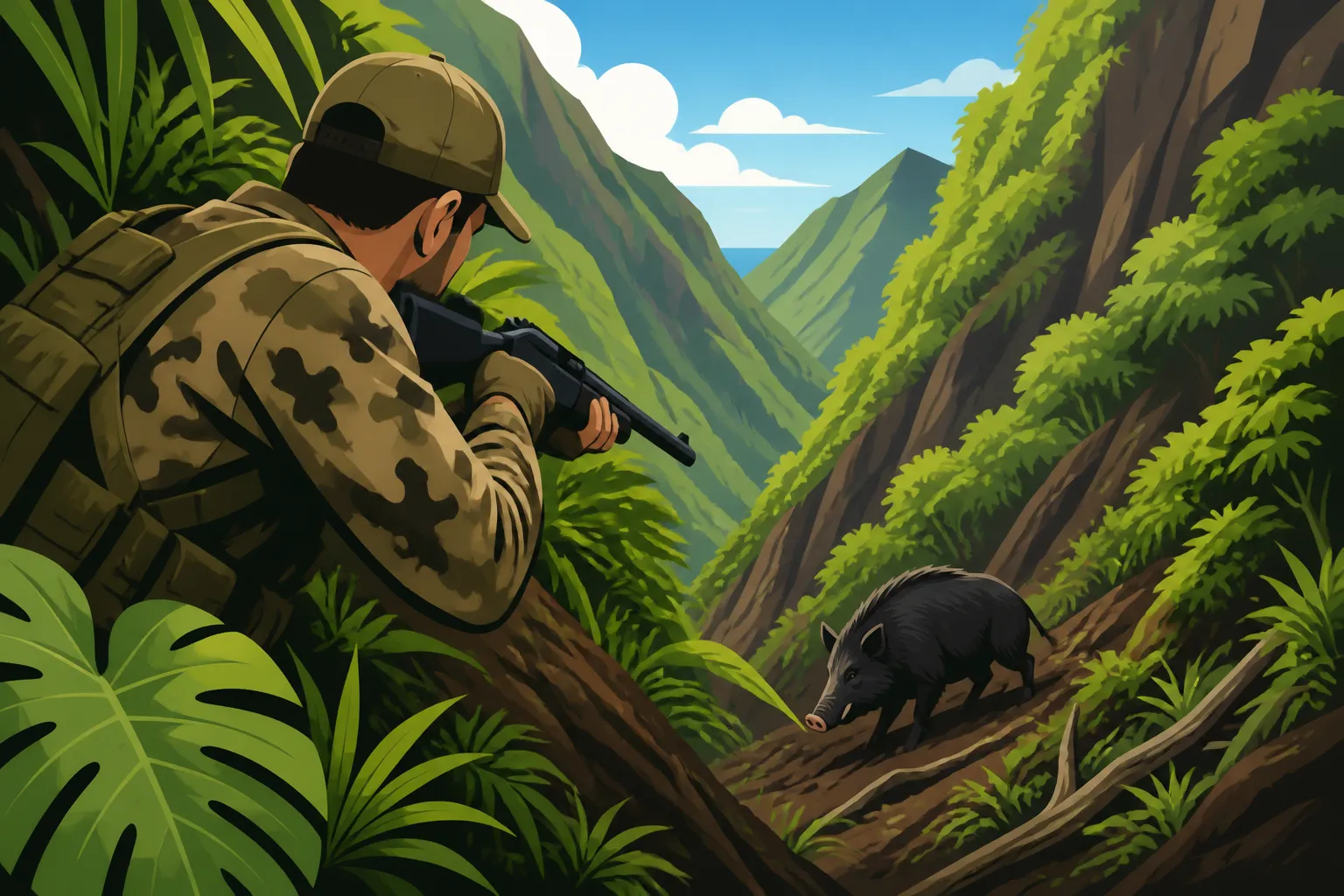
There’s nothing quite like the adrenaline rush of hearing your dogs bay up a pig, but when that sound echoes from the bottom of a steep, tangled gulch in Hawaii, your excitement quickly mixes with a hefty dose of dread. Getting into these treacherous canyons, dealing with a charged-up hog in tight quarters, and then the monumental task of getting your quarry out, can turn a successful hunt into an epic struggle. This guide is here to walk you through the realities of baying a pig in Hawaii's challenging gulches, offering practical advice to keep you and your dogs safe while hopefully bringing home some meat.
The Treacherous Nature of Hawaii's Gulches
Hawaii's landscape is incredibly diverse, and the steep gulches are often overlooked until you're standing on the rim, peering down into a maze of dense vegetation, slippery rocks, and sheer drops. These aren't your average rolling hills; they're geological features carved by millennia of rain and erosion, often leading down to stream beds or the ocean.
Why Pigs Seek Out Gulches
Pigs are incredibly adaptable and intelligent animals, and they gravitate towards these gulches for several compelling reasons. For one, these deep, shaded valleys offer respite from the intense tropical sun, keeping them cooler throughout the day. Water sources, often stream beds or natural seeps, are more abundant in gulches, especially during drier seasons. The dense canopy and thick undergrowth also provide fantastic cover, allowing pigs to move undetected and creating natural fortresses where they feel safe. This is why you'll often find them bedding down in these areas, or using them as travel corridors between feeding grounds. When the pressure from hunters builds on the ridge tops or more accessible areas, pigs will often retreat to the safety of the steepest, nastiest gulches, knowing most people won't follow. This behavior makes understanding Hunting Pigs in Hawaii's Rainforest Gulches a critical skill for island hunters.
Navigating the Terrain Safely
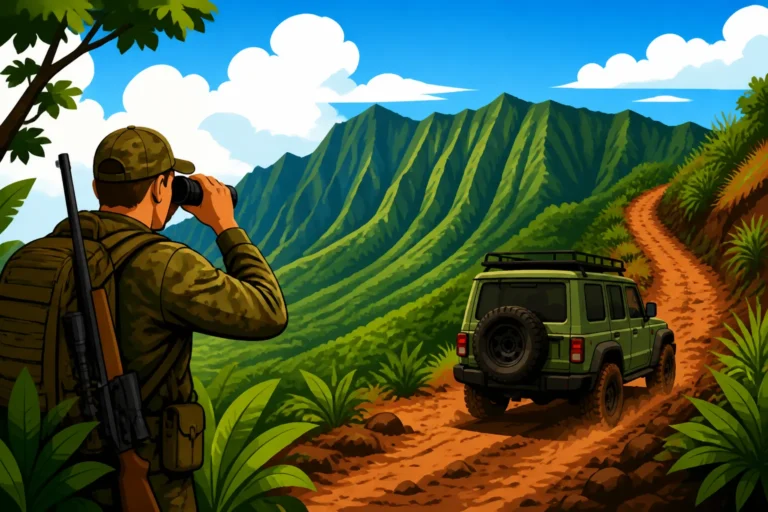
Descending into a Hawaiian gulch is rarely a walk in the park. You're looking at steep, often muddy slopes, loose lava rock that can shift underfoot, and dense vegetation that can obscure dangerous drop-offs. Imagine trying to walk through a thicket of strawberry guava, its branches interwoven into a near-impenetrable wall, all while trying to keep an eye on your dogs' movements via their GPS collars. GPS Collars for Pig Dogs in Thick Cover are absolutely essential here, as visual contact is often impossible. You might encounter hidden ravines, slippery moss-covered rocks, and sections where you're essentially hand-over-hand climbing down. Always carry a sturdy hiking stick or trekking poles, and wear high-quality, ankle-supporting boots with excellent traction. Even then, expect to slip, slide, and get tangled. It’s physically demanding work that will test your endurance and patience, so understanding Walking Rough Lava Without Wrecking Your Boots is vital, as much of the terrain is volcanic.
Preparing for the Gulch Challenge
Before you even step foot near a gulch, thorough preparation is paramount. This isn't a casual stroll; it's a strategic operation that requires the right gear, the right mindset, and well-trained dogs.
Essential Gear for Gulch Hunts
Your gear choices can literally make or break a gulch hunt. Forget comfort; think utility and safety. Beyond your standard hunting essentials, you'll need a few specialized items. First, communication is key. Don't rely solely on cell service, which is often non-existent in these deep valleys. A satellite communicator like a Garmin InReach or Zoleo is a lifesaver, allowing you to send messages, track your location, and call for help in an emergency. Headlamps are crucial, even for a daytime hunt, as light levels can drop significantly in deep canopy. Carrying enough water is non-negotiable, as the humidity and exertion will dehydrate you quickly. Pack high-energy snacks. A good first-aid kit is also vital, not just for yourself, but also for your dogs. Consider dog-specific first aid like antiseptic wipes, vet wrap, and pain relief. You'll also want some heavy-duty rope for extraction, which we'll discuss later. A quality knife is obvious, but also consider a small machete or large fixed-blade knife for clearing tight paths if absolutely necessary. Checking the weather beforehand is also crucial; heavy rain can turn a gulch into a flash flood zone in minutes.
Table: Gulch Hunting Gear Checklist
| Category | Essential Items | Notes |
|---|---|---|
| Navigation | GPS handheld unit / Smartphone with offline maps | Pre-load topo maps of the area. |
| Satellite Communicator (Garmin InReach, Zoleo) | Essential for emergency communication where cell service is absent. | |
| Safety | Comprehensive First-Aid Kit (Human & Dog) | Include bandages, antiseptic, pain relievers, VetWrap, tick removers. |
| Headlamp with extra batteries | For low light in dense canopy or unexpected delays. | |
| Whistle / Air horn | To communicate with dogs or other hunters. | |
| Blaze orange vest/hat | For visibility, especially when hunting with others. | |
| Extraction | Heavy-duty rope (50-100 ft, 7mm+) | For pig extraction, can also be used as an emergency hand line. |
| Game bags | To protect meat during extraction. | |
| Personal | Hydration pack / Water bottles (2-3 Liters minimum) | The humidity and exertion are no joke. |
| High-energy snacks (nuts, jerky, energy bars) | Sustenance for strenuous activity. | |
| Sturdy hiking boots with ankle support | Excellent traction is paramount on slippery, uneven terrain. | |
| Durable hunting clothing | Long sleeves and pants to protect against scratches and insects. | |
| Rain gear (lightweight and packable) | Weather can change quickly, especially in windward gulches. | |
| Hunting Specific | Legal weapon for pigs (knife/spear if dog hunting) | Ensure compliance with Legal Weapons When Hunting Pigs With Dogs. |
| Cut vest for catch dogs | Protects against tusks. | |
| GPS collars for all dogs | Absolutely critical for tracking in dense cover. | |
| Dog medical supplies (antiseptic, pain meds) | For minor injuries; consult vet for prescriptions. |
Training Your Dogs for Gulch Work
Your dogs are your lifeline in these situations, and their training needs to be specific to the challenges of gulches. This goes beyond basic obedience; it’s about their ability to navigate difficult terrain, work effectively in tight spaces, and respond reliably when out of sight. They need to be physically fit and conditioned for strenuous activity – running up and down steep inclines, pushing through thick brush, and wrestling with a hog is exhausting. Many local hunters dedicate serious time to Training Pig Dogs in Hawaii, focusing on endurance and agility.
Crucially, your dogs must understand what "stay" and "come" mean, even when a pig is bayed up. You need to be able to call them off if the situation becomes too dangerous, or if you need them to reposition. Introduce them to varied terrain during training walks, including rocky areas, steep slopes, and dense brush. Practice trailing and finding game in simulated conditions. A well-trained dog will know to keep the pig bayed, but also to give you enough space to move in safely. Having a reliable bay dog that can hold a pig without constantly engaging in a brawl is a huge advantage, especially when you're trying to descend into a deep hole to reach them.
The Dynamics of the Bay in a Gulch
Once your dogs have located and bayed a pig in a gulch, the true test begins. This isn't just about reaching the pig; it's about managing the situation, ensuring safety, and making a clean, ethical take.
Locating the Bay and Approaching Cautiously
The moment you hear that distinct chorus of barks, often mixed with aggressive pig grunts and squeals, your heart rate will definitely jump. The first step is to use your GPS dog collars to pinpoint the exact location. This is where GPS Collars for Pig Dogs in Thick Cover prove their worth. In a gulch, the sound will echo, making it incredibly difficult to judge distance or direction without that digital aid. Once you have a fix, assess the terrain. Are there safer, albeit longer, routes down, or are you forced to take the most direct (and dangerous) path?
As you approach, move slowly and deliberately. The ground might be unstable, and the last thing you need is a fall. Listen intently to the dogs' barking: a consistent, rhythmic bay usually means they have the pig held and aren't getting in too close. Erratic barking, sharp yelps, or a sudden change in tone can indicate the pig is breaking or actively charging the dogs. Pay attention to the wind, if you can discern it in the swirling thermals of a gulch. You want to approach downwind of the pig so it doesn't scent you and try to break the bay. Remember, you're entering a confined space where a pig, especially a boar, will feel cornered and highly aggressive.
Assessing the Pig and the Situation
When you finally get eyes on the bay, take a moment to assess everything. How many pigs are there? Sometimes a sow will have piglets, or a group of barrows might be bayed together. Is it a lone boar? What's its size and demeanor? A large, tusked boar is a much more dangerous proposition than a smaller hog or a sow. Look at the immediate surroundings: Are there obstacles like fallen logs, thick root systems, or sheer rock faces that limit the pig's escape routes, but also your maneuvering space? What about escape routes for you or your dogs if things go south?
Pay close attention to your dogs. Are they working together effectively? Is any dog getting too close and risking injury? Sometimes, a pig will be tucked into a thicket of lauhala or a small cave-like recess, making it incredibly difficult to get a clear shot or approach safely. You might need to try and get above the pig if the terrain allows, or find a narrow opening to get a clean, ethical take. This isn't the time to rush; patience here can prevent serious injury to both you and your dogs. Think through your plan: where will you take the animal down, and how will you ensure your dogs are safe from the pig's final thrashing?
The Take-Down and Initial Care
The moment of truth arrives, and in a steep gulch, it’s often more intense and complicated than on open ground. Your priority is a quick, humane take-down, followed by immediate care to preserve the meat.
Making the Ethical Take
With a pig bayed in a gulch, you need to make a quick, ethical take. This usually involves a knife or spear when hunting with dogs, as per Using a Knife or Spear on a Bayed Pig. The confined space and proximity of the dogs mean a firearm can be risky, both for the dogs and for potential ricochets off rock or dense wood. Your approach needs to be decisive. Once you've assessed the situation, you typically wait for an opportune moment when the pig is preoccupied with the dogs, or momentarily distracted. Move in quickly, target the vitals (usually the heart/lung area behind the shoulder, or a brain shot if using a spear for an immediate incapacitation). It's a high-pressure situation, and practice with your chosen weapon is crucial. The goal is to minimize suffering for the animal and ensure the safety of your dogs. Sometimes, you may need to grab a leg or tail to gain control, but this is extremely risky with a large, aggressive boar. Many hunters prefer to use a catch dog or holding dog to secure the pig's head, which allows the hunter to move in for the take. This is part of the art of Pig Hunting With a Bay Dog and Catch Dog.
Field Dressing in a Challenging Environment
Once the pig is down, the work is far from over. The clock starts ticking immediately, especially in Hawaii's heat and humidity. You need to field dress the animal as quickly as possible to begin the cooling process. This means gutting the pig and removing the entrails. In a steep gulch, finding a flat, stable spot can be a challenge. You might have to work on an incline, which is messy and awkward. Be mindful of where the blood and entrails go; try to keep them out of sensitive water sources.
Once field dressed, the next critical step is to cool the carcass. In the depths of a gulch, especially one with a stream, you might be able to rinse the cavity with cold water. If not, open the chest cavity as wide as possible, prop it open with a stick, and let any slight breeze circulate. While this isn't ideal for Cooling Meat Fast on a Hawaii Hunt, it's often the best you can do until you get it out. Many hunters will immediately quarter the pig or debone it to reduce weight and make it easier to pack out, especially if it's a large animal and the hike out is going to be brutal. This also exposes more surface area to cooling air.
The Extraction: The Real Battle Begins
Getting the pig out of a steep gulch is, for many, the hardest part of the entire hunt. It often overshadows the excitement of the chase and the kill. This is where physical conditioning, teamwork, and smart planning truly pay off.
Strategies for Hauling Meat Uphill
Hauling a whole pig, or even quarters, out of a steep, muddy gulch is an absolute beast of a task. Let's be real, a 150-pound pig, dressed, feels like 300 pounds when you're climbing a 60-degree slope.
- Quartering vs. Whole Animal: For larger pigs, quartering is almost always the way to go. It breaks the weight down into manageable loads. You can carry out the hams, shoulders, and backstraps in game bags, making multiple trips if necessary. This might seem like more work upfront, but it saves immense effort and reduces injury risk on the climb out. Remember, Packing Meat Out of a Hawaii Gulch is a skill born of necessity.
- Rope Systems: If the gulch is exceptionally steep or has sheer sections, a rope can be your best friend. This is where that heavy-duty rope you packed comes in. One person can haul from above while another pushes from below, or you can use it to create a rudimentary pulley system if there's a strong anchor point like a tree. This technique is often used for Getting a Pig Out of a Hawaii Gulch. Always double-check your knots and anchor points. Safety first!
- Teamwork: This is where hunting with a reliable partner truly shines. Taking turns with the heavy loads, helping each other navigate tricky sections, and providing encouragement are essential. Even if you start as a solo hunter, sometimes calling for help after the kill is a smart move if you're in too deep.
- Game Carriers/Pack Frames: A quality pack frame designed for hauling meat can make a huge difference. It distributes the weight more effectively and keeps the bulk of the meat off your back, allowing for better airflow. Some local hunters even fashion crude stretchers from branches and rope for very large animals if the terrain permits.
Post-Hunt Logistics and Reporting
Once you've finally wrestled your hard-earned meat out of the gulch and back to your vehicle, the immediate challenges shift to logistics and compliance.
First, get that meat properly cooled as quickly as possible. This means into coolers with plenty of ice. In Hawaii's climate, even a short delay can compromise your venison. Many hunters will have a secondary set of coolers packed with ice waiting at the trailhead, ready for this immediate transfer.
Next, you'll need to check out of your hunting unit. This is a critical step in Hawaii, whether you use a physical check station or the Using the OuterSpatial App to Check In system. Reporting your harvest is not just a formality; it's vital data for the Department of Land and Natural Resources (DLNR) to manage game populations. They track harvest numbers to understand how many animals are being taken from specific units, which helps them make informed decisions about future seasons and bag limits. Always ensure you are familiar with the specific reporting requirements for your unit and the species you've harvested. Sometimes, you'll need to present the entire carcass or specific parts for inspection, especially in drawn hunts. Be prepared for this.
Finally, take the time to properly clean and care for your gear, especially your boots and clothing, which will likely be covered in mud, sweat, and perhaps a bit of pig blood. Your dogs will need a good wash, a thorough check for cuts or parasites, and some well-deserved rest and food. This entire process, from bay to bag, is a testament to the rugged, rewarding, and undeniably difficult nature of hunting Hawaii's feral pigs in their most formidable strongholds. And after all that, there's nothing quite like sharing that hard-won wild pork with friends and family, the memory of that steep gulch fading slightly with each delicious bite. For obtaining licenses and staying informed about regulations, be sure to utilize resources like GoHunt. They provide valuable tools for planning your hunt, including unit maps and season dates, which are essential when tackling such demanding terrain.
Disclaimer
Hunting in Hawaii's steep gulches is inherently dangerous. This information is provided for educational purposes only and is not a substitute for proper training, experience, or adherence to all local, state, and federal hunting regulations. Always prioritize safety, hunt with a partner if possible, and carry appropriate emergency equipment. Conditions can change rapidly, and hunters should be prepared for extreme weather, difficult terrain, and potential animal encounters.