Hunting Hawaii’s Dry Kiawe Forest
Hunting in Hawaii often conjures up images of lush, verdant rainforests or vast, open volcanic slopes. But for many local hunters, and those who visit seeking game, the reality on the ground often involves navigating the formidable dry kiawe forests. These dense, thorny thickets, found primarily on the leeward, drier sides of our islands, present a unique set of challenges that can quickly turn a hopeful hunt into a frustrating battle against vegetation and heat. This guide is here to cut through that frustration, walking you through the distinct characteristics of kiawe country and providing the specific strategies and essential gear you’ll need to successfully pursue the Axis deer, feral pigs, and even goats that call these challenging environments home.
Understanding the Kiawe Forest Ecosystem
Before you can effectively hunt the kiawe, you really need to understand what you're up against. This isn't just any brush; it's a living, breathing, and often painful part of the Hawaiian landscape that dictates how both animals and hunters move through it.
What is Kiawe? A Hunter's Perspective
Kiawe, or Prosopis pallida, is an invasive species of mesquite that was introduced to Hawaii in the early 1800s. While it might be a headache for native ecosystems, it's become an undeniable part of our drier landscapes, especially on islands like Maui, Molokai, Lanai, and the leeward coasts of the Big Island. From a hunter's standpoint, kiawe isn't just a tree; it's a fortress.
Imagine walking into a solid wall of twisted, gnarled branches, each sporting a formidable thorn that can easily puncture a boot, tear clothing, or worse, get embedded in your skin. These trees thrive in arid conditions, forming incredibly dense, often impenetrable thickets that stretch for miles. They have shallow, widespread root systems that make the ground uneven and prone to tripping, and the fallen leaves and pods create a crunchy, noisy carpet underfoot. The air within these thickets is often stifling, trapping heat and humidity even when there’s a breeze outside. It's a stark contrast to the cooler, wetter forest units you might find elsewhere.
Why Game Animals Love Kiawe
Despite the difficulties it presents to us, kiawe is an absolute haven for game animals. It offers everything they need to survive and thrive in Hawaii's sometimes harsh, dry environments.
First and foremost, kiawe provides unparalleled sanctuary. The sheer density of the vegetation offers perfect cover from both the relentless Hawaiian sun and, more importantly, from human predators. An Axis deer can simply melt into a kiawe thicket and become virtually invisible just a few yards away. This dense cover also offers protection from the elements, especially the strong trade winds that can make open country feel exposed.
Beyond shelter, kiawe is a critical food source. Its long, sweet pods are a high-protein, readily available meal, especially during the dry season when other forage might be scarce. Axis deer and feral pigs gorge on these pods, making areas with heavy pod drop prime feeding grounds. You’ll often find pig sign like rooting and wallows near these areas, as they feast on the fallen bounty.
Lastly, kiawe provides a network of travel corridors. While it appears impenetrable, animals create subtle, often barely visible trails through the thickets. These trails are their highways, leading them from bedding areas to feeding grounds and, crucially, to water sources. Learning to identify and utilize these natural funnels is a game-changer when hunting this challenging terrain.
Key Game Species in Kiawe Country
When you head into the dry kiawe, you're primarily targeting a few key species that have adapted perfectly to this thorny habitat. Knowing their habits and preferences within this specific environment will greatly increase your chances of success.
Axis Deer: The Prized Target
Axis deer are, without a doubt, the stars of the show in Hawaii's kiawe forests, particularly on Maui, Molokai, and Lanai. These beautiful deer thrive in these dry, thorny landscapes, using the dense cover to their full advantage. During the heat of the day, you'll find them bedded down deep within the thickets, seeking shade and security. They'll often emerge at dawn and dusk to feed on kiawe pods or graze on the adjacent open pastures and clearings.
One of the unique aspects of hunting Axis deer in Hawaii is their year-round rut. Unlike mainland deer, you can encounter bucks in velvet, hard-horn, or even shedding their antlers at any time of the year. This means you need to be constantly on the lookout for fresh rubs on kiawe branches or scrapes on the ground, indicating an active buck. Their distinctive vocalizations, especially the alarm bark or the occasional fawn bleat, can also betray their presence within the dense cover. Finding them often means glassing the edges of the kiawe at first light or last light, patiently waiting for them to step out. If you're considering a focused effort, check out our guide on Axis Deer Hunting in Hawaii for a broader overview.
Feral Pigs: Rooting Through the Thickets
While Axis deer are the elegant residents, feral pigs are the rugged engineers of the kiawe forest. These intelligent and tenacious animals find both exceptional cover and abundant food within the thorny maze. They'll root extensively for tubers, grubs, and, of course, feast on the protein-rich kiawe pods, especially when they’re dropping. You'll often see tell-tale signs like fresh rooting disturbances, distinctive tracks, and sometimes even mud wallows in any damp depression within or near the kiawe.
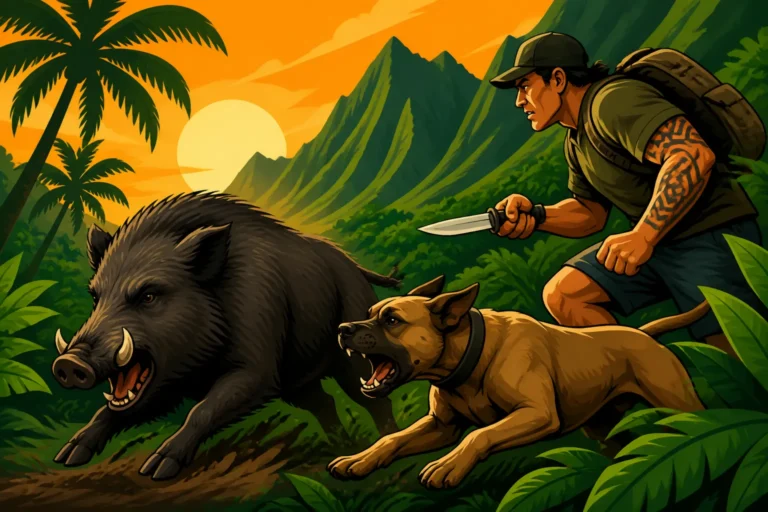
Hunting pigs in kiawe can be a thrilling challenge. Their keen sense of smell makes close approaches difficult, and their ability to vanish into the smallest opening is legendary. While some hunters prefer to still-hunt them, slowly and quietly navigating their trails, others opt for Dog and Knife Pig Hunting in Hawaii, which is a time-honored tradition here and often the most effective way to extract a pig from the impenetrable stuff. The dense cover means you often won't see them until they're very close, demanding quick reflexes and nerves of steel.
Feral Goats: Less Common, Still Present
Feral goats are generally associated with Hawaii's more open, rocky, and cliffy terrain, but don't count them out of kiawe country entirely. While they typically won't spend significant time deep within the densest thickets, they will certainly utilize sparse kiawe stands for cover, especially near water sources or along escape routes leading to more open ground. On the Big Island, for example, you might find goats browsing the edges of kiawe as it transitions into lava flows or dry pastures.
Look for their distinct pellet droppings and browsing lines on kiawe branches, often higher up than deer or pigs can reach. They’ll also leave worn trails where they’ve traveled repeatedly. Spotting goats often requires careful glassing of the interfaces between kiawe and more open country, particularly on steep slopes or canyon edges where the kiawe might be less dense. If you're specifically targeting these agile animals, our guide on Hunting Hawaii's Feral Goats offers more detailed strategies for their preferred habitats.
Effective Hunting Tactics for Kiawe Forests
Hunting kiawe is all about adapting your approach to the terrain. What works in open plains or dense rainforests simply won't cut it here. Success hinges on patience, stealth, and a deep understanding of animal behavior in this thorny labyrinth.
Spot-and-Stalk: The Edge Game
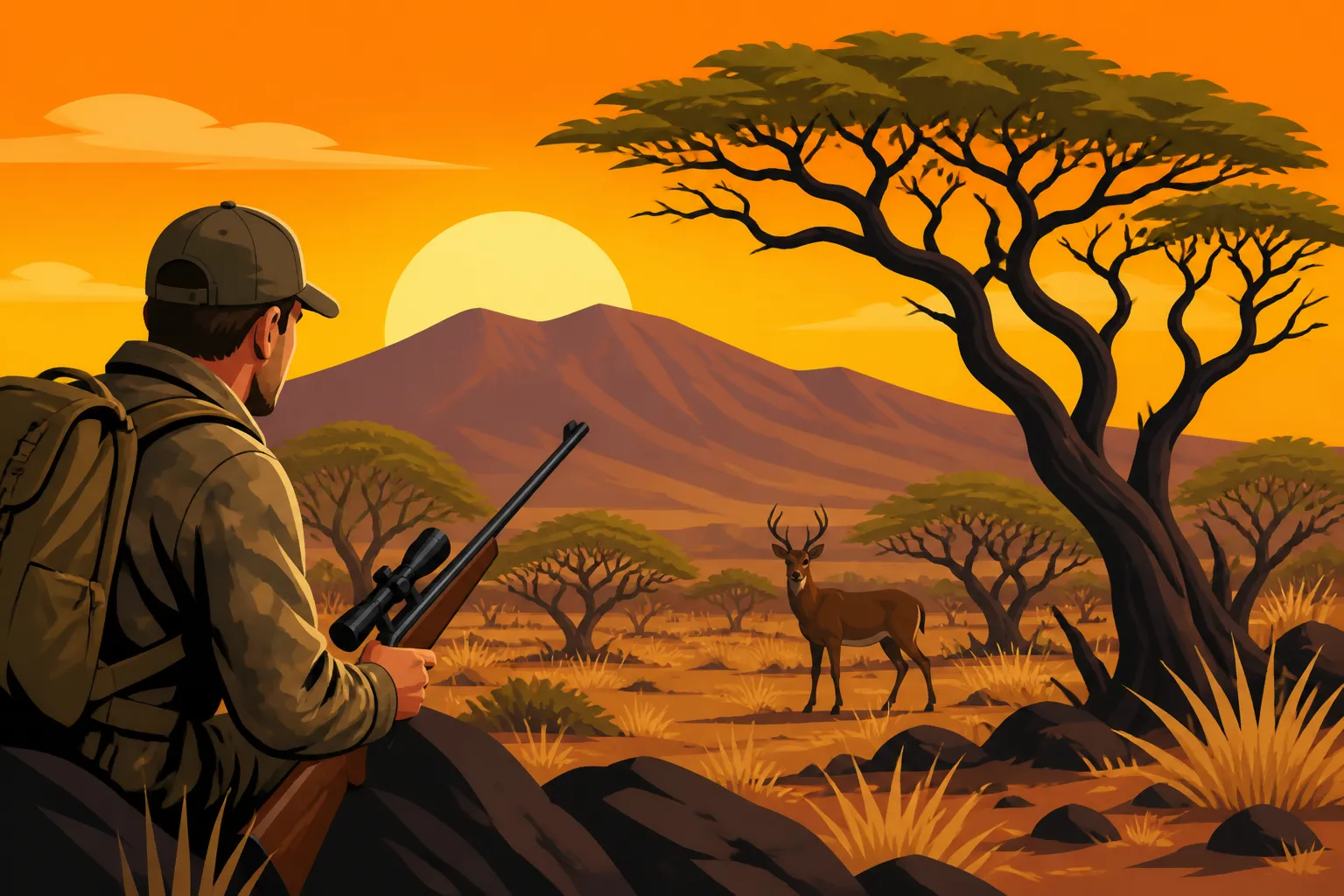
One of the most effective tactics in kiawe country is a modified spot-and-stalk approach, focusing heavily on the edges of the thickets. Since animals use kiawe for bedding and cover during the day, they will often move in and out of it to feed, particularly during the golden hours of dawn and dusk.
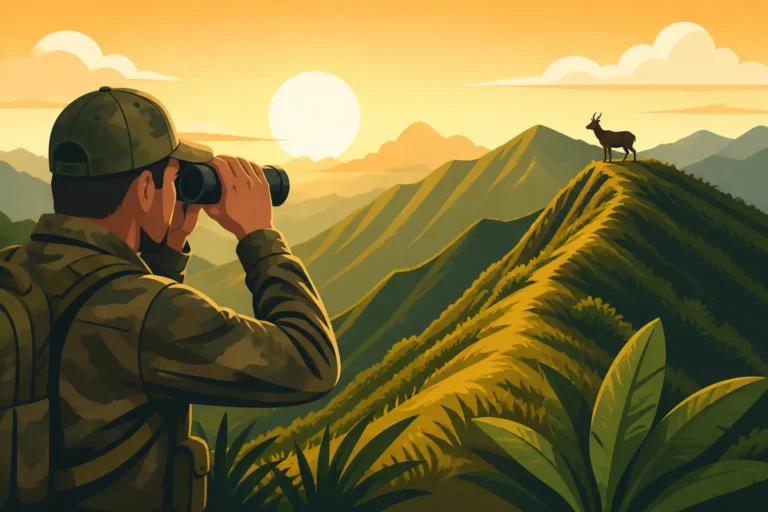
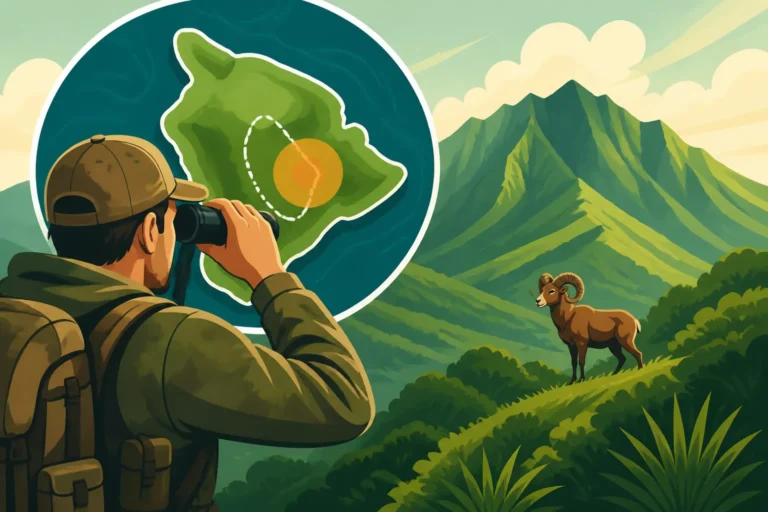
This strategy starts with intense glassing. Find an elevated position – a small hill, a cinder cone rim, or even the bed of your truck – that overlooks a vast expanse of kiawe and any adjacent open areas. Use good quality binoculars or a spotting scope to painstakingly scan every shadow, every movement, and every hint of an animal at the boundary of the kiawe. Patience here is absolutely crucial. Animals can appear and disappear quickly, often blending seamlessly with the thorny backdrop.
Once you spot an animal, the stalk begins. This is where the kiawe presents its real challenge. Your approach must be incredibly slow and deliberate. Pay absolute attention to the wind direction; shifting thermals are common in Hawaii, especially as the sun rises or sets, and a slight change can carry your scent directly to your quarry. You'll want to move parallel to the kiawe edge, using any available natural cover like rock outcroppings or larger trees to break up your silhouette. Every step must be planned to avoid the crunch of dry leaves or the snap of a twig. If you're interested in refining this skill, consider reviewing our guide on Spot-and-Stalk Axis Deer in Hawaii.
Still-Hunting the Interior
Sometimes, animals simply won't leave the safety of the dense kiawe. This is when still-hunting the interior becomes your best bet, though it demands a whole new level of mental and physical fortitude. This isn't a race; it's a slow, deliberate crawl. You'll move at a snail's pace, taking only a few steps, then pausing for several minutes to listen, look, and scan.
The goal is to pick apart the dense vegetation, looking for the most subtle clues: a flicking ear, a patch of hide, the horizontal line of a deer's back against the vertical lines of the kiawe, or the dark shape of a pig. Your ears become your primary tool – listen for the rustle of leaves, the snap of a branch, or the grunt of a pig. Keep the wind in your face at all times, as your scent will be carried easily through the thick canopy.
Game trails are your highways here. Animals create narrow tunnels through the kiawe that are often the only passable routes. Following these trails can lead you directly to bedding areas or feeding zones. However, these trails are also noisy, so every step needs to be mindful of dry leaves or brittle branches. Think like the animal; where would it bed for maximum security and shade? Where would it feed? What path would it take? This methodical approach, akin to Still-Hunting Pigs in Hawaii's Wet Forest but adapted for the dry environment, can lead to exhilarating close-range encounters.
Water Sources and Natural Funnels
In the dry kiawe, water is life, and understanding its role is a massive advantage. Any water source – a natural seep, an old cattle trough, a leaky pipe, or a small reservoir – becomes an absolute magnet for all game animals, especially during prolonged dry periods. These are prime locations for setting up an ambush.
If you find a reliable water source within or bordering kiawe, your strategy should revolve around it. Arrive well before dawn, ensure your scent is not blowing towards the approach trails, and settle in for a long, quiet wait. Animals will inevitably come to drink. Our guide on Hunting a Water Source in Dry Hawaii Country delves deeper into maximizing success at these critical spots.
Beyond water, look for natural funnels where the kiawe opens up or narrows, forcing animals into predictable travel paths. This could be a section of kiawe bordering an open field, a gulch that cuts through a thicket, or even an old road or fence line. These funnels concentrate animal movement, increasing your chances of an encounter. Scouting these areas for fresh sign before the hunt can give you a significant edge.
Reading Sign and Understanding Movement
Becoming a proficient kiawe hunter means becoming a master tracker and interpreter of animal sign. The dense vegetation often hides animals, but it can't hide their passage.
- Fresh Tracks: Look for clear, sharp tracks in dusty patches, mud (if any), or soft earth. Fresh tracks, especially those of multiple animals, indicate recent activity and a strong possibility that animals are still in the area. Our article on Reading Axis Deer Sign in Dry Country offers more specifics.
- Rubs and Scrapes: For Axis bucks, these can be found year-round. Bucks will rub their antlers on kiawe branches, polishing them or marking territory. Scrapes are less common but will be shallow depressions where a buck has pawed the ground and urinated.
- Pod Consumption: Look for chewed kiawe pods, especially those with tooth marks, and droppings containing kiawe pod remnants. This confirms that animals are actively feeding in that specific area.
- Bedding Areas: These are often subtly flattened patches of ground in the densest, shadiest parts of the kiawe thicket. Look for shed hair, fresh droppings, and the distinct impression of an animal's body. These are often tucked away in pockets of cover that offer good visibility for the animal but poor visibility of the animal.
Essential Gear and Safety for Kiawe Hunts
Hunting in kiawe is a battle of attrition against the environment. The right gear isn't just about comfort; it's about safety and preventing your hunt from being cut short by a preventable injury or mishap.
Protective Clothing and Footwear
This cannot be stressed enough: protect yourself from the thorns. Kiawe thorns are long, sharp, and will easily penetrate normal hunting clothing and even some boots.
- Thorn-Resistant Clothing: Invest in heavy-duty canvas, ripstop material, or even briar-proof pants and long-sleeved shirts. Brands like Carhartt or specific upland hunting apparel are often designed for this kind of abuse. Lightweight quick-dry fabrics are good for the heat, but they need to be robust. Denim just won't cut it.
- Rugged Boots: Your footwear needs to be exceptionally durable. Look for boots with stiff soles that can withstand punctures from thorns and provide excellent ankle support for navigating uneven, rocky terrain hidden by leaf litter. Many hunters find that a good quality leather boot with a thick rubber rand works well. For more on what to consider, check out our piece on Boots for Hawaii Lava and Wet Forest, as many of the principles apply to kiawe.
- Gaiters: These are non-negotiable. Quality, heavy-duty gaiters that cover your boots and lower legs will provide an extra layer of protection against thorns, prevent debris from entering your boots, and keep your socks dry if you encounter any unexpected moisture.
Hydration and Navigation
The dry kiawe can be brutally hot, and getting lost in the dense, monotonous thickets is a very real danger.
- Water, Water, Water: Carry significantly more water than you think you'll need. Dehydration is a serious risk. Electrolyte packets are also a good idea. Consider a hydration pack for hands-free access.
- GPS and Maps: Never rely solely on your phone. Cell service is notoriously spotty in many Hawaiian hunting units – hence our post on No Cell Signal on a Hawaii Hunt. Carry a dedicated GPS unit or use a reliable app like GoHunt or OuterSpatial (which is often used for checking in and out of units) on a fully charged phone, with downloaded offline maps. Know how to use them. Mark your starting point and any key waypoints as you go.
- Communication: A satellite messenger (like a Garmin inReach or Zoleo) can be a lifesaver for emergencies in areas without cell service. At a minimum, carry a whistle to signal for help.
Firearms and Archery Considerations
The dense nature of kiawe impacts your choice of weapon and how you handle it.
- Rifles: A durable, compact rifle is often preferred. Longer barrels and large scopes can get snagged on branches. Caliber-wise, something suitable for Axis deer, like a .243, .270, or .30-06, will be perfectly adequate for pigs and goats as well. Practice shooting quickly and accurately at close range, as opportunities can be fleeting.
- Bowhunting: Archery can be incredibly effective in kiawe, as the close quarters often make for short-range shots. However, you need a setup that can punch through tough hides and potentially bone. Choosing an arrow setup for Axis deer needs to account for the animal's size and the potential for close-range, high-adrenaline shots. Fixed-blade broadheads are often favored for their reliability.
- Muzzleloaders: While Muzzleloader Hunting in Hawaii is a viable option, be mindful that reloading in dense kiawe, especially during a follow-up shot, can be slow and cumbersome.
Safety and Field Care in the Heat
Hunting in Hawaii's kiawe presents unique safety and meat care challenges.
- First Aid Kit: A well-stocked first aid kit is essential. Include items for thorn removal, antiseptic wipes, bandages for cuts, pain relievers, and any personal medications.
- Buddy System: Whenever possible, hunt with a partner, especially in remote or dense kiawe areas. It's safer for extraction in case of injury or if an animal needs to be recovered.
- Meat Care in the Heat: Once an animal is down, the clock starts ticking due to Hawaii’s heat and humidity. You need to field dress Axis deer in Hawaii heat immediately to begin cooling the carcass. Getting the hide off and splitting the sternum can also accelerate cooling. Our guide on Cooling Meat Fast on a Hawaii Hunt provides critical tips. If you're deep in a gulch, know that Packing Meat Out of a Hawaii Gulch is going to be a strenuous effort, so plan for it. Bring game bags to protect the meat, and a cooler with ice to get it rapidly chilled once you reach your vehicle.
Comparison of Hunting Tactics in Kiawe Forest
To help you visualize the best approach for different situations in the kiawe, here's a quick comparison of the primary tactics:
| Tactic | Best For | Pros | Cons | Key Considerations |
|---|---|---|---|---|
| Spot-and-Stalk | Observing edges of thickets, open pockets, fields; dawn/dusk activity | Can cover more ground; utilizes optics for early detection; targets animals when they are exposed | Requires good visibility; difficult to execute silently in dense thickets; long, stealthy approaches needed | Wind direction is paramount; find elevated glassing points; practice slow, deliberate movement; be ready for quick shots |
| Still-Hunting | Deep interior of kiawe thickets; mid-day bedding areas; following game trails | Gets into the heart of dense cover; often leads to close, intense encounters with unaware animals | Extremely slow and physically demanding; very noisy due to dry leaves/branches; easy to get disoriented in thickets | Absolute stealth and patience; constant wind checks; focus on listening for sounds; identify and follow subtle game trails |
| Water Source Ambush | Dry seasons; known seeps, troughs, or old reservoirs; high traffic areas | High success rate during hot periods when animals seek water; less movement required by hunter | Can be crowded with other hunters; requires long, motionless waits; less effective during rainy periods | Scout for active water sources; arrive early for concealment; meticulous scent control; maintain silence throughout the wait |
Final Thoughts on Kiawe Hunting
Hunting Hawaii's dry kiawe forest is not for the faint of heart. It’s a test of patience, physical endurance, and mental toughness. The thorns will scratch, the heat will challenge you, and the animals will seem to vanish into thin air. But for those who embrace the challenge and learn to read this unique landscape, the rewards can be incredible – a hard-earned Axis deer, a formidable feral pig, or even a wary goat.
It's about respecting the environment, understanding the animals, and being prepared for anything. So, gear up, plan meticulously, and step into the kiawe with confidence. The adventure, and the potential for a truly memorable hunt, awaits.
Disclaimer
Hunting involves inherent risks, including but not limited to injury or death. The information provided in this guide is for informational purposes only and should not replace professional guidance, local regulations, or personal judgment. Always prioritize safety, follow all Hawaii Department of Land and Natural Resources (DLNR) rules and regulations, and obtain all necessary licenses and permits before hunting. Be aware of your surroundings, carry appropriate safety and first aid gear, and inform someone of your hunting plans and expected return.