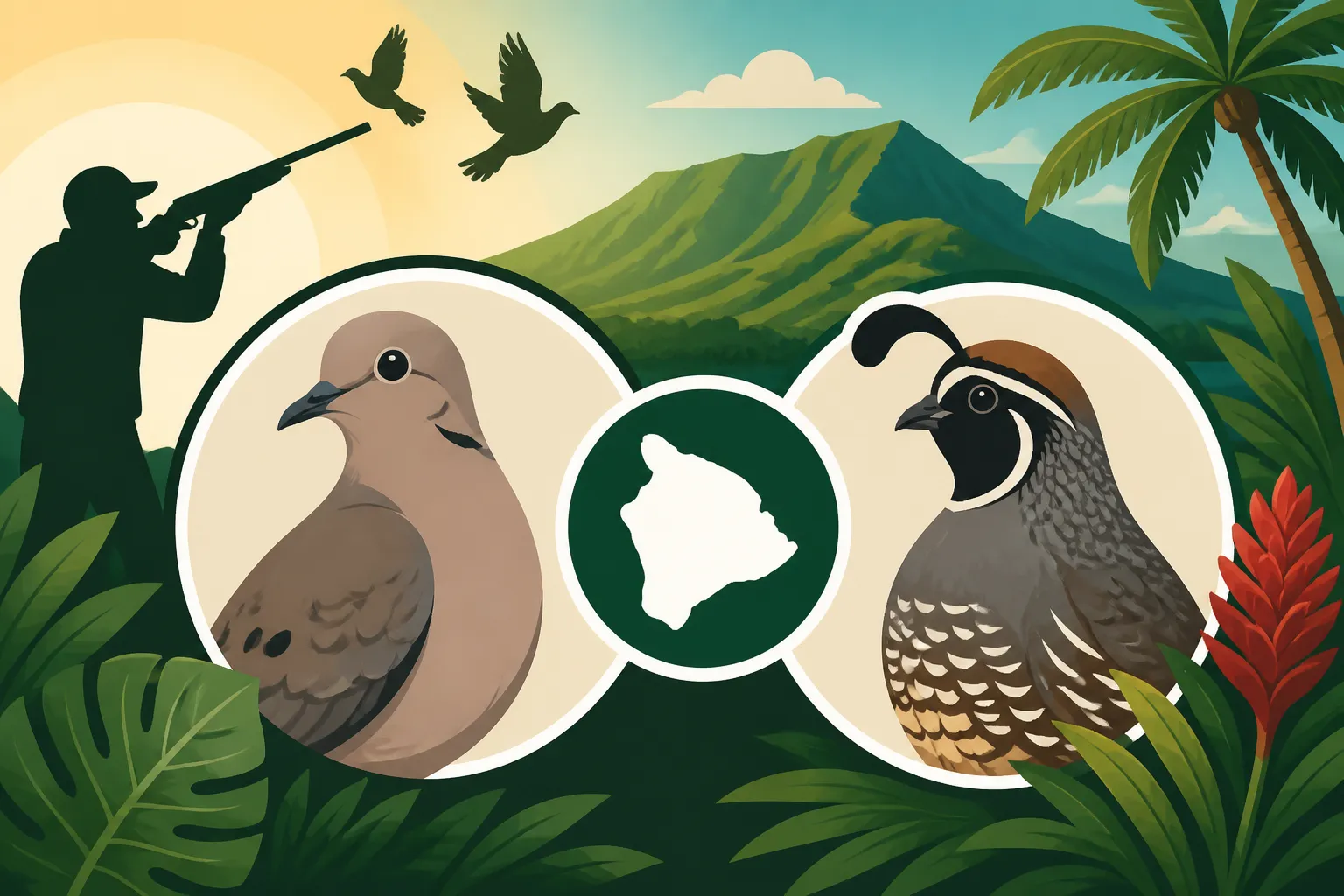
Dove and Quail Daily Bag Limits
It’s a familiar scenario for many hunters who head out to Hawaii’s public lands: you’ve scouted a great spot, the birds are moving, and the adrenaline is pumping. But in the excitement of the hunt, a common worry creeps in – "What's the exact daily bag limit for doves and quail here, again?" Navigating Hawaii's specific game bird regulations, especially the daily limits for doves and quail, can feel like trying to catch smoke. This guide aims to clear up that confusion, providing clear, up-to-date information so you can enjoy your hunt confidently and legally.
Navigating Hawaii's Game Bird Regulations
Hawaii's game bird regulations are designed to manage wild populations and provide sustainable hunting opportunities across the islands. While the general rules for Hawaii Game Bird Seasons and Bag Limits might seem straightforward at a glance, the specifics for individual species like doves and quail often require a closer look. Understanding these nuances is crucial, not just for legal compliance, but for contributing to the health of these bird populations for future generations of hunters.
The Importance of Up-to-Date Information
Wildlife management is a dynamic field, and hunting regulations can change. Factors like weather patterns, habitat conditions, and population surveys can influence season dates and bag limits. The Hawaii Department of Land and Natural Resources (DLNR), through its Division of Forestry and Wildlife (DOFAW), is the authority that sets these rules. It’s absolutely vital for every hunter to consult the most current Hawaii Game Bird Hunting Regulations issued by DOFAW before heading into the field. This means checking the official proclamations, often available on their website or at local DOFAW offices. Relying on outdated information, or even what a friend told you last year, can lead to unintended violations.
Think of it like planning a trip to a remote Hawaii hunting unit after heavy rain; conditions can change drastically, and what worked last time might not work now. Always double-check. The official GoHunt Hawaii licensing system, where you purchase your Hawaii Hunting Licenses and What They Cost, is also a great resource for current regulations, often linking directly to the latest proclamations. They want you to succeed and stay legal, so they make these resources available.
General Principles of Bag Limits
Bag limits are a cornerstone of wildlife conservation. They dictate the maximum number of a particular species an individual hunter can harvest in a single day or possess at any given time. For game birds in Hawaii, these limits are set to ensure that enough birds remain to reproduce and maintain healthy populations, especially considering that many of Hawaii's game birds are introduced species. The concept is pretty simple: don't take more than nature can replenish.
What sometimes trips up hunters, especially those new to island hunting or those coming from the mainland, is the distinction between individual species limits and aggregate limits. Sometimes, different species within the same category (like doves) might have the same individual limit, and then a combined total limit as well. It’s critical to know if you can take 15 Barred Doves and 15 Spotted Doves, or if it's 15 total doves combined. This guide will clarify that distinction for doves and quail specifically. These limits are non-negotiable and are enforced strictly by wildlife conservation officers.
Daily Bag Limits for Doves in Hawaii
Hawaii is home to two primary dove species popular with hunters: the Barred Dove and the Spotted Dove. Both are excellent table fare and provide challenging hunting opportunities, often found in agricultural areas, kiawe flats, and forest edges. Understanding their specific bag limits is essential before you even chamber a round.
Barred Dove and Spotted Dove Limits
For Barred Doves and Spotted Doves in Hawaii, the daily bag limit is generally 15 birds per hunter, combined. This means that whether you harvest 15 Barred Doves, 15 Spotted Doves, or any combination of the two adding up to 15, that's your daily maximum. You can't take 10 Barred Doves and then decide to pursue another 10 Spotted Doves; once you hit 15, your dove hunting for the day is done.
It’s crucial to keep a mental tally (or even a physical one on a small notepad) as you hunt. The excitement of a flock flying in can make it easy to lose count, but ignorance of the law is no excuse. These doves are often found in similar habitats, so you'll likely encounter both species during a hunt. Many hunters focus on Hunting Doves Over a Hawaii Pasture, where both Barred and Spotted Doves often feed. Their fast, erratic flight makes them a fun challenge, but always be mindful of that 15-bird aggregate limit.
Identifying Doves in the Field
While the bag limit for both Barred and Spotted Doves is the same, being able to distinguish them is a good practice for any ethical hunter. It helps you appreciate the biodiversity of the islands and ensures you’re correctly identifying your target.
- Barred Dove: These are smaller, often described as having a "barred" or scaled appearance on their neck and upper chest, which gives them their name. Their overall color is a dull brownish-gray, and they have a relatively shorter tail. They are quite common and can be found almost anywhere at lower elevations.
- Spotted Dove: Larger than the Barred Dove, the Spotted Dove is characterized by a distinctive black patch on the side of its neck, adorned with white spots. Its body is a more purplish-gray, and it has a longer, tapering tail, edged with white.
Both species have a similar cooing call, but with practice, you can learn to tell them apart by sight and sound. When a mixed flock comes into range, you'll need to be quick with your identification if you're trying to selectively harvest one over the other, though for bag limit purposes, they are counted together. Observing them through binoculars before they flush can help hone your identification skills.
Daily Bag Limits for Quail in Hawaii
Hawaii also offers opportunities to hunt quail, specifically the California Quail and the Japanese Quail. These birds provide a different kind of challenge, often requiring more active pursuit through rugged terrain compared to doves, which are frequently ambushed at feeding areas. Just like with doves, knowing the precise bag limits for quail is fundamental.
California Quail and Japanese Quail Limits
For both California Quail and Japanese Quail in Hawaii, the daily bag limit is typically 10 birds per hunter, combined. Similar to doves, this means your total quail harvest for the day, regardless of species, cannot exceed 10. You cannot take 7 California Quail and then pursue another 5 Japanese Quail; once you reach 10, you must cease quail hunting for that day.
Quail hunting in Hawaii often involves traversing dry uplands, grasslands, and areas with dense brush, sometimes utilizing Using a Bird Dog in Hawaii Terrain to flush coveys. These environments, such as those found in the higher elevations of Hawaii Island or some areas of Maui, are ideal for quail. When a covey flushes, it can be a whirlwind of activity, making it easy to forget your count. Many hunters find themselves focused on Hunting Quail in Hawaii's Dry Uplands, where these small, fast birds can provide thrilling action. Being disciplined about tracking your harvest, even if it's just by dropping a pebble in your vest pocket for each bird, can save you a lot of trouble.
Differentiating Quail Species
While both quail species fall under the same combined bag limit, knowing the difference adds to your appreciation of the hunt and the local wildlife.
- California Quail: These are the most iconic quail species, immediately recognizable by the distinctive, curving plume or "topknot" on their head. Males have a striking black face with a white border, a chestnut crown, and a scaly belly pattern. Females are duller but still possess the topknot. They are often found in coveys in open woodlands, brushy areas, and grasslands.
- Japanese Quail: These are smaller and less flashy than California Quail, lacking the prominent head plume. They have a more streaked, brownish plumage overall, providing excellent camouflage in grassy fields. The male has a dark brown throat and cheeks, while the female has a paler throat and a heavily spotted breast. They prefer open grasslands and agricultural fields.
Japanese Quail are often found in areas with shorter grasses, while California Quail prefer more cover. Knowing these subtle differences in appearance and habitat preferences can help you locate different coveys and improve your hunting strategy, all while keeping that 10-bird combined limit in mind.
Strategies for Staying Within Bag Limits
Successfully managing your bag limit isn't just about avoiding a fine; it's about being a responsible, ethical hunter. It contributes directly to the sustainability of the sport and ensures that these opportunities remain available for everyone.
Pre-Hunt Planning and Tracking Your Harvest
The best way to adhere to bag limits is to plan before you even step foot in the field. This includes:
- Checking Current Regulations: Always, always, always verify the latest proclamations from DOFAW. The GoHunt Hawaii platform is your friend here, along with the official state website. Regulations can sometimes vary by island or specific hunting unit, so pay close attention to the details for your planned hunting location. You might find specific rules for Hawaii Island Hunting Unit Seasons or Maui's Year-Round and Seasonal Units that impact your hunt.
- Setting a Personal Limit: Sometimes, even if the legal limit is 15 doves, you might decide a personal limit of 10 or 12 is sufficient for your needs. This is a great way to practice self-restraint and increase the challenge.
- Tracking During the Hunt: Develop a simple system for tracking your birds. As mentioned, a small notepad, tally counter, or even moving small stones from one pocket to another can help. This is especially important when Hunting Hawaii's Game Bird Weekends when multiple flushes might occur.
It's also a good idea to refresh your knowledge on Hawaii Hunter Education Requirements as these courses often cover ethical hunting practices and regulatory compliance. Being prepared is the key to a stress-free and successful hunt.
Ethical Considerations and Conservation
Bag limits are more than just numbers; they are a direct link to conservation efforts in Hawaii. Every bird you harvest responsibly means there are still plenty left to contribute to the population. Overharvesting, even unintentionally, can put undue pressure on local populations and lead to reduced opportunities in the future.
Consider these ethical points:
- Wasting Game: Never take more game than you intend to use. Field dressing and cooling your birds promptly, especially in Hawaii's heat, is crucial to preserving the meat.
- Fair Chase: Uphold the principles of fair chase. Don't hunt in ways that give you an unfair advantage or stress the birds unnecessarily.
- Respect for the Resource: Recognize that these birds are a valuable, shared resource. Your actions reflect on the entire hunting community.
Ultimately, by understanding and respecting the Dove and Quail Daily Bag Limits, you're not just following the rules; you're actively participating in the responsible management of Hawaii's unique wildlife. This commitment ensures that the thrill of a covey rise or the swift flight of a dove will be there for generations of hunters to come. Don't forget the importance of Checking In and Out of Hawaii Hunting Units properly, which sometimes includes reporting your harvest, further contributing to wildlife management data.
Hawaii Game Bird Daily Bag Limits Summary
To make things easy to reference in the field, here's a quick rundown of the general daily bag limits for doves and quail in Hawaii. Remember, always consult the current year's DOFAW proclamations for the most up-to-date and specific regulations for your hunting unit.
| Species Category | Specific Species | Daily Bag Limit (Combined) | Key Identification Notes |
|---|---|---|---|
| Doves | Barred Dove | 15 | Smaller, brownish-gray, barred pattern on neck/chest, shorter tail. |
| Spotted Dove | 15 | Larger, purplish-gray, black patch with white spots on neck, longer tail. | |
| Quail | California Quail | 10 | Prominent curving topknot, males with black face/white border. |
| Japanese Quail | 10 | Smaller, streaked brownish plumage, no topknot. |
Note: These limits are subject to change. Always verify with current DOFAW regulations before hunting.
Disclaimer
Please note: Hunting regulations in Hawaii are subject to change by the Department of Land and Natural Resources (DLNR) / Division of Forestry and Wildlife (DOFAW). This guide is for informational purposes only and is based on generally applicable regulations. It is the individual hunter's responsibility to consult the most current official Hawaii hunting proclamations and rules before engaging in any hunting activity. Failure to do so may result in legal penalties.