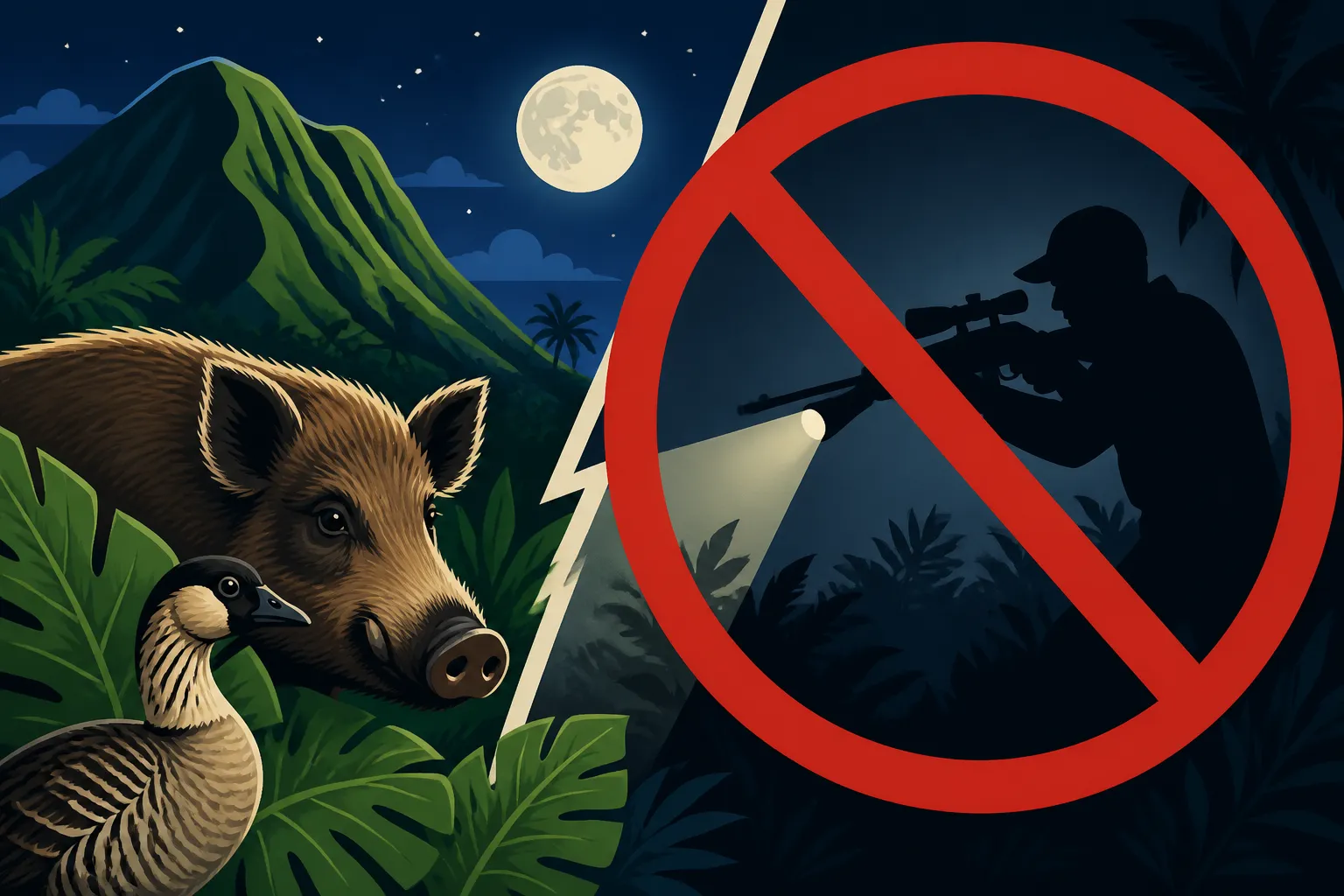
Why Night Hunting Is Restricted
It's incredibly frustrating when you know that certain animals, especially those elusive feral pigs, are most active under the cover of darkness, yet the rules say you can't hunt them at night. This can leave many hunters scratching their heads, feeling like they're fighting an uphill battle. This guide is here to shed some light on why Hawaii has strict restrictions against night hunting, help you understand the current regulations, and offer strategies to make the most of your legal hunting hours in the islands.
The Core Reasons Behind Hawaii's Night Hunting Restrictions
Hunting in Hawaii isn't just about bagging an animal; it's deeply intertwined with safety, ethics, and the unique conservation challenges these islands face. The rules surrounding night hunting are a direct reflection of these complex considerations, often designed to protect both hunters and the delicate environment.
Prioritizing Public and Hunter Safety
Let's be real, hunting in low light or complete darkness introduces a whole new layer of risk. Even with the best gear, visibility becomes severely limited, making it incredibly difficult to accurately identify your target, know what's beyond it, or even be fully aware of your surroundings. Imagine navigating Hawaii's rugged, often steep and overgrown terrain in the pitch black – it's a recipe for accidents.
One of the biggest concerns is accidental shooting. In the dark, it's exponentially harder to distinguish between legal game animals, non-target species, domestic animals, or even other hunters. Public hunting lands in Hawaii, while wild, can sometimes be near residential areas or public access roads, especially on islands like Oahu or parts of Maui and the Big Island. The risk of a stray bullet or an unintended target being hit skyrockets at night. The state's Department of Land and Natural Resources (DLNR), through its Division of Forestry and Wildlife (DOFAW), puts these restrictions in place to protect everyone – hunters, other outdoor enthusiasts, and the general public. It's a pragmatic approach to minimize tragic incidents where poor visibility could lead to devastating consequences.
Upholding Fair Chase and Ethical Hunting Practices
Beyond safety, the concept of "fair chase" is a cornerstone of ethical hunting, and night hunting often flies directly in the face of it. Fair chase implies a balance between the hunter and the hunted, where the animal has a reasonable chance to evade capture. When you introduce the advantage of darkness, animals, especially those primarily nocturnal like Hawaii's feral pigs, lose much of their natural defense mechanisms. Their superior night vision, which is their natural advantage, can be overcome by artificial lights or advanced night vision technology, creating an unfair imbalance.
For many hunters, the challenge is a significant part of the experience. The skill involved in tracking, stalking, and outsmarting an animal during legal daylight hours is what defines the hunt. Removing that challenge by hunting animals when they are most vulnerable and less wary detracts from the integrity of the hunt. Hawaii's regulations reflect a long-standing tradition of fair chase, ensuring that hunting remains a respectable pursuit that honors the game animal. It’s about more than just harvesting; it’s about how you harvest.
Wildlife Management and Conservation Objectives
While feral animals like pigs, goats, and Axis deer are often targeted for control due to their ecological impact, indiscriminate hunting practices can still disrupt wildlife management goals. Uncontrolled night hunting could lead to several issues:
- Overharvesting: The increased effectiveness of night hunting, especially if combined with certain technologies, could potentially lead to localized overharvesting of animals beyond sustainable management objectives, even for invasive species.
- Targeting Non-Target Species: In low light, the risk of misidentification increases significantly. This could inadvertently lead to the taking of protected species or game animals not currently in season, which would undermine conservation efforts. Hawaii has several unique and protected native species, and even game birds have specific seasons and bag limits that need to be respected.
- Disruption of Wildlife Patterns: Constant night hunting pressure can drastically alter animal behavior, pushing them into more remote or inaccessible areas, making management and even legitimate daylight hunting more difficult in the long run.
DOFAW continually assesses populations and sets seasons and limits to balance hunter opportunity with ecosystem health. The restrictions on night hunting are a tool in this broader management strategy, ensuring that hunting contributes positively to the islands' unique and fragile ecosystems, rather than creating new problems. This helps ensure that activities like Hawaii Game Mammal Seasons and Hawaii Game Bird Seasons and Bag Limits are managed effectively.
Understanding Hawaii's Legal Hunting Hours and Exceptions
Navigating Hawaii's hunting regulations can sometimes feel like trying to read a tide chart during a hurricane – a lot of information and it changes frequently! But when it comes to night hunting, the rules are pretty clear for general public land access.
The Standard Rule: Daylight Hours Only
For the vast majority of public hunting opportunities in Hawaii, hunting is strictly limited to legal daylight hours. This generally means from 30 minutes before sunrise to 30 minutes after sunset. This timeframe is consistent across most game mammals and birds. You’ll find this specified in the rules for individual hunting units, which you can often check when Checking In and Out of Hawaii Hunting Units.
This rule is designed to align with the safety and fair chase principles we discussed earlier. It ensures that hunters have adequate natural light to identify targets, maintain situational awareness, and minimize risks. It also levels the playing field, making the hunt more challenging and respectful of the animal's natural defenses. Always consult the most current Hawaii Administrative Rules (HAR) and DOFAW's annual hunting regulations pamphlet, available through the GoHunt website, for the precise legal shooting hours specific to the unit and species you're pursuing. Don't just rely on what you heard; verify it!
Specific Regulations by Species and Unit
While the daylight hours rule is generally universal for public hunting, it's crucial to remember that Hawaii's hunting landscape is incredibly diverse. Different islands, different units, and even different species can have nuanced rules. For example, specific game bird seasons might have slightly different start and end times compared to mammal seasons, although still within the daylight framework.
It's rare, if not non-existent, for public hunting on Hawaii's General Hunting Areas (GHAs) or Forest Reserves (FRs) to permit night hunting for any game species. The primary target for night hunting interest, the feral pig, remains under the same daylight restrictions on public land. However, it's worth noting that for private land nuisance animal control, landowners may obtain special permits that allow for control measures outside of general hunting hours. This is typically for agricultural protection and is not considered general public hunting. These are usually highly restricted permits, not blanket permissions, and involve specific methods and reporting. Unless you're on private land with an approved, specific permit for nuisance control, assume daylight hunting only. This is distinct from regular recreational hunting.
For the most accurate and up-to-date information, the GoHunt platform is an invaluable resource. You can often find specific unit rules, including legal hunting hours, when you apply for permits or research units like those detailed in Hawaii Island Hunting Unit Seasons or Maui's Year-Round and Seasonal Units.
Penalties for Violating Night Hunting Rules
Violating Hawaii's hunting regulations, including night hunting restrictions, is no small matter. The penalties can be significant and are strictly enforced by conservation officers. Here’s what you could face:
- Fines: These can range from hundreds to thousands of dollars, depending on the severity of the offense and whether it's a first-time or repeat violation.
- Forfeiture of Hunting Privileges: Your Hawaii hunting license could be suspended or revoked for a period, potentially for several years. This might also impact your hunting privileges in other states through reciprocity agreements.
- Confiscation of Equipment: Firearms, vehicles, and other hunting gear used in the commission of the violation can be seized.
- Criminal Charges: Serious violations could lead to criminal charges, including jail time, especially if safety was severely compromised or protected species were involved.
It’s just not worth the risk. Always adhere to the legal shooting hours, carry your valid Hawaii Hunting Licenses and What They Cost, and understand Hawaii Hunter Education Requirements before you head out. These regulations are in place to ensure a safe and sustainable hunting future for everyone.
Here's a quick reference for general legal hunting hours:
| Activity | Legal Hours (General Rule) | Notes |
|---|---|---|
| Game Mammal Hunting | 30 minutes before sunrise to 30 minutes after sunset | Always verify specific unit rules; some may vary slightly. |
| Game Bird Hunting | Sunrise to Sunset | Check specific game bird seasons and bag limits for precise times. |
| Check-in/Check-out | Varies by station, or 24/7 via OuterSpatial App | Mandatory for public units; crucial for compliance. |
| Prohibited | Night hunting (outside of legal hours) | Generally applies to all public lands and game species. |
Adapting Your Hunting Strategies to Legal Daylight Hours
So, if those elusive pigs and deer are primarily moving in the shadows, how do you successfully hunt them when you're limited to daylight? It requires a shift in strategy, a deeper understanding of animal behavior, and a commitment to ethical hunting practices.
Maximizing Prime Time: Dawn and Dusk Tactics
Even though full night hunting is off-limits, those magical "golden hours" around dawn and dusk are still fair game and incredibly productive. This is when many nocturnal animals transition to and from their daytime bedding areas.
- Early Morning Ambushes: Get into your hunting area well before legal shooting light. Position yourself along known travel corridors, near water sources, or at the edges of feeding areas. Pigs, especially, will often hit these spots just as the sun is coming up before retreating to thick cover for the day. This is prime time for Still-Hunting Pigs in Hawaii's Wet Forest or catching Axis Deer Hunting at First Light in Hawaii.
- Late Evening Patience: Similarly, be in position well before sunset. Animals will start to emerge from their cover to feed and water as the heat of the day subsides. This means quiet, patient waiting is key. Consider hunting near A Water Source in Dry Hawaii Country if you're after Axis deer, or along the edges of agricultural plots if you're targeting pigs, like Hunting Pigs Near a Taro Patch.
- Reading the Terrain: In Hawaii, elevation plays a huge role in animal movement. Thermals will rise in the morning and fall in the evening. Understanding these wind patterns is critical for a successful stalk. Always try to hunt with the wind in your favor.
Scouting and Understanding Animal Behavior
To be effective during legal hours, you need to think like the animal you're pursuing. This means diligent scouting.
- Trail Cameras: These are your best friends for understanding nocturnal movement patterns. While you can't hunt at night, trail camera intel can show you where animals are moving before and after legal hours, giving you clues about their daytime travel routes and bedding locations. A string of photos showing pigs at 2 AM near a water source tells you they'll likely be hitting that water early in the morning or late in the evening.
- Sign Reading: Becoming an expert at Reading Pig Sign Along a Muddy Trail or "Reading Axis Deer Sign in Dry Country" will pay dividends. Look for fresh tracks, droppings, rubs, and recent feeding activity. These signs tell you what animals are doing and when they're doing it, even if you don't see them directly. For instance, large, fresh rooting might indicate where pigs were feeding heavily just before sunrise.
- Bedding Areas: During daylight, especially in the heat, animals will retreat to dense cover. For pigs, this might be deep gulches or thick guava patches in Hunting Pigs on Hawaii's Wet Windward Side. For Axis deer, it could be shaded kiawe flats or steep, brushy hillsides. Learning to identify and approach these areas quietly can be a highly effective, albeit challenging, daylight tactic.
Remember, the information you gather from nocturnal activity isn't for night hunting, but for informing your daylight strategies. Use the GoHunt app and maps to pinpoint likely areas where animals transition or bed down.
The Role of Technology and Ethical Considerations
In a world filled with advanced hunting gear, it's natural to wonder what's legal and what's not, especially when you're targeting animals known for their nocturnal habits.
Thermal and Night Vision: Legalities and Practicalities
The allure of thermal imaging and night vision devices for hunting is strong, particularly for animals like feral pigs. These technologies allow you to see in complete darkness, cutting through the very restrictions that make night hunting illegal. However, for public land hunting in Hawaii, the use of thermal or night vision devices for the purpose of locating or taking game animals is generally prohibited.
Hawaii's hunting regulations are designed to maintain fair chase principles, and these advanced optics give hunters an undeniable, often insurmountable, advantage over the animal. They fundamentally change the dynamics of the hunt. While some mainland states have introduced exceptions for using thermal or night vision during dedicated "hog eradication" programs, Hawaii's approach prioritizes a consistent, ethical framework for all public hunting. So, while your buddy might be using thermal for hogs in Texas, don't expect to do the same on a public unit in Hawaii. This restriction falls under the broader umbrella of Hawaii's Legal Weapons by Season and prohibited methods.
Hunter Responsibility and Respect for the Land
Ultimately, hunting within the confines of legal daylight hours is a testament to a hunter's responsibility and respect for Hawaii's unique environment. These islands are not just hunting grounds; they are a cherished home to rare flora and fauna, and every hunter plays a role in their preservation.
- Adhere to the Spirit of the Law: It’s not just about what you can get away with, but what you should do. Following the rules, even when it’s inconvenient, demonstrates your commitment to ethical hunting and responsible resource management.
- Be an Ambassador: Your actions reflect on the entire hunting community. By practicing responsible hunting and respecting regulations, you help ensure that hunting retains its place as a valued conservation tool in Hawaii. It reinforces the idea of Why Hunting Fits Hawaii's Conservation Plan.
- Report Violations: If you witness illegal night hunting or other violations, report them to DOFAW. This helps protect the resource and ensure fair play for all legal hunters.
While it can be challenging to adapt your strategies to daylight-only hunting, especially for elusive, nocturnal game, it encourages a deeper connection to the land and a more profound understanding of animal behavior. It's about patience, skill, and reverence for the hunt, rather than reliance on technological advantage. It’s part of the unique experience of hunting here, whether you're after Axis Deer, Hawaii's Signature Big Game or Hawaii's Feral Pigs, Island by Island.
Disclaimer
The information provided in this article is for general guidance only and is subject to change. Hunting regulations in Hawaii are complex and can vary by island, unit, and season. It is the hunter's responsibility to consult the most current Hawaii Revised Statutes, Hawaii Administrative Rules, and annual hunting proclamations published by the Hawaii Department of Land and Natural Resources (DLNR) Division of Forestry and Wildlife (DOFAW) before planning any hunt. Always verify specific rules and legal hunting hours directly with official DOFAW sources.