How Black-Tailed Deer Reached Kauai
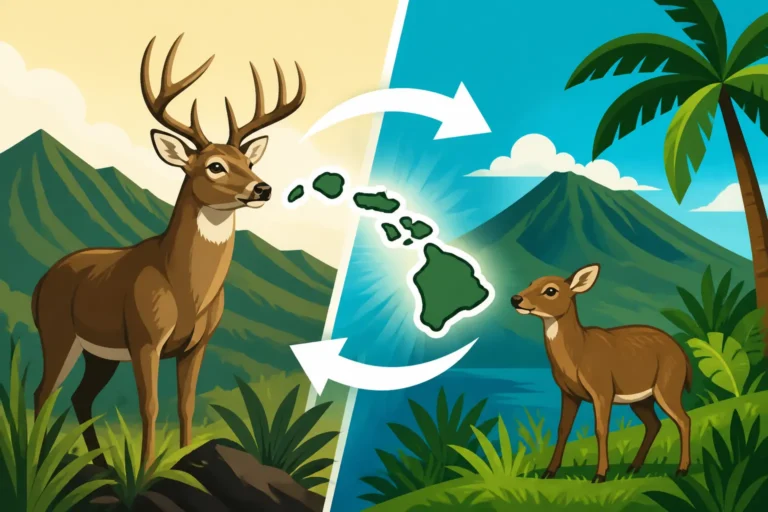
For many hunters visiting or residing in Hawaii, the idea of pursuing deer often conjures images of the abundant Axis deer on islands like Maui or Lanai. But for those looking at Kauai, a curious question often arises: what kind of deer are here, and how did they even get to this lush, ancient island? It's a question that delves into a fascinating chapter of Hawaii's ecological history, revealing a deliberate, though not always straightforward, effort to introduce a game animal that is now deeply woven into the fabric of Kauai's wild landscapes. This guide will explore the intriguing journey of how black-tailed deer, a species far removed from the tropical paradise they now call home, came to thrive exclusively on Kauai.
The Unique Presence of Black-Tailed Deer on Kauai
When you think of deer in Hawaii, most people immediately picture the striking Axis deer. Yet, if you're standing on Kauai, especially up in the cooler, misty reaches of Kōkeʻe, you're in an entirely different deer world. Here, it's the black-tailed deer that roam, a species that adds a distinct flavor to the island's hunting opportunities and a unique historical narrative to its ecosystem. Understanding their story begins with appreciating just how singular their presence is in the Hawaiian archipelago.
Why Only Kauai? A Geographic Isolation Story
The Hawaiian Islands are renowned for their incredible biodiversity and unique ecosystems, largely a result of their extreme isolation in the Pacific. This isolation meant that for millennia, land mammals were a rarity, with the hoary bat being the only native terrestrial mammal. When various game species were introduced over the centuries, they often found a niche and thrived on specific islands due to factors like suitable habitat, initial release points, and later, managed dispersal—or lack thereof. For black-tailed deer, Kauai was their sole destination, a decision rooted in historical choices and the natural barriers of the sea.
Unlike the highly reproductive and widely distributed Axis deer, which were intentionally spread to several islands from Molokai, the black-tailed deer never made the leap beyond Kauai. This geographic confinement has created a fascinating case study in island ecology. While other islands might have been considered, the logistical challenges and the specific intent behind their introduction meant that Kauai became their exclusive domain. It makes a hunt for these deer a uniquely Kauai experience, one that you won't find on the Big Island, Maui, or Oahu.
A Different Deer Altogether
If you've hunted Axis deer, you'll immediately notice that Kauai's black-tailed deer are a different animal entirely. Scientifically known as Odocoileus hemionus columbianus, they are a subspecies of mule deer, smaller than their mainland cousins but distinct from the spotted Axis deer. They typically have a stockier build, and their antlers, while still impressive, are more typical of the dichotomous branching pattern seen in mule deer, rather than the long, sweeping tines of an Axis buck.
Their physical characteristics directly influence how and where they live on Kauai. Black-tailed deer tend to favor denser cover and more rugged terrain, often found at higher elevations and within the more forested parts of the island, unlike the open grassland preferences of Axis deer. This difference isn't just academic; it dictates hunting strategies, gear choices, and even the time of day you might encounter them. Understanding that you're pursuing a distinct species, not just a variation of a more common Hawaiian deer, is crucial for any hunter planning a trip to Hunting Black-Tailed Deer in Kokee or along Hunting the Waimea Canyon Rim for Deer.
The Original Stock: From the Pacific Northwest to the Tropics
The journey of the black-tailed deer to Kauai is a testament to the ambitions and, perhaps, the adventurous spirit of early land managers and hunting enthusiasts in Hawaii. It wasn't a random event, but a calculated, albeit challenging, endeavor to introduce a new game animal to the islands. This chapter of their story reaches back more than a century, to a time when perspectives on conservation and introduced species were vastly different from today.
The Visionaries Behind the Introduction
The idea of bringing black-tailed deer to Hawaii originated in the early 20th century. Specifically, it was around 1906 when a man named Albert S. Wilcox, a prominent landowner and rancher on Kauai, took the initiative. Wilcox was a significant figure on Kauai, part of a family deeply involved in the island's sugar industry and land management. His motivation, like many introductions of the era, was likely a blend of factors: a desire to enhance game opportunities, provide a new food source, and perhaps simply an interest in seeing how a mainland species would adapt to a new tropical environment.
The prevailing mindset at the time favored introducing desirable species for sport and sustenance, often without fully grasping the potential long-term ecological impacts. While today we understand the complexities of invasive species, back then, the concept of introducing a hearty, adaptable deer seemed like a good idea for diversifying the island's wildlife. This period saw many such introductions across the islands, from various game birds to other mammals, all aimed at enriching the landscape from a human perspective.
The Journey to Kauai: A Logistical Challenge
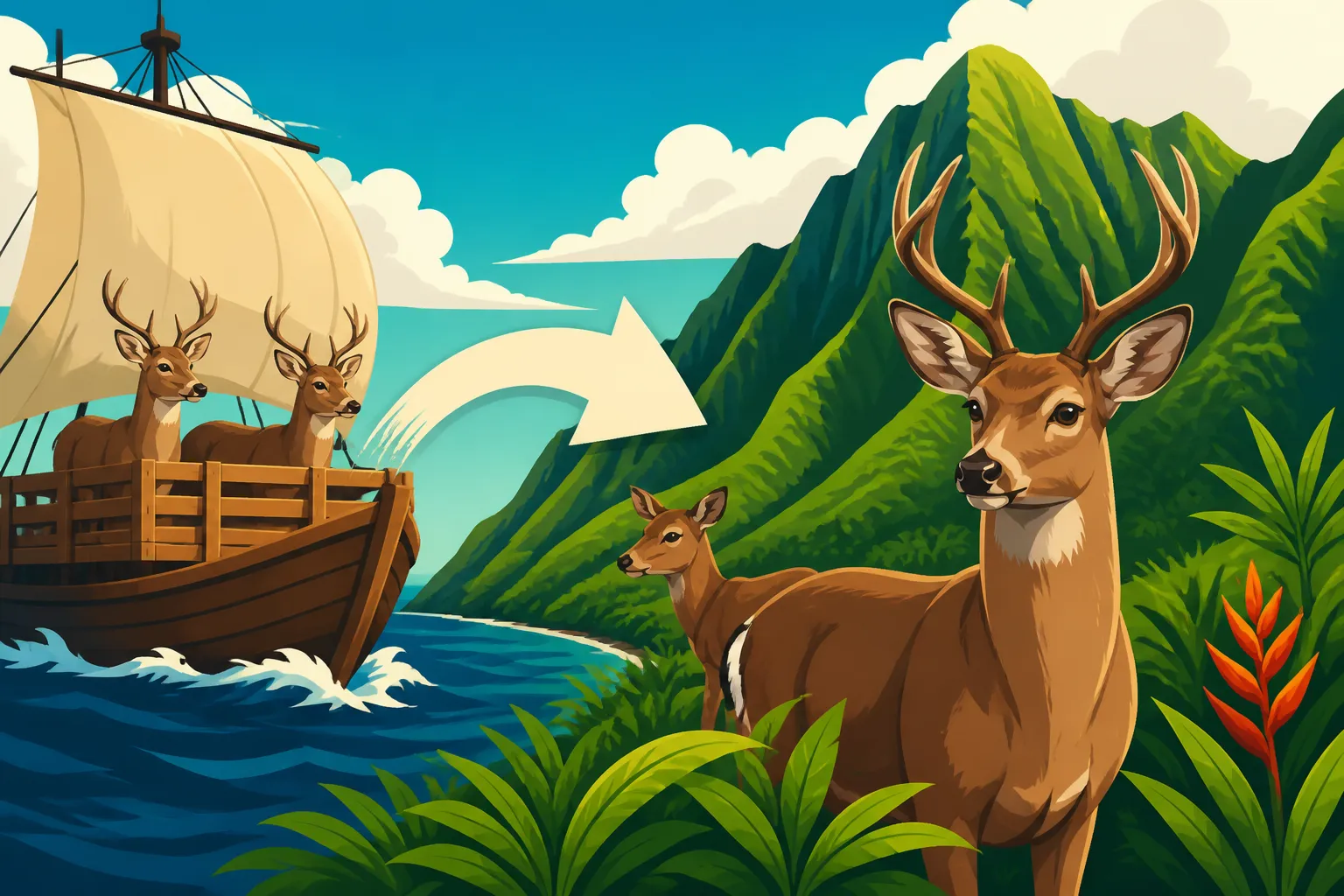
The actual process of bringing black-tailed deer from their native habitat in the Pacific Northwest—likely California or Oregon—to Kauai was no small feat, especially in the early 1900s. Imagine the logistics involved: capturing live deer, securing them for a multi-day or even multi-week sea voyage, and ensuring their survival across thousands of miles of ocean. There were no specialized animal transport services or climate-controlled containers.
The deer would have been transported by steamship, carefully crated and tended to by crew members during the long journey. Ensuring they had adequate food, fresh water, and protection from the elements and stress would have been paramount. Any misstep, any severe storm, or any disease outbreak could have doomed the entire venture. It speaks volumes about the determination of Wilcox and his team that they managed to successfully deliver and release a viable population of these animals, setting the stage for the deer's establishment on the island. This demanding journey is a key reason Why Black-Tailed Deer Stayed on One Island—the sheer effort required made widespread dispersal impractical.
The Early Years: Adaptation and Establishment
Once the black-tailed deer arrived on Kauai, their survival was far from guaranteed. They faced a radically different environment than the Pacific Northwest: new vegetation, different weather patterns, and an absence of their natural predators. The initial phase was critical, determining whether this bold introduction would take root or simply fade away into history.
Surviving the Initial Release
The first black-tailed deer were released into the Kōkeʻe region of Kauai. This area, with its higher elevations, dense forests, and cooler, wetter climate, offered a landscape that perhaps most closely resembled their ancestral home compared to the hotter, drier coastal plains. This strategic release location was crucial. The forested hillsides and deep canyons of Kōkeʻe and the Waimea Canyon provided both cover and a diverse array of plant life, even if the specific species were new to the deer.
The deer had to quickly adapt their foraging habits, learning which native and introduced plants provided sustenance. They also had to contend with a new disease environment and find suitable shelter. Without natural predators like cougars or wolves, their primary threats would have been the challenges of adaptation, potential stress from transport, and the sheer unfamiliarity of their new home. A small, healthy founding population was essential to overcome the initial shock and begin to reproduce, slowly solidifying their foothold on the island.
Expanding Their Range on the Garden Isle
Over the decades following their introduction, the black-tailed deer slowly but surely expanded their range across the western and central uplands of Kauai. From the original Kōkeʻe release, they spread through the dense wet forests and into the dramatic gulches and canyons. While they primarily favor the thick vegetation and higher elevations, their adaptability has allowed them to utilize a variety of habitats within their core range.
Unlike Axis deer which prefer more open, arid landscapes, Kauai’s black-tailed deer are often found in the thick koa and ōhiʻa forests, areas with heavy undergrowth that provide excellent cover. They navigate the steep, rugged terrain with ease, making them a challenging quarry for hunters. Their presence has become an integral part of the ecological mosaic of Kauai, influencing vegetation patterns and providing a unique hunting opportunity that draws enthusiasts to places like Where Kauai's Black-Tailed Deer Range.
Ecological Impacts and Management
The introduction of any non-native species, no matter how well-intentioned, inevitably brings about ecological changes. On Kauai, the black-tailed deer have integrated into the ecosystem, but their presence, like that of other introduced ungulates in Hawaii, requires careful management to mitigate potential negative impacts while also sustaining them as a valuable game resource.
Balancing Conservation and Game Management
In Hawaii, all introduced ungulates, including black-tailed deer, are considered non-native or invasive species. This means they can, and often do, have significant impacts on the delicate native ecosystems, especially through browsing and trampling sensitive native vegetation. The dense forests of Kauai are home to many endemic plants that evolved without the presence of large herbivores. Over-browsing by deer can hinder forest regeneration and alter plant communities.
Therefore, the management of black-tailed deer on Kauai involves a delicate balance. On one hand, they are a cherished game animal, providing hunting opportunities and a food source. On the other, their populations need to be kept at levels that minimize damage to critical native habitats, particularly within sensitive conservation areas. The Department of Land and Natural Resources (DLNR) strives to achieve this balance through regulated hunting seasons and various conservation efforts, often involving fencing and intensive management in specific areas. Hunters play a crucial role in this management, helping to keep populations in check.
Hunting Seasons and Access on Kauai
Hunting black-tailed deer on Kauai is a distinctive experience, largely confined to specific units, primarily in the Kōkeʻe and Waimea Canyon areas. These hunts are managed by the DLNR, with specific seasons, bag limits, and rules designed to control populations and ensure fair chase. Typically, hunting opportunities are available on weekends and certain holidays, and access often requires checking in and out at designated hunter stations, or increasingly, via online platforms like GoHunt, which allows hunters to register and understand unit regulations digitally.
Hunters need to be aware of the specific Kauai Black-Tailed Deer Season Dates and apply for the necessary permits and tags. The terrain is notoriously rugged, requiring physical fitness and preparedness for steep climbs, dense vegetation, and potentially wet conditions. The pursuit of black-tailed deer in these units provides a challenging and rewarding hunt for those willing to put in the effort, and it’s a crucial tool in the ongoing management of this unique island population.
Comparing Kauai's Black-Tails with Other Hawaii Game
Hawaii offers a diverse array of hunting opportunities, each with its own unique species and challenges. For hunters, distinguishing between these species is not just about identification; it's about understanding their behavior, habitat preferences, and the specific hunting strategies required. The black-tailed deer on Kauai stand out in several significant ways when compared to other game animals found across the islands.
Black-Tailed Deer Versus Axis Deer
The most natural comparison for a deer hunter in Hawaii is between Kauai's black-tailed deer and the Axis deer found on Maui, Lanai, and Molokai. While both are deer, they are fundamentally different in biology and behavior, which directly impacts the hunting experience.
| Feature | Black-Tailed Deer (Kauai) | Axis Deer (Maui, Lanai, Molokai) |
|---|---|---|
| Species Type | Subspecies of Mule Deer | Chital (Spotted Deer) |
| Average Weight | Males ~150-200 lbs, Females ~100-120 lbs | Males ~170-200 lbs, Females ~90-110 lbs |
| Coat Color | Greyish-brown to reddish-brown, often darker legs/face | Rufous-fawn with distinct white spots, white belly |
| Antler Style | Bifurcated (forked), typically smaller racks | Long, sweeping tines, often 3 points per side, can be impressive |
| Tail Appearance | Short, black-tipped tail | Long, bushy tail, dark stripe on top |
| Habitat Pref. | Dense forest, steep terrain, higher elevation | Open grasslands, dry brush, lower elevations |
| Vocalization | More mule deer-like snorts, grunts | Distinctive alarm bark, loud bugle during rut |
| Rut Timing | More seasonal, typically fall/early winter | Year-round, but peaks after wet season |
| Hunting Style | Still-hunting, tracking, patience in thick cover | Spot-and-stalk, glassing open country |
As you can see from the table, these are two very different animals. How Black-Tailed Deer Differ From Axis goes beyond just physical appearance; their habits are shaped by their evolutionary history and their specific island environments. Hunting black-tails is often about navigating dense cover, working wind in steep gulches, and having the patience to still-hunt or track. Axis deer, conversely, often involve extensive glassing of open country and challenging long-range spot-and-stalk approaches. Both offer fantastic hunting, but they demand different skill sets and preparations.
Management Approaches: Different Species, Different Strategies
The management of black-tailed deer on Kauai also reflects their unique status. Because they are confined to a single island and primarily within specific public hunting units, management efforts are highly localized. This contrasts with Axis deer, which are more widespread and often subject to broader control programs, especially on islands like Maui where their numbers have grown exponentially, sometimes leading to initiatives like the Hawaii's Maui Nui Deer Control Program.
For black-tailed deer, management focuses on maintaining a healthy population within their established range while monitoring impacts on the native ecosystem. This often means regulating hunter numbers through permits and specific season dates. There’s a constant effort to understand What a Kauai Black-Tailed Deer Weighs and their population dynamics to ensure sustainable hunting opportunities without overwhelming the fragile native flora. This species-specific approach underscores the fact that while Hawaii offers diverse hunting, each game animal presents its own set of ecological and management considerations.
Planning Your Kauai Black-Tail Hunt
Embarking on a black-tailed deer hunt on Kauai is an adventure unlike any other in Hawaii. It requires careful planning, a good understanding of the terrain, and respect for the regulations that govern hunting on this unique island. This isn't a walk in the park; it's a genuine challenge that rewards preparation and persistence.
Understanding the Kauai Hunter's Challenge
Hunting black-tailed deer on Kauai means embracing the rugged, often wet, and densely vegetated landscape of the Kōkeʻe and Waimea Canyon areas. This isn't the open, expansive terrain where you might glass for Axis deer from a distance. Here, you're likely to be still-hunting through thick forest, navigating steep gulches, and relying on your tracking skills. The weather can change rapidly, from sunny skies to misty rain, often within a single morning. This humidity and moisture can also impact gear, especially optics and traditional muzzleloaders, requiring extra care in the field.
Physical fitness is paramount. You'll be traversing uneven ground, climbing significant elevation, and potentially packing out an animal from a remote, challenging location. Scouting beforehand, if possible, is invaluable to understand the lay of the land, deer trails, and potential bedding areas. Even if you can't physically scout, studying detailed maps, like those available through Using onX for Hawaii Land Status, and talking to experienced local hunters will significantly improve your chances. Remember, this hunt is as much about the journey and the challenge of the environment as it is about the harvest.
Resources for the Kauai Hunter
Navigating the regulations and access requirements for hunting on Kauai can seem daunting, especially for those unfamiliar with Hawaii's unique system. The first step is always to ensure you have the proper Hawaii Hunting Licenses and What They Cost and understand How Hawaii's Permit-Tag System Works. For black-tailed deer on Kauai, specific permits and tags are required, and these are often tied to draw periods or limited availability.
The Hawaii Department of Land and Natural Resources (DLNR) website is your primary source for official regulations, season dates, and unit maps. However, for a streamlined and user-friendly experience, many hunters find digital platforms incredibly helpful. Websites and apps like GoHunt offer comprehensive information, often consolidating license purchasing, tag applications, draw odds, and detailed unit maps into one place. While you'll still need to follow official DLNR procedures, GoHunt can be a valuable tool for researching Kauai's Weekend Hunt Calendar and applying for the necessary paperwork. Always check the official DLNR announcements regularly for any changes to seasons or unit closures, as these can occur due to weather, fire, or conservation efforts. Having these resources at your fingertips will help you prepare for a successful and legal hunt for Kauai's unique black-tailed deer.
Disclaimer
This article is for general informational purposes only and does not constitute professional advice. Laws, prices and regulations vary by location and change over time. Consult a qualified professional for guidance on your specific situation.